Bonefish fly tying video: Four-eyed Charlie

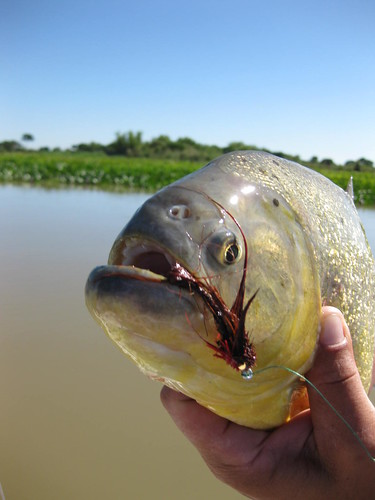
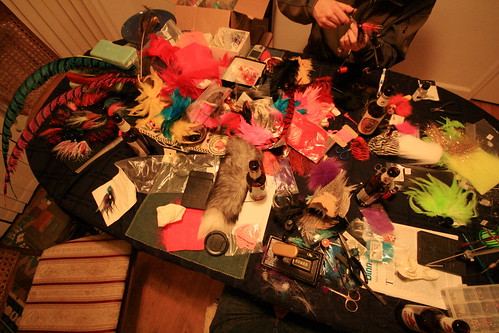
The Four-eyed Charlie is a bonefish pattern that has been very effective in the Florida Keys for Barrett and the Bahamas for Chris. The stripes give this bonefish fly the illusion of movement.

Four-eyed Charlie

Four-eyed Charlie Bonefish Fly materials:
Hook: Gamakatsu bonefish, size 6 SL45
Thread: 6/0 Uni
Body: Flat pink diamond braid
Wing: Cerise and Tan craft fur
Eyes: Orange bead chain, black mono eyes
Stripes: Black marker

Check out this great how-to article on Midcurrent about Fly Fishing for Bonefish for more info.

Posted in Fly Tying | Leave a comment

Pay to play trout lakes: Hook a slob, get your fix this winter

You know it’s coming… probably by the end of the week. It’s going to rain, and keep raining for like 90 days. The rivers are going to blow out, they’ll come back into shape on a weekday and be back blown out again by the weekend. The next thing you know, it’s 8 weeks later, you’re sitting in front of your vise with a bunch of lime green nutria fur and some dumbell eyes. And you’ll wonder what the hell you’re doing. When was the last time you even saw a fish?

Well, it doesn’t have to be that way this winter. If you want to catch some monster fish and hone your stillwater trout tactics, you need to book at day up at the Roaring Springs Ranch in Scio, OR. The facility has three ponds — two for people who like the idea of shooting huge fish in a barrel, and one lake-size impoundment with warier, wilder trout.

Roaring Springs, Scio Oregon

Roaring Springs has shelters near the lakes to keep you warm, and grills for cooking. It’d make a great winter outing. Call the shop for details and bookings: 541-342-7005. Stay tuned for an advanced stillwater class at Roaring Springs this spring.

Posted in Fishing Porn | Leave a comment

Breaking News: Governor Kulongoski calls WOPR “incomplete.”

Recently, we reported that the Western Oregon Plan Revision was on the Governor’s desk for review and asked our readers to speak out against the plan.  The Governor released his findings today asking the BLM not implement the WOPR.  View the press release or the Governor’s letter to the BLM.  

Governor Kulongoski expressed concern that the BLM plan to not complete consultation under the Endangered Species Act until after adoption of the plan  could set a “bad precedent” for other federal agencies.  In other words, no end runs around the ESA allowed now or in the future.  In fact, both the conservation/environmental community and the logging community expressed concern about that very issue.  The Governor’s other concerns included: water quality impacts, wilderness areas, insufficient monitoring provisions and the absence of forest management strategies that fight global warming.

We realize that the timber harvest community is hurting right now but in these economic times ramping up logging to 502 million board feet annually from these lands doesn’t make sense. Demand is sharply down.  Why flood the market with cheap Oregon lumber? The Governor has expressed his support for the 502 million board foot target but believes that given the four year reauthorization of the Secure Rural Schools funding the BLM has time to develop, using the existing plan as a foundation, a management plan that is in compliance with the law, will bring a steady, dependable revenue stream and will protect Oregon’s natural resource heritage.

Thanks you to all of you out there who sent comments in to the Governor’s office.–KM

Posted in Oregon Conservation News | Leave a comment

Catch magazine: Fly Fishing photo guru dishes on online media

Tonight, Oregon’s fly fishing photography guru Brian O’Keefe came to Eugene to help us promote a Trout Unlimited event before heading off to Chile for a fly fishing adventure. In this podcast, O’Keefe goes over the logistics of putting together Catch Magazine, the pros and cons of putting out an online magazine over paper magazines and more.

Drift at David Minor Theater in Eugene

Brian O’Keefe talks about the online fly fishing magazine evolution.

Drift at David Minor Theater in Eugene

It was a great sell-out crowd tonight at the David Minor Theater for our showing of Drift. Thanks to everyone who came out and made it a great night for the local chapter of Trout Unlimited, and special thanks to Confluence Films. What a great crew!

-MS

Posted in Oregon Fly Fishing Clubs and Events | 3 Comments

December trout fishing action stays hot in the Willamette Valley

Mid-December? Really? While it’s not great conditions if you’re anxious for winter steelhead season to start, the trout fishing is still pretty hot around the Eugene area. We’ve been getting good reports for trout fishing on the lower McKenzie River and the Middle Fork Willamette. Our trout crew headed out to the Middle Fork Willamette today. The water was lower than it was this summer — under 600 cfs and 3-feet on the gage. Water temp was 43-degrees.

December Trout Fishing

The hot fly was a size 14 tungsten bead-head prince nymph, under an indicator. The fish didn’t seem to want the possie bugger today. I’ve been tying nymphs with tungsten beads this year and I do notice a difference in the flies. That said, the tungsten beads cost a bit more.

December Trout Fishing

December Trout Fishing

December Trout Fishing

MIddle Fork Rainbow Trout

The fishing stayed hot from 10-2pm. Rick Allen and Karl Mueller tagged super-slob whitefish. Greg Hatten pulled some nice trout before jumping into the river with his pipe. Beat the hell out of watching football on the couch.
-MS
Posted in Middle Fork Willamette River fishing | 1 Comment

How to tie tarpon flies: Bunny Toad Jr.

This fly is a variation of the tarpon toad shrimp from a couple months ago. It’s a very effective fly pattern for juvenile tarpon — but it will work for big boys as well. Shrimp tend to have an orange egg sack, and a little orange maraboue skirt on this shrimp pattern really lights the fly up. You could also tie this fly in black and purple for night-time fly fishing.

Baby Tarpon Toad fly

Bunny tarpon toad fly materials
Hook: Gamakatsu SC17 1/0
Thread: 6/0 uni Orange
Foul guard: 20lb mono
Tail: Magnum bunny strip, gold variant
Collar: Tan and orange marabou
Head: Polypropelene yarn
Eyes: Black mono

Posted in Fly Tying | Leave a comment

Red Gold available today!!!

The new documentary by Travis Rummel and Ben Knight is now in stock. Angler’s Book Supply is shipping copies to fly shops — The Caddis Fly will have copies after 5pm today.

At the headwaters of the Kvichak and the Nushagak Rivers in Bristol Bay Alaska — the two largest remaining sockeye salmon runs on the planet — mining companies Northern Dynasty and Anglo American have proposed to extract what may prove to be the richest deposit of gold and copper in the world. Red Gold is a portrait of a unique way of life that would not exist if the salmon didn’t return with Bristol Bay’s tide. *5$ of every purchase goes to the TU chapter in AK.

Let’s lick these sub-human corporations and bury them in one of their own holes.

What you can do to help:
1. Speak Up Protect the immense renewable resource value of Bristol Bay, tell Gov. Sarah Palin and the BLM that protecting our fishery resources in the Bristol Bay watershed is important to you and the State.
2. Stay Informed Sign up to receive email updates from Trout Unlimited.

Go to: www.savebristolbay.org and pick up your copy at the shop tonight or buy Red Gold online.

Posted in Uncategorized | Leave a comment

Fly Fishing Event updates: Sell outs, giveaways, and photos

Thanks to everybody who bought tickets to the Eugene showing of Drift next week. The event is sold out! And if checking out the film on the big screen, hearing from Brian O’Keefe, and watching new shorts from some of the best fly fishing filmmakers wasn’t enough — Confluence films just sent us a big box of items for giveaways.

Also, we’re gearing up for the Caddis Fly Christmas party (Friday Dec 12). We’re putting toghether a photo slideshow to play during the party– send us your best pics from 2008 and we’ll include them in the lineup.
-MS

Posted in Oregon Fly Fishing Clubs and Events | Leave a comment

McKenzie, Willamette and North Umpqua fishing reports

Fall like weather has prolonged trout fishing, and made fall and winter steelhead available to the fly angler all of November and amazingly into December. Today you will find water levels on the Mckenzie, The Middle Fork of the Willamette, main-stem Willamette and North Umpqua in fine shape, summer levels really.

Mckenzie: Fish lower in the river, water temps are dipping down in the low 40s and more activity has been seen in the Belinger to Armitage area than above the dam. Soft hackles will catch fish mid-day when a few midges and Blue Winged Olives are around. Fish slow, soft edges and when your swing is over slowly retreive your emerger pattern. Best success will be fishing medium to small nymphs, Mega Prince, Possie Buggers, Prince, Copper John in sizes # 8-14.

Middle Fork of the Willamette: Flows are not down as low as they can go but they are very wadable in the area from Oakridge down to Black Canyon. Fish nymphs similar to the McKenzie, but you may want to roll a larger stone in faster water. The Middle fork will be a bit warmer than the McKenzie and you may see some Blue Winged Olives. Patterns #18-20 imitating Blue Winged Olive emergers and adults are worth having.

Willamette Main-stem: The town run has been producing a few steelhead and trout. Swing Moal Leeches on sink tips in the tail outs between Island Park and Valley River Center for steelhead. Black and Purple seem to be the best colors. For trout swinging soft hackles and fishing small Blue Winged Olives has been productive in slower runs and edges.

North Umpqua: Fishing pressure has been light. The bulk of the winter run is still out in the ocean, at least we have to hope so. Currently there are still summer fish in the system and a few winter fish. Recently I have had several reports of bright winter fish being caught in the fly water, the first of what should be a good year for winter steelhead on the North Umpqua.

Other opportunities are the state include the Metolius, Crooked and Fall river. South Coast salmon and a few steelhead are available as water conditions remain excellent.-CD

Posted in Fishing Reports, Lower Willamette, McKenzie River, Middle Fork Willamette River fishing, North Umpqua River Fishing Reports | Leave a comment

Chinook Salmon Clouser pattern: Fly Tying Video

Barrett’s Chinook Clouser is a killer pattern for chrome salmon entering Oregon rivers. This version uses a synthetic extra select craft fur instead of the traditional bucktail.

Chinook Clouser Minnow

Clouser materials available at www.CaddisFlyShop.com:
Gamakatsu SC-15
Ultra Select Craft Fur
Dumbbell eyes
Hareline Diamond Braid
Hareline Crystal Flash
Uni-thread

Posted in Fly Tying, Oregon Salmon fly fishing | Leave a comment

Drift Showing in Eugene on Monday — Meet Brian O’Keefe at the theater

Trout Unlimited Chapter 678 and Confluence Films are happy to present the new fly fishing film Drift, narrated by The Drake editor Tom Bie. One of the featured anglers in the film, Oregon’s own Brian O’Keefe, will be on hand to talk about the new movie and his new online fly fishing magazine, Catch.

DRIFT DVD

Tickets are $10 and the proceeds for the event will go to the McKenzie Upper-Willamette Chapter of Trout Unlimited. The event is being held at the David Minor Theater in Eugene — a new venue serving Ninkasi Beer during movies! We’ll also be showing the top four “shorts” from this year’s Drake Video Awards. We’ll have shorts from the latest project by Travis and Ben at Felt Soul, Jamie Howards new clip from Bass-The Movie, Will Benson’s permit short, and R.A. Beattie’s Streams of Consciousness.

This event has sold out in Portland and Bend already this year. Due to limited seating, tickets are pre-sale only. So come to the Caddis Fly to pick up your tickets before they’re gone.

When: Monday Dec. 8th 5:30-7:30
Where: David Minor Theater 180 E. 5th Street Eugene, OR 97401
Cost: $10

Pick up your copy of Drift at CaddisFlyShop.com.

Posted in Oregon Fly Fishing Clubs and Events | 1 Comment

Bellinger Bamboo Fly Rods, made in Oregon

Chet Croco, owner of Bellinger Fly rods in Albany, OR has a passion for taking gnarled burl wood and lengths of bamboo and turning those materials into works of art. And he wants you to learn to do it too.

Croco started making fly rods for Bellinger in 2002, and bought the business from the original owner Al Bellinger in 2004. The company started out in the custom reel seat business, making reel seats from rare and unusual woods you would find in high end firearms and knife handles.

“When Al started in this business, there wasn’t a lot of choice of what you could put on the reel seat, Bakelite, aluminum, straight grain wood,” Croco said. With a custom reel seat, rod makers could incorporate different kinds of wood that would complement the colors of the wraps on the rod and make it one of a kind.

A good example is the Dan Callaghan tribute rod Croco built for Jim Van Loan for a North Umpqua Foundation fundraiser. It was called the Green Butt Skunk rod: 8 ½ foot rod with a fighting butt, nickel silver hardware, wrapped in black with white tipping. The burl wood reel seat had just enough green and red in it to bring it all together to look like a Green Butt Skunk. Croco said that single, colorful piece of wood drove the entire design of that rod.

Bellinger Bamboo Fly Rods

Bellinger uses dozens of kinds of wood for reel seats: box elder, redwood, myrtlewood, circasian walnut, black ash and more.

“We have walnut that came from a burl in a guy’s pasture, an old orchard. This guy burned and cut and drove over it, and tried to get rid of it. The burl was so big. It must have been the size of a Volkswagen,” Croco said. “Somewhere in the process of the burning and the cutting, he showed up at Al and Hugh’s shop up in Salem saying, ‘I understand you guys like burl wood. What would you do with this? Should I burn it or can you use it?’ That was several years ago — we still have enough walnut burl wood to last a while.”

Bellinger makes two kinds of reel seats — a hand rubbed, varnish finish on high quality wood, and stabilized wood for the funky burls that give the reel seats the wild grains and colors.

“Stabilizing enables you to bring in wood that wouldn’t have the integrity that you would need to create a reel seat,” Croco said. “It’s punky and falls apart. But once you stabilize it — filling the pores with acrylic resin — it’s 100% moisture proof. In the decaying process, lines called spalt, like mineral deposit lines, form in the wood. From a design standpoint it’s beautiful if you can incorporate that into a reel seat.”

Bellinger Bamboo Fly Rods

Early on, a rep from Orvis noticed what Al Bellinger was doing with the reel seats and soon after, he started selling tons of wood to Orvis, which allowed Al to hire more people and grow the business.

“The Orvis relationship became the horsepower within the company that enabled him to pursue his other passions — which was to make bamboo fly rods, bamboo fly rod making equipment and fly reels,” Croco said.

Bellinger also made reel seats for Winston Rods for a while, but the large rod companies started looking for reel seats at less cost, and wound up going overseas. Today Bellinger does a small amount of business for bigger companies, but its niche is taking care of the guy that makes 12 rods a year.

From reel seats to bamboo rodmaking equipment innovator
From reel seats, the company then expanded into manufacturing rodmaking equipment. Bellinger benefitted from a friendship and proximity of Daryll Whitehead, maker of the D.L. Whitehead bamboo rods, one of the most sought after fly rods in the world. One of the first tools Al made for bamboo fly rod manufacturing was a glue binder. Whitehead used it in one of his rod making classes. Pretty soon Paul French, Russ Gooding and other rodmakers were all buying a Bellinger glue binder.

Next Bellinger started making planing forms. “This is the most rudimentary tool that a hobbyist rodmaker would want to own. It’s in essence two pieces of steel put together with a 60-degree groove machined between the two bars, so when you open it up, the groove gets larger,” Croco explained. “At each position (at five inch centers). Using a depth gage you can set the depth of the groove to your desired taper. You can copy tapers and this would serve as your platform to hand plane strips on this form. You can make an infinite number of tapers if you have a form.”

Bellinger Bamboo Fly Rods

In the early days people used to make bamboo rods with files and pocket knives. Now, according to Croco, the greenest rookie within a few tries is making really nice rods with the right equipment.

Bellinger Bamboo Fly Rods

Bellinger offers a tool to saw bamboo strips into thin rectangles. “Splitting them by hand is possible, but you’ll spend a lot of time over a burner, straightening out strips, because they won’t split as straight as you can saw them. They’ll have kinks in them at the nodes,” Croco said.

Bellinger Bamboo Fly Rods

Bellinger also created a machine rough those rectangular strips into 60 degree triangles. “The benefit of these tools is that they can make this possible for people that are strapped for time. They can also save wear and tear on the body.”

“Every one of these pieces of machinery is for sale,” Croco said, swinging his arm to include all of the machines in his small machine shop in Albany. “Part of our business is promoting the craft. Creating more bamboo rodmakers is a good thing for bamboo rodmaking. So we teach people how to make blanks as efficiently as possible, just like Daryll taught me all those years ago.”

Bellinger Bamboo Fly Rods

According to Croco, the most intimidating part of building a bamboo fly rod is the front end — acquiring all the equipment and stuff you need. For starters, you need a place to work, a woodshop with basic woodshop tools. You have to be able to cut, split and temper bamboo. You have to be able plane it into a rudimentary shape to fit into a planing form. You’ll need a dial indicator, a depth gage.

You will also need to heat bamboo — driving out moisture. Tempering the bamboo allows it to flex 200,000 times and return to its proper position. If there was moisture in the rod, after a few uses, it would develop a set. “You’ll see it in old rods left leaning up against a wall in a garage. Normally the set can be taken out with a little heat, but a well-made rod should be heat tempered so it’s resilient and flexible,” Croco said. “We happen to use a pretty rudimentary torch that creates enough temperature to get the moisture out of the lignin inside and create a stiffer product.”

Bellinger Bamboo Fly Rods

Putting on ferrules and reel seats is very difficult without a lathe. “Having a small shop lathe is a great idea,” Croco said. “You can get one for $500 on eBay. We use it to turn cork, cut reel seat stations, put on ferrules.”

Bamboo rodmaking classes
Bellinger hosts between 8-10 individuals a year to learn to make bamboo fly rods. The class starts on a Thursday morning and the students leave on Sunday. Croco teaches students that want to make one bamboo fly rod, and he gets people who want to go into the bamboo blank making business that plan to make 100-200 rods a year.

“It’s really neat to see a guy going from never having made a rod, come in here and within a year he’s selling them on the internet and has his own customer base and a taper of his own design, using our components and equipment to make the rod. It’s very rewarding from that standpoint,” Croco said.

“The more people are out there, the greater the likelihood that the craft will continue on,” Croco said. “We’re teaching people a method that isn’t covered in a book, or people who just can’t read a book and get it. They can come here and learn to do it, and can get the equipment to take home and continue on the process, so we really shorten the learning curve. It’s not just showing them how to make a bamboo rod, but how they can make several bamboo rods. Not just the one they want, but one for their brother or neighbor or cousin.”

The making of the Bellinger Fly Rod
Every rodmaker has a file set up with tapers in it. A taper is an expression of a rod’s action. The old school bamboo rodmakers typically developed their own taper that identifies their rod: Payne tapers, Dickerson tapers, Montague tapers. Even in the modern age, there are rodmakers that make their own taper — their set of numbers.

Bellinger Bamboo Fly Rods

When Bellinger started making high end rods, it didn’t have a following behind a Bellinger taper. Croco decided to create one. After talking to bamboo gurus like Al Bellinger, Daryll Whitehead, Tom Morgan, AJ Thramer — their advice to Croco was universal: If you’re going to make a rod for your program, make a rod that you like to cast.

“I like a medium action dry fly rod, so over a couple of years, Daryll Whitehead and I developed a taper,” Croco said. “I say Daryll and I because he has a very extensive catalog of tapers. You could look at rods are similar to ones you like to cast, but make it slightly different, based certain reasons. And through trial and error, pretty soon you come up with a set of numbers you like.”

The seven foot Bellinger rod you buy today will be the same rod you buy a few years. “If we were to change the taper, people would be upset with us. They’re buying the feel,” Croco said.

Bellinger is currently making 50 rods a year, wrapped in brown or olive with gold or yellow tipping, and custom nickel silver hardware, made on turret lathes right in the shop.

Bellinger Bamboo Fly Rods

Fishing bamboo fly rods
So it comes down to this: You won’t make 100-foot casts with bamboo.

“They make nine and a half-foot, seven-weight graphite rods that can blast line forever. There are guys on two-handed spey rods that will outdistance me, and maybe outfish me. But I’ve caught a lot of steelhead on an 8-foot, six-weight bamboo rod — and I didn’t have to cast very far to get them.”

Croco says it’s not hard to get a 60-foot cast with a solid six-weight bamboo rod. If you can put some accuracy and line control at 45 feet, you’re going to catch fish. “They say it’s all about presentation. Read Schweibert or Bergman. It’s all about line control, not casting distance.”

What you will get fishing bamboo is feedback from the rod — a feeling you don’t get with graphite. The rod tells you when it’s loaded, it slows down the process. You can feel the rod load in the grip.

“It’s about tempo, letting the rod do what it’s supposed to do and not getting in its way,” Croco said. “There’s something about catching a wild steelhead on a rod you’ve made with a fly some friend of yours tied, knowing that cocktails are an hour away.”

Posted in Fly Fishing Profiles | 13 Comments

Fly Fishing Video Review: Four Seasons of Steelhead

Much more than plain old fish porn, Four Seasons of Steelhead is a fly fishing film that celebrates Oregon’s beauty and the magnificent fish native to our state.  From the promotional materials:

For Wayne Van Burger Steelhead fishing is not just a destination, it is a lifelong journey. Follow Wayne on a tewlve month odysessy as he seeks out the toughest fighting trophy Steelhead in his home waters of Southern Oregon.

It’s no secret that I’m a Oregon homer (Go Ducks!) so any fishing DVD that focuses on Oregon is fine by me.  Each season is introduced with spectacular Oregon scenery and finds Wayne into steelhead including some seriously hot summer fish on the Rogue.  The cinematography is high quality–this isn’t your Sunday bassin’ show and Four Seaons of Steelhead has the awards to prove it.

The film isn’t perfect–I’d like to have seen a couple of wild winter fish and a couple of wild bruisers in the spring but really I’m nit-picking.Don’t get this DVD expecting a seminar on fly-fishing.  This film is about celebrating Oregon and steelhead fly fishing.  It might be the cure for what ailes you on a shut in, blown out winter day.

–KM

Pick up your copy of Four Seasons of Steelhead at CaddisFlyShop.com

Posted in Coastal Steelhead Fishing, Fishing Porn, Summer Steelhead | Leave a comment

Fly fishing for salmon: Q&A with Jay Nicholas

Jay Nicholas knows how to catch Chinook salmon on the fly. He spent the last 30 years studying and supporting wild salmon as a fisheries biologist with ODFW and has been fly fishing since 1954. He was a longtime gear fisherman, but after catching his first king salmon on the fly rod, it was over. There was no going back.

In this Q&A, Nicholas talks about techniques for catching salmon on the fly and the important conservation issues facing our salmon populations.

Be sure to sign up for Jay Nicholas’s salmon seminar at The Caddis Fly on Thursday Dec. 11th. Details at the bottom of this post.

Jay Nicholas Salmon Seminar

So why fish for salmon with a fly rod?
Fishing – any kind of fishing – is deeply personal. There is no objectivity to it. Eggs, spoons, plugs, jigs – these all require skill and technique. I fished all kinds of gear for Chinook from the mid 1960s until 2003. That year, on a whim, I decided to try the fly.

I stopped at the Caddis Fly (honestly) to buy my shooting heads, knotted braided loops on the lines, applied PlioBond to the knots, and hung them over my windshield visor to dry on the trip from Eugene to Gold Beach. I put a second coat of PlioBond on the knots at Elkton, where I bought a diet Coke and got a giant case of hiccups.

I arrived on the Rogue in the dark and stumbled into a campground where I met some old guys from California who were fly fishing regulars on the Rogue. They shared their beer and hot dogs. I shared my Hershey bars. They were up and on the water in the dark, but I hung back, hesitant in my ignorance. I didn’t know where to fish, how to anchor, how close I could fish to the regulars, what line or fly to use. The first day I fished I had one grab, a complete accident, and broke-off on the grab. The second day I never had a grab. My hands were swollen because I didn’t know how to double haul and I had never fished over an 8-weight fly rod. The sun seared my eyes. The wind howled in from the coast and threw every cast back in my face. I was exhausted. I was confused by the chit-chat overheard among the fly anglers around me. And then, on day-four, I hooked a Chinook on ten-pound leader and a size 6 Chartreuse Scud (a fly given me by a friend and mentor). This fish was maybe 12 or 14 pounds. Chrome on Chrome. Powerful. Primitive. My heart was in my throat every second I fought the fish, and I shook with joy and excitement long after I beached the fish. I had caught many, many Chinook on gear over the previous four decades. I even caught a #50-plus fish back in the 1980s. Not one of those salmon inspired me like this smallish king salmon did. Not one, and not all of them together. This one king salmon changed my life. For me, fly fishing for Chinook is a passion. An obsession. A lifestyle. Whatever you call it. It’s also a little crazy. It is what it is.

Do you have a rule of thumb for fly selection for salmon?
The lower, the clearer, the more pressure from anglers on the water, the smaller the fly. Those are conditions where I’d go to a size eight Comet, sparsely dressed. If you get murkier water or real early or late in the day, I like larger flies that present a bigger silhouette.

Even in murky water, most of my flies are size twos, but sometimes I larger hooks and longer shanks even though they’re out of vogue. In lower visibility I like my fly to be larger. And I like to have some black in these big flies because it shows up well.

Jay Nicholas Salmon Seminar: More Clousers

Do you notice a difference in what flies salmon prefer from river to river?
I think the salmon like bigger flies on Oregon’s North Coast. I don’t know why. But on the South Coast, fishing the Rogue I would never consider using a big # 2 Boss. But of course, when I’m fishing the Rogue, it’s 65 degrees, clear water and that’s where I’m using size sixes and eights. On Elk River, if the water is clear, I’m using size 6 comets and smallish (under 2-inch) Clousers. If I get up to the Nestucca I’m going to want a 4-6 inch Clouser on a size 2 hook or a big bushy Boss fly.

Are larger flies really more effective on the North Coast? Don’t know. Fact is, I haven’t done the true experiment of consistently fishing small flies in North Coast.

What’s the biggest conservation threat to salmon on the coast?
You, me, our neighbors, and our society that wants everything from our streams, woods, and lands, thinking that we can continue to “use” these natural resources without consequences to fish, to clean water, and our children’s future. Salmon must have a suitable stream where they can spawn and young fish must have good rearing habitat. Salmon are different than migratory birds that can fly from one good patch of habitat to another. Salmon are different from animals that can survive in an isolated patch of suitable habitat. Salmon spawn in the headwaters, migrate to the ocean and back again. If something is broken in the river/estuary/ocean ecosystem anywhere along the line, you’re going to lose these great fish. Any break in the life-cycle chain can lead to the salmon’s demise.

And I worry about predators, too, seals and some of the pisciverous birds that are mostly protected these days. I’m speaking from emotion here, not from data, but I really believe that marine mammals and birds are taking a significant chunk out of the number of salmon that could be returning to our coastal streams. Time will tell.

The broader fishing community has been apathetic about protecting salmon habitat. How can we get more people involved?

I don’t know. I wonder if anglers, organized or not, tend to focus most of their energy on learning how to catch more fish, and on promoting hatcheries. I wonder if anglers just don’t want to get as involved in habitat protection as they do in the social aspects of fishing. Of course this isn’t universally true. I know anglers who participate in STEP (Salmon and Trout Enhancement Program) who are as passionate about protecting habitat as they are about supporting hatcheries and going fishing. I just wish that the watershed councils were full of anglers, and landowners, and conservation advocates.

There are a lot of coastal rivers where wild fish are the foundation of an opportunity to catch fish. In Tillamook Bay, probably 90% of the fall-run fish run is wild. On the Nehalem, Siletz, Alsea, and Siuslaw, all the Chinook are wild. The Rogue fall-run is probably over 98% wild.

None of these remarks are meant to diminish the importance of hatchery fish. Tillamook Bay, for instance, depends on hatchery spring Chinook to support a fishery. Same goes with the upper Rogue spring Chinook fishery – it really depends on hatchery fish. I just try to remind people that we have some really important and productive wild fish runs and emphasize the importance of protecting the ecosystem processes that these fish need.

How do Oregon’s coastal salmon populations look today?
I want to be able to catch wild salmon and steelhead in our streams in 100 years. Well, you know, not me, really, but my son’s kids – I want them to be able to catch wild salmon in our coastal streams a hundred years from now. Whether salmon are reasonably abundant or scarce, a hundred years from now, that’s the real question. I don’t think extinction is on the table, especially on our coastal streams. I think on most coastal rivers, the habitat and fishery management decisions we make over the next 10-20 years will determine whether wild salmon are common or rare in the next century.

You asked how salmon are doing on the coast these days. OK – I would say OK. We are in a Chinook slump right now, after seeing great returns in the late 1980s and early 2000s. But we’ve seen more Chinook jacks on the coast this fall than I’ve heard of for years. That indicates good survival for the 2007 brood. The ocean off Oregon this summer was full of salmon food. If we could put together two-to-three good years of ocean conditions, we could have 100,000 kings come back to the Rogue and 50,000 to the Tillamook area. That’s what I’m hoping for. Three or four good survival years in a row. Then we need to maintain moderate harvest rates in ocean fisheries to pass through good numbers of spawners. There is hope – real hope – if we do our part protecting habitat and the ocean cooperates too.

How should someone start fly fishing for salmon?
Plan A: Hire a good Guide. A fly fishing Guide who knows Chinook. That is the most direct route to a shorter learning curve.

Plan B: Go to your local fly shop, listen to people you trust. Get out on the river and see what other people are doing. Go fishing, go fishing, and go fishing some more. Listen and observe. Be patient. Be tenacious. Be stubborn.

Plan C: Execute both Plan A and Plan B!

Your time on the water is valuable beyond price. You need to see the lines people are using in specific locations, and under specific flow and tide conditions. You need to see the leaders and flies and tackle they are using. You need to see where they stand, where they anchor, and where they cast. This is how you will learn when to use a 3-foot leader versus a 12-foot leader; when to choose small flies or big flies; when to use fast sinking lines versus dry lines. If you want to flyfish for Chinook, by yourself, you have to immerse yourself heart and soul in it.

Jay Nicholas Salmon Seminar: SeaLice

What are some of the misconceptions about salmon on the fly?
Part of getting people introduced to Chinook fly fishing involves expanding their consciousness and understanding about the fish. You can catch big kings on small flies, ten-pound leader, and have a ball. For the angler getting into fly fishing for Chinook, there is no simple formula; it is a journey, a pilgrimage.

A lot of the Salmon fly fishing articles promote heavy sinking heads, say, 400-500 grain lines. These lines can be very effective when you’re fishing swift deep water. In contrast, I tend to fish slower water and use lighter, slower sinking lines. The water might be 12 feet deep, but I want to have my fly at 6 feet.

You have to understand the fish. Very often in slow deep water Chinook won’t be on the bottom. If it’s a rip-roaring current, yes they will be, because that’s the only place they have velocity shelter. This is what Back-bouncers refer to as 3- or 4-ounce water, because it takes 3-4 ounces of lead to get their bait down to the fish. But if it’s slow moving water, and Chinook are fresh from the ocean, they’re pelagic. They’re swimming around 4-5 feet off the bottom, cruising around. So if you use a fast sinking fly line, you’re out of the zone by dredging the bottom. Another misconception is that salmon flies have to be tied on giant heavy hooks, that’s mostly nonsense.

What is your preference on hook selection?
My first choice is usually a straight-eye hook, my second choice is a down eye, and my last choice is up-eye. That’s my theory. In practice, I use all of these hooks and they all work. I have even used 3XL standard trout hooks – like you would use for tying Wooly Buggers – and had good results. I tend to use a Uni-loop knot and I think that my hook-setting ability is better with either a ring-eye or down-eye hook. But I can’t provide proof, just preference.

I like the Uni loop because I tend to fish fairly slow water. If I’m fishing slower water, I don’t want to take a chance that my knot is off to the side or my fly is hanging funny. You may get a little more wiggle with a loop knot.

Any advice on rod selection for salmon?
I started out fishing single handed rods for kings. I tried an eleven weight and it almost killed me. I had to triple dose on ibuprofen to cast the thing. Then I went to nine and ten weight rods – much nicer. Then I saw a guy fishing a Spey rod. I watched him, decided to give it a try, just overhand casting with traditional shooting heads or integrated shooting head lines.

Now I carry both one- and two-hand rods whenever I fish kings. Tidewater Spey rod casting is strictly overhead casting. Fishing Spey rods upriver calls for Skagit lines and genuine spey casting with sinking tips.

My one-handers are all nine and ten weights, and are typically nine-footers. As far as two handers go, I prefer rods no longer than 14’, simply because a long rod can get in the way in an eleven foot pram. Spey rods have great fish-fighting ability. When you’ve got a 35lb king that wants to hang under the boat, with a 9-weight single hand rod, it’s really hard to pull them out. Males tend to do that to you. They will get under the boat and just stay there. An 8- or 9-weight Spey rod has a lot more butt to it. The awkward part is finding the line that will load the two-hander, without fishing too deep.

Do you have any recommendations for prospective salmon-chasers to read?
A lot of the glossy articles about Chinook fly fishing show photos of pristine rivers in Canada or Alaska. They show the most beautiful giant fish and talk about 20-fish days. Unless you can afford to travel to exotic locations, that’s not what you’re likely to experience here in Oregon. It is just plain hard work here in Oregon, and it is rare to find solitude and numbers of willing Chinook in the same place and time here. Chinook fly fishing here in Oregon includes boats anchored six feet apart, or 30 guys standing in a riffle. Chinook fly fishing here in Oregon often includes small fish, or dark fish – they aren’t all giant chromers. Here in Oregon, you may fish 6 days straight, dawn to dark, and only getting a single grab. And that’s when you have it good. It may take you 15 days or more, to get a single grab. But if you love the quest, the art, the passion of fly fishing for Chinook, it is a sweet joy when the grab does come.

The classic book on fly fishing for Chinook salmon in California and Oregon is The Angler’s Coast by Russell Chatham. It’s good to know that there were fanatics fly fishing for Chinook decades ago, using tackle we would now consider primitive. The Angler’s Coast is a fun book to read. It will tell you something about the roots of the sport, the personalities that you will still meet today, and the techniques — and the book will give you encouragement, perhaps, to give this crazy pursuit a try yourself.

Jay Nicholas is coming to The Caddis Fly for a one-evening fly fishing for salmon seminar. Jay will share his tips for catching big chrome fish on flies, presenting his PowerPoint tour of salmon fishing in Oregon, demonstrating how to tie his most successful salmon fly patterns, and explaining gear and line selection for handling these sea-run bruisers. This is going to be an amazing class, so come sign up at the shop, seating is limited.When: Thursday Dec 11th, 6-9pm
Where: The Caddis Fly 168 West 6th Ave., Eugene, OR 97401
Cost: $20

Posted in Fly Fishing Profiles, Oregon Salmon fly fishing | 3 Comments

December to remember: Huge events at the Caddis Fly Angling Shop

This is going to be a December to remember at The Caddis Fly Angling Shop. Let’s start with the most important announcement: Steelhead brewery beer on tap at the shop the entire month of December.

Also, we’ve launched our online store today, CaddisFlyShop.com. Chris just did a new video listing the best fly fishing Christmas gifts for 2008:

Last but certainly not least, we’ve got some huge events next month, so mark your calendars:

Monday December 8: Drift by Confluence Films comes to Eugene, OR
Trout Unlimited Chapter 678 and Confluence Films are happy to present the new fly fishing film Drift, narrated by The Drake editor Tom Bie. One of the featured anglers in the film, Oregon’s own Brian O’Keefe, will be on hand to talk about the new movie and his new online fly fishing magazine, Catch. Tickets are $10 and the proceeds for the event will go to the McKenzie Upper-Willamette Chapter of Trout Unlimited. The event is being held at the David Minor Theater in Eugene — a new venue serving Ninkasi Beer during movies! We’ll also be showing the top four “shorts” from this year’s Drake Video Awards. We’ll have shorts from the latest project by Travis and Ben at Felt Soul, Jamie Howards new clip from Bass-The Movie, Will Benson’s permit short, and R.A. Beattie’s Streams of Consciousness.

This event has sold out in Portland and Bend already this year. Due to limited seating, tickets are pre-sale only. So come to the Caddis Fly to pick up your tickets before they’re gone.

When: Monday Dec. 8th 5:30-7:30
Where: David Minor Theater 180 E. 5th Street Eugene, OR 97401
Cost: $10

Thurdsday December 11th: Fly fishing for salmon with Jay Nicholas
30-year fisheries biologist, Wild Salmon Hall-of-Famer and fly fishing fanatic Jay Nicholas is coming to The Caddis Fly for a one-evening fly fishing for salmon seminar. Jay will share his tips for catching big chrome fish on flies, presenting his PowerPoint tour of salmon fishing in Oregon, demonstrating how to tie his most successful salmon fly patterns, and explaining gear and line selection for handling these sea-run bruisers. This is going to be an amazing class, so come sign up at the shop, seating is limited.

When: Thursday Dec 11th, 6-9pm
Where: The Caddis Fly 168 West 6th Ave., Eugene, OR 97401
Cost: $20

Friday Dec 12: Caddis Fly Shop Christmas Party!
Friday we’ll have food, wine, lies, buys and beer from 4pm to 8pm. Don’t miss it.
When: Friday Dec 12th 4-8pm
Where: The Caddis Fly 168 West 6th Ave., Eugene, OR 97401
Cost: $0

Posted in Oregon Fly Fishing Clubs and Events | Leave a comment