Dry fly action on Middle Fork Willamette after dinnertime

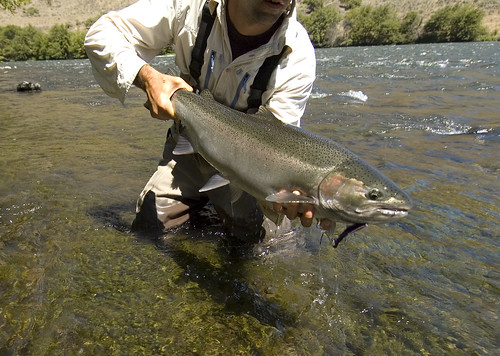
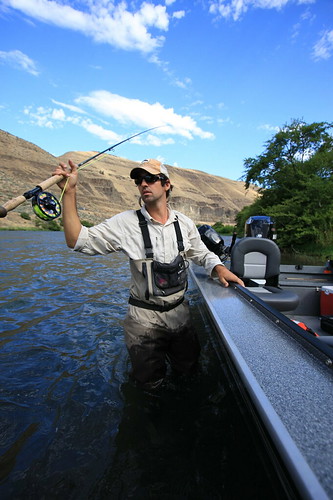
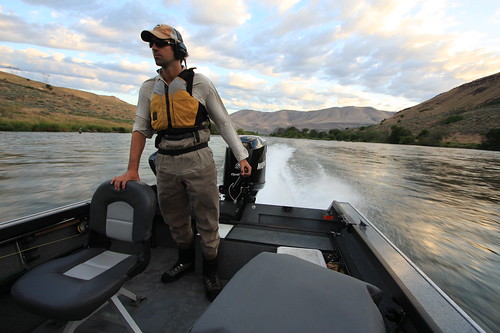
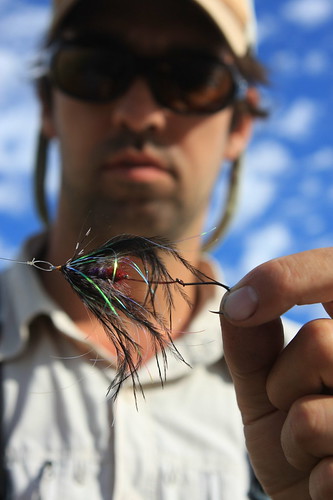
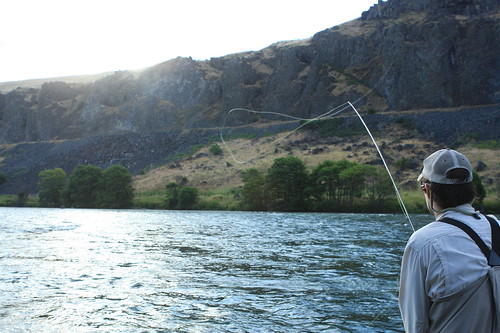
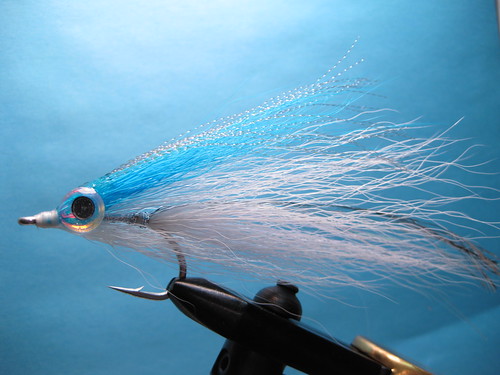
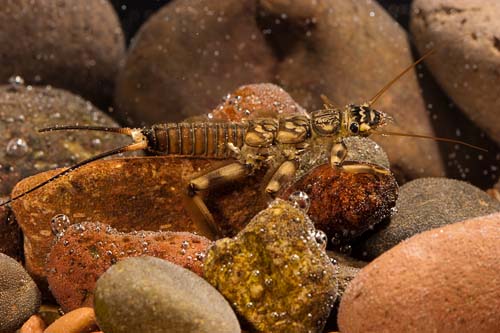
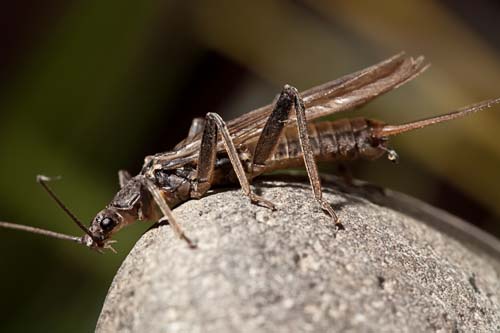
We waded the Middle Fork Willamette this evening, picking up plenty of wild trout on nymphs early with dry fly action later — after 7pm. Megaprince was the hot nymph for the day, scoring some nice fish for Matt Siegmund. There were some large stoneflies on the water, and lots of caddis, shifting later to mayflies later on. The hot fly for the evening dry fly bite on the Middle Fork has been a Stalcup’s Green Drake adult.

Middle Fork Willamette Fishing

-MS

Posted in Fishing Reports, Middle Fork Willamette River fishing | 3 Comments

Tech Tip: Icing Fused Ferrules

Is your four piece a two piece? Or worse, your two piece a one? We aren’t talking women’s swimwear here. What I’m asking is whether you through no fault of your own, (or in my case a complete case of neglect) have a rod, or will have a rod that you just can’t get apart? I did and I have a sweet Caddis fly rod tube that held the two piece nicely but it still irked me.

I tried the knee trick–that’s the first method. Hold the rod behind your legs in the knee area and use your legs as as well as your arms to try to pull the offending ferrules apart. That didn’t work. I tried silicone spray in the joint and allowed it to seep in and got Shelly to pull as hard as she could on one end with me reefing on the other. Nix.

Kvetching about this situation to Nate, he asked “have you tried icing it? That’s what we’ve always done”

I felt sorta like Archimedes, except I was fully clothed, and it wasn’t my idea. Other than that though it was really similar. “Oh, good idea, it’ll contract.”

“Yep, it contracts.”

A stroke of pure genius. I went home and iced the rod at the joint for a couple hours and when Shelly got there we tried again. With a satisfying, ‘ploop’ the rod did the unstuck. File this one away, you might need it someday.–KM

Posted in Oregon Fly Fishing Tips | 5 Comments

Summer Steelhead Fly Tying Contest entries trickling in

Call to action all fly tyers.  Hareline Dubbin has steped up and provided us with a great prize, see photo below. Entries are slim right now, which means your odds of winning are great. Deadline for turning in flies is August 1st.

IMG_1746

Check out a couple of fine entries below. Clik here for contest details.–CD

IMG_1745

Plutonium Sucking Leech
Hook: size 4 TMC 5262
Bead: Green 5/32
Weight: Lead
Thread: Chartreuse 6/0 Uni Thread
Tail: Black Rabbit Strip
Flash: Crystal Flash
Body: Black Ploar Chenille
Collar: Fl. Yellow Senyo’s Laser Dub

IMG_1744

Black Orchid

Hook: 25mm Waddinston Shank, #2 Gamakatsu Octopus
Conection: 50lbs flouro
Tag: Shell Pink Ice Dub
Rear Hackle: Hot Pink Marabou/Hot Pink Lady Amherst Tail
Body: Purple Ice Dub
Front Flash: Mettalic Purple Flashabou
Front Hackle: Black Marabou with Hot Pink Lady Amherst Tail
Collar: Purple Ice Dub
Eyes: Small Pseudo Eyes
Head: Hot Pink Senyo’s Lazer Dub

Posted in Fly Fishing Contests | Leave a comment

Coho salmon going off on the Oregon Coast

Ocean salmon and tuna fishing has been red hot as sea conditions have been more than favorable. Ports up and down the coast have been checking-in longfins and silvers filling freezers and creating sore arms for anglers lucky enough to get offshore.

DSCN1244

Fly fishing opportunities exist especially in these conditions. While trolling gear we encountered several pelicans working bait along with the coho and had fish bust our flies on the strip and in the prop wash! Good luck trying to stop a dime bright fish lit up 3 feet from the boat.

Summer is here and get on the ocean if you can. Anglers targeting coho need to remember barbless hooks only and 3 hatchery coho apiece with regulations changing constantly. Clousers and baitfish patterns paired up with heavy shooting heads will get you started and obviously calmer conditions will give you a better shot with light tackle.

DSCN1251

Call the shop for more info and be safe.
-NS

Posted in Oregon Salmon fly fishing, Oregon Saltwater Fishing | 4 Comments

Fish warriors, arm yourselves for battle: Recommended reading

Our wild fish stocks are at a turning point in Oregon

Dams are coming down. Studies are showing that inbred hatchery pukes are no substitute for (and are in fact complicit in the destruction of) native fish. Ocean conditions have returned to high productivity, providing a buffet of marine life for a huge run of coho. And thoughtful conservation minded individuals are climbing the ranks at even the most backward state and federal agencies that affect our watersheds.

At the same time, our fall chinook populations are crashing this year, maybe hitting bottom on some rivers. Ideologically outdated fisheries managers continue to equate angler opportunity with angler harvest. County commissioners are demanding the opportunity to destroy some of the most fragile, productive, publically-owned temperate rainforest in the state. And our region is poised for continued growth – which translates to further encroachment on floodplains and water resources.

As native fish advocates prepare to battle politicians, hatchery-heads, and short-sightedness, we need to arm ourselves. In order to protect and restore our rivers, we need to have the knowledge of the historical productivity and condition of the watersheds. And in order to fight a long, seemingly futile battle against politically entrenched, well-funded enemies, you need to have manic optimism.

And so I recommend you read two books: What the River Reveals by Valerie Rapp and My Story as Told by Water by David James Duncan.

Rapp’s book, What the River Reveals, is an exploration of what constitutes a healthy river in the Pacific Northwest. Rapp’s home water is our own McKenzie River, and she uses it throughout the book to illustrate how a river can appear pristine, but not necessarily be healthy, as salmon populations are disconnected from spawning habitat, fallen trees are removed from the river and water is diverted to power plants and irrigation.

The book provides some excellent facts about some of our rivers’ historical states.

For example, in 1826 there was a logjam on the Siuslaw River that was over a mile long and extended across the entire valley, immovable, creating a braided, complex river that encompassed the entire valley floor, instead of the channelized trough running through cow pasture we have today. At the time, the Siuslaw was one of the most productive salmon watersheds in the state, second only to the Columbia.

Or our Willamette River (which every endangered McKenzie River Spring Chinook needs to swim up from Willamette Falls) was at one time twisted and braided across wetlands, sloughs, islands and logjams two to three miles wide, instead of the brown stripe running from Eugene to Oregon City. In the 1870s, the Army Corps of Engineers removed 10,000 snags from the Willamette and cut down thousands of riverbank trees.

This book has excellent information about the natural history of our watersheds and its inhabitants and is a must-read for river supporters.

An excerpt: Simplified rivers look recovered after a few years. In fact, biologists don’t know how long it takes for severely degraded waterways to recuperate because they have never seen one recover on it own. Channelized streams are almost completely severed from their watersheds. Riprapped banks and levees usually stop rivers from reinhabiting their old flood plains and side channels. Richly textured channels with meanders, pools, riffles and logjams are replaced by straight runs of riffling water. The riparian areas may be narrowed to thin lines of alders and cottonwoods that no longer have the ability to buffer a stream from events in the watershed, and that contribute little to the stream. Cobbled rivers once rich with young salmon, trout, sculpins, beavers, mergansers, osprey, and eagles are turned into simple canals with greatly diminished life.

Rapp’s book offers guidelines to restoring our watersheds, but the most salient point she makes is that we need to manage people, not rivers or salmon. As University of Washington Jim Karr said in the book, “Northwest rivers have been making salmon for millennia. We need to manage people so natural systems can make salmon as they’ve done for a long time.”

According to Rapp, we need to save the best places first, as the truly degraded watersheds could take up to 100 years to recover. Lucky for us, in Oregon we have so much potential to save the last best places.

But in order to save the last best places, we’ll need something to sustain and inspire us. Something that will allow you to keep fighting against the currents of entrenched beliefs, political cowardice, and defeat. Luckily, we have David James Duncan. I’ve excerpted a few paragraphs from My Story as Told by Water below to illustrate the kind of Quixotic hope we’ll need to see wild fisheries restored in the next generation.

Life itself sometimes hangs by a thread made of nothing but the spirit in which we see. And with life itself at stake, I grew suspicious of my eyes’ many easy, dark conclusions. Even the most warranted pessimism began to feel unwarranted. I began to see hope, however feeble its apparent foundation, bespeaks allegiance to every unlikely beauty that remains intact on Earth.

I believe every life-loving human on Earth carries a far-from-agnostic obligation to remain primitive enough, and reverent enough, to stand up and say to any political power or poll or public: Trees and mountains are holy. Rain and rivers are holy. Salmon are holy. For this reason alone I will fight with all my might to keep them alive. This is not an argument, not a number, not a polled opinion. It’s naked native belief.

Appearances are deceiving: the Columbia and her salmon are as ancient and God-given as the mountains and the seas. Whereas the average dam’s lifespan is about the same as yours and mine. As I slide toward my half-century mark and feel the currents of time lapping at my knees, my memory, my libido, I sure feel removable as hell. Welcome to the club, dams!

Read both, and get ready.

-MS

Posted in Fly Fishing Books, Oregon Conservation News | 4 Comments

Middle Fork Willamette Marathon

This past Saturday, I fished with Senator Merkely’s Central Oregon point man on the Middle Fork Willamette. You might imagine that I was in his ear all day about Trout Unlimited’s conservation agenda–but you’d be wrong.

Johnny is one of my oldest friends and we used to fish together a couple times a week. Since his move to Bend we haven’t been out much and it was great to fish with my erstwhile partner in crime–reliving our old adventures in angling–like the time we without hesitation turned down the two hotties who tried to pick us up while we were steelheading the ‘Slaw, only to realize later what we had done. Talk about a singular pursuit–doh! Or the time we found a huge blaze on the Mckenzie–calling it in before it got a chance to spot and spread . . . I could go on all day but I read the survey results and you want fishing reports not my semi-coherent ramblings. So here goes:

We started on the Middle Fork above Hills Creek Reservoir, fishing from the head of the reservoir which is still higher than I’d like to see it and working our way upstream. We hooked and landed a mixed bag of hatchery fish and wild trout. Johnny hooked a big rainbow that managed to throw him before we got a good look at its orgins. Trout ate Golden Stone dries and the Parachute “I hope it’s me” Adams–a story for another time . . . or not.

All this was prelude though to the evening bite on the river below Hills Creek. The hatches weren’t as prolific as they were the other day but the fish were still looking up. We caught a mess of wild rainbows, exclusively on Green Drake dry patterns. Here Johnny does battle with a fairly typical Middle Fork wild rainbow (I’m pretty sure the chin strap is supposed to go under your chin there Johnny):

Johnny does battle

and the fish:

Middle Fork Willamette Rainbow

A few minutes later this happened–note my horror:

Middle Fork Willamette Monster

Ok, it wasn’t all that upsetting:

Middle Fork Willamette Monster

and the release:

Middle Fork Willamette Monster Release

The Middle Fork Willamette is fishing great in the evening along its whole length. Perfect for a post-work get away!–KM

Posted in Fishing Porn, Fishing Reports, Middle Fork Willamette River fishing | 4 Comments

The North Umpqua Chronicles: Q&A with Pat McRae

Saturday, I was fishing with Pat McRae, author of the new steelhead diary The North Umpqua Chronicles on his home water – the famed pools of the North Umpqua. McRae’s book will be available in August — it covers fishing twelve months on the river. We sat down to breakfast at the Steamboat Inn and chatted about why he wrote it.

Why the North Umpqua?
In 1974, I read an article in The Oregonian about one of Zane Grey’s children, describing the river, sun slanting through the trees, beautiful green water. And I wanted to go see it. I came down, and once I was here I was hooked.

When I first started, I knew three or four pools and I fished them over and over again. There are about 140 pools, and each one is different. As time passes, you learn them pool by pool. You learn the details of each pool little by little, and after 34 years you know it pretty well.

Your method is very specific: Spey-casting on a single hand rod, with floating line, long leader and sinking fly. How’d you come to that system?
It’s a specific river. It’s not like you’re on the Deschutes where you cast and take two steps down. When you go to a pool, you’re hitting specific spots and trying to get your fly to do what you want it to do in front of the fish’s eyes.

Can you tell me about your flies and how you fish them?
The Blue Captain Nemo is predominantly a blue flashabou fly. I like the way it looks in the water, with a gold head, and a black marabou tail. Every steelhead fly has got to have a little black in it. And it moves.

I never actually want the fly to be on a tight line. I want to be in control, connected to it, but not tightly. When I have a fly swinging, I’m constantly trying to provide a little more slack to it so it can move.

So why did you write the book?
I started keeping track of the steelhead I hooked with the very first one. I used to keep a ledger. The logbook would have the date, male-female, the size. And then I started wanting to write a little more about the day and the fish. So I kept journals. I have a big huge stack of them down at the cabin.

I’ve got steelhead fishing friends all over the place that can’t fish except when they get down here for their summer vacation. And I started writing for them. Check this out guys, don’t you wish you were here?

At one point, Peter Tronquet said, “you have a book here.” So I started taking stuff out of the journals, cleaned it up and showed it to Jim Van Loan. And he thought I had something. He proofread it three times and taught me some things about proper English. And out of that came the book.

What do you want people to get out of the book?
I hope they enjoy it. I hope they like the way it’s written. It’d be nice if it brought more lovers of this river here. The more people that love this river, the more people will help us take care of it.

Conservation is a form of giving back. There was a period of time in my life when I was depressed and steelhead fishing got me out of that. The river and fish did that for me, so I’ve always wanted to give back for that reason.

Stay tuned for this book’s release in the coming weeks.

-MS

Posted in Fly Fishing Books, Fly Fishing Profiles, North Umpqua River Fishing Reports | 2 Comments

North Umpqua Summer Steelhead Report

Having just returned from a 3-day, marathon fishing-trip to the North Umpqua, I wanted to share what I learned. Get ready, folks, this will be shocking.

This internationally famed Oregon River is reputed to host runs of summer and winter steelhead, catchable on flies. I suspect that this rumor is of questionable substance. The run of summer and winter steelhead to the North Umpqua is probably around twenty-seven steelhead, total. The fish-counts at Winchester are mostly a fabrication to create the impression that it might actually be possible to catch one.

Caption: North Umpqua tailout. Note two dozen “faux” steelhead placed around rocks by Umpqua Fly Guides Association in order to maintain client enthusiasm.
Jay Nicholas' N. Umpqua trip

The North Umpqua is still a beautiful river and a great place to test inflatable life jackets and waterproof fly boxes. Clever fly-fishing guides place steelhead “decoys” underwater in strategically located tailouts to motivate their clients, creating an illusion that Steelhead live in the river. “Faux” steelhead are typically placed in areas where guide-clients can view them from roadside pullouts. This is a tactic to increase sales of Polaroid glasses and binoculars. Most photos of fly anglers releasing steelhead in the North Umpqua have been staged on the South Santiam, hoping to increase occupancy rates in local motels and sell more fly fishing gear.

The North Umpqua River is mostly populated by “Pogies”. A future article will feature research conducted on this fascinating and furtive fish. Pogies will splash at steelhead flies and even tug on one’s line, enhancing the fantasy of hooking a real steelhead on a fly. Pogies have been known to attach small alder trees to an angler’s fly line, thus creating the impression of a monster steelhead screaming off downstream, taking line and backing through the next three pools. No one knows what motivates or rewards these Pogies. Better not ask, I think.

A list of fly fishing products supported almost solely by the North Umpqua Steelhead “legend” includes armpit-high Gore-Tex waders; cleated, felt-soled boots; Shortie vests; Polaroid glasses; wading staffs; snake-bite kits; Poison Oak creams; and October Caddis Skaters. Lately, the most prominent product line supported by the North Umpqua is: (surprise-surprise) Spey rods, Spey reels, and Spey lines – by the shopping cart-load.

Caption: Steamboat Inn caries a deeper stock in Poison Oak cream than in steelhead flies. This should tell you something.
Jay Nicholas' N. Umpqua trip

It is little known (but true) that several Orthopedic Clinics in Eugene are supported almost entirely by knee, shoulder, back, rib, wrist, and collarbone surgery – all for fly fishers injured by falling off the highway while scouting for steelhead on the North Umpqua.

Caption: Note tell-tale sign of wading cleats sliding across the surface of rock that is harder than diamond. There is a 300 foot cliff below this rock — let’s just hope the poor devil fell into the river and didn’t bust his Spey Rod.
Jay Nicholas' N. Umpqua trip

Getting to the point – I fished hard for three evenings and three mornings. I Spey fished my guts out. I mended my mends and twitched my twitches. I went swimming three times. One camera is definitely not waterproof. I hurt all over. I found a place where I could fall and crack my butt on one rock and jam my kidneys into another. Repeatedly.

Caption: Two-and-a-half days without a tug. Fell in river 3 times already. Sore. Tired. Must have Coffee.
Jay Nicholas' N. Umpqua trip

On the third morning, at 9 AM, I got the tug. Not just a tug, actually, a MONSTER, ker-sploosh and eat-it grab. All the time I had invested, all the pain, the tackle, the practice casting, and the fly-tying – all of it came together in a blinding flash of joy. A magnificent fight took place and I released the giant fish. I was lucky enough to snap a photo of the release.

Now, in spite of the truth, I am hooked for life; I am mesmerized by the legend of the North Umpqua. No matter what it takes, no matter how long, no matter how much more tackle I must buy – I’m hooked. Steelhead crazy, ya might say.

Caption: North Umpqua Summer Steelhead. This fish took a secret skated-fly on Day-3 and was released unharmed.
Jay Nicholas' N. Umpqua trip

JN

Posted in North Umpqua River Fishing Reports, Summer Steelhead | 17 Comments

Middle Fork Willamette Report: Daytime, slow and low. Evening fishing, white hot

Thursday, I floated the Middle Fork of the Willamette from Oakridge to Black Canyon . . . ok, floated might be a bit generous. I banged and dragged my way down the river with a couple gentlemen who had purchased the trip in the Trout Unlimited auction back in February. Thanks for your generous support of TU guys!

Beautiful weather, good company, good anglers, good times, the day couldn’t have been better except for one thing: a river that appeared completely devoid of insect life. Despite the tough conditions, the guys managed to hook a couple nice fish and eked out several more.

Reaching Black canyon around 6:00 the guys had enough and called it a day but Matt didn’t start calling me ‘The Mule’ for nothing. Stubborn and a good bit dumber than a bag of hammers I decided to hit my favorite bank spot before heading home. Jackpot!

There were bugs galore, caddis, huge golden stones, PEDs and big green drakes. The drakes really had the fish turned on and I caught active fish everywhere they were supposed to be and even in a couple places I’ve never hooked a good fish before. It was a mixed bag for a change, a couple nicer cutts and a slew of fairly good rainbows.

Upper Willamette Cutthroat

Seeing interest in but several refusals of the Green Stimulator, I switched my approach. A hairwing green drake on bottom and a high floating Green Humpy (yeah, I know) up top. Fish ate them both and the two biggest ‘bows even ate the less precise Humpy. It was getting dark and not wanting to miss the hot bite I didn’t get photographic evidence of all the fish–but guys, it really happened, I promise.

They were eating every few casts and I’m guessing it’ll be an early morning/evening show until the weather cools. I’ve been wrong before but every so often my stubbornness gets rewarded.-KM

Posted in Middle Fork Willamette River fishing | Leave a comment

Summer Steelhead fly tying contest reminder

Just a reminder to turn in your flies for the new Hareline Dubbin fly tying contest for Oregon Fly Fishing Blog. Check the link for more details.

The grand prize, all of the colors of Crystal Flash that Hareline makes — is pretty damn substantial. Stop by the shop to check it out. 44 different shades of Crystal Flash — nearly $200 worth. A small fortune really. It’s enough to make any serious summer steelhead tyer drool.

Posted in Fly Fishing Contests | Leave a comment

Fishing reports around the state of Oregon

We are in the midst of another excellent water year and fishing remains good in many areas around the state. The following are some of what we have been hearing/experiencing around the state.

McKenzie River: Water levels are perfect. Fishing remains good all day on the river with “hopper dropper set ups”. Evening hatches to keep in mind include Little yellow stones, Pale Morning Duns, Golden Stones, Green Drakes and small brown and tan caddis.

Middle Fork of the Willamette: Fishing has been surprisingly good despite the bright sunshine on the Middle Fork. Water temps have remained very cold. Still worth fishing Green McKenzie Caddis, Golden Stones, Pale Morning Duns, Green Drakes and smaller Brown Caddis.

The North Umpua: Steelhead are beginning to show up in the fly water. Sink tips are allowed but no weighted flies. You will work hard for your fish on the North right now but the fish are well worth the effort.

The Williamson River: Look for the Hex hatch when you head to the Williamson. Other flies to consider are small pheasant tails, chironomids, small leeches and damsels. Hot weather in the southern part of the state makes this fishery get better.

The lower Deschutes: My favorite time of year. Blizzard Caddis hatches fewer people and big bank feeding trout. Try a variety of small caddis patterns including X-caddis, elk hair caddis, cdc emerging caddis and hot butt CDC caddis emergers. Red Copper johns and tiny pheasant tails will kill them as well.

The Midddle Fork of the Willamette above Hills Creek, Salt Creek, Salmon Creek and The North Fork of the Middle Fork: All of these streams offer excellent wading opportunities right now and fishing with “boots and shorts” is great this time of year. Try Green Drakes, smaller caddis, paracute adams, half down goldens and other attractors. Hoppers will work as well.

Wherever you fish this weekend enjoy!-CD

Posted in Fishing Reports | 2 Comments

Oregon Fly Fishing Blog survey results, Sharkskin winner announced

Let’s get this out of the way. The random winner of the Sharkskin Line (as determined by plugging the numbers 1-156 into Random.org) is Todd Davidson of Salem, OR. We’ll be in touch about picking up your prize, or you can shoot us an email.

So what did we find out in the survey? The audience is 98% male, mostly between 25-35, you tie flies and really like to fish for trout in moving water. About a third of you spey fish, and Rob and Jay are nudging a few of you a little closer to pulling the trigger. The majority of you send $35 to Trout Unlimited, but a scary amount of you don’t do anything on the conservation side at all.

Sage dominates the favorite rod-maker category, and Ross is the clear winner on reels. Half of you chuck gear — music to Karl’s ears. Your dream fishing trip would be Alaska or Argentina. And we have a lot of hiking, photo-buffs out there.

Oregon Fly Fishing Blog survey results

As for preferred fly fishing Web sites, aside from Oregon Fly Fishing Blog, you really like Westfly, Moldy Chum, Buster Wants to Fish and Catch Magazine, in descending order.

As for why you like our site, it’s primarily local fishing reports and frequency of the updates, with fly tying videos coming in third.

Oregon Fly Fishing Blog survey results

There were some really excellent suggestions for improving the site and we’re taking them all to heart.

We have a plan to make the site easier to navigate in the coming months — so for the dozens of you who told us to get the fly tying videos organized, it’s coming!

We’re looking into producing more beginner and instructional content. We’re going to get back on the Podcasts again. We plan to offer more info for the wading angler, increased frequency on local hatch reports — probably through our Twitter account. And we’ll continue to focus on conservation issues in our area.

Thanks to everybody who took the survey, and be sure to enter the Hareline Dubbin Summer Steelhead fly tying contest.
-MS

Posted in Fly Fishing Contests | 2 Comments

Trout Unlimited Meeting tonight at the Eagles Aerie

Reminder: Trout Unlimited Chapter 678 meeting tonight at the Eagles Aerie 1375 Irving Rd. in Eugene, 7pm. The chapter has been interested in studying wild trout populations on the Row and Coast Fork Willamette to help better protect these native fish, and ODFW’s Erik Moberly and Coast Fork Watershed Council coordinator Pam Reber will be on hand to chat with us about these watersheds and ongoing research.

We’ll also be discussing the chapter’s upcoming outing on the Deschutes the weekend of July 24-26. And we’ll be planning our 2009 backcountry high lakes trout trips for late-summer early fall.

Hope to see you at the meeting.
-MS

Posted in Oregon Conservation News, Oregon Fly Fishing Clubs and Events | Leave a comment

South Santiam: Hidden Jewel?

How could a River so beautiful have remained undiscovered? Dunno. Summer day, moderate 70s, broken cloud cover, gentle breeze, and swallows working bugs in the afternoon. Several nice runs to swing flies in, without a boat in sight.

River teeth and beaver-sticks to collect. Petrified wood treasures if you can find them. Green rocks from upstream in the Middle Santiam basin, perfect for garden landscaping. All the petrified wood has to come out of the Wiley Creek basin these days, because Foster Dam blocks any downstream flow of gravel from the river above that point. All the petrified wood – one hundred percent – shows evidence of a prehistoric forest fire. One perfect place (right side, lower end of the first island) for kids to wade in the shallows. Plenty of healthy snacks – no shortage of brownies and chips.

Oops! Somebody couldn’t resist a Marabou fly on the hang-down. Rod jumps into Jackson’s hands. Oops! Reel forward to make the line come in. Let him run if he pulls hard. Upstream and downstream, ‘round the boat – a narrow miss – almost wrapped that nice green Winston around the bow anchor release. “ Get the net ready”, Jackson says. Oops! That’s OK son, we were going to let him go anyway.

Jay Nicholas South Santiam Pics

Jay Nicholas South Santiam Pics

So it goes. The river looked clean, the steelhead runs green, and the deep holes were blue. Trout splatted at the evening hatch. A 510 gr Airflo Scandi Compact seemed right strung on a 7123. My freshly tied Muddlers skated like they were supposed to.

The R&E funded restroom at the take-out was sparkling clean. Life’s gifts can be so perfect and simple. We unhitched the boat so we could use the drive-up at the Sweet Home A&W. Root Beer Floats and Tater Tots served on a window-tray. Brad paisley sings, “I’m Still a Guy” on Country Western Radio. We all sing along. Home by 8:30.

Sweet.

JN

Posted in Fishing Reports, Summer Steelhead | 7 Comments

Hareline Pro Grade Streamer Capes: Product Review by Jay Nicholas

Fly Tying materials. Yummm. What’s not to love about beautiful Rooster Capes? That’s right. Easy on the eyes, fair on the wallet, and spectacular on the hook – that is – if you find the right feather structure and colors for the flies you are tying.

Up front disclosure – I am an unabashed fan of Hareline Dubbin. Their product line is so deep and broad that it makes me drool. I decided to write a series of product reviews to 1) highlight some of Hareline’s products that tyers might not be familiar with, and 2) share my thoughts on various applications of these products.

Lately, I have renounced my addiction to rabbit and marabou leeches and refocused my attention on hackled steelhead flies. You know, the flies we used to catch steelhead on: Fairly simple traditional steelhead flies tied with a hackle “collar” or “beard”. So in my usual fashion, I proceeded to look for hackles to tie a supply of these little beauties.

Out of the blue, Hareline Pro Grade Streamer Capes popped up on my radar screen. I have always been a great fan of the Hareline Dyed Rooster Saddles for tying steelhead and salmon flies, but until recently, the Streamer Capes eluded my attention. Then in a flash of light (sort of) I found myself standing next to Bob Borden as he arranged a mountain of the most beautiful white Rooster Capes I have seen in years, maybe ever.

“What the heck are those, Bob?”

He smiled that all-knowing smile, and proceeded to tell me a little about the capes. American grown and processed right here in Monroe, Oregon. High feather count. Moderate amount of web. Good hackle range. Versatile. Dyed in Black, chartreuse, hot orange, and purple, in addition to white.

ready

I looked over a pile of the whites. I photographed a batch of chartreuse Bob was laying out to dry. I peered into the dye vat as Marcos checked a batch of hot orange capes.

orange

green

Ooohhhhhh man, these looked good.

I pushed and pulled, fiddled and fussed, spread out feathers, checked stems, and felt for fullness on several dozen capes. Oh Boy. “Honey, it’s me. Yeah, I’m down at Hareline. Yeah, I found some really great feathers. Yeah, I know I told you I had everything I needed for quite a while – but – these are so good, and Bob says, “when they’re gone they’re gone. Yeah, I know. Yeah, I know. Ok honey, just a few – for now – I’ll order them from the Caddis Fly” (note blatant biased advertisement here).

feather

Here are a few characteristics worth noting about these capes.
• The largest hackles at the base of the cape tie very nice palmered and collared Spey flies
• The hackle stems are fine enough to wind-on nicely
• They have a nice balance of web and fiber firmness
• Bob understated the hackle count, these are very full-feathered capes
• Unlike my favorite White Dyed Saddle Patches, which tend to have a size range of mostly #2 to #4 with fewer #6s, these Streamer Capes have a much wider hackle range, say #1/0 to #10
• I have found these tie very nice hackle collars for my Steelhead and Sea-run cutthroat flies, and – joy of joys – they have made some great Comets too!
• The colors are true and the whites are white
• And yes, when they’re are gone, bye-bye!

feathers

Sorry, this review has demonstrated one of my many shortcomings as a fly tyer, specifically; I have limited experience tying STREAMERS! After all, these are Pro Grade STREAMER CAPES. These are not advertised for the types of flies I have found them most useful for.

What to do? Y’all tell me. I look at these beautiful curved feathers that range from very small to very large and my imagination runs wild on streamers. These feathers could be faced with dull concave sides together or with shiny convex sides together – a making for either a slim streamer wing, or a traditional, curved, pulse-in-the-water wing.

chartreuse

Sorry, I know these Capes will tie great STREAMERS, but I just finished my hundred dozen steelhead flies and promised myself I would learn to tie skaters this summer. So I’m depending on someone else to tie the streamers with these beauties, all-righty?

Tie yourself silly – – –

JN

Posted in Fly Tying | 1 Comment