Dry Fly Fishing Improving Locally – McKenzie and Willamette Fishing Very Well

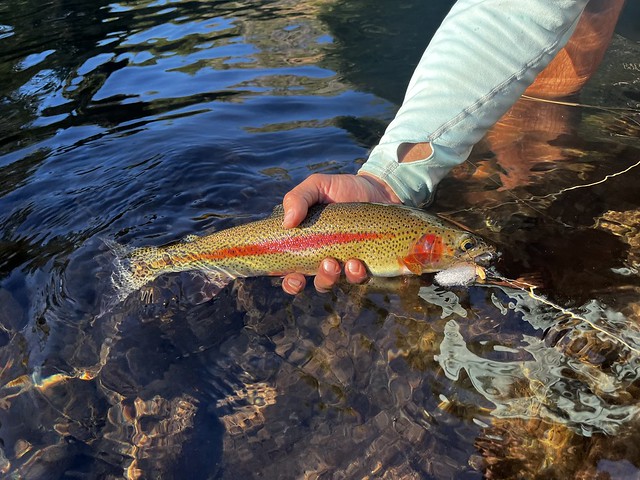
IMG_2548

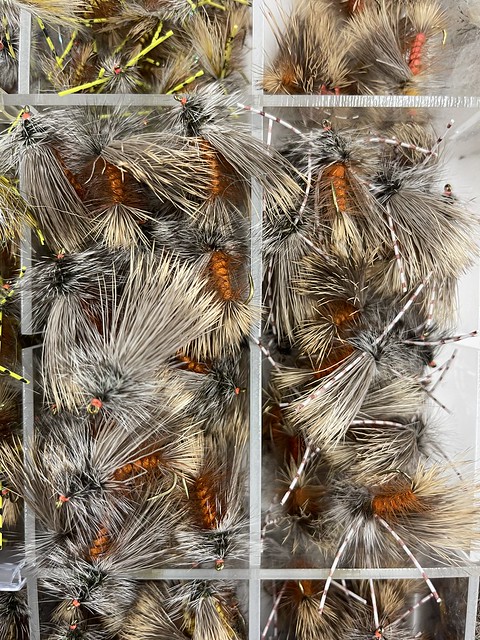
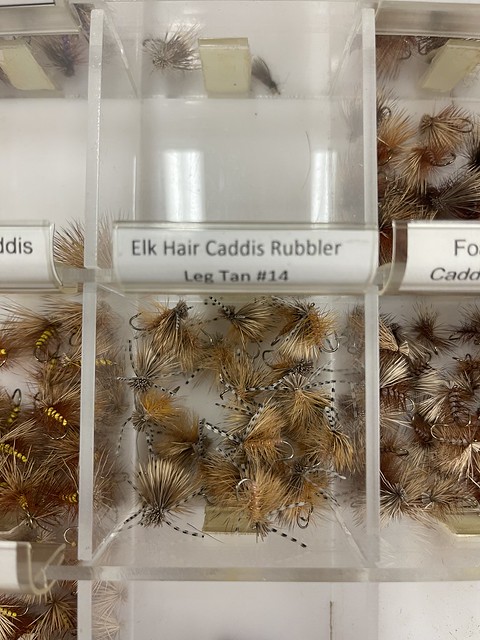
Increased shade, cooler evenings and lighter fishing pressure have trout looking up much more in recent days. Must have (don’t leave home without them) dry flies for the McKenzie, Willamette and tributaries include the following:

Parachute Adams #10-14
Carlson’s Purple Haze #10-16
Brown Elk Hair Caddis #12-16
Tan Elk Hair Caddis #12-16
Orange Stimulator #8-12

IMG_2550

IMG_4095

IMG_4093

IMG_4094

Other news and notes fishing report-wise in the area. Steelhead fishing on the Middle Fork of the Willamette between Dexter Dam and the confluence of the McKenzie has been decent considering the overall number of fish in the system.

Both the McKenzie and Willamette drainages have seen bumps in flow as reservoirs are drawn down to prep for fall. Water temps and flows have improved fishing on all fronts.

I have been seeing quite a few more hoppers in the burned area of the McKenzie, no doubt more grass growing in the forest and hoppers are loving it. Fish are loving the MFC Chubby as an imitation but there are a bunch of cool hopper patterns out there that work well.

Let’s hope we all escape the inferno predicted this weekend!

IMG_4065

IMG_4068

Posted in Fishing Reports, Lower Willamette, McKenzie River, Middle Fork Willamette River fishing | Leave a comment

Determining the Future of the Leaburg Hydroelectric Project

This video fully addresses the Leaburg Dam, Canal and Hydro project. EWEB is still taking public comment on this issue until October 10th. You can submit your comments at this link: https://www.eweb.org/about-us/power-supply/mckenzie-river-hydro-projects/future-of-the-leaburg-canal/leaburg-public-comment-form

Posted in McKenzie River, Oregon Conservation News | Leave a comment

Late Summer 2022 Southern Oregon Report

I was able get a couple of the Technical Men’s Conference attendees to leave grampa duty to fish Southern Oregon. During 2016 ODFW dumped brown trout into Diamond Lake to get after the chubs. During a great Callibaetis hatch several nice browns fell to hand. If you ever get to Diamond Lake and love pizza, you know where these fish were caught!

D1IMG_1113 (1)D2 The following day we headed to Chiloquin and floated the Williamson.   It was very challenging, but we were able to get one fish to hand.    The Willamson has many deep slots, leech patterns and sinking lines are a must. W1

Posted in Central Oregon Fishing Report, Fishing Reports | Leave a comment

Oregon Fall Steelhead 2022: New Lines and Best Flies

Cooler evenings and mornings have our thoughts focused on fall and steelhead. While we’re still below ten-year return averages in most of the rivers here in Oregon, we’re glad to see things bouncing back the way they are. It will be interesting to see what the next few years look like.
We’ve got a few exciting things to go over here: New spey lines, tips and leaders from Rio and what we consider to be the best flies for fall steelhead.

This season, Rio is aiming to simplify their lines by integrating running lines with shooting heads. We like this because it makes the purchasing process a bit easier for you, and there are no loop connections clicking through your rod guides. We’ll start with the RIO Elite Skagit Max Power Spey Head. This line has a shorter head that delivers heavier flies with ease but don’t feel limited with this one because it can be thrown all day long with whatever you’re using. Fish the Max Power with light, medium or heavy MOW tips depending on your line weights. The Max Power is great in the 5 through 7 weight class with 12 and a half foot rods.

The RIO Elite Integrated Skagit Mini Max is perfect for rivers like the Rogue where you’ll be fishing slightly lighter rods, think more along the lines of trout spey here. The 16-18 foot turns over heavier flies with ease and when you pair this line with light MOW tips, you’ll be pleased.

Also, the Trout Spey non-skagit Shooting Heads are perfect for Trout Spey rods and are available in line weights #1-5 weight. All models of Elite Trout Spey Shooting Heads are 23ft. We recommend matching Elite Trout Spey shooting heads with thinner running lines in coated and mono versions. Best Sinking and floating tips to use are 10ft replacement tips or Trout Versileaders for lighter work.

Again, to simplify your systems for the modern spey caster, Rio is offering up three new VersiLeaders in Trout, Medium and Heavy. VersiLeaders allow the user to quickly adjust fishing depth without changing fly lines. Simply loop the VersiLeader onto to the end of a line to adjust the depth at which the fly is presented in the water column. The Rio Trout Versileader is great for floating and Scandi lines with 4 weight or lighter lines. The Rio Medium Versileader is excellent for traditional spey lines, scandi shooting heads up to #7, and single
hand lines 8wt and up. And the Rio Heavy Versileader shines with traditional spey lines and Scandi shooting heads sizes #8 and up.

Fall Steelhead Flies
In the first half of the above video, we go over these in a bit more detail.

Surface Flies
Ska-Opper Black Skater
Pompadour Skater Steelhead Dry Fly
Tube Skater
Finnerty’s Steelhead Skater

Sub-surface
Jack’s Klickitat Muddler
Chou’s Mooshoo Muddler
Berry’s Euphoric Muddler
Steelhead Mini Muddler

Traditional
Bennet’s Last Light Steelhead flies
Anderson’s Euphoria
Silver Hilton
Silvey’s Spey Fly
Purple Peril

Heavy
Hoh Bo Spey Fly
Reverse Marabou Leech
Signature Intruder Steelhead and Chinook Salmon Fly

blog-flies

Posted in Fly Fishing Gear Review, Oregon Fly Fishing Tips, Summer Steelhead | Leave a comment

WEDNESDAY, AUGUST 31ST IS BACK TO SCHOOL NIGHT WITH THE NATIVE FISH SOCIETY MCKENZIE CHAPTER!

mailCohoSchool_AKSeaGrant

Jeff Ziller, the Oregon Department of Fish and Wildlife District Fish Biologist, will be joining us, giving his perspective on current fish trends in the McKenzie, discussing potential citizen science collaborations with ODFW, and answering any questions you might have!

The meeting will take place on Wednesday, August 31st, at 5:30pm again at Ninkasi’s Better Living Room, 155 Blair Blvd, Eugene.

Please encourage others to join us! The more, the merrier!

Lastly, McKenzie River Trust is offering an opportunity to take a tour of the Finn Rock Reach early in Chinook spawning season, September 25th from 9:00-11:00 am. The tour will be led by Jeff Ziller. If you’d like to join in, sign up soon at this link.

If you have any questions or concerns, please reach out to me,
Liz Perkin, Northern Oregon Regional Coordinator
503-442-3985
liz@nativefishsociety.org

Posted in Lower Willamette, McKenzie River, Middle Fork Willamette River fishing, Oregon Conservation News | Leave a comment

Finn Rock Landing Restoration on the Middle McKenzie

Finn Rock Landing Campaign QR Code 2022 (1)

McKenzie River Trust has done a fantastic job of fund raising to restore and keep Finn Rock Landing on the McKenzie open to the public. They are very close to reaching the goal which will allow them to build one of the best landings on the entire McKenzie. If you have yet to give I urge you to do what you can to help the trust with this important community project. Donate Here.

OregonFlyFishingBlog.com and The Caddis Fly Angling Shop invite you to participate in building a new landing at Finn Rock on the McKenzie River. Finn Rock is a popular landing for anglers and whitewater enthusiasts and this project will improve the site tremendously and keep it free to the public. We are very lucky to have McKenzie River Trust in our community. MRT is local, accessible, and is protecting and creating vital habitats on the McKenzie River. Additionally MRT protects the very fine water we all drink in the Willamette Valley. I encourage you to participate in this new project. Please give at this link: A Better Place to Land

From McKenzie River Trust

Connecting People to the River

Finn Rock Landing is the most popular landing on the Upper McKenzie. As a part of a larger land protection project, McKenzie River Trust purchased the area in 2016. The Finn Rock Landing is located at the downstream end of a 278-acre conservation project where caring for the land and community come together. Used by rafters, kayakers, and drift boats, the space supports public access while also serving professional guides and outfitters. Since purchasing the landing, McKenzie River Trust has invested in site improvements including installing bathrooms, an informational kiosk, and creating paved ADA parking spaces. Now, we have the opportunity to make a lasting investment in the area to support outdoor recreation and tourism economies for the McKenzie River Valley.

Today we’re asking you to join us in this important community work. Your support of this project is building more than just a boat landing, it’s building a stronger connection between people and rivers in western Oregon.

Donate Here: A Better Place to Land

Posted in McKenzie River, Oregon fly fishing links, Oregon Fly Fishing Tips | Leave a comment

Why Protecting Old Growth Trees Protect Our Fish and Waters Too

Screen Shot 2022-08-26 at 7.32.13 AM

by Helena Virga. Forest and Climate Campaign, Oregon Wild

Oregon’s native trout, steelhead, and salmon rely on our trees, and our trees rely on our fish. Over millions of years, many plants and animals of the Pacific Northwest evolved to rely on the nutrient exchanges brought by salmon and steelhead returning from the ocean to spawn. In order for these fish to grow and thrive, they need an abundance of food from the sea. The nutrition gained from their years in the ocean allows them to successfully return to their home waters to spawn.

When these fish return, they bring with them an abundance of nutrients from the ocean. When salmon (and sometimes steelhead) die, they provide nutrients, including nitrogen and phosphorus to the river and its vegetation. According to Robert Naiman of the University of Washington, vegetation alongside streams gets just under 25% of its nitrogen from salmon. Other researchers report up to 70% of the nitrogen found in riparian zones comes from salmon. Some of these nutrients sustain streamside trees like alder and willows, but it is also an important source of nutrients for our old-growth giants, the douglas fir, red cedar, and sitka spruce that define our region.

The link between tree size and salmon runs are intertwined, and just as much as the trees need salmon, salmon need the trees as well.

Large trees keep streams cool for spawning, falling leaves, branches, and trunks provide resting pools, covr habitat, and food for the fish. Tree roots slow erosion by stabilizing banks and anchoring the soil on steep slopes. Healthy, mature forest ecosystems also help shade the rivers and streams, reducing temperature, and moderate the effects of drought. Finally, mature and old-growth forests are important for combating climate change. Trees are the most efficient technology ever invented for capturing and storing carbon dioxide, and the bigger they get, the more they hold. An old-growth douglas fir can capture and store hundreds of thousands of pounds of carbon dioxide, and keep it out of our atmosphere for centuries.

When these mature and old-growth forests are logged, it can lead to serious soil erosion and mudslides, poor water quality, and degraded habitat. Dense young tree plantations, which provide little shade but consume enormous amounts of water, can reduce flows in nearby streams and rivers. Overall, intact healthy forests contribute to healthy watersheds, which will be especially valuable as the impacts of climate change, such as drought and heatwaves, become more severe. When old-growth is logged, most of the carbon once stored in the tree is quickly lost back into our atmosphere. The loss of our historic mature and old-growth forests has been a major factor in the decline of our native trout, salmon, and steelhead, particularly in the Oregon Cascades and Coast Range.

Oregon Wild’s Climate Forest Campaign is fighting to protect our remaining mature and old growth trees on public lands, and to defend our forests and our waters from abusive logging practices. We are partnering with organizations from Alaska to North Carolina to urge President Biden to establish stronger, permanent protections for America’s mature and old-growth forests as a way to both combat climate change, and protect the vital habitat and clean water they provide. Take action by filling in this form here to tell the The Forest Service and Bureau of Land Management why our climate forests are worth more standing.

You can also support this campaign by signing your organization on to support by emailing us at info@climate-forests.org, and following our campaign on social media.

Posted in Oregon Conservation News | Leave a comment

Take Action on Safeguarding Bristol Bay

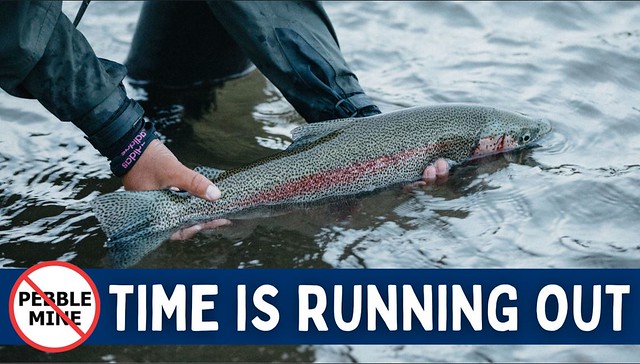
Time is Running Out

From: Meghan Barker and Trout Unlimited’s Save Bristol Bay team

Dear Bristol Bay supporters,

We know it’s been a busy summer- if you’re like us, your days have been filled with fishing and soaking up that warmer weather. But now we are in the final two weeks of the comment period to tell EPA that we support Clean Water Act safeguards for Bristol Bay, and we need your help. Submit a comment here.

Why do we want EPA to finalize these Clean Water Act safeguards? We’ve got just a few reasons why:

Local people want these protections, and have been asking for them for well over a decade. Over 90% of testifiers at regional hearings earlier this summer spoke up in support of these protections for their lands and waters.

The Bristol Bay sockeye salmon run broke the all-time record this season at 78.4 million fish. Bristol Bay is special, and able to support millions of fish because of clean water and healthy habitat.

Pebble isn’t gone yet. The Pebble Limited Partnership might have failed to get its key federal permit in 2020, but it’s vowing to move forward through an appeal process. Most recently, the project received a $60 million investment from an unnamed investor. We are watching them closely, but Pebble is still a threat and will be until we have permanent protections for the region.

Bottom line, we need to be loud in telling the EPA that we support Clean Water Act safeguards for Bristol Bay. Please submit a comment today– I’ve made it so that it takes less than one minute!

Thank you for your support for Bristol Bay!

Posted in Fly Fishing Travel, Oregon Conservation News, Oregon fly fishing links | Leave a comment

FREE FLIES with every purchase at Caddis Fly Shop

IMG_4044

In store and online purchases will receive six free flies with every purchase for the rest of August. Parachutes, caddis, march browns, stoneflies and more will be gifts with purchase for the rest of the month. NO MINIMUM PURCHASE REQUIRED

Posted in Shop Sales and Specials | Leave a comment

2022 Columbia River Summer Steelhead Update

DSC_0437

by David Moskowitz, Executive Director and John McMillan, Director of Science

Overall, things are looking better than expected for wild summer steelhead in the Columbia River basin.

Of course, we’re now entering the dry, hot slog of August and September. The high streamflows of early summer have dissipated. Fish are now pulling into thermal refuge and the rate of migration will slow.

It’s the Dog Days in baseball terms, figuratively and literally.

Will the surprisingly hot hitter in June and July remain hot for the rest of the season? Read the rest of the Article HERE

Posted in Oregon Conservation News, Summer Steelhead | Leave a comment

Fly Organization August 2022

IMG_4019

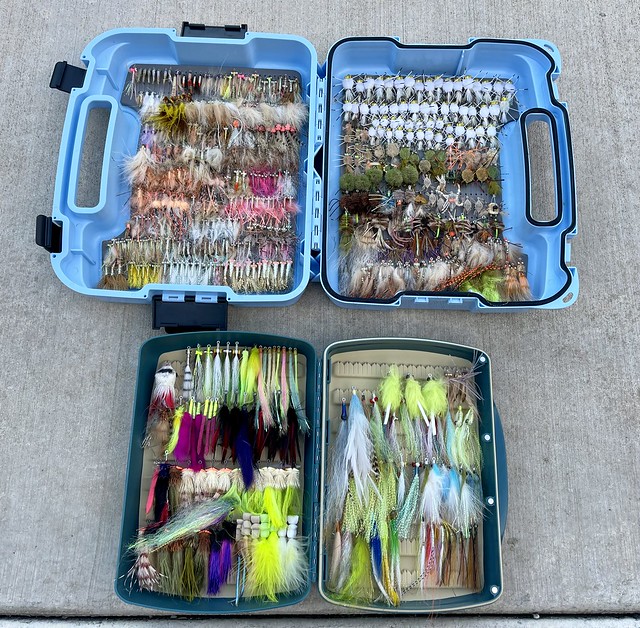
Fly organization is a challenge. Storage solutions and organizational strategies must be considered, and then there is the time it takes. This past Sunday I went for it. Twenty five plus years of collecting saltwater flies, putting them in a “mish-mash” of 13 fly boxes and storing them in a cupboard in my office. I was able to condense them all into 2 fly boxes.

IMG_4020

Step one: I separated all the saltwater flies from all the trout flies, jungle flies and anadromous fish flies.
Step Two: I found a space where I could open all the fly boxes up and examine them all at once. This is critical as to see patterns, colors, sizes that will help organize the flies.
Step Three: I removed like patterns from fly boxes making piles of flies. Example: Bonefish Puff Patterns all in one pile, tan Crazy Charlie style patterns in another, Christmas Island style flies in another.
Step Four: Have one of your children start inserting flies in boxes. Or you may have to do this yourself. I chose the MFC Boat Box, the blue one is pretty cool for saltwater flies. And for larger Tarpon, Snook, Jacks etc flies I chose the Fishpond Tacky Pescador in XL. The beauty of both fly boxes is their capacity and depth. Larger patterns with weed guards, big eyes, massive hooks fit in these boxes with ease.
Step Five: Figure out what to do with all the old boxes you now have. I am thinking of using some of them as “satellite fly boxes” to load on site and put in a pack, vest, etc to carry with you. The others I plan to give away so I reduce the clutter in my office, that was the plan from the beginning… Trout flies next!

Posted in Fly Fishing Gear Review, Fly Fishing Glossary, Fly Fishing Travel | Leave a comment

Oregon Set to Open The Summer Steelhead Season on the Deschutes

Screen Shot 2022-08-12 at 5.03.53 AM

From Flylordsmag.com Will Poston

Oregon’s Deschutes River will have a fishing season for summer steelhead this year, announced the Oregon Department of Fish & Wildlife (ODFW). The summer steelhead fishing season on the Deschutes will open on August 15th. Throughout the last few years, wild steelhead returns have been so low that fishery managers were forced to close many river systems in the Pacific Northwest. The Deschutes, one of the famed steelhead rivers in the PNW, closed its summer steelhead season last year, as runs were abysmally poor. Even as this year’s steelhead runs (and salmon, for that matter) are looking good–especially compared to last year’s historically low runs–managers and stakeholders mustn’t lose sight of what historic runs looked like. In the PNW, wild salmon and steelhead runs are fractions of what they looked like decades ago. Read the rest of the article HERE.

Screen Shot 2022-08-12 at 5.04.19 AM

Posted in Central Oregon Fishing Report, Fishing Reports, Summer Steelhead | Leave a comment

Frontier Steelhead Experience Raffle On Now!

Banner (1)Screen Shot 2022-08-04 at 10.26.50 AM_1

Is there anything better than fishing the epic waters of British Columbia’s Bulkley and Morice rivers during a stunning autumn week in October? How about winning a week-long trip for only $100? You heard us right…Native Fish Society is raffling off a spot – to one lucky winner – for a week of wild fish, primetime fishing joy to the Frontier Steelhead Experience lodges in beautiful British Columbia.

Trip dates are set for October 21-28, 2022 and you better believe that your hosts are ready to spoil you rotten.

PURCHASE YOUR TICKET HERE

The main lodge in Smithers is the starting point for this huge week of adventure. Although there are 12 guests a week, the group splits into two and you are never fishing with more than 6 people all week long. A group of 6 will head to the Morice Lodge and the other 6 will stay at the main lodge fishing the Bulkley Canyons. Mid-week guests will flip flop. This means you will only be sharing the lodge and the river (either Bulkley or Morice) with six people during the week. Needless to say, with some of the largest returns of wild steelhead in the world, an exceptional program, and top-notch guides and staff that are there just for you – how can you pass up this incredible opportunity?!

Raffle tickets are on sale NOW for $100 each, and will close on September 15th. Winner drawing will be held Friday, September 16th at 3pm at our Oregon City headquarters. With only 250 tickets available, and the pent-up excitement to get out of the country, this is the perfect opportunity to spend those stockpiled COVID vacation bucks and buy a raffle ticket or three. The odds of winning are high, and the adventure will be that of a lifetime!

Details: 1 angler / October 21-28, 2022 / Guided steelhead fishing + accommodations
*Does not include travel to Smithers, British Columbia, licensing, or gratuity.
**COVID restrictions may apply to enter Canada

Posted in Fly Fishing Contests | Leave a comment

Early August Willamette Valley Fishing Report

IMG_4005

Cooler water temperatures will be found in the upper reaches of both the McKenzie and Willamette. Best fishing is taking place early and late in the day. Hatches have been minimal with most activity during the coolest parts of the day. Small tan caddis #14-16, Parachute Adams #16-18, Pale Morning Duns #16 have been effective when fish are rising. Larger (#8-12) attractors like Chubby Chernobyls, Hippy Stompers, Stubby Chubby, Fat Angie will bring fish to the surface in fast water. We caught our best fish this Saturday in fast water with large structure near by, banks and shade were also vital.Both the McKenzie and Willamette “mainstems” have had recent “bumps” of water from tributaries and dam releases. These water releases have helped keep water levels and water temperatures at decent levels and we are very lucky to not be dealing with “hoot owl” fishing regulations.

Steelhead fishing has been better than last year on the Middle Willamette with most fish being caught closer to Dexter Dam, MOAL Leeches, How Bo Speys have been taking fish. Speaking of Steelhead all indications are that there will be a season on the Deschutes this year. The North Umpqua is getting plenty of love this year and fishing seems about as tough as ever. Anglers can expect to put in their time to have success on the North.

If you have time to sign up for our Citizen Science Project and enter some water temperature data we would love to add more info to the project here: https://citsci.org/projects/hot-homewaters-taskforce All waterways are welcome.

Good Luck out there!

Posted in Fishing Reports, McKenzie River, Middle Fork Willamette River fishing, North Umpqua River Fishing Reports | Leave a comment

Citizen Science Project Needs Your Help – Hot Homewaters Taskforce

RussRicketts_RiverSnorkeling

CitiSci is a super cool application supported by Natural Resource Ecology Lab (NREL) at Colorado State University, CitSci now hosts 1146 projects that have contributed more than 1606605 data points to answer local, regional, and global scientific questions.

We would love have our local fishing community contribute to data collection in Oregon.

How to participate? Download the CitiSci App: Icon looks like this.
Screen Shot 2022-08-04 at 6.15.44 AM

Collect water temps wherever you fish!

Hot Homewaters Taskforce aims to monitor stream temperatures across Oregon

Goals:

1. Determine how hot streams get during summer.

2. Provide temperature data for streams that aren’t currently monitored for temperature.

3. Provide data to analyze land management.

Tasks:
Collecting temperature from streams, as close to the main flow possible while staying safe.

Get Started:
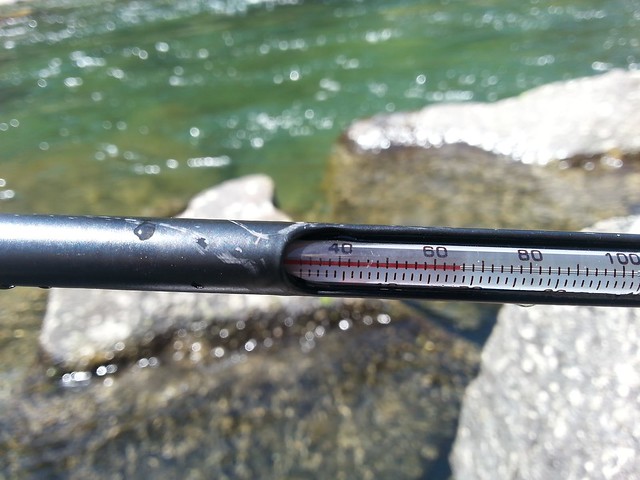
Grab a stream thermometer and visit your favorite stream! Taking regular temperature measurements in the same location at different times of the day throughout the year will provide the most useful data.

Posted in Oregon Conservation News | Leave a comment