The Corvalis Trout Unlimited Chapter the “Bluebacks” are Hosting a Fly Fishing Film tour event coming up later this month. Details on the event are attached below.
In this video, Simon ties a proven pattern for monster Lahontan Cuttroat Trout in Pyramid lake. It is that time of year where anglers all over the world are gearing up with dreams of catching a massive Lahontan Cutthroat Trout while being perched on top of a ladder. Although some would argue that bringing a ladder to fish from shore is an unnecessary piece of equipment, many will agree this fly is indeed necessary, and an advantage to have in your box.
This fly is fished on a sinking line often sink rates 3-7 either full sink, or multi density. It behaves a lot like a traditional booby fly where on the strip the fly sinks and at the pause it floats back up. The Popcorn Beetle is often paired with a small streamer like a wooly bugger, or a balanced leech. The fly doesn’t necessarily imitate anything they eat, but it is well known that this fly and its action drives those giant Cutthroat nuts. They’re a quick and easy tie, which is perfect when you’re in a time crunch before your trip!
The fly is tied on a Gamakatsu B10S in size 6, although it can be fished in sizes 4-12. This hook has a wide gap and is phenomenal for aiding in more hookups. A marabou tail ads more action to the fly, but it is often omitted; having some with tails, and some “tailless” is to your advantage. Lastly, the foam featured here is the new Hi-Float foam from Hareline has larger cells of air and higher durometer which means it floats higher and is more durable to stretching, pulling, and the pressure of the thread. The foam comes in 2 and 3mm and this fly in particular uses 3mm. Using 2mm would be more appropriate for smaller sizes like 10 and smaller.
Stopping by your local fly sh0p to get water conditions, fly recommendations and information on tactics is still the very best resource for the angler. Chatting with a fly shop employee who was on the water recently will give you the best understanding of hatches, timing and location. We have been writing fishing reports on OregonFlyFishingBlog.com since 2008, so a quick search of fishing reports or specific rivers on OFFB will also be useful.
Online Resources:
Oregon Levels is a super useful site for a quick check of water levels for rivers in the state of Oregon. I use this site almost daily to check current and past river levels. This past trend helps me determine what to expect on the day I head out.
The screen shot above is from Oregon Levels and gives both a gauge height and a CFS (cubic feet per second), both are useful. It pays to check these levels frequently to understand what the numbers really mean. For example, the only, “low” reading you see is on the Middle Fork of the Willamette at Oakridge. This calculation is basically the release of water at Hills Creek Dam. 400 CFS is about as low as you will see it. It’s really nice for wading and really skinny for boating from the top slide near the dam to Greenwaters Park. The, “Below NF-MF” refers to the Middle Fork after the North Fork of the Middle Fork enters it, basically the volume of the river that you would see at Black Canyon Campground and the inflow to Lookout Point Reservoir (graph below.) This number is greatly affected by the North Fork of the Middle Fork of the Willamette. Late winter and spring flows from the North Fork can really make the river jump so keep an eye on the “Below NF-MF” as well. A good range of fishable levels for the Middle Fork at Oakridge are from 400-1200cfs, from Hills Creek or “Oakridge” and 1500-4500cfs “Below the North Fork.” 4500cfs is big water and wading will be limited but if the river has been stable for while we find the fishing to be just fine.
Below is another screen shot from Oregon Levels, this one gives the key data for the McKenzie. When you click the CFS number, a graph expands so you can see the past 10 day trend (following image below).
Starting from the top of the screen shot is, “Above Cougar,” is the inflow to Cougar Reservoir. Anglers generally want to see this number pretty low for the best wading opportunities. 200-800cfs is a nice range, but the time of year is also important when speaking about the South Fork above Cougar. Early season runoff can be really cold so we look at this one a little later in the year.
The next reading, “SF McKenzie nr Rainbow,” indicates the flow leaving Cougar Dam, or the South Fork below Cougar Reservoir. The South Fork can be a significant contributor to the overall flow of the main-stem of the McKenzie, as is the case at 2700cfs. The South Fork is not a “boatable” river and waders will have a much easier time when flows are between 300-800cfs.
The next line “McKenzie River” “Trail Bridge” refers to the very top of the McKenzie, this is the water level from the dam release at Trail Bridge Reservoir. This number tends to be lower in winter as runoff is curtailed with cold temps in upper elevation. Spring flows can increase the outflow but the river remains clear. As the season progresses, June-October, there is a steady decline of water down to sub 600cfs. The lower the river is in this upper section the easier it is to wade. The elevational drop from Trail Bridge to McKenzie Bridge is considerable so the river is fast up here regardless of flow. Gorgeous pocket water and beautiful fish occupy this section but access is tough as the banks are tree lined and the fast flows make it difficult to get around. The McKenzie River Trail does follow the river most of the way and anglers can jump off the trail to find fishable water.
The “McKenzie River” at McKenzie Bridge includes numerous tributaries below Trail Bridge including Horse Creek which typically kicks in a decent amount of water especially in spring. You can see how the water can start to add up and we have yet to get down to the dam release from Blue River. The McKenzie at Vida includes all of what we call the, “upper river.” This is the majority of the McKenzie and the gauge I use the most. The next line, “Leaburg Dam,” is basically the same as Vida as they are super close to each other.
Next in the table, “Walterville,” flows are actually less. How can this be? Well, the Walterville canal diverts water for a minor hydro project and then kicks it back into the McKenzie between Hendricks and Belinger Boat landings. Hence the reading at “Springfield” of 6490 in the table. At this point, you have virtually all the water that flows to the Willamette north of Eugene. Some reliable flows to fish and float the McKenzie are 1-3ft in terms of gauge height at and 1500-6000cfs at Vida. Of course, stability is key, so I don’t love fishing the river if it’s rising from 2000-4000 in a given day. It’s likely that your results will be poor. At 6000cfs you need to be really careful as the water is high, cold, and not something you want to be swimming in at anytime of year.
Northwest River Forecast Center is a super useful site for examining potential changes in flow. I use this site a lot in the spring and less during really stable times. We have a prime example currently. As you can see the past 10 day trends have been on the decline (graphs above). As a matter of fact, this Wednesday and Thursday nymphing was excellent on both the upper and lower McKenzie and Middle Fork of the Willamette. Anytime you have this downward trend in water, you have a good shot at solid spring fishing. However…. (observe graphs)
You get to the graphs above on the NRFC site by searching a given river and then clicking down to each gauge site. Not every gauge has a predictive hydrograph, but we can certainly make some deductions by using this info. According to this graph, the McKenzie would definitely be out 29 Feb to March 3. The Willamette must jump on the Middle Fork, North Fork, and Coast Fork in order for the water increase at the Eugene gauge. We can assume a challenging week ahead for fishing around Oakridge. The exception might be the release right at the Hills Creek dam. Of course you would be able to check that gauge before you make the trip. Anglers looking to trout fish next week in the Willamette Valley should probably head east to the Metolius, Fall River, and the Crooked… I will add, that these predictive hydrographs tend to be exaggerative. Meaning, checking them each day during wet weather in your area can lead you to find a given river returning to shape sooner rather than later.
Guided Fly Fishing Trips. The Caddis Fly Angling Shop has been running guided trips on Willamette Valley rivers since 1975. We provide an instructive guided trip that aims to help you gain knowledge of not only our area, but of specific tactics that will help you catch fish anywhere. Book your trip by calling the shop at (541) 342 7005.
Introduction to Fly Fishing Courses. Since 1975, The Caddis Fly Angling Shop has provided casting instruction to burgeoning anglers. Our 6 hour course will hone your casting skills, speak to tackle and knots, and give you an idea about ideal gear for your pursuits. Zero experience required. Call (541) 342-7005 to book your spot. Click here to see the 2024 schedule.
McKenzie River Map with Hatch Chart. We have developed a map with river access via walk and wade, boat launches, and hatch charts for the McKenzie and Middle Fork of the Willamette. Call or stop by The Caddis Fly in Eugene to grab a map.
Shuttle Services on the McKenzie River. For 2024 The Caddis Fly Angling Shop and Caddis Fly Guide Service recommend “McKenzie River Shuttle Service” Casey Chafin can be reached at (541) 912-0044. For the Middle Fork of the Willamette Dan Craft, Dan can be reached at (541) 600-5094.
In this video, Simon ties a killer attractor flats fly. This fly would work great anywhere in the caribbean for Bonefish, Permit, and anything else cruising the flats. It is tied using Hareline’s new painted brass eyes. The tan painted brass eyes work perfect for shrimpy or crabby flats flies matching the body colors. This fly also features some polar chenille legs for additional movement. This fly would also work great for Pacific Surf Perch on a more clear day where the fish will key into a smaller, more delicate pattern. Tying these in several different weights is helpful especially when fishing flats as the tides change. Having some unweighted, some with bead-chain eyes , some brass, and some lead will help you cover the board for all tidal situations. Colors and size can be adjusted based on your needs as well. Tie some up and send us some photos of what ate this fly!
In this video, Simon ties his secret winter nymph that he doesn’t leave home without. The Bubble back BWO is tied to imitate an ascending Baetis nymph surfacing to hatch and is one of his most productive BWO nymphs. When mayfly nymphs get ready to hatch, their exoskeleton fills with gases and they rise to the surface. Sometimes they deliberately swim, sometimes they uncontrollably float to the surface. Regardless, their bodies transform and get a lucent or “shimmery” appearance.
The glass bead bubble imitates this perfectly, and is also suggestive of the dun breaking through the old skin. The body is thread, wire, and resin, so it is durable, and the glossy finish helps drive the point home that this is a mature Baetis nymph that is hatching. The legs are Flouro Fibre, which is used on Charlie Craven’s Juju Baetis, it makes great legs on especially small nymphs. This fly excels at getting picky fish to eat, especially those older, smarter fish. Tied on a stout Ahrex 563 #18, it is strong enough for when that big fish decides to eat. For a small fly, it is especially good at putting large fish in the net. It is also light enough to tag behind a small dry fly.
The general blueprint of this nymph can be sized up or down and colors changed as the seasons change to imitate different mayflies. This is a fly you don’t want to leave home without this time of year, especially right now as we’ve been seeing Baetis hatches mid day. Tie some up this one can be a day saver!
In this video, Simon ties a proven Bluewing Olive (BWO) Emerger. Bluewinged Olives generally hatch on cloudy, overcast days. Because of the cooler, sometimes wet conditions, it can take them longer to emerge and dry their wings. Due to the conditions, the insects also often hatch in a short window and there are a lot of bugs. The fish key in on this and particularly target the insects breaking free from their shuck. Fishing this fly is so productive because it imitates the easy meals that the trout key in on when there are an abundance of naturals on the surface. Times like this its important for your fly to stand out.
This fly uses a newer dubbing from our friends over at Semperfli called Kapok dubbing. It comes from the seed pods of a tropical plant and is extremely hydrophobic. Semperfli claims it can suspend 30 times its own weight! We like it because of how tightly it dubs for small dry flies; this helps you reduce bulk and create a natural taper on the body. Snowshoe rabbit is naturally hydrophobic, and sheds water quickly. Due to those animals having to live on snow for most or at least a portion of the year, the fur on the bottoms of their feet is extremely hydrophobic. This makes for a great dry fly wing material.
In this video, Simon ties up a killer golden stone pattern which uses several new products that hareline released this fall. The super buggy looking material is called mohair scruff and it makes for super buggy nymphs, chenille for buggers, or a quick chenille for balanced leeches. It comes in several sizes, this particular pattern uses the small and medium sizes. Mottled slim skin is another new material from hareline which comes on a sheet and is a lot like thin skin. It works great for exoskeletons and wing cases. Gold Sones make up a large part of our local trout’s diets. Many caddis and mayfly nymphs only live for a year or less in their nymph stage. This means during the winter, most of those insects are very small because their parents made up this past summer’s hatch, this means the bulk of winter nymphs are still very young. Stoneflies can live several years in their nymph stage, making them great searching flies year round. Because of their life cycle, they offer a substantial meal any time of the year, there are very small gold stones, and large ones in the river simultaneously. This fly is a great option to fish in tandem with a small fly to help get your smaller nymphs down. Colors can be changed and sizes can be tweaked depending on where you are fishing. This one is a proven winner, tie a few up and let us know how you do.
In this video, Simon ties a flashy take on the classic Fall Chinook fly called the Comet. When the water is clear, the general consensus is that Fall Chinook will eat surprisingly small flies for such a large fish. This is often considered a low water fly, especially if you size it down. Chartreuse and hot orange are popular colors used for comets, and other fall chinook flies of the like. This Comet variant uses some of the new materials from Hareline that came out this fall. Small Black Legged Squishenille offers a squishy chenille which is different from standard chenille. The new Hareline Badger Saddle Hackle offers a saddle feather with a dark center which compliments the dark chenille nicely. Both of these new materials come in several sizes and colors to mix and match. For salmon, it helps to have some different sizes and colors to try to see what is working on a given day. This fly can certainly be sized down or up and colors changed depending on where you are fishing. Tie some up and let us know how they work!
1 Lucky Angler, 1 Epic Week on the Babine River this Fall for just $100!
British Columbia’s Babine River is the hallowed homewaters of some of the largest wild steelhead swimming on the planet. At the Babine Steelhead Lodge, their goal is for you to have the fishing adventure of a lifetime – which you could experience for only $100!
From the minute you arrive at the lodge, you will experience first-class fishing and accommodations. Not to mention the Babine River is considered one of the last unspoiled rivers in British Columbia, making its pristine beauty the ideal setting for a memorable wilderness getaway.
Trip Details: 1 angler / Steelhead Season 2024 – dates to be determined / Guided steelhead fishing on the Babine River, hosted by Tom Derry
Don’t miss this week-long dream trip, including fishing with some of the best guides around, delicious gourmet dining, and tranquil river-side lodging – all of which could be yours for just $100!
We’re talking about your best (and most economical shot) at some of the incredible dry line (even dry fly) wild steelhead fishing in the world.
That’s right, the one and only Babine Steelhead Lodge has generously donated a week of steelhead fishing on the Babine River for one angler to support the Native Fish Society’s work reviving abundant wild, native fish across the Pacific Northwest.
How does it work? Native Fish Society is selling 250 tickets for $100 each. We’ll draw the winner on March 1st, and then the lucky angler will get ready for the time of their life!
Trip Includes:
World-class guided fishing on the Babine
Cozy accommodations at the newly renovated lodge
Gourmet meals prepared by the talented Lodge Chef and staff
Full bar, beer, and wine
Not Included:
Does not include travel to Smithers, B.C., taxes, gratuities, or licenses.
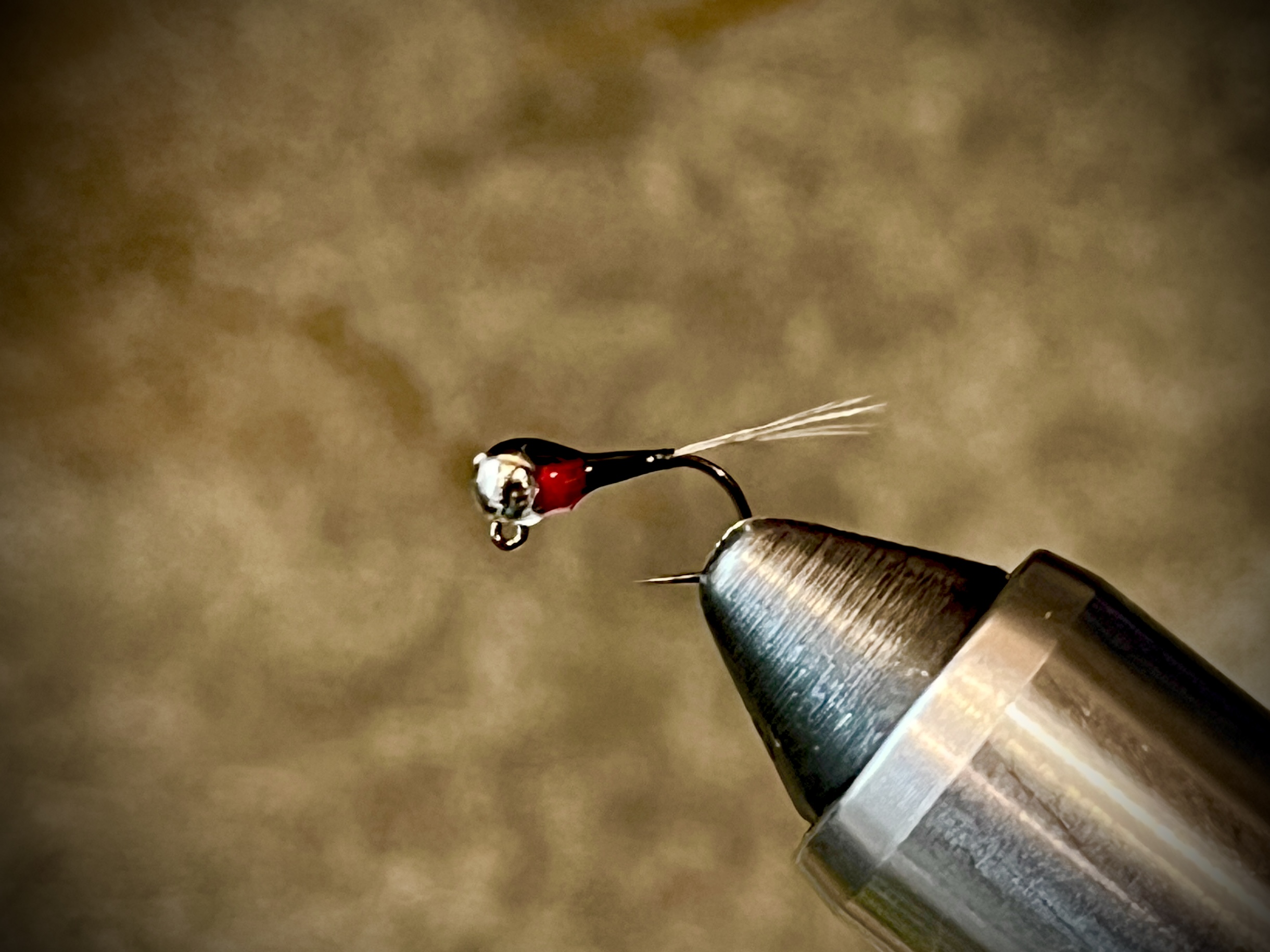
In this video, Greg ties a simple but very effective perdigon fly in black & red.
A small fly pattern designed to drop quickly, this fly can be tied in different colors and sizes to mimic just about any mayfly out there as well as midges.
Greg uses them primarily as a tag fly on an indicator setup or euro nymphing rod and ties them in sizes 16-20. Use them as a dropper fly off a dry fly too.
Last summer he had a client from the Perdigon area of Spain who tied his own and knocked it out of the park fishing the Tuolumne River.
A great fly pattern for trout and a great pattern for the beginning fly-tier. Give them a try!
A N.O.A.A. IMAGE SHOWS JUVENILE CLACKAMAS RIVER COHO AND CHINOOK, SALMON SPECIES THAT WILL BENEFIT FROM RESTORATION WORK COMING TO THE WILLAMETTE WATERSHED. (NOAA)
“This funding is a true lifeline to restoration practitioners who have been working to recover Endangered Species Act-listed Upper Willamette River Chinook and steelhead,” says NOAA Fisheries Biologist Anne Mullan. “These species are on the downward trajectory, but this funding gives us hope.”
Multiple major dams on the Willamette River tributaries stand between salmon and steelhead and their historic spawning grounds in the upper watershed. The Office of Habitat Conservation’s Restoration Center and its partners are restoring degraded habitat in the lower watershed. NOAA Fisheries’ West Coast Region works with the U.S. Army Corps of Engineers and others to provide passage for Chinook salmon and steelhead between the lower river and their upstream spawning habitat.
Restore floodplain and side channel habitat to provide spawning and rearing habitat for salmon and steelhead
Remove multiple barriers to fish passage including a dam on a Willamette River tributary
Reduce the risks of flooding, forest fires, and drinking water contamination
Provide jobs, educational and workforce development opportunities, new accessible greenspace, and recreational activities to local community members
In addition to helping Upper Willamette River Chinook and steelhead, the work will benefit other listed salmon and trout species as well as Pacific lamprey, which are important to Native American tribes.
“What’s exciting about this large influx of funding is that our partners are able to implement multiple large- and small-scale projects all at one time,” says Lauren Senkyr, Marine Habitat Resource Specialist for NOAA. “In the past it might have taken 5 to 10 years to get all of this work done. We’re pushing the fast-forward button on restoration and recovery.”
NOAA staff also help partners review project designs and monitoring plans and speed up permitting and regulatory compliance processes so they can start construction sooner.
Historically, hundreds of thousands of Chinook salmon and steelhead returned to the Willamette River Basin in Oregon to spawn. Fish counts at the Willamette Falls fish ladders show those numbers have plummeted. The current 5-year average annual return is about 30,000 Chinook and 3,000 steelhead. Aside from the major dams, pollution, climate change, and habitat degradation caused by development are threatening the survival of migratory fish.
“Salmon and steelhead move between streams, rivers, estuaries, and the ocean, depending on their life stage,” says NOAA Marine Habitat Resource Specialist Larissa Lee. “In each habitat they need places to hide and forage and certain temperature or chemical cues to tell them to move on to the next stage. It’s difficult to control the ocean, but we can improve conditions on land by giving them access to high-quality habitat for spawning adults and rearing juveniles.”
Why Restore Threatened Species?
Willamette salmon and trout stocks once supported robust fisheries that benefited commercial fishers, the tourism industry, and local communities. Salmon and trout also hold cultural significance with local tribes. “These species have been important to the culture and diet of the people of the Pacific Northwest for thousands of years,” says Megan Hilgart, Marine Habitat Resource Specialist for NOAA. “There’s a really strong commitment to try to get back the subsistence-level fisheries for the tribes.”
In addition, salmon bring nutrients from the ocean deep inland, supporting entire forest ecosystems. Pacific salmon species die after spawning. Their bodies provide food for species ranging from black bears to Douglas fir, which absorb nutrients from decaying fish through their roots.
The restoration work itself provides jobs and educational opportunities, helps mitigate flood and forest fire risks, and will invite the community back to rivers and waterfront parks.
Over the coming months we will be posting a series of stories about each project. Stay tuned to see how NOAA and its partners will help restore the health of rivers and forests in the Willamette Valley for both wildlife and people.
The Mckenzie River Discovery Center (MRDC) is holding two riverboat building classes in April: the McKenzie River Drift Boat (April 22-26), and the Diablo Canyon (April 29 – May 9), a re-creation of Keith Steele’s first Colorado River dory for Martin Litton in 1962. Both workshops will be at the MRDC site where Keith Steele built both boats. Teaching the 5-day McKenzie boat workshop is the popular Jayson Hayes, Hayes Custom Wood Boats. Teaching the 10-day Diablo workshop is the dynamic duo of Brad Dimock and Cricket Rust, Fretwater Boatworks. Go here for more information and registration details – https://www.mckenziediscoverycenter.org/product/mckenzie-river-drift-boat-building-class/ and here: https://www.mckenziediscoverycenter.org/product/build-the-diablo-canyon-the-first-colorado-river-dory/
In this video, Simon ties a more flashy version of the famous prince nymph. It is tied on a new hook from Ahrex called the FW563 “Short Nymph”. This hook is extremely stout making it a great candidate to tie a small attractor nymph used for nymphing for winter steelhead. It uses some new materials from Hareline; one being their new Synthetic Peacock Chenille. Which offers a more durable and colorful option compared to natural peacock herl. This fly would be great nymph for steelheading when the water is low and clear, and it would be a great half-pounder fly on the Rogue as well. For you Midwesterners doing steelhead fishing in the great lakes tributaries, this fly would be killer. This would make a great trout nymph as well tied on a more tame hook and sized down a bit. Sizes and colors can be substituted to fit your fisheries needs. Tie some up and let us know how you do!