Trout Unlimited Regional Meeting Update

Last weekend, the Western Regional Meeting for Trout Unlimited was held at the Red Lion in Spokane, WA. As a first-time attendee of a regional meeting, the chance to meet TU staff and grassroots leaders from around the Western US was nothing short of inspiring. Over 70 chapter presidents, council chairs, and National Leadership Council reps made it to Spokane to reconnect and learn more about how to become a better grassroots volunteer for coldwater conservation.

tu meeting

Rob Masonis, Vice President for Western Conservation, gave an overview of Western TU, with the takeaway that TU is growing exponentially, and doing more for fish than ever before. Western TU staff positions have doubled since 2008 and Rob expects the organization to continue growing in the future.

Following Rob’s talk, TU Staff put on a number of informative and useful breakout sessions designed to help chapter leaders increase membership, recruit and train board members, attract diverse audiences to TU’s mission and goals, and plan and fund restoration projects. We also heard a number of updates on projects across the West, from Yellowstone Lake native trout conservation to TU’s role in taking down the Elwha dams. In all, the weekend was a great chance to connect with like minded conservationists, get caught up on TU’s activities, and gain inspiration and ideas to take home to our local chapters.

In the most recent issue of Trout, TU’s quarterly newsletter, President Chris Wood called on current TU members to resolve to double the organization’s membership over the next five years. As supporters of Trout Unlimited and all things coldwater conservation related, we urge readers of this blog to become members of TU and get involved with your local chapter. In the Eugene area, contact Karl Mueller, President of the McKenzie River and Upper Willamette River Chapter at onemuleteam@yahoo.com. Folks in the Corvallis area can contact Kyle Smith, President of the newly formed Blueback TU Chapter at kms2159@gmail.com.

Posted in Oregon Conservation News, Oregon Fly Fishing Clubs and Events | Leave a comment

Senyo’s Dr. Feel Good Steelhead Fly Tying Video

Greg Senyo of Steelhead Alley Outfitters demonstrates how to tie his Dr. Feel Good Steelhead Pattern. In our previous post Greg showed how to mix EP Brushes to get just the right bulk and flash for his pattern. Change up colors to suit your river as necessary.

download-2

Senyo’s Dr. Feel Good

Thread: Hot Pink Ultra Thread 70
Shank: Pink 25mm Senyo’s Articulated Shank
Loop: Purple Senyo Intruder Wire
Butt: Hot Pink 1.5 Foxy Brush
Wing: Pink/Purple Shimmer Fringe
Silver Speckled Flashabou
Purple Flashabou
Body: Hot Pink EP 3” Foxy Brush twisted with
Silver Sparkle Brush (see video)
Eyes: Large Pink Real Fake Jungle Cock eyes
Collar: Natural Guinea

Posted in Fly Tying, Fly Tying Materials and Supplies | 1 Comment

Mixing Dubbing Brushes with Greg Senyo

Great Lakes Steelhead guru Greg Senyo demonstrates how to use Enrico Puglisi dubbing brushes to make a custom color version for Steelhead flies. By mixing a Foxy Brush and a Sparkle Brush Greg creates a unique brush for his Dr. Feelgood pattern.

Posted in Fly Tying, Fly Tying Materials and Supplies | 1 Comment

Winter Steelhead Photos

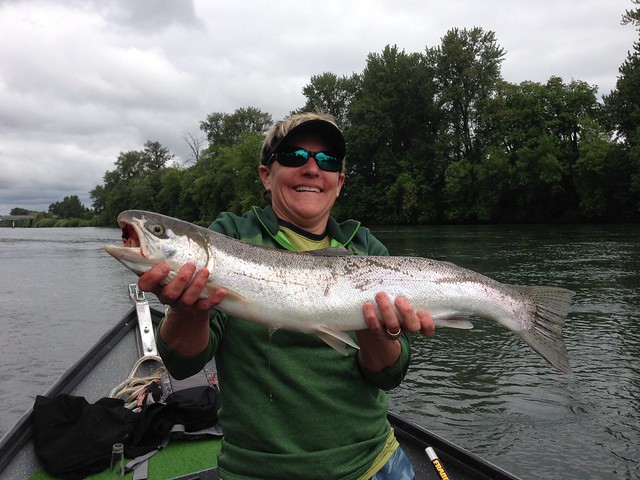
It’s about time to call it a year on most of Oregon’s Winter Steelhead streams. It’s time to give the fish a little alone time for future generations. As the photos below suggest the low water and excellent runs made for some happy anglers all the way up till the end of the season. Early indications for our Spring and Summer Run Steelhead on the McKenzie and Willamette point to good numbers and early returns.

DSC_0138

winter steelhead ty on the umpqua

winter steelhead ty holloway caddis fly

Posted in Fishing Porn | Leave a comment

March Brown Hatch Best in Years on the McKenzie and Willamette Rivers

upload

Clay and I floated the lower Mckenzie on into the Willamette, from Armitage to Cross Roads ramp this Tuesday. Fish were rising from the start of our float around 10am. I had to pry the indicator rod from Clay’s hands and quickly insert the Sage Circa 589-4, after that it was all dry all day. We did a little swinging of flies but by far our best luck was with dry flies. Caddis flitted about from the start, and as the sun won out over cloud cover the caddis grew thick. We stopped on numerous riffles with fish up and feeding. Best paterns were Parachute Adams, Purple Rooster, March Brown Parachutes and Peacock Caddis. As the sunshine of Tuesday afternoon intensified so did the caddis hatch. The caddis hatch became so intense in spots that we moved away from the spot in search of fewer bugs and less selective fish.

The weather looks to have shifted into clouds and showers for the next week or so, a perfect storm for the angler in my mind. With low snow pack and low reservoirs in the Willamette Valley water conditions are likely to remain ideal despite rainfall. Warm rainy days are without question the very best for March Brown hatches. The adult and emerging insect becomes “stuck” in the film and on the surface much longer, giving the fish a great opportunity to eat them. The Caddis that have hatched and will also be available but not as intense as on bright warm days. Fishing will be excellent!

Mckenzie willamette confluence float

Posted in Fishing Reports, Lower Willamette, McKenzie River | 5 Comments

Samurai Steelhead Shank Style Fly Tying Video

The Samurai Steelhead Fly employs proven materials like UV Polar Chenille, Marabou and a Rabbit. The unique aspect of the fly is the “waggling” rabbit strip tied near the front of the fly that stays on top of the fly while the eyes keep the pattern riding correctly. The Samurai is an excellent Steelhead pattern both in Summer and Winter.

Samurai steelhead pattern

Samurai Steelhead Shank

Hook Shank: Gamakatsu L11S-3H #2 or # 4
Thread: U140 Black
Wire: Senyo’s Intruder Wire
Body UV Polar Chenille Pink
Wing: Two Tone Rabbit Strip Purple Hot Pink
Hackle: Purple Marabou
Collar Hackle: Pink Guinea
Eyes: Lead or Brass Dumbells

Posted in Fly Tying, Fly Tying Materials and Supplies | Leave a comment

Outcast’s New Frameless Boat: Fish Cat Scout

Check out the newest stealthy craft from Outcast Sporting Gear. The Fish Cat Scout gets you on the water with ease and allows for comfortable fishing on rivers or lakes. The Scout is 7ft long and only weight 35lbs. Portable, stable and limitless access! Watch out fish.

Posted in Fly Fishing Gear Review | Leave a comment

Spring Rod and Wader Sales: Free Boots with Waders and Free Reels with Rods

Need a new five weight outfit for the Spring fishing season? How about a new set of waders for a Fathers Day gift for the fly fishing Dad in your life.

It’s a great time to buy Redington Sonic Pro and Zip Front Sonic Pro Waders at The Caddis Fly. With the purchase of a pair of Sonic Pro Waders you will receive a FREE pair of Felt Soled Skagit River Wading Boots.

Skagit river felt wading boot caddisflyshop.com

When you purchase a 9ft 5weight Redington Voyant Fly Rod you will receive a free Redington Surge Fly Reel. Purchase a fly line and we will load on backing and a leader no charge. You or your gift recipient will on the water in no time.

Have a trip planned to catch big fish this Spring or Summer? Need a solid rod that will handle the Salmon of Alaska or the Tarpon and Barracuda of the Keys? Have a look at the Redington Predator Fly Rod. We are giving away a FREE Redington Surge Fly Reel with every Predator Fly Rod.

All specials limited to stock on hand.

redington surge fly reel caddislfyshop.com

Posted in Shop Sales and Specials | 1 Comment

McKenzie and Willamette Continue to Fish Well

mckenzie river fly fishing caddis fly

The weekend forecast is looking great for weather and water conditions on our local rivers. Be prepared for March Browns around 2pm and blizzard caddis hatch’s to develop as the days warm. Swinging traditional wets like Cahills, March Brown Wets and emergers continue to produce.

Nymphing tactics using Mega Prince, Golden Stone Patterns, Caddis pupae and small Pheasant Tails have been working well throughout the day.

Posted in Fishing Reports, Lower Willamette, McKenzie River, Middle Fork Willamette River fishing | 2 Comments

Echo Airflo Review – New for 2013 Rods and Lines

Review of new products and revised reintroductions for 2013 from Rajeff sports

Echo Dec Hogan II (new): They took the immensely popular first generation Dec-O and went back to the shop to redesign mandrels, tapers & cosmetics.  Not just for looks.  More concentrated rod series (6 wt; 6.5 wt; 7 wt; and 8 wt).  Yes really, a genuine 6.5 wt.  Check out the amazingly broad grain wt window each of these rods accommodates.

Echo PRIME (new): OMG.  One piece fly rods at 8 ft 10 in.  These rods really amaze me, but that’s just me.  Anyone who fishes from boats with shooting lines or integrated shooting heads should check out these rods.  Time will tell if this new offering is successful, but my experience with the rods in 100% smile producing.

Echo PIN (new): rumor has it that not every steelhead angler fishes intruders on the swing with Spey rods.  Hummmmm.  Just in case, Echo introduces a really fine rod for use with Centerpin reels.  If you know what this terminology means, were done. If not, just imagine a fly reel that has zero drag, a spool with more mass (thusly inertia) than a traditional fly reel.  Now load this reel with mono instead of fly line.  Now add a float (space-age strike indicator), weight, and a weighted nymph or egg pattern.  Many fly anglers sneer at this means of steelhead fishing.  Few have tried this method of fishing to the extent that they appreciate the finesse involved.  Personally, I do not know anyone who fishes indicators, and certainly would not associate with anyone who fishes Centerpin reels. To do so is simply unthinkable.

Echo Solo Complete fly fishing outfits (new): Take the solo rod, reel, an airflow line, backing and leader, add a rod & reel case – there you have it.  This new long rod offers an excellent no-hassle, entry level, all occasion gift or spare outfit.  There are some great Redington and Sage outfits on the market, and this one by Echo is a solid competitor.

Echo ION Fly Rod (Cosmetic improvements): key features include slightly lighter handle & reel seat; far nicer rod shaft color; and exactly the same rod shaft composition and action – tried and trusted.  Nicer cosmetics overall, same performance, and same price.

Echo Carbon Fly Rod (Cosmetic improvements): retain the rod shaft, lighten the handle and reel seat, and you have a polished Carbon that stays rock solid at the same thrifty price point.

Echo SR Switch Rod (Cosmetic improvements): This has been an immensely popular rod already, based purely on its performance, in spite of a most unattractive rod shaft color.  Timmie Rajeff finally took action and has built this rod for 2013 to a dark slate gloss, and simultaneously reducing handle and reel seat weight.  The new SR still fishes great, and just looks a lot nicer.

Classic Spey (new): Whoa.  At a shockingly low price of $270, Rajeff has brought a very decent, fully warranted Echo Spey rod within reach of every fly angler.  One of these three Echo Classic Two Handers will handle the vast majority of Spey fishing conditions, at a price that allows one to assemble rod, reel, line, and Polyleader into a package under 5 bills.  Spare outfit, beginner outfit, or gift, this is going to be a winner.

Echo Classic Spey Combo Outfit (at under five bills, this is a Caddis Fly Exclusive): Start with an Echo Classic Two hander, add ION reel, backing, Airflo  fly line and a Polyleader. Whoa. Spare outfit, beginner outfit, or as a gift, this outfit is going to be a winner.

ION Fly reel sizes (new options): The 7/9 and the 2/3 join the existing series of solid performance-value Echo fly reels.

New Airflo Fly Lines .: Tropical Sniper; UltraSpey; Tropical Clear & Tropical Clear Tip.

All of these new or revised Echo/Airflo products are available now.

Jay Nicholas, January 2013

Posted in Fly Fishing Gear Review | 4 Comments

Victory in McKenzie Bridge: Goose Island

News from Save McKenzie Bridge:

Thanks to you and about 5259 other signors of the “Goose Project” petition, the court has ruled that the request set forth in our petition for an Environmental Impact Statement was warranted and just! Effective now, the Goose project at McKenzie bridge has been stopped. It may not be stopped forever, the USFS may complete an EIS and start over (or they may not) but not without the input from the public that we sought to provide. We now have an opportunity to make our voices heard and to shape this project with a unified voice.

Upper McKenzie 2009

The Goose project, if implemented, eliminated over 1200 acres of potential wilderness…pristine, healthy forest land without roads, undisturbed and unspoiled by human development.

The Goose project, if implemented, destroyed critical habitat needlessly.

The Goose project, if implemented, logged in sensitive watershed areas, despite a law that requires such logging to be beneficial to the riparian area.

The Goose project, if implemented, scarred the landscape for decades to come and destroyed the peaceful nature of McKenzie Bridge by running some 9000 log trucks through town.

If the Forest Service chooses to proceed with the environmental impact statement, I hope you will join us once again to make our voices heard loud and clear. The loss of potential wilderness, habitat and water quality is worth fighting. I’m very proud to say that together we all made a difference. Stay tuned as we make sure we don’t lose ground going forward.

Once again…THANK YOU ALL!

Jerry Gilmour
Save McKenzie Bridge

Posted in McKenzie River, Oregon Conservation News | Leave a comment

The Biggest Party for Wild Fish in the Universe

Every April the Native Fish Society, 300 wild fish fervents, and 100 generous donors come together under the big top at Montgomery Park in Portland, OR to create the largest wild fish fundraiser/party in the universe. This year’s auction theme is Homewaters Reflect Hopes; as we acknowledge the recovery of wild salmonids that has begun in so many of our Pacific Northwest watersheds. This year’s auction will feature a delicious dinner by Food in Bloom Catering, beer by GoodLife Brewing, and wine from Lange Estate Winery, Yamhill Valley Vinyards and Z’ivo Wines. We hope to see you there!

Registration
Tickets are on sale for $100. You can register online or, if you prefer, we can register you over the phone by calling our Oregon City office at 503.496.0807.

2013 Auction Items
The Native Fish Society Benefit Banquet + Auction features over 150 items auctioned in three different categories: live, super silent and silent. Our silent and super silent items are auctioned off first, during a two hour silent auction. Super silent items are distinguished from silent items by their increased value and/or rarity. Typically, there are 125 items in these two categories.

24 Live items will be auctioned off during the live auction portion of the night (including a guided Upper-McKenzie trip donated by the Caddis Fly Shop) , concurrent with a delicious dinner, award ceremony and festivities.

Over the coming weeks NFS will be updating this page with this year’s auction items — don’t be alarmed if you don’t see all 150 items — some will remain a surprise until the night of the event. Also, check the sidebar for our list of generous auction donors and please patronize the businesses that care for wild, native fish as you do!

Hope to see you there.

Posted in Oregon Conservation News | Leave a comment

Preparing Rhea Feathers for Tying Steelhead Flies

Tony Torrence demonstrates how to prepare a Rhea feather for tying Steelhead and Salmon Flies.

Posted in Fly Tying, Fly Tying Materials and Supplies | 3 Comments

Native Fish Society gets a win on Sandy River lawsuit

From Native Fish Society: Wild spring Chinook in the Sandy River are at less risk after a federal judge’s order that will reduce hatchery Chinook releases by more than half.

U.S. District Court Judge Ancer Haggerty’s order, released today, rules on a preliminary injunction that requested a halt to this spring’s releases of salmon and steelhead from the Sandy River hatchery by the Oregon Department of Fish and Wildlife (ODFW). The legal action was filed by the Native Fish Society, a non‐profit fish conservation group, based in Oregon City.

Save Sandy Salmon Postcard - Front

Judge Haggerty’s order restricts ODFW to no more than 132,000 smolt releases in 2013, a dramatic reduction from the 300,000 called for in the hatchery plan. In a preliminary ruling, Judge Haggerty also found that it is likely that the National Marine Fisheries Service (NMFS) violated the Endangered Species Act and the National Environmental Policy Act in approving the Hatchery’s operation plans. A final decision on the case will be issued later this year.

Native Fish Society contends that wild salmon in the Sandy River are being overwhelmed by the more than 1.3 million hatchery‐grown fish released by the state and federal governments annually.

“Both anecdotal and peer‐reviewed scientific evidence show that wild, native fish—Coho, Chinook, and Steelhead—in the Sandy River basin are now overwhelmed by artificially-bred fish produced by hatcheries,” says Mike Moody, NFS Executive Director.

NFS, along with McKenzie River Flyfishers, brought this action on behalf of its members, as well as the general public. “As a grass roots advocacy organization, we see it as our responsibility to ensure that laws such as the Endangered Species Act are followed,” Moody says. “We do this in order to represent the public interest in matters when our natural resources ‐‐‐ in this case wild, native Coho, Chinook and Steelhead ‐‐‐ are threatened.”

The actions brought by NFS focus solely on the hatchery on the Sandy River. It’s objective is to recover wild fish. The NFS is not opposed to either recreational or sports fishing, but wants to ensure that the survival and recovery of wild fish is put first as required by law.

The Native Fish Society launched the “Save Sandy Salmon” campaign in 2011. Based on extensive peer‐reviewed scientific research conducted over more than three decades, the NFS asserts the following:

-Historically, the cold, pristine waters of the glacier‐fed Sandy River system sustained enormous populations of wild native steelhead and salmon. Runs of native fish to the Sandy River basin once ranged as high as 20,000 winter Steelhead, 10,000 spring Chinook, 15,000 Coho, and 10,000 fall Chinook.

-Today, the numbers of wild native fish in this system have declined precipitously. Wild winter steelhead average approximately 700 spawners annually, wild spring Chinook now average approximately 1,000 spawners annually and wild Coho now average approximately 860 spawners annually. The runs of fish returning to the Sandy River basin are now dominated by artificially bred fish produced by the Hatchery.

-Hatchery‐bred fish cause significant ecological and reproductive problems for wild fish. Hatchery fish occupy habitat and compete for food needed for wild fish to survive and to spawn, they attract predators and prey on smaller wild fish (both of the same species and of other species), transmit diseases, and compete for spawning grounds.

-Also, when hatchery fish interbreed with wild fish it reduces the genetic fitness of the wild fish for generations afterwards. Steelhead born of hatchery parents in the wild might produce only one‐eighth to one‐third of the offspring that two breeding wild fish would produce.

-Programs at the hatchery are not conservation programs, but rather are harvest programs used to 1) mitigate loss of fishing and harvest opportunities due to loss of habitat and migration blockage resulting from the Columbia Basin hydropower system, and 2) augment fishing and harvest opportunities on the Sandy River.

-The goal of the hatchery programs is to produce artificially bred fish that will contribute to commercial and sport fisheries in the Columbia River Basin and Sandy River. In no instance has a salmon hatchery restored a depressed wild population to the point where it is self‐sustaining. There is little or no evidence that hatcheries have been effective over the long term at assisting in the recovery of wild populations.

The Oregonian also covered the story.

Posted in Oregon Conservation News | Leave a comment

March Brown Hatch on the McKenzie and Willamette Rivers

march brown hatch mckenzie river fishing

March Brown mayflies are emerging on the McKenzie and Willamette Rivers daily. Best time to see fish rising to adult March Browns has been from about 1:30 to about 3:30.

Best fly patterns have been the High and Dry March Brown in size #14, March Brown Parachute patterns and emergers.

The weather forecast is looking pretty good for the weekend. Get out and enjoy!
We still have openings for our early season guide special through the month of March.

mckenzie river fly fishing

Posted in Fishing Reports, Lower Willamette, McKenzie River | 1 Comment