Cedar Lodge in the Washington Post

Last week the Washington Post published a feature on Cedar Lodge, by Chris Santella:

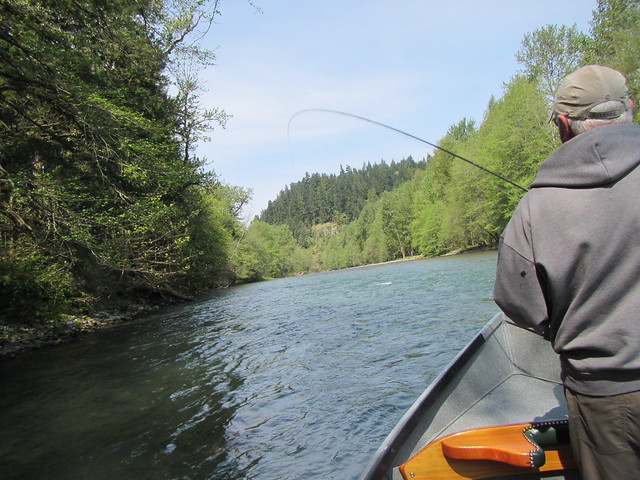
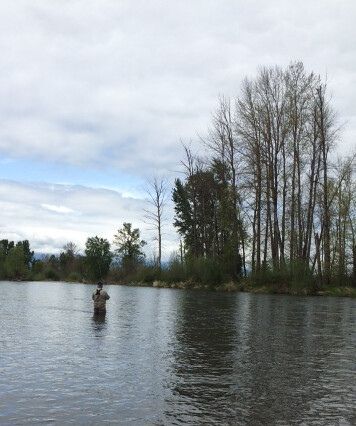
A large spotted head popped out of the water and engulfed my beetle fly. I lifted the rod and was connected to a feisty brown trout. My fly rod bent double and line peeled off my reel as the fish tore about, leaping clear of the water twice before coming to Paul’s net. It was a thing of beauty — buttery golden skin, dotted with fine black and silver spots. Paul gently removed the fly, revived the fish by holding it by the tail in the current, and let go. The fish beat a hasty retreat, soon blending with the river’s rocky substrate. We shook hands and continued walking upstream, searching for the next fish.

Here are some photos from a recent trip with the kids:

GOPR0090

GOPR0137

GOPR0124

GOPR0149

We’re fully booked this season, but taking bookings for next year!

-CD

Posted in Fly Fishing Travel | Leave a comment

Larimer’s Brazilian Fly Tying Video

The Brazilian is a subtle colored fly designed to fish in low, clear water. Claret flies are a great choice for Summer Steelhead, and this Tom Larimer creation is no exception. Whether you swing this fly as a comeback fly or as your pattern of the day, I think you will be pleasantly surprised. While I have tied this pattern with a red wire, the pattern calls for Copper Wire, not wine as stated in the video. According to Mr. Larimer, a very consistent producer on Idaho’s Clearwater River.

Jan 2015
T. Torrence

larimers-brazilian

Larimer’s Brazilian

Daiichi AJ D2051, Sizes 5-7
Thread: Veevus 10/0, Black
Tail: Gold Pheasant Red Breast feather fibers
Rib: Ultra Wire; Medium Claret
Body: Claret Hareline STS Trilobal
Wing: Black Hareline Krystal Flash; Dyed Black Arctic Fox
Hackle: Dyed Claret Guinea

Posted in Fly Tying, Fly Tying Materials and Supplies | 1 Comment

Victory for Clackamas River Salmon and Steelhead

From WaterWatch (one of the most awesome conservation groups in Oregon):

This week, the Oregon Court of Appeals delivered a victory for Clackamas Riverc salmon and steelhead in an opinion determining that municipal water users must leave enough water in the Clackamas River for imperiled fish populations. The decision was also a win for WaterWatch of Oregon, the river conservation group which originally challenged a state decision to allow increased water diversions from the Clackamas despite the risks to struggling fish runs.

Clackamas  Wild and Scenic River

“This is a welcome decision for all those who value Oregon’s incredible rivers, salmon, and steelhead, and especially for those in the Portland metro area who regularly enjoy the Clackamas River,” said Lisa Brown, WaterWatch Staff Attorney.

The decision addresses the proper conditions needed on state-issued permits allowing withdrawals of 100 million gallons of water per day (150 cubic feet per second) from the lower Clackamas River. These permits are held by the City of Lake Oswego, the South Fork Water Board (which serves water to Oregon City and West Linn), and the North Clackamas County Water Commission (which serves areas including Damascus, Oak Lodge, Happy Valley and additional unincorporated areas of Clackamas County). The 100 million gallons of water per day at question would come on top of another 100 million gallons of water per day already allowed to be diverted from the lower Clackamas River for municipal uses. The Clackamas River flows into the Willamette River near Oregon City.

In 2008, WaterWatch filed protests against the orders issued by the Oregon Water Resources Department (OWRD), raising concerns that the fish protection conditions placed on the permits were inadequate. A 2005 state law requires undeveloped permits such as these be developed in a way that maintains the persistence of struggling fish populations listed under the state or federal Endangered Species Acts. The Oregon Department of Fish and Wildlife (ODFW) has identified five populations of fish in the lower Clackamas which qualify for such protections: cutthroat trout, winter steelhead, spring chinook, fall chinook, and coho salmon. Chum salmon would also qualify, but are considered extinct in the area.

The Court interpreted a law that many cities across Oregon are already successfully implementing. On rivers with imperiled fish, the law allows cities to meet their reasonable water needs and develop more water but in ways that allow imperiled fish to persist into the future. On the Clackamas, the cities argued that the law only required enough water to ensure that the listed fish species do not vanish altogether from the affected portion of the river. Thankfully, the court rejected this interpretation.

“There is plenty of water to go around in the Portland metro area without putting the Clackamas River and its fish at risk,” said John DeVoe, WaterWatch’s Executive Director. “For example, the Bull Run system is underutilized, and many other utilities are tapping into the Willamette River. The fact that the state allowed the Clackamas River—the Portland metro area’s backyard gem—to be put at risk when there are clearly other better solutions highlights the shortcomings of Oregon’s water planning requirements.”

Although the ODFW identified river flows needed for the fish, the Oregon Water Resources Department issued orders allowing the permits to be developed without protecting these streamflows.

“Even though the Oregon Department of Fish and Wildlife indicated that struggling fish would need 650 cubic feet per second of river flow in the summer, and 800 cfs in the fall for spawning salmon, OWRD’s permits set no limits on the new water diversions if river flows fell below these levels in the summer months, and inadequate controls during the rest of the year,” noted Brown.

The permits at issue tie up an amount of water clearly in excess of what the permit holders’ need, but under Oregon law this water can be sold to other municipalities. The City of Lake Oswego is doing just this, by allowing Tigard to use its water in exchange for Tigard footing a significant portion of the bill for Lake Oswego’s massive infrastructure upgrade currently under construction.

“The Clackamas may have the last run of self-sustaining wild coho salmon in the Columbia Basin,” said Lisa Brown, WaterWatch Staff Attorney. “We shouldn’t be sacrificing Clackamas fish populations when there are other, less risky options readily available.”

Posted in Oregon Conservation News | 1 Comment

Happy to reschedule — TU Chapter 678 meeting tonight: GO DUCKS!

From The Redsides:

The January meeting has been moved up to TODAY!

Due to the conflict with the Ducks in the National Championship game on the 12th, we’re moving the meeting up to Monday, the 5th (That’s this Monday as in, two days from now).

We apologize for the change, but we don’t think many (if any) people will want to show up at the January TU meeting in the middle of the Ducks National Championship game.

The general meeting will be held at Izzy’s Pizza, 1930 Mohawk Boulevard in Springfield. at 7:00pm. The board meeting will follow at 9:15 or so.

We also decided that since some people have had trouble making the board meeting at 6:00, we would move the board meeting to after the general meeting.

So to review:

We have a new location at Izzy’s Pizza in Springfield
The meeting has been moved up to January 5th (day after tomorrow).
The board meeting will take place after the general meeting.

Again, we apologize for switching things around on you. Our goal is to settle on a location and meeting day and stick to it. We’ll make some time to hear from you at this meeting and in future meetings, so if you have any questions, suggestions, comments or you just like to hear yourself talk, come out and speak up.

The Redsides

Posted in Oregon Conservation News | 1 Comment

EP Senyo’s Chromatic Brush – Must have material for Intruders

I have been tying with a variety of Enrico Puglisi’s brushes for about three years now, many in my saltwater flies and also as elements of my steelhead and salmon flies. In the most basic terms, these brushes have a wire core and look like a hackle made of various natural and synthetic barbules. EP brushes come in many widths, materials, and colors – they make great bodies, butts, and principal components of flies.

The latest of these EP brushes I have used is the series of Chromatic Brushes and Sommerlatte’s UV Brushes. These are offered in 1.5″ and 3″ widths, include natural hair plus synthetic flash, and are both easy to use and very fish-catchy.

One of the most effective flies one may tie and fish for both steelhead and salmon is constructed by winding on several turns of a Chromatic Brush at the rear of the tube or Intruder Shank, applying a slim tinsel body, adding weight (or not), and then winding on several turns of the same or different color Chromatic Brush at the front of the fly.

You may use the 1.5″ brush at the butt and the 3″ at the head of the fly, or use the 3″ at both ends of the fly, depending on your preference. One may top the fly with a marabou hackle and wing of Arctic Fox hair or ostrich (or not), again depending on your preference. Adding extra Krystal Flash topping or Real Fake Jungle Cock is another option too.

Main point here is that the EP Chromatic and Sommerlatte’s Brushes offer a ready to wrap alternative to spinning our own butts and hackles for our steelhead and salmon flies. the colors are very fishy, the materials are UV iridescent (if you care), and these flies swim enticingly and the fish eat them.

Here are a few photos of the material and two flies I have tied with the EP Brushes.

Have fun with these brushes, they will save you time and create great flies to swing.  And yes, you may use these brushes under marabou if you want the traditional feather look to finish off your flies, same with Guinea – simply tie the Chromatic Brush, then wind the hackle in front of the brush.

A few of my favorite colors: blueberry; Copper Candy; Flame (this is a hot orange); Midnight; Ruby; Chrome Black; Tiger (Orange with black highlights); Purple Rain; and Joker.

I should mention that the Chromatic and Sommerlatte’s Brushes are available in muted hues perfect for imitating a variety of baitfish too.

Enjoy. This material makes a wonderful addition at the fly bench.

Jay Nicholas

Posted in Fly Tying, Fly Tying Materials and Supplies | 1 Comment

Town Lake Fishing Report December 2013

I’m addicted to fishing for salmon, steelhead and all creatures in the ocean – but my roots involved a lot of fishing for trout and often that meant hatchery trout.  Now our family cabin in Pacific City is action central for my fly fishing adventures and I have virtually abandoned my fishing on the Deschutes, McKenizie, Metolius and other rivers and lakes in favor of anything close to the cabin.

Well, there is a small lake less than a five minute drive from our cabin where I can head out on many days when the estuary or ocean fishing isn’t on the menu – for whatever reason including water too high or low, bad tides, bad weather or too few fish to bother with.

The Town Lake does not support wild fish, it gets worked hard by cormorants and otters, but depending on the stocking schedules, I have very pleasant fly fishing for stocked trout and recycled hatchery summer steelhead.  The trout are regular catchable size in the spring but this fall ODFW stocked “trophy” trout and there are some 16″ to 20″ bruisers still in the lake.  There have been quite a few hatchery summer steelhead stocked already too, and these take flies quite nicely on occasion when you show them the right fly for the right fish.

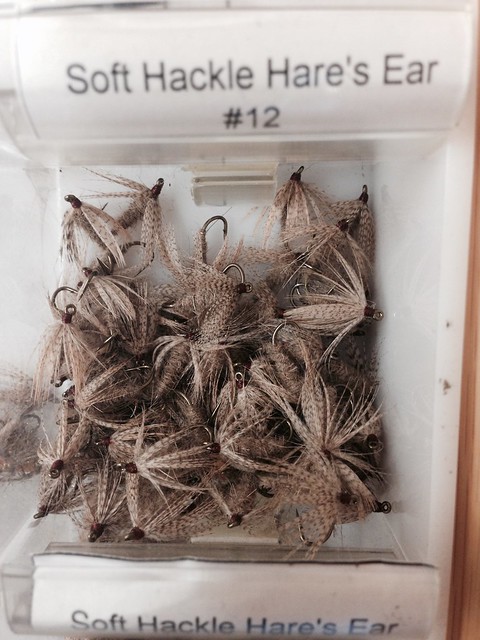
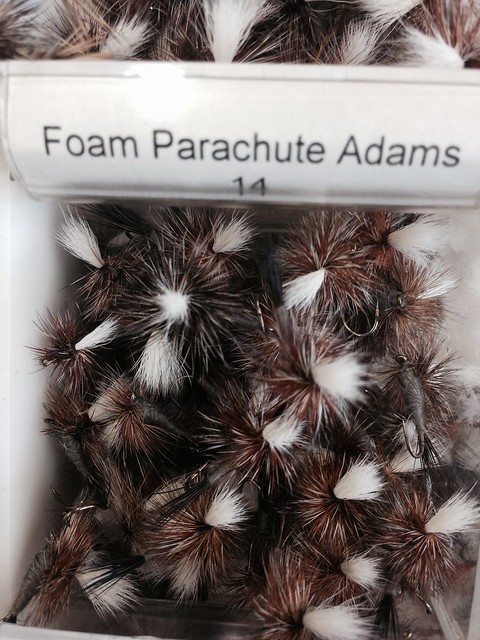
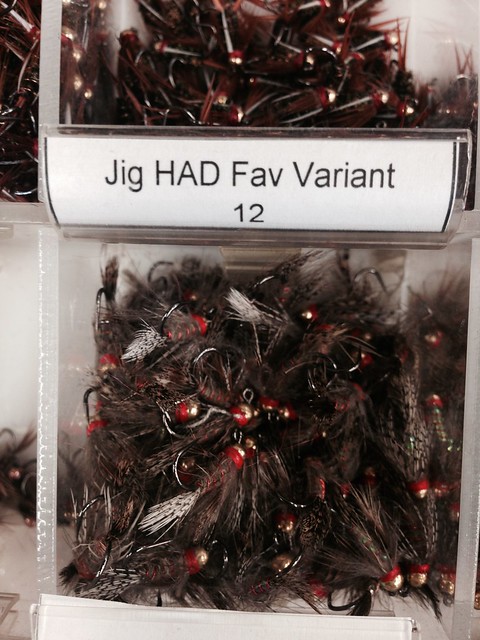
Anything from size 16 dry adams, Foam Hoppers, Muddlers, size 14 brown chironomids, bead head hare’s ears, black and brown wolly buggers and more, they all produce at times.  The steelhead can be very selective, some fish only responding to a retrieved bugger and some only taking a free falling chironomid or dry fly, but you can sight cast to these fish and release them to catch another day.

I fish 5X tippets on three and four weight fly rods and floating lines on most occasions, and the big trout and steelhead will put up a good fight.  The summers range from very clean fish to pretty old slim fish, but it is fun to spot them and try to get a take from  big fish that can be spooky or silly accommodating.  If you find yourself shut in some weekend with your usual haunts too muddy or cold to fish, consider coming over and trying Town Lake.

There is a public dock that you can fish from, but a raft, small boat, drift boat, or float tube is a big advantage to give you better access to the lake.

You may or may not catch fish here on any particular trip, but it is a change of pace and offers a lot of potential from day to day, depending on stocking schedules and water conditions.

If you have questions, you may email the Caddis Fly Shop and they will forward your email to me and I will be happy to give you a recent report and help out as best I can.

Update: I just got back to our cabin after a 4 hour outing on the Lake today.  I managed to spot over a dozen steelhead that I was able to cast to.  Four took my and I got so excited that whipped it out of their mouth before they could close it.  I hooked three steelhead that bit my fly having finally calmed down a little; one on a size 12 bead head hares ear, one on a size 8 Silver Hilton, and one on a glass-bead brown wooly bugger size 10.  I only jammed the hook into my finger once this day.  This is fun sight fishing and quite  a challenge to tease these fish to take a fly.  Most of the summers are in the five to seven pound class – and I release these fish with hopes of finding them again this winter.

The “Trophy” hatchery trout are challenging now that they have been the lake for over a month and catching 3-4 of these 14″ to over 20″ fish is quite a feat.

This is a lake that has in the past supported perch (gone now) still has a few bass, but seems not to support any natural reproduction.  ODFW has put some really nice fish in ths small lake, there is a public access boat ramp for small boats, Kyaks, float tubes, and such, and there is a very nice new public dock for people to fish from. I see people fishing Powerbait and spinners with success regularly, and fly fishing is always effective on the hatchery trout and steelhead.  I think this is a great place for every experience level from beginners to advanced skill anglers with time on their hands.  Close to home, nice scenery, and challenging fishing make a great combination in my opinion.

Jay Nicholas, December 2013

Posted in Fishing Reports | 2 Comments

Jay Nicholas’ 2014 Photo Review

2014 was a very full year and I have much more planned for 2015. These photos are just a few snapshots from a very full year from the Nicholas family.

I am full of hope for the future. May you also have great plans for adventure and joy in the coming year; I look forward to posting another year-end review twelve months from now.

Thanks to Chris Daughters, Bryson, Ty, Clay, Andrew, Lou, and Peter of the Caddis Fly Shop staff; and the many fine people I’ve had the good fortune to correspond with and share river-time with this last year.

Jay Nicholas


Posted in Fishing Reports | 1 Comment

McKenzie River Trust’s CARP ponds

From McKenzie River Trust: The Willamette Valley is peppered with old gravel pits, sites where the meandering river has deposited gravel for millennia. The Coburg Aggregate Reclamation Project (CARP) is one of the best opportunities in the region to restore one such site, enhancing its value for native fish and wildlife.

Homepage_CARP

CARP’s location on Green Island amplifies the impact of restoration because the habitat enhancements lie within a 1,100-acre habitat conservation area. By re-establishing the natural river processes that once impacted this area, the McKenzie River Trust and our partners are creating areas that are much friendlier to native fish like Chinook salmon.

Fish and wildlife on the property

Waterfowl and fish are common in the CARP ponds. The species of native fish that have been found on the site are: largescale sucker, northern pikeminnow, prickly sculpin, peamouth, three-spine stickleback, Upper Willamette spring Chinook salmon, cutthroat trout, and pacific lamprey. Notable waterfowl are hooded merganser, wood duck, pied-billed grebe, great blue heron, and green heron. CARP is also home to western pond turtle, and red-legged frog, river otter, and beaver.
Gravel pit restoration

Beginning in 2010, the McKenzie River Trust worked with engineers from River Design Group to create a plan to restore the CARP site. Restoration will benefit native Willamette spring Chinook salmon and other species such as Oregon chub, waterfowl, herons, native frogs and turtles, river otter, and beaver.

Problem: The gravel pits were disconnected from the natural river floodplain. When high water comes up in the winter, the pits fill up like a bathtub. As the water drops, fish don’t get the signal that they need to get out of the pits, leaving them stranded. Although native fish can survive in the pits, they run the risk of being eaten by non-natives, such as large-mouth bass, who favor this warmer water.

Solution: Re-connect the pits to the backwater channel to provide entry points and exits for native fish. As river levels rise and drop, these new connection points will give native fish more opportunities for refuge and escape across the seasons.

Problem: The slopes of the pit walls are steep in a former gravel mine. These pond edges provide few places for native vegetation to take hold. There are also few hiding spots for young native fish looking for refuge from birds or bigger predator fish.

Solution: Use heavy construction equipment to re-grade the slopes to a more natural rise of one foot up for every ten feet out. Then, plant thousands of willows and other native trees and shrubs along the pond edges. As the plants grow up, they’ll offer fish plenty of places to hide from predators.

MRT is a fantastic organization. If you’re looking for year-end donations, please consider donating these folks.

Posted in Oregon Conservation News | Leave a comment

Cedar Lodge Pre Christmas Season Highlights

backcountry-fly-fishing-new-zealand-1

We have come to our Christmas New Years break already this 2014/15 season at Cedar Lodge! Time flies when you are having fun. Overall our early season has been a success. Despite some very “spotty” spring weather we managed to lose only one fishing day pre-Christmas. We scrambled around the South Island a bit to find fish-able water at times but all in all we had some good fishing. The last week was particularly fishy with fine and stable sunny conditions bringing the fish to the surface more than at any other time of the year.

NZ river valley stellar summer day @cedarlodge

Huhu grub @cedarlodge

backcountry-fly-fishing-new-zealand-2

backcountry-fly-fishing-new-zealand-3

backcountry-fly-fishing-new-zealand-4

While rural home and land improvement projects never end we managed to avoid major items and concentrate on new plantings, golf course maintenance, animal husbandry and gardening when time allowed.

get-attachment

get-attachment-3

backcountry-fly-fishing-new-zealand

cedar-lodge-new-zealand-outdoor-dining

Our new chef Steven Weiler has been amazing. Not only has his food and presentation been outstanding, his organizational skills have made everyone’s day to day much smoother. He has been able to source high quality food from smaller New Zealand suppliers and it has made a positive difference in our cuisine this year.

Our summer/fall session (Jan-March 15) is at full capacity for the 2015 season but it’s never to early to make plans for Cedar Lodge’s 2015/2016 season ( NOV-10-2015-MARCH-15-2016). Heli-fishing in New Zealand for a Christmas present anyone?

daughters-family-new-zealand-fly-fishing

father-and-son-new-zealand-fly-fishing

fly-fishing-new-zealand-cedar-lodge-1

fly-fishing-new-zealand-cedar-lodge-2

heli-fishing-new-zealand-cedar-lodge-3

heli-fishing-new-zealand-cedar-lodge-5

new-zealand-fly-fishing-cedar-lodge-1

new-zealand-fly-fishing-cedar-lodge-3

new-zealand-fly-fishing-cedar-lodge-4

sight-fishing-new-zealand-cedar-lodge-1

sight-fishing-new-zealand-cedar-lodge-2

sight-fishing-new-zealand-cedar-lodge-3

sight-fishing-new-zealand-cedar-lodge-4

Posted in Fly Fishing Travel | 1 Comment

President Obama protects Bristol Bay

President Obama took action to protect one of Alaska’s most powerful economic engines and one of America’s greatest national treasures: Bristol Bay.

He signed a Presidential Memorandum that withdraws these beautiful and pristine waters from all future oil and gas drilling. “These waters are too special and too valuable to auction off to the highest bidder,” the President said.

Great post here.

Posted in Oregon Conservation News | 1 Comment

Caddis Fly Christmas Party December 18th 2014 4-8pm

get-attachment-1

new zealand fly fishing

Patsy, Cash, Shauna and Chris wish everyone a very merry holiday season.

Please join us for our annual Christmas party at the shop on December 18th from 4-830ish. A discount of 10% will be extended to all in stock purchases during party hours.

Food, beverage, cheer and last minute gift specials will be served up at the shop. Please stop by and let us say thanks to you for your patronage over the years.

Posted in Oregon fly fishing links, Oregon Fly Fishing Tips | Leave a comment

Harrop’s CDC Bubble Back Variant

This wonderful Caddis imitation is from the desk of famed fly fisherman and tier, Rene Harrop. His creations have been fooling fish for years, and this pattern is no exception. I discovered this fly online while researching Eastern Oregon streams I haven’t fished yet. “Harrop’s Bubbleback Caddis” kept popping up as a primary pattern, and for good reason. This fly has become my go to pattern for big selective trout during the emergence of caddis flies. This caddis emerger is simple to fish, just dead drift like a dry, or as a dropper behind a visible dry. A delicate emerging caddis pattern, but will get those “big slurpers” to eat when all else fails.

T. Torrence

November 2014

Harrop’s CDC Bubble Back Variant

Hook: TMC 206BL 14-20
Thread: Veevus 12/0
Tail: Lemon Wood Duck Fiber, Tan STS Trilobal Dub
Front hackle: Partridge I a ½ collar on bottom
Thorax: Senyo’s Lazer Dub, Dark Tan

Posted in Fly Tying, Fly Tying Materials and Supplies | Leave a comment

Parasol Zebra Midge Fly Tying Video

A funny little pattern I discoverer on the web while researching Midge patterns. While at first appearance it seems to be a lot of work to tie, and prone to fouling, nothing could be farther from the truth. Whip out the parasols at one time, and then sit down at the bench to tie. It is important to note that no matter what material you use for the parasol, it must have a floatant applied if you are not using a material like Hareline’s Parapost. Para post has Hareline’s Water shed Treatment.

T. Torrence
November 2014

Parasol Zebra Midge

Thread: Black Veevus 12/0
Hook: TMC 2487, 18-26
Parasol: 3x Fluorocarbon to white, black grey or fl. Orange Parapost wing
Rib: Small Veevus Pearl Mylar
Body: Black Veevus Thread
Head: Black Hareline Micro Fine Dry Fly Dub
Body Coating: Clear Cure Goo Hydro

Posted in Fly Tying, Fly Tying Materials and Supplies | Leave a comment

Reminder, December 12 & 13 – Rob Russell and Jay Tying Flies at Shop

Reminder: December 19 & 20, Jay’s at Shop – with Rob Russell on the 20th.

Rob Russell will be at the fly bench on Saturday too, and it will be fun to re-connect and pry some great new fly patterns out of this guy.  He will also be able to talk about a book he and I are working on – “Modern Steelhead Flies”, scheduled for release by Stackpole in 2015.


I’ll be tying flies and displaying published copies of 5 new books and any books ordered will be delivered to the shop the following weekend with personalized signatures.

Fly Fishing Book of Revelation: The Ultimate Irreverent Illustrated Fishing Glossary.

Super Flies:  The 52 Best for Trout, Steelhead, Salmon, and Cutthroat Flies Since 1962.

Super Flies ~ Color:  For Trout, Steelhead, Salmon, and Cutthroat.

Sea Flies: For Salmon, Sea Bass, Lingcod, and Albacore.

Sketch: Flies, Fish, Fly Fishig

December 12 – Tying winter steelhead tube flies (Friday 10 – 4)


I’ll demonstrate use of the HMH Tube Fly Adaptor, ProSportfisher, and NOR Vise Tube fly tying tools to compose several basic tube flies that would be appropriate to fish this winter for steelhead.

December 13 – Rob Russell will tie anything you request, from Intruders to salmon flies.

Jay – Tying flies featured in Super Flies book (Saturday 10 – 4)


These will include flies for trout, steelhead, salmon, and sea-run cutthroat and I will be happy to take requests from folks who have interest in particular flies.

While this is the plan – I’ll have a full range of my fly tying materials at the shop and be prepared to shift gears if there are special requests for different fly styles or patterns

From coastal lake trout to albacore and salmon in between, let’s have fun tying flies and sharing our experiences and discoveries.

Hope to see you there.

Jay Nicholas

Posted in Classes and Instruction, Fishing Reports, Fly Fishing Books, Fly Fishing Glossary | 2 Comments

Calapooia Watershed Video

Check out this great video on the Calapooia Watershed Council by Freshwaters Illustrated.

Calapooia Watershed Portrait: Finding Natives from Freshwaters Illustrated on Vimeo.

Posted in Oregon Conservation News | Leave a comment