Fishing Pliers are part of my all day every day gear that have become second nature to carry, whether I’m on a lake fishing for hatchery trout, on a river swinging flies for steelhead, or out in a friend’s dory boat fishing the Pacific ocean.
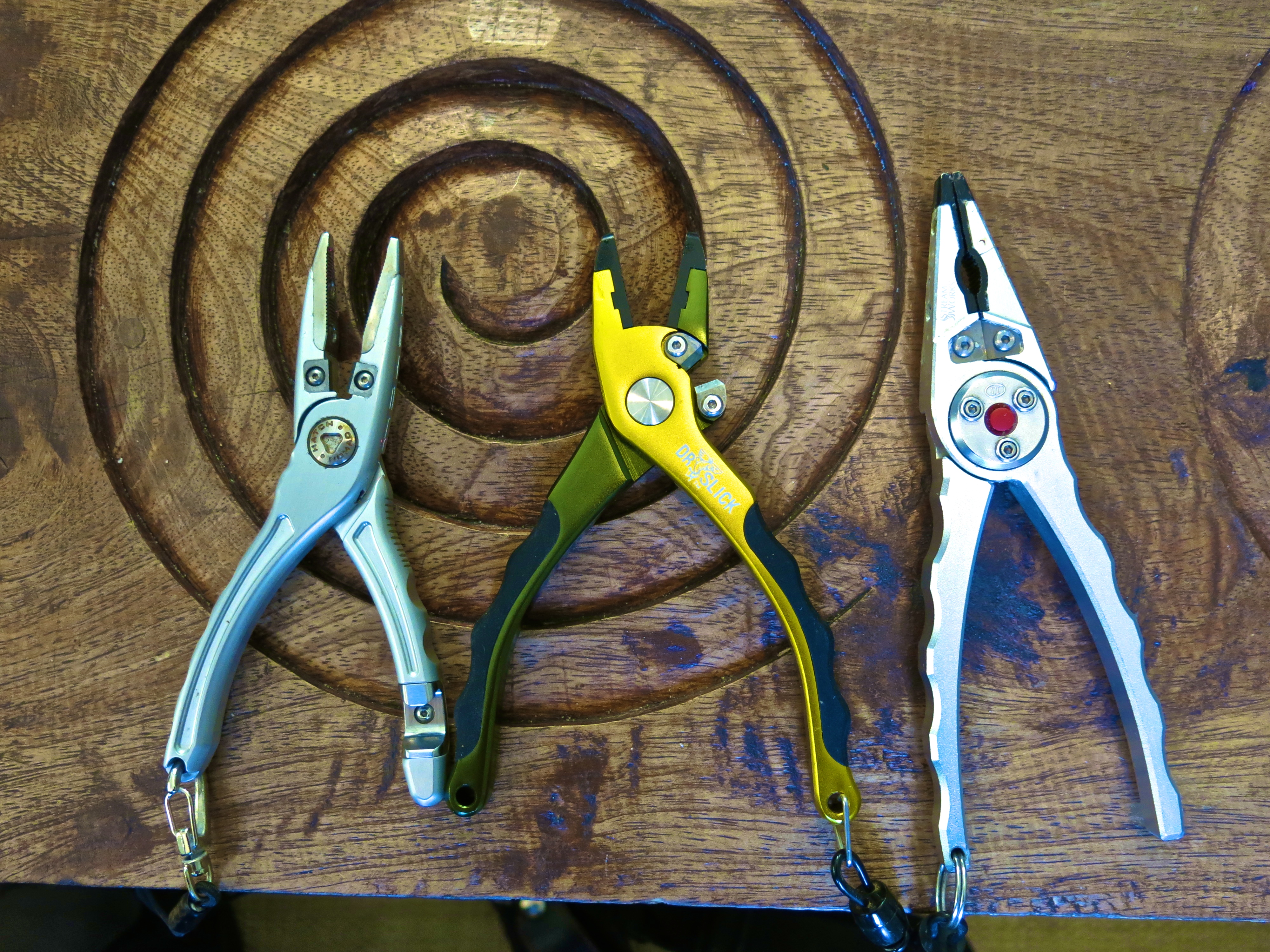
Shown left to right above and below are images of my Hatch, Dr. Slick Typhoon, and Steeamworks Night Hawk fishing pliers.
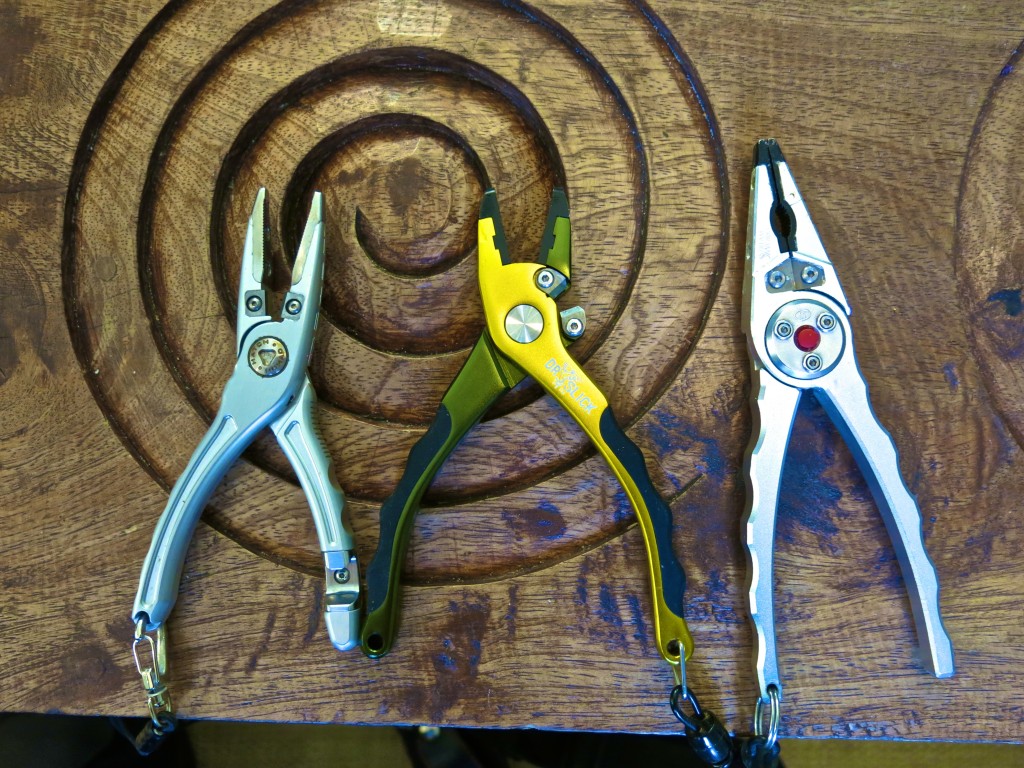
Left to right – Hatch, Dr. Slick Typhoon, and Streamworks Night Hawk fishing pliers.
First thing you should know is price.
Hatch Nomad Pliers: $280
Dr Slick Typhoon: $59.95
Stream Works Night Hawk: $59.95
Simms Plier: 159.95 (Not pictured.)
I have used all but the Simms over the course of the last year. The Typhoon are the newest Dr. Slick Plier and I have only used it a month or so.
Here is the thing about fishing pliers. You get what you pay for, they all work reasonably well, and the only bad fishing pliers are the set you leave at home in your rush to get on the water (or the pliers you drop overboard in a thousand feet of water).
I have fished all of my pliers hard, I do not clean them after use, and they take a real beating.

My well used Stream Works Night Hawk Pliers
My stream works pliers are still covered with dry blood from Albacore caught offshore last September. There is corrosion that would have been avoided if I had but rinsed the pliers after each saltwater use. That said, the Night Hawk Plers work very well, they have the longest reach (handy at times) and have been entirely satisfactory. I do wish the handles did not stick up quite as high in the holster, but it works none the less. If you fish at night the LED light in these pliers are a huge help. The batteries are replaceable, and this unusual feature does come in handy at times.

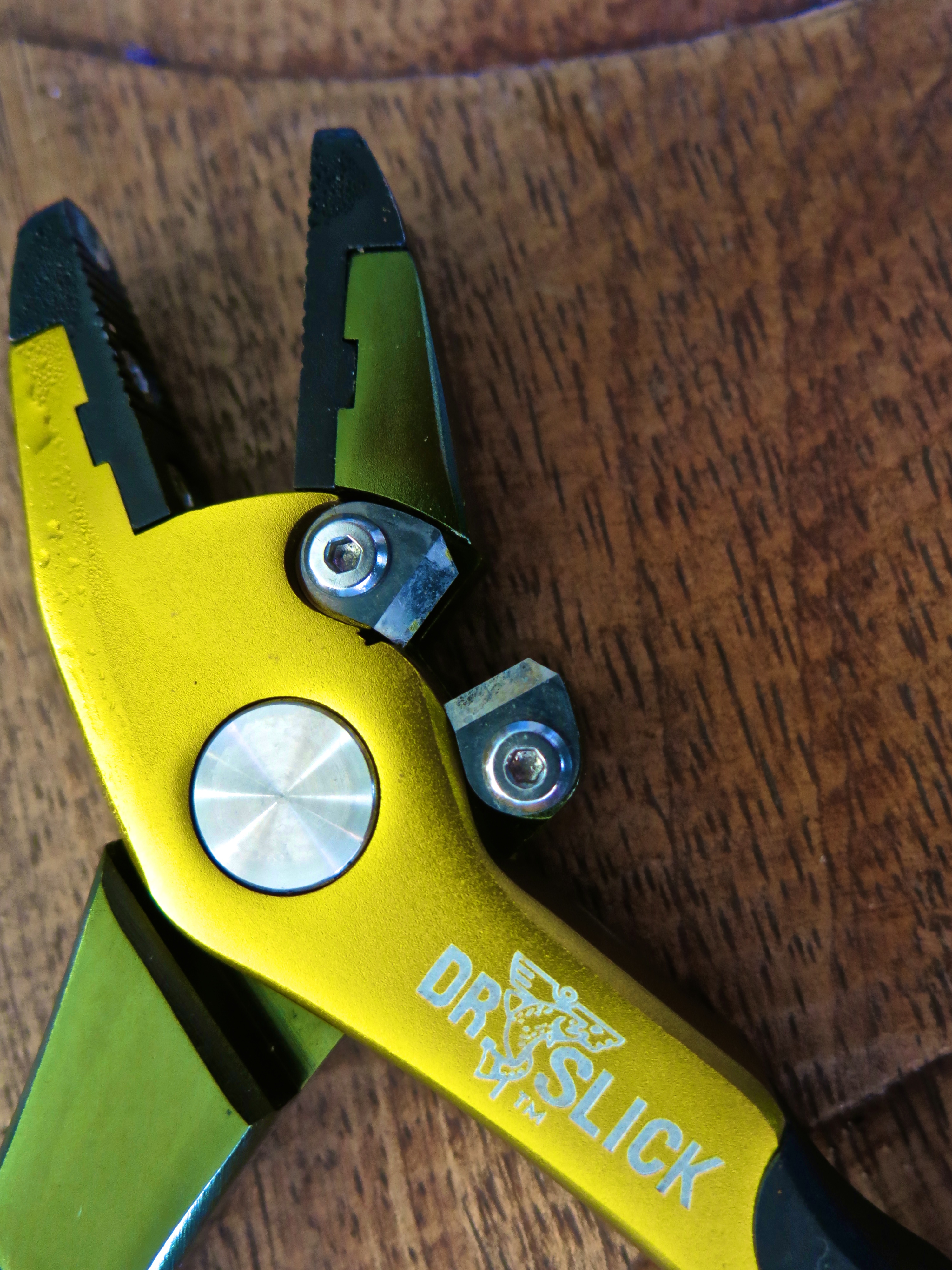
Dr Slick Typhoon Plier for fishing application
My Typhoon Pliers are the latest Heavy Duty fishing Pliers offered by Dr. Slick, they are stout, the cutters are on the side of the plier, making them easy to see to use, and the set comes complete with spare jaw liner and cutters, a very nice feature. The nose of these pliers is a little shorter so if you need a long reach, these might not be your best choice. Otherwise, they are sturdy, function well, fit well in the sheath, and are an overall great value in a good fishing plier.
The Simms Plier is one I have not used yet, but priced between the 60 buck and 280 buck price points, this 160 buck plier carries the SIMMS reputation and feels good in hand. I’m likely to get a set of these for use at sea in 2015, but I have every confidence that this is very good fishing plier, because SIMMS never compromises on quality.

Hatch Nomad Fishing Plier
My Hatch pliers are spendy but are hands down my favorite. This probably just proves that I’ve been brainwashed by the Fly Fishing Military Industrial Complex, but everything about these pliers (from the holster, the lanyard, the clip attaching the lanyard, the fit of the holster on my SIMMS wading belt, the heft of the plier, the cutters, the mid-length of the nose, and the materials add up to a superior (duh) product.

If you are a gear nut like me and can afford it, I recommend the Hatch fishing Plier.
For normal people, the Stream Works and Dr. Slick pliers are very good tools that will give good service – and once you get your first set of fishing pliers you will begin to develop your own biases and opinions about these must have tools.
The SIMMS Plier is nestled in the middle between high and low end fishing pliers. Consider these as a mid-range option that merits a serious look, as I will be doing in 2015.
Jay Nicholas, March 2015, and I’d be pleased to answer specific questions about any of these fishing pliers.