Middle Fork of the Willamette Still Fishing Well

middle fork of the willamette fly fishing

Despite all of the recent rains, the Middle Fork near Oakridge is still in good shape and the trout are still willing to eat a fly. On my recent trip to the Middle Fork, I was able to nymph up some respectable fish including a nice rainbow that was pushing 18 inches. Keep in mind that this is winter fishing and the water is cold, so make sure to work your runs thoroughly.

The flies that were working for me were a #4 Black Jimmy Legs and a Rogue Ice Stone #6 as my top fly and a Little Black Sloan in a size 12 as the bottom fly. Don’t be afraid to lose a few flies during the course of a day. If you’re not losing a few flies you’re probably not fishing deep enough, keep them “bouncin” close to or on the bottom. Remember to dress warm and make sure you have a good rain jacket to keep you dry and block the wind.

middle fork of the willamette fly fishing

After a good day of fishing it’s nice to find an inviting place for some warmth and sustenance, and the town of Oakridge has just what you need. Brewers Union Local 180 is a English/American Public House with nice locals and is also family friendly. If you enjoy a good beer and some homemade food, Brewers Union is definitely worth checking out. They have real ale on cask and a host of tasty menu items that are sure to please your palate. Check em out.

TE

Posted in Fishing Reports, Middle Fork Willamette River fishing | 2 Comments

Fly Fishers Gift Guide for 2015 – Top Gift Ideas for the Fly Fisher

It’s that time again and we have created a list that includes some of our top gifts for the fly fisher. Share with your friends and loved ones for best results.

2015 50 Best Gifts for the Fly Fisher

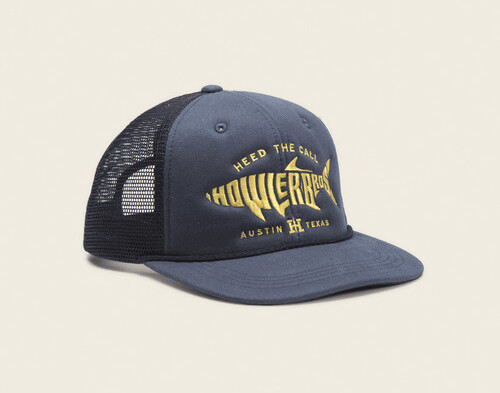
howler-bros-electric-snapback-hat-12

$1-$50

1.Caddis Fly T-Shirt – Shop t, Oregon Trout and Oregon Steelhead Head Shirts $24.95
2. McKenzie and Willamette Fly selections including fly box. $40
3. New Rio Powerflex Plus Leaders and Powerflex Plus Tippets. $9.95
4. Patagonia Beanie Hat for winter steelhead fishing $39
5. Sage Travel Tube Humidor $50
6. Measure Net in both nylon and Rubber Bags – $27 and up
7. Yeti Rambler Low Ball $24.95
8. Howler Brothers Snap Back $27
9. Simms Nipper $24.95
10. Simms Flask $29.95

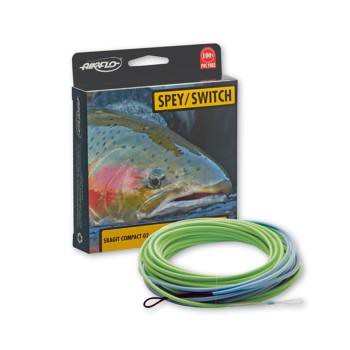
airflo-skagit-compact-g2-3

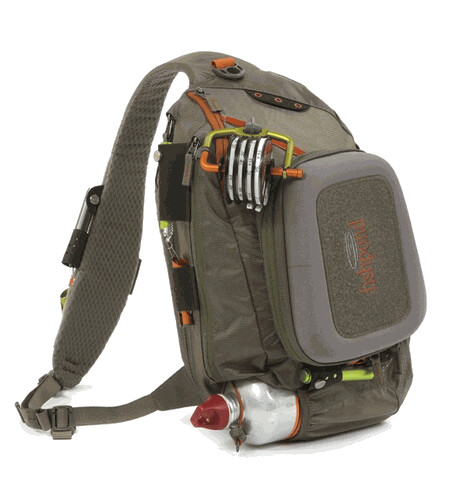
fishpond-summit-sling-3

$50-$100

11.Hatch Nipper with lanyard $100
12. Patagonia Capilene Tops and Bottoms starting at $59
13. Rio Single Hand Spey Line $89.95
14. Simms Wading Staff $99.95
15. Howler Brothers Matagorda Shirt $85
16. Marc Petitjean Thread Through Bobbin $58.95
17. Simms Rock Creek Felt Soled Wading Shoe $99.95
18. Wapsi Fly Tying Kit $59 and up
19. Do It Yourself Dubbing Kit $99.95
20 Patagonia Stealth Atom Sling $89.00
21. Echo Ion Reel $79.95
22. Airflo Compact Skagit 2 Spey Head $49.95
23. Patagonia Buckshot Shirt $89
24. Fishpond Summit Sling $99.95
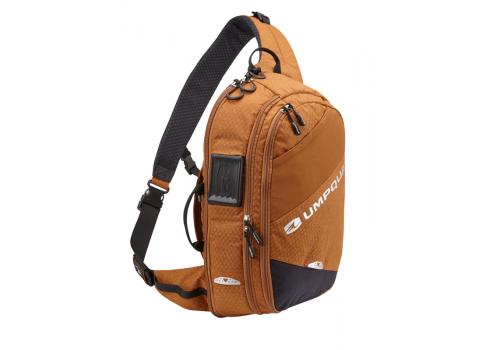
25. Umpqua Rock Creek Zero Sweep Series Chest Pack $69.95

steamboat-1200-zs-sling-pack-10

$100-$250

26. Patagonia Black Hole Duffel $129 and up
27. Patagonia Torrent Shell Jacket $129
28. Patagonia Nano Puff Hoodie $189
29. Regal Fly Tying Vice $165
30. Redington Behemoth Reel $109.95-$129.95
31. Korkers Whitehorse Wading Boot $169.95
32. Umpqua Steamboat 1200 Zero Sweep Sling $119.95
33. REdington Complete Fly Fishing Outfit $169.95
34. Patagonia Nano Air Jackets $249.95
35. Fishpond Thunderhead Sling $199.95

patagonia-nano-air-hoody-3

yhst-17105658520519_2272_1582729110

$250-$500

36. Simms G3 Waders $499.95
37. Scott A4 Fly Rod $395
38. Redington Hydrogen Rod $299
39. Patagonia River Salt Jacket $349.00
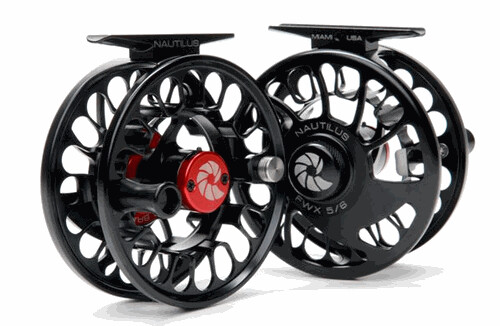
40. Nautilus FWX Fly Reel $275
41. Nano Puff Hoodie $249
42. Black Hole Wheeled duffel $349
43. Redington Chromer Spey or Switch Rod $399.95
44. Outcast Super fat cat $449
45. Yeti Hopper $299 & $349
46. Sage Pulse Rods $450
47. Gift Certificate for Guided Fishing Trip

hatch-9-plus-large-arbor-turneffe-atoll-trust-reel-3

$500+

48. SAGE MOD Rod $850
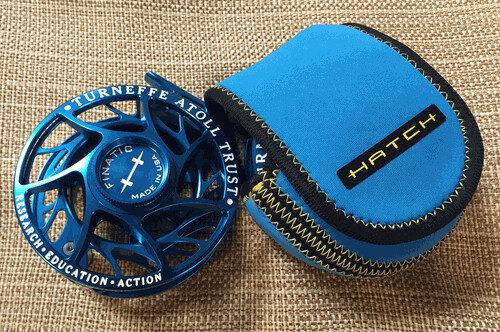
49. Hatch TAT 9+ Fly Reel $1000
50. Scott Meridian Saltwater Fly Rod $865

Posted in Fly Fishing Gear Review | Leave a comment

High Water Fly Tying Demo Day Nov 21st

Jay Nicholas Fly Demo Day a

Ok. The rivers are high, the days are dark and it’s time to do some serious re-stocking of fly boxes in preparation for winter steelhead season.

Jay Nicholas will be seated at the fly bench at the Shop from 10 AM until roughly 3 PM Saturday, November 21st, tying up his own stock of winter flies and answering questions about all manner of technique, tackle, and fishing craziness you care to bring up.

Jay Nicholas Fly Demo Day f

Jay Nicholas Fly Demo Day e

Of particular interest are two new products, both EP brushes. the first is the Steelegg Brush. This is a 3/4″ brush that makes wonderful eggs and egg-like enhancements on intruders and various butts on traditional steelhead flies. I’ve given these brushes a try and they meet my immediate approval, so I’m launching into tying a ton of flies for this season, even though I’ve yet to catch a winter steelhead on this material yet. That is how confident I am. This is good stuff.

Jay Nicholas Fly Demo Day d

The second product is the EP Craft Fur Brush. Wow. Should have thought of this one years ago. great colors and highly adaptable for a wide of flies from steelhead, salmon, bass, freshwater, saltwater and so on.

Wind these brushes like a hackle and let the magic flow.

I hope to see you at the Shop, but I’ll be down several Saturdays over the next few months so if not sooner, then later.

Best wishes to you all.

Jay Nicholas

Jay Nicholas Fly Demo Day b

Jay Nicholas Fly Demo Day c


Posted in Fly Tying, Fly Tying Materials and Supplies | 1 Comment

Fishing Report: November Update

pic 2s

With the first decent rains projected this coming week, its a good time to check out some early opportunities. The coastal rivers, Elk, Sixes, Siletz, Siuslaw, and Alsea have been producing some fair to good action. Anglers are reporting action with Clousers, Egg patterns and Comets, for salmon. Anglers are reminded to check the regs for the streams you are going to fish.

pic 1s

Mother nature can become evil about rain forecasts. Our mid and lower coastal rivers forecast on 11/12/15, show rises but nothing dramatic. For the weekend, the sooner anglers get out there, the better.

pic 3s

Back in the Valley, Nymphing (hopper dropper set up) the Lower Mckenzie is still producing good results with the usual suspects: Mega Prince, Possie Bugger, and Jig Prince Nymph. Dry fly fishing has been pretty weak, but Blue Wing Olives have been hatching out. Again, the rain will come but river forecasts show modest rises and nothing dramatic. The sooner the better….

Posted in Coastal Steelhead Fishing, Fishing Reports, McKenzie River | Leave a comment

Floodplains Mag: Arts and Letters

This week we’re happy to help support the launch of a new web magazine, Floodplains — featuring original art for every story by David Wilson and writers who have contributed to The FlyFish Journal, Grays Sporting Journal and The Drake. No hero shots, in fact no photos at all, just great artwork. These are the essays and short fiction by Oregon Fly Fishing Blog founder Matt Stansberry, Northeast Ohio fly fishing guide Jim Lampros, and conservation advocate Kendrick Chittock.

Floodplains Mag

Give them a read and let us know what you think.

Posted in Fly Fishing Books | Leave a comment

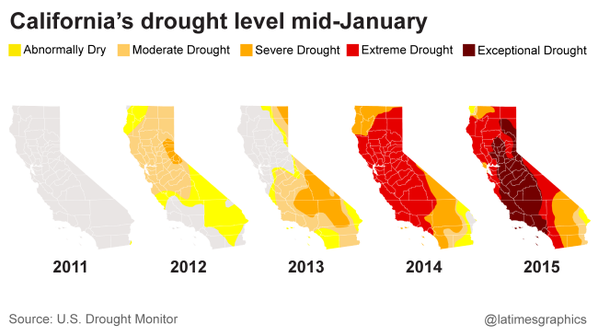
Drought and California salmon

From YubaNet: New claims – asserted by the Natural Resources Defense Council, Earthjustice, San Francisco Baykeeper, The Bay Institute, the Winnemem Wintu Tribe, and Pacific Coast Federation of Fisherman’s Association/Institute for Fisheries Resources – allege that the Bureau unlawfully diverted limited water supplies from behind Shasta Dam for the use of corporate agriculture, instead of using the water to keep Chinook salmon alive below the Dam.

Drought

Several runs of Chinook salmon – including spring and winter runs – are on the brink of extinction in California, weakening the backbone of the salmon fishery. The Bureau’s actions led to the death of more than 95 percent of young winter-run Chinook salmon emerging from eggs and rearing below Shasta Dam in 2014 and appear to have nearly wiped another generation of young salmon this year.

Less than 2 percent of the water flowing through California’s Bay-Delta estuary was dedicated to protecting fish and wildlife in this drought year, while rice growers received millions of acre-feet of water to flood their fields several feet deep in the drought.

“The federal government’s mismanagement of limited water supplies in the ongoing drought is a near-death blow for Chinook salmon and the thousands of people whose livelihood is tied to the salmon industry,” said Kate Poole, litigation director for NRDC’s water program. “The kicker is that we have the ability to create enough water for all of the cities and farms in the state. Our leaders should be focused on putting the available solutions in place that can provide water for us all in dry times, while at the same time protecting California’s jobs and wildlife.”

Posted in Oregon Conservation News | Leave a comment

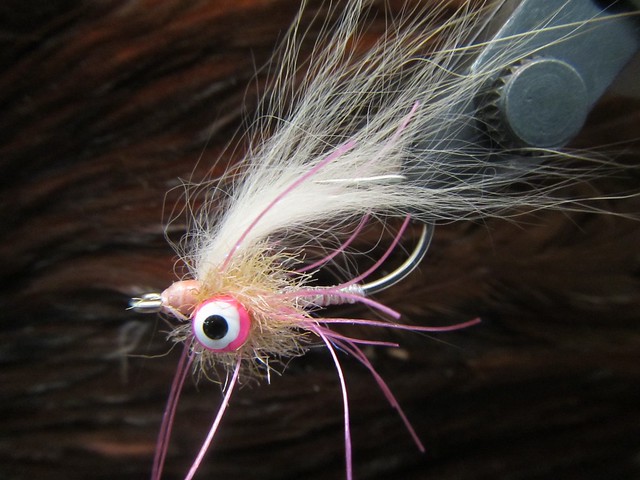
Modern Pink Puff Bonefish Fly Pattern Instructional Video

The Pink Puff is one of our favorite Bahamas bonefish flies. In the video above we demonstrate how to tie a version utilizing the new Double Pupil Eyes and Wooly Critter Brush for the head of the fly. The micro legs that are part of the Critter Brush are super cool!

modern-bonefish-puff

Modern Pink Puff Fly

Hook: TMC 811S #4
Thread: Danville Fl Shrimp Pink Flat Waxed Nylon
Eyes: Double Pupil Eyes Pink with white pupil

Body: Veevus Iridescent Thread/Braid
Puff: EP Wooly Critter Brush Tan
Wing: Coyote Mask
Overwing Optional Bonefish Pink Krystal Flash

Posted in Fly Tying, Fly Tying Materials and Supplies | Leave a comment

Closer to the Ground: Parenting, fly fishing, food

When Patagonia wrote me a note about reviewing Dylan Tomine’s book Closer to the Ground, I had no idea how much I needed this book.

A lot of us know Tomine from his articles in The FlyFish Journal or The Drake, and I thought “I need another fly fishing book like I need a hole in my waders. With three kids under six, I’m barely fishing as it is, and I really don’t want to feel worse about it than I already do.”

Turns out, I was wrong. The book describes how someone addicted to fly fishing might shift focus and retain a connection to the sport, but more importantly, the spiritual core of the experience, of the land and its wildlife.

Tomine describes exactly how I’d been feeling for about the past five years:

“I spent every weekend fishing and my allotted two week vacation traveling to various outdoor destinations. But no matter how hard I tried, I could never quite shake the sensation of being a tourist in the activities that meant the most to me. It was unsatisfying, like coming into a theater in the middle of a movie and leaving before the end…”

Before fatherhood, I fished 200 days a year. Now I seriously fish about 20. I could probably fish more, but they would be as Tomine said, unsatisfying jaunts, short spurts that prevent any actual connection to anything. So I fish when I can make it count. But what the hell do you do with the other hundreds of days you would want to spend outside?

Unless you’re Chris and Shauna Daughters, fly fishing with little kids is hellish. Yes yes, I’ve seen the great shots of Patsy and Cash with bonefish and New Zealand’s badass looking trout, but if my kids where out there, one would be choking on a cidada while the other would snap a $600 fly rod, and the third would be messing a diaper. This folks, is not relaxing. I’d rather watch back-to-back episodes of Thomas the Train than do that.

God bless the people who run fly fishing for kids events. There just isn’t enough booze and Xanax in the world for me to do that.

But if you adjust expectations a bit, make it about food, then you’re in business. Tomine brings his kids along to gather shellfish, to garden, to gear fish for salmon. These are all of the kinds of things I could probably do with little kids. I wouldn’t feel that crazy pressure — DON’T SPOOK THE FISH, OH GOD SET THE HOOK — that seems to come over me when fly fishing. I could do those things without emotionally scarring my children.

The writing is fantastic. You get to watch Tomine’s kids gather clams, his daughter catch her first salmon, and you get to see a realistic version of living close to the land from a suburban life. It’s a year long exploration of seasonal moments, different aspects of life well-lived in the Northwest. It’s also a book about patience and parenting.

I’d highly recommend it for any parents, recovering fly fishing addicts or just folks who want to exist within their landscape in a more meaningful way.

I’ll close with this great quote from another fly fishing writer.

“So this is leading by example, and the quiet message is to learn to live with the things that really matter; the eternal things about the earth, and about each other.” –from the foreword by Thomas McGuane

-MS

Posted in Fly Fishing Books | Leave a comment

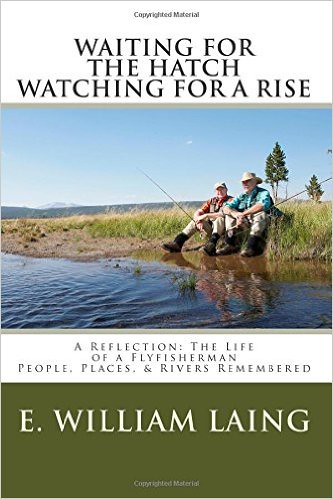
Local Angler/Author William Laing – “Waiting For The Hatch Watching For A Rise”

waiting-for-a-hatch-watching-for-a-rise

WAITING FOR THE HATCH
WATCHING FOR A RISE
A reflection: The life of a flyfisherman. People, places, & rivers remembered
By
E. William Laing

Bill Laing is a 78-year-old retired Dentist and life-long Flyfisherman. He lives in Eugene Oregon with his wife, Shirley. The McKenzie River is his home-water. He is a charter member of the McKenzie Flyfishers, charter member of the International Federation of Flyfishers, and a long time member of the McKenzie River Guides Association.
This collection of stories is from a lifetime of experiences and memories. It’s mostly, but not exclusively about fly-fishing,
You won’t learn how to catch more or bigger fish. You won’t learn the best places to fish. You will learn about the people who fly-fish, the personalities of flyfishers. You’ll learn about other people and events that have affected Bill’s life.

A book for the seasoned angler — Humorous, thoughtful, and entertaining stories every Flyfisher can relate to. Bill Laing captures the essence of fly-fishing and eloquently reveals there is more to fly-fishing than catching fish. Buy it today at the Caddisfly — $12

Posted in Fly Fishing Books | 1 Comment

Fall Fishing Holding up in November

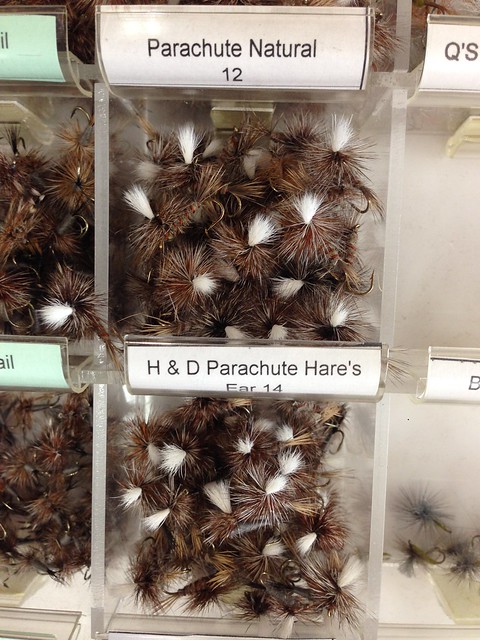
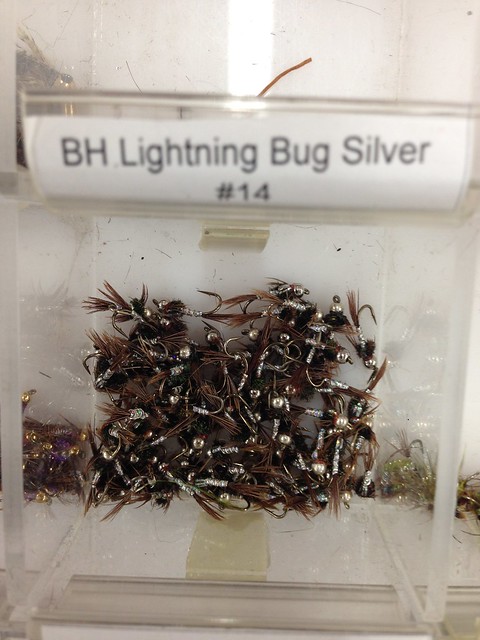
We are slated for a warmer night tonight and river levels are still low on the McKenzie and Middle Fork of the Willamette. Enjoy some fishing before game time with the following patterns. Small nymphs off of Parachute Adams or October Caddis are still working really well. Look for fish to be in a bit slower water and softer flowing riffles and runs.

Untitled

Untitled

Untitled

Untitled

Untitled

Posted in Fishing Reports, McKenzie River, Middle Fork Willamette River fishing | Leave a comment

Biot Body Mayfly Nymph Fly Tying Video Instructional

If you love the segmentation and realistic look that biot bodies give your fly patterns check out the new dyed versions in cool colors like fluorescent blue, fluorescent purple, fluorescent pink, and fluorescent orange. These make great tails and wings for disco prince nymphs as well.

In this video Chris Scott uses a fl. Blue stripped goose biot for the body and the same biots for the legs. This quick descending mayfly nymph is a killer dropper fly!

biot-body-nymph

Blue Biot Mayfly Nymph

Hook: TMC 2457 #12
Bead: Tungsten 1/8”
Thread White GSP 150
Tail: Pheasant Tail Fibers or Brown Hackle
Body: Blue Dyed Goose Biots
Wing Case: Pheasant Tail fibers
Thorax: UV Pearl Ice Dub
Legs Pheasant Tail Fibers

Posted in Fly Tying, Fly Tying Materials and Supplies | Leave a comment

Turning 40 in Southern Yucatan

Mahahual Mexico Fly fishing

I just spent 2 weeks in Mexico for my 40th birthday with the plan to catch my first Tarpon. Flew into Cancun with my wife and another couple and drove to Tulum the first night. After stocking up on provisions we made the two-hour drive South to the village of Mahahual. Our rental house was right on the beach and within minutes I saw bonefish, barracuda and other reef fish cruising around the closest flat a mere 200 yard walk from our back door. Travel weary and hungry we made dinner and prepared for the 5:30 wake up call for our first day on the tarpon lakes.

We had booked a few days with guide Nick Denbow http://catchafish.net/ to explore the lagoons in search of tarpon. The area’s lagoons are land locked but connected to the ocean through underground passages called cenotes. The tarpon and snook smell the fresh water leaving the lakes on the ocean side and swim up the underground caves into the lakes. These are fish nurseries with most being babies or teenagers but we did see plenty of 50 pound and better fish rolling and swimming around. Our first morning we arrived just as it was getting light and we were soon cruising in a 12’ “john boat” out to the edge of what for the next 2 days we would call “the Hole”. This was on one of Nick’s favorite lakes and it holds the best population of Tarpon in the 20-pound class with plenty of much larger adults mixed in. “The Hole” was where the cenote was located in the lake. The average depth of the lake is 3 feet but here it dropped to over 100 feet. We saw some fish rolling around and I made several casts with a cockroach but none were hungry. We then motored to the mangroves and I switched to a gurgler and started casting to the edges. Within the first 10 minutes I had 3 or 4 tarpon strikes on top water, hooking 2 of them but they all came off during the fight. One 20 pounder was very memorable as after hooking up he instantly went airborne, my fly came unbuttoned and he practically flew into a tree. The rest of the day for me included more jumped fish but none landed. My spin fishing partner hooked a 40-50 pounder that he had right up to the boat before breaking off and he landed tarpon and a nice snook. Great start to my quest and fishing top water bugs for these amazing fish is a blast.

Mahahual Mexico Fly fishing

Mahahual Mexico Fly fishing

Day 2 started at one of the largest lakes and more gurglers thrown at the mangroves. Within the first hour I finally landed my first tarpon albeit it was also my smallest one of about 3 pounds. Day 2 tally ended with landing several tarpon up to 12 pounds and a good snook. The weather changed for the worse that day and it really wiped out the fishing for the rest of our trip.

Mahahual Mexico Fly fishing

Mahahual Mexico Fly fishing

Our time in Mahahual was winding down and after tropical storm Olaf had sat directly on us for 3 days I had serious cabin fever so decided to try my luck one more time. So Day 3 was my birthday and Nick decided to take us to the lake with the biggest fish with the hopes of a trophy for my 40th. It was raining sideways with constant winds. The lagoons are somewhat protected from wind so even in bad weather they remain pretty “fishable”. I had invited my wife Tanya to go that day because I thought it would be fun for her to see the unique environment. Not the best choice as it rained even harder once we got there and never stopped. I jumped one good fish and had a couple other whacks but overall the fish were just not cooperating that day. On the positive side we did get to see some six footers roll around and it really gets your heart racing casting to a fish of that size.

All 3 of the lakes we fished had incredible bird life, saltwater crocodiles, and beautiful flora to gaze at while taking a break from the fishing. The tropical storm wiped out the chances of fishing the ocean side but in talking to locals there is 70 km of ocean flats, rocky points and bays that all hold bones, permit, jacks, barracuda, tarpon and snapper. There is a beach road running the entire length so access is very easy. On calm days Super Grand Slams are always possible. Nick is very professional and he really has it dialed down there. Being a British expat it is also nice having an English-speaking guide.

I fished the new Scott Meridian 8wt in the lagoons and all the hype you may have heard is true. Ridiculously lightweight blank was really nice when casting for 6-7 hours straight. Powerful action to bomb longer casts into the wind as well as incredible feel for the shorter 20-foot casts into and under mangrove branches. The cenote lagoons of the Southern Yucatan are a unique experience that I will definitely be back someday.

BF

Posted in Fishing Reports, Fly Fishing Travel | Leave a comment

Fall Fishing in Northeast Oregon

Special thanks to Jim Reichman for sharing his Northeast Oregon fishing trip with OregonFlyFishingBlog.com readers.

Among the many attractions of NE Oregon are the rivers and creeks that flow into the Snake River and ultimately the Columbia. After six years of imagining a fishing trip that would include the Wenaha, Wallowa, Minam, Lostine, Imnaha and Grande Ronde rivers I was able to convince fishing buddies from Eugene (Ron), Arizona (Ted), California (Mike), and Pennsylvania (Rob) to join me on the expedition. We set up the trip for mid-October, the prime time for arriving steelhead and large resident rainbows, which would include hike-ins, wading, and a float on the Grand Ronde.
The initial objective was the Wenaha, a beautiful river that begins in Washington, flows south into Oregon before taking a hard left to the east and flowing into the Grand Ronde near Troy. Getting to the river from the rim would involve a 5 mile round trip hike, with altitude changes of 1,700’ – 2,500’. However, about a month before we were to go in the Grizzly fire burned over 80,000 acres, including about 15 miles of the Wenaha Canyon. The road to the rim is still closed, and there is no information on the extent of the impact of the fire, which Forest Service officials believe won’t be put out until snows arrive.
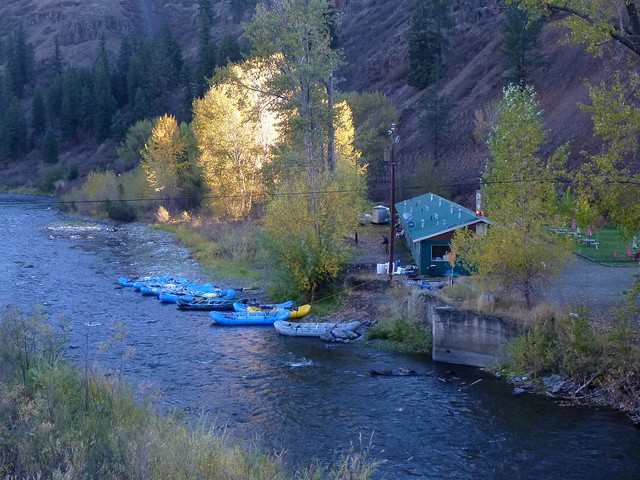
MinamMotelSmall

Minam Motel

So, after a slight change in our itinerary, three of us drove to Minam, Oregon and took up residence in the Minam Motel, a classic 1950’s roadside motel at the confluence of the Minam and Wallowa rivers. The motel is owned and operated by Grant and Lottie Richie, the outfitters for the Grand Ronde float. We fished right at the motel and a full day on the 10 miles of public access on the Wallowa, focusing on the 2-3 miles just above the motel. We mostly used hopper/dropper rigs (e.g., Chubby Chernobyl/Copper John) and while we didn’t catch many large rainbows the fishing was fun, the scenery and weather beautiful.

The next day our two other friends showed up and fished the Wallowa, with plentiful fish, including a few large rainbows. Meanwhile, three of us hiked up the Minam River which, along with all of the water in the area, was extremely low. We found very little water to fish, but the hike was great, and one could imagine, with a bit more water, the fishing would have been enjoyable. Alas, the Lostine, a small river to start with, was unfishable at these low water flows.
P1030155

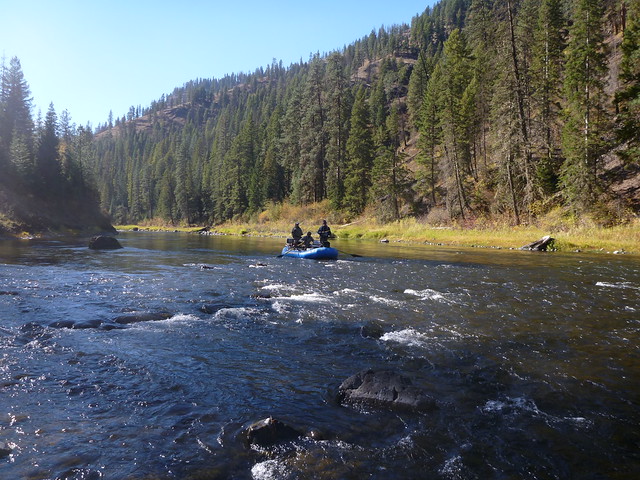
The next day the five of us, joined by Dan from Maine, began a 4-night, 5-day float on the Grand Ronde run by Grant and his crew (http://minamraftrentals.com/guided_trips.html). The guided trips have 4-8 anglers, 2 to a raft, which are nicely set up with fishing stations on either end. Grant also rents equipment (rafts, frames, and associated gear for a float) for those who want to do their own trip, and runs supported trips with anglers doing fishing on their own, but arriving in camp with tents up and appetizers and dinner waiting.
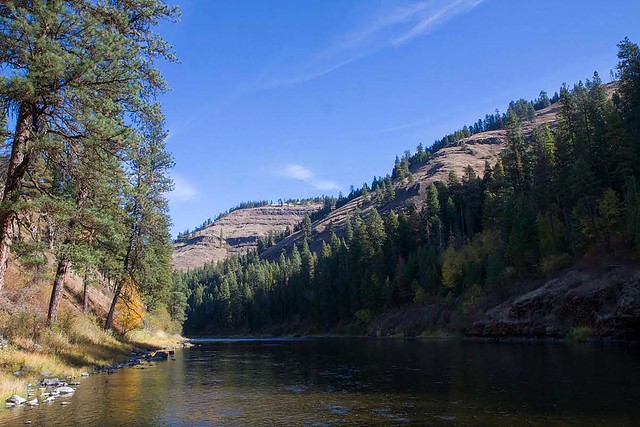
GR#1Small

Grand Ronde scenery – Photo by Rob Gendron
Ted#2Small

Another hook-up

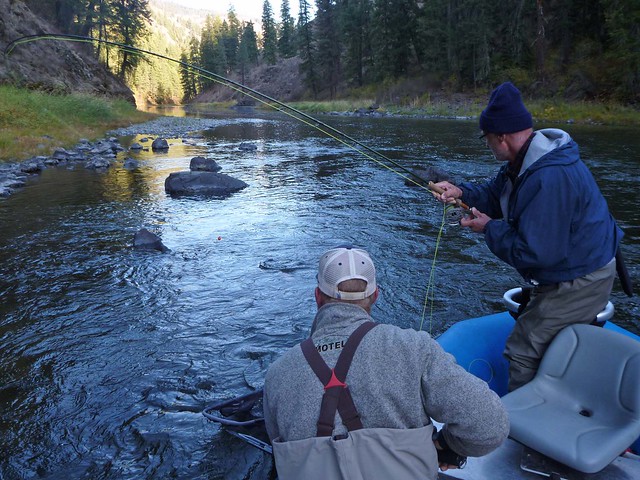
The float alone is memorable – 45 miles of roadless (no cars or trains) water. We spent most of the first day on the Wallowa, floating into the Grand Ronde after about 8 miles. The water was very low, and fishing was slow, although the last of the three fishing rafts caught 30+ fish. The fishing heated up on the second day, as we got into the Grand Ronde canyon, and generally got better each day, with the third and fourth day being particularly active. The fishing was diverse and almost continuous – popping flies into pocket water or dropping them in deep holes, drifting them along steep canyon walls, lobbing rigs into eddies and drawing them out across seams, and stripping streamers through slots. The fish were diverse as well – while we were targeting aggressive steelhead and big rainbows we also caught four or five other species..
On top of this the weather was sunny and warm, there was abundant wildlife (mink, otters, bighorn sheep, with black bears, mountain goats, and elk often spotted on other trips), and we had the river to ourselves.
RobRainbowSmall

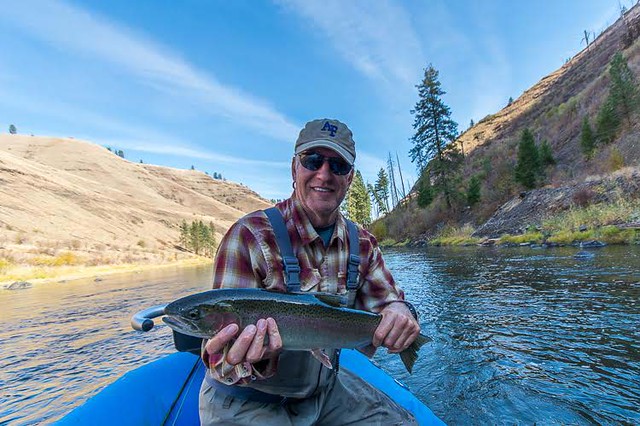
Nice rainbow – Photo by Grant Ritchie
Ted#1Small

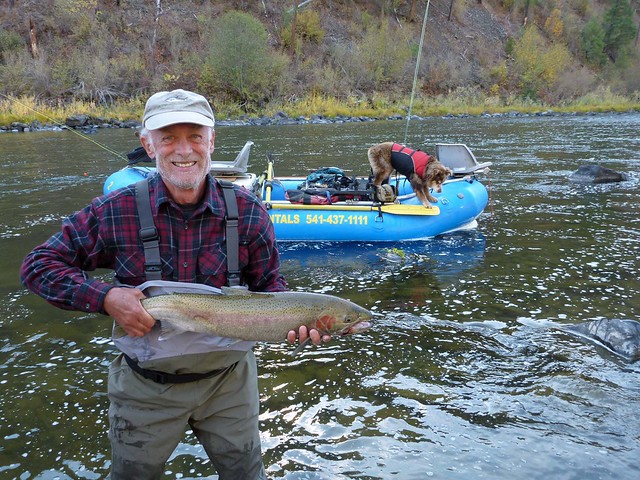
A happy angler

The number and nature of the fish varied by day, position, and flies. Often the lead raft got to the best holes first and had the best success, but on many occasions the following rafts would pull into the same holes and haul big fish out. At one memorable spot two rafts worked one hole, with three of the anglers landing a steelhead. I hooked one but didn’t land it, ruining the grand slam. We started out using streamers (especially black-and-white Dali Lamas) but eventually moved to two black rubber legs under an indicator (Pat’s Rubber Legs being the local fly of choice). By the last day of the trip streamers were working. We used 6 wt. – 8 wt. rods – I used a 7 wt. switch rod, which seemed ideal.
RobMikeSmall

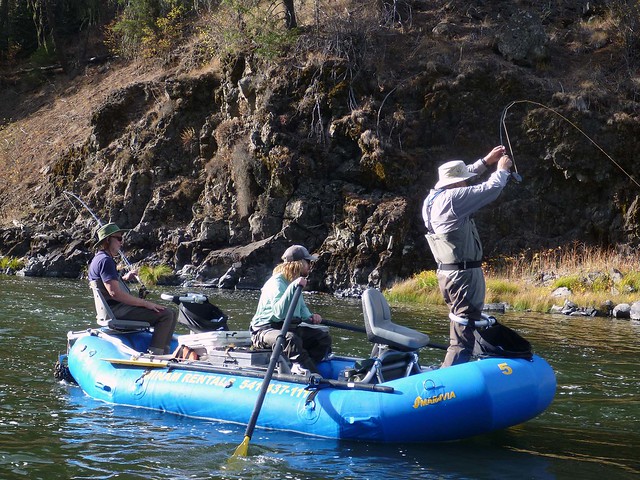
A steelhead bends a 6 wt. rod

Camp3

A pleasant camp – Photo by Rob Gendron

The camps were very pleasant and comfortable – usually 2 people per tent (but they don’t put you in tents with people you don’t know, although being in with people you do know could be worse…). The food was quite nice, and there was a fire (in a fire pan) every evening and morning. The three guides and the two “swampers” were very capable and cordial, as were the anglers, making for a memorable, even “best ever”, trip.
We pulled out, near Troy, around mid-afternoon on the 5th day. He had our car shuttled to the takeout as we were headed over to the Imnaha River. We settled in to the Imnaha River Inn (http://www.imnahariverinn.com/index.html), a very comfortable B&B five miles north of the town of Imnaha. Breakfast is provided and you can order a packed lunch and get a home cooked dinner for a bit extra.
ImnahaLowerSmall

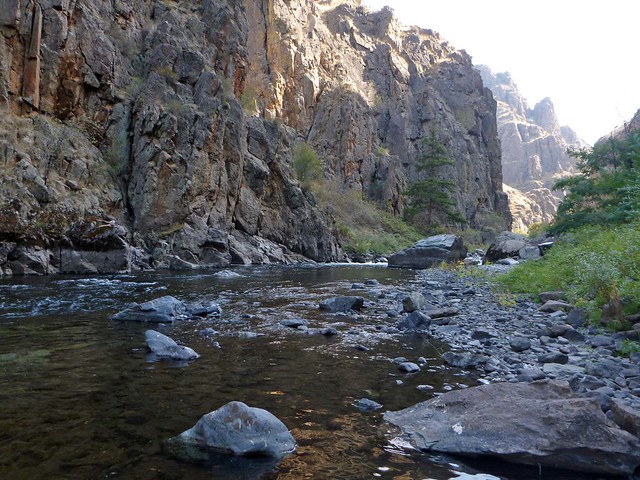
Lower Imnaha canyon

The next morning we drove from the Inn to the trail head that follows the Imnaha down to the confluence with the Snake. The road is slow going – about 1.5 hours to go 15 miles but it is not as gnarly as it is made out to be, at least when the weather is good. The trail to the confluence is about 5.5 miles, but there is fishing all along the way. We fished between 15 minutes and 50 minutes in and, using rubber legs caught 3 steelhead between us in about 2 hours of fishing. As an added benefit, the hike is beautiful (but heavily patrolled by poison oak).

ImnahaUpperSmall

Upper Imnaha Canyon

The next day we packed up and headed south, up river and out of the Imnaha basin. Because of the focus on steelhead (and a resurgent salmon run) the Imnaha is not known as a trout stream but we had a great time fishing spots along the river. Much of the land is private property, but there is public access for about 2.5 miles south of the town of Imnaha, and about 15 miles south there is a clearly marked stretch of public access and with beautiful water where we caught trout (mostly small) and a couple of bull trout (which can be targeted but must be released).
Late that afternoon we drove out of the Imnaha Canyon towards Lick Creek and Joseph, headed home after 10 days of fishing. The highlights – the amazing float on the Wallowa/Grand Ronde, catching steelhead “unguided”, and really great friends.

Jim Reichman

Posted in Fishing Reports, Fly Fishing Travel | Leave a comment

Local Rivers still Fishing Well

middle-fork-willamette

Both the Middle Fork of the Willamette and lower McKenzie are fishing well and remain extremely low. I had a chance to get out and float from Dexter Dam to Jasper bridge and despite minimal hatches the fishing was very productive. We fished October Caddis, Parachute Adams and small Chubby Chernobyls on the surface and had best luck dropping a size 16 jigged nymph or copper john 18-24″ below the dry.

The weather is going to get wet in the near future but water levels are unlikely to get completely blown out. Our local reservoirs are simply so low that we can handle some serious water before the rivers become “un-fishable”.

Further a field to our south Salmon Fishing on the Elk river has been very good. Today’s storm should aid in pushing fall salmon up all of Oregon’s coastal streams this coming week.

Posted in Fishing Reports | Leave a comment

Undertaker Steelhead Fly Tying Video Instructional

The Undertaker originated as an Atlantic Salmon fly pattern and is now equally popular amongst steelhead anglers. It’s a great pattern to use on a floating line or clear sink tip on the Deschutes River in Summer and Fall. Tony demonstrates how to tie this great looking fly in the video above. Try it on your closest Steelhead water!

undertaker-steelhead-fly

Undertaker

Hook: TMC 7999 Sizes 1-8, or your favorite Steelhead wet fly hook
Thread: Veevus 10/0, White and Black
Tip: Silver Mylar Tinsel
Tag: Chartreuse and Fl. Red Danville Floss
Rib: Veevus Fine Oval Gold Tinsel
Body: Peacock Herl
Hackle: Black, Hen Neck or Chinese Strung Saddle Hackle
Wing: Black, Bear or Calftail or Arctic Fox Tail

Posted in Fly Tying, Fly Tying Materials and Supplies | 1 Comment