Last week I had the opportunity to fish East lake with one of our friends and stillwater guides of the shop, Adison Rook. I have screwed around on many of our famed Stillwater venues over the years and done okay. Based on my past experience, I felt that I’d leave the stillwater thing as something to figure out when I got old and cannot wade anymore. Being in the boat with Adison, who intimitately knows many of the Northwest’s most famed Stillwater fisheries, opened my eyes to the dynamic world of technical stillwater angling. Utilizing techniques from competition Stillwater angling in the UK, we caught fish on a variety of methods, consistently all day. I’m not going to say I’m a changed man, but I am convinced that stillwater fishing can be just as engaging as floating the river, or working your way up a small stream when done right.

We were testing a variety of stillwater products, some new to the market, others not so new. We are excited to be working more with Adison leaning into his stillwater expertise and sharing it with you all on the blog, our YouTube, and most importantly our instagram. Stay tuned for additional educational content and product reviews. This year, especially, our stillwater venues will be getting a lot of love as our rivers are already unseasonably warm as a result of the subpar winter we had.
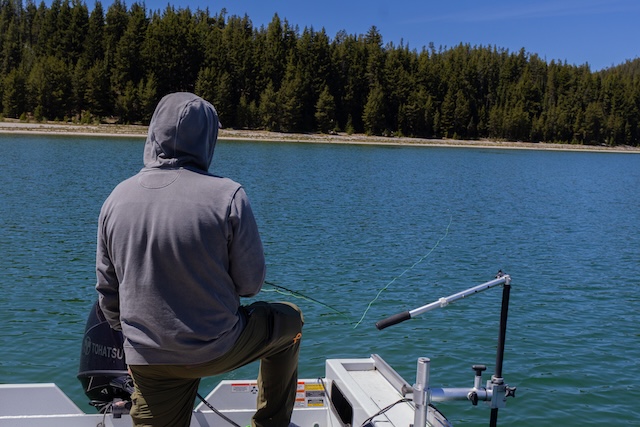
East Lake rests in the Newberry Caldera which is the crater left behind after the eruption of the Newberry Stratovolcano about 600,000 years ago. East Lake shares the caldera with Paulina Lake, separated by a relatively small flow. East lake is smaller coming in at just over 1,000 acres and Paulina being roughly 1,500 acres. East lake is the higher of the two being about 50 feet higher in elevation. Both lakes are considered high lakes sharing an elevation over 6,300 feet. Both East and Paulina have fantastic fishing for Rainbow Trout, Brown Trout, Kokanee, and the occasional Brook Trout, with East Lake having better access for bank anglers on the fly.
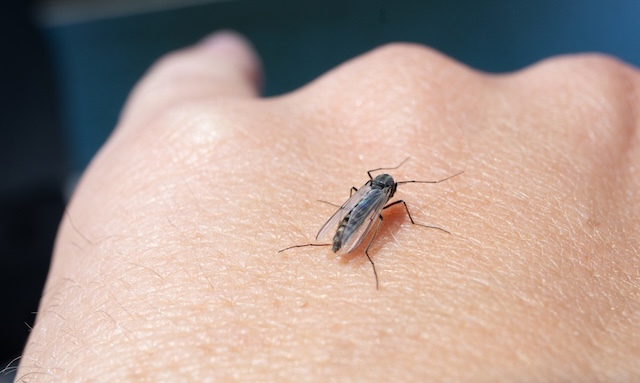
I was along for the ride with Adison, who knows his way around the high lakes and we began the cool, still morning indicator fishing. We caught Rainbows, Browns, and Kokanee for hours searching with a double chironomid rig. Here are some Chironomid options from the shop: Chironomid Bomber, Rio’s Hangin’ w/ My Chromies, Chironocones, Buzzer, Kelly’s Ice Cream Cone, or a Croston’s Bung Buzzer.
The most necessary part of our rig was a slip strike indicator, which allows you to fish at a depth longer than your fly rod. When stripping a fish in, once the indicator hits your top guide, it is tripped and will slide down freely until it is stopped by your first fly. Adison prefers to fish the smallest ones he can get away with; which made sense after seeing some very subtle takes. We also fished Phil Rowley’s Indicator Line which has a tippet ring instead of a welded loop. This made stripping your long leader through guides much easier when landing fish close to the boat. Typically we fished about a foot off the bottom, and got eats at frequent intervals that kept things fun.
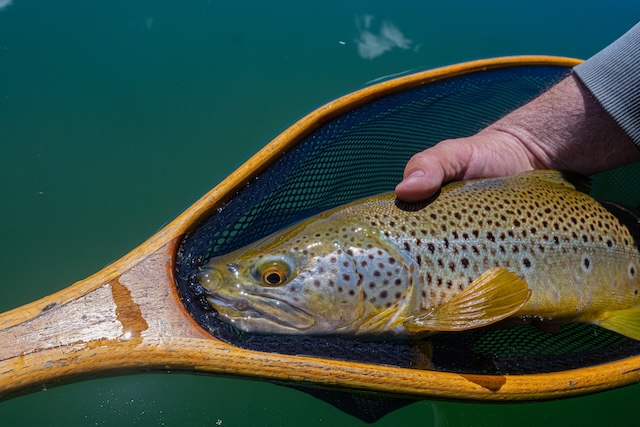
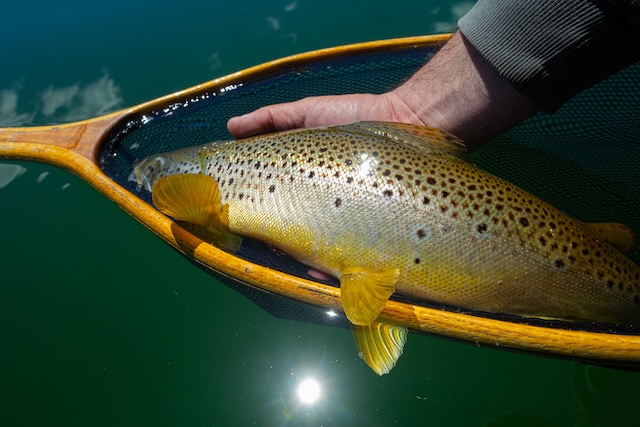
As things warmed up, Chironimids starting popping off on the surface and on Adison’s instruments he could see fish starting to move off the bottom. We started to see more fish eating dries and as things slowed down we switched over to Callibaetis nymphs. With a significant early season Callibaetis hatch starting we each turned one of our flies to a Callibaetis nymph and began picking fish up again. Here are some Callibaetis patterns that we like: Mercer’s Epoxyback Emerger Callibaetis, KJ’s Diawl UV Hot Head Fly, Foisset’s UV Callibaetis, Red Holo Diawl Bach Fly, Callibungus Nymph, or a Callibaetis Pandemic May. Adison flipped over to another fantastic line from Phil Rowley, the Midge Tip Long Float/ Intermediate. He promptly hooked up on a 20 inch brown that ate his slowly stripped Callibeatis. We fished these lines “Loch Style” the day before and I was impressed at how these lines both shot and presented flies.

The day prior, we fished “Loch Style” which entails letting the wind catch the boats broad side and casting with the wind to your back. This allows you to present flies to fish that you have not floated over yet. A “drogue”, which is like a parachute dropped off the side of the boat, allows you to slow your drift and get more casts in over the prime shoal habitat. I’ve heard Adison talk about this technique, but seeing it, and fishing it really helped me understand how deadly of a tactic it is. There’s no surprise it is standard procedure on the stillwater venues in the UK, where that is there jam. It is also a fantastic option when it gets too windy for dries or indicator fishing. We fished Callibaetis and Chironomid nymphs on Midge Tips and got bit on most casts. Our retrieve rate depended on how heavy our flies were, and more importantly how quickly the boat is drifting. This method is certainly effective with streamers as well s, but we were dialed in giving the fish exactly what they wanted.

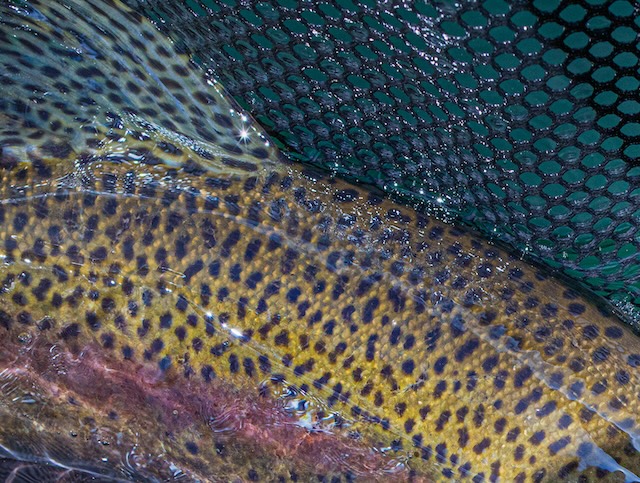
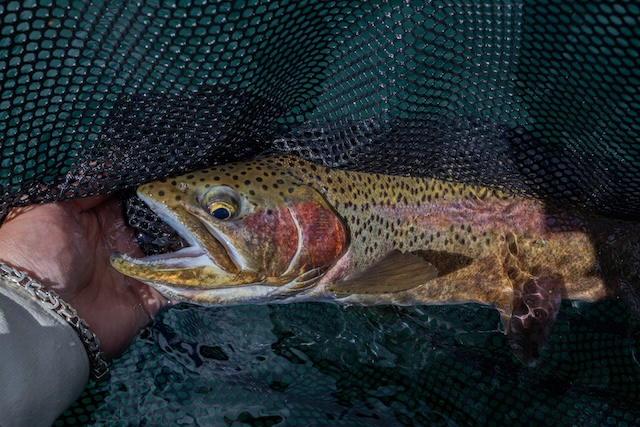
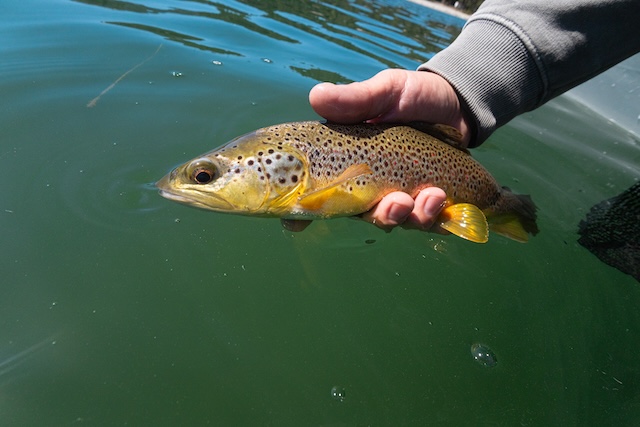
We finished up the afternoon fishing terrestrial patterns up against the banks. If you can fish downwind of the banks of East, Adison told me that you can have fantastic terrestrial fishing early in the season. We brought countless fish to hand fishing terrestrials which I figured was unseasonably early, but was assured that the fish get dialed in on them extra early. Working the banks, Adison taught me that fish will hang out in a territory that they claim, sipping terrestrials that end up in their zone. He spotted a large fish repeatedly eating off of a rock as we were slowly working up the bank. I landed a nice 20″ Blackwater strain Rainbow on a dry. They are so dark and bronze, we both assumed it was a big brown at first. These fish were introduced from Canada to help control the booming Tui Chub population, but happen to also fancy dry flies in the afternoon.
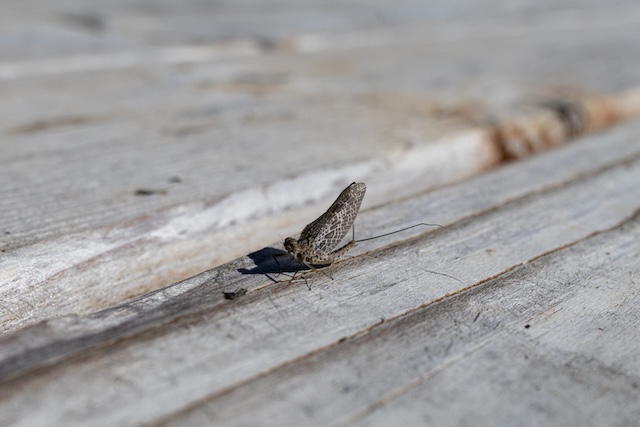
As things continue to warm up, Callibaetis Dries will become increasingly important. Here are some favorites that we have: Tilt Wing Calilibaetis Dun, Cripple Callibaetis, CDC Biot Comparadun Callibaetis, Hackle Stacker, or a Parachute Extended Body Callibaetis. Spent Callibaetis spinners can be especially important such as these two: Hi Vis Spinner, Hi-Vis Spinner. Some great larger terrestrials follow: Hi-Vis Micro Chubby Chernobyl, Ground Beetle, Splitzville Beetle, Stubby Chubby, Fat Angie, or a Rio’s Blade Runner Hopper. Ants are often overlooked, and they are super important. Here are some favorites: Mason’s Bant, Mason’s Wingman Ant, Hi-Vis Flying Ant, Black CDC Ant, or a Rainy’s Hi Vis Ant(3 Pack).
I’ve done well working the bank from foot with many of the above mentioned tactics. Typically, I make my way up to East Lake later in the year, but got a taste of earlier season there and it is just as good. Searching with dries in the afternoon into the evening can be fantastic, especially as summer carries on. Stripping flies from the bank has yielded more of my large fish over the years. Indicator fishing from the bank is doable, especially with a 10′ rod. Obviously being in a boat is best, but East lake is a venue that is extremely accessible for most bank anglers.

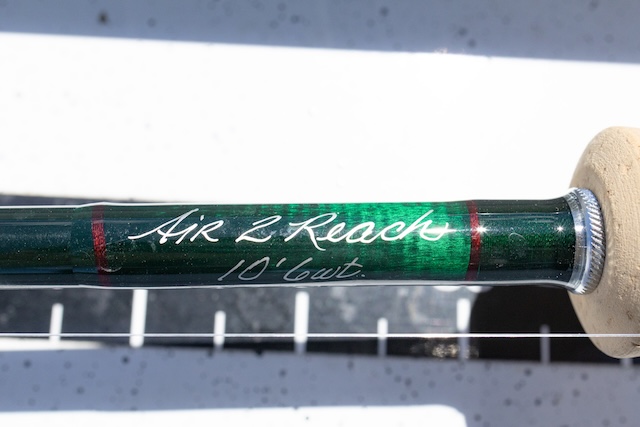
We fished a handful of rods there, most were 10′ 5 weights. These rods have enough punch to reach far from the boat or the bank, without being overpowered for the trout there. We compared the Echo Stillwater and Lago both in 10′ 5 wt; stay tuned for an in depth review comparing them. We also fished the brand new Sage Arrow 9′ 5 wt mainly for risers throwing terrestrials. Another rod that we threw for dries happened to be one of my favorite rods of all time: The Winston Air 2 9′ 5wt. We also ran the newer 10′ 6wt Air 2 Reach from Winston which felt great. I have the 10′ 4wt Air 2 Reach which is a fantastic nymph stick, and with the right dry fly geared line, would be an epic high lakes dry fly rod. We ran the extra long Absolute Indicator/Stillwater Leaders which have a sighter and is very helpful.
We fished indicator lines from SA and RIO for Indicator setups: Scientific Anglers Amplitude Anadro / Nymph Fly Line and Phils Stillwater Floater from Rio. Phil Rowley’s Midge Tip Long in Float/ Intermediate from Rio seems like a staple for subsurface presentations after using it. For dries we ran the RIO Elite Technical Trout Line on the Arrow and it presented small flies delicately in shallower water. I ran the tried and true Textured Scientific Anglers Amplitude Infinity on my Winston Air 2 9′ 5wt which worked good enough to entice an eat from that large bow. Two better options more geared towards delicate dry presentations versus the more versatile Infinity from SA would be: Scientific Anglers Amplitude Textured Trout Expert Fly Line or Scientific Anglers Amplitude Textured Trout GP Fly Line.
East Lake is a fantastic option to spend a weekend learning the ropes of stillwater angling, whether you’re in a boat or from the bank. The suggestions above will surely enhance your experience there, but you can make things work with your standard 9′ 5wt setup enough to catch a handful of fish. This past trip really opened my eyes into the big leagues of stillwater angling. With Adison showing me the ropes, I have seen into a whole different side of the sport that typically does not get as much love here in the US as it does in the UK. We’ve got everything you need to have a fantastic trip there. Swing by the shop for advice and to get geared up, or shop online here.
-Simon
Stay up to date with additional links below
Follow us on Instagram
Caddis Fly Shop: @Caddisflyshop
Oregon Fly Fishing Blog: @OregonFlyFishingBlog
Caddis Fly Travel: @Caddis_Fly_Travel
Subscribe to our Youtube channel
Shop Online from all over the World