Duo Slamo – Isla de la Juventud

fly-fishing-cuba

This years Caddis Fly Shop hosted Cuba trip was on the Isle of Youth aboard Georgiana Yacht. We again utilized Avalon Fishing and Fly Fishing Caribe for our booking.

georgiana-idj-dining

We originally booked the smaller Perola craft but due to a water pump issue our group was moved to the larger 100ft Georgiana yacht.

monkey-island-idj

The Island of Youth is located on the South Side of the Cuban mainland and was the subject of Robert Louis Stevenson’s novel Treasure Island. The sleepy but large fishing and agriculture focused island is not a tourist hot spot by any means.

pigs-monkey-island

swimming-pig

pig-in-a-boat

Getting there

We woke at on July 2nd, way to early but limited flights and wanting to fish as early as possible this is the best option. We were transported via bus from our downtown Havana hotel “Parque Central” to the Jose Marti national airport; from there we flew to the island around 6am. A short bus ride to a marina on the east side of the island and we arrived at our boat.

georgiana-idj

tarpon-jump

The Georgiana is indeed large but is in no way a luxury yacht. In fact it needs a bit of work and has maintenance is scheduled this off-season. The boat’s size does allow for guests to have there own single accommodation. The staff is friendly and accommodating. Our food was good; lobster was served virtually every meal, fresh fish, fresh fruit, beans and rice, excellent soups all were standard fare.

georgiana-foods

Day one is a scheduled half-day of fishing while the boat moves out of the marina to an anchorage on one of the innumerable cays between the Island of Youth and Cayo Largo. Like all of Avalon Fishing’s locations around Cuba the truly amazing and unique aspect of the fishing location is that you will see virtually no other anglers during your stay. Our group of 5 anglers had what seemed like 100 square miles of reefs, cays, channels and other ideal fish habitat alone. The price of a fishing trip to Cuba is expensive but as long as this solitude can be maintained to some degree it’s well worth the price of admission.

jack-idj

The rest of our fishing days were great. I loved the program of, fish from 8am to 1pm, eat a nice lunch and go out between 3-4pm, and fish until 8pm. On the last day we had to be back at the dock by 5pm and our day shifted to an 8-5pm day with a shorter lunch break.

patsy-cash-snook

The fishing area surround the Island of Youth is know more as a tarpon fishing zone than most other areas of Cuba. The nearby reefs and channels provide a steady stream of moving tarpon anglers can target depending upon weather and tidal conditions. There are bonefish and a couple of zones during our stay had flats the guides felt were suited for permit fishing.

cash-tarpon

Our group had good fishing. Tarpon and bonefish were caught every day and we were fortunate enough to catch two permit as well. The Permit were caught on consecutive mornings and both led to “Grand Slams”. We caught many more “baby” tarpon than larger fish but we certainly had our opportunities. Our weather was fantastic; minimal winds for the most part, mostly sunny conditions.

tarpon-release

The guides that were assigned to our group were very good, in particular “Landy” the guide Shauna, the kids and I shared had superb English and a great “handle” on were to be when. Landy guided us into the Permit and stuck with it until the slam was complete.

permit-shauna

shauna-bonefish

shauna-tarpon

We have led quite a few excursions to Cuba since 2001 and now feel we have an excellent understanding of the great variety of fishing available through Avalon Fishing Charters. This year’s trip was a reminder of the benefits of a live aboard boat fishing program. Travel in Cuba is generally problematic and while it looks like more American carriers are going to fly into more locations around the country of Cuba, there are very limited “in country flights”. Getting to your fishing destination can require some long days, some serious “hurry up and wait” situations and some flexibility/patience when required.

cd-permit

beach-tarpon

We consider the to trips below as the very best. There are others of course and I am happy to help with what to expect on both the land based operations and other “floating hotel” and live a board options that we have experienced in Cuba.

working-old-cars

havana-centro

Best land based operation – Cayo Largo see our article here: Cayo Largo here.

Best Boat experience – Avalon I – See our article on Cayo Cruz aboard Avalon I here.

Next years trip is aboard the Avalon I in the Jardines de la Reina we really feel this is the ideal mix of tremendous variety and deluxe accommodation. We still have a few spots available on this Cuban Fly Fishing Adventure. Give me a call or email if you would like to inquire further. Dates June 23-July 1, 2017. Cost $6900.

Chris Daughters

caddiseug@yahoo.com

box-fish-release

snook-idj

Posted in Fishing Reports, Fly Fishing Travel | Leave a comment

Introduction and Interview with Doug Brutaco of Aqua Flies

DSC_3797

Aqua Flies. New Kid on the block. Impressive flies. Very nice. Very tasty. I purchased several patterns and am busily trying to adapt my own flies with the new inspiration I’ve found in these beauties.

Doug Brutocao. Doug is the man who runs Aqua Flies. Doug’s introduction to fly fishing was a lot like mine, except he was a few years over me, 15 versus 13, and he started with a Fenwick while iIstarted with a Japanese bamboo rod. We both started with Pfluger fly reels though. We both read books and had help along the way. My help was from people like Audrey Joy and Lloyd Byerly of Portland Oregon Doug watched Grant King at work, along with people like Bill Schaadt, Hal Jansen, Bob Nauheim and other California fly angler/tyers.

Doug has traveled and fished more destinations than I have too. Places like Alaska, BC, New Brunswick and Russia have been on his itinerary, but BC has been my only out of country venture for sea run fish.

While I was tying for a few retailers, Doug founded Doug’s Bugs at the age of 18 — my semi-commercial tying was as a grad student at OSU and then in my spare time while working full time as a fish biologist.

Doug tells me that he formed Aqua Flies to take the state of commercially produced steelhead and salmon flies to a new level. I look at his bugs and think he has achieved just that. Nice job Doug.

The Caddis Fly Shop is pleased to offer Aquaflies online – after our in-store clients welcomed these patterns with enthusiasm.

Here is a brief Interview with Doug agreed to let me use to help introduce his product line.

____________________________________________________

Aqua Flies Q/A (July 2016)

Jay: How did you decide on the traditional steelhead and salmon fly patterns you would carry?

Doug: We noticed that the traditional steelhead fly we know 25 years ago was becoming increasingly difficult to find.  It was easy to find a Green Butt Skunk, but many of the other patterns were simply disappearing from the view of fly shop buyers and consumers. The flies you would find were not up to par, except for those flies that were being tied by regional commercial fly tiers. The quality that was on the market was very poor from the use of inferior quality hooks, bad proportions and incorrect color schemes.  We wanted to show shops that we could produce a quality fly that is tied correctly, a good way to do that is with old school patterns with a little bit of glitz.

Jay: How did you meet and decide to work with people like Greg Senyo and Brett Jensen as two examples of your signature flies?

Doug:  Not only do we respect tradition, but we want to be cutting edge.  Greg is well known for developing new fly tying materials and incorporating those new materials into his innovative patterns.  Our lineup of flies was lacking the style of fly that the swing guys in the Great Lakes like to use.  Shops in the Great Lakes were telling us that our patterns looked great, but not exactly what they like to use.  So we fumbled around with a few things until Greg came to us and offered us two patterns as a trial.  As soon as Greg saw the quality and our ability to tie his fly almost exactly as it had come off of his vise, he opened up his box and gave us more patterns to tie.

I had fished on and off  with Brett for many years.  His flies always impressed me, he had good proportions, good color selections, neatly tied and they caught fish.  A few years ago I had a chance to fish with Brett on the Klamath.  We were all having success that day.  I asked Brett what he was using and he showed me his Klamath Caddis, I had seen the fly a number of years ago in his box, but never saw the fly in action.  HE gave me a few to use along with his Obie Skater.  I asked if he would mind if we produced the flies, thinking they would be popular only in Northern California.  He was excited at the opportunity and suggested that he submit some other patterns.  From the get go, his patterns have sold very well, with sales from BC to California.

Jay: I think I see some hooks that are different from those I am accustomed to fishing. Can you share a little information about these hooks and why you selected them for your flies?

Doug: We use Gamakatsu Octopus hooks for our trailer hooks on most of our flies.  The little trailer hooks that are ring eye are out of Korea called Iseama.  The traditional flies are tied on Maruto out of Japan.  Tubes are rigged with the Iseama hooks also. I chose the very best hooks I could find considering sharpness, durability, shape, and wire diameter at each size.

Jay: Could you note a few of the new fly patterns you plan on releasing in the autumn of 2016?

Doug:  We have the honor to be working with Jerry French on his patterns.  Being the father of the Intruder and an innovator in tying using the composite loops, we were thrilled.  IT is very challenging for your tiers to switch gears when tying Jerry’s flies, but they are tuning out very well.  This is a project that has taken over a year to develop, but we feel that there is nothing like Jerry’s flies on the market.   In addition to his Intruders, we will be tying the Dirty Hoh, Summer Sculpin and Jerry’s Waker Maker.

Stu Foxall has also submitted some very nice patterns for release this fall.  He has a PrawnTruder tube fly.  This fly is a little different in that the rubber legs are tied underneath the fly to represent the legs of the prawn.  When looking at the fly from behind, it looks just like a prawn with the eyes, feelers and fluttering legs.  Small brass eyes are tied on the bottom of the tube so the fly rides with legs hanging down.  Very cool pattern.

We will also be introducing a line of marabou tube flies  that incorporate the Pro Sport Fisher Ultra Sonic discs.


________________________

End  of Jay’s Interview with Doug

Post Script: 

The Caddis Fly Shop is pleased to announce that our stock of Aquaflies is sufficient to list most patterns we carry online.

My photography is less than optimum, but these flies are the best examples of commercially tied flies that I would be confident fishing myself. kThe following photos are representative of patterns we will stock with more to come by the likes of Greg Senyo and Jerry French and maybe, possibly, a few flies by Jay Nicholas in 2017.

Here are some quick links to the flies we currently stock, absent the riffle hitch skaters we now have in the shop but I just have not placed the link here yet. My bad.

Aqua Flies incite me to swing other people’s flies — and I bet you will feel the same when you see them in person.

Brett’s Obie Skaters

Brett’s Klamath Skaters.

Stu’s Mini Intruders

Brett’s Klamath Intruders

Scorpion Stingers

Stu’s Barred Ostrich Intruders

Senyo’s Predator Scandi


Senyo’s OCD


DSC_3781 DSC_3782 DSC_3783

Jay Nicholas Aquaflies d

Brett’s Obie Skaters and Klamath Skaters.

DSC_3793 DSC_3801 DSC_3792

Stu’s Mini Intruders

DSC_3797

Scorpion Stingers

DSC_3803 DSC_3787

Brett’s Klamath Intruders

DSC_3791 DSC_3790 DSC_3800

Stu’s Mini Intruders

DSC_3797

Stu’s Barred Ostrich Intruders

DSC_3799

Senyo’s Predator Scandi

DSC_3804

Senyo’s OCD

DSC_3805

Jay Nicholas – July 2016

Posted in Fly Fishing Gear Review, Fly Tying, Fly Tying Materials and Supplies, Uncategorized | Leave a comment

Support Recovering America’s Wildlife Act!

A bill was introduced last week in Congress to provide $1.3 billion annually for wildlife conservation across the United States. The proposed legislation, called the Recovering America’s Wildlife Act (H.R. 5650), was authored by Reps. Debbie Dingell (D-Mich.) and Don Young (R-Alaska). It would use royalties from energy and mineral development on federal lands and waters to fund the Wildlife Conservation Restoration Program.

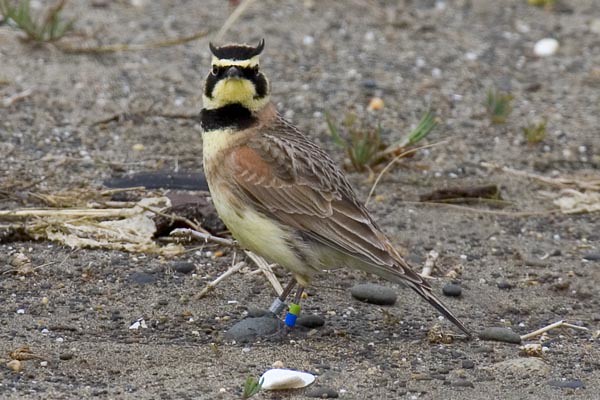
Streaked Horned Lark

The bill was inspired by a report released last spring by the Blue Ribbon Panel on Sustaining America’s Diverse Fish and Wildlife Resources:

Our generation has been blessed with abundant elk, wild turkeys and a diversity of sport fish—but this has not always been the case. A century ago, most game species were imperiled and our nation was facing a fish and wildlife crisis. Fortunately hunters, anglers and the shooting sports and fishing industries rose to the occasion and secured funding so the states could do the important work of restoring and managing fish and wildlife. This remarkable partnership led to one of the greatest conservation success stories the world has known. Yet what is hidden from most Americans is another impending fish and wildlife crisis.

For every game species that is thriving, hundreds of nongame species are in decline. Unlike the conservation finance system that was created for game and sport fish, there is no comparable funding mechanism to manage the majority of fish and wildlife under state stewardship. As a result, thousands of species of birds, frogs, turtles and even the iconic monarch butterfly are slipping through the cracks and could become endangered in the future.

The next step is to secure bipartisan co-sponsors of the bill. Let your representatives know you support this important legislation.

Posted in Oregon Conservation News | Leave a comment

North to Adventure: The Next Generation

For decades, our family has traveled far into the Canadian wilds to fish for northern pike and walleye at Lake Esnagi. You might remember some blogs posts from years back… Molson and whiskey-soaked weeks chasing forty-inch pike with fly rods.

This year, I took my son for the first time. On the first hour of the first day, he smacked his orbital bone on the side of the wooden boat and bled all over. We stuck a Sponge-Bob Band-Aid on it and hoped for the best – we were far from any roads or stitches. He stuck it out and spent the rest of the week reeling in large, toothy critters. I even had a chance to get a few on the 8-weight.

Some photos below. Hope you enjoy them.

esnagi

27538336473_1dba15c646_k

27933358652_3a23050c61_k(1)

27958008171_53a52a628c_k(1)

27958007701_afc1257e28_k(1)

28153682005_b07dce3582_k(1)

27872396110_bede2e1a6c_k(1)

27933402532_a838660e53_k

27538344853_b6b737da66_k

-MS

Posted in Fly Fishing Travel | 2 Comments

Greg Senyo’s Micro Shanks – a great new option for Micro Intruders and more!

Caddis Fly Shop Senyo's Micro Shanks
Many fly tyers have been in the process of down-sizing their Intruders, and have been exploring the world of swinging a variety of streamers and smallish Intruder style flies for trout.

Our friend Greg Senyo has teamed with Fish Skull and we now have these Micro Shanks at our disposal, at 17mm and 23mm to work with.

Senyo’s Micro Shanks will give us more options when tying than the excellent OPST 20mm Dumbell eye shanks, because the Senyo’s Micro Shanks have the ability to link two or more shanks together to make articulated style flies.

I will be featuring Micro Intruders tied on the OPST 20mm shanks and on these Senyo’s Micro Shanks this summer, but I wanted to spread the word about these two products now, in case my video schedule slips while I’m writing and fishing.

SAMSUNG CSC

For the present, here is a photo of a 1.75″ fly I just tied on a 23 mm Senyo’s Micro Shank: the hook is a #6 OPST Swing Hook. The accent is Pro Sportfisher HD Jungle Cock, the body is Senyo’s Muppet Fusion Dub. Feelers are Lady Amherst Pheasant, and the hackle is Ringneck Pheasant Rump.

OLYMPUS DIGITAL CAMERA

And here just above is another summer steelhead fly I just tied that I am quite sure will catch me a fish in the next few weeks (ha ha).

Any tyers who have struggled to craft small steelhead flies with trailer hooks will immediately recognize the excellence of these small shanks with features that include the shape of the shank, the finish, and the fine wire diameter. I recommend these Micro Shanks very highly.

Whether you are tying flies to swing on your MicroSpey rod for steelhead, crafting european style wet and dry flies for Atlantic Salmon, tying articulated Intruders in small sizes, or tying flies with clean short shank hooks for warmwater species, I think you will like this new product.

Jay Nicholas, June 2016

Posted in Fly Tying, Fly Tying Materials and Supplies | 2 Comments

SAGE ONE FLY ROD SALE 30% OFF SPEY, SWITCH and SINGLE HAND MODELS

sage-one-sale-rods

While they last, and we have a bunch, SAGE ONE rods are discounted at least 30% off. The ONE series of rods has been the flagship model for SAGE for over eight years now and it’s time for it’s successor the SAGE X to step in and take over.

We have a very large stock of SAGE ONE single hand rods, SAGE ONE Switch Rods, and SAGE ONE Spey Rods. Rods will be discounted at least 30%. Additionally the SAGE ESN (European Nymphing models) and SAGE CIRCA models are being discontinued and we have those marked down 30% as well.

Stop in and pick one up or, order online at Caddisflyshop.com-SAGE-ONE-SALE

caddisstickerround

Posted in Shop Sales and Specials | 2 Comments

Summer Fishing Conditions on the McKenzie and Willamette Rivers

McKenzie summer 2016

Gorgeous summer days look to be in front of us for a while. Water levels are fantastic for wading and boating. Steelhead counts are looking good, welcome to the Willamette Valley!

Hatches have slowed for sure on the McKenzie and Willamette and anglers should focus on smaller bugs and lower light conditions at this stage. Make sure to have Pale Morning Duns, Little Yellow Stones, and small Parachute Caddis in your box. Yesterday around mid morning I did find quite a few fish rising on the upper McKenzie. They were willing to take a Purple Parachute Rooster pattern, an excellent all around searching pattern.

Mckenzie river and Redington Butterstick

Evenings are going to produce solid fishing and again you will want smaller caddis patterns, little yellow stones and some spent Pale Morning Duns or “rusty spinner patterns”. It’s time to go to a longer leader and fish 5x and even 6x tippet to get that perfect drift with your smaller flies.

Steelhead fishing is going to best in low light as well. Fishing has remained solid on both the McKenzie and Willamette. The McKenzie seems to have more fish stacked up at Leaburg dam while the Willamette is getting a better spread of fish throughout from Dexter dam through town. We expect water conditions to get lower and scaling down your “intruder style” pattern is a good idea as the sun gets up a bit. We have some killer Aqua Flies that fit the bill.

willamette falls fish counts

CD

Posted in Fishing Reports | Leave a comment

Oregonian Op-Ed: Renewed optimism for salmon recovery

New Op-Ed in the Oregonian this week By Liz Hamilton, Jeff Feldner and Chris Daughters…

lower_granite_dam

Biologists have cited removal of the lower Snake River dams as the best tool we’ve got for restoring wild salmon at risk of extinction. Despite a rapidly growing list of river restoration success stories, federal agencies have avoided seriously considering this option. The recently restored Elwha River in Washington state is a nearby example of how quickly fish and wildlife populations can bounce back. Recent coverage in National Geographic points out that young chinook, chum and coho salmon have all seen unexpectedly rapid population spikes since the Elwha and Glines Canyon dams were dismantled.

Posted in Oregon Conservation News | 1 Comment

McKenzie Special Caddis with Lagartun Micro Flat Braid

The first McKenzie Special Caddis I saw was when I met Prince Helfrich while fishing the Metolius River in the early 1960s. The pattern Prince fished had a muskrat grey body, brown hackle, and squirrel tail wing. You will see many variations on this fly today and my own preferences shift from season to season. This fly features a tag of Fl Chartreuse Lagartun Micro Braid. Fish this fly with a lot of movement and action to mimic the active swimming of the natural caddis as it swims to the surface to emerge.

Green McKenzie caddis

Hook TMC 3761 #10
Thread Lagartun 94D or Veevus 10/0
Tag – Chartreuse Lagartun Micro Flat Braid
Body – Whitlock SLF green & grey mixed
Rib – Lagartun wire
Hackle – Brown, Grizzly as you choose
Wing – Nature’s Spirit Humpy Deer Hair

Save

Posted in Fly Tying, Fly Tying Materials and Supplies | 1 Comment

Stocked, Locked, Ready to Rock…Hosmer Lake Report

hosmer-lake-fishing-report

Americans are notorious for not using their hard earned paid time off. That fact is rather sad and is indicative of a culture that at times has its priorities out of whack. When I logged into my employee account, I noticed that I was quickly approaching the ceiling of my accrued PTO. That meant only one thing, it’s Hosmer time. I packed up the trailer and my family and headed east last Thursday for a 4 day Hosmer get away.

But first, I must rant a little. My attitude towards Hosmer has become rather Jekyll and Hyde of late. I’ve been fishing Hosmer for several years and my fishing buddy, Rick Bocko, who would join me on Friday, has been fishing it much longer. Hosmer has changed. So many kayaks, paddle boards, pontoons and worst of all, an increasing presence of drift boats. Drift boats? On Hosmer? Hmmm…. Shall I prep my jet sled? I even had a bit of cognitive dissonance as I wrote this article. Do I expose to even more people to the beauty of Hosmer that would perhaps draw in even more people?

I guess the answer to that last question is, yes.

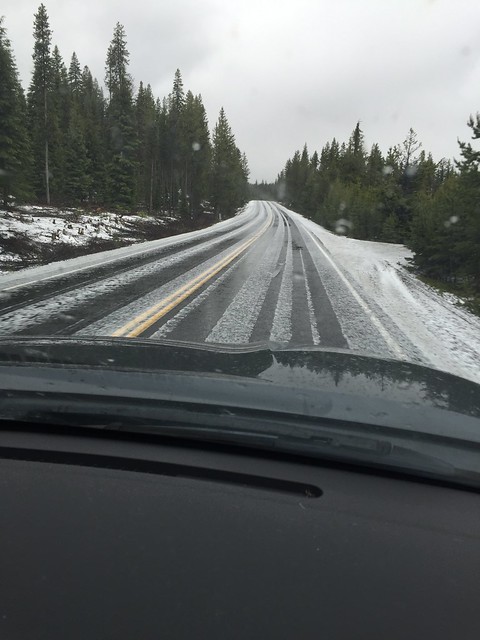
This trip was highlighted by a myriad of lows and highs. Even before leaving Eugene, we had a massive water leak in the trailer. The weather became somewhat schizophrenic at about Cultus with an inch or two of snow on the ground. While normally not a big deal, hauling a trailer in snow made it a big deal.

hosmer-lake

Once “camp” was set up, I quickly grabbed a rod with my new Scientific Angler Stillwater line (great stuff) and hit the water. I fished the channel with not much luck, then headed to south lake.

Just at the entrance of south lake a tan caddis hatch started to emerge onto glass smooth water with a late evening intermittent light summer rain. Remember, it had just snowed not more than an hour prior. I sat in my pontoon awaiting to see how Hosmer’s new stocking program would react to these small tan caddis just sitting on the surface. One by one, small swirls started to appear with the occasional, “what the heck was that?”. Dry fly action was on. But dammit, in my haste to get on the water, I forgot to grab my dry fly set-up. Panicking, I threw a Lafontaine caddis emerger onto my clear sinking line and just hoped it would float long enough for a trout to be interested. Well, the trout were interested. Let me rephrase that, the pigs were interested.

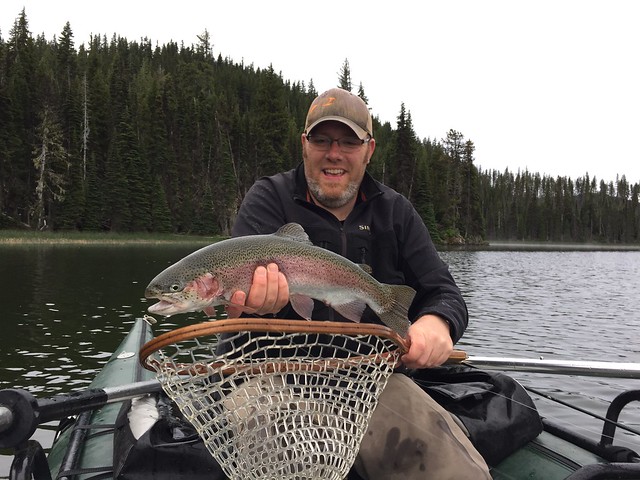
Hosmer is on year two of a new stocking program that is eliminating Atlantic salmon in favor of rainbows and cutthroats. Let me just say, the rainbows are absolutely sick. They are plentiful, very hardy and at times they are huge. This last assertion is best seen in exhibits A and B below.

hosmer-lake-rainbow-trout

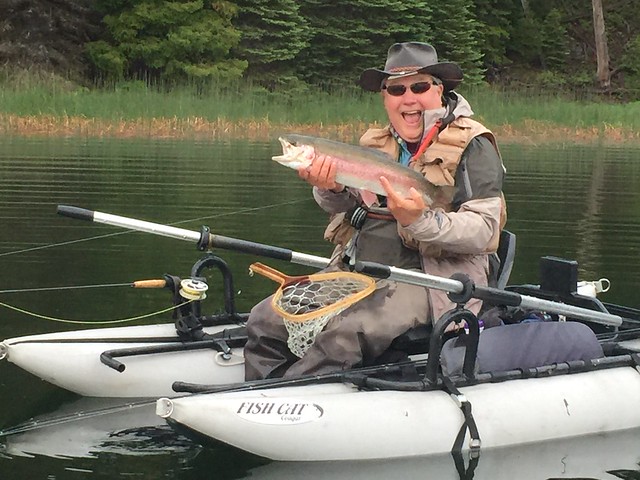
hosmer-lake-fly-fishing

On Friday, Rick joined me and we spent 13 and 11 hours sitting in our pontoons, respectively. The weather at times was horrid with torrential down pours. Another low of the trip was me forgetting my rain jacket. A little hypothermia is good for the soul, right? Rick caught a dozen including a very large (20+in) trout on a dry caddis along with several 17-18 inchers. I hooked up times ten including a 17 inch brookie and several good size bows and a couple small cuts. A word about cutthroats to ODFW. Just be gone with them. A 20 inch cut at Hosmer fights like a 12 inch bow. The flies that reigned the day were hula damsel, tan x-caddis and green scud.

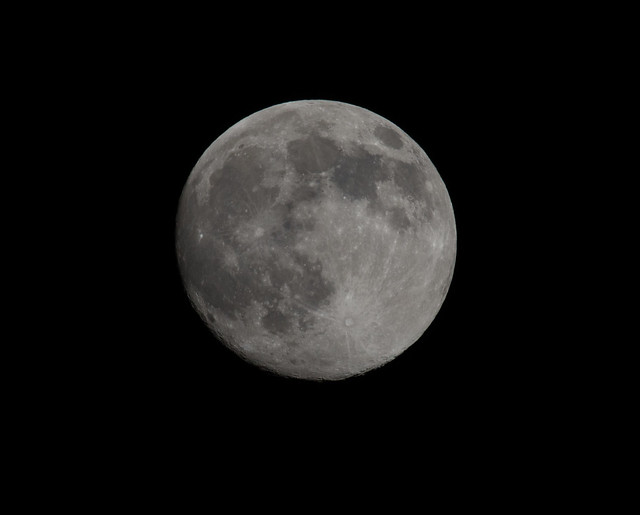
On Saturday and with much improved weather and a gorgeous full moon (tested out my new lens), I parked for the now predictable caddis hatch on south lake and hooked into a very fat, 20 inch bow while explaining to another fisherman the particulars of these trout. I remember muttering to my audience while being dragged around the lake that I needed a bigger boat (but not a drift boat). Yes, I actually said and have since regretted that comment.

hosmer-lake-report-moon

Of the 30ish fish Rick and I caught, we landed only one Atlantic salmon and a couple brookies, a definite sign of a waning era. While he and I are definitely missing the old stocking program, who in their right mind can argue with the new dawn of the bow and for that I thank ODFW.

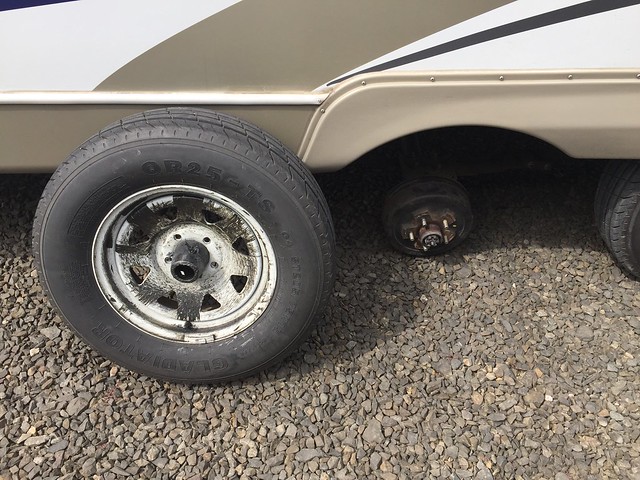
fly-fishing-hazards

And oh yeah…another low was when I blew a bearing on my trailer 10 miles after leaving Hosmer, couldn’t get a tow and had to hobble back to Eugene with only three wheels on Father’s day.

Good times.

Posted in Central Oregon Fishing Report, Oregon High Lakes | 5 Comments

NZ ’16

Summer is officially here, so cheers, to wet wading, weekend excursions, and some of the most fun fishing of the year. Let me tell you about where I spent my ‘first’ summer of 2016 down South.

IMG_5209

My best friend and I needed an escape from the gloom and darkness of February in the Pacific Northwest, so we headed to the land of monster trout and sandflies for a life changing fly fishing adventure.

“We’re so screwed.”

We said this a lot. It was never because something bad had happened, or because something bad was going to happen. We typically said it after we had just released a 20+ inch brown trout that had slurped our dry fly as it sat in 10 inches of the clearest, most pristine, turquoise water we’d ever seen. In other words, we thought we had genuinely ruined our lives at the spry, recently graduated age of 22. We’d constantly ask ourselves the question: “How could anything be better than this?” We thought we’d genuinely jaded ourselves past the point of no return. It was a serious concern; it still is to be honest…

New Zealand is a twisted place. Vegemite is unanimously enjoyed, they drive on the left side of the road, and the trout are absolutely monstrous. The fishing is incomparable– It is some of the most challenging, relentless, but rewarding angling you will ever do. Its trout fishing with the mindset of steelheading: to catch one fish is a treat, to catch multiple is truly a special day. The psychology is the same because whether you are swinging for steelhead or trout fishing in New Zealand one thing is for certain: if you get one, its going to be a good one.

IMG_5181

It is also unique to any other trout fishing you will ever do. It is 100% sight fishing in crystal clear water for large, intelligent trout in precarious situations requiring not only long casts, but also sneaky presentations. You get one shot at a fish before it either spooks or decides to never move again. So, not only is it difficult, it is also a game of patience, and one that tests your skill as a fisherman with every trout you encounter. The fish aren’t necessarily picky, but the most willing of feeders won’t even sniff your fly if you don’t place it precisely and gently. Did I mention you’re using a 15-17 foot leader and wind is a constant variable? That doesn’t help much. Neither does a swarm of sandflies buzzing around your face looking for any piece of exposed skin to gnaw on. But hey, its all part of the kiwi experience.

The dark spot in the center  of the frame is a fish.

The dark spot in the center of the frame is a fish.

IMG_5043

From what I’ve gathered, every season is different in New Zealand. Some years you’re catching fish on mouse patterns and others (such as this one) it’s all about cicadas. I don’t think I’ll ever forget the constant humming of these insects as they serenaded me from the surrounding trees as I walked up the river. I’ll never forget how much the fish loved them, too. See and hear for yourself:

It’s a cool thing to be 22 years old, backpack on, fly rod in hand, and setting out on the trail up a new river whose name you can’t even pronounce. It’s another cool thing to trek 20 kilometers through rainforest and have the day culminate with a few hungry fish and a cozy, backcountry hut to sleep in at night. And it’s a really cool thing to sit on the bank of a trout stream 7,000 miles away from home and think about where you are in the world, let alone the universe.

whatever you do, look down.

whatever you do, look down.

IMG_5183

IMG_5048

IMG_5341

Magical

Magical

This was my first taste of traveling internationally with a fly rod and I now know what I want to do with my life. Perfecting your craft and knowledge on your home water over a lifetime is awesome but as the term ‘home water’ implies, it will always be there when you return. I’d say there is nothing more enjoyable then stepping out into a mysterious, utopian-like trout stream on the other side of the world and not having the slightest inclination of what might happen. That sort of anticipation and adventure is addicting and enriching for the soul. I read once that water covers about 70% of the earth, I’d say that fares pretty well for us fisherman.

enjoy summer.
Andy

Posted in Fly Fishing Travel | Leave a comment

Green Butt Silver Hilton Fly Tying Video

Tony demonstrates how to tie a very productive “northwest favorite” steelhead pattern. The Green Butt Silver Hilton works great on the McKenzie, Willamette, Deschutes and so many more!

GB Silver Hilton photo

Green Butt Silver Hilton Fly Tying Video

Hook: TMC 7999, sizes 1-8
Thread: Veevus 10/0 White & Black
Tag: Lagartun Flat Silver Tinsel
Tag: Teal Flank or Mallard Flank
Rib: Lagartun Oval Silver Tinsel
Butt: Fl. Chartreuse Hareline STS Trilobal Dubbing
Body: Black Hareline STS Tribal Dubbing
Hackle: Guinea Hen or Grizzly Hackle
Wing: Grizzly Hackle Tips

Posted in Fly Tying, Fly Tying Materials and Supplies | 1 Comment

Middle Fork of the Willamette Fishing Well Top To Bottom – June 2016

Middle fork of the willamette

Water levels have dropped on the Middle Fork of the Willamette recently and fishing has remained very good. Wading anglers can now access much of the water between Hills Creek Reservoir and Lookout Point Reservoir with relative ease. For those looking to catch steelhead from Dexter Dam on into Eugene that section of the Willamette has also dropped and steelhead fishing has been good as well. Water levels in this area are in the “sweet spot” to be sure.

middle-fork-oakridge

middle-fork-in-town

Best patterns for the Middle Fork of the Willamette have been Pale Morning Duns, Parachute Caddis, Green Drakes, Parachute Adams and Jigged Pheasant Tail Nymphs.

Best Steelhead patterns for the Willamette have been articulated style flies with color schemes purple/black and purple pink.

Steelhead numbers are looking pretty good to date, let’s hope they keep coming!

june-fish-counts

Posted in Fishing Reports, Lower Willamette, Middle Fork Willamette River fishing, Summer Steelhead | 1 Comment

Fly Line Blow Out Sale – Over 100 Lines on SALE at The Caddis Fly

Sale lines

Jay and I continued our attempt to organize and streamline the shops inventory today by taking a hard look at the fly line wall. We removed all the “onesies” and odd balls, included some great lines in trout, spey and saltwater and marked them down as low as $29.95. When we finished there were over 100 lines designed to serve who knows how many different fly fishing applications. There are some fantastic deals to be had here take a close look at the extensive listing here: SALE LINES

Sale lines

Sale lines

Sale lines

Posted in Shop Sales and Specials | Leave a comment

Pacific City Dory Flyfishing – June 2016

My phone buzzed the fisherman’s five o-clock alarm on the bedside table and I reached for it with pinched eyes. Birdsong came in a congress of calls beyond the glow of my curtained window. The birds were more excited to be awake then I was, but that wouldn’t take long to remedy. In a half an hour I was going fishing.

Jay Nicholas had graciously invited me to fish with Capt. John Harrell (Pacific City Fly Fishing)  – our party included me, Jay, and Rob & Erin Perkin. We would be hunting crab and Pacific black rockfish, a dark and slick speckled species of sea bass off the coast. We figured the fish would start to bite at 5:30am, so we were up and dressed by ten before to head down to Pacific City Fly Fishing.

SAMSUNG CSC

The morning was pale and cool, the same bluish gray as the slats on the shop as it rolled up beside the truck. Parking and piling out of the car, I met our fishing comrades for the day. Erin and Rob fished these waters several times each month and Rob gave my hand a hardy, excited shake. He grinned for the morning ahead, stoked like a fire to be burning the early morning oil for dory fishing. Next there was Jack Harrell, John’s Dad, our host and driver to the launch, and finally his son John, our dory Capt. and guide.

“Are you ready?” John asked me, with a kind toothy grin.

We’d packed the dory and loaded into respective vehicles for the short trip to shore. I sat in the passenger seat of John’s truck, with Rob in the back behind me.

“So ready,” I said.

“Atta girl,” he replied.

It took only a few minutes to get to the beach. We crossed a man dug canal, passed a smattering of prettily shingled, wind weathered houses, rolled through a sandy parking lot and down a long ramp to the dune flanked shoreline.

SAMSUNG CSC

Waves rolled up to meet a handful of vehicles and dories in line to put into the swells. I chatted with Erin, our hands shoved into our river salt jackets against the morning chill. We grinned at the impressive spectacle of men backing trucks and boats into the surf, racing away from the launched boat in four wheel drive like dare devils approaching launch ramps. Each left men behind to push their boat into the waves up to their watered hips.

Erin and I were the only women on shore.

SAMSUNG CSC

When it was our dory’s turn, things happened quickly. John backed her into the surf until the boat floated about a foot above bottom, then he pulled the truck and trailer away. His black lab Gracie splashed in the sea after him as the vehicle rushed up the beach. John ushered Erin and I onto the Dory first, followed by Jay and Rob, and then he walked us out into the waves until he, too, heaved himself over the hull and into the boat. And before we could be pushed back into shore by the sea, he clicked the key to bring the engine to life and we cruised out into open water.

It wasn’t long before the shore was a distant sight, the beach and pine tree topped cliffs the only stable thing beyond the rolling waves. I stood next to John as we cruised up and down with them.

“We’re getting close,” he said, pointing to a white lined screen with what looked like color graded mountains on it.

“This is a sensor that tells us the depth of the water we’re in,” he explained. “We’re looking for rock formations that will gather fish. They’ll look like spikes on the screen,” he said.

SAMSUNG CSC

As if John had called them up with his words the mountains suddenly spiked into towers. Little fish figures appeared on the screen with numbers next to each. 21, 19, 20, 24 feet below—there were fish all over the screen below us.

“There we go! I think we found, em’” John said with a wink and slowed the engine.

That’s when I saw my first rise on open water.

It was splashy and sporadic. The bass crashed into the surface to take their food and then abruptly turned, whipping the air with their tail. They were everywhere, dotting the waves like rain drops on a huge puddle.

Everyone in the boat rodded up. I pulled the popper off of the keeper above my handle, stripped to the end of my shooting head and with the heart palpitating rush that is the first cast of any day on the water, I cast line toward the last splashing rise I’d seen. Erin had joined me at the hull, and we cast out together, pulling our poppers through the surf.

SAMSUNG CSC SAMSUNG CSC

Stripping one, two, three, four—BANG!—it wasn’t five strips before I had my first fish on. And it wasn’t two more strips before Erin made it a double. We erupted in yelps and cheers as the poppers disappeared in splashing rises and the fish began to run. My fish escaped straight toward the bottom of the ocean. Rock fish, I learned pack some muscle, and this one put up a heck of a fight. Soon, though, the line turned to leader as it left the water and the bass emerged out of the depths at the end.

I had never grinned so wide.

SAMSUNG CSC

John pulled my fish from the water and held it up for me to see. It’s bulging eye and gaping sharp toothed mouth were glistening, the white foam head and bucktail of my popper snug in its lip. This was just the beginning of a morning of extraordinary fishing—a morning we would soon laugh about as one not of fishing, but of catching.

SAMSUNG CSC

It could have been Erin with bass on poppers, Jay hooking bass on a Tenkara rod, or maybe it was Rob’s elation as he mastered catching big bass in the manner we all envisioned fishing as kids—dropping a hand-line straight down below the boat to catch more than a handful of fish simply by jigging the fly up and down. Or maybe it was John’s constant excitement with each strike, congratulating my every take with a hearty “Atta girl!” that made the morning so much fun.

SAMSUNG CSC

SAMSUNG CSC

SAMSUNG CSCIt isn’t easy being a woman in fly fishing. It’s intimidating, stepping out onto water in a sport men have held a majority in designing and building for years. And it’s even more intimidating to be a woman fly fishing at sea. Erin and I had stood in stark contrast on a beach full of male anglers, but John never made us feel like we were any different than the men we joined on the water. The cheers were sincere, the excitement tangible in each rock of the boat as we gathered round to see the spoils of the most recent take. We were all just giddy anglers in the acquisition of rising, flipping fish.

SAMSUNG CSC

The catch was plentiful, equally so in pot caught crab as we were in fish, and as we jetted for land four hours later we were the best kind of exhausted. With bins full of our quota of rockfish and still-snapping crab, we cruised toward the beach at what felt like full speed.

“Hold on,” John said, “We’re coming in hot!”

He had to be joking. But he wasn’t. We cruised up to the beach at speed, the bottom of the boat banging in a rising rattle on waves as they crested closer together near the shore. Then with one final thump and skid we landed on the wet sand and slid up the beach to a stop.

I laughed out loud and smiled, eyes wide.

“That was phenomenal!” I said to John as we piled out onto the sand and loaded the boat onto Jack’s waiting truck.

The morning rewarded the 4 anglers with (28) rock fish and (20) crab, not to mention the welcome donuts and coffee back at Jack’s shop. I can’t say thank you enough to Jay, Jack, and John —  for one of the most enthralling experiences of my angling life so far. The magic of a morning on the Dory is truly one of a kind, with bass on the rise and the mirth of great casts. Like pulling the perch out of a pond with a bread baited hook as a kid, that morning reminded me of the pure joy of catching fish and the power of fishing among friends.

Maddy Bell, June 13th 2016

Posted in Fishing Reports, Oregon Saltwater Fishing | Leave a comment