Hot Creek CA Action Alert

hot creek

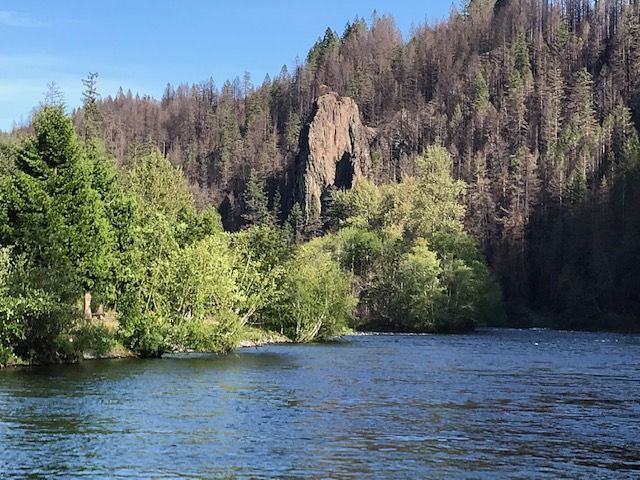
Protect Hot Creek, Stop KORE Mining

The US Forest Service is taking public comments on a proposed exploratory mining operation near the headwaters of Hot Creek in the Eastern Sierra that could lead to harmful open pit mining near this fishery. We need your help to stop it.

This project is problematic and disastrous in many ways:

KORE Mining wants to drill around Hot Creek for gold with no plan or guarantee that gold exists in that area. Dredging, excavation, and hydraulic mining will cause dramatic stream degradation.

The proposal for the exploratory operation provides no information on how much water is needed, the depth of drilling, or the negative impact on the wildlife and the environment. If the operation is granted, it would have long-term ramifications for one of California’s iconic wild trout fisheries and for the wildlife surrounding the area.

The Hot Creek watershed is highly sensitive and has remnant impacts of historic mining and development in that area.

How You Can Help

We need you to submit a public comment opposing this mining operation to Colleen Garcia with the US Forest Service. Deadline for public comment is May 7th. The link to submit comments and a sample letter are below.

We encourage you to demand an Environmental Impact Statement be conducted and share your personal comments and stories about why you wish to protect Hot Creek. Specifics are not necessary, any comment helps. Please share this action with your network. For more information visit our webpage.

Submit Public Comment

Posted in Uncategorized | 1 Comment

Fishing Report – Middle Fork Willamette – Late April 2021

Spring is my favorite time of the year to fish the McKenzie and Willamette Rivers. Cool days, light rain, and overcast skies make the Dry Fly Fisher drool with excitement.

Screen Shot 2021-04-27 at 7.36.10 AM

After a very unseasonably warm April, cooler temperatures and rain arrived later in the month and it began to feel like spring again.

March brown, caddis, osprey, and swallows were all out in abundance. These are good signs for an Epic day of fishing.

Here we go….

Screen Shot 2021-04-27 at 7.35.02 AM

Justin and I decided to fish the Middle Fork up high and after a delayed start to scout some rapids we were on our way.

The day started off great with fish smashing our Possie Buggers w/ Legs and Black Copper Johns off our Hopper/Dropper setup. The trout all seemed to jump like dolphins once hooked. The fishing was great mid to late morning, but slowed down a little between 1 p.m. and 3 p.m.

Screen Shot 2021-04-27 at 7.37.53 AM

Later in the afternoon the fish began to look up and all I used was a Chubby Chernobyl which was my hopper or top fly the entire day. Justin also used Purple Roosters, Purple Haze, and Parachute Adams with some success, but they seemed keened in on the big Chub.

Screen Shot 2021-04-27 at 7.36.44 AM

It was one of those days where you had to be there to believe it. Great fishing, great friends, fun rapids, and beautiful scenery.

Flies Used:

Chubby Chernobyl Pteronarcys Size 8
Possie Bugger w/ Legs Size 10
Black Cooper John Size 14
Purple Rooster Size 16
Purple Haze Size 14
Parachute Adams Size 14

Flies I’d Try Too:

Western March Brown Size 14
Mega Prince Size 8
Big Black Stone Fly Patterns Size 6
Hare’s Ear Size 10 or 12
Prince Nymphs Size 10 or bigger

It was nice to have some rain, because most of April felt like June and Oregon is way low in rainfall percentages. Which reminds me…

Be very careful with fire as we begin to camp under the stars at our favorite fishing destinations. Oregon last year saw the worst fires in the state’s history. People are still recovering from the devastating fires last summer and we do not need carelessness starting fires that should never happened in the first place. It’s one thing when lightning is around but, unattended campfires, burning during restrictions, cigarette butts, dragging trailer chains, target shooting in dry areas are all examples of careless and dangerous ways that ignite fires. Yes, my years rangering in Yosemite the Telegraph Fire was started in July by a man target shooting with tracer rounds in dry brush…Carelessness

Tight Lines,
Greg

Posted in Fishing Reports, Middle Fork Willamette River fishing | 1 Comment

Local Fishing Report end of April 2021 – McKenzie and Willamette Rivers

I have been out of town for the past ten days or so and asked the staff to chime in with current conditions for the McKenzie and Willamette.

thumbnail-3

Owen Grigsby was first: Bright sunny days can make McKenzie fishing difficult at times, but water is in decent shape. Black caddis are out and a few leftover March browns. The above photo is one of the biggest fish I have seen this year, nice work Owen.

thumbnail-2

Lou Verdugo: I have been fishing the Willy from Armitage to Crossroads for the past month. Its been solid “good” dry fly fishing! Mckenzie arm is slowing down due to lower water level and temp. The hatch was March Browns, now PMD’s and caddis. The greatest hatch is now later in the day. Been catching most fish on the Willy. Many Cuts but the Redsides are in the there. Proven winners have been tan soft hackles, x caddis, and parachute Adams. No nymphing! All dry flies or swinging soft hackles. The coming week with clouds should keep it going….but I am going up river. Have yet to fish it above the dam.

thumbnail-4

Justin Helm: Alex and I did a quick float today from Silver creek down to helfrich. Overcast with off and on showers made for some decent dry fly fishing with the para rooster. When it was really dumping on us, we switched over to the hopper dropper and got some nice ones on that new hustler jig and purple dart from umpqua.

thumbnail

Bryson Fairlamb: March browns winding down, light hatch around 2 but wind kept fish from keying in on them. Dry dropper with Norm Chubby and jigged 20”, Duracell and smaller standard PT (#16) produced fish all day long. McKenzie is low and with low snow pack and very little rainfall, we will see what summer holds.

Thanks for the reports guys.

Have fun out there and lets hope for some rain in May.

CD

Posted in Fishing Reports, McKenzie River, Middle Fork Willamette River fishing | Leave a comment

Carolina Spring Postcard

The creeks here are awake.

Untitled

I’ve found it easier to talk to them higher up in the watersheds. They’re fresher, less world weary.

The chub priests call one of my creeks The Transparent Serpent. They say they conjure Him into being, gathering the stones that make up His body.

The chub priests say the Serpent creates the world, and that they are trying to rebuild Him as quickly as He is devouring himself.

Untitled

So male chubs busy themselves reshaping the surface of things. They aren’t wrong, not entirely.

They grow keratin spikes this time of year. The tubercles are their armor, weapons, signs of fierceness like the span of antlers on a deer.

Untitled

They live upstream from the confluence of Plum Creek where the water is clear most of the time.

The Nocomis gathers rocks into a pile for his wife. He carries the stones in his mouth while the crawdads watch. His wife follows behind him, leaving eggs behind where he finished piling a layer of stones.

The current sweeps the nest and keeps the eggs clean.

Down in the creekbottom, cricket frogs and jumping spiders fling themselves into the air. Everything is excited as a kingfisher. Beech blossoms fall from the sky. Stoneflies emerge like smoke off the water.

It’s hard not to feel joy and awe, that places like this could exist anywhere. My creek flows out of Ace Speedway, a stockcar racetrack in Altmahaw.
Upstream from Plum Creek, there is a settlement of redbreast sunfish. Tangled tree roots hold a deep bowl. I count sycamore, sweetgum, holly, hornbeam, tuliptree, all of them inosculated. A gemel.

Untitled

There is a kingfisher settlement downriver on the flats where the creek meets the Haw. Any fish passing from the main river to this tributary is exposed on the silt.

Upriver, the creeks must have wandered at some point. They left a low wetland that fills with Atamasco Lilies.

Untitled

Fishflies are flopping all over the streambanks, soaking up the sun, the caresses from the soft leaves.

Untitled

Beech blossoms pile up in the backchannels. The dewberry is flowering. Everything is.

I want to tell you about all of this, each of these things a wonder, constantly moving. I’m happily drowning in it.

Hope y’all are good!

-MS

Posted in Fly Fishing Travel | Leave a comment

Native fish vulnerable during current low water flows in south coast streams

From ODFW: GOLD BEACH, Ore – Wild winter steelhead and Pacific lamprey are now actively spawning in southern Oregon coastal streams. Unfortunately, spawning is happening during low water flows that are more characteristic of early summer than spring and may put these and other fish species at risk from human activity.

Pacific Lamprey Spawning Apr 14, ODFW Photo

Pacific Lamprey Spawning Apr 14, ODFW Photo

ODFW fish biologists are encouraging people to take steps to protect the fish species in these streams. Landowners should not clear native vegetation along streams that run through their property. Recreationists should not to drive vehicles across creeks which can destroy redds (fish nests) of wild winter steelhead and Pacific lamprey and the fall Chinook salmon fry that are just beginning to emerge from the gravel. Normally, flows would be higher this time of year, and people would not be crossing rivers and creeks with ATVs or vehicles.

“We’re seeing flows right now that are typical of early summer, and we’re concerned about water temperatures heating up sooner if riparian vegetation is removed,” said Steve Mazur, Gold Beach district fish biologist. “Spawning activity typically occurs at the bottom end of pools as the water shallows and starts to speed up. This is where livestock and vehicles tend to cross and impact the redds.”

Mazur also encourages landowners living along some of the smaller south coast streams to start thinking about conserving water and leaving a little bit more in the streams for fish

ODFW is surveying smaller watersheds to monitor wild winter steelhead spawning and help inform development of the draft Rogue-South Coast Multispecies Conservation and Management Plan. The plan identifies habitat (including water quality and quantity) as a main limiting factor for winter and summer steelhead, coho salmon, and coastal cutthroat trout.

The most vulnerable watershed where ODFW is seeing impacts to riparian and spawning areas are in Hunter Creek and the Winchuck and Elk rivers.

Posted in Oregon Conservation News | Leave a comment

Fly Fishing Outfits for the Aspiring Fly Fisher – Spring 2021

Redington Field Kit – New 2021

Echo Traverse Kit

Additional outfits now in stock at Caddisflyshop.com include:
SAGE FOUNDATION OUTFITS
Echo Base Outfit now on Sale
Echo Gecko Kit

Posted in Fly Fishing Gear Review | Leave a comment

New Sage & Redington European Style Nymphing Gear 2021

The SENSE is designed specifically for the European Style Nymphing angler, with a rod that combines Euro Nymphing specific action, optimized components, and stealthy cosmetics to make the perfect tool for those looking to get the most out of their tight line techniques.

Sage Sense ESN Rod

The TILT Euro Nymph Fly Reel was designed to give you the unfair advantage you have been looking for. We incorporate three one-ounce removable weights that will allow anglers to dial in any rod and find that perfect balance. The TILT features a fully machined, full-frame narrow large arbor design, which prevents narrow comp line from slipping in between the frame and the spool, with the capability of quick line retrieval. At the heart of this design is a carbon fiber drag system that will quickly put the brakes on any fish, so you get quickly get it in the net and your flies back into the water.

Redington Tilt ESN Reel

Posted in Fly Fishing Gear Review | Leave a comment

Upper McKenzie April Fishing Report

IMG_3841

I floated from Hamlin to Silver Creek this past Friday. It was a gorgeous sunny day, and the river is in perfect condition. Nymphing was solid all day long with larger stonefly imitations being best. Hatches included a massive Grannom caddis emergence, March Browns, Blue Winged Olives and a few Salmon flies. I saw very few fish feeding on the surface.

IMG_3835

IMG_3836

Boat landings above the dam that are open and cleaned up post Holiday Fire Farm: EWEB Ramp, Helfrich Landing, Silver Creek, Finn Rock, Blue River, Hamlin, Bruckart. Closures include: Ben and Kay Doris and Rennie landing.

IMG_3837

IMG_3842

I had driven 126 post fire but this was my first time floating through the area and the devastation is shocking. There are tens of thousands of trees that undoubtably will be removed so the landscape is likely to change further. It’s difficult to describe the feeling you get floating through the area. It’s extremely sad for the homeowners and businesses in the area. The power of the fire and ruggedness of the exposed terrain if humbling. The river is still stunning and the fish are still very healthy.

IMG_3843

Posted in Fishing Reports, McKenzie River | Leave a comment

April March Browns Still Going Strong on the Lower McKenzie River

IMG_3821

March Brown mayflies continue to hatch from 2-4pm on the lower McKenzie. Dry fly fishing has been everything from challenging to very good. Setting up on a “feeding lane” during the hatch and presenting sparse mayfly imitations seemed to be the most effective strategy the two days I spent out on the lower river this week. Cooler afternoons are seeing Blue Winged Olives mix in the later part of the March Brown hatch. Presenting smaller Parachute Adams or Olive Haze patterns has also been successful.

IMG_3823

Nymphing with larger stonefly patterns (Pat’s Rubber Legs), and smaller mayfly nymphs Rowley’s Mayday Mayfly Nymph and Jigged Frenchie has also been very effective.

Screen Shot 2021-04-09 at 6.12.15 AM

Water levels have come up a a bit since the 6th of April but they are still excellent for spring angling. Enjoy!

Posted in Fishing Reports, Lower Willamette, McKenzie River | Leave a comment

Justin Helm’s McKenzie Green Cornfed Caddis Variation Fly Tying Video

Today, Justin Helm ties for us an exciting variation of Lance Egan’s heralded Cornfed Caddis. Sure to fool trout on our local waters, this size and color specific pattern will closely resemble the natural McKenzie Green Caddis. These green caddis will start showing up soon, so it is a great time to start filling your dry fly boxes with some of these killer flies. If you enjoyed the video, feel free to comment, like, and subscribe for more.

Resized_20210330_114015

Materials list:
Hook: TMC 100, Sz 8
Thread: Ultra Thread 70D, Dark Grey
Body: Chicone’s Fettuccini Foam, Chartreuse
Wing: Select CDC, 2 Feathers Grey, 2 Blue Dun
Post: McFlylon Flo. Green
Front Hackle: Select CDC, 2 Feathers Grey, 2 Blue Dun
Key Tools: Swiss CDC Clamp

Materials are available at https://www.caddisflyshop.com/​

Posted in Fly Tying, Fly Tying Materials and Supplies, NW Fly Tyer & Fly Fishing Expo | 1 Comment

OPST Demo Day – Free Clinic April 9th, 2021

image0

When: April 9th 9am-12
Where: Armitage Park
Cost: $0
Limited Space: Call to reserve your spot 541 505 8061

James Millard from Olympic Peninsula Skagit Tactics or OPST as they are known will describe and demonstrate how OPST lines fit into both single hand and two hand angling in our local area.

OPST lines are truly innovative and do differ from other lines on the market. He will reveal where and how he fishes a lot of OPST products within a couple hours from the shop, including the local stuff like the Mckenzie and Willamette.

Along with his discussion of single and two handed casting he will help folks with their casting, and line matches. He will have most of the OPST lines on reels and folks can experiment with OPST lines on their own rods or with OPST rods.

Posted in Classes and Instruction, Fly Fishing Gear Review | Leave a comment

Early April McKenzie River Report 2021

Screen Shot 2021-04-01 at 8.45.12 PM

I’ve gotten out the past week a few times with success. Days can be slow at first, but they’ll begin to pick up once it warms up a little.
Dry-fly hatches have been as early as 11 a.m. or just begin mid-afternoon.
Be sure to have nymphs, drys, and even soft-hackles (I saw a guide out there with a client crushing it every cast).
Overall, Good.
-G

Screen Shot 2021-04-01 at 8.51.54 PM

Drys:
Parachute Purple Rooster Sizes 14 & 16
Hi and Dry Western March Brown Size 14 & 12
March Brown Western Size 14 & 12
Purple Haze Size 14

Nymphs:
Sens Improved Jigged Twenty Incher Size 12 All colors
Possie Bugger Size 10
Mega Prince Size 8 & 10
Cooper John Size 14 Cooper

Wet Flies:
Sen’s March Brown Wet
Soft Hackle March Brown Size 12 & 14

Screen Shot 2021-04-01 at 9.07.36 PM

March Brown Fly Patterns

Posted in Fishing Reports | 2 Comments

Native Fish Society Annual Benefit Auction – Big Fish Tickets On Sale Now

mail

From Native Fish Society

HOMEWATERS: RECONNECT
Big Fish Tickets Available Now & Going Fast!

If you haven’t already purchased your 1 in 100 chance for any single auction item in our lineup, what are you waiting for??! For ONLY $100, you could take home a beautiful handcrafted Anderson Custom Rod, or experience the fish-filled waters of Andros South in the Bahamas. Or maybe you and the family would prefer a few days on the open road with a fully loaded Roamerica Campervan? How about a hot air balloon ride with your sweetie?

Well, if you are the lucky holder of the winning BIG FISH TICKET, you can have your choice of any one item from the Homewaters: Reconnect Auction lineup, regardless of its value!

But be sure to get your tickets while they last as they sell out quick! Only 100 BIG FISH TICKETS will be sold and your final day to purchase is coming up quick! Last call for tickets will be Friday, April 16th at High Noon. Winner will be drawn at 3pm.

Get your BIG FISH TICKETS by following this link or by giving Tracy a call at Native Fish Society HQ. 503.344.4218

Then, starting on April 18 we will be auctioning off local (and not so local) guided fishing trips; rods, reels, and gear; Yeti coolers; fly boxes loaded with flies from some of the Northwest’s most talented tyers; outdoor excursions; wine, art, and more. And all the money we raise will directly support the revival of abundant wild fish.

Join us as we reconnect with the wonder of wild!

Register Now!
Bidding Begins Sunday, April 18th

Posted in Oregon Conservation News, Oregon Fly Fishing Clubs and Events, Oregon fly fishing links, Oregon Fly Fishing Tips | Leave a comment

Jay’s Five Inch Predator Tube Fly Tying Video

Using Pro Sportfisher Predator Tubes, Jay Nicholas ties another great looking fresh & salt water tube fly.

Incorporating a Fair Flies 5D Brush, this fly has “life” to it as it is stripped, drifted, or swung. With different color combinations the possibilities are endless.

Screen Shot 2019-06-09 at 9.03.40 AM

ProSportfisher Predator Flexineedle
Hook: Ahrex Big Game Predator 4/0
Thread: Veevus GSP 150D or Danville 210D
Glue: Loc Tite Brush On
Body/Belly: Fair Flies 5D Brush
Back: SF Blend Bronz Back
Lateral Line: Holo Flashabou Silver/Black
Cone: ProSportfisher Nickle/Silver Predator Cone

Posted in Fly Tying, Fly Tying Materials and Supplies | 1 Comment

RIO Sink Tips For Two Handed Rods – 2021

Screen Shot 2021-03-26 at 5.52.53 AM

George Cook’s discussion of RIO MOW Tips and Sink Tips.

Add this info to the previous posts on line matches and two handed lines and you have everything spey from SAGE and RIO.

The Genius of RIO’s Skagit MOW and iMOW Tips
2021
By George Cook

Originally brought forth by the “3 Speyketeers” as I call them, Mike McCune, Scott O’Donnell, and Ed Ward (Hence the name MOW…McCune-O’Donnell-Ward). The MOW System is nothing short of brilliant!!

Available in Light (T-8 format 7.0 ips), Medium (T-11, 8.0 ips), Heavy (T-14 format @9.0 ips) and Extra Heavy (T-17, 10.0 ips).

Each MOW Family (Series) has 6 “Family Members” consisting of the following:

10’ Floating Tip
10’ Sinking Tip
12.5” Sinking Tip
THEN….the 3 MOW’s…..7.5 x 2.5 (7.5 Floating integrated into 2.5 of given make up say medium as an example in T-11). 2nd MOW is a 5 x 5 (5’ of Floating integrated into 5’ on sinking).MOW #3 is a 2.5 x 7.5 (2.5 of Floating Integrated into 7.5 of sinking).

There are two ways to get these 6 family members, either individually or in a MOW Kit (Say, a MOW Medium Kit as an example).

Practical Usages as prescribed below….

10’ Floating Tip: The MOW system is built for use with Skagit Style Spey Lines. Regardless of Skagit “Type” (RIO formula’s include Max Launch/Max Power) the MOW’s are formulated to play in the Skagit line theater. The 10’ Floating Tip is a quick way to “Ala Carte” your Skagit Line into a Full Floating use line.

10’ and 12.5’ Sink Tips: Available throughout the MOW Range (Light/Medium/Heavy/EX Heavy), these practical length sink tips play incredibly well with a wide range of Spey and switch rods making them a wonderful addition to the standard “Traditional” 15’ sink tips (Intermediate/Type 3, 6 and Type 8). These 2 sink tips will provide the Angler with sink rates from 7.0 ips (Light T-8) all the way to 10.0 ips (EX Heavy T-17)that will cover a wide range of use from Alaskan Kings to Tierra Del Fuego Sea Run Browns as well as the full gamut of Steelhead application.

The 3 True MOW’s

Here is where the absolute Genius of the MOW boys shines brightest! Given that any “Cut” sink tip under 9’ is likely going to basically become a boomerang/tumbler within the cast that will prove to be ugly at best and ultra-frustrating at worst. The “Integration Format” that McCune/Scotty O and Ed brought to the table from their “Chop Shop” artistry days providing the stability/cast-ability of a 10’ common denominator in overall length coupled with the desirable “Baby Tips” making for one of the all-time great innovations.

7.5 x 2.5 (2.5 being the Sinking Portion): True “Rock Garden/Tail Out Probe Tool”. One could think of a 15’ Type 3 in this instance but the beauty of the MOW idea/format is that the mere 2.5 sinking portion is simply unrivaled when it comes to sliding around and thru such haunts. The traditional 15’ sink tip or even the 10’ and 12.5” MOW Sink Tip family members are all prone to “Swing Drag Thru” often catching/hanging up and killing any real chance at a follow and/or GRAB.

5 x5 (5’ Floating with 5’ Sinking): Again, another Rock Garden probe but long enough to provide quick drop for given slots particularly in ledge rock environments found in many Steelhead streams. The 5 x 5 MOW Heavy (T-14 Format) is a great one for such a task where the angler needs a quick drop into a slot where he’ll need to engage quickly in order to be in that zone/slot target area. Lots of Pacific Northwest watersheds feature just such places making the 5 x 5 MOW a handy tool.

2.5 x 7.5 (7.5 being the sinking portion): My personal favorite in both the standard MOW as well as IMOW (See Below). This “Baby Tip” if you will has tons of application for a host of fisheries most certainly including the trout game. Given water depth and speed considerations often play perfectly into the hands of the 2.5 x 7.5 MOW quite often in the MOW Medium (T-11) format. Incredibly versatile sliding thru the boulders and swinging “All The way In” giving both “The Long Followers and The Down Below You” Critters time and opportunity to run down or run into your swung offering.

iMOW Family

I personally love the iMOW’s, as a general MOW use tool as they can, and do have their place covering a host of angling waters particularly where you know going in, that the bottom format is relatively clean but needing “Less” of a given sink tip. iMOW’s come in LIGHT/Medium and Heavy. Kits have 6 family members with the previously mentioned 10’ floating Tip subbed out for a 10’ Intermediate tip.

iMOW Family:

10’ Intermediate Tip
10’ Sink Tip
12.5” Sinking Tip

The 3 iMOW’s
7.5 x 2.5 (7.5 is intermediate integrated to 2.5 of given sink tip say iMOW Heavy T-14 as an example)
5 x 5 IMOW
2.5 x 7.5 IMOW

3D MOW Tips (Available in Light, Medium, and Heavy)

The 3D Story Line: The Success of the Skagit Game Changers (3D, 4D Skagit Heads), have provided the inspiration for a family of 3D MOW Tips. Increased “Swing Dig” is a hallmark trait of these 10’ tips. Available in 3 sinking formats (Light, Medium, Heavy). These new 3D MOW’s will find themselves as the new tip in many a sling pack, be it trout, steelhead, or salmon.
Light (8 grains per foot) with sink rates of I/S3/S4, S3/S4/S5, S5/S6/S7
Medium (11 grains per foot): with sink rates of I/S3/S4, S3/S4/S5, S5/S6/S7
Heavy (14 grains per foot) with sink rates of I/S3/S4, S3/S4/S5, S5/S6/S7

15’ Format MOW’s

The 15’ Storyline: The MOW revolution has become an omni-present item for anglers throughout the global spey theater. Over these last 10yrs it has become increasingly apparent that within this tremendous popularity, coupled with its incredible angling success that the 10’ basic length format is at times fundamentally too short. Not short in a fishing sense but rather in an execution of cast sense. It is noteworthy to understand that the original Skagit heads of 2003 were 27’-32’ across the original range. Today’s Skagit head lengths from all manufactures are largely in the 20’-26’ range. Depending on Spey rod length, coupled with head length, there can be, and is the potential for a percentage of casts to fall victim to a blown anchor within the D-Loop set. As rods reach 12’9” and beyond (Especially 13’-13’6”), a short head in that 20’-24.5” range is susceptible to this phenomenon. Given the overall popularity of 13’-13’6” spey rods, the need for a second-generation MOW system is well founded. This day has arrived.

15’ MOW TIPS. Available in Medium (T-11), Heavy (T-14), and Extra Heavy (T-17). Each MOW Family will have 6 family members. Consisting of the following:
15’ Floating
10’ Floating x 5’ Sink
7.5’ x 7.5’
5’ Floating x 10’ Sink
2.5’ Floating x 12.5’ Sink
15’ Full Sink

The Sinking lengths of these new MOW’s are based on proven sinking lengths which have not only become standard, but legendary. It is worth noting that the 15’ full sink tip may prove better at 12.5’ to 13’ to which an angler can feel free to custom cut back in order to achieve great casting coupled with wicked sink length. We say this because T-14 and T-17 have a known history of super effectiveness at 13’ in length, “where castability and sink rate meet on the curve.”

All in all, the MOW Families have a lot to offer the Spey and Switch Rod enthusiast. I can tell you with absolute confidence that every angler out there has and knows places that are “Made To Order” for MOW use, in particular the 3 True MOW tips. The Spey community owes a lot to the genius of the 3 “Speyketeers” Mike McCune, Scott O’Donnell and Ed Ward.

Sorting Out Sink Tips In The Modern Era

For a good decade (1993 thru the early 2000 period) the conventional (Now Traditional) 15’ sink tip was the “Tip Of The day” so to speak. Here the angler was typically armed with an array of 15’ Sink Tips in Type 3, 6, 8 and even a clear version Intermediate. Both Single Hand as well as Spey Anglers employed their use plying waters from Alaska to Tierra Del Fuego. Such tips, particularly in the Type 6 and 8 sink rates were extremely common in the Pacific Northwest. Such popularity was well deserved and fully earned as these sink Tips (The Brainchild of RIO Founder Jim Vincent) were simply indispensable be it winter or summer assignment. The beauty of these 15’ tips was that they cast extremely well and play wonderfully throughout the Steelhead range of the west coast. In this, the classic and beautiful gliding runs from the Rogue to the Babine and all points in between were covered by single hand (Versi Tip Line sets) and spey anglers alike, (Windcutter and Skagit lines of era). The selection of these tips by the Steelhead and at times the King enthusiast, was well thought out on any given run. The study of a given run (Head/Body/Tail out) closely coincided with just how these tips would play out in such waters and the education/selection/use understanding was well under way. Available in various Grain weights from 95-190 with the #9 (129 Grain) and 150 grain (#10 Weight) leading the way these tips while not as popular today these still have their place in every anglers shooting head wallet.

15’ Intermediate Tip

Use: The sleeper tip in your wallet. The intermediate has a reputation as a “Slicer/Wind Cutter” that can and will serve the summer angler well from dawn to mid-morning even during the day as it provides what I like to call slicer line speed that often makes the difference on a turned over fly on such haunts as Oregon’s Deschutes or Idaho’s Clearwater (Same goes for an Intermediate Spey-Freshwater Versi-leader used on a Scandi style line).

15’ Type 3

Often overlooked but has a distinctive place in the Steelheaders wallet with Silver Salmon use as well. The obvious use is classic tail out scenarios both winter, and summer; unobvious use is for what we lovingly call “Frog water” which many of these Pacific Northwest Rivers have and Big Ol’ Late winter Runs have a penchant for hanging in. These often “Given Up On” portions of bottom end runs can hold Big Nasty Steelie Bucks that can only be swung up with lesser sink tip or MOW type animal. Anything beyond a Type 3 (3.0 ips /inches per second sink rate) sink tip is simply too much, dragging bottom and out of the game.

15’ Type 6

A Longtime, prime time sink tip player. To be sure, loads of Steelhead and Kings have been subdued with these 6.0 ips tips. When in doubt upon arriving courtside on a classic northwest Steelhead run string up a 150 grain (#10) 15’ type 6 sink tip and proceed with CONFIDENCE. Truly a tip to not be missed as it will serve one well in the global spey theater.

15’ Type 8

7.0 ips provides for high line speed charged cast coupled with a sink rate that has become the new standard in historical 15’ tips. #9 @129 Grain along with the vaunted 150 Grain (#10) are the go to players here. Long classic glide runs are possibly the foremost targets with these tips.

Posted in Fly Fishing Gear Review, Oregon fly fishing links, Oregon Fly Fishing Tips, Oregon Winter Steelhead Fishing | Leave a comment