Sea Run Cutthroat Fly Fishing Tips — Videos on the way

I asked Jay Nicholas to introduce a series of videos we shot recently about flies for Sea Run Cutthroat here in Oregon. Blueback are in already, and they will keep trickling into our coastal rivers throughout the fall. Enjoy. Remember too, that I will schedule a class for folks who want to learn more from Jay about Sea Run Cutthroat, the flies, the techniques, and the waters to fish.
Enjoy.

CD

sea run flies

Jay Nicholas dishes on Sea Run Cutthroat fly patterns:

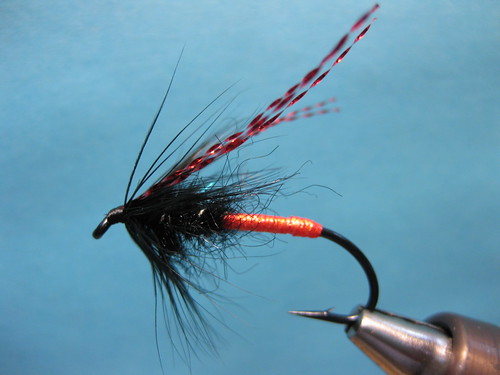
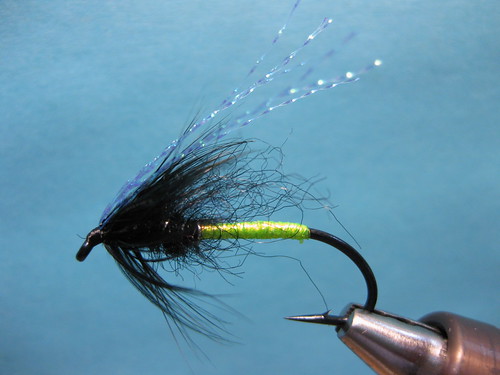
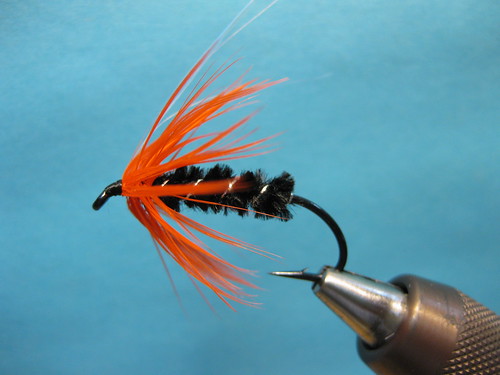
My favorite Sea Run cutthroat fly styles are the traditional (named) Sea Run flies; baitfish imitations; slim bodied wet flies; dubbed body wet flies; fore-and-aft hackled wet flies; deer wing wet flies; and October caddis & Muddlers. Egg patterns are reputed to catch old mangy cutthroat feeding behind spawning chinook. Not likely.

Favorite Sea Run cutthroat fly sizes: Personal choice is size #8, second choice is #6, but be sure to carry some #10s because the smaller sizes will sometimes be taken more readily than the large flies. Please stay away from #4s, because if taken deeply, these big hooks cause a lot of death and destruction on relatively little (12”- 14”) but proud fish.

Favorite hooks for Sea Run cutthroat flies: I recommend TMC 3761, TMC 5263, Daiichi D1760, D1720, and D1560. These are all very excellent, sharp, small barbed hooks that can be easily de-barbed; they are also heavy enough to let our flies sink properly and swim true.

Favorite colors for Sea Run flies: yellow, orange, and red have to be in the top tier of color choices. Pink. Pink is a dependable color. Mid-tier of color choices would include olive, black, purple. Lower tier would be chartreuse, brown, and lavender. This is all accurate information except on days when the bottom tier of colors happens to be the preferred set of colors, so carry the whole palate, OK? Also, consider bright colors in dim light, and subtle colors in sun. Any color that imitates a Rooster Tail Spinner will catch Sea Run Cutthroat.

Favorite hackles for Sea Run cutthroat flies: First choice: American Saddle Clumps, available in every color but pink. Second Choice and still most excellent: strung Rooster Schlappen feathers, strung Rooster Saddles, and strung Grizzly Variant Saddles (natural is close to a Badger and Hareline will be dying Hot Pink in these saddles, just for us! Third choice, depending on the individual saddle patch: webby portion of feathers at the bottom of dyed Grizzly Saddle patch, webby portion of Euro Saddles (in certain colors).

Favorite Wing Materials: Arctic Fox Tail. Tops. Get a whole white tail. It will last and last and you will find it really easy to tie with. Arctic Fox tails make great wings for steelhead flies also. Don’t try to use small packs of Arctic Fox body fur as a substitute for Arctic Fox Tail hair, because you will be sorely disappointed with the results. Next favorite is the good dependable Bucktail. This wing material is essential, in my opinion, for tying baitfish patterns, Clousers, and the like. Use white for the under-wing, use various dyed color for over-wings. Great stuff. Also gotta have some natural deer hair and white deer belly hair, although the latter is difficult to access at times. Squirrel, pheasant tail feather fibers, and Peacock herl also work well for dark wings.

Favorite body materials: Uni yarn; STS Trilobal; Hareline Dubbin; Ice Dub; Lagartun Mni-Flat Braid, medium chenille.

How to fish Sea Run flies. Action. Action. Action. Cast ‘em out near a log, a riverside bush, a rock, or a drop-off. Let ‘em set for a second or two. Give ‘em a twitch, pull, jiggle, yank or strip. Repeat. Don’t try for a gentle, light as a feather touchdown. Slap your fly n the water. Attract some attention. Make one cast to an area and move on. The only exception to this is if you are fishing in an area when schools of cutthroat might be moving into range. Otherwise, keep prospecting. If you raise one fish, work the area, as there are likely to be more around.

Note: all of the information provided above is true, or virtually accurate, or something approaching interpretation of rumor, unless it isn’t.

JN

Posted in Fly Tying | 3 Comments

Is there a doctor in the house?

I was embarrassed to admit it, even to my closest friends. But I went back. Again. Two sunny, warm weeks since I had supposedly called it a season. But all it took was one enticing report from the Tillamook underground to rekindle the fire: “There are still a handful of fish in the bay, mostly natives, and I heard a bunch of jacks shot through the rivers over the last few days.” The report was intended to steer me away. “Nothing worth the drive,” was how the report ended. Jacks consistently come at the end of the spring run on the coast. They typically show in decent numbers, and there are usually a few shiny adults lurking nearby.

I hung up the phone and pondered the situation. Could I handle another three-day weekend chasing chinook on the coast? The clever voices in my head flipped the question around: “Could I handle a weekend in town, knowing there were fresh chinook in the bay?” Amazing how an obsession develops a personality. That little devil on your shoulder is such a great salesman. The angel on the opposite shoulder didn’t have much to offer: “Or you could stay home and catch up on house-cleaning, maybe hit the town-run?” Lame, and easily ignored. Gas up the truck.

This time it was just me, my boat, my fly poles, and every fly in my arsenal. Nobody to entertain. Nobody to reassure. No guilt over sitting in a pool for six hours waiting for the grab. No pressure. The more I thought about it, the faster I started packing. Here was my chance to go full-dirtbag for three straight days, sleeping on the beach, roasting fillets over a wood fire, and working on my sea-bird calls. So what if I would face ridicule from my friends? Let them kneel at the alter of the North Umpqua. There would be plenty of time for that. I would much rather work on my personal relationship with the fish god, tschawytscha.

That Friday was a pleasant grind. The occasional rolling salmon helped to keep me motivated, but from 6AM to 1PM, I felt nothing resembling a grab. As the tides shifted, the “salad” got bad, causing me to check my fly between each cast. Many times that day I came to realize no sane person would keep up such a hopeless charade. There was a perfectly good reason I was all alone out there. But I couldn’t imagine anywhere I would rather be. I cracked a tall beer, stretched my arms and shoulders, and kept up the rhythm. My eyes remained fixed to the water’s surface, while my mind’s eye scanned the underwater world. My little fly searched for danger, for a big black mouth and a flash of silver. And as I fell deeper into my trance, as my eyes began to roll back into my head, there was a soft grab, then slack. I instinctively stripped line as fast as I could, feeling the mushy resistance of a fish moving toward me. The fish paused, then turned away. The line tightened, and I stripped hard to set the hook. Twice. Game on.

I learned my next move watching an old-timer: with two good sets of a barbed hook, I stepped to the bow and hoisted the anchor with one hand, keeping pressure on the fish with the other. Then two big steps back to the rower’s seat, set the hook one more time and crank the drag a little tighter. Hoist the stern anchor and row to shore with alternating hands, switching the rod back and forth, and applying maximum pressure all the while. As the boat backed up to the beach, I gave the oar a big pull, and the soft sound of sand on fiberglass told me it was time to jump ship. Once on dry land, my final move was to give the anchor another foot of scope. Easy to lose one’s boat to a stiff breeze while attending to a fish.

The final phase of the fight was to become very familiar over the next couple of days: the salmon appeared to tire out, its runs becoming shorter in distance and duration. Then, as I relaxed a little, the fish paused and appeared to survey its surroundings. It found its reserves, and bolted toward the only root wad for 100 yards, way out in the tailout. I did my best to slow him down, but no drag in the world can stop a determined king salmon. Could he actually see that far in his pea-soup world? Was I imagining this intelligence? Whatever the truth, the fish made it to the stump, and I felt my leader stop cold. It was over, my fly stuck forever in an ancient spruce stump. But I was triumphant. I let out a whoop that sent the gulls into an aerial lap around the pool. My heart was racing.

Moments later I was back on the water, anchored up and swinging a new offering through the mid-section of the pool. Before the fly could finish its first swing, another king bit hard and set the hook on himself. I fought him on anchor for a minute, then muscled my way to shore. This time I was determined to either stop the fish from running to the wood, or break him off trying. Sure enough, there came the same pause, the imagined survey of the pool, and a dead run for the wood. I cranked the drag tight and yelled as I dug in my heels. This time he came to the surface and made a sloppy splash. It was his last run. We were down to the final bull-dogging, the part that can really wear you down. Kings rarely quit. They’re bodies just give out, no longer able to take them where they want to go. They lose their ability to right themselves, and then they just seize up. Some recover very quickly, and those are the hard ones. This one hit the beach with finality.

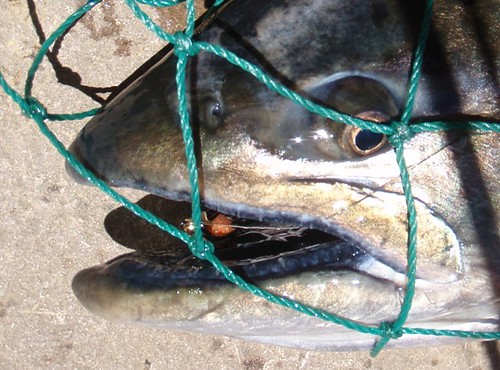
A bronze buck slid over the sandy cobbles at my feet, gasping for breath. I snapped a photo, my orange fly imbedded in the curve of his upper jaw. My elation evaporated as I saw the fish laying there, struggling in vain to recoup his oxygen deficit. No time for gloating over the demise of a great animal, hatchery or no. I thanked him for his sacrifice, clubbed him hard, and bled him on the beach.

Rob Russel Tidewater salmon

The rest of the afternoon melted away without a grab, and well before dark I rowed out and headed for camp. I ate a quarter of the salmon for dinner, roasting it in foil over driftwood coals, my feet digging into cool Pacific sand. I fell asleep to the sound of waves and gulls, and the reassuring smell of wood smoke.

Dawn was hard to discern. First it was dark and misty, then it was gray and misty. I never looked at the time. It didn’t matter. I launched, rowed, searched, and anchored in the same pool as the day before. True to form, I didn’t have a sniff until mid-afternoon. Then, the bites came easily. I lost four fish in a row on the same damn root wad. One bolted for it immediately, while the others waited until they were almost on the ropes. But all were able to force their way into the wood pile. I chased down the next fish, anchoring directly over the snag. I tried different angles and probed around with my rod tip, reeling when I could. The fish stopped fighting, and I eased her out of the mire. Her nose was touching the tip-top of the rod as she emerged. I fumbled for my net, and scooped up a gorgeous hatchery hen. Applause broke out from behind me, and a pair of sea kayakers pulled up, totally amazed to find someone flyfishing in the middle of nowhere. We exchanged pleasantries, and I explained there was only a narrow window of activity, and I had better get back to it. “You mind if we watch?” they asked. “Feel free,” I said, “But I hope you aren’t expecting much. That may have been it for the day.”
Rob Russel Tidewater salmon

I repositioned and fired off another cast. Something told me it would happen, and it did. A big grab, slow head shakes, and the flash of a heavy salmon zig-zagging his way to the top. A chrome-plated head tore the surface. There was a bright swirl, then the fight began. The yakkers were in for a show, probably at my expense. They provided play-by-play commentary as I made it to shore and worked the fish.

“If I can get this fish in, you’re welcome to have it,” I offered.
“Really? Yeah! We’d love it!”

I explained my little root wad problem so they wouldn’t be too disappointed when the fish tied me off. At the appropriate time, the fish made his move. I refused to give in, jamming the entire rod and reel under the water and stopping the spool with my palm. He turned briefly, then took two more shots at it. My 12-pound Maxima held, and we played out the rest of our drama at the head of the pool. Near the end, as he paced the shore, refusing to enter the shallows, I saw an adipose fin.

“Native!” I blurted, a little too happily. “Sorry guys, but this baby is going to swim free.” I was pumped to see a native springer. Truly a unicorn in these dark days.

“Awesome!” they said, earning my heartfelt thanks and respect.

In my arms, the fish was spellbinding. Perfect in every way. One of my new kayaker-friends snapped a photo, and we cheered as the beast shot off into the depths.

Rob Russel Tidewater salmon

It was hard to fish after that. I found myself poking around the boat, then decided to row out. The next morning I went through the motions, but I was done. Satisfied. For a few days, at least.

So, do you think I have a problem?

Posted in Oregon Salmon fly fishing | 8 Comments

TU putting Oregon felt sole ban on the agenda

Trout Unlimited at the State Council Level has been involved in lobbying our state legislators in Salem to ban felt sole wading boots in the 2011 legislature. The following info is from Dave Kumlien, Executive Director of the Whirling Disease Foundation and Trout Unlimited:

It is a very good idea on reaching out to fly shops, guides, and outfitters on the Oregon effort to regulate the use of felt soled waders and boots. I know that as a still active 36 year Montana fly fishing outfitter and a former 20 year fly shop owner, I would appreciate this sort of opportunity to make input on your effort. I am sure you will find supporters and detractors. In my opinion it is very important to be armed with the information about the science behind the move to eliminate felt. You will hear lots of statements from the uniformed that there is “no data, no science” behind this effort to eliminate felt, and this is not true. Following is a link to a good summary of the science behind the TU felt sole policy.

[Money quote from report: There is sound scientific evidence that anglers are moving invasives and that felt is much worse than any other part of a boot or any other fishing equipment.]

It is important to understand that the goal of the TU eliminate felt sole policy is to reduce, not eliminate the risk of moving aquatic invasive species (AIS) by anglers. Essentially, there is no way to eliminate the risk of anglers moving AIS, no treatment, no chemical that will totally eliminate the risk. The only certain way to eliminate risk is to eliminate the activity, and we, TU, are most definitely not recommending to anyone that we quit fishing! Understand, too, that this effort to eliminate the use of felt soles is only a small part of the overall message to practice the clean angling techniques to inspect, clean, and dry angling equipment and to avoid moving fish, fish parts, plants or water between drainages. The felt sole policy provides a tremendous opportunity to talk about the rest of this important message regarding aquatic invasive species.

Regarding Korkers, they are opposed to the move to eliminate felt soles and will not support any effort to eliminate the use of felt soles by regulation or law. However, Korkers does understand the threat of AIS to our cold water trough and salmon resource, and they do support the clean angling effort. When TU announced the eliminate felt sole policy at its annual meeting in ’08 and Simms Fishing Products Company followed the next week with an announcement at the AFFTA Fly Fishing Trade Show endorsing the TU policy and announcing that Simms was dropping felt from their product line 2010.

Korkers immediately opposed the policy. Korkers actively opposed the TU policy and lobbied everyone, including me, the author, to oppose the idea. At the 2009 AFFTA trade show Korkers presented their “pro choice” marketing program actively opposing the TU policy. Mind you, Korkers is concerned about the angler’s role in moving AIS, but they will tell you that their concern regarding eliminating the use of felt is based on product liability claiming that alternative soled boots are unsafe.

I’ve extensively tested and used all of the new alternative soled boots, and I’ve found that rubber with studs is equal to any felt sole product. Korkers does not believe this. It’s a subjective position and for either side of the issue, impossible to defend with facts. The liability issue is also subjective and debatable, but it is the Korker’s position, and they won’t budge. TU has come to an agreement with Korkers to work with them to produce a Korkers/TU cleaning angling sole package of a rubber and studded rubber sole with Korkers making a donation to TU’s AIS program from the sale of these boots and soles. I worked on this clean angling sole package idea, and I applaud Korkers for their effort.

You’re also likely to hear feedback that this “eliminate felt sole” policy is a conspiracy between TU and Simms. Here are the facts. First, the TU policy was originated by me and was based on my 15 years of working on whirling disease and other AIS. The motivation to write the TU policy came from numerous discussions and meetings with fish health and aquatic invasive species specialists over many years, growing scientific evidence regarding the movement of AIS by anglers, and an official request from the Utah Division of Wildlife Resources in 2008 asking TU to lead an effort to get the angling public and boot and wader manufacturers to eliminate the use of felt soles.

Simms had nothing to do with the formulation of the TU policy. At the time we announced the TU policy at the annual meeting in Salt Lake City in ‘08 TU had no idea that Simms would introduce their new Vibram rubber Rivertread sole at the AFFTA show or would announce that they were dropping felt soles from their product line in 2010. This information was kept under tight wraps by Simms, and I wasn’t aware of the dropping felt soles from the product line until I heard it at the AFFTA show. Furthermore, at the time that Simms introduced their new Rivertread soled boot and announced their “no felt in the product line in 2010” policy, Simms was NOT a TU donor. Since then, Simms has made a small contribution, $5,000 to be exact, to TU’s AIS program. The TU AIS program budget is $200K. The Simms contribution is generous but not a significant part of the budget. TU has worked with but independently from the wader and boot manufacturing industry.

Finally, I would like to say that it is not TU national’s policy to seek regulatory bans on felt. The ban in Alaska was originated by a TU member and then supported by the AK TU State Council. In Vermont, the legislation to ban felt was introduced by a Vermont Representative David Deen who had no prior contact with TU. In Maryland, the ban is being pushed by their Bureau of Inland Fisheries. When asked, TU has provided information to these groups regarding the science of felt, and I did travel to Alaska at the invitation (and expense) of Alaska TU to testify in the AK Board of Fisheries hearings. I also was requested by the Vermont legislature to testify on the Vermont bill.

To be effective, this eliminate felt sole policy must be supported and carried by the grassroots TU members. Nothing will kill this effort faster, I believe, than having this effort to eliminate felt appear to be orchestrated by the national TU office and its “hired guns.” You guys are doing this the right way, and I am prepared to help however you need me to.

Posted in Oregon Conservation News | 12 Comments

Lagartun Mini Flat Braid Summer Steelhead Fly Series: Fluorescent Red and Fluorescent Chartreuse

The final two patterns in Jay’s Lagartun Mini Flat Braid Series. Summer Steelhead fishing is looking great locally with over 22,000 fish over Willamette Falls. The Deschutes had a record year last and is again looking good this year. Decent reports from the North Umpqua have been trickling in. Shorter days and more shade are coming, the best “steelheading” is yet to come.–CD

Summer Steelhead Lagartun Mini Flat Braid Series

Fluorescent Red Mini Flat Braid Summer Steelhead Fly

Hook: TMC 700 #2-6
Thread: Lagartun 95D Black
Underbody: Silver Lagartun Mini Flat Braid
Overbody: Fl. Red Lagartun Mini Flat Braid
Rib: Small Silver Oval Lagartun Tinsel
Thorax: Black STS Trilobal dubbing
Colar Hackle: Black Schlappen Hackle
Wing: Red Krystal Flash

Summer Steelhead Lagartun Mini Flat Braid Series

Fluorescent Chartreuse Mini Flat Braid Summer Steelhead Fly

Hook: TMC 700 #2-6
Thread: Lagartun 95D Black
Underbody: Silver Lagartun Mini Flat Braid
Overbody: Fl. Chartreuse Lagartun Mini Flat Braid
Rib: Small Silver Oval Lagartun Tinsel
Thorax: Black STS Trilobal dubbing
Colar Hackle: Black Schlappen Hackle
Wing: Smolt Blue Krystal Flash

Posted in Fly Tying, Summer Steelhead | Leave a comment

Madison River report: Montana fly fishing

Our pal Warren Moran sent us this report from the Madison River.

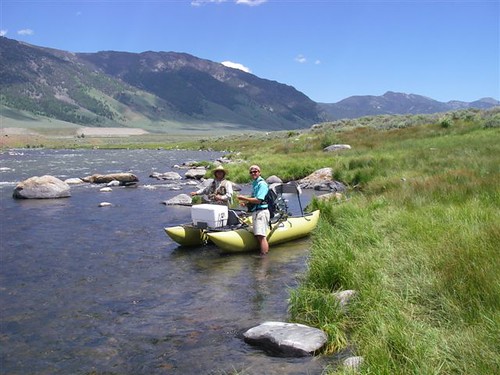
This is my ninth trip to the Madison River in the last ten years. The good news is that things haven’t changed much up here. Just a few more trophy homes and maybe a few more “sports” on the water. The Madison, also know as the “50 mile riffle” is a fast, highly productive, high gradient stream that originates in Yellowstone NP about 30-40 miles up-stream. High fish concentrations seem to be from Quake to Lyons (fish average 16″). My favorite water is the stretch between the Slide Inn and $3 Bridge. Floating this section is a great way to beat the crowds since fishing from a boat is prohibited (meaning that guides largely ignore this stretch). Pontoons work great.

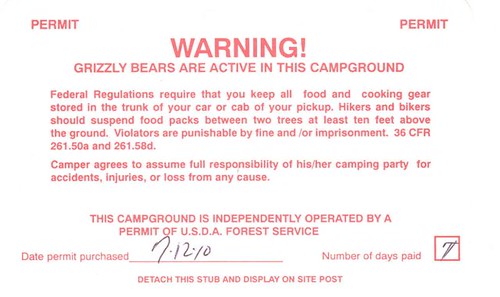
We camped at Beaver Creek CG above Quake Lake this year and were rewarded with a wildlife show. Moose, brown bear, bighorn all around camp made for interesting camping. Maybe a bit too interesting – it’s always good to have a few well armed friends from Texas in camp.

Bear Warning

Hatches this year were about 2 weeks behind schedule due to late rain and colder than normal temps. We arrived to find salmon flies and golden stones in abundance with fish looking up. The Madison fishes great on sunny bright days so don’t miss the middle of the day. Evening caddis hatches can be epic this time of year (#16 chocolate, olive X-caddis).

This week big browns and bows killed drys in the fast current 6-10 feet off the bank. Hot flies were size 2 cat puke and foam body GS. We’re talking 2-3 inch dry flies here. Big bugs are over now (until hopper time) but it’s always a good idea to check with Kelly Galloup or John at the Slide Inn for the local favorites. We’ve stayed here for years and they’re good guys. Buy a few flies and fish down stream from the Slide for a good time. They might even let you drink whiskey and smoke cigars on the front porch.

This aint Texas

wmoran

Gray drakes were starting to show later in the week. Kelly recommended a #14 adams with a #18 lightning bug dropper. It worked. The adams took about 1/2 of the fish with this set up. Other caddis pupa droppers worked about as well. Wade wet and fish upstream within a foot of the bank. 90% of the people that fish this river make the mistake of standing in the water – big mistake. On anther note – I managed to fish properly all week (Moon would be proud) until 10 minutes before the end – just had to land one “mountain bone fish” on the trip. And I did.

Posted in Fly Fishing Travel | 2 Comments

Fly fishing industry links!

Jeff Mishler has posted some amazing videos of the forthcoming Skagit Master 2 featuring Scott Howell. Check out the videos — a 2 minute intruder and winter steelhead fish porn.

Pebble Mine opponents scored a court victory. Environmentalists oppose the huge copper and gold mine being developed in Alaska near some of the world’s most productive wild salmon streams have scored a court victory. An Anchorage Superior Court judge issued a decision Monday clearing the way for a trial to challenge state permits.

Blog pal Brian from Reno Trout Envy and Truckee Brownzilla fame is moving to PDX.

Steelie Mike posted details on a study of warmwater invasive species impact on Pac NW salmonids.

Want to vent about wild fish? Washing Department of Fish and Wildlife are taking comments on how the state is going to handle massive budget cuts. Apocalypse Steelheader has some choice words for the agency on protecting wild fish.

Posted in Oregon fly fishing links | 1 Comment

Lagartun Mini Flat Braid Summer Steelhead Fly Series: Fluorescent Blue

In this video Jay Nicholas ties another one of his favorite Steelhead patterns in the Summer Steelhead Lagartun Mini Flat Braid Series.

Steelhead and Salmon love blue! Lagartun Mini Flat Braid Fluorescent Blue is a material that almost glows in the water. Swing this pattern on a floating line or sink tip for Steelhead at any time of the year.–CD

Summer Steelhead Lagartun Mini Flat Braid Series

Fluorescent Blue Mini Flat Braid Summer Steelhead Fly

Hook: TMC 700 #2-6
Thread: Lagartun 95D Black
Underbody: Silver Lagartun Mini Flat Braid
Overbody: Fl. Blue Lagartun Mini Flat Braid
Rib: Small Silver Oval Lagartun Tinsel
Thorax: Black STS Trilobal dubbing
Colar Hackle: Black Schlappen Hackle
Wing: Smolt Blue Krystal Flash

Posted in Fly Tying, Summer Steelhead | Leave a comment

Bug Launcher Classic: The Reel McCoys’ Place July 24th & 25th

89

Bug Launcher Classic
The Reel McCoys’ Place
July 24th & 25th

What: BBQ and casting challenge on the N. Umpqua River

Where: 9624 South Bank Dr.
Roseburg, OR

When: Saturday:
Course open 9am-5pm
Sunday:
Course open 9am-12pm & 1.30pm-4pm
Lunch 12pm-1.30pm

Why: Have a little fun casting a line
Eat a little and meet some folks
Raise support for Native Fish Society
Prize drawing

How much? All station fees (any amount)
cash or check donated to the
Native Fish Society

RSVP: Contact Mike or Jan McCoy
Call~(541) 677-0100
Email~ mikemccoy@dcwisp.net

Recommended Equipment

~Single Handed Rod
~7.5 tapered
leader to 2x
~Yarn fly only
(provided)
~Good sense of
humor

Bug Launcher Course Specifics

Twelve casting stations on our near the
N. Umpqua River.

Each station with targets at three skill levels.

36 opportunities to test and hone your abilities.

Sunday BBQ
Turkey and beef burgers and hot dogs
Go alongs included as well

Bring you own liquid refreshments

Posted in Oregon Conservation News, Oregon Fly Fishing Clubs and Events | 1 Comment

Lagartun Mini Flat Braid Summer Steelhead Fly Series: Fluorescent Orange

The first of four different steelhead flies tied by Jay Nicholas from his Steelhead Mini Flat Braid Series. Fluorescent Orange Lagartun Mini Flat Braid over-body and a silver Lagartun Mini Flat Braid under-body give this pattern a subtle glow in the water. Add some trilobal dubbing and a Krystal Flash wing and you have a steelhead magnet. More versions of this one to come.–CD

Summer Steelhead Lagartun Mini Flat Braid Series

Fluorescent Orange Mini Flat Braid Summer Steelhead Fly

Hook: TMC 700 #2-6
Thread: Lagartun 95D Black
Underbody: Silver Lagartun Mini Flat Braid
Overbody: Fl. Orange Lagartun Mini Flat Braid
Rib: Small Silver Oval Lagartun Tinsel
Thorax: Black STS Trilobal dubbing
Colar Hackle: Black Schlappen Hackle
Wing: Fl. Orange Krystal Flash

Posted in Fly Tying, Summer Steelhead | 1 Comment

North Umpqua summer steelhead, sleep deprivation, and collective insanity

We made it hard on ourselves, taking off for the North Umpqua Thursday night after last call. How many days ago, two? We left with no sleep, straight for the fly water.

When I popped out of the truck that first morning, I’d felt like a million bucks, swinging good water, casting my switch rod.

But things started coming unglued around lunchtime on that first day, when we found the photo on the wall at the Idleyld gas station – a guy holding up what the caption said was a 28lb chinook salmon, caught one week in the future. I hadn’t considered the implications of observing a tear in the spacetime continuum.

North Umpqua Summer Steelheading

A few more unexplained occurrences happened between lunch and nighttime – strange odors, total loss of geographical bearings, etc. But we didn’t go collectively insane until some time after midnight.

We were huddled together under a tent on cold river gravel when Julian started yelling. Get out of here! Julian talks in his sleep, so I chocked it up to night terrors, and thought better to ignore it than get punched in the face by a somnambulist. But actually he was awake. Apparently something had pressed its snout into the sidewall of the tent and was panting in Julian’s ear.

That’s about the time we became aware of the strobe light. Our first thought: It’s the flashing beacon on a radio collar around a cougar’s neck. Then the winking light started spinning around the tent. Some alien presence was trying to enter our dimension. Or maybe the lights were the ghosts of drowned steelheaders.

Three of us sat bolt upright and slapped at each other, making sure we were all awake, until the pulsing white light slowed down, then changed color to red, and finally blinked out. We settled back into our cold, hard beds and prepared for another day of collective insanity (aka steelhead fishing on the N. Umpqua) with our brethren.

North Umpqua Summer Steelheading

The alarm went off before dawn, still dark, with a sick feeling in my stomach and a chill coming off the river. No reasonable people are awake at this hour, but some jerk has been getting to Station before four AM all week, so everybody’s getting up earlier. We planned to give the geeks the first crack at the Camp Water – if you can’t beat them, go somewhere else. We walked the trail downriver to find good swing water and rolling fish.

The successful guys, old timers mostly, will tell you that you have to be on the water before first light. It’s part of the mystique, piling one more level of difficulty on this hyper-ritualized fishery. The fish probably do bite better at sun up, but it’s also part of the old-timers game to wear us down. The really smart dudes sleep in, grab an omelet at Steamboat, scout pools from the road with binoculars and mark fish for dusk. They spend the rest of the day soaking in a hot spring, or motel with an attractive companion.

It came together for us around 7am on the second day. We found a pool the three of us could swing, saw some rollers. A fish took a swat at one of our flies as it hung awkwardly at the bottom of a cast, missed. Subsequent swings, no takers. A fish rolled in the tail out. We spent a couple hours flailing at the river, as light creeps up the canyon walls upriver.

We should have stayed, rested the pool and made another charge. But the lust for Steamboat’s non-gas station coffee was too strong. After two days of fishing and a total of six hours of fitful sleep, reality was just too thin.

Good luck out there pilgrims.

-MS

Posted in North Umpqua River Fishing Reports | 4 Comments

Jay’s Summer Steelhead Chenille Series Red and Black and Orange and Black

The final two of eight Summer Steelhead Chenille Series flies from Jay Nicholas. Jay discusses hook size, proportions and flash. The next series of low water patterns is on the way!–CD

Classic Summer Steelhead Series Red and Black

Classic Summer Steelhead Series Orange and Black

Summer Steelhead Chenille Series

Hook: TMC 700 2-6
Thread: Lagartun 95D Black
Rib: Lagartun Oval Tinsel
Body: Medium Black Chenille
Collar Hackle Fly # 1: Red Saddle Hackle
Collar Hackle Fly # 2: Orange Schlappen Hackle
Wing: Mirage Flashabou

Posted in Fly Tying, Summer Steelhead | Leave a comment

Jay’s Summer Steelhead Chenille Series Claret and Black and Blue and Black

Two more in Jay’s Summer Steelhead Chenille Series Steelhead fly patterns. During the tying session Jay discusses stomach contents of Steelhead. His career as a biologist and angler has led to a tremendous amount of research, field observation and access to information about fish. Enjoy!–CD

Classic Summer Steelhead Series Claret and Black

Classic Summer Steelhead Series Blue and Black

Summer Steelhead Chenille Series

Hook: TMC 700 2-6
Thread: Lagartun 95D Black
Rib: Lagartun Oval Tinsel
Body: Medium Black Chenille
Collar Hackle Fly # 1: Claret Wooly Bugger Saddle Hackle
Collar Hackle Fly # 2: Kingfisher Blue Saddle Hackle
Wing: Mirage Flashabou

Posted in Fly Tying, Summer Steelhead | Leave a comment

More of Jay’s Steelhead Chenille Series Fly Tying Videos

Two more proven Steelhead patterns from Jay Nicholas’s Summer Steelhead Chenille Series. Purple has to be considered along with black as a top producing steelhead color. Fly number two is a “Juicy Bug” knock off that Jay has had success both on the Rogue and North Umpqua.–CD


Summer Steelhead Chenille Series

Hook: TMC 700 2-6
Thread: Lagartun 95D Black
Rib: Lagartun Oval Tinsel
Body: Fly # 1 Purple Trilobal Antron Chenille size Small.
Body: Fly # 2 Medium Black and Red Chenille
Collar Hackle: Fly #1 Purple Schlappen
Collar Hackle: Black Schlappen
Wing: Mirage Flashabou

Posted in Fly Tying, Summer Steelhead | Leave a comment

Middle Fork Willamette Report

Thursday, my friend Mike and I decided to take advantage of the good flows on the Middle Fork of the Willamette above Lookout Point and float for wild trout.  Whether it was the late rain or the Corps hording water due to low snowpack or a combination of the two I guess it doesn’t really matter.  Point is, the MFW is running about 245 c.f.s. higher than long term median for this date above Salt Creek and about 400 c.f.s. higher than usual below the North Fork.  This makes me happy as the MFW can be a real bang and drag show as the summer progresses. 

Putting in at the Traihead at about 3:30 we fished the mid-day doldrums but rainbows did come to the Ice Prince, Half-Down stone and Possie Buggers.   Once the sun was off the water fish became more active the catch rate bumped up dramatically.  We both caught  really nice cutthroat which seem pretty few and far between up there.  Mike got bent by a big rainbow:

Middle Fork Willamette

The big fish of the day ate a Parachute PED. The river was putting off prolific amounts of Yellow Sallys, big golden stones, brown caddis and there were a few PEDs in the mix. The fish weren’t keyed in on the top as much as I’d liked to have seen but they were willing to eat an Elk Hair Caddis without too much convincing. Bottom Line: The fishing was good and the levels are great. It’s a nice time to be out there. –KM

Posted in Middle Fork Willamette River fishing | 2 Comments

The making of a steelheader: Bob Welch on the Town Run

Greg Hatten shot this great video earlier this week of Register-Guard columnist Bob Welch fighting his first steelhead on the Town Run. Check out the four-foot jump this thing takes. Apparently Bob is hooked.

Posted in Summer Steelhead | 8 Comments