October Caddis Sea Run Cutthroat Fly Pattern

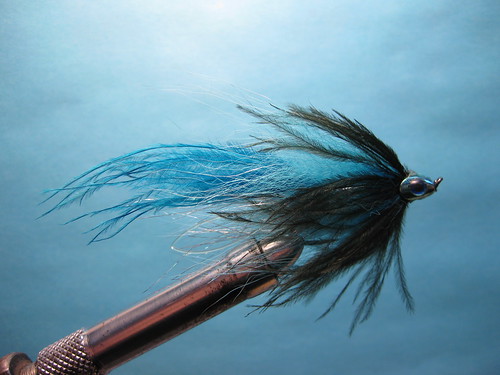
October Caddis are one of the most important insects for fall fishing. Coastal rivers have been seeing a few already, and Sea Run Cutthroat are just as dialed into them as resident trout. In this video Jay ties a favorite October Caddis wet fly pattern. Try it for Sea Runs, Steelhead and your favorite local trout stream.

october caddis wet

October Caddis Wet

Hook: TMC 3761 or Daiichi 1560 # 6,8
Thread: Petitjean Split Second 8/0
Rib: Lagartun Silver Oval Small
Body: STS Trilobal Dub, burnt orange, Hot Orange and UV Ice dub minnow belly Blended
Hackle: American Saddle Clump Brown
Wing: Natural Deer Hair
Head: Black STS Trilobal Dubbing

Posted in Fly Tying | 2 Comments

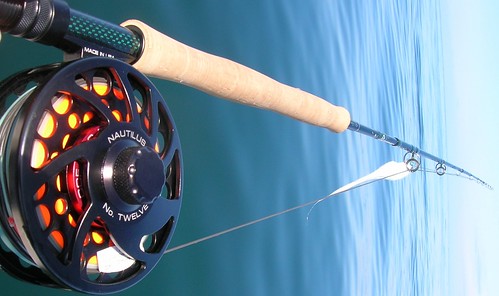
Ring ring… Who is it? Nautilus!

DSCN1272

So ringtones are all the rage these days… In an attempt to bring fly anglers to the 21st Century Miami based Nautilus is making several ringtones available for free! Imagine hearing that drag scream when your inlaws call…fish on.

Posted in Uncategorized | 3 Comments

Ninth Circuit Court of Appeals hands down a win for Tillamook Salmon

From the Crag Law Center: The Ninth Circuit Court of Appeals issued a long-awaited decision on the Oregon Department of Forestry’s management of logging roads and stormwater in the Tillamook State Forest. In the western United States, logging roads are one of the worst sources of sediment pollution, which smothers salmon spawning beds and harms water quality. On the Tillamook State Forest, ODF has for years designed their roads to channel and discharge polluted stormwater from logging roads into coastal rivers and streams in the Tillamook State Forest, often times directly on top of or close to salmon spawning grounds.

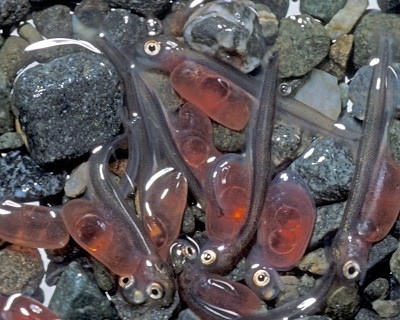
Alevins spend two to eight months in river gravel.

alevins

So how do we make improvements? Native Fish Society River Steward Tom Davis shared this from a recent report:

Erosion-Sedimentation Reduction – The essentials for effectively reducing erosion and sedimentation from forest activities and projects include:

  • No new roads except for projects that are essential for watershed recovery, or that will not cause soil erosion and sedimentation impacts on an ephemeral, seasonal or permanent channel.
  • Maximum road-prism widths that reflect the soils and slopes present, and are smaller/narrower on more erodible soils and/or steeper slopes.
  • Accelerated decommissioning of non-essential roads to achieve road densities of < one per sq. mile.
  • Performing subsoiling, or “tillage”, of compacted soils for road decommissioning or revegetation of disturbed sites in ways that eliminate the potential for transport of eroded soil from the site.
  • Limiting the use of ATVs to roads suitable for two-wheel drive vehicles.
  • Soil disturbance slope limits that are specific for the soils present, ranging from 15% to 30%. Steeper sites would require enhanced mitigation measures, for examples reduced weeks of exposure, higher levels of mulching and multiple rows of silt fence. No disturbance on slopes => 30%.
  • Project and activity design that reduces the grading and soil disturbance area to a minimum.
  • A time limit in weeks on the exposure of disturbed soils, with no carryover from one activity phase to the next, and requiring a disturbance-free period during high-risk seasons of at least four (4) months.
  • Establishment of water management systems immediately after grading and soil disturbance begins.
  • Interim controls including early mulching on slopes steeper than 5 percent, revegetation and temporary sedimentation traps for the 5-year storm recurrence interval runoff.
  • Transitioning from natural to post-development/activity water conveyance and storage systems within one activity phase, or nine months at most.
  • Out sloping or in sloping of roads with ditch relief culverts every 200 feet or less.
  • Maintenance measures that ensure no rutting of the road surface and do not increase the fine material available for erosion.
  • Minimal compaction and mitigation of all compaction not essential for long-term use of a road.
  • Silt fences if soil disturbance is within 200 ft of an ephemeral, seasonal or permanent channel.
  • Sediment catchments downgradient in rills and gullies prior to any soil disturbance.
  • Posted in Oregon Conservation News | 2 Comments

    “September like” weather improves local fishing.

    Both the McKenzie and Willamette rivers are fishing well. Cooler weather has prevailed for the past week or so and the fishing has bumped up as a result.

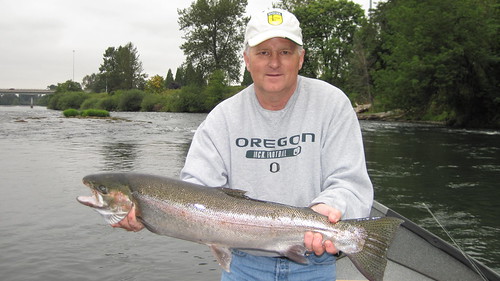
    Town Run: Although the Willamette River is now really low compared to much of the year Steelhead remain active. The river is very “wading friendly” now and it’s a great time to get out and learn the subtle slots and drops that hold fish regardless of water levels. Moal Leeches remain solid choices, muddlers and Hoh Bo speys are also doing the trick. Floating lines and type 6 sink tips are both nice to have this time of year. Vary your leader depending upon your sink tip, 10ft for the floater and 6ft for the sink tip.

    town run buck

    Middle Fork of the Willamette: Higher flows out of Hills Creek dam have made wading daunting much of the month of August. Flows of 2300-2400 CFS make the middle fork near Oakridge look out of shape. But as we know fish like water and the Middle Fork fishes well when it’s high in the spring and fall.
    MId-Summer, August flows are often low and fishing is best in the evening. This August (due to reservoir draw downs for future repairs) has the MFW rolling and the fish are digging it all day. Try nymphing with the standards, Prince’s, Possie Buggers, Pheasant Tails, try larger Caddis, Orange and brown, Royal Wulff’s, and X-Caddis will get the job done as well. Hatches are not impressive but they are developing. Small Caddis, a couple of October Caddis have even been spotted. Flows have dropped to around 1500 CFS out of Hills Creek and the fall fishing will be fantastic as long as we have decent water.

    hells gate

    Upper McKenzie: Again cooler weather has been nice on the Upper River and this weekend fishing was excellent. Typically August means small caddis, attractors and fishing fast water, this year is no exception. The Upper McKenzie is low and experiencing a serious “rubber (raft) hatch”. All that being said fall shadows are coming on strong and the shorter days have fish looking up in the afternoon. “Hopper Dropper” rigs have been productive as well.

    upper mac paradise down

    mckenzie wild rainbow

    Our local waters have had reasonable flows all Summer and fall fishing is looking great. 24,000 summer steelhead over Willamette Falls is a fine number, and trout fishing has been consistent. The the wild trout on both the McKenzie and Willamette will benefit greatly from the “better than last year” spring Chinook spawning cycle taking place over the next couple of weeks. Overall fall fishing should be great.–CD

    Posted in Fishing Reports, McKenzie River, Middle Fork Willamette River fishing | 1 Comment

    Ocean coho fishing heats up on the Oregon Coast

    Reports came in over the weekend, big schools of coho off of Newport. We’d already planned to head out for albacore and bluewater a bit further off, and thought coho would be a good fall back plan. It was.

    offshore trip

    offshore trip

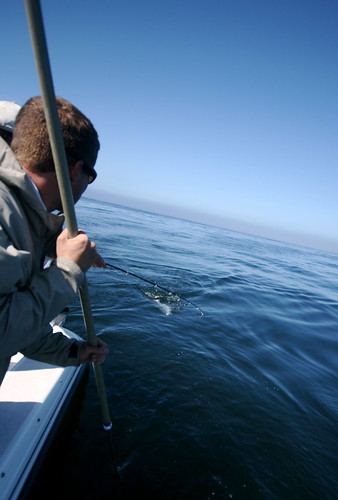
    After racing offshore early in the morning and finding the warmer bluewater had pushed a bit further off than we expected, we headed back toward Newport where the recreational angling fleet was out in force. Trolling our bucktail albacore jigs for a couple hours in the middle of the day, we still managed to bag a couple of the nicest hatchery coho we’ve seen this year. These are some big hens. It’s been a slow ocean salmon fishing season so far, so it’s great news to find grabby schools of coho. If you’re interested in chasing salmon in the salt on light tackle, or skipping flies, call the shop 541-342-7005.

    Posted in Oregon Salmon fly fishing, Oregon Saltwater Fishing | 1 Comment

    McKenzie River Native Trout Coalition T-Shirts now available

    The McKenzie River Native Trout Coalition T-shirts are in. Designed by TU 678’s Brent Ross, these shirts are a must-have for $20. Proceeds benefit the Coalition’s efforts to reduce or remove hatchery trout from the McKenzie River. Pick up your shirt at The Caddis Fly Shop.

    McKenzie River Native Trout Coalition

    If you’re outside of Eugene, but want to support the cause, you can buy shirts online ($25 includes shipping).

    McKenzie River Native Trout Coalition T-Shirts

    McKenzie River Native Trout Coalition T-Shirts

    Help Support a Wild McKenzie!

    Posted in McKenzie River, Oregon Conservation News | 7 Comments

    Tying Hair Wing Sea Run Cutthroat Flies

    The final series of Sea Run Cutthroat patterns: “Hair Wings”. Jay demonstrates how to tie a pattern similar to the Borden’s Special.  More variations shown below. This series has a larger profile and fishes well in water with a tinge of green and on days when lower light conditions exist. Don’t forget to sign up for Jay’s Sea Run Class Aug 28th 10am-1pm $20.–CD

    DSCF0211

    Traditonal Hair Wing Sea Run Cutthroat Fly

    Hook: TMC  3761 or Daiichi 1560 # 6
    Thread: Petitjean Split Second 8/0
    Butt: Lagartun Mini Flat Braid Holo Gold
    Rib: Small Oval Lagartun Silver
    Body: STS Trilobal Dub and Hareline Fl. Pink Dub blended
    Wing: White Deer Belly Hair
    Hackle: Pink Grizzly Saddle or Dyed Grizzly Pink Variant Saddle

    Hair Wing Sea Run Cutthroat Fly

    Hair Wing Sea Run Cutthroat Fly

    Hair Wing Sea Run Cutthroat Fly

    Hair Wing Sea Run Cutthroat Fly

    Hair Wing Sea Run Cutthroat Fly

    Posted in Fly Tying | Leave a comment

    These North Umpqua Steelhead are easy

    I spent three days on the Umpqua River last weekend, starting with a morning in Reedsport fishing for fall chinook. Salmon were in the river between the mouth and Dean Creek. We stumbled onto a couple good spots to fly fish this huge estuary, and trolled spinners without much luck, but a few guys landed some early season chromers.

    Big Umpqua Salmon Fishing

    I spent the rest of the weekend on the North Umpqua with my parents, visiting from Ohio. I fished a couple mornings before dawn.

    North Umpqua Dawn

    One afternoon, my dad comes back from a hike to tell me, “These North Umpqua Steelhead are easy. They’re all piled up in one spot, jumping all over.”

    Well, what the hell. I followed him to his magic steelhead hole and indeed, there were big silver steelhead darting all over… in Steamboat Creek. Oh well.

    Salmon and steelhead are around in the Umpqua. If you can convince them to bite, tell me how.
    -MS

    Posted in North Umpqua River Fishing Reports | 4 Comments

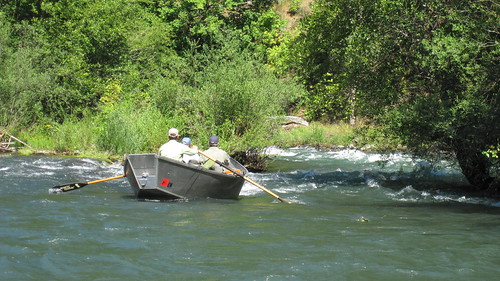
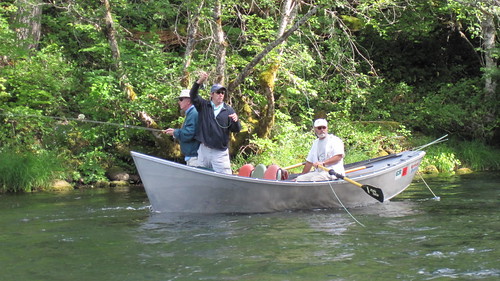
    Filming ‘On the Rise’ on the Mckenzie River

    Day T-Minus One

    We pushed hard for Trout Unlimited’s national show, ‘On the Rise’ stop by for some fishing on the upper Mckenzie River’s wild trout managment zone. The time that they could do it was less than ideal.   Mid-August isn’t exactly peak season but they agreed to come and we promised to put them on some redsides. Now, as the fateful day approached, I was becoming a bit nervous and my conversation with Jake, the production crew chief did little to calm my nerves. He wanted a camera man in the back of my driftboat and another on a trailer boat. I explained that we don’t run in-line and asked if we could experiment a bit, “sounds like a rodeo to me,” he said curtly. We agreed on a time and meeting place. I grabbed a beer, slammed it and reached for another . . . .

    Day One

    The production crew and host, Jed Fiebelkorn of Endless Drift Outfitters rolled up at the appointed time all smiles and I knew we would have a good day. As we prepared for the shoot, the Missoula Montana based crew admired the river.  So lush and green with vegetation all the way to the water’s edge, the Mckenzie is very different than what they are used to.  Our home water reminded them of New Zealand.  They marveled at the clarity of the water and just how cold it is, even in mid-August. Clearly, they are the kind of guys that love the outdoors and appreciate a beautiful river and its native fish.  My kind of guys.

    As we set up the intro shot, getting miked up and the camera ready  to roll, we discussed tactics and techniques and I agreed with Jake to let him sit on my rear seat with the tight lensed camera for the first rapid and we’d know right away if it was going to work.  Mercifully, Jake is not a big guy and while the boat felt a bit unresponsive, I was able to negotiate the first set  rapids just fine and we knew it was on.  Not a few seconds later in the first spot, Jed was on his first Mckenzie rainbow.  The smaller fish were plenty active all day, eating both dries and nymphs in the 90 degree sun.    Jed caught a grip of wild fish, both rainbow and cutts between 6 and 10 inches with most being about the size of your average planter.  I kept promising Jed that there are bigger fish in the river and to his credit, he believed me and was even enjoying catching the smaller wild fish.   Myself,  I was enjoying getting a bit of an inside view as to how a outdoors show gets made, at least on the production end. 

    We ate a lazy lunch, lounging in the shade, relaxing, swapping fishing stories and getting acquainted a bit more.  Jed and I, noting that the bigger fish had all eaten nymphs decided to go down and dirty for the rest of the day with a tandem nymph rig under an indicator.  The smaller fish continued to attack the flies and I was getting a bit despondent, we needed a bigger fish to come out for some watersports.  Our perseverance was eventually rewarded when a chunky redside grabbed, (what else?),  a #8 Possie Bugger.  Naturally, it ate when Jake wasn’t rolling but taking a few stills with my camera.  I think the other camera boat captured the take-down though.  A couple times Jed thought the fish was ready for the net only to take another hot run. 

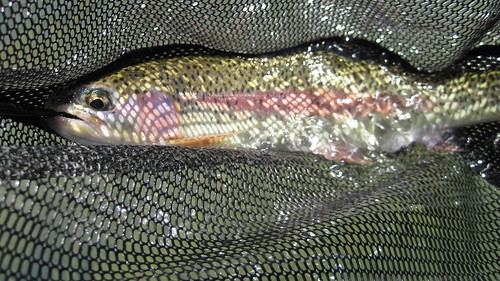
    We landed the trout and Jed admired it’s combination of beauty and power seeing right away why we’d like to see the river managed to optimize production of this magnificent fish.  He noted how big,  healthy and beautiful it was but also told me that the fish was punching way above its weight class, that it fought with strength and spirit beyond its size.  The Montana outfitter was clearly impressed by the Mckenzie redside.  This was the cast:

    IMG_1094

    Once we had a bigger fish, our fishing became faster and there was a bit of a sense of mission accomplished, I was much more at ease and our talk turned to managment issues on the Mckenzie River.  I did my best to express my opinion while being fair to opposing viewpoints and ODFW,  giving credit when due, criticism when appropriate in my view and not mentioning anyone or any group, except ours by name.    That is, after all, why we were there.

    Day 2

    It started with a bang.  As Chris and I readied our boats and the crew prepared for the shoot we were approached by a gentleman.  His emotions clearly had the better of him and he yelled at us.  “You ought to be ashamed of yourself.”  This was repeated several times to apparently little avail .  Chris calmy tried explaining his concerns  for the wild fish.  Our calm demeanor did little to calm this fellow.  He informed us that we are “a bunch of girls.”  Um, no.  By the way, it’s 2010.

    The crew was pleased get some insight into what we are up against.  Having no stocked fish in Montana moving waters they found the assertion that reducing or eliminating stocking over a number of years would be the “end of guiding” interesting but  puzzling.  I think it was a bit hard for them to fathom until then how passionate someone can get over hatchery trout.  You learn something every day I guess.

    We went fishing with Chris guiding and me running the camera boat.  Again the fishing was active with tons of 6-10 inch fish eating both dries and nymphs.  In some heavy water Jed hooked a good redside and they pulled over to do battle but as happens so often up there, the fish came unbuttoned in the current. 

    Beautiful water, good fish, some good company and a good cause.  Good times.

    'One the Rise'

    'One the Rise'

    'On the Rise'

    'One The Rise'

    I want to thank all of the wild trout advocates in our community, the Trout Unlimited staff, host Jed Fiebelkorn, the crew of Barrett Productions, Chris Daughters and everyone else who worked to make this a reality.  ‘On the Rise’ airs on the Sportsman Channel.  It is available locally and the segment on the Mckenzie will air sometime during the 2011 season.  We’ll keep you posted.–KM

    Posted in McKenzie River, Oregon Conservation News, Uncategorized | 8 Comments

    Your tuna truck has come in!

    If you live near the coast or in Eugene for that matter I’m sure you have seen the guys in the parking lots selling Oregon albacore out of a truck for 3 bucks a pound. That should be a sign to you that the tuna season is in full swing and maybe if you are fortunate enough to go offshore you might even have a truck out front of your very own! Now I’m not suggesting you go out and sell these beautiful creatures or begin fitting your Koffler with a set of twin Yamaha’s, but the thought may just cross your mind. Well the bite is and has been on so please enjoy these pictures responsibly! If you have any desire to try and chase longfins with a fly rod please let us know. Also keep in mind the opportunity passes as fast as the fish so don’t be afraid to get caught up in the tuna fever. We would love to help in anyway possible with your gear or trouble shooting so call the shop for info.

    DSCN1389

    Also a thank you to Oregon’s Magazine 1859 for hopping along the rocks chasing Rockfish… For their take on the trip and a great magazine check out 1859’s blog.

    -NS

    Posted in Fishing Porn, Oregon Saltwater Fishing | 3 Comments

    Fly Fishing Report late Summer 2010

    Mid day fly fishing in the McKenzie and Willamette can be a bit tough these days. What’s an angler to do? The following are a few suggestions, thoughts, observations to get you through the next couple of weeks.

    Smallmouth Bass on the Umpqua

    Take a few Clousers, Mega Princes and JJ’s Special and head down to the Umpqua. The water is warm so you won’t need your waders. Tube it, wade it or boat it. Popular drifts are Umpqua to Woods Ramp, or Woods to Osprey. A raft or Pontoon can make the drift from Ferguson to Yellow Creek. I just made this one this weekend for the first time and it was a short productive drift.

    Upper Tributaries

    The Middle Fork above Hills Creek Reservoir and the  South Fork above Cougar Reservoir are both excellent bets this time of year. Try attractors, hoppers, parachute adams, small caddis and small possie buggers. Both of these rivers have tons of walk and wade access and you will often have large stretches of river all to yourself.

    IMG_7422

    IMG_7542

    Tuna Fishing With Capt Nate, the photo tells it all.

    tuna

    Sea Runs on the Coast
    Take Jay Nicholas’s Class on Sea Runs scheduled for Aug 28th, see more details here.

    Classic Sea Run Cutthroat Patterns

    Steelhead are moving into the lower Deschutes and reports vary from decent to poor. Look for water temperatures in the lower Deschutes to get colder and a “wad” of fish to move into the lower river.

    Local Steelheading has been good on the Willamette. Dexter all the way into town has been consistently producing fish. Moal leeches, Hobo Spey’s, Bush’s Town Run, Morejohn’s Bantam have been productive patterns.

    September and October are going to be amazing this year, good water, good salmon and steelhead returns mean to many places to go, fish to catch and not enough time.–CD

    Posted in Fishing Reports | 2 Comments

    Tying a Traditional Yarn Body Sea Run Cutthroat Fly

    Number four of seven in Jay Nicholas’s Sea Run Cutthroat fly series. The Yarn Body Sea Run Fly is a sprasely dressed pattern that works well mid day in clear water. If you are getting numerous drive buys or short strikes on your more “fully dressed” patterns give this one a try. A variety of body colors are shown as well. These patterns will also work for half pounder steelhead on the Rogue and even summer steelhead laid up in shallow water late summer.–CD

    DSCF0208

    Highlander Green Yarn Body Sea Run Cutthroat Fly

    Hook: TMC 3761 # 8 or Daiichi 1560 # 8
    Thread: Petitjean Split Second 8/0
    Rib: Oval Uni or Lagartun Silver
    Body: Highlander Green Uni-Yarn
    Hackle: American Saddle Clump Grizzly Dyed Olive
    Wing: Mirage Flashabou Opal

    DSCF0242

    DSCF0243

    Uni Yarn Sea Run Cutthroat Fly

    Uni Yarn Sea Run Cutthroat Fly

    Uni Yarn Sea Run Cutthroat Fly

    Posted in Fly Tying | 2 Comments

    Tying the Spruce Fly Substitute Sea Run Cutthroat Fly

    Another variation in Jay’s Sea Run Fly Series. The Spruce substitute falls in the Yarn body traditional fly realm.–CD

    DSCF0244

    Spruce Fly Substitute

    Hook: TMC 3761 # 8 or Daiichi 1560 # 8
    Thread: Petitjean Split Second 8/0
    Rib: Oval Uni or Lagartun Silver
    Butt: Chinese Red Uni Yarn
    Body: Purple Uni Yarn
    Collar: Strung Grizzly Variant Saddle
    Wing Mirage flashabou opal

    Posted in Fly Tying | 1 Comment

    Tying a Sea Run Cutthroat Traditional Dubbed Body Fly Pattern

    Jay discusses Sea Run Cutthroat fly fishing tactics during his demonstration of how to tie a dubbed body traditional. More variations are shown below.–CD

    DSCF0220

    Red and Yellow Dubbed Body Sea Run Favorite

    Hook: TMC 3761 or Daiichi 1560 # 8
    Thread: Petitjean Split Second 8/0
    Rib: Lagartun Oval Silver
    Body: 1/2 red 1/2 yellow STS Trilobal Dubbing
    Hackle: American Saddle Clump Black
    Wing: Mirage Flashabou Opal

    DSCF0221

    DSCF0219

    DSCF0217

    DSCF0216

    DSCF0215

    DSCF0214

    DSCF0213

    Posted in Fly Tying | Leave a comment

    The making of an Oregon Fly Fisher

    Wild fish advocate and shop customer Jim Reichman sent us this story about his evolution as a beginning angler in Oregon. Check it out. -MS

    Almost two years ago Tom Sisk, a special friend and long time fly angler, handed me a Winston rod (which, at the time, could have been from Wal-Mart for all I knew) and said “I’m calling your bluff”. I had talked about learning to fly fish since retirement, and Tom was tired of the chitchat unaccompanied by action.

    After moving to Eugene I sheepishly walked into the Caddis Fly where I met Lou. I explained my situation, imagining that no novice angler had ever been in the shop before. Lou smiled a grandfatherly smile (he is, after all, old enough to be my brother) and said “you are in the best place in the country to fish year ‘round”. He helped me choose a reel, line, some flies, and needed accessories. Not knowing whether I’d stick with it, I purchased waders and boots on Craigslist – the transaction took place out of the trunk of a car in Alton Baker Park in what felt like some sort of nefarious transaction.

    My first effort in Oregon was on the Rogue in the Holy Waters just below Lost Creek Reservoir. I waded in as deep as I could and threw the fly in random directions as far as I could, convinced that both were necessary for catching trout (perhaps at times necessary, but never sufficient). Soon thereafter I met Ron Hegge, who became a fishing buddy and mentor (he was present when I caught the first trout – a 6” beaut on the Lower McKenzie) and we’ve fished many waters since, always to my pleasure and benefit.

    About the same time I traveled back to Arizona to fish Marble Canyon below Glen Canyon Dam with Tom, who had given me the rod. In the wide open waters I was getting comfortable with casting and told Tom that I was feeling pretty good about putting the fly where I wanted it. Tom replied “that’s nice Jim, but you need to put it where the fish want it”.

    TomSiskFishingMarbleCanyon

    Returning to Oregon, I took Lou’s notion to heart and over the last 18 months have fished every month of the year in 30 bodies of water in the state (and caught fish in 23 of them). I’ve benefited immensely from everyone at the shop, and from trips with Chris and Ethan. Ron and I have talked about getting a drift boat, but we’ve realized that it is who is in the boat, not the craft itself. Their patience is as remarkable as their expertise.

    What stands out? I expect that experienced anglers know it’s not the big fish, although that is always a treat. For me it is the gratification of catching a fish that involves the perfect combination of exploration, a little skill (too little in my case), some knowledge, beautiful surroundings, and solitude. I remember one fish on the Blitzen River in SE Oregon that took a couple of looks at the fly and shunned it. I used to teach a course in animal behavior and I thought “this guy is a predator – he wants to eat something”. So after some gentle casts into a small pool I skipped the fly in hard a few times and made the connection.

    Another memorable time was threading a fly along an 18” ribbon of water between an eddy and faster current and letting it drift 60 feet to a nice cutthroat rising to BWOs. And then there was the time… you know.

    RonHeggeFishingNorthFork#2

    What’s next? More time on the beautiful, productive rivers of the State. Perhaps some more salmon, and the first steelhead (which, I hope, Ethan will take care of in September). More hikes into remote locations to wet wade with light gear, and early season float trips on the McKenzie. Such opportunities engender a desire, even a responsibility, to become involved in watershed conservation through public forums and organizations like the McKenzie River Trust.

    It is hard to imagine a place with a more diverse suite of places, waters, fish, and angling days than Oregon – how fortunate we are.

    -Jim Reichman

    Posted in Fishing Reports | 3 Comments