November McKenzie and Willamette Fishing Report

Eric and Christopher Stowell Steelhead

The fishing in the Eugene area in November can be hit or miss. If the weather stays dry, and the water levels low, as they have this season, ideal fishing conditions will linger. Look for the trout and steelhead fishing on the Willamette and McKenzie to remain good until monsoon season arrives.

Dan Phillips Steelhead

Afternoon blue winged olive hatches will keep the trout looking up, while the October caddis dry and Possie Bugger dropper combinations continue to get a lot of attention. The Steelhead this time of year will eat a number of different things, provided they are in the right spot. In the past week, I have seen Steelhead taken on October caddis dry flies, nymphs, muddlers, leeches, and traditional wet flies.

Willamette River Steelhead

In short, get out and fish close to home while you still can. If you want to maximize your time on the water, catch some fish, and learn a few things in the bargain, take us up on the Fall half day guided trip special for just $250. Give the shop a call (541-342-7005) to book your day out for one or two anglers. We will fish the prime part of the day, provide the equipment if needed.

Posted in Fishing Reports, Shop Sales and Specials | Leave a comment

Nau Clothing Line for Men and Women

nau_caddisfly_trunkshow_2

Join us Wednesday 2-5pm for a look at Portland based clothier NAU. NAU has a new line of great fall outerwear for women and men.

Gentleman and ladies, the shop is loaded with great stuff from Simms, EX Officio, Patagonia and more. Come on down have a glass of wine or a Ninkasi brew and get that wish list started.

Posted in Shop Sales and Specials | Leave a comment

Salmon Season Yet?

From the Desk of Jay Nicholas, clearly he’s been busy.

Fly Fishing for Salmon in Oregon

Oregon Salmon Fly Fishing
Continue reading

Posted in Oregon Salmon fly fishing | 1 Comment

EP Tarantula Hairy Legged Leech Fly Tying Video

Enrico Puglisi and Hareline Dubbin got together to create a new and innovative dubbing brush called EP Tarantula Hairy Legs Brush. The Tarantula Brush come in two different sizes and has tremendous applications in the world of fly tying. In this short video Barrett demonstrates how to use the brush to create the body of a Leech or Bugger pattern. You will see more videos in the coming weeks using the EP Tarantula Hairy Leg Brush, it’s a really cool new fly tying material.

IMG_4337


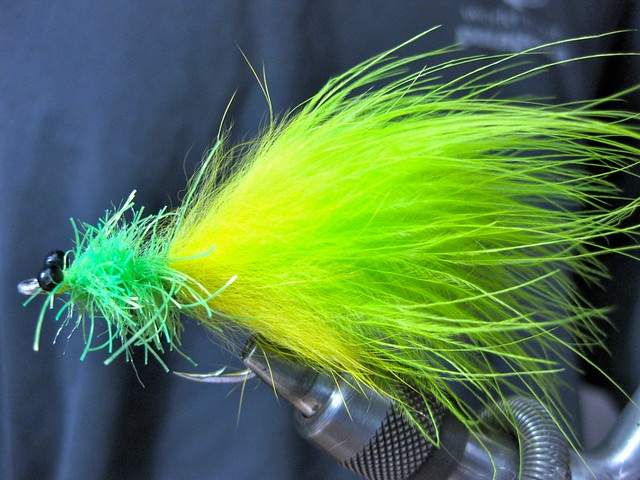
EP Tarantula Hairy Legged Leech

Hook: TMC 5262 #4-12
Bead: Rainbow Hued Tungsten Plummeting Bead to match hook
Tail: Wooly Bugger Marabou Black
Thread: Lagartun 150 x-strong Black
Body: EP Tarantula Hairy Leg Brush1/2 inch Red Black

Posted in Fly Tying, Fly Tying Materials and Supplies | Leave a comment

To the Kings: Some of RR’s best shots

Let’s raise a toast to Oregon’s king salmon! Three broken rods, two broken reels, hundreds of bent-up, chewed-up, and spit-out flies, and hundreds of mind-numbing hours waiting for the grab. It was all SO worth it. Thanks to everyone who helped make it a memorable season. Here are some of the highlights from my little point-and-shoot…

Rob Russell, Fall Chinook photos

Rob Russell, Fall Chinook photos

Rob Russell, Fall Chinook photos

Rob Russell, Fall Chinook photos

Rob Russell, Fall Chinook photos

Rob Russell, Fall Chinook photos

Rob Russell, Fall Chinook photos

Rob Russell, Fall Chinook photos

Rob Russell, Fall Chinook photos

Rob Russell, Fall Chinook photos

Rob Russell, Fall Chinook photos

Rob Russell, Fall Chinook photos

Rob Russell, Fall Chinook photos

Rob Russell, Fall Chinook photos

Rob Russell, Fall Chinook photos

Rob Russell, Fall Chinook photos

Rob Russell, Fall Chinook photos

Rob Russell, Fall Chinook photos

Rob Russell, Fall Chinook photos

Posted in Fishing Porn, Oregon Salmon fly fishing | 9 Comments

When to go fishing on the Oregon Coast

Salmon, steelhead, and sea run cutthroat fishing in Oregon Coastal Rivers is virtually an endless summer of delight. Ooops, that was a surfer movie, I think. And fishing on the Oregon coast isn’t just a summer thing, either. Point is, the time to go fishing on the rivers and estuaries of Oregon is now, Autumn, Winter, Spring, and yes, Summer too.

This virtual year-long fishing season can be problematic for any fly fisher who has significant others who do not fish. Wives, girlfriend, boyfriends, dogs, cats, parakeets, and Iguanas – not to forget so-called friends and work associates – can get relegated to the leftovers, so to speak, if one seriously pursues the fishery opportunities on the Oregon Coast.

Here is how the year in Oregon coastal rivers from the Winchuck to the Necanicum goes.
January – Winter steelhead.
February – Winter steelhead.
March – Winter steelhead.
April – Winter steelhead & spring chinook.
May – Summer steelhead & spring Chinook.
June – Summer steelhead & spring Chinook.
July – Summer steelhead, blueback, & spring chinook.
August – Summer steelhead, blueback, & summer chinook.
September – Summer steelhead, blue back, & summer/fall chinook.
October – summer steelhead, blueback, & fall chinook.
November – fall chinook, winter steelhead.
December – Fall chinook & winter steelhead.

Make sure to note that not all rivers support all species of sea-going salmonids and runs noted above, but with a little gas in the tank, they are all there, somewhere on the Oregon coast.

When is the best time to go fishing on the Oregon Coast?

Pick any of 365 days each year. Somewhere along the coast where some river isn’t closed (check the regulations please), the water isn’t in flood or bone dry. Think about the ocean for those days. There are wonderful opportunities right here close to your home, if you get to know your “local” Oregon coastal waters.

Jay Nicholas
November, 2011

Posted in Fishing Reports, Oregon Salmon fly fishing, Oregon Winter Steelhead Fishing | 3 Comments

The River Why on DVD

This just in: The Caddis Fly has secured real live DVDs of the new film The River Why! Cutting to the chase, what you need to know about this film is that Amber Heard plays Eddie, Gus Orviston’s steelhead fishing partner. She jumps naked from trees, for Pete’s sake.

Stop by the shop, pour yourself a cold Ninkasi Sleigher, and pick up your very own copy. It’s movie night!

Posted in Fly Fishing Gear Review, Shop Sales and Specials | 5 Comments

Reminder: Trout Unlimited Meeting Tonight

Trout Unlimited is hosting its monthly membership meeting Wednesday, November ninth at 7:00 pm at the Veteran’s Memorial building near 18th and Willamette in Eugene. The schedule includes ODFW Regional Fish Biologist Jeff Ziller presenting this year’s results from the wild trout population study area between Hendricks and Hayden bridges on the lower Mckenzie River. As always, the meeting is free and open to the public.–KM

Posted in Uncategorized | 2 Comments

Oregon Silvers Part 2: Leaving it to Beaver

From the Desk of TU’s Alan Moore: Interested in joining the North Coast Beaver Brigade for a day of tree planting and shenanigans on Saturday, Nov. 19 at the Stanley Marsh Project Site just outside of Seaside? Drop a note to Michael with Tualatin Valley TU at tvturestoration@gmail.com or Alan at amoore@tu.org. Carpooling from Portland available and encouraged. With sufficient interest, we may even fire up the North Coast Beaver Bus.

FeelMyRage

Prologue: Two beavers walk into a house, one leaves the door open. “Shut the dam door!” says the other. That’s your beaver joke, OK? Grow up. Now let’s get buck wild.

When we talked wild coho habitat on the North Oregon Coast a couple of days ago here, we talked about silvers’ need for slow, slackwater areas off the main channel or on the edges for fry and parr to feed, ride out high-flow events, conserve energy, and grow into big angry smolts before heading down to the salt.

Beavers make that habitat, and they do it better, cheaper, and a gajillion times more efficiently than humans could ever hope to. The little buggers are aggressive too, and busy. They work at night, on holidays, and in all kinds of weather. Don’t eat much. Just some ol’ wood’l do.

Beaver Shot (beaver shot by Paul Stevenson)

Ever-growing stacks of science bears this relationship out, and the numbers are pretty much just nuts. We’re talking percentages up into the 80s and 90s of coho production potential lost in areas where beavers have been eradicated, and conversely, similar numbers of gains where they’ve been restored – way better than human-engineered projects, often off-the-page better. And when you consider that North American beaver populations have gone from anywhere from 100 million or two down to a few million since we started trapping the crap out of them back in the late 1800s, it’s not a stretch to translate that into a big hit against wild salmon.

In a joint project between The Tualatin Valley Chapter of TU, the North Coast Land Conservancy and the Jubitz Family Foundation just outside of Seaside, Ore., we’re restoring wild salmon habitat simply by making it hospitable to beavers, then leaving them alone to do all the work.

Stanley Marsh, just off Neawanna Creek in the Necanicum River watershed, was once a tidally influenced wetland of a dozen or two acres and a veritable a smorgasbord of native wetland plants and animals, including, undoubtedly, stunning numbers of juvenile wild salmon and trout. Over time we drained and filled it, and brought in invasive non-native plants, and for a time, according to local lore, thoroughbred horses owned by Adam West. Yes, THAT Adam West.

Recently, the NCLC acquired Stanley Marsh and an adjacent highly productive wild coho spawning creek, saving both from development in what is now a semi-urban setting. A herd of 40 or so elk still lives there, hanging in the bottom in the trees near the creek in the mornings before scrambling up the hill into the timber during daylight.

Thompson.Spawners.1

A perennial stream – ok, dammit, a ditch – surrounding the property captures much of the water coming off the steep hillside above, and hydrology tests by the NCLC have shown there’s more than adequate flows to re-inundate the marsh and keep it wet year-round. All that’s needed is some help from the beavers to back that flow up and push it sideways, re-filling the marsh and the connection to Neawanna Creek. We’ve had beavers building dams in the ditch for a couple of years now: they’re even using nasty non-native Himalayan blackberry in their dams – testament to their resourcefulness and can-do attitude. But they won’t stick around if there isn’t ample wood on hand, and that’s where we come in.

Salmon Love

TU has been working with the NCLC’s Celeste Coulter and local award-winning wetland ecology Jedi Doug Ray planting willow and alder by the ton to make sure the beaver population dabbling in Stanley Marsh makes a permanent home there, has many baby beavers, and tells all their eager friends. Willow plantings will be protected from browsing till mature, after which time they’ll keep coming back even when gnawed down to nubs. The tree plantings will be complimented by a comprehensive native plant revegetation program so that over time as the marsh fills with water courtesy of the beavers’ front teeth. With any good fortune, before too long we’ll have a restored nursery to rear all of the juvenile wild coho emerging from the gravels, literally right across the street.

-AM

Posted in Oregon Conservation News | 2 Comments

Fly fishing tackle for Oregon Salmon: the “A” List

Fall Salmon season rolled in during September, is now in full swing, and will extend to the end of the year. Some of us have been banging our heads with 2x4s for the past two months, while others are just shifting gears from trout or steelhead fishing and moving on to salmon fishing. Others are considering taking up this crazy (yes I mean crazy) thing called fly fishing for salmon for the first time.

This post is a series of recommendations intended to help the beginner more so than the seasoned salmon angler. Please recognize that it will not cover every possibility, but it will offer a place to start and maybe bust some myths about salmon tackle. Continue reading

Posted in Fly Fishing Gear Review, Oregon Salmon fly fishing | 3 Comments

Eventful Fall Bahamas Family Fly Fishing Trip

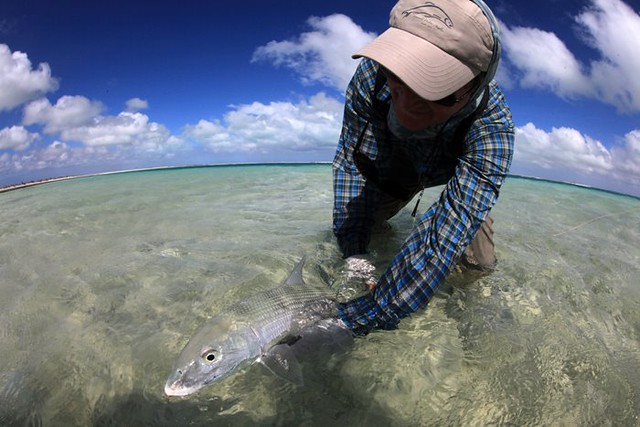
Abaco Bonefish

The first week of our annual family Bahamas Bonefishing Trip has been a wild one. We have had all types of weather, more flights than we bargained for, and some good fishing.

Bahamas Bonefish

We have been coming to the Bahamian Island of Abaco now since 1993, staying in a variety of locals from Marsh Harbor to Sandy Point and even Moores Island. Children have been in the picture for the past 7 years and we have really enjoyed the small settlement of Casuarina Point.
Continue reading

Posted in Fishing Reports, Fly Fishing Gear Review, Fly Fishing Travel | 5 Comments

Wild and Scenic Rogue Half-pounder report

From Rogue River lunatic, Greg Hatten: Our annual trip to the Wild and Scenic section of the Rogue last weekend was particularly memorable this year. My son came out from Texas and brought a friend which added an extra element of river management to the long list of things on my mind. Three guys, two tents, three sleeping bags and food and drink for four days pushed the limits of my little wooden drift boat and I swear I heard it groan under the weight as we pushed off from Graves Creek put-in early last Thursday loaded to the gunnels. There were seven of us in two drift boats and two cats.

Greg Hatten Rogue Pics

Some of my favorite faithful river-rats were on this trip and were quick to point out I was so loaded down with gear and guys that I had no rocker left to my boat – both the bow and the stern were touching water… ouch – kinda negates the best features of the McKenzie style drift boat. How in the world was the boat going to navigate the technical water ahead??? I was worried.

We took on more water than usual through Graves – the first Class III of the 34 miles, and we picked up a few new “racing stripes” in the fish ladder as we scraped our way around the Class VI Rainie Falls – at one terrifying part of the lining I lost control of the heavy boat and it careened down the chute as a runaway – ripping rope through my gloved hands so fast I smelled burning leather and felt fire in my palms. It came to rest with 5 feet of rope left in my hands and we scrambled to regain rope and composure.

We fished the heck out of Mondale Riffle and faced the first Class IV of the trip – Tyee. Normally my boat floats like a leaf, draws 4 inches of water, is more nimble than most any boat on the river, and handles a Class IV rapid without too much worry. Based on the sluggish first four miles of this trip, my boat was in no shape to make the sharp left turn and stay off the wall at the bottom of Tyee – so, thanks to the suggestion of Rick Allen, I asked my boat mates to “fish” their way around the rapid and meet me on the down-river side… (it would be the successful strategy for our next four days of river running the III’s and IV’s). With my passengers out of the boat “fishing”, the boat transformed into it’s old self and became as responsive as always hitting every line and avoiding most every rock.

Greg Hatten Rogue Pics

Wildcat was wicked, Slim Pickins was fun, Black Bar was brutal, Mule Creek was dark and evil, Blossom was manageable, and the canyon was on fire with bright fall colors, crisp mornings, and warm days. The camp fires at night smelled like camping is supposed to smell like and the banter seemed somehow more meaningful than usual – maybe it was the scotch… maybe it was the moon… maybe it was the Rogue.

Greg Hatten Rogue Pics

The half pounders played hard-to-get but more than a few were willing and we had one adult steelhead on the line long enough to know they’re around. Our David Ellis canvas tent smelled like the ones my Boy Scout Troop 45 set up along the banks of the Platte River when I was twelve. We ate better than usual with roasted garlic, fire pan pizza, toasted peppers, grilled pork tenderloin, dutch oven desserts, and the highlight – steelhead on a cedar stick on an open flame… un-freakin believable!!!

It was an incredible trip and I didn’t even mention rowing out in the pre-dawn darkness the last day – navigating by headlamps to get to Foster take-out by 8 a.m., finding our rig had been broken into and burgled (can’t believe they took my Allison Krouse CD), or driving the one-lane logging road like it was the Baja so the boys could catch the afternoon flight out of PDX.

I asked my son how he would describe this trip to his Texas Ranger buddies back home and he said he tried once but words don’t work – it’s larger than life… “the colors are brighter, the rapids are bigger, the canyon walls are closer, the water is colder, the fish are brighter, the trees are greener… just can’t put that into words for them”.

We captured some of the highlights in HD with a little Contour… still doesn’t do it justice. If you ever get the chance to run the Rogue Wild & Scenic – Do It !!
GH

Posted in Fishing Reports, Southern Oregon, Summer Steelhead | 3 Comments

Late Season Half Day Special Guided Trip Report

Willy Guide Special November 1 2011 020

Just some pics to remind everyone the shop fall guided special is still going on. Even with the current forecast coming with “showers” the trout fishing and steelheading continue to provide good results. The mid day hours are providing some sun and hatches.

Our late season half day special trip ends November 30. The trip will be 4-6 hours during the best time of the day for either Steelhead or Trout whichever the guests choose. Trips will be via McKenzie Style Drift Boats on the McKenzie and Willamette Rivers. Trips will include all equipment and flies, but will not include lunch. All this for just $250 bucks, give the shop a call and reserve your date today.

Willy Guide Special November 1 2011 011

Willy Guide Special November 1 2011 024

Posted in Fishing Reports, McKenzie River | 1 Comment

John Larison book reading in Corvallis tonight

The OSU Literary Northwest Reading Series presents a reading by John Larison.
Thursday, November 3
7:30 p.m.
The Valley Library, Main Floor Rotunda
Free and Open to the Public
Book-signing to Follow

Rob Russell fly fishing for salmon

Larison has lots of noteworthy jacket blurbs for his books, but we’re going to post our own:

Northwest of Normal Review: I’ve been waiting for this book, and yet there was a natural reluctance to pick up and read a novel that presumes to describe my world, my life, my experiences, as Larison has done in Northwest of Normal. I was ready to hate it, but I ended up loving it. And I hope he keeps writing novels, because I want more.

The Complete Steelheader Review: John Larison’s The Complete Steelheader has changed the way I fish more than any other book I’ve read. There are lots of other books out there that have had an effect on my life, fishing philosophy, etc. But no other book actually changed the way I approach the mechanics of the sport.


Holding Lies Review
: This book is about asking why we fish. It’s about the wedge fishing can drive between an angler and family – between fishing and everything else really. Because you can lose yourself in the river. It asks the question of whether or not it’s worth it – whether we’re wasting our lives fishing. Torturing small animals and letting them go. Larison’s book captures the nuances of these questions beautifully, and asks you to come up with your own answers.

John Larison is an instructor at OSU, a river steward for the Native Fish Society, and the Northwest Field Editor for Fly Fisherman magazine. His first novel, Northwest of Normal, was heralded by the Denver Post as “a first-rate contribution to the novels of the West.” His new novel, Holding Lies, has been praised by reviewers, including the New York Journal of Books, which called Larison’s prose “worthy of comparison to that of Jim Harrison, Howard Frank Mosher, and Michael Ondaatje.” He lives with his family in Corvallis.

Buy John’s books at the Caddis Fly!
Holding Lies
The Complete Steelheader
Northwest of Normal

See you tonight! Be there.

Posted in Fly Fishing Books | Leave a comment

Oregon Silvers: Bringing Sexy Back (part 1)

From TU’s man in Portland, Alan Moore: Recent postings to these pages showing fat n’ not-so-happy silvers sucking poppers off the surface of Oregon coastal waters warmed us to the core here at Conservation Clearinghouse PDX.

The rap on Oregon coast coho that they’re crappy fly biters has always been a bit of an albatross for those of us doing habitat and other fish work on the coast and trying to get anglers and other conservation-minded souls excited about it.

Wetlands&Wood_cohoparadise

Regardless of how one feels about the Oregon coastal coho’s ESA-listed status, the fact that they are listed means much of the conservation funding, attention and opportunity focuses on them first. Not the way it should be, necessarily – we’re working hard to build an integrated, multi-species approach across all of our work – but that’s just the way it is right now.

The ESA tag does help when it comes to getting agencies, funders and restoration hacks like us excited, but let’s face it: when we’re planning a fishing day it’s pretty meaningless. As a species we’re much more likely to invest precious conservation time and resources into fish that will reciprocate by ripping a couple hundred feet of line off our reels. For showing that symbiosis in action, in real time, and for bringing sexy back to silver, Jay, we thank you. The wild coho thank you.

Someday. Maybe. OK probbly not.

For real and lasting coastal coldwater fish conservation to have a chance, we’ll need to recognize over time that it takes a village of fish to make these ecosystems go, just as it takes a broad and diverse range of native plants, bugs and other animals too. Including people. All play a vital role; all have their quirks; all are unique in some way. The closer we look, in fact, it’s often those unique quirks are the keys its critical role in the continuum.

One of the Oregon coast coho’s quirks is its need for slow-water habitats full of cover and bugs to forage and rear in its time as a juvenile in fresh water. Low-velocity water means less energy chasing and fleeing other stuff, and results in bigger smolts. Or “smolt” if you’re proper. Bigger smolts survive to adulthood at higher rates, and make for bigger adults when they do. Of all those coastal wetlands, marshes, side channels and perennial puddles off the mainstem of rivers that we so conveniently drained, filled and blocked as we developed floodplain areas, most were probably coho nurseries chock full of future pink popper-eaters, all or part of the year. Restoring passage, habitat integrity and hydrologic function for adults like these to reach spawning areas is critical for all salmonids, but making sure the progeny have ways to survive to smolthood after they emerge from the gravel is just as critical, and widely overlooked.

This comes as no surprise. Making wetlands, transitional marshes and turbid slackwaters is not sexy, especially competing with restored brawling mainstem reaches and placid babbling tributaries. And 3-inch fish make for pretty pathetic grip-n-grin poses compared to 18-pounders. Despite these handicaps, TU and our many wonderful partners in our coastal work in recent years continue to make sure that these restoring these rearing areas remains a part of our habitat program.

In part 2, we’ll show a couple of these unique projects, including one where the only heavy equipment we’re using to re-route streams is the two front teeth at the business end of large rodents’ mouths, and a way coming up for anyone interested to get involved this month.

-Alan Moore

Posted in Oregon Conservation News, Oregon Salmon fly fishing | 2 Comments