Fly Fishers Holiday Gift Guide Video 2012

Thanks to all of our customers, The Caddis Fly is loaded with great gear for fly anglers this holiday season. In this video we detail a few of our favorites for 2012.

Small Slit Foam Box
Large Streamer Foam Box and Swing Leaf Option
Buff Gloves
Airflo Skagit Intermediate Head
Bonefish Quickshooter
Hydro Flask Water Bottles and Coffee Mug
New SAGE ONE Spey and Switch Rods
Lamson ARX Reel
Polar Buff
Fishpond Westwater Sling Pack
Fishpond Westwater Guide Lumbar Pack
Sage 6000 Series Ree
Sage Response Fly Rod
Redington Topo Outfit
Sage Approach Outfit
Simms Bulkley River Jacket
Patagonia River Salt Jacket

Posted in Fly Fishing Gear Review, Oregon Fly Fishing Tips | Leave a comment

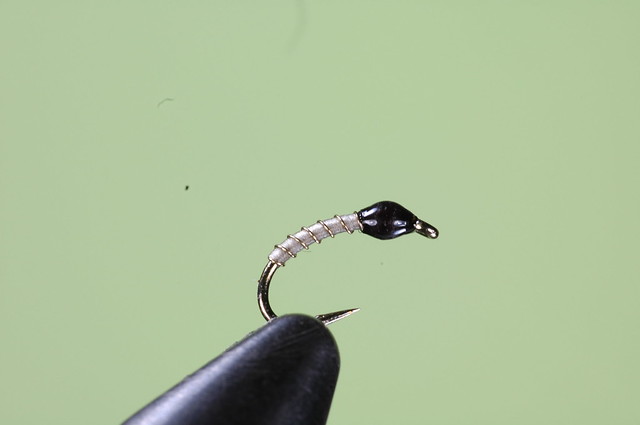
Ice Dub Shimmer Baitfish Fly Tying Video

Tony demonstrates how to use the multilayer Ice Dub Shimmer Fringe Minnow Back, Ice Dub Shimmer Sheer, and Clear Cure Goo to tie a simple but killer bait fish pattern. This fly is going to be great in the salt all over the globe.

Shimmer Baitfish

Ice Dub Shimmer Fringe Baitfish

Thread: Clear Uni-Mono
Hook: Gamakatsu SC15 #2-2/0
Wing/Body: Ice Dub Minnow Back Shimmer Fringe Pearl Olive, UV Blue Back (IDM6)
Head: Ice Dub Shimmer Sheer—Pearl
Eyes: Clear Cure Adhesive Eyes Lava size 6MM
Note: Coat head with Clear Cure Goo—thick, then Clear Cure Goo Hydro

Posted in Fly Tying, Fly Tying Materials and Supplies | Leave a comment

Escapism and winter steelhead

I flew into Seattle last week to hang out with a fishing buddy who’s working through a tough breakup. She’s running out with $30k, plus whatever she wants in the house. Furniture, electronics, the door mat… it’s all gone. My personal favorite – she’d pulled apart the home theater system – one of those five-remote monstrosities that’s built like a Jenga tower and takes you nearly a week to get working right – to take a $50 DVD player.

She won’t tell him where she’s moving, and that’s probably smart for both of them.

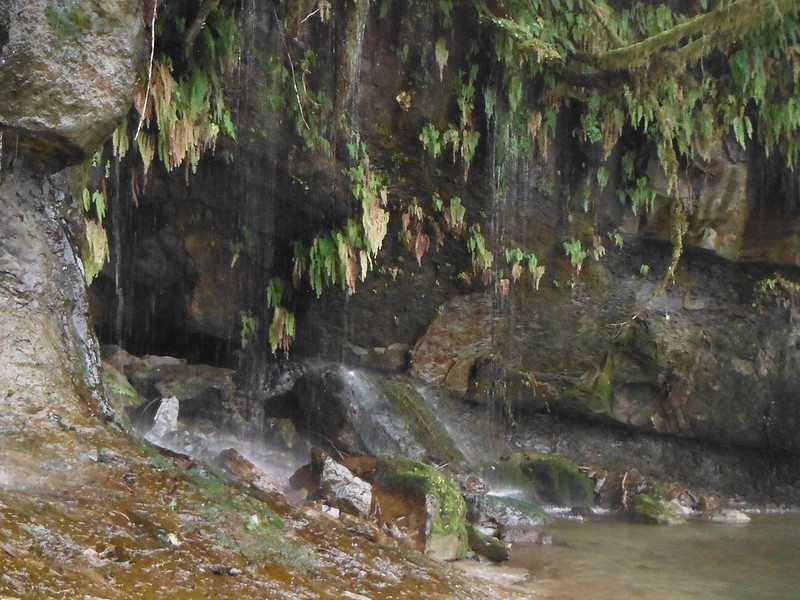
But the OP awaits! Packed with soggy tweens, all hopped up on Breaking Dawn Part 2. And winter steelhead. We fill the truck cab up with whiskey bottles and thingamabobbers and plow through the deluge toward the rainforest.

OP Steelhead Trip

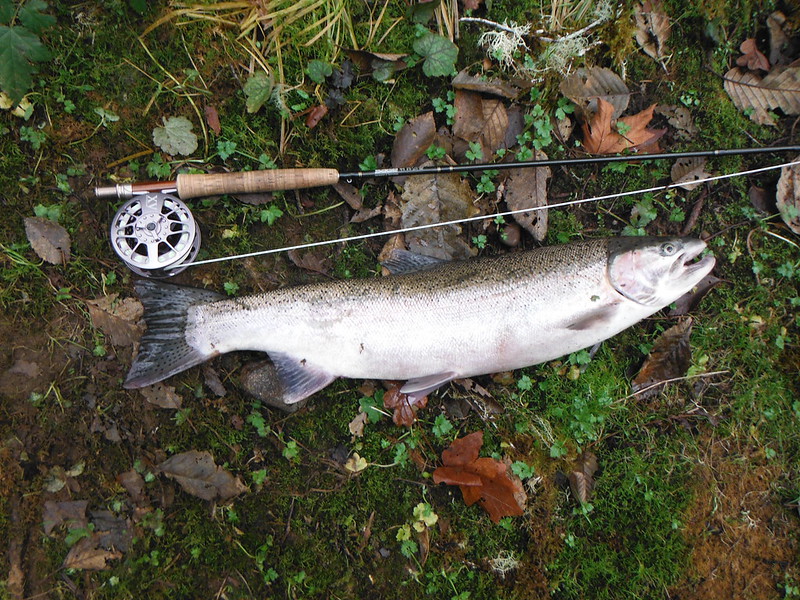
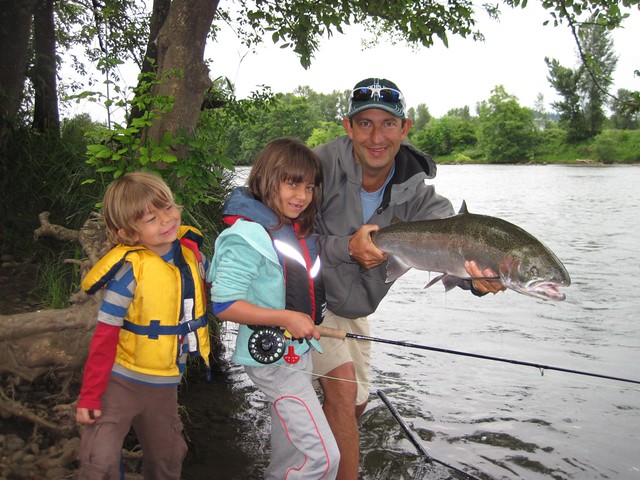
Two days fishing a tribal hatchery river, literally bursting with unclipped hatchery steelhead. And instead of 100 people, there are only eight other folks on the water. These aren’t my proudest moments as an angler, but look at that face.

OP Steelhead Trip

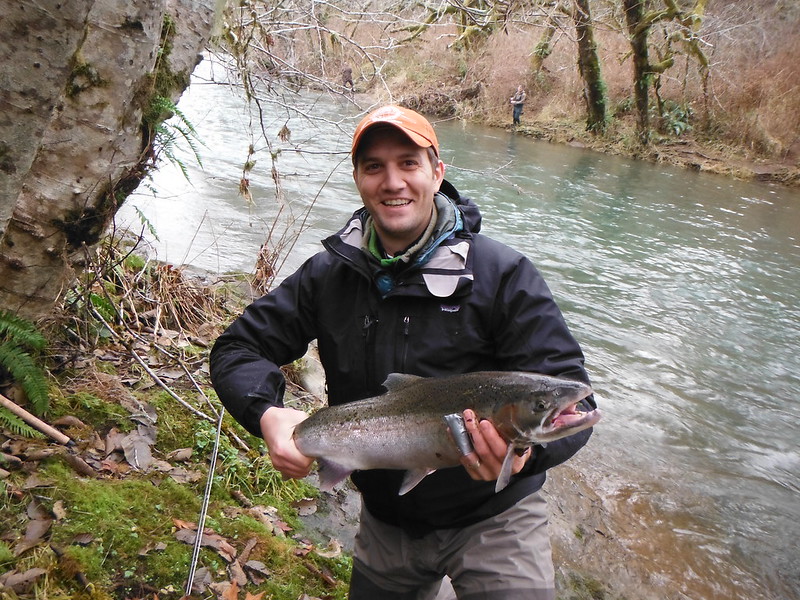
Does this man look concerned about what he’s going to find missing from his denuded Seattle home when he returns?

Look at that face again… do you think she deserves more than $30k?

-MS

Posted in Coastal Steelhead Fishing | 4 Comments

Links: Obese salmon unable to swim upstream to spawn

From The Onion: After repeatedly gorging itself on marine sea life for more than seven years, a severely obese chinook salmon told reporters Wednesday he had grown too overweight to swim upstream and reproduce.

“I used to be able to swim hundreds of miles to my natal stream,” the male salmon said as he recovered in a brackish estuary after swimming several feet against the current and growing fatigued. “But now I’m so fat I can’t even leap out of the water to overcome a natural obstacle. And when I try, my fins are super sore for a couple days.”

From Moldy Chum: A Wild Olympics Video highlighting the local effort to safeguard new Wilderness and Wild & Scenic Rivers on Washington’s Olympic Peninsula.

Wild Olympics for Our Future from Wild Olympics on Vimeo.

From the Washington Fly Fishing Forum, a biopic on the Skagit River Bull Trout’s winter lifecycle: In the salt bull trout are more like sea-run cutthroat than salmon or steelhead and stay relatively close to their natal rivers. Like the cutthroat they seem to spend the majority of their time in the shallow near shore areas taking advantage of the diverse forage found in that habitat.

New USGS Study on the impact of urban development on watersheds, including Portland: The loss of sensitive species in streams begins to occur at the initial stages of urban development, according to a new study by the USGS. The study found that streams are more sensitive to development than previously understood.

Posted in Oregon fly fishing links | Leave a comment

Autumn at Andros South

andros1

It’s been two action-packed weeks since I landed at Congotown International Airport on South Andros Island, Bahamas. And I might as well have landed on another planet. Instead of fall foliage, cold rain, wild mushrooms, and salmon, I’m dodging equatorial sunshine, wading aquamarine flats, and marveling at tropical wonders like golden coconut palms, black land crabs, translucent bonefish, great barracuda, black tipped sharks, sprawling mangroves, and delectable conch salad. I know–poor me!

andros2

The first week was spent outfitting Deneki’s Andros South Bonefish Lodge for the seven month flyfishing season. The Bahamian crew was amazing, and by the time our first guests arrived, the grounds were sparkling. We all felt a deep sense of pride when Captain Bruce Chard, the host for our first week of fishing, thanked us all for making the lodge look “better than ever.” And it did look great.

andros8

Then it was time to fish, and our world-famous flyfishing guides delivered. We ran four flats boats for eight anglers, rotating the roster so that every guest had a chance to fish with every guide. As assistant manager and lodge host, it was my job to debrief each guest at the end of their fishing day, and the stories these guys told were enough to drive any fisherman mad. These dudes were having serious fun–a brand of fun I had never experienced. So, finally, after a few days of jaw-dropping reports, I carved out a little time to explore a nearby flat on a perfect afternoon tide.

andros6

I’ll never forget that stunning afternoon. I drove the van to Pleasant Bay, parked alongside an idyllic grove of coconut palms, and pulled on my flats boots. I slowly approached the water’s edge, scanning the shoreline for movement, with rod and fly at the ready. No signs of life. But as I stepped into the water, a small school of bones exploded just a few feet away, shooting off at what seemed an impossible speed. My heart pounded in my throat. A few steps later, my eyes caught movement to the right, where a nice bonefish tailed its way through a patch of grass. I flipped my fly into the path of the fish, but by the time the fly landed, the fish had spooked. “Shit!” I turned back to the left, made a few slow steps, and saw a pack of three fish moving toward me. Again, just the movement of my rod spooked them, and they tore off into the shimmering distance.

andros3

Every few steps I encountered another fish, sometimes close, sometimes approaching from a distance, and every time I blew the shot. Even when I was sure my presentation was on the mark, the fish spooked, so I decided to change my fly to a simple tan mantis shrimp. But after the fly change, I didn’t see any fish. I walked on for ten or fifteen minutes, and started to wonder if I had burned up my chances for the
day. Even so, I was elated. Just watching the fish was hugely exciting. There was no doubt I had found a new addiction.

andros9

I stood still for a couple of minutes, carefully scanning the water in all directions. and as I turned around behind me, I spotted a nice fish feeding actively. I made a short cast, and was stunned when the fish charged the fly and ate it! I stripped and stripped some more, and the fish came right at me, making a good hook set nearly impossible. But Bruce’s excellent training paid off, and when the fish finally whirled around, the line came tight. The fish made a strong, blistering run. Impressive, to say the least. All the stories, all the videos–nothing prepared me for the intensity of that run. The fish slowed down about 75 yards away, then turned and came back toward me.

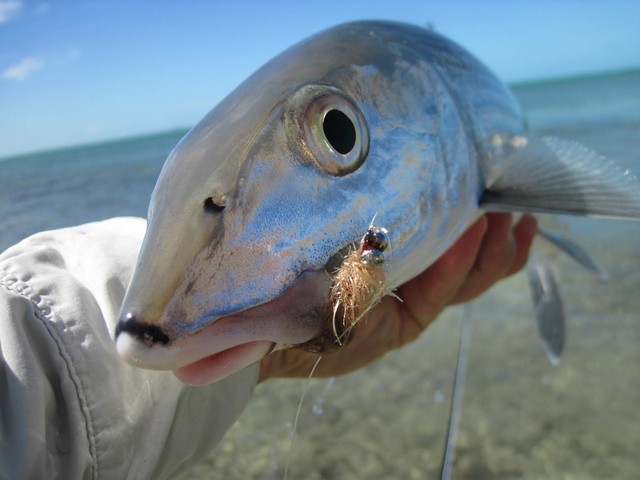
But a moment later, it took off on another hot run! It was incredible. Words can’t really do it justice. Suffice to say that the fish blew my mind. After some frantic reeling, I had it at my feet, and I snapped a quick shot before releasing it. Thankfully there were no sharks in the immediate vicinity, and the fish swam off safely. I looked at my watch, and it was time to meet the other anglers at the landing.

andros4

Two days later, I was offered an open seat–my first shot at fishing from a flats boat, with none other than the legendary guide Joseph Sands. “Josie,” as he’s known in the bonefishing world, has a reputation for being a drill sergeant, and he didn’t hold back with me. He put me on dozens of bonefish, and I blew all but one of them.

Moreover, he scolded me every time I yelled or made noise in the boat. “You spook the fish, mon! Be quiet!” Thankfully, I saved face around lunchtime by making a good cast to a chunky barracuda. Josie wanted the fish for dinner, and he was pleased when we got it in the boat.

Whew! After lunch I watched as Josie cleaned the cuda, curious to see what it had in its bulging stomach. Sure enough, the toothy beast had a whole, intact bonefish of two or three pounds packed in its gut. Gross, but impressive! And, as one can imagine, the whole experience was a wild spectacle for me.

andros5

Looking back on those incredible hours of fishing, I feel a deep gratitude to Josie, Bruce, and all the guests who encouraged and coached me across the threshold. I couldn’t have had a better set of teachers and friends for my first shot at saltwater flyfishing. And I couldn’t imagine a better place to learn than South Andros Island.

andros10

One can only wonder what will happen next…

-RR

If you would like to visit Rob at South Andros Lodge give us a call (541 342 7005) or email (caddiseug@yahoo.com) there are still a few fishing spots available for the 2013 Season

Posted in Fly Fishing Travel | 2 Comments

Since you asked: Review of Simms Pro-Dry Jacket and Bibs

I’ve been wearing a Simms ProDry Jacket and Bib for about a full year now.  I’ve also been answering individual email enquiries about this relatively new Simms Gore-Tex rain and storm-wear, so in the interest of efficiency, here is a composite of my correspondence with folks who are on the hunt for storm-wear to keep the weather out and the warmth in.

Pricy but the best rainwear I have ever used.

Lightweight – yeah, none of the Gore-Tex gear we wear these days is as heavy as the old Helly Hansen rubber coats and pants we grew up with.  But the ProDry material is genuinely lighter than other Gore-Tex jackets I have worn.

Waterproof versus Water-resistant? This innovative ProDry material may not be waterproof, but as near as I can determine, it is.  It really is.  Simms makes other great rain wear that keeps the majority of rain off and out.  Our wind-driven bucket-after-bucket rainfall here in the Pacific Northwest has a way of finding every nook and cranny, sneaking down our necks if we drop a hood, creeping up a sleeve when we make a cast or wipe hail off the end of our nose.

Day-long endurance sessions in the nastiest, wind-driven downpours have failed to breech these ProDry jackets and bibs.  That’s an honest statement of fact.

Bibs. Zippers up the outside seam of the legs go up and up and up, making it comfortable to pull the bib on and off over Muck boots.  A button and Velcro closure at the ankle seem like overkill, and I often use only the Velcro closure.  The legs are long and a person could probably get away with ankle boots instead of taller, mid-calf boots like I usually wear.  The suspenders are wide, light, and comfortable because they stay put where they are supposed to rest on shoulders.  The zipper in front goes from chest-top to crotch, making it easy to, um, well, you know, dump the coffee. The zippers are sturdy, rust proof (I’m sure the brand is significant, but all I know is that they are top notch). Velcro closure pockets on each thigh are really nice.  Not too shallow or deep, wide or narrow, long or short.  Just right to carry the gear that I want easy access to.  The knees are designed to flex and I can move around in the bib getting into and out of boats easily.  The butt of these bibs keeps water out even when sitting on a rope boat seat or drenched foam seat for hours.  Standing or seated, these ProDry Bibs are comfortable, and are extra-layer thick where high-wear areas require, like seat and knees.

Jacket. This is the most comfortable raincoat ever.  That is saying a lot considering the design work Simms has incorporated into their other fine rain jackets.  It is almost embarrassing to single this jacket out as being any more of anything, but I think it is.  There are little design perks that I won’t go into (like the glasses cleaner patch in one of the pockets) and judging by other Simms gear I have worn or carried gear in, the ProDry jacket probably has features that I haven’ even discovered yet. The hood seems just right, at least for me it is, because it is easy to wear over a ball cap and never ever seems to droop low in front.  The hood slips up and down as the squalls roll through so I can use it – or not – from moment to moment; it also is stowable if I don’t want the option of periodic use.  The front of the jacket zips up high, covering both neck and mouth, to just about nose height.  This is really nice to keep wind and driving rain out, and it is fuzzy warm comfy too.  Cuffs are adjustable and waterproof, but this feature has not seemed particularly important.  There is a clear round window on the left sleeve to allow peeking at a wristwatch.  Just make sure your watch stays on the top of your wrist or you will still need to push the cuff up to read the time.  There are two zippered chest-front pockets that are especially nice because they don’t stick out like many jacket-front pockets do.  While it is tempting to overload front pockets, the contents often get in my way when casting.  These low profile pockets carry just enough gear, and I have those front-of-thigh bellows pockets for bulkier items.  Fleece lined side pockets are just right to keep hands warm and stash a few light items.  This ProDry Jacket does not absorb water in the exterior fabric, as is the case with many Gore-Tex coats as they start the gradual process of loosing their water beading power.  A full season of wear gone by, and my ProDry jackets finds them repelling hard rain relentlessly, and since there was essentially zero surface absorption in the outer shell of the fabric, the cuffs and hem is dry as can be after hanging overnight.

Not designed for wading. The ProDry bib and jacket are really designed for boat wear.  We fish with boots under bibs and with the jacket over waders, but always from boats.  The jacket would be fine for use over waders if someone is wade-fishing, but the jacket is long enough that you should stay no more than crotch-deep.

There you have it. Great Simms rain and storm wear for the toughest conditions.

Jay Nicholas, November 2012
Posted in Fly Fishing Gear Review | 3 Comments

Grim Reaper Bass Fly Tying Video

The Grim Reaper Bass Fly gets to the bottom and “crawls along” jigging and swimming, “fling’en and craven” on all sorts of Bass. The fly is heavy so you will need a fast action 7 or 8wt to hurl it with long leader and a floating line for extreme jigging action. Cool new leg material and easy to use Clear Cure Goo make tying this fly easier than it looks.

Grim Reaper Variant

Grim Reaper Variant

Thread: Veevus 6/0 Black
Hook: Gamakatsu B10S #1
Weed guard: Rio Hard Nylon 20lb
Tail: Large Black Fish Reaper Tail
Body: Black UV Polar Chenille
Hackle: Grizzly Flutter Legs-Your Choice of Color
Eyes: Heavy Lead Eyes—Medium, Nickel
Coat eyes with Clear Goo Thick, then Clear Goo Hydro

Posted in Fly Tying, Fly Tying Materials and Supplies | 1 Comment

Dry Times During Wet Weather: Middle Fork of the Willamette Report

November Middle Fork

Sam Parker bring this late season report to the blog. We are very fortunate to have such a long season in the Willamette Valley. Thanks for the report Sam.

It had been awhile since Rick and I fished together on a local stream. This last Saturday we decided to hit the Middle Fork of the Willamette. For those of you in the know, a section of the Middle Fork can fish quite well at 850 CFS. On arrival to the river, the weather was cold and very damp with air temps hovering just above 40 degrees. The surrounding hills were covered in snow. I love those days when you can actually be warmed by standing in the river. Armed with rod preloaded with the usual Mega Prince followed by Possie Bugger, I proceeded to chuck and duck. Rick started off with his homemade “Gusbugger” consisting of a red bead head and his late dog, Gus’ white fur. No luck whatsoever straight off the bat. Rick, however, did receive a fleeting flash at the Gusbugger while I continued to have no luck with my rigs. After about 30 minutes I hear Rick scream, not all that uncommon for him while on the river. Only later did I learn that Rick’s Thingamabobber was slashed at by a fish. Having never worked after a bobber slashing, Rick decided to switch to dry thinking that just maybe, just maybe the fish would go dry. Sure enough, troutie became victim to an October caddis only a couple casts after switching to dry.

Middle Fork of the willamette trout fly fishing

In the meantime, I’m tearing my two fly rig out of a tree when I learn of Rick’s success on the dry. I head up stream while tying on a size 16 Quigley Hackle Stacker. I’m starting to notice little trout on the rise. In an effort to not get skunked, I float the Quigley right over these rising fish and promptly miss the take. I send the fly out a few more feet and, BAM, a 15 incher rocketed out of the water, fly and all.

Middle Fork of the Willamette Trout

Both Rick and I stuck to dry for the remainder of the day with Quigley Hackle Stacker being the fly of choice. However, October caddis, Renegade, and Little Yellow Sally all produced for a total of 20 fish on the day. Not bad for a cold, wet, November day. Full disclosure: Rick did tail snag a 14 incher on a zebra midge. I guess we can include one wet fly as being kind of successful.

middle fork

Posted in Fishing Reports | Leave a comment

Oregon Salmon Fly Fishing Tackle Prep

Salmon fishing is heating up on the Southern Oregon Coast and we are fielding a lot of enquiries at the Caddis Fly Shop from folks who want to gear-up for this specialized fly fishing niche.  Soooooo, I went back to our blog archive and retrieved a post by Jay Nicholas last fall.  The following is a bare-bones abstract version of his chatty post.

Here you go. . . . .

Oregon Salmon Fly fishing Tackle Recommendations: as Jay noted and I agree – these ideas involve a lot of of personal opinion, but they represent a heck of a good place to start.

Oregon Salmon Fly Rods:

The all-waters single hand Chinook rod would be a 9 ft, 9 wt fly rod.  You can fish an 8 wt rod if you must, and a 10 wt is really best if you are likely to encounter salmon in the 30 Lb and higher class.  But if you expect to be “blind casting” for hours and fishing over salmon in the sub-thirty class, the 9 wt fly rod is perfect for most people.

The Caddis Fly shop offer rods that cover the price point range like the high-end Sage ONE , and the extremely modestly priced Echo ION . The more expensive fly rods are truly lighter in hand, throw tighter loops, and cast more easily.   All of these fly rods perform well and great many of our clients regularly select an Echo 3 Saltwater  fly rod for their salmon fishing.

Salmon fly reels:

Top end salmon fly reel recommendations: Hatch, Nautilus, Tibor, Bauer.
Mid range salmon fly reel recommendations: Ross , Lamson
Economy salmon fly reel recommendation: Echo Ion.

All of these fly reels will get the job done. You pay more for closer manufacturing spool tolerances, higher grade metals, better saltwater protection, smoother drag mechanisms, and longer life-expectancy (for the fly reels, that is).  Go ahead and take the plunge, it will feel good when that Chinook takes a smoking run.

Fly lines. Two options provide a clean way to start.

The simplest choice would be to start with an integrated shooting head fly line like the Rio Outbound or the Airflo 40+ . Both of these lines are easy to cast, and eliminate the need for a loop-to-loop connection that goes clackety-clack through the guides. If   a person must choose one of these fly lines, it would be the type 3 sink tip which is roughly a sink rate of 3-4 inches per second. If a person has the ability to get two lines, the second would be a clear Intermediate tip line. These two fly lines will cover a lot of the Oregon Salmon fishing conditions.

A traditional salmon fly line is a 30′ shooting head fly line looped to a shooting or running line. Riomax II Shooting Heads lines are looped at both ends.  Intermediate running lines are offered by both Rio and Airflo Intermediate Running Line. Rio Slickshooter is an oval mono running line that many shooting head anglers prefer.

Salmon leader recommendation. Start with a 9′ leader. A Rio Steelhead & Salmon Tapered Leader in #16 and #20lbs is a good choice. Alternatively, Grab a few spools of 10#, 12#, and 15# Maxima Ultragreen leader, with a spool of 20# for the butt section and tie your self a few tapered leaders of 9′.

Traditional 15 ft sink tip fly lines, in the 15′ type 3 or 6 sink rates are still useful and if purchasing a new fly line is standing between you and going salmon fishing, just load up your old 15′ sink tip fly line an your heaviest steelhead rod and go fishing.

Salmon flies for Oregon destinations. Comet , Boss , and Clouser type flies are on the “A” list day in and day out.  Choose hot orange, chartreuse, blue, pink, purple, and black.  Egg sucking leeches work well too.  I recently suggested that a casual salmon angler just tie on a Green Butt Skunk, because he had only an afternoon to fish.  Yes, you guessed it, he hooked a Chinook on what is thought to as a traditional and perhaps outdated steelhead fly.

Hope this helps. Jay proofed my revisions of his post to ensure its authenticity and rationale.

CD


Posted in Fly Fishing Gear Review, Oregon Salmon fly fishing | Leave a comment

Trout Unlimited Meeting this Wednesday: Biologist Jeff Ziller

Join us for our November meeting this Wednesday, 11/15 at 7:00 pm. As always,
we’ll handle chapter business, share some beer, and enjoy a presentation by Jeff
Ziller, ODFW Head District Biologist. Jeff will give us more specifics about our
upcoming restoration project on Marten Creek in the McKenzie watershed. We’ll
have a better sense of how to get boots on the ground after this presentation.
Don’t miss it!

Where: Veteran’s Club, 1626 Willamette Street
When: Wednesday, 11/15 at 7:00 pm
What to bring: Yourself and a couple of bucks for a beer

We hope to see you all there!

TU 678

Posted in Oregon Conservation News, Oregon Fly Fishing Clubs and Events | Leave a comment

Local Fall Fishing Hanging On

Late summer steelhead

Water levels are still up a bit, but fishing opportunities for Trout and Steelhead remain viable. The Middle Fork of the Willamette from Dexter Dam down into Eugene is still holding Summer and late arriving Fall Steelhead. It’s time to get out the Skagit Heads MOW Tips and larger flies like Pick Yer Pockets and Signature Intruders.

On the McKenzie trout fishing has been fair with best results coming on days when mid-day Blue Winged Olive hatches have been present. Nymphing with Mega Princes and small Pheasant Tails has also been effective.

There is still time to do a little fishing this November and odds are you will have it to yourself out there.

Posted in Fishing Reports | Leave a comment

Thank a veteran

Thank you, veterans, for having helped make this country what it is. Thank you, current members of the military, for continuing to make this nation great.

Today is a good day to donate to Project Healing Waters.

The mission of Project Healing Waters Fly Fishing is to assist in the physical and emotional rehabilitation of disabled active duty military personnel and veterans through fly fishing and fly tying education and outings.

Posted in Uncategorized | Leave a comment

McKenzie Fly Fishers sue ODFW over hatchery impact on McKenzie Spring Chinook

The Western Environmental Law Center, on behalf of the McKenzie Flyfishers, today sent a notice of intent to sue to the Oregon Department of Fish & Wildlife (ODFW) for operating two fish hatcheries on the McKenzie River that harm wild Chinook salmon without having studied the impacts of hatcheries and obtaining federal approval to operate them.

Chinook Spawning McKenzie River(Photo of hatchery spring chinook attempting to spawn on the lower McKenzie River)

The McKenzie River is cherished as a source of drinking water, for its varied recreational values, and as home to native wild spring Chinook salmon. Federal fish biologists have found that the McKenzie provides the best remaining habitat in the Willamette River basin for wild spring Chinook salmon, which were listed under the Endangered Species Act (“ESA”) as threatened with extinction in 1999.

“We ask ODFW to make transparent decisions for how it operates its hatcheries in order to save wild Chinook,” said Dave Thomas of McKenzie Flyfishers. “We cannot afford business as usual when wild Chinook face extinction.”

ODFW operates two hatcheries that breed and release hatchery fish into the McKenzie. The McKenzie River hatchery breeds and releases hatchery Chinook salmon. Fish biologists – including those within ODFW – have found that hatchery salmon compete with wild salmon for food, habitat, and spawning space, and can spawn with wild salmon, diluting their genetic integrity. The Leaburg hatchery breeds and releases steelhead and rainbow trout. Hatchery trout are voracious, and data indicate that hatchery trout in the McKenzie consume a significant number of young wild spring Chinook in the river.

These impacts constitute illegal “takes” under the ESA. ODFW may avoid liability for its hatchery operations only if it obtains a federal Hatchery and Genetic Management Plan or other federal authorization, after public notice and comment.

ODFW states that its top priority is to protect and restore native salmon. The mission stated in the Oregon Plan for Salmon and Watersheds is to restore “Oregon’s native fish populations and the aquatic systems that support them to productive and sustainable levels that will provide substantial environmental, cultural, and economic benefits.” But ODFW has never obtained – through a public process – the required permits to ensure that its hatchery operations will in fact restore wild spring Chinook in the McKenzie.

“We hope ODFW will commit to comply with the ESA so no lawsuit will be necessary,” said Pete Frost, attorney with the Western Environmental Law Center. “But we stand ready to ensure that wild Chinook are truly on a road to recovery.”

Posted in McKenzie River, Oregon Conservation News | 14 Comments

Oregon Salmon Fishing: Unvarnished & Unglamorous Recap for 2012

Unvarnished? This is just to say that this recap shows the whole picture, in about the real way the season unfolded for me in 2012.  Sure, I understand that salmon season isn’t really complete yet, but it feels like it to me, already, and I’m just not sure how much more oooomph I have in my reserve tank to continue smacking myself in the head with a  2 x 4.

Unglamorous? Mostly, people show the best of the best in their photo journals.  I know that I have often tried to do that in the past.  Hundreds of days will be compressed into a half dozen images, making it seem that this thing we call fly fishing for salmon in Oregon is  a gloriously vivid, breathtakingingly beautiful pursuit.

Not that it isn’t – beautiful – because it is.  But sometimes the beauty is not the stuff of coffee table books.  Sometimes energy fails, fish do not cooperate, cameras malfunction (too much saltwater in the dang thing), the sun is too bright, the rain too intense, and the background exceedingly un-photogenic.

No matter. Fishing for salmon here on the Oregon coast is a gamble at best.  Any great day could be followed by a day bereft of salmon.  Any day when fish seem non-existant could be followed by a day when they seem plentiful.  Fish present are not always on the prowl for a fly to eat, and a thousand casts just might – or might not produce a single grab.

My enthusiasm for photography has been at a low point this season, for all the reasons noted above.  But a few images do chronicle the flavor of the year to date.  I invite you to browse these unglamorous shots and hope you will find a few that strike a chord of recognition, be you a salmon fisher or not – because these are the stuff of any fishing pursuit, anywhere we pursue any fish we love.

Ever wondered if blogging about a place you love will forever ruin it?

Tying a few flies some mornings was hazardous but entertaining.

If there was a place other than the water to place a fly, I usually found it.

Don’t know how, but fly line usually migrates under my boots more often than not.

Deer wandered through the yard.

Hummm.  Last guy to the hot spot gets last choice on anchor position.

When in doubt, tie some Tubes.

Some hunters were wise and took a break now and then.

Seven hours into the day, a grab, and a cranky camera lens.

Hail at the door; the start of another fishless day.

Finally.

My friend, each and every day.

This is an un-named cast, perfected throughout the season.

Desperation generates desperate creativity.

Indescribable beauty.

Chinook may have been tempted, but none rose to eat a little mouse this day.

Self portrait.

I released this 22″ Jack, and so it seems did the Seal.

Perhaps I should consider fly fishing for pumpkin, as the success rate seems higher, with less energy applied to the hunt.

This Echo Prime moment was glorious, and well deserved, if I do say.

At the tail-end of what just may be the end of my 2012 salmon season,  reason to smile, and rejuvenation.

JN, November 2012


Posted in Oregon Salmon fly fishing | 6 Comments

NW Fly Fishing & Fly Tying Expo: 25 Years!

069
Mark your calendars, the 2013 Northwest Fly Tyer and Fly Fishing Expo (www.nwexpo.com) is scheduled for March 8th and 9th at the Linn County Expo Center in Albany, Oregon.

A vision conceived by the Oregon Council of Federation of Fly Fishers (OCFFF) 25 years ago, in Eugene, Oregon, has now become one of the largest fly fishing expositions on the west coast. Check out the blog in the coming months for details.

Posted in Fly Tying Materials and Supplies, Oregon Fly Fishing Clubs and Events | Leave a comment