Long Tom River Fisheries Meeting this month

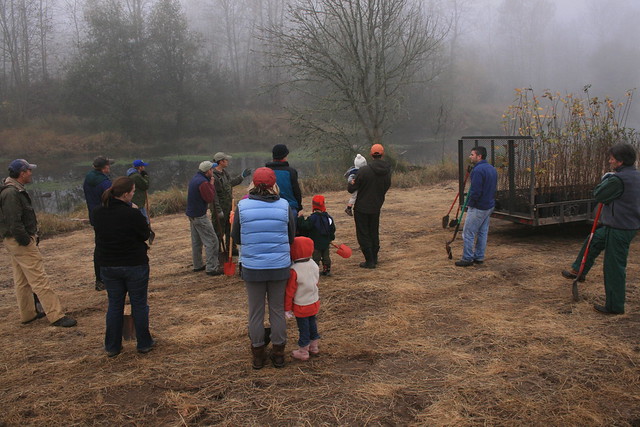
The Long Tom Watershed Council is hosting a public meeting 6pm, Jan 29th at the Monroe high school to discuss the state of fisheries on the river.

The Long Tom is home to a host of native fish species, including Pacific Lamprey, Oregon Chub, Spring Chinook, and Cutthroat Trout. Karen Hans, ODFW Fisheries Biologist and Jed Kaul, LTWC Fisheries Biologist / Restoration Projects Manager will discuss the status of these species, and offer suggestions on how you can help with protection and restoration.

Posted in Oregon Conservation News | 1 Comment

Fly Tying Events Reminder

skip morris nymph class3

We still have room in Skip Morris’s Tying Nymphs Class this coming Friday see details below.

Skip Morris, author of FLY TYING MADE CLEAR AND SIMPLE, THE ART OF TYING THE NYMPH, TROUT FLIES FOR RIVERS, and WESTERN RIVER HATCHES, along with nine other fly-fishing books, will sit with no more than ten local fly tiers and together tie some of Skip’s favorite nymph patterns. During the three hours of demonstration and instruction (and a little kidding around) with Skip at your elbow helping and encouraging you, you’ll improve your tying skills and knowledge with techniques you already use and some fascinating ones you may not have explored. Special techniques you’ll learn in the class: making distinct and supple flat-feather legs, making a fly-body of several glass beads under a haze of shaggy dubbing, tying a tiny nymph, making a nymph thorax with a metal bead blended into it, forming a smooth foundation for a nymph-body, and much more.

Skip will give you a handout with the fly patterns and their dressings.

The date, again, is Friday January 18, from 6:30 to 9:30pm. The fee is $75. Call The Caddis Fly Angling Shop and register at 541-342-7005.

Jan 26th Adrian Cortes will be demonstrating how to tie Steelhead and Atlantic Salmon Flies without a vise. Check out more details about the demo here.

March 8 and 9 the NW Fly Fishing and Fly Tying Expo will be held at the Linn County Expo Center in Albany, Oregon.

Posted in Classes and Instruction | Leave a comment

Sage Circa 5 Weight or Sage ONE 5 Weight?

IMG_5205

The five weight fly rod is widely considered the trout fishers most all around choice. Anglers use five weights for dry fly fishing, nymph fishing, hopper dropper rigs, and even streamer style methods. There are many fine fly rods being manufactured today and I was fortunate enough to fish two of the very best on a recent trip. The Sage ONE 9ft 5wt and the Sage Circa 8’9″ 5wt are fantastic trout fly fishing rods.

IMG_5323

The Sage Fly Rod Company has been an industry leader in fly rod manufacturing and design for years. Chief rod designer Jerry Seim is universally considered the guru of fly rod action, design and casting. Sage’s recent move to “Konnetic Technology” in it’s graphite production has allowed design and function to reach new levels of performance. The two five weight fly rods discussed in this review/commentary utilize “Konnetic Technology” and yet when one shakes or feels the rods side by side they are vastly different. On the stream performance between these rods varies considerably as well. Hopefully this discussion will shed light on two incredibly fine fly rods, or as Sage calls them “Fly Delivery Systems”.

IMG_5305

Over the course of approximately 10 days I carried both rods with me on varied freestone waters. Both rods had 4200 series Sage Fly reels, the Circa a 4230 and the ONE a 4250. Lines were weight forward Rio Golds, and leaders Rio 13.5ft Suppleflex leaders. Leaders were added to in most cases but largely maintained a 13-15ft total length.

Both the Sage Circa 5wt and the Sage ONE 9ft 5wt are great fly rods. The fact that both of the rods perform beautifully will be a recurring theme in this discussion but breaking the rods down based on specific situational fly fishing aims to help anglers understand the difference between the two.

Dry Fly Fishing

For smooth casting medium to smaller flies in close quarters with little wind I found the Circa to be an absolute joy to cast and present flies. It quickly became the rod of choice when just casting a single dry. You would expect this from a rod designed to get back to the traditional feel of a slow action rod. The ONE responded better when shooting line and “over-powering” (not necessarily a good thing) the rod. Is the ONE a joy to cast dry flies? Yes it is but in pure dry fly situations, utilizing a relax casting stroke the Circa is the pick.

IMG_5268

Wind

We had some serious wind on a few of the days on our trip. Wide open river valleys on the South Island and a North West Wind create problems for the fly angler. This is where you would expect the ONE to perform far better than the Circa. In using the Circa however I found it better than expected in the wind. The slow action did require a better timed cast, but it did get the job done. Despite a slow action, modern materials and Konnetic technology kept the line incredibly straight to target through windy conditions. The ONE would power through the wind with a “harder” more forceful stroke while the Circa would fold up a bit with this type of casting stroke. Overall if I had to fish in the wind most days the ONE is the best choice between the two as it’s stiff action made it more forgiving when casting in wind.

IMG_5201

Nymph Fly Fishing

Living in the Pacific Northwest I fish with indicators and heavy nymphs in early Spring a lot. No rod has done a better job delivering heavy nymphs, split shot and indicators for me than the Sage ONE. For dedicated nymph fishing there is no doubt that the Sage ONE is the rod. Is the Circa useless when nymphing? I think it depends upon the style of nymph fishing you do. On this trip I fished with some Kiwi’s who simply put a slip knot in there leader, inserted a bit of yarn and fished one or two light nymphs upstream to blind or sighted fish. The Circa 5wt performed very well with this rig. Heavy double nymph rigs are not the norm for me in New Zealand. But on a tough day this trip I employed some dredging tactics with both rods and the ONE 5wt stayed stable throughout the “chucking” of heavy flies while the Circa labored. As you would expect the ONE 5 is the choice in most nymph fishing situations.

IMG_5195

Two Fly Rigs

Hopper Dropper rigs that employ a dry fly and a nymph either tied off the bend of the hook or mid leader are very common in trout fishing worldwide today. The Sage Circa is being marketed largely as a slow action rod with performance. In casting two flies you get to see the performance aspect of the Circa. It cast two flies with relative ease up to around 50ft when relaxing the stroke and using a wider loop to deliver the flies even in wind. The Sage ONE casts two flies with ease in close and at distance.

IMG_5194

Short Casts and Long Casts

As discussed previously the Circa 5wt cast better than anticipated at distance and the Sage ONE excels at distance in wind and with two fly rigs and nymphs. Now let’s look at the majority of your trout casts. Even with spooky fish in New Zealand casts over 50 feet are pretty rare. Most of the fish catching casts we make occur within 40ft. Both the Circa and Sage ONE deliver flies of most sorts well within these distances. Both rods are light, easy casting and incredibly accurate as well. So it gets down a bit to what you are throwing, heavy flies, large wind resistant flies go with the ONE, medium sized flies, small and even tiny stuff with long leaders the Circa lands the fly with smooth delicacy. Pure dry fly presentation given most trout casts I found the Circa to be the go to rod.

IMG_5292

Over-Lining the Rods

Many people like to “one up” the recommended fly line size on fast action rods. Rio Grand and Scientific Anglers GPX taper lines are “upsized” lines meaning a five weight is really a six in terms of grain weight. The Sage ONE handled being over lined just fine in all conditions. The Circa’s smooth yet fast line speed action was slowed by casting a heavier line. We consulted Jerry Seim at Sage on this one and his line recommendation for the Circa was a Rio Gold as the number one choice and the Rio Trout LT as number two. Bottom line is the ONE is more versatile/capable of handle a myriad of line types.

IMG_5330

Fish Fighting

Both the Circa and ONE handled large fish well in close. Strength and durability have been greatly improved with the use of “Konnetic Technology”. Durability may in fact be the most underrated thing about Sage’s newest rods. The difference in the rods fish fighting ability was evident when a fish was running downstream or holding downstream at a distance and needed to be moved towards you in order to avoid rocks, logs, etc.. The ONE rod had more guts at distance and made it easier to steer a fish. I think 4-7lbs fish may be pushing things a bit in terms of what the Circa was designed for. That said, fish were lost because of the rod being to light in any regard.

IMG_5245

Conclusion

Fly Rod Materials and designs have changed immensely over the years, in my opinion these changes are very much for the better, and allow fly anglers to push the boundaries of the sport. Although both rods are 5 weights, both great trout rods and both wonderful casting tools they do differ greatly. If you get a chance to cast one of these modern marvels I highly recommend them both.

-CD

Posted in Fly Fishing Gear Review | 6 Comments

Barred Rabbit Strip Tube Fly Tying Video

Bruce Berry of Pro Tube Sport Fisher and Beaulah Fly Rods demonstrates how to tie a simple Barred Rabbit Strip to fly for Steelhead. This pattern works for both Winter and Summer Steelhead. Swing it down and across on your favorite Steelhead stream.

Simple rabbit on a pro tube

Rabbit Strip Tube Fly

Tube: Micro Tube Orange
Hook Guide: Large
Weight: Flexiweight 15mm Black
Wing: Black Barred Rabbit Fl. Blue
Flash: Micro Lateral Scale
Hackle: Black Marabou
Cone Head: Pro Tube Sonic Disc

Posted in Fly Tying, Fly Tying Materials and Supplies | Leave a comment

Middle Fork Willamette Watershed Council at TU meeting tonight

Come out to the Vet’s Club tonight for the January Trout Unlimited 678 chapter meeting. We’ll handle the usual business this month and enjoy a presentation from Elise Ferrarese, Restoration Specialist from the Middle Fork Willamette Watershed Council. It will be a great compliment to last month’s presentation from the McKenzie River Watershed Council.

Caddis bonanza

From the MFWWC’s Website: One of the highest priority areas for restoration in the Middle Fork Willamette Watershed lies at the confluence of Lost Creek and the Middle Fork Willamette River in Elijah Bristow State Park. This 30-acre deforested area is part of a historical floodplain forest. In December of 2007, the MFWWC began the final phase of a multi-phased project to restore the area. The project involved extensive weed removal, planting of 4,500 native trees, the installation of an innovative solar-powered irrigation system, and western pond turtle and red-legged frog monitoring. The project also has served as a publicly accessible demonstration project: since January of 2004, over 300 volunteers and community members have visited the site and learned about on-the-ground watershed restoration. Our Watershed Education Program works with all elementary schools in the watershed to teach science and environmental concepts while providing opportunities for students, teachers and parents to get involved in community service projects. The Confluence project serves as a field station for three local schools, reaching over 125 students. These students have salvaged native plants from the site, planted trees and conducted water quality monitoring on site.

Don’t miss the first Trout Unlimited meeting of 2013…see you there!

What: Trout Unlimited 678 chapter meeting & Middle Fork Willamette Watershed Council presentation
Where: Veteran’s Club, 1626 Willamette Street, Eugene
When: Wednesday, 1/9/12 at 7:00 pm
What to bring: Yourself, a couple of bucks for a beer, and a friend

TU 678

Posted in Oregon Conservation News, Oregon Fly Fishing Clubs and Events | Leave a comment

Spey Sink Tips Part 2: Rio Products options

Sink tips for Spey fishing Part 2: Review of Rio Products

Here’s a quick review of Rio’s sink tips that are especially useful to Spey and Switch anglers fishing salmon, steelhead, and lake or sea run trout.

Rio MOW Tips: These have become immensely popular since their introduction in late 2011. Offered principally in 10 ft lengths (12 ft full sinkers are available also) these come in light (T-8), medium (T-11), heavy (T-14), and extra heavy (T-17) wt classes to suit any Switch or Spey rod, fly, and river condition. The wt classes have different total weight at the 10 ft length and the higher numeric classification tips sink faster.

Unique MOW Features: These aren’t just simple sink tips; many of these tips are composed of both floating and sinking portions, making them an AMAZING tip to fine-tune a fly presentation in technical waters from evenly graveled tail-outs to boulder-gardens and narrow trenches. Looped on both ends and with as little as 2.5 ft to a full 12 ft of sinking material, MOW tips are very easy to use. Add tippet and fish: All you need to do is loop on a mono leader with (for example) a double surgeon’s loop, tie on a fly, and make your cast. Recommendation: use T-8 and T-11 MOW Tips with Switch rods and light Spey rods. Fish T-14 and T-17 MOWs on Spey rods of 7 wt or up.

Rio iMow Tips: These are new for 2013, and unlike the standard MOW tips (composed of integrated sections of floating and sinking material), the iMOW tips are composed of varying lengths of Intermediate sink and T-class sink rate material. The iMOWS will put your fly a little deeper than any corresponding traditional MOW, because the Intermediate butt section of the tip sinks instead of floats. Sorry. Obvious.

Mow Tips Kits: Yep. Choose the wt class of the MOW tips you want to fish, purchase a full selection in a Rio tip wallet, and save some cash you can spend on tippet material or flies.

Rio Level Tungsten Material: Rio packages coils of raw T (Tungsten impregnated) material in densities that include T-8, T-11, T-14, T-17, and by gosh T-20. Note that a 15 ft tip of T-20 will weigh in at about 300 gr, so be careful with this big boy. T-8 has about a 6 ips sink rate, and T-20 has a whopping 10 ips sink rate. Note that the T-20 comes as a 20 ft coil while all the others are 30 ft. Level T material is not looped at either end. To fish tips constructed with Level T material, we first cut the desired length of sink tip, create a loop on one or both ends, using braided butt loops, a nail knot loop, or use a loop at one end and an Albright knot on the terminal end to attach our tippet material. Rio Level T material is laid over a mono core and I do not recommend creating loops with heat-welding techniques.  Recommendation: use T-8 and T-11 material with Switch rods and light Spey rods. Use T-14 to T-20 with Spey rods, and the T-20 should probably be reserved for Skagit Heads over 600 gr or so.

Rio Spey Versileaders: These are available in 6 ft, 10 ft, and 15 ft options, all with a 24 Lb maximum core strength. Rio Versileaders are offered in 5 sink rates from 1.5 ips to 7 ips. Versileaders have a welded loop on the butt end and a bare core monofilament at the other. We add tippet of #16 Lb or less by looping or blood knotting to the mono core tip. Versileaders are labeled as #24 Lb, meaning the strength at the tip of the mono core, and it is important to keep the tippets a fair amount under this strength class. Suggestion: use T-8 and T-11 material with Switch rods and light Spey rods. Use T-14 to T-20 with Spey rods, and the T-20 should probably be reserved for Skagit Heads over 600 gr or so.

Spey Versileader Kits are a money saving option and include all of the sink rate options of one length Versileader in a Rio Tip Wallet.

Rio Replacement 15 ft Tips: These are the same sink tips provided with Rio Multi-tip Spey fly lines. Looped at one end and labeled as to line class and sink rate, these tips are available in sink rates of Intermediate, Type 3 (3-4 ips), Type 6 (6-7 ips), and Type 8 (8-9 ips). Unlike Versileaders that are classified only by length and sink rate, this product is classified by line weight also, as in matched for a 7 wt, 9 wt 12 wt line. As such, the Type-3, 12 wt sink tip will be considerably heavier than an 8 wt tip that is also Type 3 sink rate. Suggestion: These Replacement sink tips allow the Switch and Spey anglers to fine-tune his or her tips to an individual rod and line. And we find that these tips are far better than Versileaders when fishing heavier Skagit Heads. These 15 ft tips may be cut down to 12 ft, 13 ft or 14 ft to meet the needs of individual anglers, rods, and water conditions.

Replacement 10’ Sink Tips: Same as the Rio 15 ft Replacement sink tips, just in a shorter version.

15 ft Replacement 15 ft Tips Kit & Tip wallet: This is a complete set of 15 ft Replacement tips packaged in a Rio Leader Wallet. Save some cash and make sure you have the full range of tips at hand next time you head out..

So ends part 2 of this Spey Sink Tip Review
Jay Nicholas, December 2012

Posted in Fishing Reports, Fly Fishing Gear Review, Uncategorized | 1 Comment

Adrian Cortes Fly Tying Demo, January 26th

adrian cortes

The Caddis Fly Angling Shop is proud to announce Adrian Cortes will be conducting a fly tying demo at the shop on January 26, 2013. If you spend any time on Spey Pages you might know him as fshnazn. Adrian ties Classic Salmon and Steelhead flies with a classic twist, all without a vise. Yep, he ties his flies like the tiers of old—in hand. If you have ever thought you would like to learn how to tie the Classics or married wing Steelhead flies come to the Caddis Fly Angling Shop on January 26th and see what all the buzz is about. Adrian will be giving his free demo from 1-3pm. Come by grab a Ninkasi and check out some amazing fly tying.

adrian cortes flies

adrian cortes 1

Posted in Fly Tying | 4 Comments

The New Year Brings Fresh Chrome: Oregon Winter Steelhead Report

winter steelhead fly fishing

The New Year greeted us with great river conditions as the high and brown water that blighted most of December dropped and cleared into the ideal range on many of the rivers draining the coast range. Some of the guys on the Caddis Fly guide staff were on hand to take a steelhead census on a number of central coast drainages. The results are in: it appears we have another great winter steelhead season on our hands with good returns of adult fish to our coastal rivers.

fly fishing for winter steelhead caddis fly guides

oregon fly fishing winter stealhead

The photos in this entry are from this past week’s fishing with Ethan, Clay, Bryson and Ty .

The weather prognosticators claim we don’t have a major storm in our immediate future, so fishing conditions should remain good until the next gully-washer rolls in. Throughout the rest of the winter, river conditions will fluctuate, as they always do, with the whim of the weather, but barring the immediate aftermath of a prolonged downpour, there is usually somewhere good to fish within striking distance of the Eugene area.

winter steelhead guiding

A guided fishing trip is a great way to jump-start your Winter steelheading knowledge and steepen your learning curve. Whether you are a seasoned veteran of winter steelhead flyfishing, or have never held a fly rod before, our guides are excited to show you a great day on the water. You are guaranteed to learn a good deal, and chances are you will encounter large and angry, silvery fish on the end of your line.

winter steelhead photos

Cold weather deters some anglers from braving Winter’s icy flows, but a heater system installed in the drift boat makes fishing warm and comfortable on even the nastiest days. Both Ethan’s and Clay’s boats have dual propane heater systems installed that keep guests toasty while they fish without any of the hazards usually associated with heater heads (melted waders, fly lines, etc).

Bryson with a nice Winter fish in the sunshine today

clay with a mess o fish

The 2013 Winter steelhead season is just getting started. Good opportunities to chase chrome will persist through March. Whether you book a trip with us or go out fishing on your own, it is time to get out on the river.
Phone 541 342 7005 email: caddiseug@yahoo.com

Posted in Oregon Winter Steelhead Fishing | 2 Comments

McKenzie River Trout Fly Patterns page updated

We’ve recently updated the fly tying page for McKenzie River Trout patterns. While we’re sure these will work on lots of other watersheds, this page really reflects the rhythms of our local fishery.

Mckenzie redside

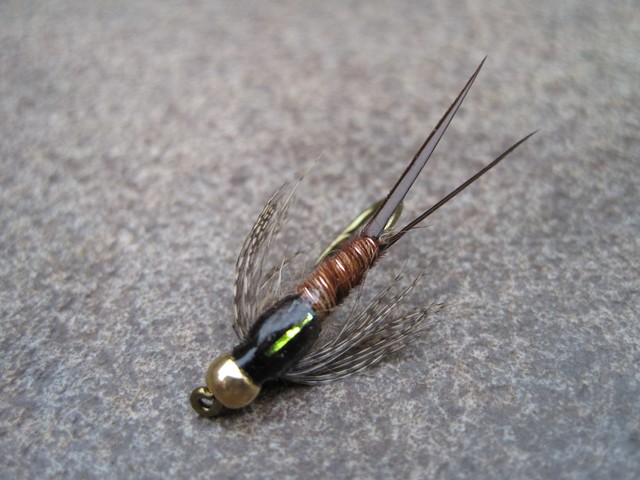
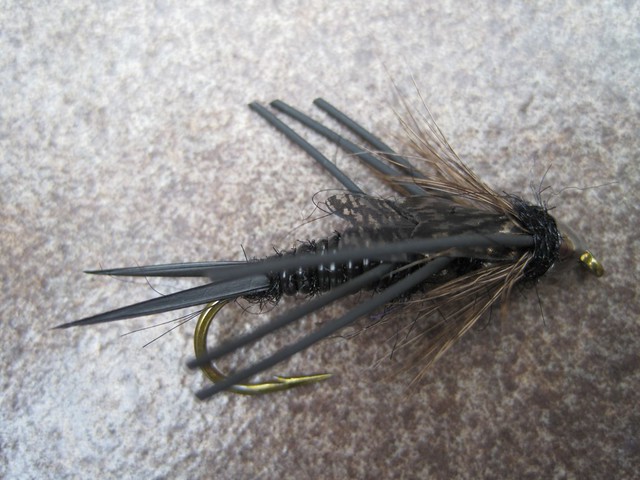
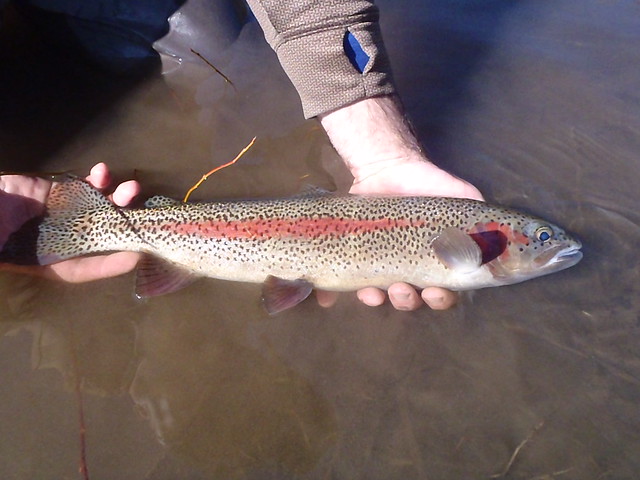
Going through the library and updating new patterns, deleting some with broken videos, I noticed that the emphasis is really on catching big wild trout, and having the most possible fun doing it. Lots of March Brown patterns for the upcoming season, lots of big, fluffy stoneflies for wild trout on the upper river, big buggy nymphs for crawling the deep corners. Check out the patterns and as always, leave your suggestions: McKenzie and Willamette River Trout Patterns. Also, be sure to check out some of our earliest videos featuring shop owner Chris Daughters himself, tying trout flies.

It’s hard to imagine, but we’re coming up on five years of Oregon Fly Fishing Blog!

-MS

Posted in Fly Tying, Fly Tying Materials and Supplies, McKenzie River | Leave a comment

TIE NYMPHS WITH SKIP MORRIS–A HANDS-ON WORKSHOP Friday, January 18

skip morris nymph class3

Get a jump on Spring Fly Tying with this Workshop offered by Skip Morris and The Caddis Fly.

Skip Morris, author of FLY TYING MADE CLEAR AND SIMPLE, THE ART OF TYING THE NYMPH, TROUT FLIES FOR RIVERS, and WESTERN RIVER HATCHES, along with nine other fly-fishing books, will sit with no more than ten local fly tiers and together tie some of Skip’s favorite nymph patterns. During the three hours of demonstration and instruction (and a little kidding around) with Skip at your elbow helping and encouraging you, you’ll improve your tying skills and knowledge with techniques you already use and some fascinating ones you may not have explored. Special techniques you’ll learn in the class: making distinct and supple flat-feather legs, making a fly-body of several glass beads under a haze of shaggy dubbing, tying a tiny nymph, making a nymph thorax with a metal bead blended into it, forming a smooth foundation for a nymph-body, and much more.

Skip will give you a handout with the fly patterns and their dressings.

The date, again, is Friday January 18, from 6:30 to 9:30pm. The fee is $75. Call The Caddis Fly Angling Shop and register at 541-342-7005.

skip morris tying class4

skip morris nymphs

skip morris nymphs2

Posted in Classes and Instruction, Fly Tying, Shop Sales and Specials | Leave a comment

Spey Sink Tips Review Part 1 – Introduction to Rio and Airflo

Sink tips for Spey fishing Part I: Introduction

Well now, here it is – January already, with fall salmon season winding down, and Winter steelhead trickling into our coastal rivers here in Oregon. Many of us are dusting off our Spey rods and winding on new lines to begin the season, while others are just shifting our summer for winter lines. This season presents a larger than usual range of choices in the sink tips we have available to fish on Spey lines. I’m guessing that most of us will be un-looping those floating and intermediate tips, rummaging around for sink tips to fish swifter, colder waters.

Decision time. What will we stuff into our tip-wallet next time we head to the river this season? Here is a comprehensive review of the sink tip options we have at our summons as we slip into 2013.

Product offerings by Rio and Airflo. Both of these manufacturers have a proven on-river reputation and both will serve you well. This first post (Part 1) will serve only to note key sink-tip products on the market now, and note similarities between Rio and Airflo. The next post (Part 2) will review The Rio Brand of sink tips, followed by a final post (Part 3) that reviews Airflo’s sink tip options. Part 1 is your table of contents, if you will, of some great contemporary sink tip options.

RIO MOW Tips – Unique to Rio and including a new T-17 extra heavy option, there is no Airflo Equivalent.

Rio iMow Tips: New for 2013 and unique to Rio, there is no Airflo Equivalent.

Rio Level Tungsten Material – The Airflo Custom Cut Tips (CCT) 10 ft & 18 ft is a very similar product, looped at one or both ends, in 10 ft, 18 ft or 20 ft lengths, instead of the 30 ft raw, un-looped length offered by Rio.

The Tungsten coated material from Rio is laid over a mono core while the Tungsten material offered by Airflo as CCTs is laid over a braided core.  Spey anglers who are prone to construct welded loops should choose the Airflo Product, because heat-welding will go far more smoothly with the braided core than with the mono core material.  Both Rio and Airflo offer pretty fast sink rates as the norm with Level T material, and both are a good choice when fishing heavier Skagit lines and big flies.

Rio Spey VersiLeadersAirflo Polyleaders are very similar to this Rio Product. Both are looped on one end and have a bare mono tip to attach your tippet at the other end; both are offered in a wide variety of sink rates, both have a monofilament core rated at #24 Lb, and both are well suited to Switch and Light Spey rod applications.

The key difference between these two products is that the Versileaders are level, and the floating Versileader is an olive opaque fly line material.  Polyleaders are clear in floating, Hover, and Intermediate sink rates, and are tapered instead of being level.

Rio Replacement 15’ Sink Tips: The Airflo equivalent is their Spare 15 ft Sink Tips
that also have a loop at one end, offer virtually the same sink rates, and are line class/wt rated as Type 3 (3-4 ips), Type 6 (6-7 ips), and Type 8 (8-9 ips) in line classes from about 6 to 12. Rio 15 ft tips are labeled and coded; Airflo 15 ft tips are coded for size also. Rio offers a wider wt range range of this product. The heavier wt classes of this product are ideal for fishing on Skagit lines over about 510 gr. and the lighter end of the product line fish well on switch rods and on Spey rods using heads under about 510 gr.

Rio Replacement 10’ Sink Tips: This length is unique to Rio, there is no Airflo Equivalent. Essentially a shorter version of the 15 ft Replacement tips offered by both Rio and Airflo.

Sink tip kits: both Rio and Airflo offer a variety of tip selections or tip kits at a savings with a tip wallet included. These offer convenience, adaptability, and savings. Rio kits are available for MOWs, Versileaders, and Replacement 15 ft tips.

Airflo kits are available for PolyLeaders, and Spare 15 ft Sink Tips.

I hope this bare-bones list helps set the stage for a more thorough review of Spey Sink Tips: Part 2 and Part 3. At the very least, it should provide a short summary of sink tip options from Rio and Airflo that I believe are worthy of your consideration as the New Year unfolds.

End Part 1: Spey Sink Tips Review
Jay Nicholas, December 2012

Posted in Fly Fishing Gear Review, Uncategorized | Leave a comment

Coastal Winter Steelhead Update

Most coastal streams are dropping and clearing. River forecast projections indicate this trend will continue next week. The weather forecast shows little rain activity until late in the week.
2012-12-28 13.30.23

The first of the winter steelhead have arrived and many anglers are finding success.

2012-12-30 12.45.55

Although not the brightest fish, this buck fell for an egg pattern. Once again the Sage 99, with indicator line, proved to handle the fish quite well. I continue to be impressed with the performance of my Lamson Litespeed.
2012-12-30 12.47.55
I had my fishing buddy, Brad, my son-in-law, along to help me land the fish. It was great to share the catch of the day with Brad.

Dinner

The fish made for a nice dinner accompanied with linguini pasta and a sauce of butternut squash.

2013 is very near and may the New Year bring much success and happiness. Happy New Year to one and all!

Posted in Coastal Steelhead Fishing, Fishing Reports | 2 Comments

Tight Quarters Big Fish Video Monster Brown Trout Fishing in New Zealand

Customer Henry Slater sent us the link to this video.

Posted in Fly Fishing Travel | Leave a comment

Chinook Salmon Fly Patterns page updated

Most Chinook salmon flies are ugly, stemming from a Northern California tradition of goggle-eyed, skinny-chicken looking Comets with too long tails.

But tie one on anyway, and heave a Type-II shooting head out in an ungraceful loop and let the little pink and black fly swing through the estuary current. When the first strip stops hard, and the line takes off across the pool… The salmon lunges for deep water, and you are physically connected by a wispy piece of plastic to a marine predator the size of a fifth-grader. You will believe.

IMG_5946

Chinook Salmon Fly Pattern Library: Updated, featuring patterns from Jay Nicholas, Rob Russell, Barrett Christiansen and Tony Torrence.

Posted in Fly Tying, Oregon Salmon fly fishing | Leave a comment

Pollution in Paradise

Many readers of this blog probably have a few Willamette steelhead in their grip and grin photo collections, but it’s important to remember that not so long ago, the Willamette wasn’t much of a river.

Pollution in Paradise is a hefty reminder of the Willamette’s polluted history and an encouraging indicator of progress for anyone working on restoring the mistakes of the past.  The video was shot by Portland’s KGW TV in 1962 and features Tom McCall, who would go on to become one of Oregon’s most noted environmental champions in his role as Governor from 1967-1975.

Take 20 minutes and watch all six sections of the movie.  If you care about the future of the Willamette River, it’s well worth your time. To get involved with current restoration efforts on the Willamette, contact your local watershed council, the McKenzie River Trust, Greenbelt Land Trust, or Willamette Riverkeeper.

Part 2
Part 3
Part 4
Part 5
Part 6

Posted in Lower Willamette, McKenzie River, Oregon Conservation News | 2 Comments