Flashback Hare’s Ear Fly Tying Video

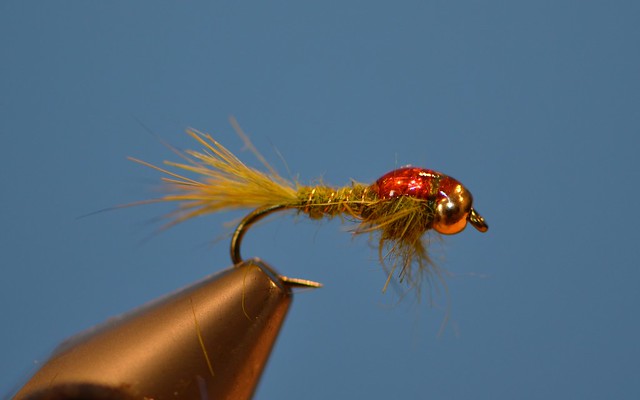
ge hare's ear olive red flashback sheet

Flash Back Hare’s Ear Nymph—Olive

Hook: TMC 3761 10-18
Bead: Gold Cyclops
Thread: Veevus 16/0 Olive
Tail: Olive Hare’ Ear Mask
Rib: Gold Ultra Wire
Abdomen: Hareline’s Olive Hare’s Ear Dubbin #34
Wing case: Hareline Flashback Sheeting
Thorax: Hareline’s Olive Hare’s Ear Dubbin #34
Wing case finish: Clear Cure Goo Thin, then CCG Hydro.

The Hare’s Ear Nymph is truly one of the quintessential flies of fly-fishing. A fly that has saved so many trips for me over the years that I don’t leave home without it. The history of the fly seems a bit clouded, but we know that the fly dates back to at least the 1880’s and possibly beyond.

The fly has been credited to a Victorian tyer, Mr. James Ogden many times, but there are many other references that credit or question the originator. I still carry many of the old standard Gold-Ribbed Hare’s Ear Nymphs in my box, but why not give the classic Hare’s Ear a little “face lift”?

Hareline’s Flash Back Sheeting seemed to be the place to start. I added a little Clear Cure Goo to bring the sheeting to life…and protect the wing case from those pesky trout teeth. There are many old patterns out there that can be “tweaked”, to meet the demands of your fishing conditions.

We truly are in the “Golden Age of Fly Tying”, with so many new materials to make your offering more enticing!

Disclaimer: This was to be the test run for the next batch of videos, and it’s a little rough.

TT

Posted in Fly Tying, Fly Tying Materials and Supplies | Leave a comment

Fishing Amongst Fires: Deschutes, Lake Simtustus, and Metolius River Fishing Reports

My dad and I putting in at Warm Springs for trip #1!

It’s wildfire season in Central Oregon. It came fast and hard, knocking firefighters on their heels with winds and high temperatures. Despite this, I got out to do some fishing last week on the Deschutes, Lake Simtustus, and the Metolius.

My dad and I did a Tuesday-Wednesday float trip from Warms Springs to Trout Creek. It was hot, but thankfully we both had a pair of Simms Guard Socks for wet wading, which saved our butts. The fishing was good despite the 95+ degree weather. X-Caddis was still a hot fly on the surface, while Sparkle Pupas, nest building caddis, and emerging caddis nymphs down low also produced.

Wednesday night my uncle from Washington arrived at the Lake Simtustus RV Park, which acted as our base camp, and the next day we put in at Warm Springs for Thursday-Friday float trip. This trip met us with cooler temperatures, and even cooler fishing. An X-Caddis pattern worked early, but once the wind picked up the bugs and the fish sulked. Despite this I managed fish on Sparkle Pupas below a heavily weighted Mega Prince.

One of my dads fish caught on a #16 olive X-Caddis

I targeted the rocky banks with my tandem nymph rig and went about 4-5 feet below my indicator to my anchor fly. I hooked into two monsters that both broke me off thanks to a too-hardy drag setting, ugh. The next day was even cooler, but less wind, and even though there were bugs on the surface the fish didn’t seem to go for them. I kept with the same nymphing rig and managed to hook into a few.

Saturday I woke up back at the Lake Simtustus RV Park. Check out was at 1pm, so I only had a few hours to explore. I’d heard the lake has hearty populations of Rainbows, Browns, Kokanee, and Smallmouth Bass. I went with an olive/black Woolly Bugger and started banging the banks next to low hanging trees in the shady spots. One of my first casts produced a nice 12-inch smallmouth, my first on the fly.

My dad, my uncle, and me looking like dorks at the Warm Springs put in for trip #2

I caught two more, and had two more bites, but then I noticed fish rising towards the middle part of the east arm I was on. I began trolling with that same Woolly Bugger, but got nothing. Maybe I wasn’t deep enough, or maybe they were just focused on surface flies, who knows!? The sun was getting higher, and the wind was picking up, so I started casting perpendicular to the bank about two/three feet out, letting it sink a little deeper and did a slow retrieve around jetties and rock outcroppings. On my second cast I hooked into something monstrous. It shook its head a few times, but then I felt the sinking feeling of a slack line. He’d broken me off and stolen my last tungsten-weighted Woolly Bugger.

Me fishing near Grassy Camp under a smoke-tinted sunset.

After that the sun was too high, the fish too low, and the wind too strong. Over the few days and nights I spent there I was impressed with the size and number of fish in Lake Simtustus, and would recommend anyone who hasn’t fished it to go there and check it out. It’s also a great base camp for doing day or overnight trips on the Deschutes, which is only 15 minutes away.

Seems like mornings and evenings are best at Lake Simtustus, and a boat is a must because the bank is steep and inundated with bushes that make casting a pain. There’s also a small creek feeding the lake near the RV Park on the east arm that holds many small trout. Pheasant tails and Parachute Adams both worked there, and targeting the deeper pools below cascades was successful.

Finally, Sunday brought with it cooler temperatures and cloudy skies. I sped over to the Metolius and was met with larger crowds than usual. Wizard Falls Fish Hatchery and below was closed to fishing and visitors due to the fire, so everybody moved upriver to fish the Camp Sherman to Gorge stretch. Still, most of my favorite holes and runs were open when I got to them, and luckily the fishing was hot. I caught two rainbows, one of which was about 15”, and one large white fish all on a Yellow Sally nymph. The Golden Stones are late this year like most of the hatches due to high water and weird weather. Anyways, the Golden Stoneflies are migrating to the shore to hatch, and the trout are keyed in on them. So if you’re heading there, make sure to pack your Beldar Stones and Yellow Sally nymphs.

Overlooking Lake Simtustus RV Park. Image thanks to lakesimtustusresort.com

As for dries there wasn’t much action on top. However, around mid afternoon at Allingham hole a group of kids started throwing Cheetos into the river just below where I was fishing. I hadn’t seen a fish rise all day, and was convinced they’d fled or weren’t eating just to spite me.

“Watch the Cheeto,” one of them said.

As I did a massive redside crashed the surface and took the Cheeto with him. I looked at the guy fishing the other shore.

“Did you see that?” I asked him. “Do it again,” I said to the kids.

Sure enough every Cheeto they tossed into the water was met with a voracious rise from another rainbow. I tried everything, even an orange and brown stimulator I though looked like a Cheeto, but couldn’t get a fish to rise.

After another half an hour of unsuccessful attempts I looked at the other guy who was equally frustrated.

“Typical Metolius,” I said before setting off downstream.

Even though I didn’t get a fish on the dry that day, the fishing was still hot, and seeing those fish rise to Cheetos was a kick too. All in all it was a great week of fishing and I can’t wait to do it again soon!

Summary:

Deschutes: X-Caddis, Missing Link Caddis, and Parachute Adams in size 16 worked well early, late, and during breaks in the wind. Sparkle Pupas, Mega Prices, emerging caddis patterns, and Nest Building Caddis worked well all day along seams and rocky banks.

Lake Simtustus: Woolly Bugger early in the morning along jetties and rocky shorelines below trees produced Smallmouth. Cast close to shore and wait for your fly to get low then do a slow 6-inch retrieve. Pheasant Tails and Parachute Adams worked on Willow Creek on the east arm below cascades and in deeper pools.

Metolius: Yellow Sally nymphs were the hot fly on the Camp Sherman to Gorge stretch. Below Wizard Falls was closed to fishing and visitors due to the nearby fire. Bring some stone fly nymphs and adult dries as the Golden Stone hatch is coming off a bit later this year due to high water and weird weather.

Bryan T. Robinson

Posted in Central Oregon Fishing Report, Fishing Reports | 2 Comments

Reminder: GLoomis Demo Day: July 26

Gloomis 2

Just a quick reminder G-Loomis will be at Alton Baker, July 26, 2-5pm, at the ponds. To gain your attendance, our G-Loomis host, Josh Linn has sweeten the opportunities with the following offers: aanyone who buys a rod will have the receive a free G-Loomis Fly Duffel Bag ($80 value) included at no charge!
Also, for the angler who can cast the furthest, Josh will be giving away a FREE NRX 590-4LP. The rod will be shipped to the lucky winner at the conclusion of the event.

If you have not had the opportunity to cast a NRX GLoomis rod, Spey or single handed,….this is the time!

LV

Posted in Classes and Instruction, Oregon Fly Fishing Clubs and Events | Leave a comment

International Fly Fishing Reports: Tokyo and New Zealand

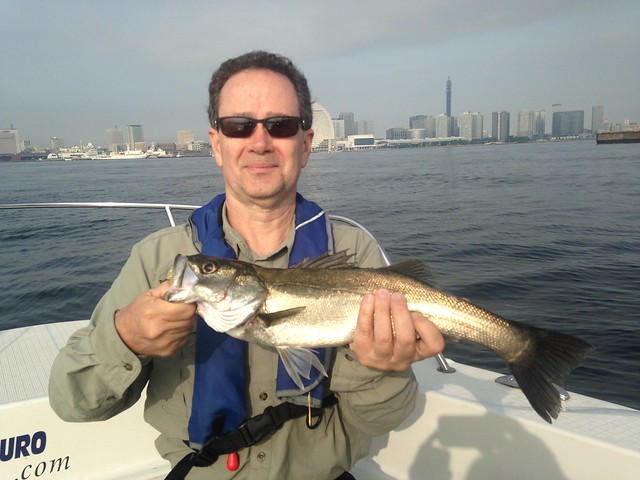
Tokyo Harbor

tokyo harbor fly fishing

Customer and avid angler Michael Beech sent us this photo from a recent business trip to Tokyo

He writes:

All on the surface. They call them sea bass. Found in schools feeding on bait fish. Exciting fishing in the early morning. Interesting landscape. Start at 4am back in the hotel by 11.
Thought your clients might be interested any time they have a stopover in Tokyo.

Michael used Trout and King Fishing Tours as his outfitter.

New Zealand Micro Steelhead

new-zealand-trout

John Taunton Clark who gave us a Newby Switch Post was back at it on the Tongariro River with some of Jay’s creations.

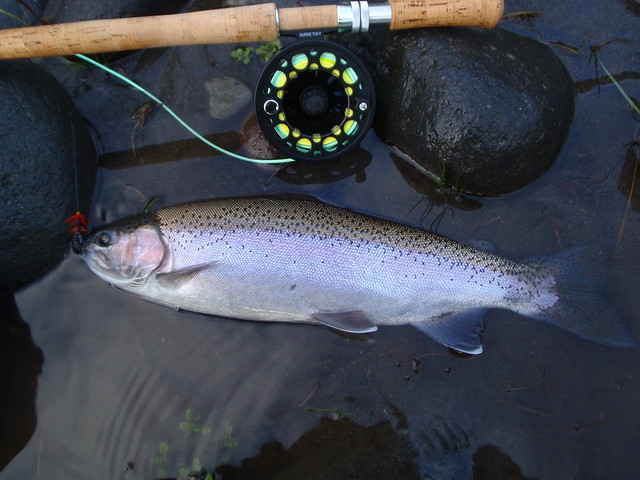
I’ve just got back from a few days on the Tongariro River, catching some NZ ‘micro steelhead’. In one of my orders, Caddis kindly sent me a couple of Jay Nicholas’ tube flies, which I used on my trip. The flies worked (but you knew that). The attached photos show an example of my catch with the fly visible. I was using my Dually #6, Surge reel, with the RIO Switch Chucker and ten feet of Airflo T10 CCT. All good fun. Must confess that at the start of my trip the river was low and clear, and my best fishing was using the single-hander for upstream nymphing. I got most fish on green or pink jelly caddis patterns – fitting.

nz-micro-steelhead

Posted in Fly Fishing Travel | Leave a comment

Summer Fly Patterns 2: Mercer’s Missing Link

Summer fly favorites

Mercer’s Missing Link may have become my new favorite dry fly! While it was originally designed as a dying caddis pattern for the Sacramento River in northern California it seems to catch fish everywhere. It imitates caddisflies very well but will also imitate a Blue Winged Olive in size 16 and 18, and a Green Drake in size 12. As previously discussed in my first Summer flies post, the design attributes of this fly are critical to it’s success.

Summer fly favorites

The elk hair wing of the Missing Link is visible. The hair wing is not to sparse considering it’s size, meaning it’s a very good floater. It’s tied on a strong but light wire barbless hook also contributing to it’s excellent visible floatation. The wings of the Missing Link , zlon/antron “down wings” help the fly float upright virtually every cast. It’s “parachute style” wrapped hackle also aids in the flies visible floatation. It’s thin flashabou body and peacock ice dub thorax offer just enough flash to make the Missing Link it an attractor as well as an imitator. Give the Missing Link a try on your next trout fishing trip anywhere you may be!

Posted in Fishing Reports, Fly Fishing Gear Review | Leave a comment

Cedar Lodge in Fly Life Magazine

Fly Life Magazine, a fly fishing publication focusing on Australia and New Zealand, recently published a feature on Cedar Lodge.

fly fishing nz cedar lodge

The fly fishing in the region was spectacular, the scenery sublime and the lodge beautiful. The entire experience of flying in and out of remote valleys and fishing waters where there was no visible sign of human activity was overwhelming. The sense of the wildness, pristine waters and difficult trout marry into an experience that makes fly fishing here so special.

Check out a PDF of the article here:

Flying High — Fly Life Magazine

Posted in Fly Fishing Travel | Leave a comment

GLoomis Demo Day: July 26

Gloomis 2

Set aside Saturday, July 26, Alton Baker Park, 2-5pm for the Caddis Fly Shop Gloomis Demo Day. We will be hosted by Josh Linn, national flyfishing manager for Gloomis. Josh lives in Oregon and is a renowned two handed authority and instructor for single and two hand techniques. His home water is the Sandy and Deschutes where he guided for the last 10 years. His experience ranges from fishing internationally in Russia for atlantics to Central America chasing the various saltwater species available.

Accompanying Josh will be Steve Choate. Steve Choate is the first American to enter the world Spey Casting Competition at the British CLA Game Fair in 2002 where brought home the gold from the International Open Spey Casting Championship at Broadlands on the River Test. Since then he has become a highly sought after design consultant for such companies as Scientific Anglers and G. Loomis. Steve has taught and competed in spey casting events and had the pleasure of fishing anadromous fish all over the world. Steve’s home waters are Oregon’s Deschutes and Washington’s Skagit rivers. He has also fished many of the international two handed destinations of British Columbia, Chile, Argentina, Scotland, Russia, and many places in between.

Gloomis 1

Chad Normoyle our Gloomis representative will also be on hand with various raffle prizes. Chad says he is bringing the latest in Spey, Switch, and Single handed rods from Gloomis. The latest innovation in rods is the brand new NRX series. If you have a specific line you wish to try out on one of these great new rods, please either bring it down or ask us before July 25 and will arrange to have it on hand. Or, you can just bring your reel and line down and demo the rod. To help you make a buying decision after you cast a Gloomis NRX fly rod the shop will give you a FREE RIO or AIRFLO fly line to match your NRX rod!

Also, for the angler who can cast the furthest, Chad will be giving away a FREE NRX 590-4LP. The rod will be shipped to the lucky winner at the conclusion of the event.

We look forward to having you and hope you can join us on July 26 at Alton Baker, 2-5pm. We will be in the pond area of the park.

LV

Posted in Classes and Instruction, Fly Fishing Gear Review, Shop Sales and Specials | Leave a comment

Reflections from a Montana Adventure

Back in January, two of my close friends and I decided to plan a trip to Montana during the upcoming Summer. None of us had ever been, and we wanted to see if Montana really was all that we had heard it could be. It most definitely did not disappoint!

The three of us had a general idea of what we wanted to do once we got up there, but we took it day by day and spent a spectacular week fishing 7 different rivers across Eastern Idaho and Southwest Montana.

The journey began at Silver Creek in Idaho, a world famous spring creek that calmly carves its way through stunning country. With a consistent gentle current and shallow water, light tippets and small dry flies were the name of the game. We spent one day at this creek, and had an amazing time.

Casting to Sippers on Silver


Small PMDs and sparse, low-riding caddis imitations were tied onto our 5X fluorocarbon tippet during the early evening;however, as the sun began to set, we were joined by swarms of Brown Drakes, and the slow, sauntering current that once was took the form of a riffle simply from the myriad ripples of rising browns and rainbows. We scrambled to tie on flies in the dying light and managed to hook, but not land, a few of the phenomenal fish that call Silver Creek home. Definitely a place I will be returning to in the future.

We continued East and spent the next two days fishing the Madison River. If you have yet to visit the Madison, you must go. Not only for the truly world class trout fishing, but for the sightseeing. The Madison River Valley is simply breathtaking.

Sun setting over the Madison River Valley

With the salmonfly hatch still going off in the Upper River, we concentrated our efforts there. During the morning and afternoons, we fished the Chubby Chernobyl with a Jigged prince nymph dropper. And, in case you wondering, the jigged Prince rips just as hard up there as it does in our neck of the woods!

Madison Brownie fell for the Chubby

Once the sun began to set, the caddis hatches were unbelievable. During these evenings, my friends and I brought one rod down to the river rigged up with a Size 14 Elk hair caddis, and worked up the banks doing “One fish Switch.” The rules are simple: If you have the rod, you fish until you either hook one or whiff one. The rod was switching hands about every other cast.

Evening Caddis spreadin' their wings

One Fish Switchin'

doubled over!

From there, we explored the Ruby, the Beaverhead, and the Big Hole rivers with our few remaining days. For the most part the narrative stayed the same: beautiful browns and rainbows on caddis, PMDs, and some stoneflies as well. I came to realize that the reason why Montana is the real deal is because you can’t really go wrong- Pick any river, Im sure you love it.

Recollecting on the trip, I realized that the best part wasn’t necessarily the fishing. It was meeting up with two of my best friends who I don’t get to see much anymore due to our busy schedules, and spending a week without a care in the world and not having a clue where we would be fishing the next day. However, I always knew that whatever we did, it would be phenomenal, and that is why I will be returning soon, Montana.

Tight lines

AA

Posted in Uncategorized | Leave a comment

Echo Glass Fly Rod Review

This is a very brief report on the Echo Glass fly rod I have been fishing for the last several months.  In short, I REALLY enjoy the rod.  This is not a long range casting rod like my 9 foot, E3, four-weight rod.  That is my cannon.  This Glass is a five-weight rod and at seven feet 10 inches, it reminds me of the rods I fished as a high school kid.

I think I have already mentioned that the Echo Glass rod makes little fish seem large.  It really does.  I have caught trout in the 8 to 18 inch range on this rod and find that it is very fun to fish.  My son Jackson fished the rod too, and he is a very inexperienced caster who managed to get the fly our far enough to catch fish.  I found the AIRFLO Elite line in a WF5 to be an excellent  match, but managed to cast reasonably well with an Elete WF4 and an Exceed WF4.  I spends much time fishing 7-10 wt fly rods with whatever lines I may happen to have handy that I have become a little too casual about properly matching lines to lighter rods.  With the Glass series, I think it is important to pay attention.  The 5 wt AIRFLO Elite line was superb, as was a 5 wt RIO Gold line.  I think that the actions of the Glass rods, much like the actions of light Cane rods, is such that a proper line match becomes far more important than with the high modulus fast action graphite rods I have fished so much over recent decades.

Main point with the Glass, was to slow down my casting stroke, and make sure the line was behind me before making the forward cast.  The rod’s softness is so different from the speeds generated by high modulus modern graphite that it is important to remember that the Glass will be moving the line slower too.  So if everything slows down – all will be well.

Here are a few additional thoughts on the Glass.  Would this be my first choice for a lake rod or an estuary rod for that matter?  Not really.  This rod will get the job done, but its casting range is better tuned to close range and precision – there are times fishing a lake or large river when one would want to make very long distance casts.  Although I made the Glass work on longer casts, it is not an ideal tool for these scenarios.

For small streams, though, the Glass would be wonderful.  Short distance , accurate presentations to trout of all sizes are the perfect home for the Echo Glass.  And under the right conditions, big rivers like the Deschutes would also be a great place to fish this Glass fly rod.  I remember tactical situations where big Deschutes trout would lay under a bush slurping stoneflies dropping onto the water.  This limber, pleasing-to-cast fly rod would be a great choice for fishing up-close and personal to big trout and having a great time fighting the fish.  Same goes on locales like the Upper Williamson River or the Malheur River or the Upper McKenzie and the Metolius around Camp Sherman  too.

Fishing from a drift boat, casting dry flies or soft hackles, at close to moderate range, the Glass would be a very nice alternative to the high tech high speed marvels we have become accustomed to fishing.

Jay Nicholas – July 2014

Posted in Fly Fishing Gear Review | 8 Comments

Summer Flies Part I 2014: New Jigged Fly Patterns

We have recently added highly some effective and unique flies to our offering at The Caddis Fly and Caddisflyshop.com. A new series of Steelhead dry flies, more jigged style nymphs, and more colors to a “new to us” but very proven dry fly. I make particular note of these flies because they are unique in their look, but also in there designed performance. We have had them out on the water and they are fantastic fishing flies. Through their design they achieve performance that catch you more fish.

This post is part one of three and covers the jigged style nymphs, I will cover the other patterns in future posts.

First the Tungsten Jigged Copper John. The Copper John has long been one of the best selling nymph fly patterns in the West so the look of the fly is extremely proven. It’s the Jigged Style of this fly that makes it unique. Using a tungsten bead and a 60 degree angle super sharp jig style hook this fly plummets to the bottom. It rides hook up under a dry fly or indicator reducing bottom snagging and increasing fish hook ups. We have been playing with jigged nymph patterns for a couple of years now and they are very effective. One of the keys to the design is keeping the pattern slender, dense and heavy. The Copper John suits the slim, dense, heavy profile beautifully.

Summer fly favorites

Two other tungsten bead jig style patterns that have been deadly of late are the Jigged Prince and Jigged Possie Bugger.

Summer fly favorites

We are looking at some low flows this summer and getting a smaller fly down in fast deep water is an effective tactic. Try some of these jigged style fly patterns on your next outing.

Posted in Fishing Reports, Fly Fishing Gear Review | 1 Comment

Post Cards from Pacific City, Oregon – 2014

Life is good here on the Oregon Coast.  One day might involve a leisurely outing from 10 to 1 at Lake Hebo, fishing for trophy size hatchery trout.  The next could involve fishing the estuary on an easy outgoing tide for early sea-run cutthroat trout.  The next could involve a grueling 6-8 hours grinding it out on the estuary in hopes of hooking a spring chinook; some days with a grab and many days without the hint of a living fish at the end of your line.  Then there are the days in the ocean when the Black Rockfish are almost always in the mood to eat a fly, plus the possibility of a lingcod.  Some days there is open season for Coho salmon, and hooking these fish on buck tail flies, either trolled or cast is a blast and a half.  Recently, we found the Black Rockfish on the surface, where they remained feeding for close to 4 hours.  We fished floating lines and un-weighted tube flies inches under the surface, watching Blacks take our flies like sea-runs or tarpon within twenty feet of the boat.  There are so many opportunities and options, and so little time to explore.  Please enjoy the following images of a few moments in the daily routine at PC.

Jay Nicholas – july 2014

PS: if you fish coho during a selective season, make sure your barbs are pinched.  Thanks.

Posted in Fishing Reports | 5 Comments

Coming Up Caddis: Deschutes River Report

You may not know me. I’m new to the Caddis Fly Shop family. Chris hired me to help with caddisflyshop.com writing product descriptions and general upkeep. I am extremely lucky and thankful to be able to blend my passion for fly fishing with work and still get paid for it!

Anyways, my dad and I had the good fortune of floating the Deschutes last week from Warms Springs to Trout Creek. The Caddis flies were out in force and since it was the middle of the week the river was practically empty save for a few rafters and guides.

Our first few stops saw my dad hooking into with a couple smaller redsides. He was using a small X-Caddis pattern, and the fish went after it with gusto.

Fishing below Luelling River Retreat with our pontoons!

At one point we were separated. I was further up, fishing in front of the Luelling property, and my dad was 200 yards downriver. I floated down to see how he was faring, and he immediately waved me over. He’d seen three large torpedoes cruising close to the bank. He had been nymphing but after one of them smashed a Caddis adult, he switched to a dry. After four or five casts I asked to grab some of his 5x tippet since I had run out. He turned to grab some and I saw a mammoth fish smash his size 16 X-Caddis.

“Woa!” I yelled and he set the hook without even looking.

We saw him jump once, and then the leviathan was off to the races. Directly downstream from us was a tree and it took all my dads skill to keep the rod between a two-foot gap in the branches. I ran downstream. If he continued to run or if he got caught in the tree, our only chance would be for me to maybe somehow grab the line and coax him into the net without breaking him off. It was a long shot, and I knew it.

My dad recovered some line and the fish was at my feet. I saw the line had caught on an underwater branch. It’s over, I thought. He’d brake off and return to the depths.

Miraculously, the fish decided to run upriver, which untangled him from the branch, but danger still threatened. Since the rod was between two sets of branches, my dad couldn’t lift it to get leverage.

“He’s coming up,” I yelled to him. He reeled like crazy.

This monster hit a #16 olive body X-Caddis!

I got right above my dad and held the net ready. Soon the fish slipped right in with his head and tail sticking out of the 18” long net. He measured longer than my elbow to fingertips with a beautiful purplish-red stripe down the side of his body. We snapped a picture and set him loose. Our hearts still thumping in our chest we watched him swim away, our faces plastered with idiot grins.

The next day dawned cloudy and threatened rain. It was humid and thunder seemed possible. We broke camp and I tried nymphing above Grassy Camp. Thankfully my luck had changed from the day before and I hooked into a few small ones and a nice sixteen incher. They all had taken a size 18 CDC Pheasant Tail.

I managed to get this guy to net thanks to a #18 CDC Pheasant Tail Nymph!

We stopped at Frog Creek where my dad proceeded to catch monster after monster all on an #16 olive body X-Caddis. I couldn’t get a fish to move even though I was using a size 16 olive body Elk Hair Caddis. However, just above Frog Creek a massive fish smashed my #16 Parachute Adams, but after a fight in strong current he got off. When I recovered the fly I saw he’d bent the hook almost straight!

We missed the brunt of the storm, and only had to sit through a minor shower and a tiny bit of thunder. All too soon it was time to take out. It’d been a great trip with beautiful weather and even better fishing! I can’t wait to go back next week!

Heading towards takeout at Trout Creek. Can't wait to go back!

Summary: Slim body Caddis patterns were the name of the game this trip. My dad killed it with a #16 olive body X-Caddis, but a similar sized Missing Link Caddis would work too. Best places were behind overhanging trees and the soft current next to fast moving water. I had some success with a similar sized Parachute Adams, but a more imitative Caddis pattern was much more successful. For nymphs #18 CDC Pheasant Tails worked well for me in tandem with a larger Sparkle Pupa. I didn’t get many bites on the Pupa, but it was good as an anchor fly to get the PT down farther under an indicator. Nymph patterns seemed to work best early in the day, and in shady spots in soft water.

Bryan Robinson

Posted in Central Oregon Fishing Report, Fishing Reports | Leave a comment

McKenzie and Willamette River Fishing Report

mckenzie river fly fishing summer

Let’s be honest 90+ degree temperatures are less than ideal for trout fishing in the Willamette Valley. We just don’t see this kind of heat this early in the year very often. Combine the heat with a lack of snow melt and we will be begging for rain before you know it.

The main-stem McKenzie and Middle fork of the Willamette are fishing fair in the morning and evening as you would expect. Between 2pm and 6pm things get a little rough. Pale Morning Duns, smaller caddis and Parachute Adams are taking fish reasonably well but overall there is a real lack of insects out on the river lately.

Here are two strategies in response to the “lack of hatch” I have been employing lately that have been fairly effective. First, simply tie on your favorite attractor pattern, could be wulff or a stimulator. Make it something mid-sized a #12-16 a dry fly you really have confidence in. Some of my favorites are, Ramsey’s Goofball, Hippy Stomper, Half-Down Golden, Purple Parachute Adams or Lady-Di. Fish these dries in riffled water, “bubbly” rocky pockets and shady edges. The second strategy is to scale down you “hopper dropper” or nymph rig with smaller more slender patterns. Instead of a fat Possie Bugger in a size 10 go with a Copper John in a 16 even a Jigged Copper John (new and killer). If you fish two flies off an indicator make sure one of them is much lighter and slighter in profile.

fly fishing the mckenzie river

The insects that are out are smaller, and the water being on the low and clear side has me shrinking tippets as well. It’ time to fish 5x and 6x tippets. Lighter tippets will help with presentation and you will catch more fish! Good luck out there, enjoy the wet wading!

Posted in Fishing Reports | 1 Comment

Why we loose fish – sometimes

We fish and fish, and sometimes we hook a fish.  If that fish happens to be a spring chinook, it is a dear prize and we then proceed to do our best to land the fish.  We may release the fish or we may kill it, depending on the regulations, location, personal preferences, and all of those issues, but we would normally like to be able to make a conscious decision regarding the kill or release – at least I like to make the choice.

Sometimes, though,  the fish, or fate, or circumstances, or our own actions results in the fish’s early release.

Usually, we don’t know why, unless it was some ridiculously dumb mistake that we recognize.  More often, fish lost are a mystery.  After a short or long period in play, the fish simply comes un-buttoned, and we do not know why.

Recently, I netted a hatchery spring chinook and was able to see just how close I had come to not netting said fish.  The springer was held by a slim thread of skin, after running around the pool for many minutes, being well into my backing, being tangled up in kelp, with my fly line so fouled with the green stuff that I was forced to lay my rod down and let the fish swim free under the boat while I picked kelp off the line and out of the rod tip.

How many times do we loose good fish because they were hooked like this one, and the hook either fell loose from the skin or the skin broke.  We can’t be sure, but this is just food for thought, and perhaps reason to not feel like it is necessarily anyone’s fault when the fish says adios before we want it to.

If a fish is hooked like this one, (well into the bone of the maxillary) we are far more likely to land it than if hooked like the other noted.  Just sayin’.

And while on the topic of chance encounters, the photo above is of the smallest Bullhead I have ever caught on a Clouser or on any hait or lure for that matter.

And on the topic of close calls – Kerry Burkheimer please note – I was backing down at the ramp recently with my two favorite short two hand Burkies on the rack, when i heard some undefinable noise.  I got out to find that the leader on one rod had caught on a tree and I was about 6 inches short from breaking one of my precious rods.  Normally I would have backed down another several feet until the sickening sound of shattering graphite caused me to stop.  Not this time, thankfully.

Hope you found a smile or a glimmer of recognition in these photos.

And – I hope to see you on the river soon, or the ocean or estuary, or in the coffee shop or whatever.  Be well.

Jay Nicholas – July 2014

Posted in Fishing Reports, Oregon Salmon fly fishing | 5 Comments

Luck of the Draw – First Springer on the fly

Sometimes everything goes right.  I met a young man recently, new to the Oregon Coast, who saw me fishing and started to ask questions about what, how, when, and even why.  I offered help on lines, gave him a few flies and pointed him to the river.

Less than a week later, I saw him walk down to a place where there are often twenty or thirty people fishing spinners and bait, but at the moment it was vacant, and so he stood there in sandals and made a few casts.  Shortly after, he hooked a spring chinook – when others had been fishing days without so much as a glimmer of a bite.

A fellow in the parking lot shouted, hey the fly guy got one on! He went to his truck and got a net and it shortly came in quite handy.  So Jamie got his first springer – on a fly.  From the bank.  With a lot of applause and onlookers, as is the case with anything that goes on in Pacific City.

Way to go Jamie. The only way to catch a fish is to throw your fly into the water.

Jay Nicholas – July 2014

Posted in Fishing Reports, Oregon Salmon fly fishing | 6 Comments