Deschutes River Fishing Report Spring 2015

2015-05-02 09.57.06

Headed down the Deschutes last week for a four day trip.   The Deschutes flow gauge at Madras was 3750 cfs when we launched.  Seemed a bit low from my experiences on the D.  But hey, we had not fished the D early in the season for a least a decade or more.  With it being spring, and the stories about stoneflies coming out early due to “the tower”, we decided to check it out for ourselves.

2015-05-01 13.01.31

Did I mention the flow rate was low?  Here is a pic of Ken C. out in a place where we normally do not wade!  It became very obvious low water meant we could wade to places we have not seen for some period of time.  We saw a number of sections where a strong angler could  wade across the entire river.

Deschutes boaters should bring  their “A game” while running Whitehorse.  The rapid is very low at these levels and the infamous entrance or key,  the two waves at top, should be scouted.   On Saturday, we cut our fishing short as we saw boat debris float past.  No one seriously injured and no pics to “dog pile” on a tough day for a group of anglers.   Mark Angel showed up on Sunday and removed the boat.
2015-05-01 12.57.03

The fishing overall?  Good!  Above is a small Bull Trout caught on my Nexus 6 weight.  It fell prey to a dry stone.   Easily excited, I figured, hey, they are going to get going on the surface!   I was greatly disappointed.

2015-05-03 13.30.23There is not much better scenery than wildlife in the canyon.  The bighorns were out, they seemed to have adapted quite well.  We had three sightings on the trip. Our last sighting was near Nena.

2015-05-03 11.14.30

While I was creating surface foam and catching zip with a dry fly….Ken C. was using his “bomber” technique and crushing the Redsides below the surface.

2015-05-01 08.48.28

“Oh, look…. an Osprey!”   Repeat this phrase,  50 times, and you will come close to how many of these mighty feathered anglers we saw….the reason….SMOLTS!  Unaware to us,  our beloved ODFW had released the steelhead smolts…the good news…its gonna be a hell of steelhead season down the road…..the bad…Osprey are feasting!

2015-05-01 09.28.23

The signs of spring were abundant…wild flowers blooming etc…however…the signs of a dry winter were ever more present.
I think we will see lower flows, and we all had better be sure we just use good angling and boater sense while we enjoy one of Oregon’s finest blue ribbon streams.

Check later this week for another post on…. “flies that worked”  on our trip.

LV

Posted in Central Oregon Fishing Report, Eastern Oregon, Fishing Porn, Fishing Reports | 1 Comment

Redhorse available now

As a lot of you already know, Matt Stansberry who writes for the blog had moved to the Rust Belt a couple years ago. Since moving back to Cleveland, Matt has been writing a monthly nature column for a publication called Belt Magazine. The columns are about the native flora and fauna of the Great Lakes. Belt recently published a journal collecting the first six months of articles, and artwork from David Wilson, who has done work for us on the site.

Redhorse Cover

These are stories of warblers migrating from the tropics to Toledo, the tiny joys living in the creeks of Lake County, the diversity and abundance of fish swimming through Cleveland, and a fungus killing our hibernating bats. They are stories about bugs and the people who love them, and the last wild places in Ohio and the misguided fools who would ruin them.

The essays and images in Redhorse present the wildlife of Lake Erie as it exists today. These are the shockingly wild inhabitants of our landscape.

We have copies in the shop. Stop by and pick one up. Or order online here.

Posted in Fly Fishing Profiles | Leave a comment

Mondays Can Be Brutal, Even at a Your Local Fly Shop

fly-shop-eugene

Fortunately no one was hurt and we have some good friends that helped us clean up and get ready for business on Tuesday. We will be open the entire time while we reconstruct the shop. No change in our seven day a week open for business schedule.

caddisfly-eugene

caddisflyshop-eugene

upload

Posted in Oregon fly fishing links, Oregon Fly Fishing Tips, Shop Sales and Specials | 8 Comments

ECHO Dec Hogan II & Glass Spey Rod Review

Echo Glass Two Hand and Dec Hogan II Spey rods on the Nestucca River.

Echo Glass Two Hand and Dec Hogan II Spey rods on the Nestucca River.

Just when you thought you were safe from the continual onslaught by the Fly Fishing Military Industrial complex and blatant commercialism  – here we go again.

Seriously, ha ha, I do enjoy sharing my thoughts on gear when I take on the self imposed challenge of fishing new rods, reels, fly lines, leaders, hooks, fly tying materials, and associated gear.  Like the saying goes, it’s tough work but someone’s got to do it.

Unlike some reviewers, I tend to lean in my temperament and comentary towards the average consumer/angler/caster/tyer in the sense that I am not impressed with overly technical details and am especially loath to use trendy sales terms that have been concocted to hypnotize (see Fly Fishing Book of Revelation) us into buying more stuff. I’m going to resist providing concrete examples here because I don’t want to unnecessarily single out and offend any of my friends in the FFI (Fly Fishing Industry) but you probably have a few terms in mind, made up words and descriptive phrases created out of thin air and designed to spur sales.

What I do like to do is fish new tackle and then share my delight when something goes right.  Same deal with apparel, fly tying materials, tools and such forth. By the way, I’m quite aware that writing “what I do like to do” is stupid, and should be replaced by something literate like “I prefer to”, but – see – I have the freedom to use sub-par english in my writing just as I apply illogic to my fly selection and most aspects of my life as well.

If I really honestly understood some of the finer points of the gear I’ve used I would probably feel more comfortable using techno babble in these reviews.  Fact is, however, that I’m not smart enough or don’t have the interest in most of the technical details like ball bearing counts, the ratio of boron to titanium, to graphite, to fiberglass in our rods, and how many little bubbles of floatation per cubic inch there may be in our fly lines.

What I do care about, and have fun reporting, is when a new fish pole and string feel good in my hand and allow me to “huck” my fly way out onto the river/lake/estuary to lure a fish.  I like a fly reel that feels good, spins nicely, has a “decent” drag system, and holds up under my low maintenance philosophy of “fish it and forget it.” I do not throw perfect tight loops.  I fish.  I fish hard and long and cover the water, so any gear that allows me to fish more effectively, or with less effort – is a winner.

Another factor that distinguishes me as a reviewer is that most of what I write is based on long term use of a product, not just a quick run to the field and back to the keyboard.  Take these here ECHO GLASSS and Dec Hogan rods, for example.  I probably have forty days with the former and twenty five of so with the latter fishing this season.  Then add in a solid thirty to forty days with the GLASS Switch rods in hand and I’ve had opportunity to get down and dirty with these rods.

OK, on with the review at hand.

In addition to the rods that are focus of this review, I also fished an ECHO GLASS 7 wt Switch Rod a lot this winter, companion to my Burkheimer 7115-4 and an ECHO PIN.  That’s right, I fish a wide range of gear and techniques, depending on my mood, the fish’s mood, the place, water conditions, and circumstances.  As the season progressed, I transitioned into fishing the longer ECHO GLASS Two Hand rods: the 7 wt FG 7129-4 and the 8 wt FG 8130-4.  I had a wonderful time fishing upriver with these rods swinging flies on FLO and iMOW tips.

My lines included the Airflo Skagit Switch Compact, the Skagit Intermediate Compact, and most recently, the Scandi Compact.

I’ll add a special note here that the Skagit Intermediate compact is an amazing line that will allow your un-weighted Micro Intruder (see Intruder Essentials) to swing a little deeper and swim beneath fast surface currents.

Why these two spey rods, the GLASS and the Dec Hogan II?

The GLASS rods are new and I wanted to see what they are like.  If these rods had not delivered something remarkable, like a smile and a giggle, I would have remained silent on the subject.  Well the new ECHO GLASS long rods did more than just making me smile and so here we are.

The DH-2 was a last moment, oh yeah, I ought to see if I like the new Dec rods as much as I liked the first gen versions years ago.  My how time flies!

First, on the topic of the GLASS Spey Rods – I can not imagine anyone who would find these rods anything but pleasant. Pleasant to cast and darn fun to fight fish on.  These rods take me back to when I was a teenager, when fast had not been invented for fly rods, and the casting stroke was quite different from what we have come to use with fast, ultra fast, and light-speed graphite blend action rods.

I fished the 3, 4, and 7 switch rods with WF floaters and light sink tips all winter, in still waters, tidewater, and rivers plus the GLASS Two Hand 8 and 8 wt long rods.  My flies were bit by more steelhead this winter than ever and for those of you who know me this is not only referring to the lake-bound summer steelhead, but also to fresh run winter fish plus a fair number of kelts.

ECHO GLASS Two Hand and Dec Hogan II spey rods, with Hardy Marquis reels.

ECHO GLASS Two Hand and Dec Hogan II spey rods, with Hardy Marquis reels.

So these reviews are NOT just heading out to the river, making a few casts, and dong the barf it up on the internet report.  Nope, this is based on four months of 3-5 days each week on the water somewhere, rain and shine, low and high water, slugging out the casts and swings and strips and drifts, sliding down muddy banks, falling down in the boat, getting holes in my waders that still need patching, leaving early, getting home late, soaking wet rain gear, need more flies and leaders, and the usual fare of day to day fishing challenges.

If I fished the GLASS 7 yesterday, I’ll fish the 8 today.  Swing one run with a GLASS 2H 7  and Skagit Switch ; then grab the DH2 with a Skagit Intermediate for the next tailout. Fish FLOS and MOWS and iMOW tips.  Big flies and small flies.  Fall in, get wet, assess the damages and get on with it. Real world trials.

Here is what I found, bottom line.

ECHO GLASS two hand reel seat.

ECHO GLASS two hand reel seat.

The ECHO GLASS long rod series is rated wonderful. Sorry, I know I overuse that rating, but I don’t waste time writing about gear that isn’t anyway.

My preconceptions about the rods were that the action would be very slow, very deep  into the cork, and that the casting range would be less than with faster action graphite rods.  While this might be true for champion class casters, for me, on a practical basis, I was able to achieve every measure of distance with the long GLASS rods that I achieve with my usual Two Hand graphite rods. In practical terms, I’m not on the Dean or the Skeena, and I’m able to cover every inch of our coastal rivers with ease.

That said, the graphite rods I fish tend to the slower action, like the DH series and my Burkheimer rods that are well known for their ability to flex down into the butt section and enhance the caster’s sense of rod load feeling. I do on occasion fish faster action graphite two hand rods, including the ECHO TR, the SAGE ONE, and the SAGE METHOD.  These are all faster rods and frankly, I have not devoted sufficient time to any of them to be able to do more than state my confidence that each and every model is a fine rod, designed and refined by people who know a whole lot more than me about such things. When it comes to faster action Spey rods, I tend to need to use lines higher in the grain window of each rod and then take time to get the feel of each rod/line/tip combination.

Not so withe the GLASS and DH series rods, like my Burhheimers.  With these rods, I seem better able to just pick one up, line it with a head on the low end of the grain window, and let fly – with entirely satisfactory results.  This I like.

I think (remember I’m not the expert certified casting instructor) that I tended to overpower the GLASS rods at first.  I didn’t realize just how well they would transfer energy from me through the line.  When I slowed down a little, eased up a little, my casting was fluid and effortless.  I think that a beginning two hand caster could learn to Spey cast more easily on the GLASS (and the DH2) than they would on a relatively stiffer, fast acton graphite rod. I watched Tim Rajeff’s video on the Glass two hand rods some three months into my trials, and guess what?  He explained it!  He said that the upper 3 seceions of the GLASS Spey & Switch rods are indeed “soft” (not a bad thing when we are talking about fly rod performance), but the lower section (the butt) is much more powerful.  In my case, I assumed that the deep flex of the rod would be similar throughout and so I was overpowering the cast at the last instant, not realizing that there was so much reserve power in the butt section.  Ah ha!  That is why my casting improved when I relaxed, eased off the throttle a little, and let that butt do its work for me with a lighter pull on the lower hand.

ECHO GLASS Two Hand Spey Rod.

ECHO GLASS Two Hand Spey Rod.

At a price point under three hundred bucks, any new spey caster would be very pleased learning to cast on any of the long GLASS rods.  Why choose this option over the ECHO CLASSIC?  Good question.  Both are good options and very reasonably priced.  The GLASS is slower than the Classic and I think it would be a more intuitive process to feel the load and execute the cast with the GLASS compared to the faster action Classic – but the economics of both are admirable.

ECHO GLASS TWO HAND 8 WT ROD.

ECHO GLASS TWO HAND 8 WT ROD.

I’m going to shift gears and make a few remarks about the Dec Hogan 2 spey rods now.

I fished the first generation DH spey rods years ago, back when  was fishing the valley streams for summer steelhead, and principally fished the DH6 and DH5 Spey rods.  I loved them.  Intuitive to cast, fun to play fish on, no complaints whatsoever.

When I received my new DH2 rods, I decided to fish the 6.5 and 7 wts, and expected to be as comfortable with the new Dec rods as I was with the originals.  Well, I was surprised indeed.  I started out fishing the DH2 7130-4 with a 510 gr Skagit Intermediate head. I then fished this same rod with a 480 gr Skagit Intermediate and found that I liked it even better. Finally, and this was really fun, I fished unweighted flies on the DH26.5129 with a 450 gr. Scandi Compact.

AMAZING!

ECHO Dec Hogan II Spey Rod (Reel Seat).

ECHO Dec Hogan II Spey Rod (Reel Seat).

It seemed impossible to do anything but execute great cast after great cast.  I didn’t need to think, I seemed able to compensate for inexpertly composed casting stroke anywhere throughout.  That last sentence may not make sense to anyone but me, so let me try to explain.  My casting tends to include a wide variety of open loops and up or downstream angled curves as my tip lays out, plus a few tips that fall to the water in piles.  I just let it fish, see if I get grabbed, and make a better cast the next time.  This is true when I fish my Burkies and SAGEs too.  I’m just an average caster who puts my time in and works on making a higher percentage of good casts while I’m actually fishing.

But I thought, think, and still do, that the DH2 upped my game at least two notches, whatever that means.  I guess it means I think the DH2 allows my casting to shine.  I hear that some people are saying that the DH series is too slow.  Well it seems faster than the GLASS to me, and I fish the GLASS just fine thank you very much, and the DH2 seems like a rocketship to me, so what else can I say?

ECHO DH II Rod Alignment Dots, a very nice touch.

ECHO DH II Rod Alignment Dots, a very nice touch.

In mid April, I ventured upriver on the Nestucca with an old friend, Steve.  Yes he is old, and yes we have been friends many years, so old qualifies in more than one way.  We were only planning on some spey casting lessons for Steve, who fished an ECHO TR7 rod with a mis-matched line.  He is the stubborn type, a manly man who didn’t want to try a different line, so he struggled with what he had, and failed to adopt most of my most helpful suggestions.  Never the less, he got the fly out there and hooked a beautiful wild hen – proving once again that one need not be a pretty caster to catch fish.  I also connected with a fresh run winter steelhead that afternoon in the sun, on a smoothly executed cast I should add, and we were both thrilled to have time together with fish pulling at the end of our lines.

Steve with April Chrome.

Steve with April Chrome.

Jay with April Chrome.

Jay with April Chrome.

Let’s close.

ECHO GLASS and Dec Hogan II long rods are personal favorites, both intuitive to cast, and both tremendous fun to play fish on.  I’m convinced that any Spey fishers pursuing steelhead, salmon, and trout will enjoy these rods and experts will find them respectable additions to whatever tackle collection they be amassing.

I fished days on days on end with AIRFLO Skagit Compact, Skagit Switch, Skagit Intermedite, and Scandi Compact lines.  The latter was swinging Gurglers, and the only line I have not yet fished on these two rod series is the RAGE, but I will soon.

And no, I did not mention components and finish because all these rods are very nicely outfitted and finished.  This isn’t 1964 when rod manufacturers had a tough time gluing on guides and making parts fit.  With ECHO, as with any of the big names like SAGE, WINSTON, SCOTT, BAUER, ORVIS, Burkheimer, I have come to expect high quality components and finish, and I have not been disappointed of late.

One thing I will add concerns the handle on ECHO long rods.  I like these handle shapes.  I find them comfortable and pleasant to hold all day long.

Hope this helps tip you over the edge.  If you are thinking about an ECHO GLASS or DH II long rod, you will be glad you pulled the trigger the very first time you are on the water.  The line recommendations from ECHO are spot-on too.

Jay Nicholas April 2015  (this is a link to my books on Amazon)


Posted in Fly Fishing Gear Review | 4 Comments

OPST Product Review: Olympic Peninsula Skagit Tactics, May 2015

OPST logo

OPST logo

Olympic Peninsula Skagit Tactics (OPST) is a recent addition within the Fly Fishing Military Industrial Complex (referenced in the Fly Fishing Book of Revelation) but this small company merits a close look from anglers and fly tiers who devote themselves to swinging flies.  In short, this company limits its product offerings to a very narrow field: stuff that is most useful to anglers swinging flies using a “sustained anchor” form of Spey casting.  The “About Us” tab on the OPST site notes that Ed Ward and Jerry French are the heart of the Expertise that stokes OPST’s innovative fire, but doesn’t quite say that these two men are principals  of the company. Initially, I wondered if Jerry and Ed were hostages of some cabal of entrepreneurs who have them chained to a park bench somewhere in the Olympic Peninsula.  My contacts within the Department of Homeland and Spey Fishing Security indicate (privately) that Ed and Jerry are indeed  partner-owners, perhaps only occasional recipients of hypnosis or truth drugs administered to extract their Spey knowledge.

____________________________

Post Script:  after drafting this post yesterday, I went fishing up the Nestucca, swinging flies on an ECHO GLASS 8 wt and a DEC HOGAN II  7 wt.  I fished from about 1 PM until dark, hooking one fish briefly (pulled ten feet of line off my reel) at about 6 PM and then hooked a big buck about 7 PM that ran me across the river,  jumped, ran back at my feet, ran back across the river and spit the hook.

Anyway, throughout the day, I noticed occasional glints of light reflecting off glass in the brush along the river.  This seemed odd, but I’m now quite sure that these were spotting scopes.  Several times I was surprised  to see one of those creepy red laser dots planted dead center in the middle of my chest.  I even spotted a portable satellite dish rising up out of the brush then retracting after a few minutes.  These are telltale indications that someone from OPST was checking me out and deciding my fate.

Strange but true. On my porch this morning is a hand written note signed by Ed Ward and Jerry French assuring me that they are well and are principals and product design controllers for OPST and if I really care about them and the future of Skagit casting and wild fish I had best get on with my review or else they might tell the world that I’ve been seen with an ECHO PIN rod in my boat on a few occasions this winter.  OK.  I yield.  Ed and Jerry are big honchos in OPST.  This of course makes me feel like a worm because those guys have such amazing history tying and fishing Intruders and here I’m the newbie in the riffle.

End Post Script ______________________________

Here goes.

Several  OPST products are high on my list of good gear, so I’ll share my thoughts on these, mention the ones I have not used yet, and let the reader take it from there.

OPST Intruder Shanks.

OPST Intruder Shanks.

OPST Steelhead Shanks. These are the basic up/down eye straight shanks, available in 1″, 2″ and 3″ lengths.  These are great to tie on if you want to rig your flies (Intruders or other styles) with leader strung through the hook eye and junction tubing at the rear of the fly.  This style allows one to tie on a shank but rig like a tube and these OPST shanks come with smoothly rounded ends saving me the time it takes to round the ends of a hook cut off with wire cutters. I have used these shanks extensively for about 3 months now and am pleased with the results. Oh yes, I should note that these shanks are perfect for use with beads and cone heads – but can also be used with barbell/dumbell eyes too.


OPST Dumbell Eye Shanks.

OPST Dumbell Eye Shanks.

OPST Dumbell Eye Shanks.

OPST Dumbell Eye Shanks.

OPST Dumbell Eye Shanks. While These are specifically intended for use with dumbbell eyes, I find that I like to use these on unweighted flies also, simply because I like the large size of the looped eye.  These also work with beads and cones if the ID of the bead/cone is sufficient to accommodate the return of the eye, and many are.  Overall, I find that these are my preferred shanks.

OPST Swing Shanks

OPST Swing Shanks

OPST Swing Hooks. In short, these are FANTASTIC HOOKS.  The points are sticky sharp, the points are slightly in-turned and offset, and the hooks are already barbless.  The steel is stout but not overly stout.  These are almost but not quite straight eye hooks so they are best suited to attachment with a clinch or non slip loop knot and junction tubing.  Overall, these are the best new hooks I’ve seen on the Intruder scene; so my opinion aside, I urge you to take a look and see what you think.

I like the sizes too, and I’ll be using the 1/0 hooks for Chinook this season. So far, I LOVE these hooks!  I’ll be tying Clousers on these in 2015, no doubt about it.

OPST Swing Hooks

OPST Swing Hooks

OPST Swing Hooks sizes 1/0, 1, and 2.

OPST Swing Hooks sizes 1/0, 1, and 2.

Jay Nicholas OPST Lazer Line a

OPST Lazar LIne #30 Lb. spool.

OPST Lazar LIne #30 Lb. spool.

OPST Lazar Running Line.  This is very good running line (shooting line if you insist) for use behind all of our Spey fly line heads.  The mono is as memory free as any I’ve ever used, does a decent job of floating (not perfect just good), and I like the wide range of sizes available.  I have used the sizes between #25 and #50 lbs depending on the Skagit head, and like them all.  I suggest the #40 and #50 if you are fishing heavy tippets, just to be sure you save your head if you get hung on a mid river rock.  Very nice stuff and worth a closer look.

OPST Dubbing Spinner.

OPST Dubbing Spinner.

OPST Dubbing Spinner.  At first glance, this seemed just an ordinary dubbing spinner and I have used many, including a Sheppard’s hook and the Stonefo Elite Dubbing Spinner that I recently reviewed.  A closer look at the OPST spinner gave me pause.  First thing I noticed was that it didn’t roll off my fly bench like many spinners with round weighted bodies do.  That’s nice.  Second thing I noticed was that it is heavier than the various dubbing spinners I’ve been using.  I found that this extra weight has been a distinct asset when I’m spinning a lot of materials in a single loop.  For these “composite” loops, I use Danvilles 210D waxed thread because it is strong and tacky.  I’ll include Marble Fox, Ostrich, Lady Amherst Pheasant tail, and flashabou with Ice Dub and twirl up an amazing concoction.  The added weight and easy to insert hook on the OPST Dubbing Spinner – together – made my spinning more certain and less likely to fumble in the middle of the process.  Oh well, we fly tiers do live for specialty tools for specialized applications, and this is a fun little discovery.

OPST Ostrich Drabs.

OPST Ostrich Drabs.

OPST Barred Ostrich Drabs (Plumes).  Excellent pair of plumes with one larger and one smaller plume per pack.  I have not found a better fluffy Ostrich with as nice a set of black bars as these.

Hands down, I want these plumes on my bench when I’m tying Intruders. The practice of bundling a larger feather with a smaller feather is standard in the fly materials industry (as you will see when you purchase a pair of Peacock eyed tail feathers).  I’ve been through many packs of the OPST Ostrich plumes and always get one great plume, sometimes get two great plumes, and sometimes one plume is considerably smaller than the other.  I have found that that smaller plume in the pack is usually perfect for dressing butts on my Intruders, so there is no waste if I’m smart about using the proper length herl on the proper size fly.  The smaller plumes are also perfect for  my Micro Intruders.

Other OPST Products. These include trailer hook wire, Junction Tubing, Dotted Ostrich Drabs, Skagit lines, and a variety of SIMMS gear with the OPST logo imprinted on it. I have not used any of these but judging by the quality of the products I have first hand experience with assure me that these will be first rate gear as well.

The Caddis Fly Shop makes regular orders from OPST, so if you want some of their products as part of your regular order, please call or shoot us a note or comment on your ask if we can fill your OPST shopping list.  We appreciate people like Ed Ward, and Jerry French (and Benjamin Paull ha ha!) who are supporting our fly tying and fishing passion, striving to keep our product line current and innovative, recognizing that there are many existing as well as new gizmos that are fun and effective to tie with.

Jay Nicholas – May 2015


Posted in Fly Fishing Gear Review, Fly Tying, Fly Tying Materials and Supplies, Uncategorized | 2 Comments

Lower Mckenzie Report Spring 2015

IMG_3054The Lower Mckenzie continues to fish well as April comes to a close.  As is the case during Spring, the fishing is quite dependent on the weather.  Cloudy days with intermittent showers have been the best because its when we’re seeing the most insect activity.  On Friday, the March Browns were out in full force between 11am-5pm.  There were also plenty of tan caddis, blue winged olives, and a few McKenzie green caddis as well.

IMG_3045For most of the day the most productive method was swinging march brown soft hackles, but when the rain began to fall the March Browns began to flurry and thats what the fish were waiting for.  Even though the times where the fish were keyed on the dry fly was short-lived, it was incredible to see so many fish looking up at once.  The catch was a mixed bag between rainbows, cutthroats, and eager smolts that were recently dumped into the river.  In the end, we were fortunate enough to come in contact with a few quality Mckenzie redsides on Friday, and its those fish that make the Spring fishing days really special.  IMG_3053There is still some great Spring fishing to be had on the lower McKenzie.  Cloudy days are when you really want to be out there, but sunnier days have still produced decent fishing particularly on nymphs.  With the upper river now open, we are entering that time of the year where our angling options become overwhelming–a good problem to have if you ask me.

Andy Archer


Posted in McKenzie River | 1 Comment

Rio Knot Video Worth a Look

Rio Products created this excellent video demonstrating how to tie, why to tie and how strong each of these very useful fly fishing knots.

Seven knots for attaching a fly to leader/tippet material, and how to tie them from RIO Products on Vimeo.

Posted in Oregon Fly Fishing Tips | Leave a comment

New location, Jeff Ziller for TU on Monday, May 4

Please join us Monday, May 4th at McMenamins North Bank, 22 Club Rd. in Eugene

The general meeting will start at 7:00PM and the public is welcome. The board meeting will follow directly after the general meeting and TU members are welcome to attend.

Presentation:
We welcome Jeff Ziller, Head District Biologist for ODFW. Jeff will be giving a presentation on the Colorado River.

Hoover Dam on the Colorado River, May 1972

Summer break:
We will not be holding general chapter meetings in June, July, August and September. We will hold regular monthly board meetings during this time, and any news of outings, events, volunteer opportunities and meeting minutes will be reported here.

See you Monday!

Posted in Oregon Fly Fishing Clubs and Events | Leave a comment

Fly Fishing Film Fest Reminder April 30

The International Fly Fishing Film Festival (IF4) is coming to Eugene

Wildish Community Theater | April 30, 2015
Doors open at 6:15 PM. Film begins AT 7:00 PM.
Hosted By: True West Custom Fly Rods, Caddis Fly Shop and Homewaters Fly Shop

Part of the fund raising efforts include some super cool gear that will be auctioned and raffled at the event. Items include:

Custom Sage Method
2 Echo Rods
Several Airflo lines
Custom Steelhead pattern rod tube
Patagonia Fishing sling
$500 Tying Vise and tying package
Guided Fly Fishing Trips

Funds raised from this event will benefit Fly Fishing Colloborative.

Tickets are on sale here, and will also be available for $15.00 at the Caddis Fly Shop and if available, for $18.00 at the door on the day of the event.

For more information, please contact event organizer at info@flyfilmfest.com

Posted in Oregon Fly Fishing Clubs and Events | Leave a comment

Best Local Flies Spring 2015

It’s the general trout season opener this weekend. While many folks have been enjoying some fine fishing on the lower McKenzie everything else opens up Saturday morning!

The following is a list of fly patterns that have been effective this spring and will continue to fool fish throughout April and May.

Flies for the McKenzie

The Purple Parachute has worked well during March Brown and Blue Winged Olive hatches. It’s also been a solid searching pattern(good general dry fly) much like a parachute Adams.

Flies for the McKenzie

The Glitter Soft Hackle has been deadly during cloudy and rainy conditions, imitating emerging mayflies and caddis flies. Fish this fly on the swing.

Flies for the McKenzie

On warmer days Golden Stones have been present and fishing the Golden Rollin Stone alone or as a dry to hold up a dropper nymph is an excellent tactic.

Flies for the McKenzie

The Foam Elk Hair Caddis is a solid performer from April through July. One of the best all around dry fly patterns to have in your box.

Flies for the McKenzie

The Soft Hackle Hare’s Ear is another solid down and across swing fly. Great for those cloudy and rainy days. This one can be fished behind a dry fly as well.

Flies for the McKenzie

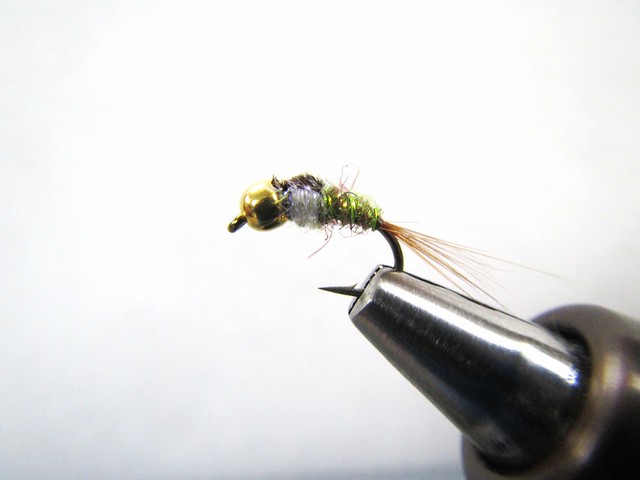
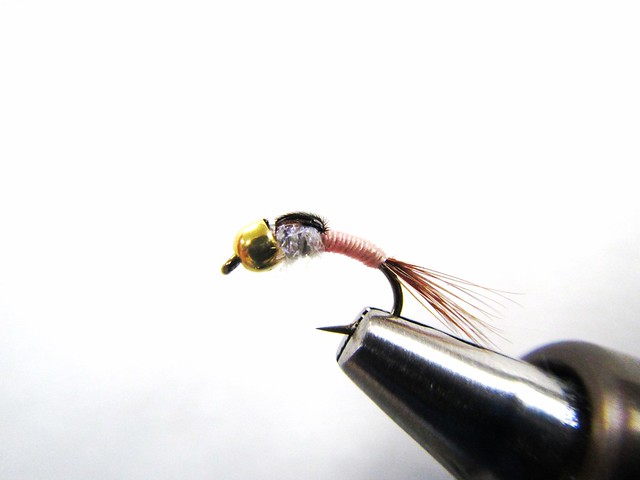
The Tungsten Trout Retriever will help you get down near the bottom in some of the faster runs on the McKenzie, Willamette and Deschutes. It will help drag down a smaller dropper nymph as well.

Flies for the McKenzie

Swung, dead drift or just flopped out in the flow, the Mega Prince just works!

Flies for the McKenzie

“Hall of Famer” Again swing it hang it under a dry, drag it etc.. The Possie Bugger catches fish on 6 of 7 continents.

Flies for the McKenzie

Let’s not forget a classic dry fly. The Parachute Adams in a variety of sizes needs to be in your fly box. With the incredibly low water we are having you might see Green Drakes in April. The Parachute Adams in various sizes will cover you.

Flies for the McKenzie

The Green McKenzie Caddis emergence is developing and should blossom in next weeks heat.  Actively “jig” “twitch” “skitter” this pattern while on the swing and look for smashing takes.

Flies for the McKenzie

The Jigged Prince has been deadly under a dry or with a larger Golden Stone nymph. It’s quick decent and “hook point up” during the drift keep it close to the bottom but not hung up.

Flies for the McKenzie

Our new favorite. A variation on the old faithful Hare’s Ear. Fish it under a Green Caddis or Golden Stone pattern.

Flies for the McKenzie

Another killer nymph to fish either with a larger bug off an indicator or under a dry.

Flies for the McKenzie

Missing Link Caddis fishes well during caddis hatches and is a solid all around dry fly when you have picky fish rising anytime.

Flies for the McKenzie

The Half Down Golden is a great Stonefly dry to hold up the nymphs I mention above. It’s also a winner on the Deschutes during the Stonefly Hatch.

Flies for the McKenzie

The Green McKenzie Caddis or locally know as the McKenzie Special is one of the best flies on the McKenzie and Willamette during the months of April and May.

Posted in Fishing Reports, Lower Willamette, McKenzie River, Middle Fork Willamette River fishing, Oregon Fly Fishing Tips | 3 Comments

Middle Fork of the Willamette River Report April 2015

Middle Fork of the Willamette Fly Fishing

We floated from Greenwaters Park on the East side of the Oakridge township down to Black Canyon campground this past Tuesday. Fishing was fair. Using hopper dropper rigs with Golden Stone adult patterns and HDA Fav Variant Jigged Nymphs we caught fish on the surface and deep. We had success using indicator nymph rigs and caught fish on Golden Stone nymph patterns and Jigged Pheasant Tail nymphs as well.

Middle Fork of the Willamette Fly Fishing

I knew the water would be low but my goodness! Not only is there very little water being released out of Hills Creek Dam (approx 340 CFS) but tributaries like Salt and Salmon Creek are very very low. Overall the flow on the Middle Fork of the Willamette near Oakridge is well below what we might expect in late July.

Middle Fork of the Willamette Fly Fishing

On the plus side wading anglers have innumerable gravel bars to easily access the waters of the Middle Fork and this is not likely to change in the next 4 months. If you want to have a nice walk and wade fishing day give the middle fork a shot.

Here are just a few ideas for anglers looking to wade the middle fork.

1. Park at Black Canyon Campground and start fishing upstream. It’s so low you will easily cross the river to the large island at the upstream end of the campground.

2. Turn hard left after you pass the green metal bridge about 1 mile prior to Oarkridge “Ferrin” boat launch. Fish upstream from this local.

3. From Greenwaters park walk down the true right bank and fish all the water downstream from the conflueence of Salmon Creek.

Middle Fork of the Willamette Fly Fishing

Posted in Fishing Reports, Middle Fork Willamette River fishing | Leave a comment

Return to Malhuer 2015

Mal 1 2015

Headed out to Eastern Oregon this past week with binoculars and my fly rod. My wife and I joined a hearty group of bird watchers for our third year at the Malheur Field Station.

Mal 5 2015

We saw many Sand Hill Cranes this trip. Probably the most we have seen over the past years. This one was an easy picture; he walked across the road in front of our car!

Mal 4 2015

The volume of birds was less than previous years, but we did come much earlier than the past years.

Mal 3 2015

Another issue this year impacting not only the birds, is a severe Eastern Oregon drought. Governor Kate Brown has declared a drought emergency in Malheur and Lake counties due to dry conditions, low snowpack, and lack of precipitation.

Mal 9 2015

From the Governors declaration: “Projected forecasts for Malheur and Lake counties look bleak, meaning these rural communities will continue to experience severe drought conditions,” Governor Brown said. “In addition to creating an increased wildfire risk, this drought presents hardships to crops, agriculture, communities, recreation, and wildlife, all of which rely on Oregon’s water resources. I will continue working with federal, state, and local partners to help Oregonians in this part of the state through this challenging situation.”

Last year, water was very apparent. This year, we had to go looking for water. The only good news, less water equaled more birds in one place.

Mal 7 2015

Even with dry conditions, the great basin serves as a good place to find Golden Eagles. We were very fortunate to have been shown an eagle nest, said to have been used for many, many, years hidden away on a remote cliff side.

Mal 8 2015

Mal 6 2015

From the ODFW Blitzen River report:

” The Blitzen River has been flowing between 90 and 100 cfs with water temperatures around 8oC. Recent precipitation in the Steens Mountain area has caused the river to rise and become slightly murky at times.

Recent reports indicate that fishing around the Page Springs Campground has been productive and fish have been taking dry flies when a mid-day hatch is present. Anglers have also had some success swinging weighted streamers. The Blitzen River around Page Springs is a good year-round trout fishery, offering amazing scenery and the chance to catch redband trout up to 20 inches.

The East Canal, Bridge Creek, main stem Blitzen above Bridge Creek and the Little Blitzen River are open for catch-and-release fishing for trout. Anglers willing to hike/bike the 3 miles into Bridge Creek have reported good success near the lower canyon. The South Loop Road is still closed for the winter (generally opens near the end of April), which limits access to the upper portions of the Blitzen.”

The Blitzen River never got to see my fly rod this trip. But, fishing was not the priority. Family, Friends, Nature, and the good earth are the priority.

LV

Posted in Central Oregon Fishing Report, Eastern Oregon | Leave a comment

McKenzie River Wooden Boat Festival This Saturday

McKenzie-River-Poster-2015

Celebrating the history, the form and the function of the wooden white water boat that was invented here on McKenzie River.

Held on the lawns of Eagle Rock Lodge from 10am until 5pm in the afternoon. View over fifty wooden white water boats designed for the McKenzie River and now used on white water rivers all over the world.

Admission is free. Lunch concessions are on site with proceeds going to the McKenzie River Guides Association.

49198 McKenzie Highway, Milepost 34.5

Posted in McKenzie River, Oregon Fly Fishing Clubs and Events, Oregon fly fishing links | Leave a comment

North Oregon Coast Saltwater Fishing Report April 2015

I’m going to keep this post short, and let the fun featured in the short movie speak for itself. These scenes were shot over a consecutive period of two days by John or Jack Harrell, while they were hosting me in John’s dory Gold comet, launched from the beach into the surf at Pacific City in mid April.

On the first day we had only one popper rod, Jack’s, and he graciously caught one black sea bass and asked if I would like to fish his rod while he filmed. Yes I would thank you very much. I had the good fortune to be on the ocean three days straight, two in Gold Comet and one in Ed and Kevin’s dory (as yet unnamed).

First day saw the bass gorging on crab spawn and a fair number taking the poppers; each crushing take was glorious.

Days two and three saw the bass taking both crab spawn and big anchovies (5-6”) so they were far more receptive to the Popper and Gurgler than when they only had the crab spawn to eat.

Day two was the best of the three with an extended period when John and I hooked roughly two dozen nice black rockfish on Poppers and Gurglers. There was no objective measurable or anecdotal difference in the bass’ receptivity to John’s Popper versus my Gurgler, but I am convinced that my fly is the better of the two (ha ha).

On Day three – Ed, Rob, and I went a little farther north of Haystack Rock (one of several in Oregon) to fish for lingcod after the bass ceased taking poppers and we found lings just over thirty inches willing to take our flies. To be clear, not all the lingcod were in the 30” size class, because several were rather small but still feisty.

Fly rod Lingcod comes to the dory.

Fly rod Lingcod comes to the dory.

At one point during the morning, I was having fun slowly lowering my Clouser down into the water beside the boat and watching black rockfish flash on the fly just as it was going out of sight, perhaps at 8-10 ft deep. One flash was a much larger fish and I felt the heavy pull of a lingcod and saw it do a slow back and forth shake before it spit my hook.

Ed Bowles and Jay Nicholas with fly rod lingcod.

Ed Bowles and Jay Nicholas with fly rod lingcod.

We fished rods in weights from 5 (Poppers) to 10 (lingcod).

Fly lines are crucial in these situations. Very good fly lines to fish Poppers include the RIO Outbound Short Floater; the Airflo Sniper Floater, and the Wulff Ambush floater. A short aggressive front head with slim running line characterizes all of these lines. These lines are great to get the Popper or Gurgler out to the bass with only one or two back casts, so you maximize fishing time.

Leaders? Maxima Ultragreen is a dependable standby. I am a fan of RIO Alloy Hard tippet material because it is super abrasion resistant. The material is stiffer than the Maxima and has a larger diameter for each line class, but I have found it a dependable performer for rockfish and lingcod and it stands up to the abrasive teeth better than any leader in its strength rating. Do NOT use tapered trout leaders for this fishing!. I tried and believe me that a sea bass will cut you off using OX trout leader about as fast as you can say oooops!

At present I’m waiting for the surf to lay down so we can get off the beach and fish again. Meanwhile, there is still a little late winter steelhead and early spring Chinook action in north coast rivers and that is keeping me quite occupied, along with an occasional trip up to the town lake.

I hope you enjoyed the movie, and thanks to Chris for his editing.

John and Jack Harrell of Pacific City Fly Fishing.

John and Jack Harrell of Pacific City Fly Fishing.

John Harrell will be booking charters specializing in fly fishing in the ocean at Pacific City Fly Fishing.


Jay Nicholas
April 2015

Posted in Fishing Reports, Oregon Saltwater Fishing | 2 Comments

40th edition of Catch Magazine online, features Cedar Lodge, Pure New Zealand

If you haven’t checked out Catch Magazine #40, definitely go there now and subscribe. A one year subscription is $12 a year, or $2 an issue. It’s an incredible visual experience and costs less than a handful of trips to the coffee shack. Here’s a trailer for the latest video on Cedar Lodge by Todd Moen.

Also check out Catch Magazine on Instragram @catch_magazine and Facebook.

Posted in Fishing Porn | Leave a comment