Alaska has been an iconic destination for anglers from all over the globe, and for good reason. The opportunities for world class fishing seem to be endless. Saltwater, rivers, lakes, creeks, ponds, trout, char, grayling, sheefish, pike, salmon, steelhead, halibut, lingcod, rockfish…. Whether you fish conventionally or with a fly it’s hard to pick your pursuit. Personally, I’m a dedicated stillwater angler. My first trip to Alaska was in 2018 with my wife, our float tubes, a rental car and a list of lakes to check off while we looked at properties for sale on the Kenai peninsula. I’ll certainly be back to Alaska for a similar trip due to its logistical ease, price point, accessibility, and excellent stillwater fishing, but this year I stepped up the adventure aspect with a remote backcountry DIY wilderness float through Papa Bear Adventures in Bethel.
This trip has been on my radar for over a decade. Dreaming of fishing the Alaska backcountry and seeing some of the most remote wilderness in the union has an allure that can consume you. When I first started dreaming of this trip I wanted to share it with my father. My dad is responsible for my current fishing addiction. I started at a young age fishing with him and my grandfather whenever possible and they created a monster; in a good way of course! Like everything in life, things get increasingly expensive over the years. Add not getting any younger to the equation, and we just decided it’s time to make this thing happen. I selected a group of close friends and family to invite, mulled over our options and the five of us were set to have the adventure of a lifetime in July on the Arolik river in remote Alaska. We chose the Arolik because it was a less popular river from the given options. Being a smaller, more intimate river came with its own set of challenges. My goal in this post is to help take some of the guesswork out of planning a trip of this magnitude, give you some useful tips, and of course stoke the fire in you and inspire you to get out there and make your own dreams come to fruition.
We were set to land in Bethel in the afternoon of our arrival. Papa Bear Adventures would pick us up, do some grocery shopping, we would lodge with PBA for the night, and fly out after breakfast the next morning. It was nice to be able to do our own shopping, but PPA does has a service where you can just fill out a form/list and they will do the shopping for you. It is super convenient and I recommend you use that service, as your food will be ready to go when you get there. Aside from convenience, if you get to Bethel early enough and the weather is clear the owner will give you the option of being dropped at your river the same day and I recommend you take advantage of that if you can. The weather is very unpredictable all year in this part of the world. What are good flying conditions today, might be the only shot you get for the foreseeable future. We learned this lesson on day two when the owner told us conditions weren’t good to fly and we waited, and waited, and as the time went by, we got anxious. So, here’s another tip: stay prepared and be flexible. The elements can foil any plans in Alaska and if you can, add an extra day or two into your schedule in case inclement weather pushes your flights out.

We waited for what seemed like forever, and I even started contemplating putting together a rod and commandeering a raft so I could fish the small lake PBA resides on. Then at the end of the day the owner found us and told us to suit up, and we were leaving immediately before it’s too late. A small spike of adrenaline hit our veins as we scrambled to get our waders on and figure out our seating arrangement. It was happening. We were going into the most remote wilderness any of us had been to, and despite the wait throughout the day, it seemed to happen quick.
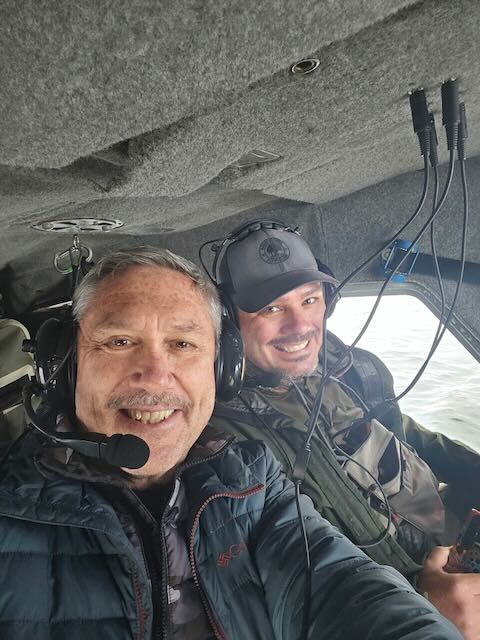
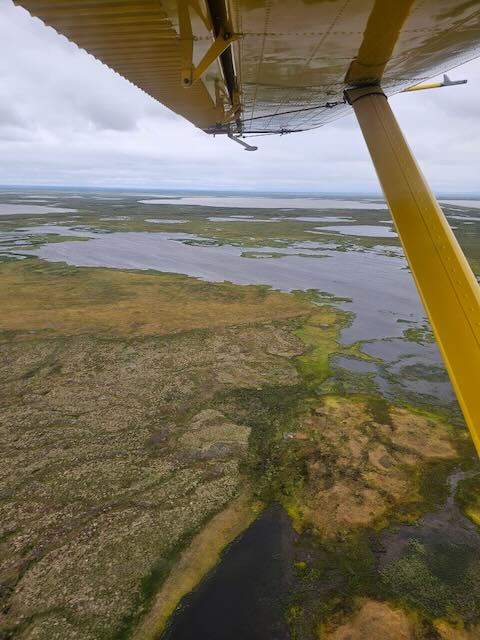
I’d never been on a float plane before; as crude as the planes seem, I was very comfortable and takeoff was smooth. As the plane lifted off the lake, our journey began and I immediately went into adventure mode. We started over the tundra. Our pilot, a cool young guy from Bend, started pointing out the moose that frequently cruise certain spots out of town. Then a little while into the flight we spotted caribou. “Let’s check him out!” our pilot said over the radio. He banked the plane around to get a couple looks at the lone Caribou, and we were off. These planes aren’t instrument rated, so the pilots fly from sight. They generally only fly a few hundred feet in the air, so you get a good look at the landscape, and it was beautiful. We flew across the tundra until we found the Arolik. Then the pilot turned up the drainage, and we followed the river for some time. From the air it seemed untouched. I spoke up over the comms, “Those fish have no idea what’s about to hit em!” we we’re only the third group they had on the river, so the pressure these fish had was nothing compared to back home.

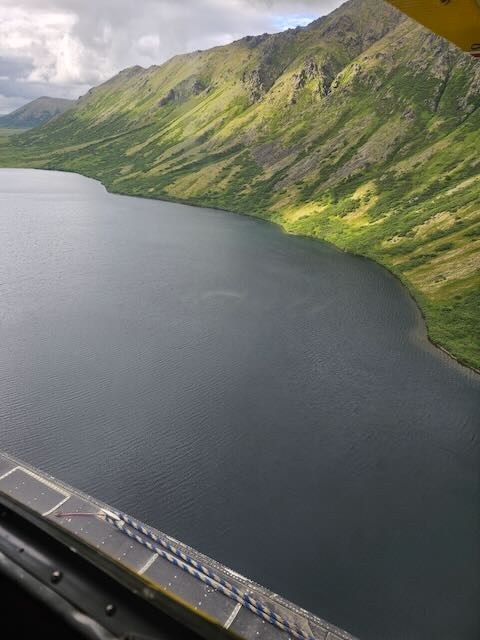
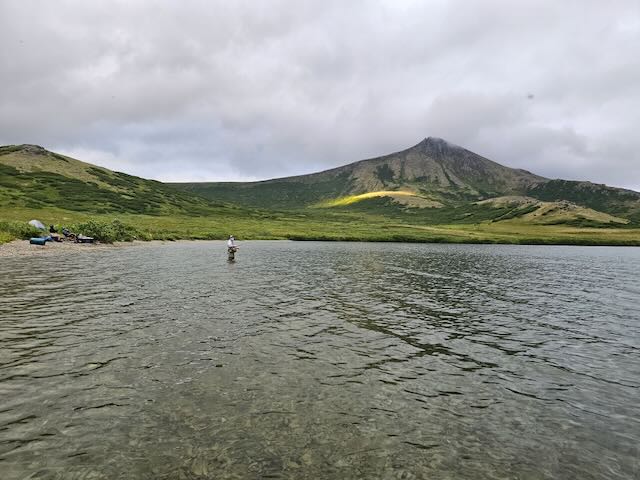
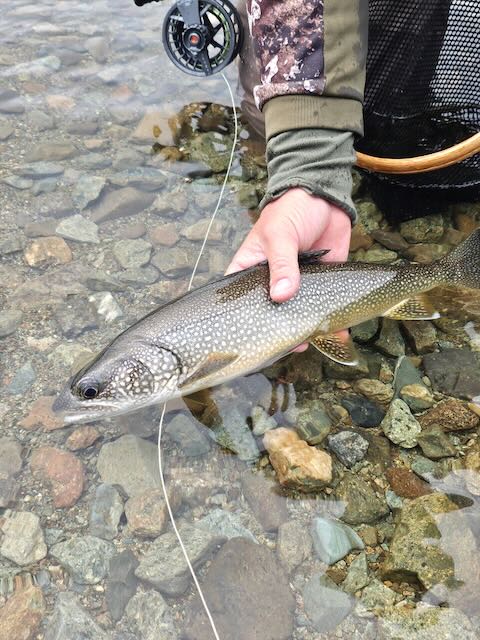
The pilot made his way to the head waters, Arolik lake. It’s big, and we flew all the way around the lake. We spotted two Grizzlies chasing salmon around the creeks that emptied out of the opposite end we were set to camp on. “If those are the only two bears I see this whole trip, I’ll be just fine with it.” I chuckled over the comms. The pilot set that plane down smoother than a mallard on a flat pond, and we throttled back as we approached shore. After the pilot anchored the plane on shore we popped out and started off loading gear. The pilot pushed off, throttled down and he tipped his wings to us as he headed back to civilization. We were all alone in remote Alaska! There was only a couple of hours of solid light left in the day, and we just focused on getting the rafts set up and making camp. Being the stillwater junky that I am, I had to see if we could catch something out of the lake. Of course camp could wait, so I rigged up a rod and got after it. It didn’t take long to work up a couple lake trout from shore. I was stoked; my first fish of the trip was a species I had never caught before. I was off to a good start. We made a quick dinner of sandwiches and got things ready for morning. More weather blew in, and my little tent rattled in the wind all night.
The first day of the float was rough. The first ten miles before the main confluence is notoriously skinny water. There is a lot of getting out and dragging the boat. We were told that it gets worse as the season goes on, but it was boney by the time we got there. Another tip: If you aren’t in good shape, I’d consider a float less physical. I would also advise leaving the rods in the tube and waiting until after the confluence to fish. There is some fishing in this stretch, but it’s probably best to wait. The river is still beautiful, meandering through a few different types of topography. We immediately began to see schools of sockeye salmon. The schools seemed to part as the boat floated by. We even had a caribou that followed us downriver for a mile or so. He seemed to be curious of our presence. Even though the first ten miles was a rough go, the adventure was full throttle. We hit the confluence towards the end of the day and we were stoked. The fishing picked up a tick, and we decided on a camp for the night.
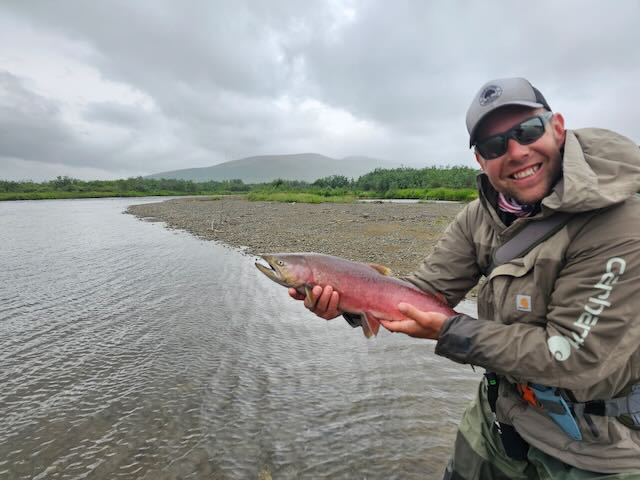
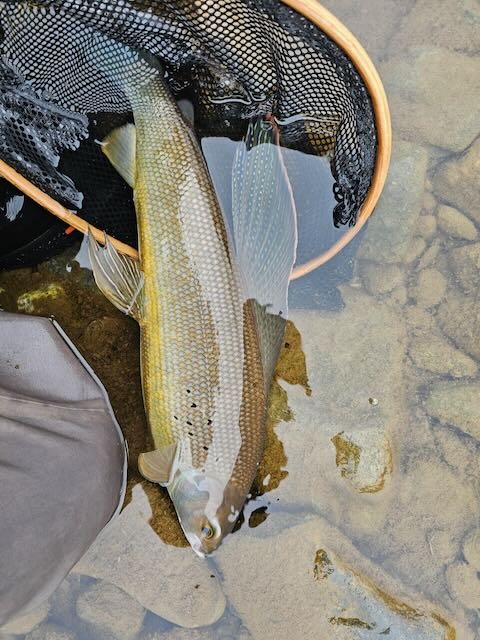
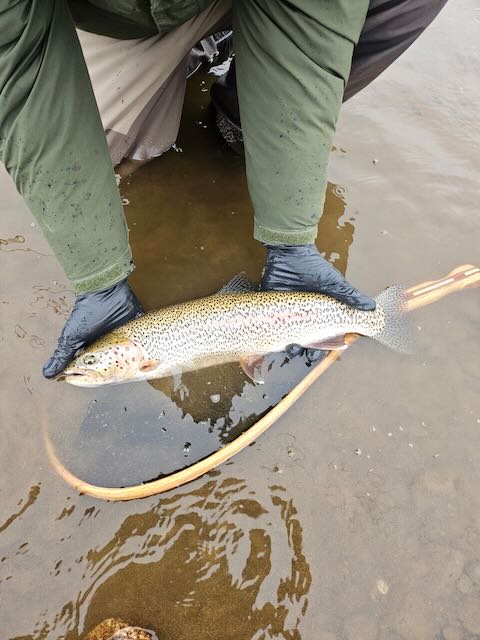
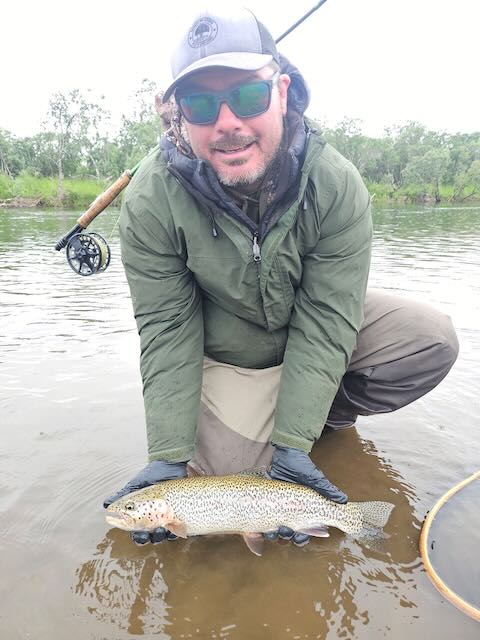
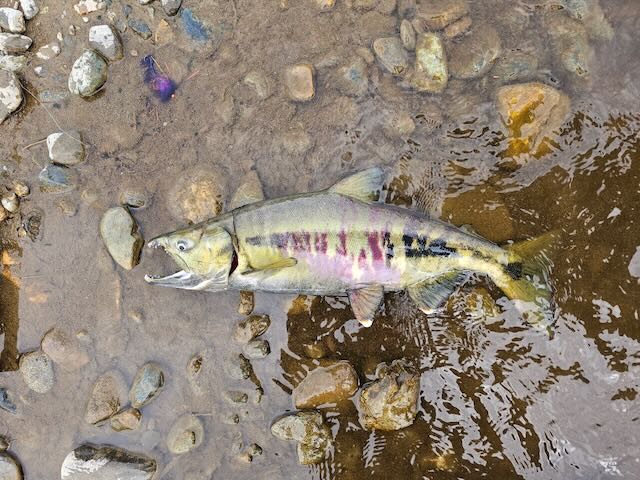
Over the course of the next few days, the fishing really picked up. Our group had two boats, and we caught fish as we floated. When we would see a big gravel bar the five of us could spread out on, we hopped out and fished. It was ridiculously good most of the time in the middle section of the Arolik. We were catching king salmon, rainbows, coho, grayling, chum salmon, a few sockeye, and more char than you could shake a magic bug wand (fly rod) at. I had waited so long for this trip, and I couldn’t believe it was happening. Sharing it with friends and family made it perfect. It was the ultimate form of adventure and not knowing what was around the next bend was exhilarating.
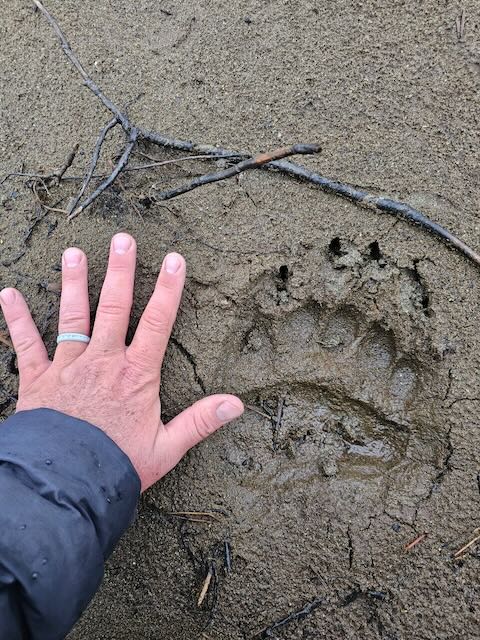
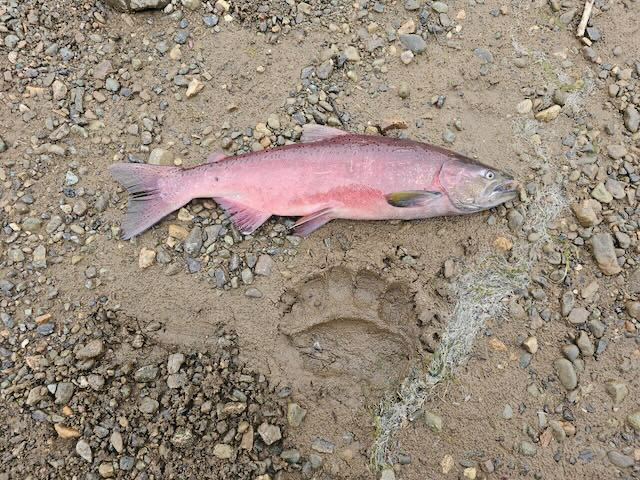
Every gravel bar we stopped at, I mean EVERY gravel bar, had grizzly tracks on it. We got somewhat lucky that we never had an encounter, but they had a presence everywhere. Another tip: have whatever form of protection you choose within arm’s reach. Even bear spray is prone to accidental discharge. My friend’s dad was fishing in the adjacent raft and accidentally knocked off the safety clip; he gave himself a small shot of bear spray. Luckily, he only got the overspray and didn’t take a direct shot. He took it like a champ! Things were intense as we tried helping him relieve the pain. Once the situation was under control, the jokes started rolling and we were back to business as usual, laughing and looking for the next fishing spot. I’m not one to be “bearanoid” in the woods. I’ve done a lot of backpacking in my day including the Bob Marshall wilderness of Montana which is home to plenty of Grizzlies. I just accept it and try not to let it take up head space. I slept fine in camp.
The old men in camp snore so bad that I told them I’d take my chances with the bears and set my tent up isolated well away from them. I STILL heard them snoring on occasion. Those bears are on the forefront of most people’s minds when going to Alaska but let me tell you, it’s the mosquitoes that draw first blood out there. To put it simply, they will black out the sun. That brings me to another tip: whatever you do, when you make your gear rental list through PBA, rent the screen tent for your trip. Between your sleeping tent and the screen tent they are your only refuge from the bugs while in camp. The screen tent also sheds rain well. Head nets are another easy choice, but I was smart enough to bring a couple pairs of thick mechanic nitrile style gloves to keep them off my hands too. Between screen tent, sleeping tent, head nets, gloves, rain jacket or long sleeves, pants or waders, you might escape the little vampires and not need a blood transfusion by the end of the trip. Back to the fishing.
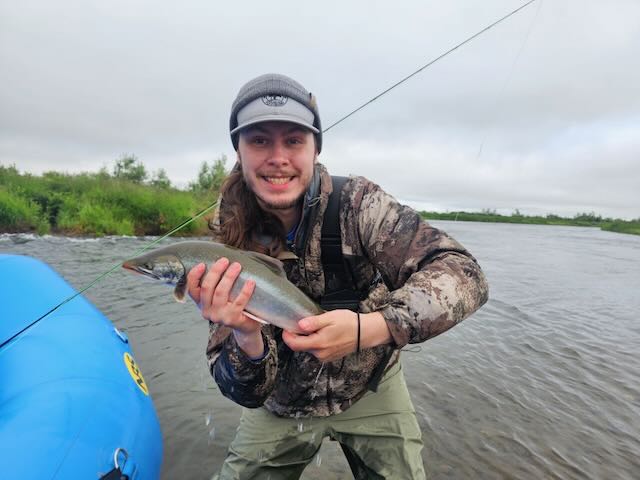
Gear choice can be tricky. I wanted a rod that would be fun for the average trout and char, but I also wanted to be prepared for salmon. I had never fished for salmon on the fly before. I build rods, and I have plenty of them. As a stillwater angler, I fish 10’ rods exclusively. I settled on a 10’ 5wt, 10’ 6wt, and a 10’ 7wt in case we got into a lot of salmon. The 10’ rods might have been too long in the upper section, but they served me well in the middle and lower river. I paired them with Scientific Anglers Anadro Indicator Lines, Rio Xtreme Indicator Lines, Rio Outbound Short Lines, and even brought a spool with a OPST Skagit head setup for swinging flies on sink tips. I was actually surprised at how versatile the Outbound Short was. The line seemed to be able to fish everything well. It even handled skagit style casts and swinging smaller weighted streamers on a longer leader. It didn’t seem like it was overkill for indicator fishing either. I run that line on my guided stillwater trips when I’m indicator fishing using longer leaders and balanced leeches with clients and it performs well.

As far as flies go, you could fish a bead under an indicator from beginning to end and catch an absolute pile of fish. While it was deadly effective, I’m not a fan. Due to the nature of the way a bead fishes, you end up hooking fish all over their face. That put me off and next time I’ll be tying and fishing egg patterns on jigged hooks to get a clean purchase in the roof of the mouth. I love jigged hooks as you rarely damage the maxillary. Other effective patterns were egg sucking leeches, sculpin patterns, squirrel leeches, dolly llama, and graboid leeches. I fished a mouse pattern on occasion and got some blow ups, but I didn’t land any fish. Leaders ending in 3x for trout and 0x for salmon were sufficient (although I did have a king salmon break my heaviest tippet).
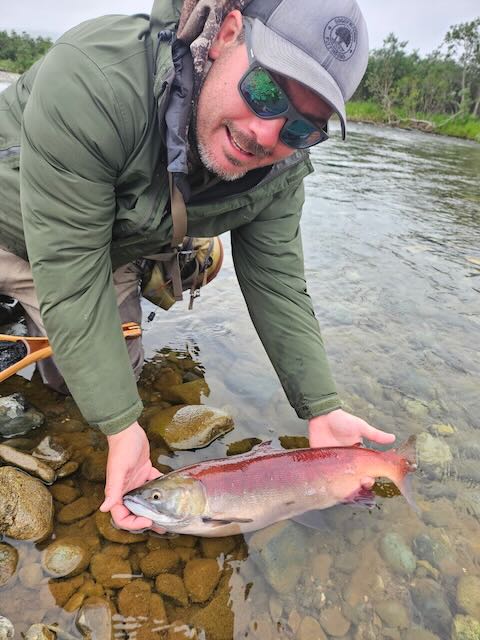
The fishing was straight forward. As mentioned above, a bead under an indicator was king. The one thing that surprised me was how shallow the fish were holding in the river. Most fish were caught on the edges in 1-2 feet of water. Most of the fish caught mid river were salmon with the occasional trout, grayling, or char. Swinging flies is my favorite way to fish the river; although it wasn’t as effective as the bead, it still accounted for plenty of fish. Don’t overthink fly patterns. Part of the excitement of getting prepared for any trip is loading a fly box, but it is easy to overthink it.

The river can be divided into three sections. Upper, middle, and lower. The upper section generally doesn’t fish well until after the confluence. The middle section is lights out. The beginning of the lower section fishes well, and the bottom of the lower section becomes tidewater. You’ll notice the riffles give way to a deep river with a slick surface; the fishing slows substantially. I can see it potentially fishing well for salmon, but our trip was focused on trout, char, and grayling. That brings us to another tip: focus your efforts on the middle portion of the river. It might be a good thing to stay two nights in one camp if you end up on a gravel bar worth staying on. We noticed an uptick of King Salmon, Chum Salmon, and a few Coho in the middle section. It seemed like everything was happening in the middle section. Downloading maps on an app like OnX Hunt is super helpful in determining where you’ll end up staying and keeping track of your progress. It is also fantastic for finding potential gravel bars to fish while out of cell service.
We floated the Arolik for 9 days; it could have easily been done in 7 or less. That being said, I wouldn’t change a thing. I think we had one day of sunshine. We basically lived in our waders and rain gear. It was so wet and dank that it was difficult getting a fire going most of the time. Another tip: the second to last day of your float you’ll end up in or near tidewater. You should find the highest elevation to set your camp up on, even upriver. Enough rain or tide flux can raise the river enough to flood camp, so keep that in mind. Always drag your raft ashore and tie it off. We woke up to our raft floating one morning and the only reason we didn’t lose it was the fact that it was tied off to a willow.
While I was getting prepared for this trip I spoke with some of the guys at The Caddis Fly, who are well versed in Alaska fly fishing. They have everything you need to get set up. A couple of them had even floated the Arolik in their day. They were kind enough to share some stories about their trip, helping elevate my stoke factor even more. Papa Bear Adventures is super helpful with any questions you might have for the trip, but I would lean on the fly shop for any fishing intel and supplies.
Alaska has adventure you can’t experience anywhere else in the lower 48. We are truly blessed to have it as part of the union. I’m already plotting my next back country trip with PBA. I hope this article helps you lock in a date and pull the trigger on the trip you’ve been dreaming of regardless of where it is. Don’t let another year pass by if you can help it. But be careful, it’s a slippery slope….
Adison Rook is a stillwater focused fly fishing guide in the Willamette Valley. Contact Caddis Fly Shop or visit the oregonflyfishingblog.com for details on his trips. Follow him on Instagram @soggy.waders