Rio Palena Lodge Chile – Trip Report

Screen Shot 2020-03-05 at 6.14.46 PM

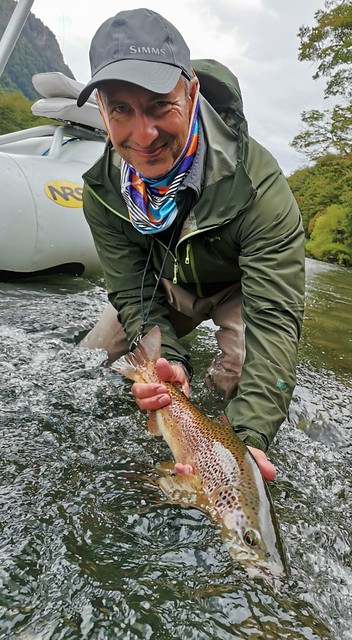
My family and I and five friends had the pleasure of visiting Rio Palena Lodge in Chile this past February. Rio Palena Lodge is one of several properties owned by Eleven Experience. We had a great time fishing the numerous waters near the lodge and enjoying the incredibly well appointed property.

PHOTO-2020-02-19-16-35-39 2

IMG_0186

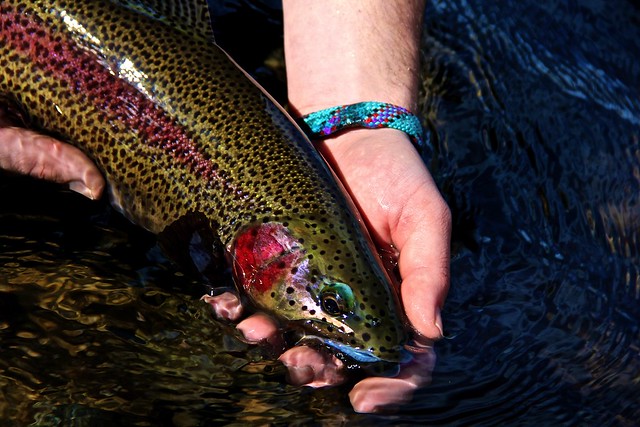
The varied waters of Chilean Patagonia contain rainbow, brown and brook trout amidst stunning scenery. Rio Palena has the resources to get anglers to the best waters. Deluxe NRS Rafts, Hyde Power Drifters, a Helicopter, 9 Toyota Hilux trucks, and 2 Mercedes Sprinters. Our group experienced all of the “travel to options” and all of the “fish to” options. The staff and the efficiencies of getting anglers to the water were fantastic. Anglers were often transported to boats in the water ready to go. When the day was done we went back to the lodge in a van while the boats, shuttles and gear were sorted out behind the scenes. I felt this maximized fishing time and relaxing at the lodge time.

IMG_0145

We caught some of our best fish in Lago Yelcho. Rio Palena Lodge has unique access to the lower Futaleufu River and then into the lake.

IMG_0131

PHOTO-2020-02-17-17-28-02 3

IMG_0192

The Lodge is on the Palena River which offers several “floatable” beats all season.

IMG_0279

IMG_0282

PHOTO-2020-02-16-13-15-05 3

PHOTO-2020-02-28-06-36-39 2

Utilizing a helicopter anglers can visit lakes with boats and smaller waters in the area. We had a fantastic combo day were we visited Palena Lake and a small stream loaded with Brook Trout.

PHOTO-2020-02-28-06-36-51

PHOTO-2020-02-28-06-36-38

The lodge facility is absolutely stunning and is no expense has been spared in making the rooms, fireplaces, bars, hot tubs, sauna, steam showers, music system, outdoor dinning areas and more, very enjoyable.

One of the coolest design features of the lodge (and there are many) was the “fishing locker room”. Anglers are assigned a wooden “locker” in a beautiful open room in the basement of the lodge. In the locker are your boots, waders, life jacket, rain jacket, water bottle, sun screen etc.. You are able to keep all your fishing gear in your locker so it’s ready each day. No need to deal with wet gear in your room. A boot drier is in each locker, the room is dry enough that by morning all of your gear was dry for the next day. In addition to all your gear the locker room has a coffee maker, mini fridge, music system, snacks and restroom.

IMG_0075

IMG_0484

IMG_0478

IMG_0487

IMG_0483

IMG_0485

On our final night at the lodge the staff and local gauchos put on an Asado ( South American BBQ). A short walk from the main lodge is a delightful outdoor dining area that has a stand alone bar, picnic tables, performance stage, BBQ pit, earthen empanada oven, grilling area, and dining enclosure. The food was excellent and the evening finished with karaoke, good times were had by all.

IMG_0409

PHOTO-2020-02-28-06-36-39

IMG_0418

d83d84ba-94b1-4c6a-b71a-dad9e9afe17a

81b72f32-d90c-4229-a9fa-5d094c62e71b

For information on booking Rio Palena Lodge call 541 342 7005 or email me at caddiseug@yahoo.com

CD

Posted in Fishing Porn, Fishing Reports, Fly Fishing Travel | Leave a comment

Parallel Perch Fly Tying Video – Rob Hrabik

In this video, Rob Hrabik of Yosemite Outfitters ties a variation of Tom Loe’s Parallel Punk Perch.

A highly efficient fly anywhere trout live, Rob fishes this fly under an indicator, on the strip, as a streamer, and as a Euro nymph point fly. With a “balanced” fly you are less likely to snag bottom, but increase hook sets. Tom Loe once said balanced patterns were, “the most significant improvement in fly design in over a decade.”

Follow along as Rob shows you how to rig the bead and create amazing dubbing loops with simple materials such as Ice Dub and Simi Seal.

DSC_0125

Parallel Perch
Hook: Daiichi 4640 Size 14
Pin: Sewing/Upholstery Pin Size 17
Bead: Tungsten Black Nickel 3/32″
Thread: Uni 6/0 Tan
Tail: Ginger Maribou
Pearl Krystal Flash
Body: UV Pearl Ice Dubbing
Grey/Olive Simi Seal Dubbing
Wax
Collar: Red UTC 70D
Glue: Zap A Gap

Posted in Fly Tying, Fly Tying Materials and Supplies | Leave a comment

Yakoda Supply Drifter Gear Transport Bag

In this video, Chris discusses the new Drifter Gear Transport Bag by Yakoda Supply.

yakoda-supply-drifter-gear-transport-10

Yakoda Supply Drifter Gear Transport Bag

Posted in Fly Fishing Gear Review | Leave a comment

Yakoda Supply Utility Pouch

In this video, Chris Daughters reviews Yakoda Supplies new Utility Pouch. Made in the USA.

DSC_0013

Yakoda Supply Utility Pouch

Posted in Fly Fishing Gear Review | Leave a comment

Yakoda Supply Fly Tins

In this video, Chris introduces Yakoda Supply Fly Tins.

Two different styles with or without tweezers. Made in the USA.

DSC_0010

Yakoda Supply Fly Tin with Tweezer
Yakoda Supply Fly Tin

Posted in Fly Fishing Gear Review | Leave a comment

Early Spring Mckenzie Fishing Report

IMG_2672

My girlfriend and I decided to play hooky from work on Thursday (thanks, Greg) on the first over 60° day of the year. We fished the upper Mckenzie from Blue River to Silver Creek.

IMG_4063 copy

Most of the fish we caught were on nymphs, fishing the dark green water; drop-offs, shelves, and deep pools. I fished a mega prince and possie bugger combination in the #6-10 range, 7-8’ under the bobber most of the day, which is a sure fire way to hook some fish.

IMG_4025 copy

A minor blue wing olive and small caddis hatch started to materialize around 2 o’clock with sporadic march browns coming off as well. There were a few fish coming to the surface, falling prey to our smaller BWO offerings. We caught plenty of beautiful redsides with whiteys also being abundant…

IMG_4068 copy

Essential flies to have in your box for the next few weeks will include:

Parachute Western March Brown

March Brown Spider

Tilt Wing BWO

Jigged 20 Incher

The river is lower than usual for this time of year, which creates great early season fishing. Weather this upcoming week will improve insect activity with slightly warmer nights and overcast days. Time to get out there!


Justin Helm

Posted in Fishing Reports, McKenzie River, Oregon Fly Fishing Tips | 6 Comments

Spring Guide Special March 2020

mckenzie river rainbow trout caddis fly shop

Each Spring we are reminded of how fortunate we are to have the Lower McKenzie and Willamette rivers within such close proximity to the Eugene area. When conditions align, there is potential for exceptional trout fishing.

Current water conditions and weather are ideal to get out for an early look at the lower McKenzie and Willamette rivers. Let’s hope this continues through the spring. Our spring guide special will continue through the end of March.

If you would like to experience what the Lower River has to offer in Spring, take advantage of our half day special. The special includes 5-6 hours of fishing, and all tackle is provided. Anglers need only to bring lunch and beverages. The price for this “best part of the day half day” is $375 for one or two anglers.

One of the great things about this early season excursion is the varied tactics you will experience with one of our guides. Indicator nymphing, euro nymphing, swinging and dry fly fishing can all be done in the span of a few hours. It’s a really cool time of year.

Call the shop for a reservation. 541 342 7005

Posted in Lower Willamette, McKenzie River, Oregon Weekend Fishing Forecast, Shop Sales and Specials | Leave a comment

Reminder – The Orvis “50/50 on the Water” Film Tour – March 3rd 2020

When: Tuesday, March 3, 2020 at 7 PM – 9 PM

Where: WildCraft Cider Works 232 Lincoln St, Eugene, Oregon 97401

Come and be inspired to get out on the water: The Orvis “50/50 on the Water” Film Tour features 12 fly-fishing films by and about female anglers! You’ll leave the event inspired and energized by the 90+ minutes of storytelling, which highlights anglers and fisheries from around the world. The 50/50 on the Water campaign aims to inspire more women to get out on the water and discover the joys of fly-fishing. By breaking down some of the barriers that keep women from enjoying time on the stream, we can add new perspectives and bring new voices into the sport. And if we are going to protect what we love through conservation efforts, the more voices the better.

In celebration of International Women’s Day, this event is sponsored by The Caddis Fly Angling Shop in partnership with McKenzie River Trust, REI, and Wildcraft Cider Works.

Register for this free event here: “50/50 on the water”

You can also register here: 50/50 Facebook

Sliding scale donations accepted at the door.

Posted in Fishing Porn, Fly Fishing Travel, Oregon Fly Fishing Clubs and Events, Oregon fly fishing links | Leave a comment

2020 NW Fly Tyer & Fly Fishing Expo – March 13 & 14, Albany Oregon

When: March 13th & 14th | 9:00am – 5:00pm

Where: Linn County Expo Center, Albany Oregon
Admission: $10 | FFI Members and Youth 18 & Under: FREE|
Veteran admission is $5.00 This year. Parking is free

Website: http://nwexpo.com

The EXPO is on Instagram!

WE are looking forward to a very nice show here in 2020, with an opportunity to re-connect with old friends, make new friends, learn from the collective knowledge of hundreds of fly tyers, and get some great deals on gear and materials.

expo 1

Friday Evening Banquet prices and details (get on ’em soon!)
Fly Tying exhibitions
Fly tying classes
Youth Fly Fishing Workshop
Fishing classes
Casting Games
New Casting classes events
raffles and Auctions
Vendor Booths
Author Signing Booth

The Northwest Fly Tyer & Fly Fishing Expo is the largest show devoted entirely to fly-fishing.   Come to the Expo and be part of the crowd of fly tyers and fly fishers building their knowledge and seeing old friends.

The tyer schedule has been posted.  The schedule allows you to search for your favorite tyer to see when they are tying.  Tyers can also be sorted by named and table that they are tying at – https://nwexpo.com/wp/tyers/.  This year includes 4 Buz Buszek Fly Tying Award Winners, 15 Stan Walters Memorial “Tyer of the Year” award winners and many other great tyers. Check out the featured tyers here – https://nwexpo.com/wp/featured-tyers/.

Learn from 200 fly tyers

There will be 72 tyers tying at anytime across three time slots each day.  Attendees will be able to watch tyers tie a variety of styles including trout, steelhead, realistic, and Atlantic salmon flies.  Some of the best fly tyers in the world attend the show and volunteer to demonstrate their skills.  For a schedule of tyers visit – http://nwexpo.com/tyers.php.

20160311-CX4A1867

Explore over 50 exhibitors

There are range of exhibitors each year the Expo.  These include book publishers, fly tying shops, rod and reel manufactures, and artists.  There is a casting pond where you can try out different rods while you are at the show.  Many of the exhibitors have show deals that are only available during the show.

OLYMPUS DIGITAL CAMERA

Daily casting demonstrations

Learn from some of the best fly casters demonstrating their skills.  A schedule will be posted during the expo and everyone is welcome to watch the demonstrations.

OLYMPUS DIGITAL CAMERA

Fly tying, fly fishing, and casting classes

If you want a more hands-on approach to learning check out the classes being offered.  The fly tying classes let you follow along with the instructor as you tie a fly(s).  You can explore different styles and materials.  The fly fishing classes will introduce you to new techniques and locations.  The casting classes are a great opportunity to get 1 on 1 instruction.

Friday March 13 Class Schedule

SaturdayMarch 14 Class Schedule

You can click on the class and reserve your spot.  Sign-up quickly because classes have limited admission.

To Donate Auction/Raffle Items or learn more about this event, visit our web site https://nwexpo.com/wp/ or contact 2020 Expo Chair: Sherry Steele Email: steelefly@msn.com ; 541-549-2072


expo2

Volunteer to help out for a short shift and get in the expo free plus receive a packet of “stuff”,Badge, 2 Beverage Tickets for the food court, Expo Pin, and 4 Raffle Tickets. Visit our web site to sign up https://nwexpo.com/wp/volunteer-sign-up/  This is a 30.00 value.

This is going to be a very fine gathering in 2020, and everyone involved in organizing these event has made a commitment of their time and energy to support our craft, hoping to pass the collective knowledge and skills of thousands of years experience on to those who follow. YouTube is a wonderful new toy and a legitimate means of learning. But there is something magic that happens at theEXPO and similar events were people gather and exchange ideas face to face.

Thank you for considering attending tis event in 2020 – we hope to see you at the EXPO.

20160311-CX4A1728 (1)

OLYMPUS DIGITAL CAMERA

20160311-CX4A1862


OLYMPUS DIGITAL CAMERA

Posted in Fly Tying, Fly Tying Materials and Supplies, NW Fly Tyer & Fly Fishing Expo, Oregon Fly Fishing Clubs and Events | Leave a comment

Tube Fly Mandrels & Shank Adapters

In this video, Jay Nicholas discusses different tube fly mandrels and shank adapters from Pro Sportfisher, HMH, Stonfo, and OPST.

Pro Sportfisher Flexineedle
HMH Mandrel
Stonfo Mandrel
HMH Shank & Tube Adapter
OPST Shank Chuck Tool

Posted in Fly Tying, Fly Tying Materials and Supplies | Leave a comment

Deep Dive into Bucktail – Q+A with Jay Nicholas

nb

Question:

Hey Guys… starting to tie bait fish flies using the buck tails I bought from you awhile back. I have noticed that most of the hairs towards the bottom are curved; is there a way to remove the curve so they are straight as the ones near the tip?

Jay’s Answer

If you are asking how to remove the natural “kinkyness” that occurs in some bucktail – I am referring to the individual hairs being wavy or crinkly – I have no useful advice. All deer have tail hair that exhibits different amount of curliness depending on the individual deer. This is true with human hair – some people have hair that is absolutely straight and limp while others have hair that is straight and thick and some have hair that is wavy and some have hair that exhibits tightly wavy or curly hair.

This bucktail  has been commercially dyed and packaged. Then I soaked it in soapy water with fabric softener and let it dry to allow the hair and the tail dry in it's natural shape. NOTE PLEASE: This hair is naturally curly, and no amount of soaking will remove the curl from this hair.

This bucktail has been commercially dyed and packaged. Then I soaked it in soapy water with fabric softener and let it dry to allow the hair and the tail dry in it’s natural shape.
NOTE PLEASE: This hair is naturally curly, and no amount of soaking will remove the curl from this hair.

If you look closely at this photo, you will see, i hope, that the hair on this bucktail is rather straight when compared to the brown hair on the tail above. the relative amount of straight and curve, like the character of hair length, thickness, and so forth, is a matter of differences between individual deer.

If you look closely at this photo, you will see, i hope, that the hair on this bucktail is rather straight when compared to the brown hair on the tail above. the relative amount of straight and curve, like the character of hair length, thickness, and so forth, is a matter of differences between individual deer.

If I look at a hundred bucktails that have all been washed and rinsed and dyed, I will see tails with hair that ranges from very straight to very kinky or crinkly. I my opinion, the proposition of taking the curliness out of bucktail hair that has already been washed and dried on a flat surface is pointless. I do not know of any means of doing this. It might be possible to take a bucktail to a hair salon and ask to have the hair straightened, and it might be possible at the cost of several hundred dollars – if you could find a stylist who would work with the stink and grossness of the tail hide on un-tanned tails.

Now if on the other hand you are asking about how to get the curve out of tails that have been smushed into packages in such a manner that the hair has an “un-natural” wave to it, well, I can help here and my remedy goes also for bucktail flies that have been put away wet or stuffed into a box that caused the hair to dry in a curved shape.

The solution here is to throw the tail or the flies into a tub of warm soapy water. The soap is intended to remove some of the grease that is present in un-dyed tails. Dyed tails will be less affected by the soap because they have been soaked on a formalin solution prior to dying (most likely). The formalin removes grease and helps the hair accept the dye. Using soap with a dyed tail will probably remove excess dye (if any) and won’t hurt the process.

Let the tail soak for at least a half hour. Flies that started out straight and ended up with curved hair don’t need as much time in the bath, maybe 10-15 minutes. This is not science, it is just a matter of allowing the hairs to soak up wome water and this in turn will allow the hair to return to its original confirmation/shape. So this will not remove kinky hair but it will allow “bent” or artificially “curved” hair to return to its natural shape.

If you have been soaking “raw” un-dyed bucktails you will need multiple rinses and soakings, because you might (or might not) find considerable dirt and grease that needs to be washed and thoroughly rinsed out.

Here are some white bucktails that I threw in the wash basin with laundry soap. I wll let these soak and stir these around as much as required to get any dirt and dust out of them, then rinse several times.

Here are some white bucktails that I threw in the wash basin with laundry soap. I wll let these soak and stir these around as much as required to get any dirt and dust out of them, then rinse several times.

Now after a final rise in clear water (cold or warm) it is time to lay the tails or flies out on newspaper or cardboard in the sun to dry in the natural shape of the hair. You can press tails or flies in paper towel if you wish but make sure you wave the tail or fly in the air to let the hair fibers separate and begin the drying process.

These colorful bucktails are drying in my garage on an old towell. The hides were twisted but after soaking I was able to "straighten" the hide to make trimming hair off the hide a more orderly task. These tails need to be turned over several times and the towells replaced to make sure the tails are completely dry. Yes a hair dryer helps but make sure you have permission to use it first and don't let the hair dryer get stinky from unwashed bucktails.

These colorful bucktails are drying in my garage on an old towell. The hides were twisted but after soaking I was able to “straighten” the hide to make trimming hair off the hide a more orderly task. These tails need to be turned over several times and the towells replaced to make sure the tails are completely dry. Yes a hair dryer helps but make sure you have permission to use it first and don’t let the hair dryer get stinky from unwashed bucktails.

You can speed the drying process with a hair dryer and it is important that you allow the deer hide to COMPLETELY dry before you put the tail away; a damp hide will mold and you should make sure that the tail really really really dries before you turn your attention to other matters. No, you don’t here to watch the tail minute by minute until it dries (could be several days or more) but keep returning to see if it is dry before putting it away.

I have had 100% success removing “un-natural” curve from bucktails and flies in the manner described here. For treating the flies only, you might find success holding the fly (carefully) in the steam over a tea-kettle. The steam will allow hair and feathers to return to their original shape, and will make many grungy flies look nearly fresh and new again, unless of course they are gummed up with dirt or fish slime, and in that case you need to give the flies a soapy bath as previously described, with as many rinses as are needed to get the grunge out.

Question:

Thanks Jay… I appreciate you taking the time to help me out, and I think that will solve my problem of the tails being curved; and while I’ve got your attention… I’m tying the “Bucktail Baitfish” created by Martin Bawden, who I imagine you are familiar with. I notice that when I tie in the buck tail, that it’s very sparse at the tip, nothing like his images. Can I use a hair stacker to line up the tips so it looks better?

BTW, I have watched many of your tying videos on the Caddis website… well done!

Jay’s Answer

So here is the issue with your dilemma. If you look at the hair on individual tails, you will see that some have individual hair fibers that are quite substantial all the way from the base to the very tip of the fiber. Other tails will have individual hair fibers that are very slender or may start out substantial at the base of the hair but become progressively slender toward the tip – and some fibers are super slender at the tips or you might find bucktail with many broken tips.

You can do some tidying-up by stacking your hair, although stacking bucktail is not an easy matter.

I suspect that you are faced with a dilemma common to all of us who watch youtube fly tying videos. Many of the tutorials show competent tyers using PERFECT materials. I try to avoid doing this myself — I have seen people tying with the MOST PERFECT bucktails, deer body hair, saddle hackles, marabou, ostrich, and the like – and find myself thinking “my gosh how can I get materials like that.”

Fact is that most of us, me included, CAN NOT get the perfect materials. Many (not all) of the tyers featured on youtube have industry connections that allow “first choice” in selecting materials. So you might see someone tying with materials far better than you or I can ever get out hands on. I have tried calling fly shops all around the country and asking the employees to hand pick materials for me. They always do their best, and sometimes they hit it out of the park, but they too are limited to picking from whatever they have in the shop.

So we watch the videos, get the best materials we can procure, and resign ourselves to the fact that the glamor fly on the video might loo a little better than our fly, but ours will catch fish with the best of ‘em.

The above q+a post was a customer service correspondence with Jay Nicholas we thought many would benefit from.

CD

Posted in Fly Tying, Fly Tying Materials and Supplies | Leave a comment

WInter Steelhead Report

IMG_8832 8831

NOW is the time! All coastal streams have good numbers of returning fish and most of the fish are well spread over the entire system. All streams have been on a steady drop and even with rain (” showers”) in the forecast, the conditions forecasted will make for various egg patterns, nymphs, swinging best chances for success.

Ok, yes, I know, it is also March Brown time! Saw my first one on the coast yesterday. Trout anglers should be enjoying some great nymphing and mid day hatches of BWO’s and some….March Browns! The Mckenzie and main stem of the Willamette are in great shape. Anglers should look for mid day hours for best chances of hatches.

No matter, this is why we love OREGON…too many places, too many choices, and of course…not enough time! Get out there!

LV

Posted in Fishing Reports, Oregon Winter Steelhead Fishing | Leave a comment

Trailer Wire for Shank Flies Video Tutorial

In this video, Jay discusses the different options one may use for trailer wire.

Trailer Wire:
Maxima Chameleon
Senyo’s Intruder Wire
Rio Wire Bite
Fair Flies Trailer Rig
Power Pro
Fireline

Posted in Fly Tying, Fly Tying Materials and Supplies | 2 Comments

The Orvis “50/50 on the Water” Film Tour – March 3rd 2020

When: Tuesday, March 3, 2020 at 7 PM – 9 PM

Where: WildCraft Cider Works 232 Lincoln St, Eugene, Oregon 97401

Come and be inspired to get out on the water: The Orvis “50/50 on the Water” Film Tour features 12 fly-fishing films by and about female anglers! You’ll leave the event inspired and energized by the 90+ minutes of storytelling, which highlights anglers and fisheries from around the world. The 50/50 on the Water campaign aims to inspire more women to get out on the water and discover the joys of fly-fishing. By breaking down some of the barriers that keep women from enjoying time on the stream, we can add new perspectives and bring new voices into the sport. And if we are going to protect what we love through conservation efforts, the more voices the better.

In celebration of International Women’s Day, this event is sponsored by The Caddis Fly Angling Shop in partnership with McKenzie River Trust, REI, and Wildcraft Cider Works.

Register for this free event here: “50/50 on the water”

You can also register here: 50/50 Facebook

Sliding scale donations accepted at the door.

Posted in Fishing Porn, Oregon Conservation News, Oregon Fly Fishing Clubs and Events, Oregon fly fishing links, Oregon Fly Fishing Tips | Leave a comment

Oregon’s Forest Practices Act Update

mail

From Oregon TU Council

Yesterday, Oregon Governor Kate Brown announced a historic agreement between conservation groups and timber companies that represents an important first step in a process that will see the most significant update of Oregon’s Forest Practices Act in decades.

This agreement, formalized as a Memorandum of Understanding (MOU) between the timber industry and major conservation groups, should deliver significant benefits for Oregon’s salmon, steelhead and native trout, particularly in rural communities affected by aerial spray of pesticides, and in the Siskiyou region for rivers such as the Rogue, Smith, and Chetco.

Trout Unlimited is pleased to support this agreement. TU staff in Oregon, including Oregon Director Chrysten Lambert, Senior Policy Advisor Chandra Ferrari, and Field Coordinator Kyle Smith, have been closely engaged in the process which produced it. Grassroots volunteer leaders have been in discussions with TU staff to ensure communication with members and supporters.

The new agreement bridges a longstanding divide between commercial timber interests and conservation organizations that will put Oregon on a path toward sustainable forest management. For too long, conservation and forestry interests have fought over the adequacy of existing rules without producing meaningful change.

Ferrari said, “We’re glad to see these divergent interests coming together to do what’s best for all Oregonians and commit to commonsense, science-based rules for managing Oregon’s forest lands that adequately protect people, fish and wildlife, and water quality.”

The agreement reached today resolves to provide immediate, beneficial changes to forest rules while also establishing an accountable, collaborative process to secure additional long-term changes to forest rules through a comprehensive Habitat Conservation Plan (HCP).

Immediate reforms include changes to existing pesticide aerial spray rules that will include notice requirements for local communities, increased buffers to homes and schools and water intakes (from the existing 60 foot buffer requirement to a 300 foot buffer), and no spray within the Riparian Management Areas of fish streams (60, 70, 80 or 100 feet depending on stream type and fish species present).

The agreement also includes better streamside rules to protect the Rogue-Siskiyou region, primarily through increased riparian buffers that prevent logging in sensitive areas.

These changes represent a big step forward in the long struggle to better integrate management of Oregon’s timber resources with conservation of the state’s renowned coldwater fisheries. The new agreement will help protect people, drinking water sources, and salmon and steelhead populations in key rivers throughout the state, while sustaining Oregon’s tradition of working forests that provide jobs for rural communities.

Admittedly, the outcome of this collaborative process is uncertain. However, the progress of the initial discussions, including the immediate reforms, and meaningful support from the Governor’s office gives us optimism that a modernized Forest Practices Act – and better long-term protections for Oregon’s world-famous salmon and steelhead fisheries — is within reach.

View the OPB News Story Here

Posted in Oregon Conservation News | Leave a comment