McKenzie River Fishing Report May 3, 2020

IMG_1193

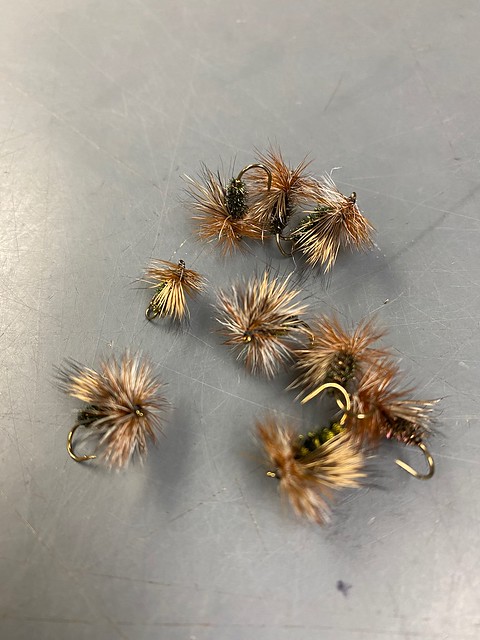
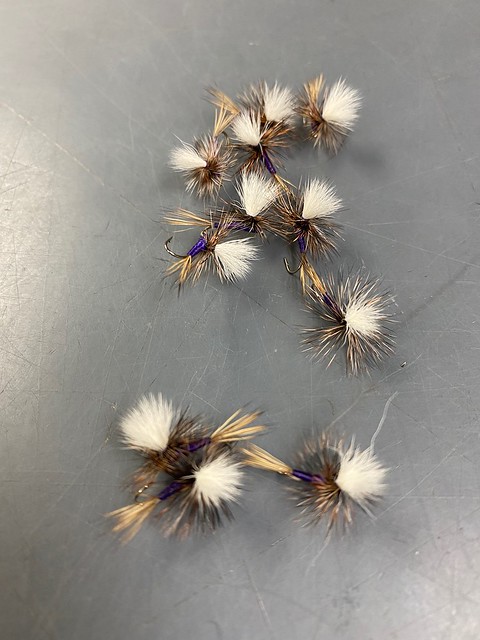
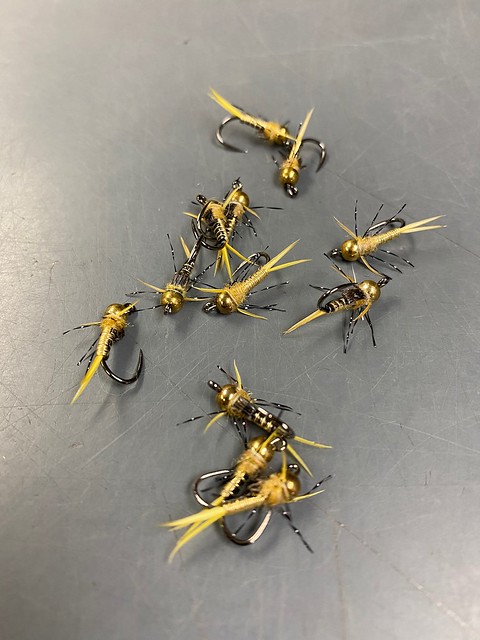
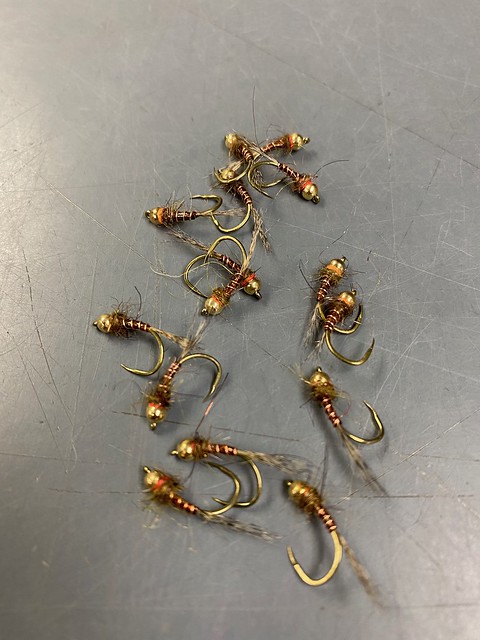
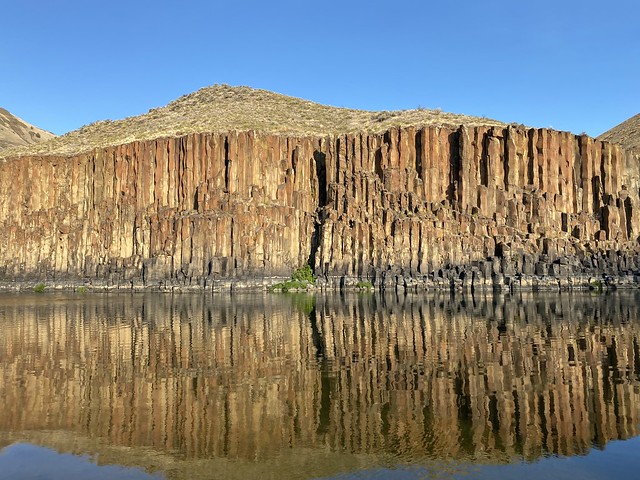
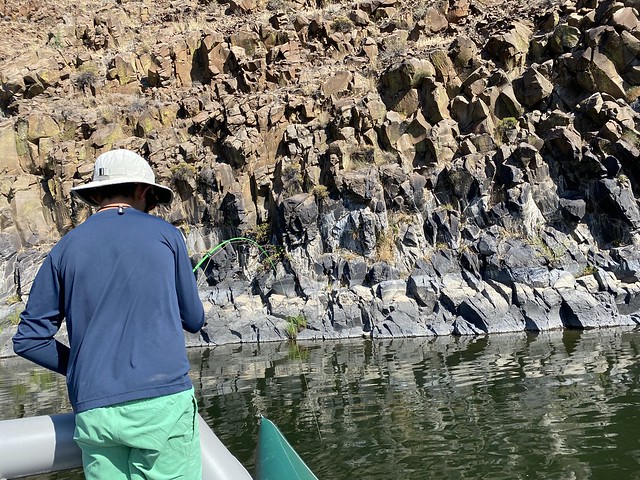
We floated the lower McKenzie from Hendricks Park to Hayden Bridge Sunday afternoon. The water was high but dropping and plenty clear. Warm periods of the day saw reasonable numbers of Green McKenzie Caddis, Brown Caddis, March Browns, and Pale Morning Duns. We nymphed a bit with Mega Prince and Jigged Pheasant Tails. Best success was had swinging Possie Buggers and Soft Hackle Pheasant Tails. You could really tell the river is on the verge of “breaking loose” in terms of some really outstanding fishing. Next week the weather looks good, water levels should drop and a slight rise in water temps will have everything going from PMD’s to larger Stones and of course the Green McKenzie Caddis. The next two months are some of the very best of the year. Enjoy!

IMG_1195

The Caddis Fly continues to be closed for walk in traffic but we are doing plenty of curbside pickups and and online mail orders. We can even help you try on a pair of waders in the parking lot with a bit of a heads up. Give us a ring and we will help pick out your flies, leaders, tippets and floatants for our super local fisheries. If you need a line on a reel not a problem just give us a ring.

CD

Posted in Fishing Reports, Lower Willamette | Leave a comment

It’s All Home Water: Oregon Steelhead – Jeff Hickman

koreski_j_1005_cc_web

This article was published at Patagonia.com and written by Steve Duda. Steve Duda is Patagonia’s managing editor for fly fishing.

Editor’s Note: For a window into a day in the life of wild steelhead activist Jeff Hickman, check out our accompanying photo essay, Steelhead Green.

Oly Hickman is an excitable three-year-old. At the moment, he’s excited about the carrot sticks his mom, Kathryn, is doling out. He’s excited about doing laps around the kitchen. He’s excited by the new humans he’s just met—all of whom are talking loudly and at the same time. But most of all, Oly Hickman is excited to finally have the opportunity to goof around with his old man.

It’s been a long day for Oly’s dad, Jeff Hickman. Hickman is a prominent steelhead fishing guide, outfitter and activist for wild rivers and wild fish. Today at the office, a short coastal stream on Oregon’s north coast, sleet, snow, rain and even squalls of hail pounded down all damn day. There were two rafts to mother hen. Knots needed untangling and flies needed changing. A newbie required help learning to Spey cast. A pair of anglers somehow got lost in the woods—that was a new one. By the time Hickman beaches at the takeout, it’s dark. And cold. No steelhead. Not today. Maybe tomorrow.

Nevertheless, Hickman is in a fine mood after the float, twirling a squealing Oly around his shoulders while he talks about river levels, weather and tomorrow’s odds. Hickman is central casting’s ideal steelhead guide. He is tall, rugged and hewn from sturdy stuff that resists wet, cold and wind. Given his size, reputation and occupation, one might expect Hickman to be a more imposing figure. Instead he’s disarming, earnest and enthusiastic—about everything. He finds small things funny and funny things hilarious, which is to say, he laughs a lot, a smile rumpling his permanent chin stubble and his chuckles rebounding off walls.

Oly logs a few more laps around the kitchen. A huge pot of pozole bubbles; crisping sourdough flavors the air; a salad attracts a few polite glances. The conversation drifts from the water’s perfect shade of steelhead green on today’s river to snow levels in the mountains to the latest local Sasquatch news. Everyone except Oly has a Bigfoot story.

Like his kid, Hickman is excitable, especially when talking about Bigfoot or steelhead or rivers— but especially steelhead and rivers. He waves his hands around, he gets louder and words come sprinting out of his mouth at a quicker pace. “Fly fishing is not only what I do for a living,” he says, “it’s my sanity.” But for Hickman, there’s something more than just the fishing that keeps him out late on a miserable Wednesday night. “It breeds stewardship … I feel like it’s my duty. I wouldn’t be able to sleep at night if I wasn’t active and vocal and doing what I can to make a difference.”

Hickman is a volunteer for the Native Fish Society, working as a river steward on Oregon’s Nehalem River for more than 11 years. In that time, the NFS has ended harmful dredge mining in over 20,000 miles of essential salmon habitats in Oregon, helped secure protections for 101,000 acres of public lands from strip mining in southwest Oregon and secured Scenic Waterway protections for the Nehalem River. Aside from showing up for meetings, hearings and planning sessions and marshalling volunteers for surveys and restoration projects, Hickman’s success as a wild fish activist is simple: combine the gift of gab with an insistently positive attitude. “The secret,” he explains, “is talking to your neighbor and getting to know people in your community—that’s grassroots activism.”

The second component to Hickman’s approach is to simply speak his mind, loudly if need be. “It’s a complaint-based system,” he says. “If you are complaining, you are going to make a difference. You’re going to influence change.” It sounds funny when he says it, and he can’t conceal a grin while saying it, but after the punchline, he presses his point. “This is not doom and gloom,” he says. “This is not me saying that the world is over, let’s all give up and get drunk. We’re at a tipping point and we all need to stand up and speak our minds and talk about what’s important to us. I think a complaint is worth a lot more than people give it credit for. The squeaky wheel gets the grease, man.”

On the river, Hickman’s natural intensity assumes another form. He seems remarkably at ease as he launches the raft, gears up and herds his day’s anglers as nonchalantly as if he were finishing up the evening dishes. With a fly rod in his hands, he is a wonder to watch. Standing knee deep in the flow, he commands his two-hander with motion that’s elegant and powerful, launching impossibly long, accurate casts across the full span of the river. He does it almost casually, barely stopping his steady stream of fish chatter. Hickman jokes, offers casting advice and reveals steelhead secrets that few people know. “Steelhead can be assholes,” he says. “Yeah, these fish are a pain in the ass. They’re super hard to catch. That’s not because they don’t bite, it’s because they’re not there. There’s not that many of them.”

Hickman need not even say it. It’s apparent in the clear-cuts, the logging trucks and the hatchery signs along these watersheds: the coastal rivers of northern Oregon and the steelhead that call them home are in serious peril. These fish, however, didn’t disappear on their own. They’re not on an extended vacation. Generations of abuse, neglect and greed have conspired to send entire populations into a death spiral. “Wild steelhead are struggling,” Hickman says between casts. “Their numbers are nowhere near where they should be.”

Those numbers are shocking. The best available data from historic and state sources strongly suggest a 90 percent ongoing decline in the Nehalem River wild steelhead population since the 1920s. Along the entire Oregon coast, agency data suggests wild steelhead in most rivers have been declining at a rate of 20-24 percent per decade since the 1980s. “If the average rate of decline continues,” says Dr. Chris Frissell, a fisheries biologist and Native Fish Society fellow, “it puts nearly all wild coastal steelhead populations at risk of extinction within 50 years.”

Nevertheless, the Oregon Department of Fish and Wildlife considers populations like the Nehalem steelhead to be “healthy,” a graphic example of the tragedy of shifting baselines. Past information about run sizes is lost or forgotten, allowing steady, long-term declines to go unrecognized.

For Hickman, the decline of wild steelhead can be traced to two main culprits—logging and hatcheries. “The world has changed,” he says. “Everything is now about corporate greed.” That greed, he argues, is aided and abetted by Oregon’s state agencies. “Both the Oregon Department of Fish and Wildlife and the Oregon Department of Forestry are departments of harvest. It’s the fox guarding the hen house. Both are run willy-nilly without any long-term solutions.”

koreski_j_1035_cc_web-2048x1365

Driving down the coast, there can be no doubt, Oregon was and remains timber country, and the industry’s long shadow is everywhere. Along the U.S. 101 Highway, logs are stacked in enormous piles waiting to be shipped to Asia. The smell of mills fouls the air. Slash piles are heaped along the roadways and turnouts. Trucks heaving with fresh-cut logs rumble down muddy logging roads. Clear-cuts creep to within 60 feet of steelhead streams. Meanwhile, just a few miles away, tourists flock year-round to Cannon Beach, not for the slash piles to the north and south, but to gaze at Haystack Rock, hike Ecola State Park and enjoy a taste of the local beer, wine and seafood back in the charming town. The contrasts between the thriving, year-round recreation and tourism industries and the rampant destruction just up the timber roads are stark and lend a feeling of antiquated desperation to the mills and timber lots.

“Look,” Hickman says, “the environmentalists didn’t kill our jobs here. We’re cutting more trees now than we ever have and employing fewer people. It’s a fairy-tale legacy story of logging. Timber doesn’t benefit many people. Our schools are not better. We’re not really getting any revenue. Communities are not profiting from the timber sales; [they] are getting poisoned and the rivers are getting filled with sediment.”

Floating these rivers with Hickman, it’s hard to disagree. During downpours, water courses through the clear-cuts and over the hacked-up land, sluicing muddy run-off into the river. Hickman hops out of the boat and bushwhacks through the undergrowth. Within moments, he’s pointing to a slope where trees used to be. “The rate of timber harvest is alarming,” he says. “That impacts everything on this river—the water quality, a higher likelihood of slides, more extreme flooding.”

He points across a cleft in the land where a new stand of trees, a few years old, greens the slopes. Hickman talks about the aerial spraying of chemicals used to keep vegetation at bay while the monoculture crop of the Douglas fir matures. The chemicals include imazapyr, a weed killer; clopyralid, an herbicide; along with glyphosate, the active ingredient in Roundup; and 2,4-D, an ingredient in Agent Orange. Hickman wonders out loud about what those chemicals are doing to the river, the fish and his family’s drinking water. Next to the new stand of Doug fir, the rest of the slope has been freshly shorn—just stubble remains. “This is about responsible management of resources,” he says against a backdrop that seems anything but responsible. “I’m not the extremist here.”

koreski_j_1022_cc_web-1365x2048

In the raft, Hickman stands at the oars much of the time, guiding the boat through narrow channels and around rocks and standing waves. He eyes a likely-looking stretch downstream and slides the boat to the shore at the head of the run. He checks the fly, the leader, where he’s standing—the little things—and begins to unfurl those casually magnificent casts, talking all the while. He talks to the fish. He talks to himself. He tells everyone what he’s thinking and what he thinks the fish are thinking. Finally, it happens. A fish grabs his fly. The reel zings that zingy sound and the fish bolts. Hickman called the shot. The fish was exactly where he said it would be. He grunts, his long Spey rod bucks and curves into and out of a rainbow shape. Someone runs to get the net.

After a few minutes, the battle is over and the fish flails in the mesh. It’s a hatchery steelhead, fins scraped and rounded by months of contact with concrete walls and raceways. The fish has violent red scrapes on its flank; Hickman hypothesizes it’s recently escaped an encounter with a hungry seal. The fish is smallish, ill-formed and didn’t put up much of a fight. It’s quickly dispatched with a piece of driftwood; the gills are slashed and its blood runs into the river. Hickman is still jacked from the grab, but is noticeably unimpressed. In fact, he’s a bit disappointed. “I don’t know why,” he says, “human nature thinks we can do something better than nature.”

koreski_j_1021_cc_web-1600x900-1-1536x864

The fish is in the bottom of the boat turning from bright silver to pale grey. Hickman is back at the oars, his eyes on the bank searching for the next run and, hopefully, a wild fish. “I don’t dislike hatchery fish,” he says a bit unconvincingly, “I just want to see our fisheries survive long term and I see hatcheries as a very short-term Band-Aid on a long-term problem. Hatcheries have been around here for 150 years and we’re still in a fisheries crisis. If hatcheries were going to bail us out, they would have by now.”

Recently, the Oregon Department of Fish and Wildlife began what’s called a broodstock hatchery program on the North Fork of the Nehalem River. In this scheme, wild fish pairs are harvested from the river and their eggs and milt are collected. The fertilized eggs are incubated, hatched and reared until they are released back into the stream. “Last winter the hatchery on the North Fork started recruiting native fish—broodstock—because their hatchery programs seemed to be collapsing. They just started collecting broodstock. There was no public input. There was no science. They don’t know what harvesting those fish will do to the run.”

The experiment didn’t go well. Fourteen spawning pairs of wild steelhead were harvested from the river, creating 42,000 smolts. Of those hatchery smolts, 30,000 were lost to Flavobacterium psychrophilum, an affliction suffered by hatchery-reared fish also known as Bacterial Cold-Water Disease. “You just have to leave ’em alone,” Hickman says, “If you leave them alone the wild fish will come back on their own. These are wild steelhead. They can do anything.”

After another long, gorgeous day on a short, scrappy coastal river, the mood in the kitchen is again warm and welcoming. There are beers flowing, the fish is being sliced into fillets and Oly is, once again, stoked to see his old man. After a few laps to release some excess energy, Hickman and his son settle down for a round of carrot sticks and juice. Unlike most kids, he shows no interest in the dead hatchery fish. Even at his age, he’s seen plenty. Hickman grabs his son and gives him a just-for-the-heck-of-it twirl around his shoulders. “We’re at a tipping point here,” he says. “It’s our responsibility to protect this for future generations—for my son and his kids. You know,” he pauses, “if we screw things up right now, it’s going to be forever.”

Posted in Coastal Steelhead Fishing, Oregon Conservation News, Oregon Winter Steelhead Fishing | Leave a comment

Boating the Deschutes? John Day? – Covid 19 Updates

IMG_7401

From Deschutes Angler Amy and John Hazel

The burning question that I have been asked often over the past couple of weeks is WHEN will we be able to camp and float on the Deschutes??? I wanted to wait until I got the official email and it came today – the date has been pushed out to May 21. This does not mean with any certainty that everything will open on the 21st – they still have the power to extend the closure beyond that date – BUT boater passes are available for floating starting on May 21. If you have an earlier boater pass you will have gotten this email and you will have gotten a refund.
We can be happy about one thing, fishing is not closed. You are welcome to drive along the river, park, and fish wherever you like as long as you are an Oregon resident. Camping and sleeping on the road is not allowed and all of the restrooms along the river are locked up. One kid said to me, “What am I supposed to do, bring a shovel???” Uh, YES. Practice your leave no trace ethics and get far away from the river with a shovel, do what you need to do, and bury it so there is no sign that you have been there. It isn’t difficult.
Speaking on non-residents, we have not seen any news about when Oregon will open the fishing back up to non-residents. Check on the website for Oregon Department of Fish and Wildlife for that information – we know that Washington is opening their fishing in their state on May 5, but we do not know if the Fish and Wildlife Departments in the two states are coordinating anything.
As for guiding, the biggest bummer is that we are not going to get to do our camp floats, overnight trips, or floating day trips during the main part of the salmonfly hatch this year. This is gut-wrenching for all of the outfitters on the Deschutes. We want nothing more than to be out there on the river showing you a great time, floating with you, teaching you, cheering you on, perfecting your cast, and having a blast around camp telling stories of the day.

From Recreation.Gov

Attention boaters: This is an update related to reservations on Lower Deschutes River Boater Pass System for the time period through 5/20/2020. All reservations through 5/20/20 have been cancelled and refunds have been issued. Permits may continue to be purchased for trips planning to be on the water after May 20, 2020. Local managers are committed to the health and safety of recreational visitors and our staff. We are following the guidelines from our agency and the CDC regarding COVID-19, closely monitoring the situation and responding to current conditions. Our agency will continue to work with our managing partners to identify how and when we will be able to issue boater passes again. Please continue to monitor this page for status updates.

The John Day?

Due to continuing guidance from the Oregon Governor and the Department of Interior, boating will not be allowed on the John Day River through May 20, 2020. ​Permits already purchased for this time period will be cancelled and refunded. The release date of May 1, 2020, to release of the second batch of permits has been postponed. The postponed release date has not yet been determined. BLM will continue to work with our local, state, and federal partners to identify how and when we will be able to allow boating to begin again. Thank you for your understanding and please continue to monitor this page for updates.

Posted in Central Oregon Fishing Report, Eastern Oregon, Fishing Reports | Leave a comment

Hardly Strictly Norm Woods Special Stonefly Pattern Spring 2020

Sit down with a cup of coffee or a cold one as this video is not an abbreviated version. Greg ties a pattern that was inspired by the Norm Woods Special fly pattern.

“My friend James sent me a picture of the Norm Wood Special years ago before I was leaving for a trip to the Deschutes River. I remember thinking it looked just like a Stimulator or a Sofa Pillow fly without a tail and that’s exactly what it is!

I had no idea the fleshy color of the wing was the big deal about the Norm Woods Special differentiating it from other stonefly patterns.  Kind of a fleshy pink color.

norm-woods-special-idylwilde-trout-flies-31

Classic Norm Woods Special

That night as I looked for something that would work for the wing I decided to use rabbit fur plunked off the rabbit mask. The texture seemed to be somewhat like calftail (like the original and I had none) and the wing looked really good. I tied a few different colors of gold, brown, light brown and tan.  All classic colors for stonefly patterns.

DSC_0037

My Original Rabbit Fur Wing with Brown Body

When the fish began to hit the surface salmonflies were everywhere around me in trees, shrubs, bushes and I got excited to tie on a size 6 dry fly. I matched the hatch identically and to my surprise the trout weren’t interested or as Marty, one of my original mentors would say, “Rejected.”

IMG_0414

Matching the Hatch but Rejected

I then began to notice smaller golden stone flies popping off the tall grass.

IMG_0406

Golden Stone

Change fly to my Norm Woods Special variation in gold and BAMM.”

DSC_0042

Gold, Black, Brown, Tan….

Tie Some Up:
Hook: TMC 200R or Daiichi 1270
Thread: 8/0 Color To Match
Wire Rib: Ultra Wire Small Gold
Dubbing: SLF Kaufmann’s or Dub of Choice
Hackle: Neck or Saddle Dry Fly Hackle Brown

Norm Woods Special Fly

Stonefly Patterns for the Deschutes River Stonefly & Salmonfly Hatch

#FlyShopStrong

Posted in Fly Tying, Fly Tying Materials and Supplies | Leave a comment

Snook Brush Tuxedo Fly Tying Video

In this video professional fly tyer and blogger Jay Nicholas ties a simple snook fly called the Snook Brush Tuxedo Fly.

Incorporating materials from Hareline including the new Bling Rabbit Strips, Helix Flash, and H2O’s Flash Blend Baitfish Brushes Jay gives his input and years of experience discussing these new materials and how to work with them.

IMG_5943

Snook Brush Tuxedo

Hook: Ahrex Predator Stinger or Gamakatsu B10S 1-3/0
Thread: Danville 210 Denier Black
Tail: Magnum Bling Rabbit Strip-White
Flash: Helix Flash
Body: Sculpting Flash Brush White 2″
Collar: Farrar Blend Baitfish Brush

Posted in Fly Tying, Fly Tying Materials and Supplies | Leave a comment

Ahrex Blue Water SA270 and Minnow SA280 Salt Water Hooks

In this video, Jay Nicholas discusses the differences between Ahrex’s new Blue Water and Minnow hooks and their uses.

SA 270 Blue Water hooks are for the largest of fish species with heavy wire, micro barb, straight eye, slightly longer shank, and come in sizes 2/0-8/0.

SA 280 Minnow hooks are for general baitfish patterns with heavy wire, micro barb, straight eye, shorter shank, bigger hook gap, and come in sizes 8-2/0.

Ahrex SA270 Blue Water Hook

Ahrex SA280 Minnow Hook

SA280 Minnow       SA270 Blue Water

SA280 Minnow                                                SA270 Blue Water

Posted in Fly Fishing Gear Review, Uncategorized | Leave a comment

Deschutes River Report – April 25th – Covid 19

casting on the deschutes

I grabbed this from The Deschutes Angler – Amy & John Hazel posted it Friday April 24th.

The ENTIRE Lower Deschutes River opens tomorrow – so you will now be able to fish Trout Creek, Mecca Flats, South Junction, and all areas upstream of the Warm Springs Reservation boundary. Unfortunately, we are still not able to float the river in any kind of boat. The BLM has suspended boater passes and has closed the boat launches. If you are out there floating in a craft you are easy pickin’ for law enforcement, so leave your boats at home and use the 40 miles of access road up and down from Maupin or join in with hundreds of anglers pounding the trails between Warm Springs and Trout Creek. You will be able to get away from the crowds better in Maupin. Camping along any part of the Deschutes River is still prohibited – this includes sleeping in your vehicle along the road. It is clearly posted, but I get a lot of questions about this on the phone. As I mentioned in earlier reports, the toilets are also closed along the river. One person messaged me about this and said, “What am I supposed to do, bring a shovel?” Um, yes. Hike yourself well away from the river and from common lanes of human traffic, dig a deep hole, and bury your business. Or, bring a wag bag or portable toilet as we use on the river for all of our trips. Or, use the one open public restroom located next to our fly shop in Maupin at the end of the parking lot.

We are all going through this Covid crisis together and it is not going to be easy for any of us to continue to deal with the restrictions on our lives, but I do believe that what we are doing is working. The curve seems to be flattening and we are saving lives – which is what is really important in the long run. It won’t be normal again for quite a while, if ever again, so we will make adjustments and try to make things work within the framework in which we have been placed.

When we are able to open our doors again, we will have to limit the number of people in the store and we will have to require that customers and staff wear face masks or facial coverings to reduce particulates in the air. We will be overjoyed to see the semi-covered faces of our customers when that day comes. As for our guide season, it is impossible to socially distance in a drift boat. We can still guide you on our private lakes if we drive our own vehicles and stay 15 feet apart from each other all day. Should I need to change your fly, you cast it to me and I make the change – voila – guiding from 30 or more feet away from someone is possible on the private lakes.

We are hoping that the river will open to camping at some time during the month of May when the salmonfly anglers are here. The BLM has been pretty tight-lipped about the possibility of opening, so we are sitting on our hands and waiting. In my opinion, camping and being socially distant is possible. TIght lines, and we will see you (through the glass door of the shop) when you stop by Maupin.

Posted in Central Oregon Fishing Report, Fishing Reports | 1 Comment

Jay Nicholas’ Fly of the Week #3 The Golden Demon

Screen Shot 2020-04-09 at 2.10.12 AM

This post is a continuation of an ongoing series of flies that I’ve selected to share in an eclectic order, throwing down a  disorganized variety of patterns that will include high lakes wet flies, Metolius Green Drake Spinners, albacore streamers, chinook scuds, large intruders, and …. who knows what sort of fly might strike me as fun to share. As usual, I will share the recipe, tying notes, and a fishing story or two for each fly. Let’s get into fly #3 now.

Golden Demon

Hook -Alec Jackson Steelhead Irons Gold #1-7
Thread – UTC or Danville’s 210 D bright yellow
Tail – Bright yellow saddle hackle barbules
Body – Lagartun Gold oval tinsel – Medium to wide
Hackle – Hot orange or bright yellow (tyer’s choice)
Wing – Fox Squirrel tail hair, to bend of hook

The Golden Demon is a fly that I tied season after season in large quantities for customers who have fished anywhere between the Klamath, Deschutes, John Day, Clearwater, Grand Ronde, North Umpqua, Rogue, and BC. Another reason to include this fly in my roster of must-tie-and fish is the fact that it so closely resembles the Comet, a fly that I fished successfully for both Chinook and Steelhead. The color combinations of this pattern are well known as attractive to anadromous fish. Another justification involves the -fact that I have heard so many stories from people who have fished my Golden Demons and caught steelhead that I would feel remiss to not include the pattern here.

He fished a Cortland (333 or 444) Type 3 or Type 6 sinking fly line, if I remember
correctly, and would hook steelhead on the short swing, on the hang, and on a slow up current retrieve. I’m sure that he fished this area in this manner in September or October after water temperatures had begun to decline, and always fished the full sinking line. Wayne described many days when he would hook and land several summer steelhead in this place, always  fishing the Golden Demon.

Screen Shot 2020-04-09 at 2.13.45 AM
Photo Caption. Vintage-style Golden Demon tied with sunrise yellow hackle, on Eagle Claw 1197-g.

Wayne would wade into the run at its head, stand in knee deep water, and cast both left and right, quartering just slightly downstream, where his fly would hang virtually straight below him in the heart of the run. Maybe that is why this Golden Demon produced so well for him on the Deschutes.

Screen Shot 2020-04-09 at 2.12.45 AM
Caption. Coastal Winter steelhead to the Golden Demon.

I’ve seen a lot of variety in the way different tyers represent the Golden Demon, but I’ve never seen this fly dressed with the brilliant yellow materials in the tail, throat, and head, presented on a brilliant gold hook. Wayne’s presentation of a widely varied fly readily distinguishes his dressing from flies that use a less vivid materials like Golden Peasant Crest for the tail, an orange hackle, and either black or orange thread for the head.

I have held Wayne’s fly in my hand alongside several of the alternate dressings, and my eye was always drawn to the sparkle of yellow highlights on his pattern.

I hope you have found entertainment or education in this.

Posted in Fly Tying, Fly Tying Materials and Supplies | Leave a comment

April 2020 Covid 19 – Support Local Guide Businesses

IMG_3597 2

Now is a good time to support the local-fishing-based small businesses that we rely on to enjoy the waters we love. 

Pre-book a guided trip for later this season with your favorite local guide service. Many guides have suspended their operations at this point. But hopefully we’ll be back on the water by early summer when fishing really heats up. 

And please consider prepaying a local shuttle service for some credits to be used in the future. Here are two of our favorite services:

Shuttle on the McKenzie

Carollyn Broom
PO Box 115
Vida, OR 97488
tel:(541)844-8812

Shuttles on The Middle Fork of the Willamette Below Dexter

Casey Chafin
43045 McKenzie Hwy
Leaburg Or 97488
541 912 0044

Casey is running a Prepay special:
Buy 10 get 1 free 10 shuttles is $200 And I will send them 11 vouchers
PayPal mailto:Harleygirl2u@hotmail.com

We’re going to need these services when we can all get together on the river again. Let’s ensure now that they’ll be there.

Posted in McKenzie River, Middle Fork Willamette River fishing, Oregon fly fishing links, Oregon Fly Fishing Tips, Shop Sales and Specials | 1 Comment

Rising From the Ashes – Wild Steelheaders United and Trout Unlimited

Trout Unlimited, Wild Steelheaders United and North Fork Studios release new film on remarkable rebound of summer run steelhead in the Elwha River

SEATTLE (April 20, 2020)—Summer run wild steelhead were thought to be extirpated from Washington’s Elwha River. But after two dams were removed, the rapid rebound of this unique life history of steelhead surprised scientists and has provided hope for recovery of wild steelhead—which
in other watersheds.

Trout Unlimited, Wild Steelheaders United, and North Fork Studios have launched a new film, Rising from the Ashes, on the resurgence of summer steelhead in Washington’s Elwha River via YouTube.

“The Elwha is basically a living laboratory for what happens when you take out dams in a river that has native salmon, steelhead and trout,” said John McMillan, science director for TU’s Wild Steelhead Initiative. “But there is one life history of fish in the Elwha that really is a remarkable story, and that is summer run steelhead. They’re like the Phoenix, rising from the ashes.”

The Elwha River is the site of the largest dam removal project yet undertaken in North America. For more than a century two dams completely blocked upstream migration of anadromous salmon, steelhead and char.

While the rebound of salmon and winter run steelhead in the Elwha after the dams were taken out was anticipated, the recovery of summer run steelhead was not. But taking out the dams changed their prospects—dramatically. Over the past two years, scientific surveys relying primarily on snorkeling throughout the river revealed a significant rebound in summer steelhead numbers.

Trout Unlimited and Wild Steelheaders United hired noted documentary filmmaker and devoted steelhead angler Shane Anderson to record the amazing recovery of summer run steelhead in the Elwha. Rising from the Ashes is the result.

“After spending the past decade documenting river and fish stories across the West, this was by far the most inspirational, magical and painful assignment I’ve done,” said Shane Anderson, owner of the North Fork Studios film production company. “I’ve spent time on the Elwha my entire life, making this comeback story really hit home for me and giving me a tremendous amount of hope during very challenging times for our fish, rivers and environment.”

Rising from the Ashes records the work of some of the leading players in the collaborative effort between resource agencies, Tribes, and conservation groups to monitor the recovery of salmon and steelhead and the Elwha. What they found, after undertaking a snorkel survey of the entire mainstem river in September of 2019, is remarkable. The film also provides insight into the benefits of removing dams from rivers for other species, and for the ecology of the watershed as a whole.

The film’s release has been supported by a series of Live events on Trout Unlimited’s Instagram feed this week. Go here for a recording of Wild Steelheaders United ambassador Lee Geist’s interview with John McMillan about the resurgence of summer steelhead in the Elwha.

Posted in Oregon Conservation News, Summer Steelhead | Leave a comment

FliCon Fly Boxes Review Spring 2020

flicon-double-sided-silicone-fly-box-15

Double Sided

FliCon Double Sided Fly Box

flicon-silicone-fly-box-7

Single Sided

FliCon Single Sided Silicon Fly Box

Posted in Fly Fishing Gear Review | Leave a comment

On this perfect morning in April – the Steelhead’s view of Covid-19

jay-nicholas-echo-dec-hogan-2-in-action

Author’s Note: I wrote this here article for your entertainment, and perhaps to offer food for thought. I make no claim regarding the veracity of numbers, logic, scientific accuracy, or commonsense. Since I am, at heart, and angler by genetic predisposition, you should know this already.

On a perfect sunny morning in April, I’d rather be fishing. I’d rather be drifting down the Nestucca or a half dozen other Oregon Rivers, but the Covid-19 pandemic is upon us, as is social distancing, so I will not be fishing this morning, and not tomorrow either.

While some folks are agonizing, tumbled ‘round and ‘round in the emotional cement-mixer of stay-go, go-stay, what-do-the rules-say, how can I get around the rules, who’s-to-stop-me, I’m an American so it’s my right, and so on, I got to thinking what the stay-home order means to the fish.

Yep. I tried putting the steelhead first, and the revelation was stunning.

alsea river a

I’ve been a shut-in self-isolator for nearly thirty-five days now. That’s thirty-five days when I haven’t been swinging flies across classic tailouts on the Nestucca. Thirty-five days when I haven’t been dragging an egg-pattern under an indicator between the runs where I like to wade-fish.

My absence from the river might have allowed, hummmmmm, about a dozen steelhead to avoid getting a hook in their snoot, given that I would have averaged a fish every three days. If you give me a more generous average, my absence might have let two dozen steelhead run up the river without one of my hooks being stuck in the corner of its mouth, the roof of its mouth, in its gill rakers, or down its throat.

If ten or twenty percent of the un-harassed fish I let swim unimpeded up-river didn’t die because I’ve been off the river, that means the spawning population just went up by one or two steelhead.

Not much, but it’s not a bad thing.

However,  I was but one among thousands of stuck-at-home anglers, so voila, the steelhead saw a lot fewer dangerous little trinkets and enticing yummy things to eat and explore and otherwise pounce upon and inhale.

My head exploded with the possibilities. How many rank beginners, twenty-fish-a-day guides, dedicated Bobber-Doggers, Jig specialists, Worm fanatics, Blue Fox swingers, Euro nymphers, spoon-chuckers, double-bead drifters, and old-school Hot-Shotters stayed home during the last thirty-five days?

Thousands stayed home during what is possibly one of the hottest months of the winter steelhead season on the Siuslaw, Alsea, South fork of the Coquille, and Umpqua ….. I bet you get the point of where my thinking is going by now.

So while this stay-at-home has been a drag for us anglers, it has been one heck of a welcome respite for the steelhead, the cutthroat, to a lesser degree for the spring chinook.

At first blush, this seemed like a move of potential conservation merit, of possible benefit to wild steelhead. Of course, it also meant a zillion dollars revenue evaporated, jobs lost, spirits crushed, and perhaps working families in ruins.

But if I set the economic and human consequences to the side, the shut-down might have helped the steelhead a little, and as angler/conservationists, this would normally be cause for celebration.

But then another thought hit me in the face like a crisp, sharp edged brick.

This new perspective came at me from an email string left in my path like a trail of bread crumbs. One fellow cited a recent study finding that 60+ percent of Puget Sound smolts get eaten by harbor seals.

Ooooooops. What’s the point of producing more wild (or hatchery smolts) if they get eaten by seals?

But the predation might be “normal,” came the retort in email trail, and besides, what about the cormorants, pollution, water withdrawals, habitat simplification, and habitat degradation, and fish-farms that are filthy with sea lice– the scenario exploded what little grey matter I had left under my Simms ball cap.

McKenzie River a
I yielded to the complexity then, puked on my fly tying bench, and went back to learning Tai Chi to soothe my daily bout with virus anxiety

My takeaway.
The steelhead’s world is a complicated place, just as our world is. Everything is connected. When someone comes along predicting the effect of this or that action, its difficult to know if they are competently knowledge-of and accurately taking into account all the variables. Who among us really is? We have our own narrow set of beliefs and bias, and that is our frame of reference.

What is certain is this. Anglers, as passionate a gaggle of people as you will ever see, are already divided over issues like
*hatchery versus wild,
*bait versus flies,
*catch-and-kill versus catch-and-release,
*among others.

Being divided, we are ripe for losing what little control we might have over the fish, rivers, and wild lands we love

We anglers are prone to rather quickly setting upon each other, to the amusement of the, the polluters, water users, golf course developers, McMansion brokers, and so on.

What to do?
Just because the world is complicated doesn’t mean that we should throw our hands in the air and give up, Just because we hold on to our seemingly conflicting beliefs doesn’t mean that we should rip our shirts off and start a cage fight.

We need to stand together, united by our love for fishing, clean rivers, public access to places where we and our families can experience a little, at least, of what was common in the 1950s, 60s, and 70s. That’s not asking for too much, really, is it?

I think it is not.

If you are a member of an advocacy group, ask your fellow members to make friends with members of other advocacy groups. You know the kind of groups. I’m talking about.

Trout Unlimited.

Association of Northwest Steelheaders.

CCA

Hatchery Wild Coexist

Native Fish Society

Water Watch of Oregon

Can’t be done, you say?

My group can’t work with those people.

We don’t need them.

Fine, go home to your own corner and sulk. File your lawsuits and lobby your legislator friends.

And don’t be surprised when the power players who represent land development, deforestation, waste disposal, mining, and commercial fish farming to name just a few examples – don’t be surprised when they mow us all to the bare dirt .

Gotta go now. Got some flies to tie, leaders to stuff into leader wallets, and maybe a few yarnies to tie.

It’s gonna be time to fish any day now.

Jay Nicholas – April 17th 2020

Posted in Coastal Steelhead Fishing, Oregon Conservation News | Leave a comment

Thoughts About How to Approach Fly Fishing in Covid-19

Screen Shot 2020-04-17 at 5.50.04 AM

This article first appeared April 8th on Meateater written by Joe Cermele.

The last week of March Raritan Bay really caught fire. This 70,000-acre piece of water, part of the New York bight, is flanked by North Jersey and Staten Island. The Manhattan skyline at the mouth of the Hudson River paints the bay’s northern backdrop. Every spring, Raritan gives cabin fever-racked salty anglers their first crack at big striped bass. The fish pile into this shallow, confined bay in April to stage for the spawn, and targeting them on a weekend can give a whole new meaning to “combat fishing.”

This year, Raritan isn’t just the nucleus of early-season striper action; it also sits in the epicenter of some of the hottest COVID-19 zones in the country. Neither nation-high infection numbers nor stay-at-home orders from both New Jersey and New York seem to be discouraging many anglers from crowding onto boats or lining up at ramps.

For clarity, I’m not suggesting we stop fishing—quite the opposite. I want us to be able to keep fishing. Getting on the water, albeit less frequently than before the pandemic, is one of the few things I can do that still feels normal. Unfortunately, after yesterday’s closure of all state and county parks in New Jersey, I now have far fewer options where I can feed my fishing fix.

What disappointed me most during the Raritan Bay striper eruption was the number of “high-profile” captains and anglers posting videos and photos from the bay with boats full of buddies. It’s simply impossible to maintain 6 feet of distance on a boat. Many states (including NY and NJ) strongly recommend that if you’re going to fish on a boat, go alone or with only members of your immediate household. That’s what I’m doing.

While I want everyone in those photos and social media posts to remain healthy, let’s not forgot that people are dying, and slowing the spread of this disease is what matters first. But the point here is bigger and well, more selfish. I want to be able to keep fishing straight through this whole coronavirus outbreak. In order to do that, I need my home state to keep fishing open. Failure to abide by social distancing directives lead to the shutdown of all recreational fishing in Washington State. In the article published on Foxnews.com on March 26, WDFW Fish Program director Kelly Cunningham presented a clear justification for the harsh decision.

“We’ve seen an uptick in outdoor recreation at some locations in recent weeks as people have looked for ways to get outside,” he said. “We’ve had reports of crowded boat ramps and busy fishing on some rivers, which runs counter to the governor’s direction to stay home and practice social distancing.”

Washington state should serve as a cautionary tale of what happens when governors and state agencies are put in the precarious position of balancing the need to control a pandemic outbreak with the desire to maintain the rights of citizens. Presently, Washington’s fishing ban has not been lifted, and on Monday the state announced a suspension of all spring bear and turkey hunting until at least May 4. The thing is, it didn’t have to happen that way. We, as outdoorsmen and women, have the power to prevent that situation from repeating all over the country. The more we disregard social distancing recommendations, the more pressure we put on state governments to keep us in check. The solution is simple: stay away from each other until this all blows over and we can keep fishing, hunting, and playing outside. But we’re clearly failing to do that, as we’re seeing more and more closures pile up as the weeks drag on.

The rules about what we can and can’t do are changing fast, but it’s on us to stay current and stay in compliance, just like any other hunting and fishing regulations. Social media isn’t helping (I know, what a shock), spreading a free-for-all of misinformation. “I read about it on Facebook” is still not a defense for violating fish and game laws, even during a pandemic. If you’re having difficulty navigating the sea of changing restrictions and social media hearsay, you can find the most up-to-date news on outdoor-related rules, closures, and seasons by state here.

If you’re looking for guidance on getting outdoors and enjoying our sports in a way that won’t negatively impact future government decisions, look West (just try to ignore Washington). The guidelines in place in states with more open land and fewer people are valuable no matter where you live. I reached out to Rachel Schmidt, the director of the Montana Office of Outdoor Recreation. With her insight, we’ve put together what we believe are best practices for outdoor recreation during this unprecedented time. And yes, some of these suggestions might be hard to swallow, but it’s all in the interest of keeping us outside now and getting back to normal life faster.

Be Prepared to be Alone
I’ve owned three boats in my life, and I didn’t buy any of them so I could spend more time fishing alone. The social aspects of hunting and fishing are what many of us love, but this is the time to put them on hold. It’s easy to tell yourself that you’re healthy and being cautious, and so are your pool of buddies, therefore there’s no harm in jumping on a boat or driving to turkey camp together. But millions of people are thinking the same way—in essence believing this virus is not going to affect their circles. And let’s be honest with ourselves, some of these same buddies have a history of contracting other “social diseases.” Hell, one of my fishing buddies contracted foot and mouth disease, twice. The mentality of keeping to your “inner circle” can still spread COVID-19, especially given that some of the biggest infectors didn’t even know they had it for a week or more.

In a recent Angling Trade story titled “The Coronavirus Elephant in the Fly-Fishing Room,” editor Kirk Deeter interviews Dr. Cliff Watts, a veteran ER doctor and avid angler. The story takes a deep dive into the practical and moral dos and don’ts of fishing during the pandemic, but when asked if fishing on a boat—particularly a drift boat—can be done safely, Dr. Watt’s answer was essentially “no.”

“Most drift boats mandate that the rower and the fisherperson be less than 6 feet apart,” Watts said. “The person downwind of a sneeze, or a spit, would be vulnerable to ‘droplets’ and hence there could be a significant potential to spread any virus.”

Fish and hunt alone, or as many government agencies suggest, only have close contact in the woods and water with people who live under your roof. If you must go out with a close buddy for safety or other reasons, drive separately, wade fish instead of using the boat, and keep proper distance during the trip. Hopefully in the coming weeks, there will be a relaxing of social distancing guidelines that allow us to enjoy the outdoors with friends in a normal fashion again, but while we’re still in the thick of it, follow the rules.

Rethink Where You Recreate
Social distancing while enjoying the outdoors has created an odd conundrum in many areas. While theoretically it’s not difficult to stay 6 feet away from other people, it is when parks, trails, and recreation areas across the country are seeing massive influxes of visitors. This crowding forced many states to close down certain areas, but according to Schmidt, there is more at play when governments consider the shutdown of public lands than simply the spreading of the virus. It boils down to behaviors triggered by the need to social distance.

“If parking lots are crowded, don’t try to fit by making new parking spaces or parking outside of the trailhead parking area on the side of the road,” Schmidt said. “If established trails are crowded, don’t blaze new trails in heavily used areas. These actions cause damage to the resources.”

According to Schmidt, with many public recreation areas operating with little or no staff, they don’t have the manpower to police these infractions. The solution is just shutting the area down completely.

“When Montana’s governor announced the stay at home order, he asked residents to use good judgment when it comes to outdoor activities,” Schmidt said. “That means maybe finding a different trail or keeping outdoor recreation closer to home. The number one goal of everyone at this moment is preventing the spread of a very serious virus, but if that goal is not compatible with responsible recreation, the recreation in certain locations will have to be put on pause.”

I caught up with Deeter at Angling Trade, who offered another perspective to consider when deciding where you’re going to recreate. It speaks directly to the growing number of people with the desire to leave the crowds—and in many cases, a COVID hot zone—behind.

“If you’re going to drive to fish, it should be for minutes, not hours,” Deeter said. “It’s not cool to drive from Denver to the Frying Pan, or from Seattle to Montana right now, but people are doing it. You have to think about the rural communities you’re heading to. They don’t want your ass there. They don’t have the infrastructure to handle an uptick in cases. Help them now by not showing up to fish, and then help them later by showing up when this is over. That’s when they’ll need you.”

Now Isn’t the Time to be Daring
Western states like Colorado and Montana were quick to advise against backcountry skiing and rock climbing, in some cases attempting to shut it down entirely. The directive is aimed at minimizing the need to tie up rescue crews, medical personnel, and medical facilities with unnecessary injuries during the pandemic. Skiers and climbers are naturally more prone to injury than hunters and anglers, however, the message from these ski-heavy states should resonate with every outdoorsman across the country.

Now is not the time to be adventurous. That section of unexplored river you’re dying to run in your kayak can wait. Suck it up and fish the easy-access water instead of crawling down a canyon to check out a new stream. If you’re running a boat alone, don’t push off 30 miles. Keep it close to the beach. Don’t head out into the steepest, rockiest terrain you can think of looking for turkeys or spring bears. Hunt the usual haunts you know well and consider staying closer to the trailhead than you normally would.

This may seem trivial and like an edict from the fun police, but imagine breaking an ankle or wrist right now. How eager are you to go visit an emergency room for an injury that could have easily been avoided? Not only could this increase the odds that you’ll be exposed to the virus, but your injury could potentially slow or hinder care to a patient with COVID-19.

Leave No Trace
I hope that everyone reading this already follows the “leave no trace” principle. Schmidt, however, pointed out that it has never been more critical than right now. Being a steward in the outdoors will directly correlate to fewer closures of boat ramps, parks, and recreation areas.

“If there’s a garbage can at your favorite trailhead, don’t throw anything in it,” she said. “Pack your trash out. If there’s a public bathroom on site, don’t use it. It’s easy in this situation to put land managers in a very tight spot because if they have to shut the bathrooms down due to lack of resources, manpower, or health risk to maintenance staff, people will relieve themselves behind or around the outhouse, and then you have a human waste hazard situation. If they leave facilities open with minimal maintenance, people complain that the facilities are not being kept up to par. It’s a very delicate balance.”

The way to tip that balance in our favor is simply minimizing our impact as we enjoy the outdoors right now, particularly in places with more visitors. Launch the boat, fish, and leave promptly when you’re done. Shorten your duration in the field; go home for lunch instead of packing in a picnic.

There are lots of reasons for fear and anxiety right now, and even outdoor recreation, our sanity safe haven, feels threatened. Recently, states like Ohio, Kentucky, and Nebraska closed turkey license sales to non-residents and are requiring out-of-state hunters to quarantine for 14 days after entering the state. Even in Raritan Bay, some townships have shut down popular waterfront fishing spots and municipal parking lots as a result of weekend crowds. Non-residents are being asked to please stay away. Washingtonians are completely locked out of their hunting and fishing, and several states including Illinois, New Mexico, Oregon, Mississippi, New Jersey, and Texas have shuttered their state parks.

But let’s please take the long view here. This is one season in a lifetime, and if we all hunt, fish, and play outside more conservatively and responsibly, we might not lose the privilege altogether. Not only are we doing the right thing for our society in this tough time, we might also find some small, long-term benefit from less-molested wildlife. Imagine what a season of lighter harvest might do for future turkey populations. Think of how reduced pressure on a bay loaded with prespawn stripers could boost the population in years to come. We have to make some sacrifices now for the good of every person in the country, but take solace in the fact that in some instances, you are subsequently doing it for the good of the fish and game species you love.

Featured image by Stanley Kosinski.

Posted in Oregon Conservation News | Leave a comment

Social Distancing and Fly Fishing

15labash-superJumbo

A Friend Shared this article with me from the New York Times. Enjoy!

My Isolation Breaking Point

I can’t wait for social distancing to end, so I can be alone again.

By Matt Labash
Mr. Labash is the author of “Fly Fishing With Darth Vader.”

In this endless war against Covid-19, I have tried to be a dutiful soldier. I’ve mostly stayed home to binge-watch and binge-eat (bad news and Fig Newtons, respectively). I’ve yet to poleax any octogenarians as they dive-tackle the last pack of Cottonelle. I only sneeze on immediate family. I’m a regular Audie Murphy.

But even we stoical war-hero types have our breaking point, and I’ve reached mine. My governor, Larry Hogan, banned recreational fishing in his recent stay-at-home order, intended to halt the spread of the coronavirus.

As a proud citizen (now, inmate) of Maryland, once un-ironically nicknamed the “Free State,” I’ve always liked Mr. Hogan. He’s stout and feisty, more workhorse than show pony. He hates many of the same things I do, like high taxes and Pennsylvania (whose tributaries pollute our Chesapeake Bay). He’s that filthiest of words in the modern Republican Party — a centrist. I’ve voted for him twice.

But now I’m rethinking my drink. In early days, when Mr. Hogan started closing schools and “nonessential” businesses, we avid fly fishermen thought our biggest problem would be our parks and rivers getting overrun by newbies, many of whom hadn’t seen sunlight in years. Stir-Crazy Nation now had nowhere else to go (including to jobs, now being eliminated at alarming speed).

A clueless dad, out for a walk with the family, skipped rocks across my fishing buddy’s favorite brown-trout hole as he was trying to fish it, unaware of river etiquette. At one of my go-to bass spots, I witnessed a roving band of bored teenagers throwing rocks at geese across the pond. They came nowhere near hitting them — the noodle-armed delinquents probably hadn’t lifted anything heavier than a PlayStation controller since seventh grade. Still, I couldn’t wait for all this “social distancing” to end, so I could be alone again.

But at least we had fishing. Or did. On March 30, the governor issued a confusing edict. While still allowing “outdoor exercise recreation” such as hiking, running and biking, he banned everything but “essential” activities. For most fishermen, fishing regularly is essential for mental health — more useful than therapy, Zoloft and even bourbon whiskey.

With much confusion over whether fishing was banned, Maryland’s Department of Natural Resources offered clarification: Those “who fish as a matter of sustenance” could still fish, but in all cases “catch-and-release fishing is strictly prohibited anywhere in Maryland.”

The coronavirus, apparently, isn’t the only epidemiological disaster. As Yossarian said in “Catch-22,” “Insanity is contagious.”

Never mind that most fly fishers, nearly all catch-and-releasers, need at least 50 feet of space to ply their craft, 7.3 times beyond social-distancing guidelines, unless they want to bury a zug bug in someone’s cornea on the backcast.

Never mind that the Environmental Protection Agency has relaxed enforcement standards during the crisis, so that it is now more lawful in Maryland for a petroleum company to dump pollutants in a river than it is for me to stand in one and catch a fish without killing it.

What made me snap was when the Department of Natural Resources stipulated that charter boats could still go out, as long as they were fishing for food and kept it to fewer than 10 people.

I frequently see these crowded boats zip by me while striper-fishing the jetties of the Chesapeake. And while I don’t begrudge a skipper making a living, just picturing their pink-faced sports floating by on a party barge, listening to bad bro-country while downing Fireball shots, as the boat catches their fish while trolling … well, that was just too much.

So, I did what I always do when the world stops making sense — went fishing.

I grabbed my trusty six-weight and my sentimental-favorite vest, which now has more holes than pockets, though I can’t seem to throw it away. I went to a nearby farm pond, half-scummed over with algae, but which is so tucked away, I drove by it for 15 years without knowing it was there. I brought a makeshift creel (a knapsack lined with a Safeway bag), in case I had to fake a fish homicide if a natural resources officer rolled up on me.

As the sun slipped behind the tree line, while spring peepers tuned up the band, I caught a mess of largemouth and crappie and bluegill, each of them somehow managing to wriggle out of my hand before they made it to the creel. Yet they didn’t have me feeling like an outlaw; they made me feel what they always do: gratitude. Helping me live just a little lighter.

As Jim Harrison wrote: “Fishing does what poet Tom Crawford said about bird watching: It removes the weight of what we’re not.”

While too many of our fellow citizens have perished, while two of my cousins and one of my nephews are in quarantine, while the woman at Safeway courageously bagging my groceries told me she was staying healthy, “but some girl at Giant just died” (she offered this matter-of-factly, a-grocer-turned-grizzled-infantryman), it was good to see old friends. They might just be fish. But they’ll do. Especially with the rest of our friends locked away.

Matt Labash, formerly a national correspondent at The Weekly Standard, is the author of “Fly Fishing with Darth Vader.”

Posted in Fly Fishing Glossary, Fly Fishing Travel | Leave a comment

Jay’s Trout Crawdad Composite Loop Streamer Fly Tying Video

In this video, Jay demonstrates a custom blended dubbing loop using Loon’s D Loop Tweezer to create a fishy crawdad trout streamer. With different color combinations, incorporating weights and sizes this fly could be used for many species of fish besides trout. Give it a try.

IMG_1114

Daiichi D1560 Size 6
Danville 210D Fl. Orange
EP Foxy Brush
Senyo’s Metallic Barred Predator Wrap
Hareline’s Ice Dub UV
Lagartun 74D Fl. Orange
Hareline’s Micro Rabbit Strips

Posted in Fly Tying, Fly Tying Materials and Supplies | Leave a comment