Jigged Zug Bug Fly Tying Video

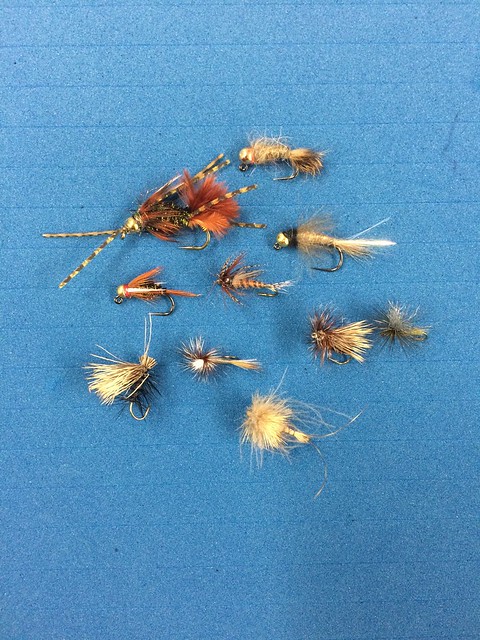
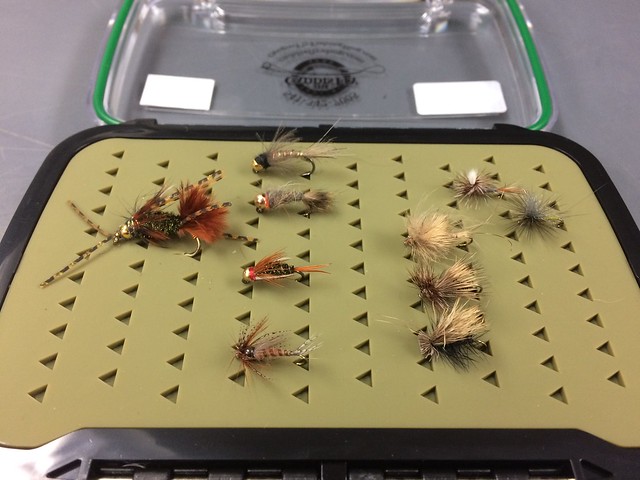
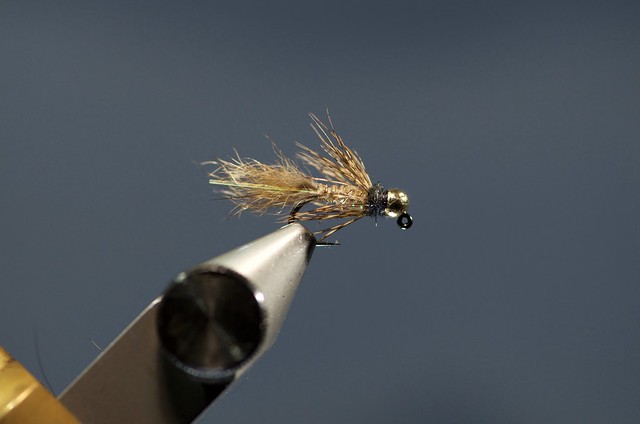
In this video Tony Torrence brings back an old favorite, in a new jig style format. You can’t go wrong with fly patterns which contain peacock herl. Fish this pattern under a dry fly or dedicated nymph rigs. The Zug Bug has caught fish in rivers and lakes for years.

Jigged ZB pic

Jigged Zug Bug

Thread: Veevus 10/0, Black

Hook: TMC C400BL or Daiichi 4647, Sizes 10-16 Size 12 in Video
Bead: Gold Slotted Tungsten Bead, Size 5/32 in Video
Weight: Lead Wire 0.020 4-5 wraps for size 12
Tail: Peacock Sword
Rib: Veevus Small Gold Oval Tinsel
Body: Peacock Herl
Wingcase: Woodduck Flank
Hackle: Hen Back or Brown Hen Hackle

Posted in Fly Tying, Fly Tying Materials and Supplies | Leave a comment

Concerning steelhead fly size ……

jay-nicholas-winter-steelhead-flies-a
I have been busily stocking my fly boxes preparing for winter steelhead season and part of my ritual concerns thinking about the best fly sizes to tie as each season approaches. In some past years I have been particularly enthused with relatively large flies, say on the order of four inch beasts. In those seasons, the three inch steelhead flies were on the small side of my tying efforts.

Over the course of several seasons, however, I have gravitated towards smaller sizes in my most current fly boxes.

Don’t misunderstand me – I dearly love to tie very large flies and still carry these with me every day on the river. That said, and after being on the receiving end of many more pulls and tugs than solid hookups (on 4″ flies), I have decided to downsize my winter steelhead flies and am now tending to tie a lot of Intruder-style flies in the neighborhood of two inches long.

Three Nicholas Steelhead Tube Intruders pictured with a 4" fly I found in a tree overhanging one of my favorite steelhead runs last season.

Three Nicholas Steelhead Tube Intruders pictured with a 4″ fly I found in a tree overhanging one of my favorite steelhead runs last season. My flies are roughly 2″ long.

Here are three of my current creations, in three different color phases, pictured with a very nice Intruder I retrieved from an overhead tree branch bordering one of my favorite steelhead runs last season. The “found” fly (second from left) is nearly 4″ long. My flies are barely a hair over 2″ long.

I took my ruler to a series of commercially available steelhead flies to check out the size of these creations.

My very unscientific sampling of juicy looking Aquaflies and Jeff Hickman’s Fish Taco flies revealed that the vast majority of these proven-effective steelhead flies are on the order of 3″ long.  I’m convinced that this is no accident. I’m convinced that steelhead respond well to flies in this size range under a wide variety of conditions. My current infatuation with filling my boxes with slightly smaller flies is sensible given the fact that I already have a very good supply of 3″ flies on hand.

I would also note that Brian Silvey’s Silveynator is a very effective steelhead fly and it is more on the order of 1.75- 2.0″ long.

Pictured from left to right: Nicholas' Tube Intruder; Brian Silvey's Silveynator; Aquaflies Intruder; Jeff Hickman's Fish Taco.

Pictured from left to right: Nicholas’ Tube Intruder; Brian Silvey’s Silveynator; Aquaflies Intruder; Jeff Hickman’s Fish Taco.

I know that really large flies are supposed to incite steelhead to react with savage grabs. At times they do. Still, I believe that many winter steelhead in waters where I fish on Oregon Coastal rivers are more likely to take a smaller than a larger fly.

The why of my belief is no more than biased opinion and dubious interpretation of fishing observation. It is up to each of us to consider the matter of fly size and then go out and fish the fly we believe is likely to  be effective on any given day, river, and run.

I should add that my preference for a 2″ fly over a 4″ fly holds true particularly in smaller streams — I am more comfortable fishing really large flies in big water than in small water. I wonder of the steelhead just feel more secure in big water than they do in smaller rivers, and feeling secure leads them to feel free to be agressive when shown a very large fly.

Not confident about all this, but for now I’ll be fishing flies in the 2″ – 3″ range more often then flies in the 4″ size class.

A future blog post will address the matter of steelhead fly color preferences.

Jay Nicholas – December 2016

Save

Save

Posted in Fly Tying, Oregon Winter Steelhead Fishing | 5 Comments

Spring 2016 Season at Cedar Lodge

cedar lodge nzIt’s been wet and nasty this spring at Cedar Lodge on the South Island of New Zealand. According to most of the long time residents in the Makarora area there hasn’t been a spring like this in nearly 20 years. We have struggled at times with high water and have already experienced more “no fly” days than we had all of last season. Our most productive fishing days have been when the mid day temps have crept up enough to get the mayflies and Manuka Beetles going. New Zealand is an amazing fishing destination and when the wind and rain have stopped for a day or two we have had some really nice fishing. Rainbow Trout South Island New Zealand

New at the lodge this year is a dedicated “school house” for the kids, a large chicken run for our egg laying friends, a new mower and a repaired tractor. Our landscaping is taking hold in a nice way and the native trees and plants we planted are maturing nicely. The five hole golf course is in as fine a shape as ever. The garden, both in the tunnel house and raised beds is prolific. All is lined up for a nice season ahead.

It’s been great having many return guests this spring at the lodge. While they have a great understanding of the unpredictability of weather in our area, it never seems to lessen the frustration and helplessness I feel when our fishing options are limited by weather and water conditions. Our new clients have also been very understanding and have been so positive when we have been in “scratch it out” mode.

Our last week of the “pre Christmas” season was much anticipated by the kids. The Hopkins family of 5(3 kids 11,13,14) was coming. Returners Rob Masonis of the Wild Steelhead Initiative and Stuart Alsop joined them. With much in common the group was at home together immediately and the week flew by. All three kids would heli to fish and hike during the day and upon return they would play hard until dark with my kids. By the end of the week all the kids were “knackered” and ready for a rest.

We had some fun times this week but I thought I would share one in particular. Ashley Hopkins captured her son Trip and I stalking, battling and eventually catching a beauty of a brown trout.

We have a nice brown spotted in the backwater ahead of us. We watch it cruise around feeding on both nymphs and beetles.

We have a nice brown spotted in the backwater ahead of us. We watch it cruise around feeding on both nymphs and beetles.

This fish is in close quarters. We talk strategy, about making one perfect cast ahead of the fish but not so long that the circular current of the backwater effects the drift.

This fish is in close quarters. We talk strategy, about making one perfect cast ahead of the fish but not so long that the circular current of the backwater effects the drift.

Trip makes an absolutely spot on cast and takes his time with the hook set. The Brown is on! Well done Trip!

Trip makes an absolutely spot on cast and takes his time with the hook set. The Brown is on! Well done Trip!

Rod up, try and keep him in the pool! The instructions and praise are flying out of my mouth and Trip is hanging on, keeping the line tight skillfully.

Rod up, try and keep him in the pool! The instructions and praise are flying out of my mouth and Trip is hanging on, keeping the line tight skillfully.

The net is out and I am thinking we may get a shot at him early in the fight.

The net is out and I am thinking we may get a shot at him early in the fight.

The river we are fishing is higher than normal and he the brown has decided to leave the backwater..... uh oh.. backing is in view. This battle goes on for several minutes, trip gaining and losing.

The river we are fishing is higher than normal, the brown has decided to leave the backwater….. uh oh.. backing is in view. This battle goes on for several minutes, trip gaining and losing.

img_3225

Trip passes me the rod and I am trying to get around, up over and in-between the Matagouri and Bush Lawyer. The plan is to have trip sneak under and around the scrub and I will crash through through and hand him the rod. At this point the line is stuck in the brush.

Trip passes me the rod and I am trying to get around, up over and in-between the Matagouri and Bush Lawyer. The plan is to have trip sneak under and around the scrub and I will crash through through and hand him the rod. At this point the line is stuck in the brush.

I now have the line out and you can barely see Trip under the brush.

I now have the line out and you can barely see Trip under the brush.

We are now clear of the deep and "brushy" spot and while the river is still quick we can carefully get around to a softer water landing spot. To Trip's credit the line has remained tight and the fish is well hooked.

We are now clear of the deep and “brushy” spot and while the river is still quick we can carefully get around to a softer water landing spot. To Trip’s credit the line has remained tight and the fish is well hooked.

A much more comfortable spot to land a fish.

A much more comfortable spot to land a fish.

Nearly  to the net.

Nearly to the net.

Finally to the net and we can all breathe. All of our efforts pay off!

Finally to the net and we can all breath. All of our efforts pay off!

A quick look.

A quick look at a gorgeous fish.

Job well done!

Job well done!

The congratulatory conversation.

The congratulatory conversation.

And on to the next one!

And on to the next one!

Save

Save

Save

A few more fun shots from Cedar this year.

Patsy D on the mowerSouth Island Brown Trout

High Country Fly Fishing New ZealandCedar Lodge Fly Fishing

Cedar Lodge New Zealand Frontage

Save

Save

Save

Save

Posted in Fly Fishing Travel | Comments Off on Spring 2016 Season at Cedar Lodge

The Caddis Fly Angling Shop – Holiday Hours

full-fly-family-holiday-16We Caddis Fly Anglers want to wish you all a very happy holiday this weekend! The shop will be open from 10am-4pm on 12/24, Christmas Eve for if you need any last minute stocking stuffers and/or gifts for Sunday. We will be closed on Christmas day, and resume our normal hours at 9am on Monday, 12/26. We will also be closed on New Year’s Day, resuming normal hours at 9am on Monday 1/2/17.

For Those List Makers in our lives:

Saturday 12/24 – Christmas Eve – Open 10am – 4pm

Sunday 12/25 – Christmas Day – Closed

Sunday 1/1 – New Year’s Day – Closed

Tight ties on those bows and ribbons, everybody. Happy holidays, and Happy New Year!


Save

Save

Posted in Oregon fly fishing links, Shop Sales and Specials | Leave a comment

Last Minute Stocking Stuffer – Finnegan’s Fly Tool

fullsizerender-2


Need a last minute stocking stuffer? Come by the Caddis Fly Angling Shop and snag the Finnegan’s Fly Tool! It’s 7 fly fishing tools in one compact, cool tool that hangs right on your vest for easy access.

Featuring an eyelet cleaning pin, a line cutter, a magnifying inspection lens (for those tiny 20 and 22s), a blood knot tying tail design, hook sharpening file, magnetic fly holder and even a church key, this tool has everything an angler could possibly need! All for $15–what a steal for a happy holiday.

Made locally, the Finnegan’s Fly Tool is the perfect gift for your favorite angler. Available at The Caddis Fly Angling Shop.


Save

Posted in Oregon Fly Fishing Tips, Shop Sales and Specials | Leave a comment

What do you get the fisherman who has everything? Something to organize his stuff!

As the gift giving holidays approach, it can be intimidating to think of something to get that special angler in your life. What can you get the fisherman who already has everything!?

Check out our gift guide video here:


For great advice on how to organize your tying materials, visit Flymen’s awesome blog post here .


Posted in Fly Tying, Fly Tying Materials and Supplies | Leave a comment

Take Action Today: Protect Wild, not Manufactured Fish

Click it and sign it now.

From the Native Fish Society:

How can fish that are manufactured in a hatchery be endangered? How can fish that are mass produced by the millions each year deserve protections under the Endangered Species Act — our nation’s most important species protection policy? How can an agency that says hatchery fish harm wild fish, turn around the next day and say hatchery and wild fish are practically the same?

These are the questions we’ve been asking since late October, when the federal agency in charge of recovering threatened salmon and steelhead, the National Marine Fisheries Service, released its proposal to protect 23 hatchery salmon and steelhead programs under the Endangered Species Act. You read that correctly, Endangered Species Act protections for hatchery salmon and steelhead — fish manufactured to support fisheries, not recover wild fish.Protect Wild

Why does this matter? If these hatchery stocks receive Endangered Species Act protections, a terrible precedent would be set: hatchery fish manufactured for harvest and best adapted to life in captivity would receive the same bedrock species protections as wild fish, which are best adapted for survival in nature. Such a precedent would further imperil wild salmon by ignoring their essential connection to their rivers of origin and blur the purpose of Endangered Species Act protections for all species. Let’s not forget, the intent of the Endangered Species Act is to protect and restore America’s imperiled wild species and their habitats, not manufacture them.

Just as concerning, the National Marine Fisheries Service’s proposal to protect these manufactured salmon and steelhead goes against the last 40 years of peer-reviewed scientific literature, which identifies significant differences between hatchery and wild fish. The agency, at minimum, needs to present the scientific justification for its proposal and provide the public with a sufficient opportunity for review and comment before it takes any action.

If you love wild salmon and steelhead and want to see them recovered in their native habitats, the time to speak up is now! Please sign our Action Alert and urge the National Marine Fisheries Service to delay its decision until it prepares an environmental impact statement, which outlines alternative actions and presents the best-available science supporting its decisions.

Posted in Oregon Conservation News | 2 Comments

The Twelve Minute Intruder – Winter Steelhead Tube Fly

Here is my blue/black 12 Minute Intruder.

Here is my blue/black 12 Minute Intruder.

This is going to be a quick post for a relatively quick winter steelhead tube Intruder. I tie this fly in about 12 minutes and it catches steelhead.

Tube: 40/40 ProSportfisher tube
butt: Chartreuse Ice dub
Rear Post: Kingfisher Blue Schlappen tied in by tip
Body: Fl Blue Lagartun Carded Flat Braid
Shoulder Post Prop: Prosportfisher Marble Fox Blue
Motion: Black Ostrich tied in all around
Flash: Lateral Scale (two strands each side)
Wing: Blue Dyed Grizzly Saddle
Collar hackle: Black Schlappen
Dumbell Eyes: Hareline Double Pupil Dumbell Eyes

This is a very effective steelhead tube fly that may be tied basically as shown with the option of making it more or less fancy and in different color phases. This is a blue/black color but I have fished this fly with success in Red/black and a pink hue also.

Ice Dub in waxed loop.

Ice Dub in waxed loop.

Ice Dub at Butt station.

Ice Dub at Butt station of my 40-40 tube. I have cut the hook guide short for this fly.

KIngfisher Blue Schlappen.

KIngfisher Blue Schlappen.

Butt Station is now compete.

Butt Station is now compete.

Lagartun Carded Flat Braid.

Lagartun Carded Flat Braid.

Pro Sportfisher Marble Fox.

Pro Sportfisher Marble Fox.

This is a pinch of Fox fur with guard hairs. I have cut it to be about its full length and extend to the butt station of the fly.

This is a pinch of Fox fur with guard hairs. I have cut it to be about its full length and extend to the butt station of the fly.

I have placed the fox into the waxed dubbing loop and spread it out before spinning it.

I have placed the fox into the waxed dubbing loop and spread it out before spinning it.

I have spun the fox tail fur and it is ready to fold.

I have spun the fox tail fur and it is ready to fold.

I am folding the spun loop by creasing it back and continually stroking it while wrapping it around the tube.

I am folding the spun loop by creasing it back and continually stroking it while wrapping it around the tube.

I have wound the folded fur around the tube like a hackle and this will prop the ostrich on the shoulder station.

I have wound the folded fur around the tube like a hackle and this will prop the ostrich on the shoulder station.

I have tied in black ostrich fibers all around the shoulder station. I could have spun the ostrich in a loop but decided simply to apply it in dispersed clumps around the tube.

I have tied in black ostrich fibers all around the shoulder station. I could have spun the ostrich in a loop but decided simply to apply it in dispersed clumps around the tube.

I have trimmed the ostrich butts from the tube.

I have trimmed the ostrich butts from the tube.

Time for the Lateral Scale.

Time for the Lateral Scale.

Two strands of Flash on each side of the fly.

Two strands of Flash on each side of the fly.

I am selecting two Grizzly saddle hackles for the fly.

I am selecting two Grizzly saddle hackles for the fly.

Grizzly hackles applied to fly.

Grizzly hackles applied to fly. Frankly, these are a little longer than I would prefer in hindsight.

Schlappen to finish off the collar of the fly.

Schlappen to finish off the collar of the fly.

Dumbell eyes will cause the fly to swim true.

Dumbell eyes will cause the fly to swim true. I will next trim the tube and melt the end.

Front view of the 12 minute Intruder.

Front view of the 12 minute Intruder.

Rear view of 12 minute Intruder.

Rear view of 12 minute Intruder.

I hope you find this a little useful as you approach your fly bench in the next few weeks.

Jay Nicholas – December 2016

Posted in Fly Tying, Fly Tying Materials and Supplies | Leave a comment

Jigged CDC Pheasant Tail Nymph Fly Tying Video

The Jigged Pheasant Tail Nymph is one of our most effect “hopper dropper” nymphs. It’s hook rides up and reduces snags and lost flies. You can tie this fly in a variety of sizes, we like it best from #12-16. It has it all in terms of fish attraction, cdc, flash, pheasant, peacock and a tungsten bead. This fly is highly effective wherever you fish it.

Jigged PT

Jigged CDC Pheasant Tail Nymph

Thread: Veevus 10/0, Rusty Brown
Hook: TMC C400BL or Daichi 4647 sizes 10-16
Bead: Copper Slotted Tungsten Bead
Weight: Lead Wire
Tail: Pheasant Tail
Rib: Copper Brassie Ultra Wire
Abdomen: Pheasant Tail
Wingcase: Large Pearl Mylar Tinsel
Hackle: Rusty Brown CDC
Thorax: Peacock Herl

Posted in Fly Tying, Fly Tying Materials and Supplies | Leave a comment

Managing Rabbit and Finn Raccoon Zonker Strips

Here are some matted rabbit strips straight out of the package.

Here are some matted rabbit strips straight out of the package.

Various  rabbit and Finn Raccoon Zonker strips make for great flies, but there are some properties of the material that can be confusing and intimidating.

The first thing that might disappoint you is the extent to which the strips might be matted and kinked as you remove them from the package. This is normal – after all, the strips have been wadded together and stuffed into a small bag and have probably taken on lots of odd shapes. It is impossible to tie a nice looking fly before I take these strips, hold them in kitchen tongs, and hold them over a tea kettle. The steam will allow the strips to loose the kinks acquired in the plastic package and you will now be able to stoke and straighten them out and tie a very nice orderly fly.

The same rabbit strips - after steaming over a tea kettle.

The same rabbit strips – after steaming over a tea kettle.

This photo shows the same Rabbit strips first pictured after being steamed and straightened out – much nicer!

Finn Raccoon Zonker strips straight out of the package.

Finn Raccoon Zonker strips straight out of the package.

Here is the same Finn Raccoon Zonker strip (cut in half) after steaming over a tea Kettle.

Here is the same Finn Raccoon Zonker strip (cut in half) after steaming over a tea Kettle.

The two photos above show Finn Raccoon Zonker strips before and after steaming – illustrating the value of steaming the strips over the tea kettle before tying.

Another natural feature of rabbit and Finn Raccoon Zonker strips is the fact that the hair length can vary considerable from package to package – just as the leather on some hides is thicker than it is on others. So don’t be surprised if you find variation in hair length and hide thickness in different packets of rabbit and Finn Raccoon.

Remember also the fact that the hair on each animal is not the same length or texture on the entire hide. This means that for both Zonker strips  you are likely to find variation in hair length along the strip.

Cross cut rabbit tends to have shorter hair on both ends of the strip and longer hair in the middle of the strip.

Zonker cut rabbit strips tend to have shorter hair at the shoulder end of the hide and longer hair at the rump end of the hide. Zonker cut Finn Raccoon may have similar length hair along the entire strip but you might find a gradient in the hair length along the strip, plus a gradient in the amount of guard hairs along the strip.

I usually purchase entire rabbit hides rather than individual packets of strips for two reasons. First, they are usually not as crinkled and mis-shaped from being stuffed into little bags. And second, I know that I will have strips from the entire rabbit hide and I can select hair from various portions of the hide according to the desired properties for the flies I am going to tie.

4 strips selected from the center of a complete stripped rabbit hide.

4 strips selected from the center of a complete stripped rabbit hide.

The photo above shows 4 strips I took from the middle of a stripped hide. Note how straight they are – with no steaming. In this photo the shoulder of the hide is at the right and the rump of the hide is at the left.

The upper rabbit strip was cut from the left end (rump) and the lower strip was cut from the right end (shoulder) of the rabbit strips.

The upper rabbit strip was cut from the left end (rump) and the lower strip was cut from the right end (shoulder) of the rabbit strips.

The photo above shows a short piece cut from one of the strips photographed above. Although this rabbit has hair that is very similar in length at the rump and shoulder ends of the strip, the texture is clearly different, and many strips have hair that is noticably shorter at the shoulder end of the zonker strip.

Depending on the properties of the individual strip, I may not use more than half of each strip for my steelhead flies, because I tend to prefer strips with very full, fluffy hair and this is most commonly found at the rump end of the strip.

I hope you have found a few morsels of useful information here, and will not despair when you find rumpled rabbit strips or hair that varies is length along each strip.

Jay Nicholas, December 2016


Posted in Fly Tying, Fly Tying Materials and Supplies | 2 Comments

Tube Fly Tutorial on Saturday December 10th

I’ll be at the Caddis Fly Shop on December 10th to present a tutorial on the basic approach to tying traditional style flies on tubes. By traditional flies I’m referring to patterns like the Polar Shrimp, Green Butt Skunk, and Thor.

Here are three traditional winter steelhead patterns that I tied on tubes - examples of the flies I will  be tying at the shop on December 10th.

Here are three traditional winter steelhead patterns that I tied on tubes – examples of the flies I will be tying at the shop on December 10th.

These three fly patterns are time-tested and proven effective when fished for winter fish under a wide variety of conditions across steelhead territory. Many tyers remain insecure, confused, or otherwise deterred from tying on tubes. This tutorial session will show how simple it can be to tie steelhead-catching flies on tubes with a minimum ecnomic investment and minimum of confusion too.

I will set aside some time throughout the day to show you the entire variey of tube fly tying products that we carry at the shop, and this is a very extensive array of tubes, weights, hook guides, junction tube, cones, disks and so forth. The most important concept I’d like to convey is the fact that the basic components of tube flies are very simple and the flies I’ll show off require only a tube, a mandrel to hold the tube, one weight, and one cone to cover the thread at the head of the fly (plus adding a little motion and weight).

This is just how simple it can be to tie traditional steelhead flies on tubes.

This is just how simple it can be to tie traditional steelhead flies on tubes. This photo shows the mandrel to hold the tube, a tube that includes a hook holder, two versions of tube weights, and two colors of cones to finish the head of the fly. Yes, it can be this simple.

I will tie using only the items pictured here, namely a flexi needle, a flexitube, a tungsten raw weight, a flexiweight, and an ultra sonic disk. Of course I’ll also use feathers, thread, body material, but the point I want to emphasize here is that the few items I’ve mentioned here are the basics needed to tie a great winter steelhead fly on a tube.

Mark your calendar for December 10th from 11 to 3, because I’ll be at the Shop to help any aspiring tube fly tyers who are able to join me.

Of course I’ll also be prepared to tie a Possum Leech and an Intruder on a tube, but first priority will be placed on de-mystifying and simplifying the process of tying on tubes.

I hope you can join me!

Jay Nicholas

Save

Posted in Classes and Instruction, Fly Tying | Leave a comment

Town Lake Steelhead Report

Jack Harrell knows Town Lake steelhead like no one else. This photo is from a recent trip when he guided me and Guy Allen on the Lake.

Jack Harrell knows Town Lake steelhead like no one else. This photo is from a recent trip when he guided me and Guy Allen on the Lake.

I can report that fly fishing for landlocked hatchery summer steelhead at the Town Lake is slow but there are opportunities to have some very challenging fishing here when the rivers are otherwise un-fishable.

On a recent guided trip to the Lake with Jack Harrell at the oars we found one fish that took our fly and held it long enough and securely enough to be hooked well.  Three other steelhead took our flies into their mouths only to have us pull them out without actually hooking the fish securely.

First good run across the lake.

First good run across the lake.

Getting close now.

Getting close now.

Ready for release in the net.

Ready for release in the net.

Thanks for a great day on the Lake Jack. Our tippets were 5X and the most productive flies included glass bead size 10 buggers, size 14  bead head Hare’s ears, and simple size 14 chironimids.

ODFW stocks these fish into the lake from the trap on Three Rivers but not very many surplus steelhead were available this season. Still, we found enough to keep the day interesting and the casting is always a challenge. I fished a #4 Echo Switch rod in the Glass family with a Nautilus fly reel and Airflo Floating line. Not that it matters – the most important matter is to fish small tippets and small flies that are cast precisely in the proper zone ahead of the fish. They will sometimes spook before the fly hits the water but not always. Sometimes they lunge at your fly and devour it – triggering much excitement. Windy days do not fish well because it is difficult to spot the fish. Almost all of the fishing we do is sight fishing but on occasion I have had success bind casting an egg sucking leach in deeper water near the dock.

I’m sure you will have fun (fish or not) if you give this fishery a try – unless the darn fish make their way out of the lake and back into the Nestucca River!

Good Luck everyone!

Jay Nicholas, December 2016


Posted in Coastal Steelhead Fishing, Fishing Reports | Leave a comment

Understanding Schlappen Feathers for Fly Tying

Comparing the Schlappen feathers in two packages of 5" - 7" feathers.

Comparing the Schlappen feathers in two packages of 5″ – 7″ feathers.

I have been using Schlappen feathers on a regular basis lately while tying up my boxes of winter steelhead flies. Fact is, I have been very surprised and pleased with the overall quality and diversity of the feathers I have obtained lately, and I guess it would be fair to say that my recent experience is but one more in a long string of situations where I continue to learn even after having more than fifty years experience as a fly tyer under my belt.

It was my routine practice to avoid purchasing Schlappen feathers, preferring instead to use hand selected saddle feathers for use as collars and beards on my salmon and steelhead flies. I was fond of being able to pluck feathers from a full saddle patch, from the shortest feathers at the top of the patch to the longest webbiest feathers at the base of the saddle patch.

In case you are not already familiar with these feathers, I would describe Schlappen as the softest, dullest feathers found near the base of the rooster’s tail and these lay between the saddle feathers on the rooster’s back and the long tail feathers.

I formerly considered Schlappen to be junk feathers, far less desirable than saddle hackles.

Lately, however, I have completely reconsidered that opinion and done a full reversal of my decades-long disdain for these feathers. I have tied flies with randomly selected packages of Hareline Schlappen during the process of tying a wide variety of winter steelhead flies, including Intruders, and have been overwhelmingly pleased with the results.

Sure, there are waste feathers in each package and the proportion of junk feathers will vary between packages and also depend on the variety of flies that you intend to tie with any specific package.

I just did an analysis of a random pack of black Schlappen and here my opinionated assessment. One package of Schlappen had had 84 feathers in it. i discarded 25 feathers, set aside 20 feathers that had good tips and 29 feathers that met my standards for high quality wet fly collars from tip to webby base. Priced at under seven bucks for the package, I’m pleased to get that many good feathers for my steelhead and salmon flies. Most of the feathers that I discarded as so-called “junk” could actually have been used for smaller flies beards, tails, and various smaller wet flies.

29 super select Schlappen feathers prepared for use as collars on winter steelhead flies.

29 super select Schlappen feathers prepared for use as collars on winter steelhead flies.

The 29 super select Schlappen feathers are pictured above, after I stripped off the stem where it became too thick to wind on a tube or hook.

How representative were the results of this Schlappen package? I have found an occasional package with lower percentage of feathers that met my standards and a few packages that had an even higher proportion of super feathers.

Stem thickness of Schlappen feathers – tends to be slender, more so I think than you will find on most strung saddle feathers. Slender stems make it easier to wind the collars and reduce bulk on my flies, so I have been very favorably impressed with these slender stems.

Overall length of Schlappen feathers – these feathers are in packages labeled as 5 – 7″. When the wholesale dealer gets these feathers from the producer, they are on a sewn string that is roughly four feet long, with the shortest feathers on one end and the longest feathers on the other end. These long strings are then cut into short sections for packaging. As a result, any specific package may be from the short end, the middle, or the long end of the feathers sewn together on string.

The photo at the beginning of this post illustrates two different strings of Schlappen that represent about the two extremes of feather lengths that you will find in any given package of these feathers. The average length of black Schlappen feathers in the one package is about 5″ with some feathers as short as 4″. The average length of the purple Schlappen feathers is closer to 8″ with a few feathers nearly 10″ or so. These two packages represent extremes of the packs that you are likely to find on the pegs at your local fly shop, and you are more likely to find feathers that are in the range of 5″ to 6″ than smaller and larger feathers.

I find that I like to get a few packages of the shorter feathers and a few packages of the longer feathers – that way I have a broader range of feather qualities to use on my flies.

I hope that this post helps answer some of the questions you may have about Schlappen feathers. My enthusiasm for tying with these has blossomed in the last two months and I think that my winter steelhead flies have benefitted greatly from my new perspective.

Questions? Shoot an email the Caddis Fly Shop and I’ll try to answer.

Jay Nicholas, late November, 2016


Posted in Fly Tying, Fly Tying Materials and Supplies | 2 Comments

Hareline Fly Tying Kits – Quality for Beginner or Aspiring Tyer

Hareline materials only fly tying kit has all first rate products and step-by-step instructions to tie 20 great fly patterns.

Hareline materials-only fly tying kit has all first rate products and step-by-step instructions to tie 20 great fly patterns.

Our friends at Hareline Dubbin in Monroe Oregon have recently introduced three new options in fly tying kits that I have had the opportunity to examine recently. Nicely done. Following I’ll note some of my observations on these three kits. They are all in stock and available as gifts or for the beginner who is about to venture into the world of fly tying for the first time.

First, the fly tying instruction booklet is very good, providing clear instructions regarding how to tie 20 of the best trout flies that are fish catchers in most waters around the world. In addition, the skills you will exercise while tying these patterns will provide a foundation for tying flies for salmon & steelhead,  bass, pike musky and bonefish at the least. Sorry, got carried away.

The instructions are good, the materials are first rate too, from threads to dry fly hackle to dubbing and hooks and so forth. All of the materials contained in this kit are the same as I select to tie flies myself, and that is my test for quality. This is not to say that there are not other high quality fly tying kits out there, only to say that I have personally inspected these kits and believe that they represent excellent value and price, with far more and diverse selection of materials than anyone could possibly purchase for a similar investment in normal packaging sizes.

Except for the spooled materials, all of these packaged materials generally represent a smaller quantity than normal packaging that you would find in fly shops. Downsizing on the materials makes perfect sense in fly tying kits because a person would not normally want to get larger quantities of many of these materials until deciding which patterns they want to tie most often.

What is in the Hareline materials-only kit? Briefly, you get two sizes of beads, six sizes of hooks, six spools of veevus thread, copper wire, gold wire, silver gold mylar tinsel, yellow floss, pearl krystal flash, sparkle emerger yarn, parapost wing, Mcfly foam, three colors of chenille, a half Hare’s mask, five colors of dubbing, rubber legs, elk hair, comparadun hair, rabbit strips, crosscut rabbit strips, marabou feathers turkey tail feathers, keough sadddle feathers and grizzly saddle feathers, tailing feathers for dry flies, saddle feathers, ringneck pheasant feathers, partridge soft hackle feathers, a half grizzly cape suitable for tying wings and all sizes of wet fly collar hackles, peacock herl, two colors of bulcktail hair, Loon water based cement, and a Hareline drink coaster, all contained in a useful plastic box.

What flies will the instruction booklet cover? San Juan Worm. Brassie. Bead Head Caddis. Prtridge & Yellow soft hackle. Girdle Bug. Woolly Worm. Woolly Bugger. Hare’s Ear Nymph. Pheasant Tail Nymph. Darian’s Kool Kat Soft Hackle. TP’s Little Nymph Thing.  Buck Tail Streamer. Bead Head Bunny Leech. Comparadun. Elk Hair Caddis. Adams. Light Cahill Parachute. Black Ant. Griffith’s Gnat. Black Gnat Dry Fly.

Hareline also offers two complete kits, the first includes an economy vise and economy tools. This vise and tools are perfectly fine for the beginner who is not sure how dedicated they will be to the adventure of fly tying. This is the Hareline Economy Kit.

The superior full fly tying kit offered by Hareline is the one I am most impressed with and includes a premium vise and premium tools.  The Hareline Premium Fly Tying Kit includes mostly USA tools and this is the best choice for the beginning tyer who is likely to continue tying – because the tools are more durable and in my opinion perform at a higher level than the imported economy tools.

Tools include a vise, a bobbin, scissors bodkin, hackle pliers, hair stacker, and a whip finish tool.

The instruction booklet also shows the proper way to secure a hook in your vise, , dub material on thread, start your thread on a bare hook, thread a bobbin, and as previously noted, tie 20 great trout flies.

Jay Nicholas, November 2016

Save

Posted in Fly Tying, Fly Tying Materials and Supplies | Leave a comment

Hydroelectric Dams: Major source of global greenhouse gas

Hydroelectric dams have had a devastating impact on anadromous fish populations, from inundating spawning areas to changing historic river flow patterns and raising water temperatures, and most importantly blocking passage of salmon and steelhead between the streams and Pacific Ocean.

But dam apologists often point to the carbon emission avoidance of using hydroelectric power. A new study from Washington State University finds that methane, which is at least 34 times more potent than another greenhouse gas, carbon dioxide, makes up 80% of the emissions from water storage reservoirs created by dams.

Mt. Hood Rises behind the Dalles Dam on the Columbia River This Dam Has Two Fish Ladders and a Powerhouse Collection System 05/1973

From The Guardian:

“I think this study shows that dams as a source of energy aren’t without their greenhouse gas costs,” says Bridget Deemer, a research ecologist at the US Geologic Survey, who led the study during her prior position as a research associate at Washington State. “Even though it’s a renewable source of energy, people should keep the greenhouse gas side of the picture in mind when making planning and policy decisions regarding dams.”

The research, which examines 100 recent studies on greenhouse gas emissions from 267 large reservoirs around the world, also calls into question the wisdom of building more hydroelectric dams as countries try to nix their dependence on coal, natural gas and oil. An estimated 3,700 new dams are proposed or under construction around the globe, the study reports. It suggests the hydropower industry will need to control its emissions.

According to the Seattle Weekly, some reservoirs emit more greenhouse gases than fossil-fuel-based energy providers, such as natural-gas power plants.

Posted in Oregon Conservation News | 1 Comment