State Land Board votes to privatize Elliott State Forest

Yesterday, via the Register-Guard:

Oregon’s new state treasurer and new secretary of state teamed up Tuesday to vote for the potential sale of the Elliott State Forest, rejecting Gov. Kate Brown’s recently revealed plan to keep public the 82,500-acre forest near Coos Bay.

Brown expressed frustration about the Tuesday vote.

“Having heard from hundreds of Oregonians and after long deliberation, it is clear to me that it is in the best interest of Oregonians to ensure public ownership of the Elliott State Forest for future generations,” she said. “Retaining the Elliott as a state asset is the proper exercise of the fiduciary responsibility of the state.”

The forest includes habitat for northern spotted owl and marbled murrellet, a pair of federally protected birds, as well as coho salmon, a federally protected fish.

Save The Elliott State Forest from Cascadia Wildlands on Vimeo.

Sean Stevens, Executive Director of Oregon Wild made the following statement:


Oregon has long prided itself on its environmental pedigree, touting its conservation leadership. This perception, some might say mythology, that is loudly proclaimed by our politicians at every available moment was dealt a heavy blow today when Democratic Treasurer Tobias Read joined with Republican Secretary of State Dennis Richardson to sell off the Elliott State Forest. The final decision was kept open by Governor Kate Brown, who has reversed course in the last week and come out strongly for a public option for the Elliott.

But a greater problem remains.

Oregon Democrats like Tobias Read have for years run campaigns around their environmental bona fides, only to continue to allow the state to fall further and further behind when it comes to environmental protections. Today’s vote underscores that when it comes to timber interests and public lands, Oregon Democrats are willing to look the other way. Like coal is to West Virginia, clearcut logging is to Oregon.

Combined, Read and Richardson received $13,000 from the logging interests trying to purchase the Elliott State Forest, not to mentioned tens of thousands more from the industry at large.

The deal is supposed to be finalized by the end of the year. Get involved with local conservation organizations to try to help #SaveTheElliot.

Posted in Oregon Conservation News | 1 Comment

2017 Flyfishing Film Tour (F3T) in Corvallis on Sat. Feb 18

Join the rascally Bluebacks for the annual film festival to raise funds for the chapter steelhead surveys in the Siletz River Basin, SOLV River cleanups, and the Linn-Benton Salmon Watch for children. These activities depend on your support.

F3T

As in the past, they will have some great silent auction items and will welcome Two Towns Ciderhouse and Block 15. They will also be serving pizza and wraps if you get a bit hungry.

So please join The Bluebacks Saturday (Feb 18th)! Doors open at 6:30 and the films will start at 7:30.

Parking is across from LaSells Stewart Center in Reser stadium parking lot.

Buy tickets at Watershed Fly Shop with cash or check and online here.

Posted in Oregon Fly Fishing Clubs and Events | Leave a comment

Letter from Cedar Lodge, “Summer” Update 2017

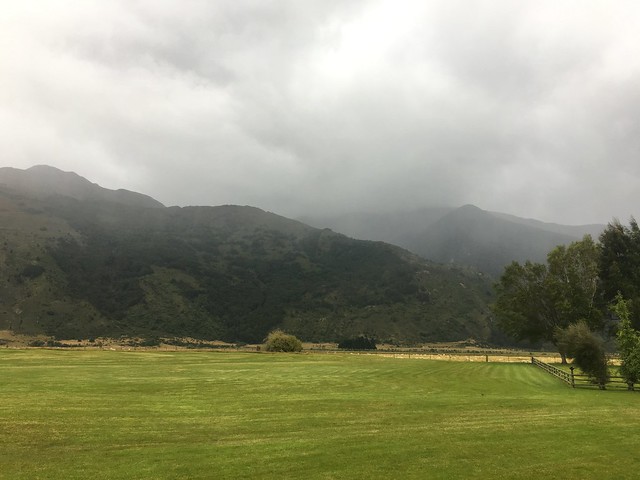
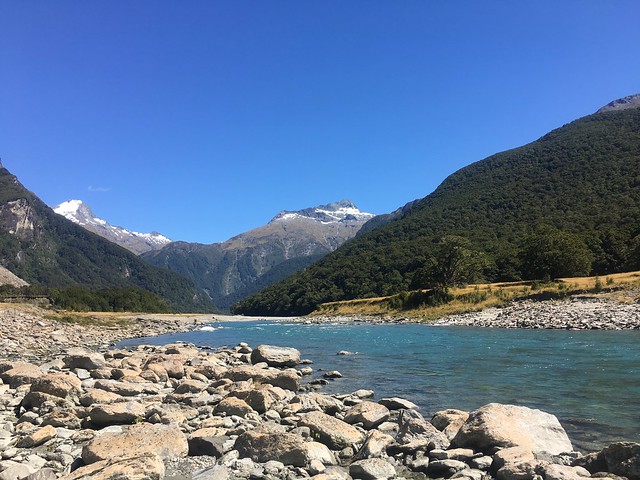
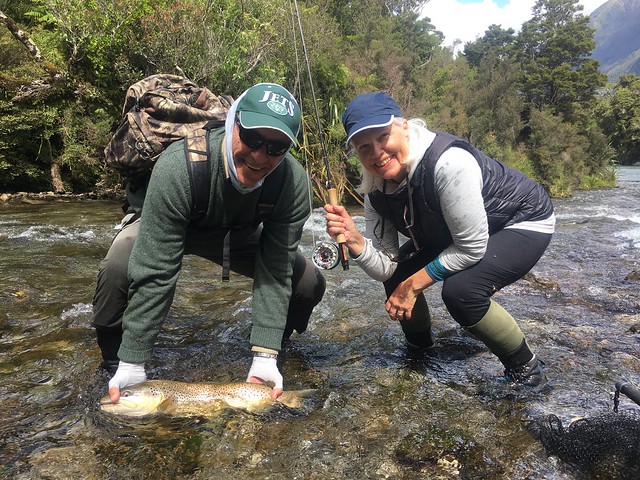
NZ summer 2017

Dear Dale and Charles,

I know it was a tough decision not to come to New Zealand this year. Life throws curveballs and we have to adjust. But… if it makes you feel any better this year has been a “once in every 40 years – cold ass summer”.

Our “summer” season has been plagued with constant cold fronts bringing more wind and rain than anyone can remember. Rivers have been high, cold and “unfishable” much of the season. Cicadas have been chirping for a month now but only during the occasional periods of heat.

We’ve had a few magical days, as you well know the South Island will give you that. West Coast Rivers on the drop with reasonable weather can be fantastic. But these have been minuscule gaps in an overall nasty onslaught of wet, cold and windy weather.

NZ summer 2017

NZ summer 2017

I have been hesitant to report (complain) on the season here at Cedar Lodge as I know the Pacific Northwest has been smashed with snow and ice. Hopefully you are able to catch some Winter Steelhead behind the fronts on the Oregon Coast.

What does a lodge owner do when the weather is constantly limiting your options for fishing and flying you ask?

Drive to fishing, yes we certainly do this, but again when it’s blowing 45-knots and pelting down rain on a swollen river are we having much fun?

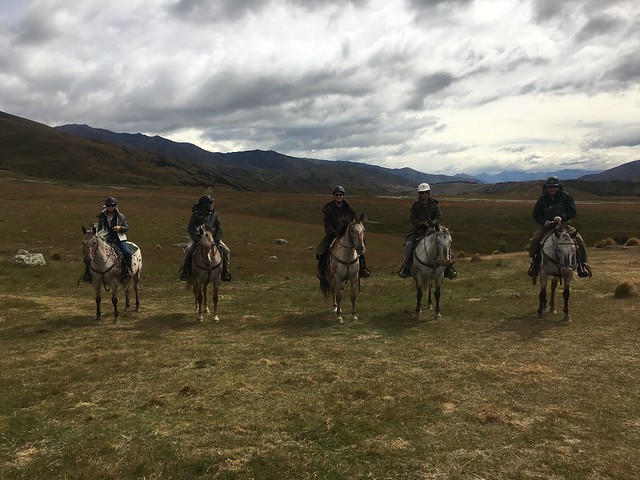
Fortunately we are about one hour from Central Otago wine region. The 45th parallel south is right up there with the Willamette Valley and Burgundy France in terms of noted Pinot Noir. I have been a wine tour guide more than I would like this season. On a positive note we have found some real gems to serve at the lodge. We stop at a couple of wineries, lunch, fruit stand, real fruit ice cream and home. Not fishing, but a New Zealand day out for sure. Additionally I have done a day of Horse Trekking, a day at the track (Highlands Motorsport Park is pretty cool) a day in town, and even a day at the movies. Yep not ideal but not sitting at the lodge playing cards either.

NZ summer 2017

NZ summer 2017

I haven’t give up on the season but I have to admit the conditions do wear on you. The long term forecast is for things to get better late February and March, one can hope!

Your Friend

Chris Daughters

Posted in Fishing Reports, Fly Fishing Travel | 1 Comment

A Chance for Trump to Save Our Streams

An awesome op-ed in the NY Times by Trout Unlimited CEO, Chris Wood.

Over the past 20 years, mining operations have buried or degraded nearly 2,000 miles of streams in Appalachia. It goes without saying that cutting the tops off mountains and dumping them in streams is bad for fishing. It is also bad for anyone who cares about clean water.

Brook trout in cool water

Which brings me to President Trump, who in an interview after the election said that “clean water, crystal clean water is vitally important.” The president is correct, and now he can take a first step toward protecting our water resources — and incidentally, earn a place as a conservation champion in the eyes of the nation’s hunters and anglers — by vetoing Congress’s misguided vote to roll back stream protection.

Posted in Oregon Conservation News | Leave a comment

House votes to kill BLM Planning 2.0 Rule

From the Denver Post:

The U.S. House of Representatives on Tuesday voted to kill a federal rule that gives Americans more of a voice in large-scale planning for projects using public land. The action launched by House Republicans, including sponsors Rep. Scott Tipton of Colorado and Liz Cheney of Wyoming, would nullify the Bureau of Land Management’s “Planning 2.0” rule that took effect in December. That rule governs all planning for future uses of 250 million acres of federal public land that is concentrated in the West.

Summer storm at the Capitol

Last week, Congress killed the Stream Protection Act that required efforts to protect waterways near coal mines.

Folks, it’s time to fight. Send your donations to conservation organizations. Call lawmakers. Fight.

Posted in Oregon Conservation News | Leave a comment

Torrence’s Black and Blue Scandi-Tube Fly Tying Video

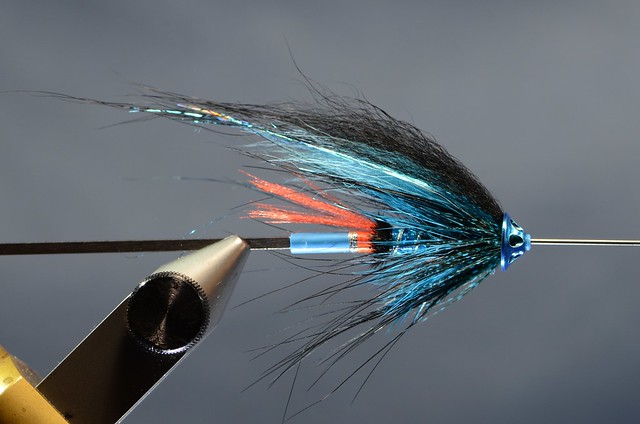
In this fly tying instructional video Tony Torrence demonstrates how to tie a Scandinavian Style Tube Fly using the Protube system by ProSportFisher. The Protube system allows the tier to control the every aspect of their creation with the addition of weight, color, and turbulence. In this fly tying tutorial Tony demonstrates the use of the Flexi weight and Pro Sonic Ultra Sonic Disc to tie his favorite Summer and Winter Steelhead Fly.

Blk n Blue Tube

Torrence’s Black and Blue Scandi-Tube

Tube: ProSportFisher Blue 40/40, Medium Flexiweight (15mm)
Tip: Lagartun or Veevus Small Oval Silver Tinsel
Tag: Danville Fl. Orange Floss, use a single strand

Tail: Fl. Orange Fluoro fiber
Butt: Black Ostrich Herl
Rib: Lagartun or Veevus Medium Oval Silver Tinsel
Body: 2/5 Large Veevus Teal Holographic Tinsel, 3/5 Hareline Black STS Trilobal Dubbing
Hackle: Black Medium Blue Eared Pheasant
Wing: Hareline Kingfisher Blue Arctic Fox
Flash: Angler’s Choice Blue Ice Angel Hair
Hackle: Hareline Kingfisher Blue Guinea Fowl
2nd Wing: Black Pro Marble Fox or Arctic Fox
Disc: Blue Chrome Pro Ultra Sonic Disc

Posted in Fly Tying, Fly Tying Materials and Supplies | Leave a comment

North Coast Fly Fishing Report – Late January 2016

OLYMPUS DIGITAL CAMERA
I’ve had a week to swing flies in several locations around the North Coast this past week. Wow, this has been a classic winter steelhead experience, as in, a textbook situation.

It is no surprise that swinging flies for winter steelhead is a daunting proposition. Fishing beads or egg patterns under a strike inceptor is, on average, more likely to result is success than swinging flies.

Anyone who knows how averages are calculated will understand that these statements conceal the wide range of conditions that make up the average. Here is what I mean by this polite explanation.

So here is the real story. There are times when the dead drifted fly or lure is far more effective than the swing fly—but—there are times when winter steelhead respond really well to a swinging fly. This is one of the secrets of a relatively small proportion of anglers and fly fishing guides who specialize in swinging flies for winters. These folks know how to target optimum water conditions and locations where the probability of hooking a winter steelhead on a fly.

The anglers you see who are swinging flies throughout the winter know that they have a genuine chance of getting a grab. They are not crazy. It can and does happen on a regular basis. Sure, they could hook more fish by dead drifting flies and beads, but they have decided to dedicate themselves to the swung fly. Not crazy, just dedicated, persistent, and stubborn.

There are rare days when the swung fly is downright killer for winter steelhead, and I do mean rare. But these days do exist.

This report is not a about one of those days.

I swung flies several days last week, under very good conditions. I fished with friends, and for four rods we hooked one steelhead. One winter among four rods across four days. I also fished with friends drifting a river in a drift boat – bobber dogging a bead under a strike indicator. I fished this way for two half days, hooking and loosing one steelhead.

I’m hoping that this report will serve to communicate the fact that anglers can hook winter steelhead using a wide variety of flies and lures on a fly rod. I saw guided anglers fishing beads and egg patterns on fly rods when I was drifting the river. Upon questioning six anglers over two days I found that their collective catch amounted to two steelhead hooked on beads. None of the guided anglers were swinging flies.

On the other hand, first hand reports from three friends who have been swinging flies through the past week indicate that they have hooked two fish, loosing both.

Overall, these stories serve to illustrate a few points. First, winter steelhead can be tough to catch. Second, both swinging flies and beads will hook fish. Third, fishing beads is no guarantee that you will catch buckets of steelhead – swinging flies can also bring on the magnificent grab.

Overall, I’d have to say that steelhead fishing has been fairly slow on the North Coast in the reaches I have been fishing. Some folks fishing conventional gear have done better, some about the same, with a fish or so a day hooked.

The photos following are from this last week supplied by my friend Guy Allen. The anglers pictured are friends who cast far better than I do. The fellow throwing a great cast clear across the river to cover a far-side tailout is Tim from the Caddis Fly Shop. Nice cast Tim!

I’m headed upriver again today, with two Echo OHS rods strapped to my truck. Wish me luck, because I’ll be swinging some of my recent Tube Intruders with great anticipation. I’m due for a grab soon, whether today, next week, or next month – I’ll be ready.

Jay Nicholas  – Winter season 2016/17


PS:  I fished 9 AM – 4PM before heading home to my family. Great water, just a little lower than I prefer to swing — no grabs.  Next time. Next time.

OLYMPUS DIGITAL CAMERA

OLYMPUS DIGITAL CAMERA

OLYMPUS DIGITAL CAMERA

OLYMPUS DIGITAL CAMERA

OLYMPUS DIGITAL CAMERA

Posted in Fishing Reports | 2 Comments

Senyo’s Aqua Veil and Hareline Polar Chenille: flashy hackles for Steelhead and Salmon Flies

Some of my steelhead and salmon flies incorporate flash only in the wing—but there are many patterns I craft that incorporate additional flash by winding on what I refer to as “flash hackles.”

Two products that I often reach for at the fly bench are Senyo’s Aqua Veil, and Hareline UV Polar Chenille.

One option for "flash hackles" is Senyo's Aqua Veil, with four colors pictured here.

One option for “flash hackles” is Senyo’s Aqua Veil, with four colors pictured here.


Mountain Berry and Sky colors of Senyo's Aqua Veil out of their package.

Mountain Blueberry and Sky colors of Senyo’s Aqua Veil out of their package.

Three colors of Hareline UV Polar Flash -- another excellent option for creating "flash hackles on steelhead and salmon flies.

Three colors of Hareline UV Polar Chenille — another excellent option for creating “flash hackles on steelhead and salmon flies.

Silver and Gold UV Polar Chenille pictured out of their packages.

Silver and Gold UV Polar Chenille pictured out of their packages.

Senyo's Aqua Veil (upper) and Hareline UV Polar Chenille (lower) shown in comparison.  The strands on both products are roughly 1.25" long.

Senyo’s Aqua Veil (upper) and Hareline UV Polar Chenille (lower) shown in comparison. The strands on both products are roughly 1.25″ long.

Tying tips: I am prone to twisting both of these materials just as you would spin a dubbing loop — before winding the material around my tube or shank. Spinning the strand causes the fibers to stick out from all sides of the core instead of coming out on one side only. I have difficulty coaxing the un-twisted material to behave as I wind it on. I seem to have better consistency when I twist the material first and then wind it on. Twisting is easily accomplished by clamping in my hackle pliers and spinning the pliers.

Use in composite dubbing loops: you can cut these fibers off the  core material and incorporate them in your composite dubbing to craft sparkle and shine in your bodies.

I hope these ideas help. As always, you may shoot an email to the fly shop and I or someone on our staff will try to help answer your tying questions.

Jay Nicholas – winter season 2016/17

Posted in Fly Tying, Fly Tying Materials and Supplies, Uncategorized | Leave a comment

Arctic Fox, Marble Fox, Fin Raccoon, and American Possum

Various fur that is useful in forming wings on salmon and steelhead flies. Shown from left to right above: Arctic Fox Tail medallion; Pro Sportfisher Marble Fox Medallion; Pro Sportfisher Finn Raccoon Piece; Finn Raccoon Zonker Strip; Arctic Fox Zonker strip.

Various fur that is useful in forming wings on salmon and steelhead flies. Shown from left to right above: Arctic Fox Tail medallion; Pro Sportfisher Marble Fox Medallion; Pro Sportfisher Finn Raccoon Piece; Finn Raccoon Zonker Strip; Arctic Fox Zonker strip.

For years during the 1970s, I tied summer and winter steelhead on traditional hooks with calf tail or polar bear wings, sometimes with Squirrel tail wings and occasionally with brown bear hair wings. None of these wings had flash in them.

Over time, polar bear hair became a rarity and it also became more difficult to obtain calf tail with consistently suitable properties to use as winging material. As these materials were becoming more difficult to obtain, we began to see Arctic fox for use as wings on our steelhead and salmon flies.

Arctic fox makes very nice wings as it compresses  better than a hard hair like calf tail or polar bear. The properties of Arctic fox make it possible to tie in a nice size wing and still finish the head of the fly in a fairly slender conformation. Initially we had about two options of Arctic fox: white and black.

Over time, we have evolved to a point where we now have Arctic fox, Marble Fox, and Finn Raccoon to craft wings on our flies.

This post represents my effort to introduce tyers to several products commonly used to tie steelhead and salmon flies. These materials have very different properties and I hope this will help folks who have not already seen and tied with these products have a better idea what they are getting before the package arrives.

Before discussing some of these options, I’d like to comment on general qualities of a few of these products.

Color consistency: you should expect considerable variation in the color of each packet of fur. In my experience, this is less so with Pro Sportfisher fur than with other suppliers, but I have also seen other suppliers that have provided very consistent colors for a period of months, only to find that their “purple” changes through time. Some of this is caused by the nature of the fur they are dying and some is caused by inconsistencies in the dye process from one batch to another.

Color brightness: you should expect some pieces of fur to be brilliantly colored and some to be far more subdued in color. Again, I have found differences in the colors offered by different suppliers and these have varied over time. Reds are difficult to dye and produce a brilliant hue, but blues tend to be a very nice blue. Where color hue is concerned, seeing is believing and it is impossible to tell you outright what a specific color will look like from any supplier until I can see an individual packet. I will say that to date, my experience is that Pro Sportfisher fur tends to be the most consistent where color is concerned.

Hair length: generally, Arctic fox is shorter, Marble fox is longer, and Finn Raccoon is the longest of the three furs I am reviewing in this article.

The first products I’ll show are medallions cut from an Arctic fox and a Marble fox.

Pro Sportfisher Marble Fox medallion on left and Arctic fox medallion on right.

Pro Sportfisher Marble Fox medallion on left and Arctic fox medallion on right.These are about the same diameter. The Arctic fox has black tips on the guard hairs- but you will not find this to be the case with every tail medallion.

Generally, the medallion (a cross-section piece of tail) on the Marble fox is a little larger than the medallion of the Arctic fox, but this is not always the case. These tail furs make very good wing materials on steelhead and salmon flies. Maximum hair length is probably 3″ but may only be in the range of 2″ to 2.5″ on some tail pieces.

I will re-emphasize here that you should expect the color of each piece may vary somewhat. This is the unavoidable consequence of dying a natural fur because the fur on each animal will absorb the dye a little differently – thus the color variation.

Arctic fox body fur zonker strip (dark purple at top) versus Finn Raccoon zonker strip (light purple at bottom).

Arctic fox body fur zonker strip (dark purple at top) versus Finn Raccoon body fur zonker strip (light purple at bottom). Both zonker strips are labeled as purple. The both zonkers are cut from body fur, but the Finn Raccoon zonker will always have longer fur.

Please note that the zonker strips shown above have not been steamed – they are all crumpled from being right out of the package. Steaming these would allow the hair to loose the kinks.

You may usually depend on the fur to be longer on the Fin Racoon zonker than on the arctic fox zonker strip. You will also find the hair length to vary between different packets of either kind of fur.

Comparison of two Arctic fox body fur zonker strips, showing different har length and color (both are purple).

Comparison of two Arctic fox body fur zonker strips, showing different hair length and color (both are purple).

Several colors of Pro Sportfisher Marble Fox tail fur.

Several colors of Pro Sportfisher Marble Fox tail fur.

Several colors of Pro Sportfisher Finn Raccon fur pieces. This is body fur that has very long guard hairs and makes for beautiful wings on steelhead and salmon flies.

Several colors of Pro Sportfisher Finn Raccoon fur pieces. This is body fur that has very long guard hairs and makes for beautiful wings on steelhead and salmon flies.

This is a packet of Pro Sportfisher American Possum fur on the hide. This is more often best suited for spinning in a dubbing loop because only a few packets of this fur will be long enough to make for good wings on steelhead and salmon flies. The color of each piece will vary as will the length of fur on each piece. This fur is very different from the tail fur previously discussed.

This is a packet of Pro Sportfisher American Possum fur on the hide. This is more often best suited for spinning in a dubbing loop because only a few packets of this fur will be long enough to make for good wings on steelhead and salmon flies. The color of each piece will vary as will the length of fur on each piece. This possum fur is very different from the tail fur previously discussed. The length of this fur is more likely to be in the range of .75″ to 1.25″. American Possum can universally be counted on to have dark tips, but dark tips on guard hair of Arctic fox and Marble fox is not usual.

I use all of these furs throughout the course of a season, with my choices based on the color and hair length on each piece. The Arctic fox and Finn Raccoon body fur is generally finer and less crinkly than the tail furs but I’ll use both furs for wings depending on my mood more than anything else.

I hope these remarks help a little.

Jay Nicholas – winter season 2016/17

Save

Posted in Fly Tying, Fly Tying Materials and Supplies | 2 Comments

Six Excellent Options for Adding Flash to Wings of Steelhead & Salmon flies

We have many very good options for adding flash in the wings of our steelhead and salmon flies these days - here are six of these options.

We have many very good options for adding flash in the wings of our steelhead and salmon flies these days – here are six of these options.

This post will just feature a half dozen of the various options we have at hand on the bench to add flash to wings of steelhead and salmon flies. There are well over a hundred options if you consider colors, thickness, and base properties of the flash material. The six products shown here are among my favorites but are by no means the only products you should consider.

Color consistency: tends to be very good between individual packets of flash and over time. These are synthetic materials and dying tends to be very consistent at least within a batch of flash material. I have seen some variation in (for example) pink Krystal Flash over time because one batch of material came out of the dye vat a little more or less pink than a different batch dyed a year or more later. Overall, though, you can count on purple being purple in packet after packet.

Limpness: varies between products but will be consistent within a produce across colors and time. Lateral Scale, Flashabou, Ice Wing, and Larva Lace tend to be relatively limp. Krystal Flash is not as limp as the previously noted products. Purple Haze holographic flash fibers tend to be a little less limp than traditional Flashabou but gosh the holo effect on the brilliant purple looks nice.

Lateral Scale is a stippled material that exhibits exceptional sparkle and flash. I like this material and use it often. Many of my steelhead flies incorporate two strands of Lateral Scale on each side of the wing.

Lateral Scale is a stippled material that exhibits exceptional sparkle and flash. I like this material and use it often. Many of my steelhead flies incorporate two strands of Lateral Scale on each side of the wing.


Traditional Flashabou is offered in close to 30 colors and still represents a great option for adding flash to our flies.

Traditional Flashabou is offered in close to 30 colors and still represents a great option for adding flash to our flies.


Krystal Flash also offers great options in over 40 colors to add flash to our fly wings.

Krystal Flash also offers great options in over 40 colors to add flash to our fly wings.


Purple Haze Holographic Flash Fibers are yet another  innovative example of a flashabou-like material we have at hand on our fly bench.

Purple Haze Holographic Flash Fibers are yet another innovative example of a flashabou-like material we have at hand on our fly bench.


Ice Wing is relatively fine and very different than traditional materials like flashabou and lateral scale. It is a little more difficult to tie in but makes for most excellent flash in wings.

Ice Wing is relatively fine and very different than traditional materials like flashabou and lateral scale. It is a little more difficult to tie in but makes for most excellent flash in wings.


Larva Lace is very similar to Ice Wing and also offers an excellent option for  adding sparkle to our steelhead and salmon wings.

Larva Lace is very similar to Ice Wing and also offers an excellent option for adding sparkle to our steelhead and salmon wings.

I just took a look in the Hareline Catalog and found something like forty different options for various flash products that are currently available. Some of these are holographic, magnum, micro, flourescent, UV, traditional and innovative products that allow each tyer of steelhead and salmon flies to choose the means of adding flash that most suits our intentions.

Jay Nicholas, winter 2016/17 season

Posted in Fly Tying, Fly Tying Materials and Supplies | Leave a comment

Three Sink Tip Options for Winter Steelhead Swing Fishing

An increasing proportion of our winter steelhead fishing these days involves the use of two hand rods (spey or switch rods). Where winter steelhead fishing is concerned, the use of a Skagit style head and sink tip is the most common line combination we fish in winter. The Skagit head and sink tip are well suited to cast large flies, weighted flies, and water-resistant flies.

This post is intended to remind folks that there are three sources of very good sink tips that you may fish on any brand of Skagit line. These include sink tips by RIO, AIRFLO, and OPST (Olympic Peninsula Skagit Tactics). RIO and Airflo have been in the sink tip game for many years — OPST is a recent entrant into the sink tip producers ranks, but the folks at OPST (including Ed Ward) are well respected experts at Skagit style casting and swinging flies for steelhead and salmon.

I will note that RIO and AIRFLO offer an extensive range of sink tips in addition to the example shown in this article. I’m hoping simply to start the conversation about sink tips for Skagit head fly lines by noting that you may be confident selecting a tip offered by all three of these manufacturers, regardless of whether you fish with a Skagit head manufactured by RIO, AIRFLO, or OPST.

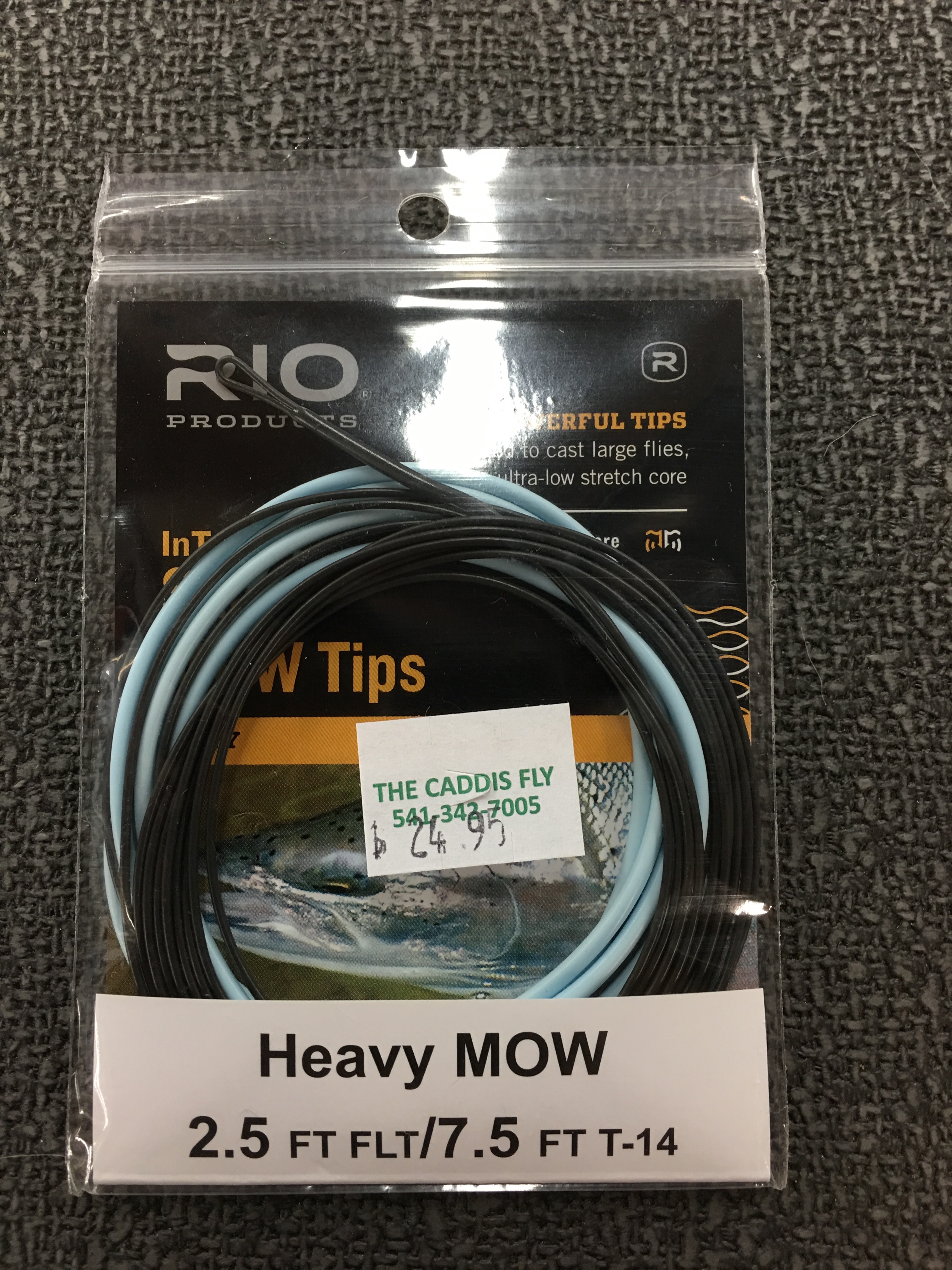
Three sink tips that are designed to fish on Skagit heads and cast on two hand spey or switch fly rods. At left is a RIO MOW tip. At center is an AIRFLO sink tip. At right is an OPST sink tip.

Three sink tips that are designed to fish on Skagit heads and cast on two hand spey or switch fly rods. At left is a RIO MOW tip. At center is an AIRFLO FLO sink tip. At right is an OPST Commando sink tip.

RIO MOW tips come in  versions that include a floating tip as well as a wide range of sink rates and combinations of floating, Intermediate, and sinking sections in the tip. The tip pictured here has a 2.5 ft floating butt with a 7.5 ft tip that sinks at 8-9" per second.

RIO MOW tips come in versions that include a floating tip as well as a wide range of sink rates and combinations of floating, Intermediate, and sinking sections in the tip. The tip pictured here has a 2.5 ft floating butt with a 7.5 ft tip that sinks at 8-9″ per second.

AIRFLO offers a wide range of sink tips also, including various Polyleaders, but the  tip pictured here is a FLO tip with an Intermediate-sink butt and a fast sinking tip.

AIRFLO offers a wide range of sink tips also, including various Polyleaders, but the tip pictured here is a FLO tip with an Intermediate-sink butt and a fast sinking tip.

OPST offers fewer iterations of tips for use with Skagit head fly lines but all are very specifically attuned to swinging flies on the Skagit lines. The tip featured in this photo is especially well suited for achieving a fast sink rate.

OPST offers fewer iterations of tips for use with Skagit head fly lines but all are very specifically attuned to swinging flies on the Skagit lines. The OPST Commando tip featured in this photo is especially well suited for achieving a fast sink rate.

The staff at the Caddis Fly Shop will be pleased to help you select a sink tip for use with your Skagit Head fly line set-up. Hopefully, this article will reassure you that it is perfectly reasonable to mix and match product manufacturers as you purchase additional sink tips.

Jay Nicholas – winter season 2016/17

Posted in Coastal Steelhead Fishing, Fly Fishing Gear Review | 2 Comments

Torrence’s Carp Caller Fly Tying Video

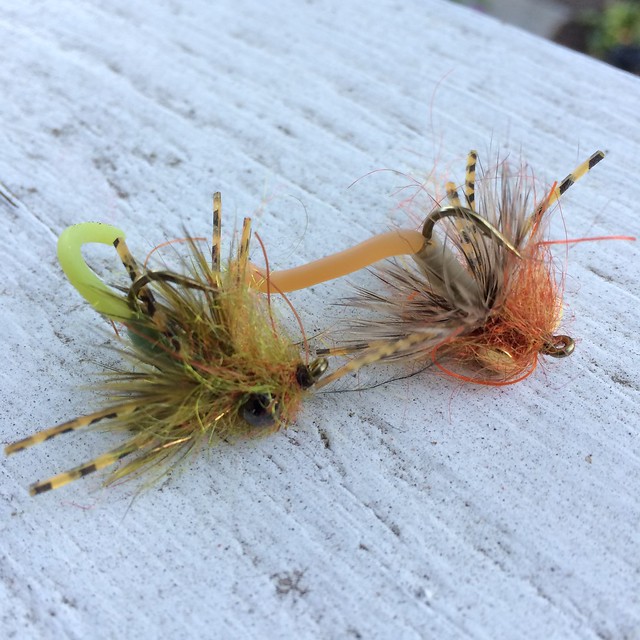
In this instructional fly tying video Tony Torrence demonstrates how to tie his Carp Caller carp fly. Using some of the latest materials available, this fly lands softly to its target due to the buggy dubbed head. After settling to the bottom, the fly moves tail up to seduce your quarry to grab. Equally deadly on Smallmouth Bass this is a fly to give a shot on your favorite Carp or Smallie waters.

Torrence's Carp Caller

Torrence’s Carp Caller—Natural (this one is in the video)

Thread: Veevus 10/0, Brown or Tan
Hook: TMC 2457 or Daichi 1120 sizes 6-10
Weight: Lead Wire 0.025 from point of hook to behind eyes
Tail: Caster’s Squirmito, Tan
Underbody: Hareline UV Ice Dub, Tan
Body: J’Son Realskins, Natural
Legs: Hareline Barred Crazy Legs, Yellow/Pearl Flake
Hackle: Grizzly Soft Hackle or Grizzly Soft Hackle Marabou patch, Tan
Head: Cohen’s Carp Dub, Blaze Orange

Torrence’s Carp Caller—Olive

Thread: Veevus 10/0, Olive or Brown
Hook: TMC 2457 or Daichi 1120 sizes 6-10
Weight: Lead Wire 0.025 from point of hook to behind eyes

Tail: Caster’s Squirmito, Light Olive
Underbody: Hareline UV Ice Dub, Caddis Green or Olive
Body: J’Son Realskins, Olive
Legs: Hareline Barred Crazy Legs, Olive/Green Flake
Hackle: Grizzly Soft Hackle or Grizzly Soft Hackle Marabou patch, Olive
Head: Cohen’s Carp Dub, Cray—Zee Olive

Posted in Fly Tying, Fly Tying Materials and Supplies | 2 Comments

Fly Tying Tips: Modifying a ProSportfisher Flexlineedle

I tie most of my Tube flies using a Regal Revolution rotary vise. When I first began using the Pro Sportfisher Flexineedle to hold my tubes, I secured the tool with the vise jaws at an angle, and this is the configuration you will usually see pictured in You Tube videos and articles.

At some point I can not remember, I figured out that if I cut off a few inches at the back end of the Flexineedle, I could secure it in my vise with the head parallel to my fly bench. Doing so allowed me to rotate my vise and tie on all sides of the fly, including the underside of the fly.

This photo shows a ProSportfisher Flexineedle at top and a shortened Flexineedle at bottom.

This photo shows a ProSportfisher Flexineedle at top and a shortened Flexineedle at bottom. I simply cut off a few inches from the back of the needle with heavy duty wire cutters.

This photo shows a Pro Sportfisher Micro Tube and Hook guard mounted on the regular Flexineedle at top and the shortened needle at bottom. This photo shows a Pro Sportfisher Micro Tube and Hook guard mounted on the regular Flexineedle at top and the shortened needle at bottom.


This photo shows a Pro Sportfisher Micro Tube and Hook guard mounted on the regular Flexineedle at top and the shortened needle at bottom.

This photo shows a tube fly mounted on a Flexineedle with the vise in the angle you usually see featured in a wide range of articles and  videos.

This photo shows a tube fly mounted on a Flexineedle with the vise in the angle you usually see featured in a wide range of articles and videos.

This is what happens when you rotate your vise with the Flexineedle mounted in the vise if the head is positioned at an angle.

This is what happens when you rotate your vise with the Flexineedle mounted in the vise if the head is positioned at an angle.

This is a tube fly mounted on a Flexineedle that has been shortened and mounted with a Revolution Series Regal vise positioned parallel to the fly bench.

This is a tube fly mounted on a Flexineedle that has been shortened and mounted with a Revolution Series Regal vise positioned parallel to the fly bench.

This photo shows that the fly remains parallel to the fly bench when the vise is rotated. This configuration allows me to tie at any point around 360 degrees of the tube by simply rotating the vise.

This photo shows that the fly remains parallel to the fly bench when the vise is rotated. This configuration allows me to tie at any point around 360 degrees of the tube by simply rotating the vise.


I wanted to share this technique of shortening the Flexineedle in case it becomes useful to you, and wish everyone good times at the fly bench this and every season.

Jay Nicholas winter season 2016/17


Posted in Fly Fishing Gear Review, Fly Tying, Fly Tying Materials and Supplies | 1 Comment

OPST Shank Chuck for tying Intruders – a Review

OPST Shank Chuck tool in hand.

OPST Shank Chuck tool in hand.

Thumbs up in my opinion for this new OPST tool. I have been satisfied enough using my HMH tool fly adaptor to hold my shanks while tying Intruders but have long awaited the arrival of this new tool offered by OPST (Olympic Peninsula Skagit Tactics).

The business end of the OPST Shank Chuck tool.

The business end of the OPST Shank Chuck tool.

The chuck tightens by rotating the head to secure the shank in the chuck just like in a power drill.

This tool works superbly with the Regal Revolution vise. Questions regarding whether it will be compatible with your vise will be answered by our staff at the Caddis Fly shop.

This tool works superbly with many fly vises including the Regal Revolution vise. Questions regarding whether it will be compatible with your vise will be answered by our staff at the Caddis Fly shop.

The rear of the tool is designed to be secured in a very wide variety of fly vises. I use a Regal Revolution vise to hold this tool. The chuck will not work with all fly vises.

This photo shows a shank in the chuck.

This photo shows a shank in the chuck.

The Shank Chuck is secured in the Regal Vise and aligned parallel with the fly bench.

The Shank Chuck is secured in the Regal Vise and aligned parallel with the fly bench.

A close view of the shank secured in the chuck and the trailer lashed to the shank.

A close view of the shank secured in the chuck and the trailer lashed to the shank.

 A freshly tied Intruder crafted with the help of the OPST Shank Chuck tool.

A freshly tied Intruder crafted with the help of the OPST Shank Chuck tool.

One advantage of this tool over using the HMH Tube Fly tool is that I am able to secure my trailer material closer to the end of the shank – a feature I much appreciate. The symmetry of this tool also allows me to rotate the vise head and still have the fly parallel to the fly bench – this makes it easier to tie in materials like ostrich all around the fly.

I have found that this tool holds my shanks securely and dependably – without exception. The Shank Chuck tool joins the OPST Dubbing twirler tool and has earned a place among my favorite fly tying tools.

I should note that this chuck does not work with Senyo’s shanks or Waddington shanks. It is designed strictly to hold a straight shank like the OPST shanks or heavy spinner wire or a straight hook shank (with the hook cut off above the bend).

Jay Nicholas – winter season 2016/17

Posted in Fly Tying, Fly Tying Materials and Supplies | 1 Comment

Best Winter Steelhead Fly Colors?

Part of my collection of Winter Steelhead Tube Intruders. The colors represented here are at the top of my list to fish in Oregon Coastal Rivers.

Part of my collection of Winter Steelhead Tube Intruders. The colors represented here are at the top of my list to fish in Oregon Coastal Rivers.

This is an opinion piece, and the reader should digest my thoughts knowing that I am as biased as any steelhead angler you’ve ever met where fly color is concerned. I definitely have ideas about the color hues of the steelhead flies I fish in winter (summer too) as well as color hue combinations and I’ll share these ideas briefly in this article.

I should also emphasize that my opinions and bias are based on the world I live in—the Pacific Northwest. Anglers who fish the Great Lakes tributaries regularly fish flies with dominant color hues that are in my least favored category. It is entirely possible that their flies would be as successful here on the west coast as they are in the Great Lakes region.

Food for thought. Our tendency to fish certain color combinations creates a self fulfilling prophesy because we can only catch fish on the flies we fish. We hear that blue/black is a good fly color to fish and that influences our own fly choice.

To generalize, my fly designs are based on my belief system that is founded on three tiers of “favored colors” that I fish in the winter.

Top Tier = black, blue, purple.

Middle Tier = pink, orange, red.

Bottom Tier = olive, chartreuse.

Least favored color hues for my winter steelhead flies = brown, tan, white, yellow, gray.

This is my way of saying that the flies I am most likely to reach for on any given day are likely to include combinations of colors in the top tier, namely black, blue, and purple.

I may also use a butt or “trigger point” using a bright color like pink, orange, or chartreuse.

The flies pictured at the top of this page are (from left to right) what I would refer to as:

1.  Black (chartreuse butt)

2.  Blue and Black (chartreuse butt)

3.  Red & Black

4.  Purple & Black (orange butt)

5.  Pink & Shrimp Pink

6.  Pink & Orange

On combining colors: I rarely fish steelhead flies that are monochromatic. I nearly always fish flies that combine at least two colors within a tier, and these combinations include blue/black; purple/black; and blue/purple.

I also combine a hint of top tier colors with a dominant second tier color. Examples include orange/black; chartreuse/black; pink/purple; red/black. pink.blue. Note that in these flies the second tier color creates the overall color hue of the fly and the top tier color is a secondary enhancement.

Oddly, I never use black to enhance pink, but I can not explain why. Most probably, a fly that is dominantly pink with a black highlight would catch winter steelhead. But my fly boxes are already full enough that I am reluctant to craft yet another combination and further complicate my choices.

Color variation – the only unambiguous color I fish is black. You will see a lot of variation in colors like purple, blue, pink, shrimp pink, red, orange and even chartreuse. Some of these color hue differences are intentional and reflected in the labeling of the material.  For example, our selection of Fish Hunter Spey Marabou includes 4 different blue hues. Even so, you should expect some variation in the shade of most colors that are dyed in different lots, because these are natural materials and the dye sometimes sets differently under different conditions.

Three varieties of blue marabou.

Three varieties of blue marabou. The differences are subtle and do not show as well in this photo as they do when you look at the feathers on a  steelhead fly.

Two more variations of blue marabou.

Two more variations of blue marabou. These are easily distinguishable from the blues pictured in the previous container of blue marabou.

Here is a great combination: blue and black.

Here is a great combination: blue and black.

Fish purple and black alone or in combination.

Another great color combination, I fish purple and black or in combination – but you could fish each of these colors alone.

Here are two versions of red and an orange to complement.

Here are two versions of red and an orange to complement.

Two versions of shrimp pink and bubble gum pink marabou.

Two versions of shrimp pink and bubble gum pink marabou.

Chartreuse and Cerise Marabou.

Chartreuse and Cerise Marabou.

I would call this a black fly, a color that fishes well under a wide variety of conditions, and this fly has a chartreuse trigger point.

I would call this a black fly, a color that fishes well under a wide variety of conditions, and this fly has a chartreuse trigger point.

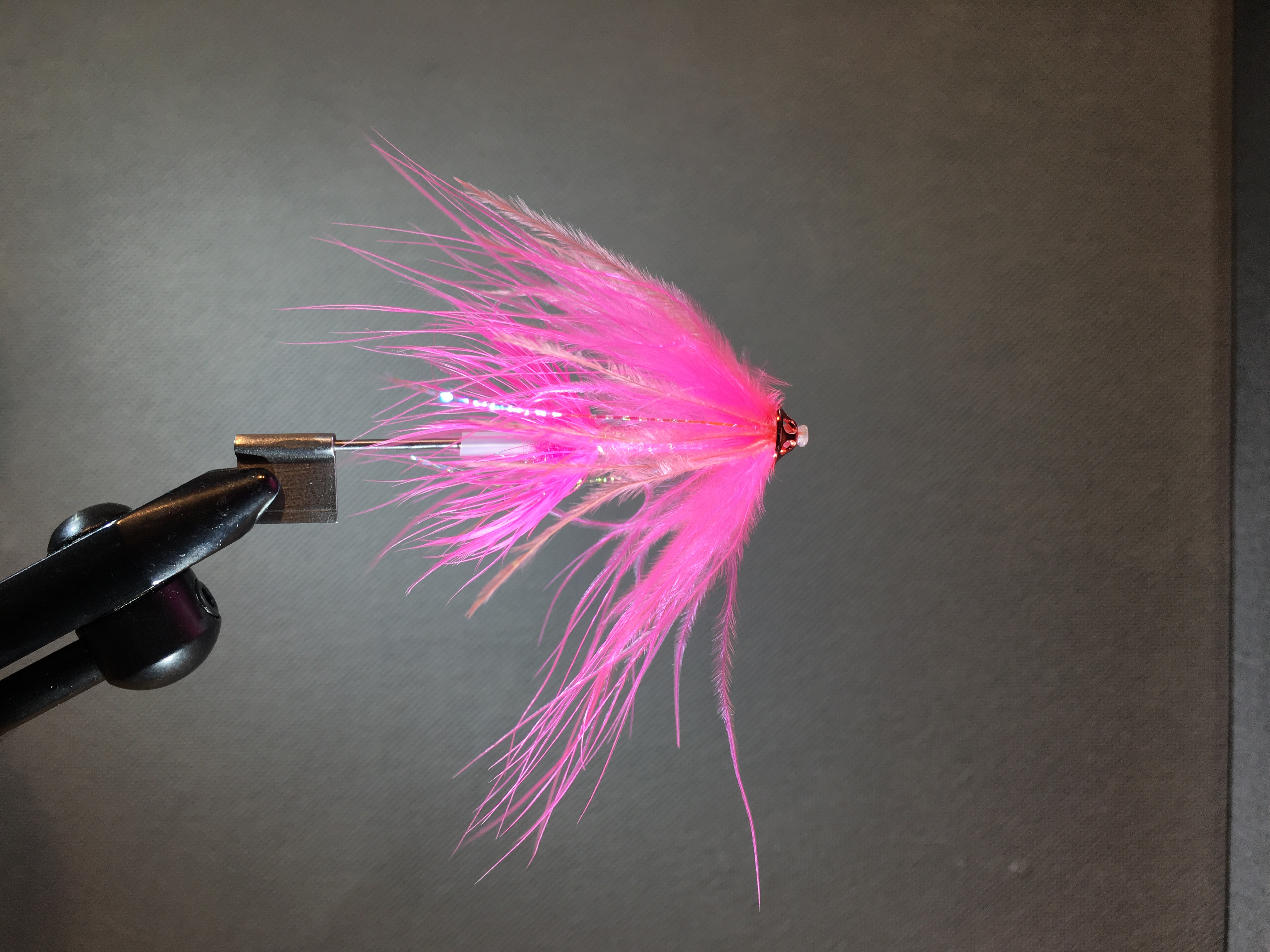
I would refer to the color hue of  this tube fly as pink  even though it has a shrimp pink highlight.

I would refer to the color hue of this tube fly as pink even though it has a shrimp pin kostrich highlight.

I would refer to the color of this fly as purple and black, with an orange trigger point.

I would refer to the color of this fly as purple and black, with an orange trigger point.

I call the color hue of this fly blue and black with a pink trigger point.

I call the color hue of this fly blue and black with a pink trigger point.

I refer to this fly as my red and black tube intruder.

I refer to this fly as my red and black tube intruder.

The rationale for fishing various colors at different river conditions is a complicated, twisted world that is full of self indulgent ideas mixed with personal experience and magic.  Here are some of the thoughts that run through my mind when tying on a fly.

If the water is on the brownish side of steelhead green, I will first reach for that are dominantly pink or purple.

If the water is a perfect steelhead green I am likely to fish any of my top tier colors alone/in combination.

If the water is on the clear side of steelhead green and the sun is high, I will likely fish orange/red; red/orange;  orange/black; red/black; or olive/black.

The color that I am least likely d to fish as a dominant theme for steelhead is chartreuse. This is funny because a chartreuse fly would be in my first tier of color choices if I were fishing for Chinook.

You should know that some successful winter steelhead anglers often rank pink and orange in their top tier while I place them among the middle tier of color choices. Anyway, I hope these thoughts help a little, the most important part of hooking a winter steelhead on the swing is to grab a fly, tie it on, and keep it wet. All the intellectualizing accomplished by me and others has yet to catch a fish while sitting at the computer or fly bench.

Jay Nicholas winter season 2016/17


Posted in Fly Tying, Fly Tying Materials and Supplies | 9 Comments