Fantastic Fall Fishing in the Willamette Valley

fall fly fishing mckenzie river

Water conditions, light conditions, hatches, it’s all happening now. Fall doesn’t get any better than the past few days. It’s looking great for the next few days and simply put, you need to get out there!

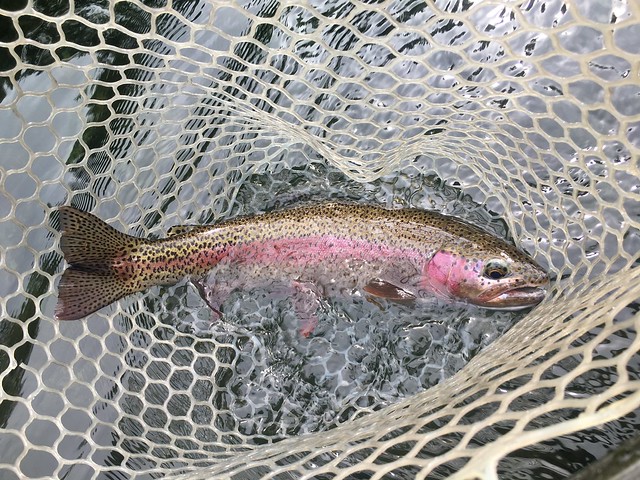
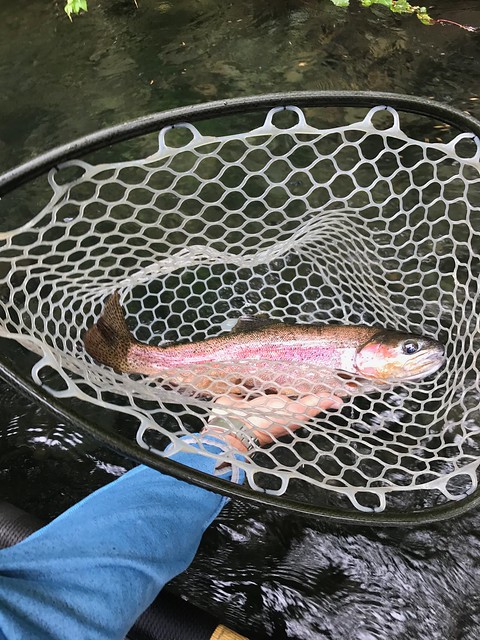
mckenzie river wild rainbow trout

Gray drakes, October Caddis, Short Winged Stoneflies, Blue Winged Olives, various caddis species are all hatching in good numbers. Fishing is best mid day. With a parachute adams, a few caddis patterns and a chubby chernobyl you are set. Dry fly fishing has been superb.

Posted in Fishing Reports, McKenzie River | Leave a comment

Sea-run cutthroat fishing & behavior, September 2017 Part 3 of 3

Jay Nicholas Sea Run Cutthroat Flies and Fishing -Part 3


The following narrative is based on my book, Sea Run Cutthroat Flies and Fishing (2016 available on Amazon and from the Caddis Fly Shop).

______________________________________________________

Cutthroat tend to be predatory and one should fish most flies with an active twitch-and-strip retrieve.

They’ll eat most anything that is available, but especially favor crawfish, sculpin, juvenile salmon and steelhead, and the like. An active retrieve is somewhat more likely to get the attention of a SRC than if you just retrieved the fly slowly and steadily. Still, it pays to vary your retrieve.

I generally employ a strip and twitch retrieve with the vast majority of the flies I fish. Exceptions are common, however, so you should at times fish your fly on a swing, a dead drift, and of course the dry flies can be drifted freely or retrieved to create a commotion on the surface. I’d say that some 75% of my SRC fishing involves some variation of retrieving a fly. The fish will sometimes take my fly as it hits the water, as it swings, or as it hangs still in the river or tidal flow. That said, I’m sure that Ive hooked more fish while twitching, stripping, or otherwise retrieving the fly—than leaving it to its own to settle, swing, or hang.

Fly Depth

I prefer to fish SRC in the top foot of the water column. This is a personal habit that surely costs me fish at times. Most fish laying in 3 to 5 feet of water will raise up to take a fly that is within 6 – 12 inches of the surface, but surely not all SRC will do so. I have seen shadows and shapes of SRCs following my fly, just deep enough that I could not see the fish clearly. Some of these fish took the fly solidly when I then allowed it to sink out of sight before retrieving. The deep retrieve is effective, but it requires the fish to take the fly and hold it—or all you will feel is a gentle tug and then nothing.

Move and Search

My opinion regarding the temperament of SRC is that they will nearly always show interest in a fly if they see it on the very first cast to an area. I think of steelhead differently. I may cast and swing through a long steelhead run three times if I think fish are present, using a different fly on each progression through the run. This careful, methodical probing of steelhead waters with different flies is something I take for granted, reasoning that a fish that did not move to one fly might move to a very different fly if given the opportunity. this is an approach I never take with SRC. I suggest that SRC waters are most efficiently fished by covering potential SRC habitat rather rapidly, placing each cast at least five or six feet away from the previous, covering each area quickly and moving on. I never make several casts to the same place, no matter how tasty a log, stump, or boulder ledge might look—unless a fish has already showed to my fly.

Once I see a SRC move to my fly, I will anchor and test these waters thoroughly, because there may very well be more than one fish in a small school in the vicinity of the first fish. This is when I may experiment with different flies, smaller and larger sizes, and so forth, but only after one fish has shown to the fly.

Once I see a SRC move to my fly, I will anchor and test these waters thoroughly, because there may very well be more than one fish in a small school in the vicinity of the first fish. This is when I may experiment with different flies, smaller and larger sizes, and so forth, but only after one fish has shown to the fly.

The False Raise

The false raise is a specialty of the SRC—the fish rushes your fly, but won’t quite take the fly into its mouth. The raise or show could consist of a swipe, a nip at the fly, a leap over the fly, a leap onto the fly or a quick look and turn-away after a close approach. Most of these false raises could be mistaken for a fish actually taking the fly—but they have not.

The false raise can usually be transformed into a solid take by switching to a smaller fly, or to a more subtly colored fly. But some of my days on the water seem destined to find the fish rushing and rejecting my fly, in spite of my best effort to find a pattern that the fish will take into their mouth.

The Rapid Ejection

I did not believe it at first. The SRC were taking my fly into their mouth and spitting it before I could set the hook. Astounded, I set-up faster, and managed to hook some of the fish, but sometimes the hook just pulled out of their mouth and went flying up into the air. I’ve learned that the SRC will sometimes behave quite nicely, taking a fly, holding it, and turning—a perfect scenario for firm hook-sets. But these ambush predators are also capable of inhaling and exhaling a fly so quickly that they are all but un-hookable unless you have faster reflexes than I. These lightning takes are the fastball of fly fishing. You need to see the fish coming and anticipate the timing of your hook-set to connect with these fish. Milliseconds early or late, you will whiff the fly into the air, it’s just like that.

Best Months to Fish SRC

There are no best months to fish SRC, because the SRC flyfishing season is a long one, lasting from approximately July through the following May — the nature of the fish you will find through out this season vary greatly. July through August will see SRC returning fresh from the ocean, and if you are lucky to intercept these fish they are at a peak of condition and fat content, if you should choose to harvest a few fish for the barbecue.

Best Time of Day to Fish SRC

Time of day is a factor that merits more consideration in some months than others. During the hot days that generate warm river water temperatures of July and August, the best SRC flyfishing will be from legal fishing time in the morning until the sun hits the water—early through mid morning—in areas that are shaded, and on days when it is overcast, cloudy, or (better still) rainy. High sun and overly warm afternoon and evening water temperatures are detrimental to our fly fishing for SRC.

July and August are the hot water months of the season when water temperature and sun are most potentially problematic. Evening SRC fishing can be productive when the sun leaves the water in shade, but one must also find suitably moderate water temperature in the evening to find receptive fish. When fishing the lowermost portions of estuaries in morning and evening, the water will be a little cooler during a morning low tide, but the water temperature on a flood or high tide will likely be determined by the ocean’s temperature, depending on the hydrograph of the estuary.

When fishing upriver after the heat of August, evening water temperatures are usually moderate, and evening fishing in shade can be as productive as morning or cloudy day fishing for SRC—if you can only find where the fish are laying and present an attractive fly.

Autumn is a season when you may reliably catch SRC throughout the day, irrespective of whether it is cloudy or not. This means that you can relax and go fishing anytime you feel like it, with similar chance of hooking fish, because the water temperatures will never be warm (or cool) enough to put fish off the bite.

SRC During Salmon Spawning Season

Cutthroat and summer steelhead will congregate below spawning salmon to feed on eggs in the fall, and these situations call for fishing small egg patterns under a strike indicator. I remind anglers to be conscious of the salmon’s spawning redds (nests) and avoid wading in areas that the salmon have dug up— to protect the eggs buried in the gravel. SRC can be found in riffles only a few feet deep that are immediately downstream from the spawning salmon. In addition to fishing egg patterns, the angler should fish the entire range of small and large trout nymphs because any of these can be disturbed and swept downriver by the spawning salmon. You will find that nymphs including the Gold Ribbed Hare’s Ear, Copper John, Prince, and any stonefly nymph are all good choices to try.The estuary SRC angler can also hope to hook a coho on rare occasion.

Fishing the Tides

When fishing the lowermost to the mid reaches of Oregon estuaries, I prefer by far to fish an outgoing tide — from about the lower half of the outgoing through the first hour or so as it has turned and started to run in again. After this point, I do not have much luck flyfishing SRC, because the water tends to get murky and my flies pick up debris stirred up by the quickening tide.

At this time I prefer to fish the very uppermost reach of tide as it floods into the river proper, and I have occasionally had the good fortune to intercept fish that are moving into the first few pools from tidewater as the riffles disappear on the flood.

Fishing After a Freshet

This is the most exciting time to fish coastal rivers (above the head of tide) in summer and early fall.

The water is up, the flows increased, water temperatures are lower, and all sorts of anadromous fish are likely to be on the move upriver, including our SRC. Keep in mind, that a rise of a few inches on a river height gage could translate to a hundred or more cubic feet per second, quite possibly doubling or tripling the low summer flow most of the short-reach Oregon Rivers on the coast. When this happens, you had best be fast to respond if at all possible. The raise and fall of the small river in summer may last a day and be done with. The fish may move at dusk or dawn and then settle into new pools. Just to have cloudy skies during the day should be sufficient to bring on a day-long bite from the same SRC that only yesterday refused to take a fly except during the first few hours of the morning.

Whatever you do, if you love SRC on the fly, you’ll find a way to be on the water the day of and the day after a summer rain. My very best summer and fall flyfishing for SRC and jack Chinook always coincided with rain, cloudy skies, and a freshened river. Note here that—circumstances depending—you may find fish only in the riffles, only in the pools, or in both, as they alternately make their way upriver and settle in to rest in new places.

_______________________________________________________

Author’s note: I hope you found something of interest in this 3 part series dedicated to sea run cutthroat, and invite you to delve into the book where you will read more about these fish and also find photographs and recipes for 60 sea-run cutthroat flies.

Jay Nicholas – September 2016


Posted in Fishing Porn, Fly Fishing Books | Leave a comment

Thoughts on sorting Schlappen & Saddle Feathers

This is an example of how I store pre-sorted saddles and schlappen feathers.

This is an example of how I store pre-sorted saddles and schlappen feathers.


I often tie with strung schlappen and saddle feathers, and prefer to pre-sort these before I begin a mega tying session. In contrast with saddle and neck patches, strung feathers usually have a lot of scrap feathers on the string. This is not a poor reflection on the material distributor, it is just a fact of life these days. The material distributors are providing the best materials they can obtain, and it is our job to sort through and select the best feathers for the fly we want to tie.


I am particularly determined to use the very best feathers on my flies and no doubt other tyers would be happy using feathers that I might discard.

So please do not think that you must end up with as large a pile of discards that I do. Just make sure that you are being sufficiently discriminating when you sort your feathers.

You also might want to sort your feathers into more categories that I have in this video.

Here are links to several feathers that are amenable to sorting:

Schlappen
saddles – dyed over white
UV2 Strung Schlappen
saddles – wooly bugger
UV2 strung saddle hackle
saltwater neck hackles

I hope you find something interesting here and wish you enjoyment at your fly bench.

Jay Nicholas – Septemer 2-17

Posted in Fly Tying | Leave a comment

Local Rivers Get a “Freshen Up”

mckenzie river water level forecast

middle fork of the willamette river level

Recent rains have caused the McKenzie and Willamette Rivers to rise quite a bit. This fresh water surge is sure to push fish into a “fall feeding mode”. Cooler water temps, lower light conditions, and increased insect activity will make fishing as good as it gets in the coming weeks. Generally speaking we get this wonderful fall window until late October.

eugene weather fall 2017

Focus your fishing on the warmest part of the day. Slight water and air temperature increases make a big difference this time of year.

Best patterns to have in your box in the coming weeks are:

Parachute Adams in standard and Purple size #10-14
Blue Winged Olives #16-18
Mahogany Duns #16
Gray Drake #10-12
October Caddis Pupae #8-10
October Caddis Adult #8
Chubby Chernobyl #8

CD

Posted in Fishing Reports, Lower Willamette, McKenzie River, Middle Fork Willamette River fishing | Leave a comment

Sea-run cutthroat primer, September 2017 Part 2 of 3

Jay Nicholas Sea Run Cutthroat Flies and Fishing -Part 2

The following narrative is based on my book, Sea Run Cutthroat Flies and Fishing (2016 available on Amazon and from the Caddis Fly Shop).

______________________________________________________

Sea Run Cutthroat

I will refer to the sea-run form of Oncorhynchus clarki clarki, coastal cutthroat, as SRC . The SRC is a species of Pacific salmon and may be locally referred to as a sea-run, harvest trout, blueback, cutt, and cutty. My personal preference of a common name for the SRC is blueback, because the freshest, fattest, fresh -from-the-ocean SRCs will usually show off a blue back and shiny white belly, with only the slightest hint of orange under the jaw. This blue-backed color phase does not last long after the SRC return to the estuary, and they begin to resume their riverine appearance within a few weeks, with spots showing above and below the lateral line, the orange slash marks under the lower jaw, and the reappearance of a greenish golden hue on the SRC’s flanks. Not all SRCs achieve the steelhead-like blueish back I’ve referred to, because not all of these fish enter the ocean proper—some make a migration into saline estuaries like the Coos, Umpqua, Tillamook and so on; some SRC reside in places like Puget Sound instead of the ocean. Cutthroat rearing in these saline habitats get quite silvery, but in my experience, they tend to show more spots and their backs are not quite as blue, bellies and fins not quite so pure white—compared to SRC that reside in the open ocean.

O. clarki clarki is a species of wild anadromous trout (Pacific salmon) that is present in virtually every Oregon coastal river and likely in the vast majority of coastal rivers of Washington, the lower Columbia tributaries below Bonneville Dam, Puget Sound, British Columbia, Vancouver Island, and Southeast Alaska. The rivers inhabited by the SRC number in the thousands, probably, and a great many of these represent places where one may flyfish for a genuinely spectacular, native, wild sea-run salmonid that may be as small as 12” or may exceed 20.” As wild fish that one may fish during many months of the year, the SRC is a wonderful gift to the fly angler willing to fish properly scaled tackle to suit the species’ size.

SRC Habitat & Behavior

SRC tend to congregate in localized areas: examples include habitats with submerged wood, shallow flats, and shade—unless you find them laying out in the shallows, with no cover near, in bright sun. Fact is — I prefer habitat with cover and structure, but the SRC may choose to lay in exposed areas as often as not. Anglers fishing spinners, spoons and bait will often catch fish in 8 ft or more deep water. My catches in deep water have been so infrequent that I consciously avoid these areas, even knowing there could be fish there. I prefer by far to fish shallower water in the range of 3-6 feet deep. Remember, when fishing below the head of tide, that the tidal influence can cause the depth in a location to change as little as two feet and as much as eight feet in the course of a six hour tide exchange. Fishing an estuary means being mobile and seeking the habitats you can fish most effectively as the tide’s depth constantly increases and decreases throughout each day’s cycle.

Sea-runs may rather unpredictably take up temporary residence in various places throughout tidewater, but many migrate quickly through tidewater and move upriver. A boat or float tube is necessary to fish effectively most places in tidewater and is also a great advantage when fishing upriver. One may reliably expect each summer rainfall event to stimulate some sea-run cutthroat to migrate upriver past the head of tide in every coastal river. As the summer progresses, these fish will then make their way upriver in small increments and eventually pause again. Eventually they will be found dispersed throughout tidewater upstream to the region of the basin where Chinook and—later—coho are spawning. SRC above head of tide may congregate in riffles at the head of long pools, but they may also take up residence around rocks and logs out in the slowest waters in pools that may be a hundred or more yards long. Fly fishing for SRC is a game of finding fish; finding one fish usually means finding several. When individual SRC reach sexual maturity, usually between December and February, they will move into the smallest tributaries to spawn on freshets. This may mean that SRC feeding 45 miles upriver near spawning Chinook drop back downriver ten or twenty miles to enter their spawning tributary.

Popular lore suggests that the SRC follow the salmon into the rivers to feed on their eggs. This is not a clearcut case, however—SRC enter many coastal rivers in July and August, well before the main run of fall salmon in September and October. SRC are capable of making feeding migrations within and between river basins that are independent of their natal spawning stream. I do not know the extent to which these feeding migrations are genetically guided versus being opportunistic, perhaps guided by olfaction. Cutthroat tend to be predatory and one should fish most flies with an active twitch-and-strip retrieve.

Where will SRC Pause?

Sea-runs may rather unpredictably take up temporary residence in various places throughout tidewater, but many migrate quickly through tidewater and move upriver. A boat or float tube is necessary to fish effectively most places in tidewater and is also a great advantage when fishing upriver. One may reliably expect each summer rainfall event to stimulate some sea-run cutthroat to migrate upriver past the head of tide in every coastal river. As the summer progresses, these fish will then make their way upriver in small increments and eventually pause again. Eventually they will be found dispersed throughout tidewater upstream to the region of the basin where Chinook and—later—coho are spawning. SRC above head of tide may congregate in riffles at the head of long pools, but they may also take up residence around rocks and logs out in the slowest waters in pools that may be a hundred or more yards long. Fly fishing for SRC is a game of finding fish; finding one fish usually means finding several. When individual SRC reach sexual maturity, usually between December and February, they will move into the smallest tributaries to spawn on freshets. This may mean that SRC feeding 45 miles upriver near spawning Chinook drop back downriver ten or twenty miles to enter their spawning tributary.

Popular lore suggests that the SRC follow the salmon into the rivers to feed on their eggs. This is not a clearcut case, however—SRC enter many coastal rivers in July and August, well before the main run of fall salmon in September and October. SRC are capable of making feeding migrations within and between river basins that are independent of their natal spawning stream. I do not know the extent to which these feeding migrations are genetically guided versus being opportunistic, perhaps guided by olfaction.

________________________________________________________

Part 3 of this series on the Sea Run Cutthroat will review fly fishing strategies and tactics, including:

*best fly depth
*Best fly retrieves
*How to find the fish
*The false rise
*Best time of tide and day to fish
*Fishing behind the salmon
*Fishing after a freshet

Jay Nicholas – September 2017

Posted in Fishing Porn, Fly Fishing Books | Leave a comment

Tackle recommendations to fly fish sea-run cutthroat September 2017 Part 1 of 3

This is the cover of my book, Sea Run Cutthroat Flies and Fishing - available by calling the Caddis Fly Shop, with my request for a little patience.

This is the cover of my book, Sea Run Cutthroat Flies and Fishing – available by calling the Caddis Fly Shop, with my request for a little patience.

Several customers have contacted the Shop or called me directly, asking for my recommendations regarding tackle and flies to fish for sea-run cutthroat. I’m drafting this blog post to cover the highlights of my thoughts.

In the good old days:

Back in the 1960s and 1970s, I considered 6 and 7 wt glass rods of 8 & 9 ft about right for SRC. I fished from a 12 ft Avon Raft with Wayne Doughton in the long slow pools just above tidewater on rivers like the Alsea, Nestucca, and Siletz.

My recommendations for SRC tackle are quite different today. Where fast action graphite rods are concerned, I consider 3 wt and 4 wt rods about perfect when I fish for SRC, and I don’t worry about the occasional silver or summer steelhead I may hook on these light rods. Bring ‘em on.

This is how I would summarize my suggestions:
Rods (Single hand) 3-5 wt rods; 8-9 ft
Each of the rods listed here will serve you well: my personal favorite is the Radian.
Echo 3 Freshwater
Echo Boost
Echo Carbon XL
Winston Kairos
Scott Radian
Sage Foundation 4 wt.
Sage Pulse

Reels:  Should be capable of holding fly line plus at lease 50 yards of 20 lb. backing  in case you hook summer steelhead or coho. Of these reels, my favorites are the hatch and the Hardy.
Lamson Guru 2
Nautilus X Series XM 4/5
Sage Spectrum
Hatch 4 Plus Gold
Hardy Marquis LWT

Leader: I prefer a tapered leader with tippet in the 4-8 lb. class; all of these leaders and tippets listed below are goo options.
Airflo Trout Polyleader
Rio Powerflex Plus Tapered Leader
Airflo Fluorocarbon G5
Rio Powerflex Plus Tippet

Fly lines: full floating fly lines and clear/camo intermediate or slow-sink tips  are the norm for the SRC angler. I recommend fishing a slightly to moderately heavier fly line than specified for your rod, to facilitate efficient run-and-gun casting with maximum time fishing and minimum time casting. I have fished all of the following lines and all served me well.

Rio In Touch Midge Tip Long
Rio In touch Hover
Rio Camolux Lake Series
Airflo Camo Ridge
Cortland 444 floating line
Cortland Denny Rickards (available at Shop)
Cortland Small Game Intermediate
SA Sonar Stillwater
SA Sonar Stillwater Clear Midge Tip

Flies:
Bead Head Bugger #6-10
Royal Coachman Wet #8
Borden Special #6-8
Bonefish Gotcha #8
Euphoric Muddler #6
Crazy Charlie Pink & Tan #8
October Caddis #8
Gorman Bead Head egg #10

I hope you find this useful – you may contact me or anyone at the Caddis Fly Shop if you would like further information.

Jay Nicholas, September 2017

Posted in Fly Fishing Gear Review | 4 Comments

pH Violations in the Lower Deschutes River: Why it’s Happening, and Why it Matters

pelton dam deschutes river

From The Deschutes River Alliance

Dear Deschutes River Alliance Community,

There has been a lot of discussion these last few years about how Selective Water Withdrawal operations at the Pelton Round Butte Project have impacted temperatures in the lower Deschutes River. This is not surprising: water temperature is something that’s easy to sense and monitor, and increased spring and summer temperatures have led to some alarming changes in the lower river.

But to understand the full extent of the ecological changes occurring in the lower Deschutes River, there is another water quality criteria that is perhaps even more important: hydrogen ion concentration, better known as pH. pH levels in the lower Deschutes have increased dramatically since SWW operations began, and discharges from the Pelton Round Butte Project have routinely violated Oregon’s pH standard.

So what is pH? Why are these violations happening, and what do these elevated pH levels mean for the ecology of the lower river? And what can be done to reverse this alarming trend? Click here to read much more about this important water quality parameter.

Posted in Fly Tying Materials and Supplies, Oregon Conservation News | 1 Comment

Fishing on the McKenzie Remains Strong

Start of fall on the McKenzie

Water levels have come down a bit and hatches are increasing the McKenzie River. We are looking at a cool down in terms of weather that will turn the lower river on and have then entire river fishing well. Look for Gray Drakes, small tan Caddis, Mahogany Duns, and even October Caddis. We have yet to see numbers of October caddis but it’s a great time to fish the pupae.

Here are a few good patterns to have on hand at this time of the year:

Anderson’s Bird of Prey October Caddis Pupae

Morrish’s W.M.D October Caddis

Kingrey’s Better Foam Caddis

Mahogany Dun

Parachute Purple Rooster

wild-trout-mckenzie-river-fly-fishing

Posted in Fishing Reports, McKenzie River | Leave a comment

The Redsides Trout Unlimited – September Meeting

Mckenzie river rainbow trout

Redsides chapter of TU

Where: Roaring rapids Pizza
When: Sept 11th 6:30

Join us to discuss the future of our chapter:

What are our conservation priorities?

What kind of presentations do you want to see?

Would you like to have fishing field trips
or other social events.

Come join the conversation.

Door Prizes will be had!

Posted in Oregon Conservation News, Oregon Fly Fishing Clubs and Events | Leave a comment

CORPS, ODFW SIGN HATCHERY CONTRACTS

Wednesday, September 6, 2017

PORTLAND, Ore. – The U.S. Army Corps of Engineers issued two contracts recently to the Oregon Department of Fish and Wildlife for the operation of five hatcheries and the production of salmon and steelhead to offset impacts of the Corps’ dams in Oregon.
The Corps will pay ODFW about $4.8 million to operate the Marion Forks, South Santiam, McKenzie and Willamette hatcheries in the Willamette Valley, and just over $2.1 million for operations at the Cole M. Rivers hatchery in the Rogue River Basin. The contracts went into effect Sept. 1, and include services such as fish production and release, marking and tagging of fish, and fish health services.
“ODFW will continue to provide many of the same hatchery services that they provided for decades,” said Andrew Traylor, Portland District hatchery coordinator. “The contracts outline and define the specific services to operate the hatcheries and produce the amount of fish necessary to meet our federal mitigation requirements.”
The agencies also expect to sign a contract by Nov. 1, to operate the Bonneville Fish Hatchery on the Columbia River.
“These contracts will ensure fish production will remain steady for the next few years,” said Scott Patterson, ODFW Fish Propagation Program manager.
Since the 1950s, the Corps has paid ODFW to manage hatchery operations and provide fish production services to meet mitigation requirements for impacts to fish passage and habitat caused by the Corps’ dams. Historically, ODFW has concurrently raised both Corps-funded and ODFW-funded fish at the same hatcheries. Both organizations’ fish contribute to Oregon’s recreational fisheries, an arrangement that benefits both agencies.

Posted in Fishing Reports, McKenzie River, Middle Fork Willamette River fishing | Leave a comment

Native Fish Society Fall Garage Sale

WenatcheeFall

When: Saturday, September 30th 2017 9:00am – 12:00pm

Where: Native Fish Society, 813 7th St. Suite 200A Oregon City, OR 97045

Join Native Fish Society staff on Saturday, September 30th from 9am to 12pm for our First Annual Fall Garage Sale at our office in Oregon City, OR. We’re going to be selling books, angling gear, boats, artwork, and Native Fish Society swag to support our work protecting and recovering wild, native fish. We’re also looking forward to visiting with our friends and supporters! Check back soon as we update this page with garage sale items.

Donate Your Stuff to the Garage Sale!

Do you have a few angling / river related items that you’d like to get out of your garage or closet? (Books, art, reels, rods, waders, boots, boats etc.?) Well you can donate these items to our garage sale and get a sweet little tax-deduction for doing so! Just give our office manager Tracy Buckner a call at 503.344.4218 or send her an email at tracy@nativefishsociety.org.

Posted in Oregon Conservation News, Oregon Fly Fishing Clubs and Events | Leave a comment

Loc Tite – A Superior Super Glue for Fly Tying


Echo Boost Beach Rod in action offshore Pacific City with a Pacific black rockfish tugging at the end of the line.

Echo Boost Beach Rod in action offshore Pacific City with a Pacific black rockfish tugging at the end of the line.

As a on again – off again user of various super glues, I’ve recently found a product (new to me) that I find is superior, at least for my skill level and preferred uses.

I was formerly of the opinion that all super glues were about the same, Loc Tite brand has shown me some new tricks.

I have two basic needs for super glue on my fly tying bench. The fist is when I’m making absolutely certain that my fly won’t come apart. I do this by occasional applications of a dab of glue throughout the tying process and at the end after I’ve whip-finished the fly.

The second operation that requires my use of a super glue involves the addition of eyes to my saltwater flies.

I’m a lucky person who has the opportunity to try-out many new products and compare each to the products I’m accustomed to using. I recently noted the addition of several super glues to our inventory: a series of Loc Tite products.

I was unimpressed/skeptical when I stocked my fly bench with several of these glues. After two months of steady use tying saltwater flies almost exclusively, I’ve turned my skepticism into enthusiastic endorsement.

Loc Tite super glues are my new product of choice, offering what I believe are characteristics that are super useful to me as a fly tyer.

IMG_6459IMG_6460

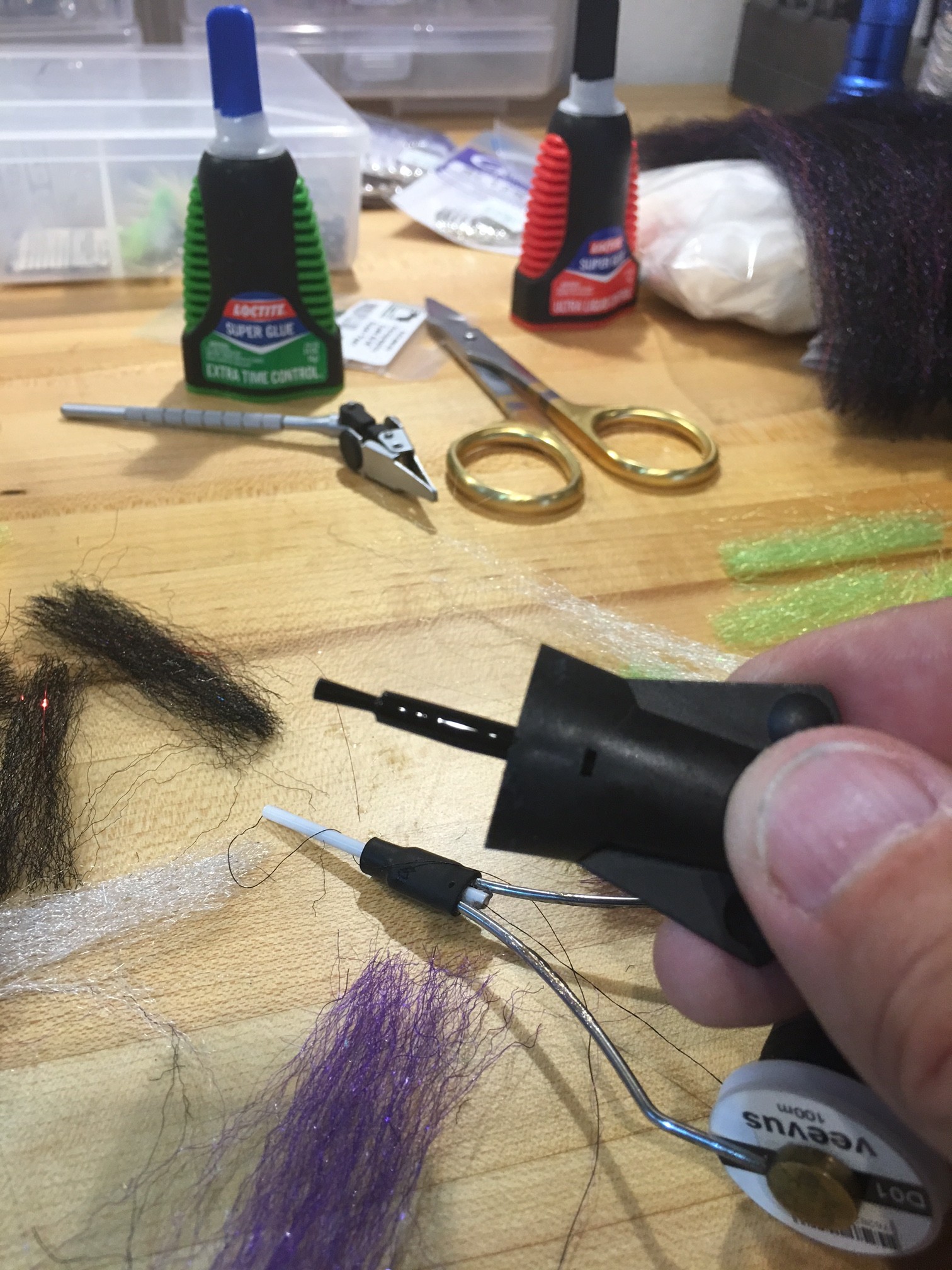
Let’s start with the basic brush on Loc Tite. This stuff is superior for fly tying because it has a short brush that is easier to use in precise application scenarios, it has a cap that is easier to hold, and the cap snaps on with a half-twist, forming an air tight seal, with a simple to secure action. This cap is easier to use, does not get sticky, and the brush is easier to use. Hands down favorite.

Now let’s move on to the Loc Tite family of super gel.

I should first note that it took me a while to figure out how to use this product. Here is what I learned without reading the instructions.

This image shows the aplicator nozzle as it comes from the store. Note the gap. This gap indicates that an inner foil barrier is in place to keep the gel fresh  - but this must be screwed down tight before you can use the gel.

This image shows the aplicator nozzle as it comes from the store. Note the gap. This gap indicates that an inner foil barrier is in place to keep the gel fresh – but this must be screwed down tight before you can use the gel.

This image shows the applicator nozzle after it has been screwed down to pierce the inner foil barrier, making the gel available for use.

This image shows the applicator nozzle after it has been screwed down to pierce the inner foil barrier, making the gel available for use. Note that the nozzle is now tight against the bottle.

First I’ll mention four versions of Loc Tite super gel glue – and I will list these from the thickest to the thinnest. The Thick gel seems to dry a little faster than each of the successively listed gels.

Gel Control is the thickest gel in the series.

Gel Control is the thickest gel in the series.

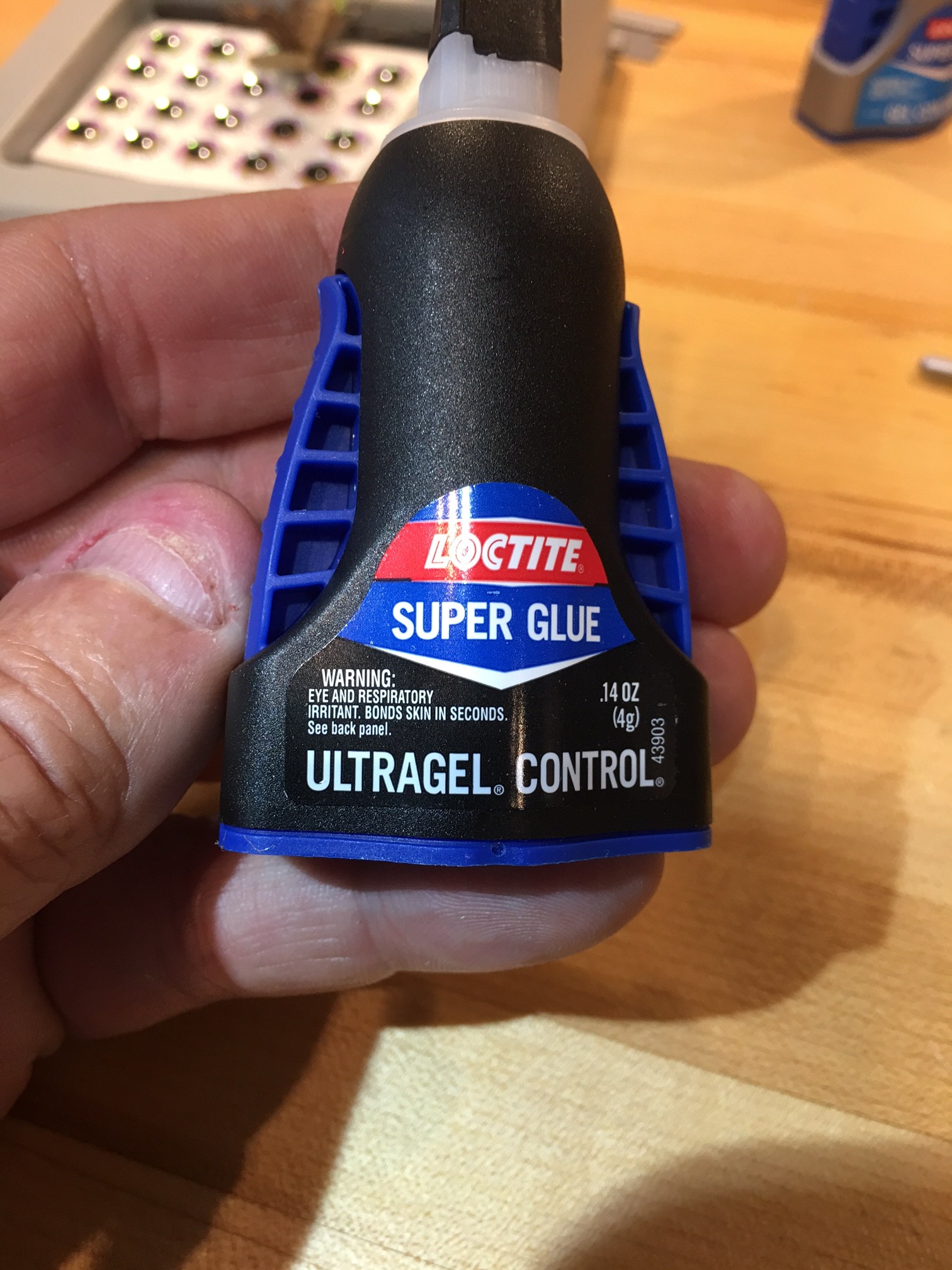
Loc Tite Gel Control: this is the thickest gel in the family. Squeeze the blue sides of the bottle and you will extrude a thin snake of gel that looks exactly like you would imagine toothpaste extruding from a tube with a tiny little opening.

Ultragel Control is still dense, but is a little softer/thinner than Gel Control.

Ultragel Control is still dense, but is a little softer/thinner than Gel Control.

Loc Tite Ultra Gel Control is still dense and holds its shape fairly well, but is a little thinner than the Gel Control. I’m pretty sure that this one is my favorite for the application  of eyes to my saltwater flies. Not too thick, not too thin – just right!

Loc Tite Extra Time Control is a little thinner yet, compared to Gel and Ultragel control.

Loc Tite Extra Time Control is a little thinner yet, compared to Gel and Ultragel control.

Loc Tite Extra Time Control  a gel that represents crossing the line between a genuine thick gel to a liquid material. This isn’t a liquid but it is thin to the point where a drop of this material will droop significantly, rather than remaining mounded up on a surface. This material will soak into fly tying materials a little more effectively than either of the first two gel products mentioned and is likely superior if that is needed.

Loc Tite Ultra Liquid Control.

Loc Tite Ultra Liquid Control.

Loc Tite Ultra Liquid Control. This is a gel that is close to the liquid brush on but not quite that thin. It provides the maximum in terms of soaking into your materials and time until it sets and you can no longer move your fly eyes around. I find that this is a little too thin for my style in adding eyes to my saltwater flies.

Loc Tite Review:

Gel Control – thickest
Ultra Gel Control – still firm but a little less so
Extra Time Control – still a gel but barely so
Ultra Extra Time Control – I guess this is still a gel but it is close to a liquid in a squeeze dispenser

I hope this is helpful information to consider the next time you are wondering what product to order in the super glue family.

Jay Nicholas September 1, 2017

Posted in Fly Tying, Fly Tying Materials and Supplies | Leave a comment

Postcards From Maine – August 2017

Al's box of Striper flies is largely poached from my Chinook boxes.

Al’s box of Striper flies is largely poached from my Chinook boxes.

My friend and fellow Salmon Journal Prodction team Leader, Al James, sent me a few photo images from his recent family vacation back in Maine. Fishing from Scarborough to Kettery, Al found just enough willing striped bass to make the fishing entertaining on a few days his schedule allowed a little exploration.

A typical schoolie striper.

A typical schoolie striper.

Al tells me that the school striper action has been most reliable on Chinook Clousers, with the chartreuse and pink perhaps showing a slight edge.

A low-light schoolie striper puts a bend in the rod.

A low-light schoolie striper puts a bend in the rod.

With a nice break back east to visit and introduce “baby-James” to the relatives, Al is looking forward to testing the waters in Oregon estuaries with his Chinook flies, now slightly chewed, but still in perfect fishy condition.

Thanks Al, let’s go fishing.

Jay Nicholas, September 1, 2017


Posted in Fishing Reports | Leave a comment

CUBA TRAVEL CLARIFIED!

From our friend John Covich of MANGROVES & MOJITOS
The latest fishing and travel news from Cuba Fishing Outfitters

e1707337-1b19-40ff-bed2-011db13ea768

Those of you who get these blog posts might have noticed how silent I have been about Trump’s recent changes in Cuba policy, and how they would effect anglers wanting to head to the island. The truth is, we were all in the dark. There were many questions left unanswered, and both myself and the nice folks at FlyWater Travel felt like we could not go ahead in planning new trips to Cuba, putting customer deposits and plans at risk.

7Q5A5643

We have continued to ask questions, and try and get clarity and details. In the past few days, we received the most detailed news of how we could proceed, and are really excited that we can again help U.S. anglers experience Cuba. Below is a synopsis written by Dylan at FlyWater, and published yesterday in their newsletter:

We are pleased to announce that travel to Cuba is 100% legal again.

The recent announcement by President Trump made it clear that the administration would roll back the legal provision for individual travel to Cuba that anglers had been traveling under for the past two years. However, they clearly stated they would continue to permit legal travel for all groups traveling under group “people to people” licensing.

7Q5A2280

Now, through a partnership with The Bonefish & Tarpon Trust anglers looking to fish Cuba can purchase a group “people to people” licenses on the BTT web site. www.btt.org
The cost of the license is $250.00 per angler.

7Q5A6003

Details:

The Trump Administration recently announced changes to US policy regarding Cuba, including travel. These changes will go into effect as soon as the Departments of Treasury and Commerce have issued specific regulations, which may take up to three months. These regulations will close the door to “regular” tourism by US citizens—travel for the sole purpose of tourism—but it will leave in place the 12 categories of authorized travel, including the category that covers BTT’s license. Likewise, direct flights, cruises, and tours will continue as before. However, provisions allowing travel under the 12 categories will be strictly enforced.

Bonefish & Tarpon Trust has been advised that these changes will not affect our Cuba License Program, which is covered under the 12 categories of authorized travel. US citizens who made travel plans with deposits for a Cuba trip prior to the new regulations being implemented will be permitted to proceed. New travelers will be required to travel as a part of a group visiting Cuba for a specific licensed purpose, including scientific, religious, and educational, among others. BTT will continue issuing licenses to groups of travelers and anglers going to Cuba who comply with the rules set forth under the license we receive from the US government. The price of the license is $250.00, which must be paid by all participants. The proceeds from the license fee benefit flats conservation programs.

In brief, the rules are as follows:

Each group must have a designated Group Leader.
The Group Leader must be pre-designated and their name provided to BTT prior to travel.
The Group Leader must write a trip report to be submitted to BTT no later than 30 days after returning to the US. The report must include the names of all the travelers in the group and provide details of the entire trip such as where everyone stayed and what they did. It must include that the group interacted with Cubans and helped further BTT’s research initiatives in Cuba.
In compliance with the above, the Group Leader must report where travelers fished, describe the vessels they boarded, report on water conditions, fish species encountered, fish abundance at sites visited, the condition of the marine habitat, catch and release practices, personal experience with guides, and other information that will help the organization track the status of the Cuban fishery and those using the resource. As additional research projects arise, BTT may ask licensed travelers to participate in specific ways. These may include, for example, BTT tagging programs or DNA fin clip programs.

By Jon Covich on Aug 25, 2017

Posted in Fishing Reports, Fly Fishing Travel | Leave a comment

Protect the Metolius River’s Native Fish

From the Native Fish Society

Dear Members and Supporters,

The Metolius River is the crown jewel of the upper Deschutes Basin and a place of exemplary ecological value in the state of Oregon. To safeguard the health of its native fish, please join us in requesting that the Oregon Department of Fish and Wildlife update its angling regulations for the Metolius River in 2018.

metolius-river-bull-trout

Our Metolius River Steward, Adam Bronstein, has identified three specific changes that will benefit native fish: 1) single barbless hooks, 2) no additional weight, and 3) explicit mention of catch and release for all native fish species. Please click the button above or below to head to our action alert page where you can send a message to the Oregon Department of Fish and Wildlife today – your voice matters and can make all the difference.

CLICK HERE

Deadline for comments: Friday, September 1, 2017

For wild, native fish,

Mark Sherwood, Executive Director
Adam Bronstein, Metolius River Steward

Posted in Central Oregon Fishing Report, Oregon Conservation News, Oregon fly fishing links | Leave a comment