Gift Ideas for the Father who Fly Fishes can be viewed at the following links:
Howler Brothers Sunset Scout Shirt
Howler Brothers Aransas Short Sleeve
Gift Ideas for the Father who Fly Fishes can be viewed at the following links:
Howler Brothers Sunset Scout Shirt
Howler Brothers Aransas Short Sleeve
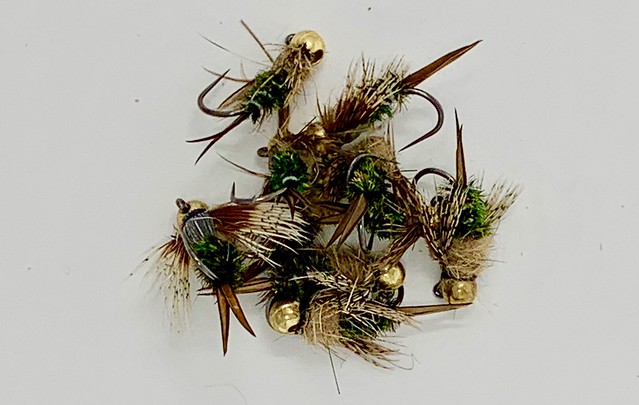
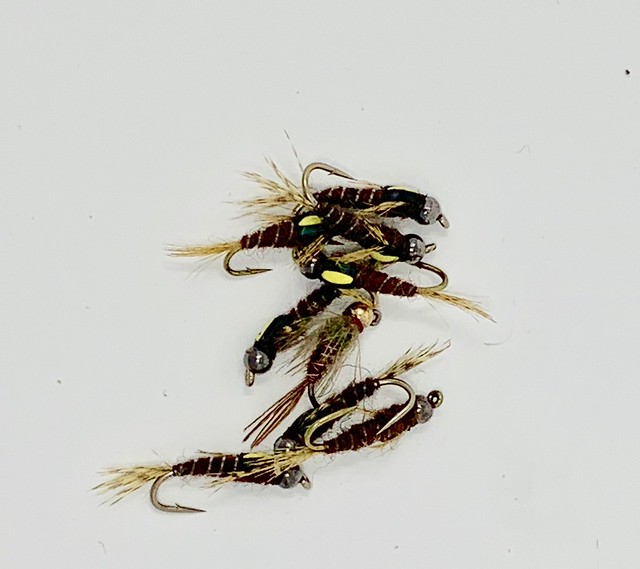
The McKenzie River remains high, significant reservoir releases and a good snow pack have combined to create a “big water” year. Water temperatures remain lower than ideal and hatches have not what you might call intense of late. We are seeing daily emergences of Green McKenzie Caddis, Pale Morning Duns, Brown Caddis, Green Drakes and Little Yellow Stones. Golden Stones are flying about when air temps come up near 70 but not in big numbers. Nymphing has been the most consistent tactic. Mega Princes, Possie buggers, and Brillon’s Lucent Jigs have been the most productive nymphs.
The Middle Fork of the Willamette near Oakridge has taken the biggest beating in terms of spring flood damage.The river has a ton of new trees down in it and channels have shifted considerably. Water clarity has really improved over the past week and water levels are good. The river is not low and still remains a bit challenging for wading but it is coming around. The MFW is hosting similar hatches as the McKenzie and nymphing has been best. Larger stonefly nymphs along with jigged pheasant tails have been working well.
Next weeks heat should intensify hatches and if water levels continue to trend downward fishing will improve in the Willamette Valley.
Have fun out there.
Overview- From Fly Water Travel
Possibly the most prolific trophy Rainbow Trout fishery on the planet.
Description
If we were put on the spot and asked specifically where the most prolific 100 yards of trophy trout water in the world was, our response would be instant, and our tone would be confident. “It is where Argentina’s Rio Barrancoso flows into Lago Strobel.” We have been there and fished it and must say that in all our years of fly fishing, we have never seen, heard of or experienced anything remotely like it. Some label it surreal or incomprehensible, but for simplicity and accuracy let us call it the one and only Jurassic Lake Lodge.
Jurassic Lake is nothing short of a biological anomaly and must be the most prolific trophy rainbow fishery on the planet. The lake itself is a large desert sink lake measuring approximately 20 by 15 km. It is located at approximately 3,000 ft. elevation in the wide open desolate expanse of the Patagonian Steppe. And while it looks like a saltwater body of water with its wind-chopped, blue water channels and shelves, it is teaming with small scuds and massive rainbow trout. Here the rainbow trout average over 10 pounds with countless fish in the mid-teens as well as good numbers of fish into the 20 + pound class. These fish are extremely stout, and most are incredibly strong and acrobatic.
The Lodge has the good fortune of being located at the mouth of Jurassic lake’s only significant tributary. With no outlet, this is far and away the best location on the lake with anglers stacking up big numbers of big fish virtually every day of the season. There have been some reports of slower fishing in February where anglers might only catch 5-10 big fish a day, but by in large the general level of productivity of the camp water is hard to comprehend.
Rates and Details
Species: Rainbow trout
Season: Mid-October to April
Capacity: 10 anglers
2019-2020 Rates: Oct 12-Dec 14 Weeks – $6,330 per person
Dec 21-Jan 18 Weeks – $5,600 per person
Jan 25-Feb 22 Weeks – $5,200 per person
Feb 29-May 1 Weeks – $5,600 per person
Included: Accommodations and meals at the lodge, wine/beer/alcohol, guided fishing, round-trip charter flight to/from the Lodge and Comodoro Rivadavia and fishing license.
Not Included: International and domestic airfare, hotels/meals/transfers in Buenos Aires and Comodoro Rivadavia, fishing equipment, laundry and staff and guide gratuities.
For more information: https://reservations.flywatertravel.com/inquire/jurassic-lake-lodge?ref=Ogxt5
Fishing Program
All fly fishing is done while wading or standing on the bank. Guests fish two anglers per guide. Anglers typically fish stations in nearby bays, on the peninsula, near the river’s mouth, and the lower stretches of the Barrancoso river and cast (often into or across the wind) with floating or intermediate lines and employ a slow retrieve. Also, there are several excellent upper river beats that we encourage all anglers to rotate through during the week. There are a wide variety of flies that work well, with woolly buggers, zonkers, various sizes and styles of dry flies, and especially assorted nymphs tied on heavy wire hooks being the staples.
There are certain times and specific bays where, during certain conditions (especially during the low light evening hours) the big fish (most often pods of them) come within a few feet of the banks and cruise the shallows like massive bonefish. Even in harsh wind keep mindful of sight fishing opportunities as you can often make out dark pods of fish.
Recommended Tackle
Due to the size of fish and high winds encountered at Jurassic Lake, a strong, fast action 9’, 7- or 8-weight rod is essential for all anglers. Pair this rod with an aggressive weight forward, floating fly line and a reel with an adjustable drag for a great all-purpose setup. An additional, optional setup to be used when winds are light or when fishing the river beats is a 9’, 6-weight rod, also paired with a weight forward, floating fly line and a reel with an adjustable drag. Another optional setup, for use on the lake in situations where extreme distance is beneficial, or simply as another enjoyable way to cast, is a two-handed setup. For this setup, we recommend a 5- or 6-weight two handed rod between 11’ and 12’6”, matched with an integrated head and shooting line system, and light sink tips.
For more information: https://reservations.flywatertravel.com/inquire/jurassic-lake-lodge?ref=Ogxt5
Took a dry run day trip from Warm Springs to Trout Creek this week. We knew the traffic would be heavy even after the three day holiday. The boat ramp at WS had 4 boats waiting, and three more boats on the ramp! Suddenly the phrase “bring your own rock to fish on” was becoming a reality! However, one possible solution, get a reservation permit (purchased ahead of time) and open up some additional space. This strategy, for us, proved to be very beneficial.
Off to a slow start in the morning, the afternoon brought up some very nice Redsides. Nymphing with jig prince and Lex’s stones was successful but as the air temps warmed…the bugs were everywhere! Norm Woods and Chubby’s were the hot flies. The hatch is well underway and the bugs are spread out. Anglers should have all the proper documents in hand as enforcement is present on the river.
Weather forecast looks great for the weekend and next week. Temps mid 70″ Madras to Maupin….the bugs will be out and laying eggs on the water. Great time to hit the Deschutes!
Happy Memorial Day to our veterans and friends from The Caddis Fly Shop. We hope you had an opportunity to get out and fish this weekend despite the rainy weather.
The Middle Deschutes saw some pressure this weekend, but fished well. The afternoon storms made it interesting, but the Redsides were coming up to the dries once it warmed up. Throw a dropper on for fun too!
Dry Flies:
Euro-nymphing was super productive throughout the day.
Nymphs Sizes 12-14:
Jigged Frenchie
Jigged Hare’s Ear
As the weather begins to warm look for fish to move into the faster, shallower water.
Tight Lines!
Greg
In this episode of RIO’s “How To” series, RIO ambassador Phil Rowley talks about one of the most effective lake fly fishing techniques – fishing with an indicator and a couple of flies. Phil explains how to set up the perfect outfit, what casts to use to maximize fishing time, and how to effectively retrieve the flies.
If you want to maximize your chances of catching a trout in lake, fishing an indicator and a couple of flies is probably the most effective way you can do it.
RIO’s “How To” videos are a series of short films that explain all you need to know to learn a particular way to fish or cast. Where applicable, each film talks through the gear that you need, shows how to rig the gear, how to read the water, and how to fish that particular technique. These educational films are packed with information and top tips designed to improve the knowledge and skill level of all fly fishers. Each one is bought to you by a RIO employee or a RIO brand ambassador.
By Kale Williams | The Oregonian/OregonLive
Turns out, if you want a river to act like it did before it was dammed, you just have to drain the reservoir the dam created.
Letting a river return to its natural course, even if only for a brief period, has other benefits, too. Invasive species disappear and endangered species, like the imperiled salmon of the Willamette River basin, get an extra boost.
That’s according to a group of researchers at Oregon State University, who published their findings Tuesday in the journal Ecohydrology.
For their research, led by recent Oregon State graduate Christina Murphy, the group looked at Fall Creek Reservoir, about 30 miles east of Eugene. Over the last several years, the U.S. Army Corps of Engineers, which operates the dam that holds back the reservoir, has drained the manmade lake in the fall to help young spring chinook salmon migrate downstream.
“Even though the strategy appears extreme, it’s both helping juvenile salmonids pass downstream and promoting a native species-dominated reservoir,” Murphy said in a statement. “Bass and crappie, which are major predators in the reservoir, have been pushed out and into the Willamette.”
It’s not just a matter of pushing the problem species into another part of the river system, either, Murphy said. It’s all about timing.
“The good news is that they were pushed downstream in the fall and winter, when the water is cold and the flow is faster, so they should be at a disadvantage in the Willamette River – compared to when they leak out of the reservoir in the summer,” she said.
Historically, the Willamette River has been home to the spawning grounds of roughly half a million fish, many of them coveted salmonids like spring chinook and winter steelhead. Adult fish swim upstream, past the mists and roar of Willamette Falls, to lay their eggs in Cascade and coast range creeks and streams. Newly hatched juvenile salmon then navigated the same course in reverse, swimming down the unimpeded streams to mature in ocean waters before returning to their inland spawning grounds to hatch the next generation.
That’s how things worked for thousands of years. Then, in the 1950s and ’60s, federally-managed dams sprung up on the McKenzie, Santiam and multiple forks of the Upper Willamette. The dams not only presented physical challenges to migratory fish, they also altered water temperatures in the rivers and reservoirs they created.
Earlier this year, an advocacy group named The Willamette as one of the country’s top-10 most endangered rivers because of the threat the dams create for salmon.
The Oregon State researchers looked at fish sampling data from 2006 through 2017, with the draining of Fall Creek Reservoir began halfway through that time period. Salmon migrating downstream increased after the draining started and invasive species, including large mouth bass and crappie, declined.
“In 2012, we could capture 10 bass an hour. This went down each year. By the summer of 2015 we only caught one during all of our sampling and in 2016, we didn’t capture any. This change was reflected in the data from the trap downstream too,” Murphy said. “The decline occurred with crappie, but faster.”
A small change is water management can make a big difference to native fish species, said Ivan Arismendi, an assistant professor at oregon State and co-author of the study.
“This extreme draining management is only about a week in duration, but has implications for the whole ecosystem,” he said. “It makes the reservoir begin to act as a natural river again affecting the entire fish community.”
— Kale Williams
Post spawn rainbows are responding well to nymphs and dries. Best flies have been Brillon’s Lucent Jig, Chubby Chernobyls, brown and green caddis.
There are a few Bull Trout migrating through the mid McKenzie at the moment.
Colder water temps mean you will still find a few “whiteys” when nymphing.
Got up to Crane early this week, with my closest friends, before the “grayness”. The weather was outstanding and so was the fishing. Many fish to hand…but wait…where are those mongo cranebows?
One angler had the misfortune of hooking one and of course….it wrapped around a log. That fish was the only fish we hooked of “mongo” size. However, the day was great for fish in the 10-15 inch range. They were all very scrappy and represented the larger cranebows quite well.
A slow retrieve with smaller leech or bugger patterns provided much success. We also indicator fished with balanced leeches….they worked!
The weekend cloud cover should provide some excellent angling for those who go!
Get out there!
LV
From Native Fish Society
The Rogue River’s iconic wild spring Chinook salmon need your support!
After years of serious decline following the construction of Lost Creek Dam/Reservoir without fish passage on the world-renowned Rogue River, wild spring Chinook salmon are on an upward trajectory.
Thanks to the dedication of the Oregon Department of Fish and Wildlife and a team of concerned advocates, including NFS Rogue River Steward Peter Tronquet, the state agency has more than a decade of Conservation Plan Actions completed that have resulted in some of the highest wild spring Chinook returns in years.
While the Rogue’s iconic wild spring Chinook have improved, the Cole Rivers Hatchery, which releases 1.7 million hatchery smolts annually as mitigation to compensate for the loss of high-value spawning and rearing habitat above the dam, has failed to meet expectations.
Unfortunately, HB 2379 (bill text available here) currently being considered in the Oregon State Legislature threatens wild spring Chinook recovery in a backdoor attempt to force the state to increase hatchery production to compensate for underperforming hatchery returns that will have serious consequences for the management of Rogue spring Chinook. We must not let the wild spring Chinook and their recovery be jeopardized by doubling down on hatchery releases when the program faces other challenges that can’t be solved by simply increasing releases.
We’re urging you to contact the Senate Natural Resources Committee to oppose HB 2379 and ensure the recovery of wild spring Chinook is prioritized over increased hatchery releases in the Rogue.
Take Action Here: Wild Fish on the Rogue
For wild fish,
Jake
Jake Crawford, River Steward Program Director
Peter Tronquet, Rogue River Steward
Charles Gehr, Rogue River Steward
Mark Sherwood, Executive Director