Egg Sucking Bling Brush Fly – Jay Nicholas

In this video, author Jay Nicholas ties another variation of a classic salmon and steelhead pattern using new materials such as Bling Rabbit Strips and Flash Blend Baitfish Brushes from Just Add H2O.

This fly could be tied in a variation of colors and sizes and used for steelhead, salmon, bass, panfish, you name it.

Join Jay and Chris Daughters as they discuss their years of experience dealing with materials and the many possibilities that these materials could be used for.

New Materials Linked Below.

Screen Shot 2019-10-26 at 10.57.35 AM

Variation with New Helix Flash

Materials:
Hook: Ahrex PR320
Thread: Veevus GSP 150d White
Eyes: Double Pupil Lead Eyes Yellow/Black
Tail: Bling Rabbit Strip Black/Pink 1/8″
Body: Just Add H2O Flash Blend Baitfish Brush
Head: Carded Chennile Pink Md.
Zap A Gap

Posted in Fly Tying, Fly Tying Materials and Supplies | Leave a comment

Caddis Fly Shop Covid 19 Update May 16th, 2020

IMG_1228

The Caddis Fly Shop/Caddisflyshop.com will return to normal store ours today 10am-5pm M-S and 10-3 Sunday. We will limit the number of people in the shop at one time, in order to maintain social distancing. We encourage online orders, call in orders for quick pick up and efficient shopping excursions. Let’s all get to “Phase 2” and “Phase 3” as soon as possible!

CD

Posted in Shop Sales and Specials | Leave a comment

ReWild the Willamette Action Alert – Add Threatened Species to Endangered

Screen Shot 2020-05-15 at 6.10.16 AM

FROM THE NATIVE FISH SOCIETY

Over the last month, we longed to connect to our communities. Wild salmon also share that longing to connect to their homewaters. The drive is so strong that they swim hundreds of miles, evade numerous predators and negotiate countless barriers to spawn in the place they were born.

In the Willamette River in Oregon, most wild salmon and steelhead fail to reach their home. Large dams, operated by the U.S. Army Corps of Engineers, stand in the way blocking access to 70-90 percent of their spawning habitat. For 20 years, these iconic fish had some protections under the Endangered Species Act, but are still struggling to survive. The full protections of the Act are needed to halt this slide to extinction.

We need your voice to support uplisting salmon and steelhead on the Willamette River.

Salmon and steelhead demonstrate over and over how resilient they are, but they need our help. The National Marine Fisheries Service needs to hear from you that you support listing Upper Willamette River spring Chinook salmon and winter steelhead as endangered species and that protecting salmon will restore a living Willamette River. Your voice is key. Sign our letter below today.

From the oceans, salmon and steelhead carry an abundance of nutrients back to rivers that feed bald eagles, cedar trees and salmonberry plants. They sustained human cultures all around the Pacific Rim for thousands of years. They are a symbol of hope, tenacity and connection. Add your voice to the groundswell of public support; together, we can restore these iconic fish to abundance.

SIGN the ACTION ALERT at the LINK: TAKE ACTION

Posted in Lower Willamette, McKenzie River, Middle Fork Willamette River fishing, Oregon Conservation News | Leave a comment

New Sage Rods and Reels May 2020

In this video, George Cook discusses Sage’s new Sonic Rods available May 2020.

IMG_1709

Sonic New 2020

With a selection of 3-8 weights and Sage’s Konnetic HD technology, these rods are where technology meets value.

In this video, George Cook introduces Sage’s new ESN (European Style Nymphing) reel.

DSC_0204

ESN New 2020

With a sleek design, sealed drag, a large arbor to reduce torque, and a selection of counter-weights to customize the balance of your Euro-stick, the ESN is a great reel for you high-sticking, trout slaying, jig nymphing, light tippet type of fly fishers.

Posted in Fly Fishing Gear Review, Shop Sales and Specials | Leave a comment

Review of Fly Tying Cements, Adhesives, and UV Resins: Part 1 – Introduction


These saltwater flies were tied with Super Glue and UV resins.

These saltwater flies were tied with Super Glue and UV resins.

This is chapter 1 of 4 in my review of cement, epoxy, and UV resin used by fly tyers in 2020.

I hope you find these remarks interesting reading in this time of the pandemic. If you stumble upon this blog post in 2030, ten years after the catastrophic event has swept over us, then take comfort that even in difficult times, we fly tyers were and are a resilient lot, able to amuse ourselves with these relatively trifling matters.

Here we go.

When I began tying in the early 1960s with little but an already outdated instruction manual and my teenage enthusiasm, I had one option: a bottle of petroleum-based cement offered by Universal Vise Corporation. This fly tying materials company had a proud rooster on its logo, and was the source for most of my supplies, other than the occasional treasures I purchased from Audrey Joy, professional tyer at the Meier & Frank Company.

I used my bottle of stinky clear cement in two ways: 1) to harden the parachute posts and the entire base of the parachutes I often tied, and 2) on the whip-finished head of my flies. For at least two decades I didn’t understand the different ways one could use cements of various viscosities indifferent ways throughout the construction of different kinds of flies.

While I was working mostly alone, crafting my bucktail caddis and blue uprights, other tyers were already longtime experts with multiple coatings, high-gloss varnish, and sturdy saltwater-resistant epoxy, long before I discovered the diversity of cements and why they were important in fly tying.

General thoughts regarding fly tying cement, epoxy and UV resin – for the moment, I will refer to all of these as “cement.”

Viscosity.
If your cement is thick, lumpy, and difficult to apply, it is time to replace it. This will occur with any of the materials we use, because of exposure to the air, bits of dust and fly tying materials contaminating the material, and sunlight exposure.

Durability.
Any fly that you tie, from a #22 Adams to a #4/0 albacore streamer, will be more durable if you use a little cement to secure the elements of your fly along the way. This is not to suggest that you must use cement throughout your fly’s construction, but it is something to consider.

Be careful.
All of the “Super Glues” are difficult to work with. You must be careful, because it is easy to glue fingers together, cement fly eyes closed, and make irreparable wads of gunk in carpets and on desks.

Spills.
It is worth your while to develop some sort of system to secure your cement on your desk so as to make it “spill-resistant.” I use a 3-M product intended to hold poster paper up on walls, but this tacky, malleable material that is the consistency of silly putty really works for me. I secure my cement to my desk with this stuff and it is protected from. My clumsy hands sweeping across the desk and knocking the cement over.

Proportional viscosity.
Small flies require thin cements, large flies require thicker, more substantial cements.

Epoxy vs. UV Resin.
Epoxy is wonderful material. It also takes time and experience to use it properly. If you are an epoxy tyer, you might be surprised to use a product like Solarez Thick-Hard UV resin.

On UV resins generally.
The UV resins we have at our reach today are amazing, far better than I used ten years ago.
As good as modern UV cures are, be forewarned, they have their own properties that require practice and patience.

Be patient.
Be willing to practice and learn as you begin using UV cures.

Objectivity? What’s that?
Brand Loyalty is a distinct human character trait. Some people develop and allegiance to one cement type over others, based not on the superior qualities of the product, but on their sentiment. This is fine, as long as it does not prevent the person from testing other products that may be better in b the long run.

Room temperature?
The ambient temperature of your fly tying environment makes a difference to your fly tying cement. This is true for Epoxy, petroleum-based cement, or UV resins. If you are tying flies in a garage (like me) and it is a cool room, your UV resin can be warmed by use of a glass of warm water on your fly bench. Make sure the glass is narrow enough that the UV bottle will not tip-over, and it will make your resin flow more easily.

Glue your thread.
I learned how to run my super glue brush along my thread from Bruce Berry. His technique involves keeping a wet drop of Super Glue handy near his vise and applying it to his thread with a bodkin when needed. Greg Senyo makes liberal use of super glue on his thread during his. Fly construction, and often does not even whip finishes flies, relying entirely on the SG-treated thread to hold his fly together. Greg’s flies are the best, so if it works for him why not?

Glue on small flies?
Objectively, I’ve decided that it is irrelevant to apply glue at any point of my small flies (#10 or smaller), but the habit acquired during my construction of large saltwater flies is so entrenched, that I find it difficult to shake. Do it if you want to, or if you feel you must, but it is not necessary.

Black cement.
This is handy to have on your bench, because it will cover up many of the last-minute scraps of material and places where our thread wraps fail to cover up brighter materials underneath. I first discovered how helpful black cement could be when I was tying bucktail caddis flies. It is so easy to have an errant fiber of deer or elk hair left not quite covered by the thread – and these gaps in the otherwise neat thread head do not look professional. Voila! A dab of black cement covers up the deer hair gaps and the finished product looks great.

Colored cement.
We have an awesome portfolio of colored cements and UV resins these days. These make for attractive heads on our flies as well as color spots on materials of all kinds, including of course on popper bodies.

Epoxy versus UV Cure.
I know good tyers who claim that old style epoxy can’t be beat for toughness on saltwater flies. Although I have not put this claim to the test myself, I doubt seriously if the time advantage of the UV resin can possibly be diminished by any slight reduction in durability. I also wonder if their belief is based on the newer formulations used by companies like SOLAREZ or if they are thinking back to the “clear cure goo “days. For my money, sanity, and experience, the UV resins are superior. If you are an ardent believer in traditional epoxy, I salute you.

Small bottle versus large bottle.
The large bottle usually gets you more quantity per penny. If you use it up before it gets lumpy then fine. If you loose value through dried out or too thick to dilute, then consider the smaller bottle next time.

Water-based versus petroleum-based cements.
I have been using the stinky cements since about 1963. Look at me, what a mess it has made. Joking. I have never been a fan of water-based cements, except for Tear Mender. That said, for anyone under the age of 70 might do well to consider water-based cement, super glues, or UV resins in place of petroleum-based products. Me? I’ll probably continue using all of these at various times.

So ends chapter 1.

Best wishes to you all.

Jay Nicholas, May 2020

Posted in Fly Tying, Fly Tying Materials and Supplies | Leave a comment

Spend a week on the Babine River this fall for just $100!

mail

From The Native Fish Society

British Columbia’s Babine River is the hallowed homewaters of some of the largest wild steelhead swimming on the planet. Don’t miss this week-long dream trip, including guided fishing with some of the best guides around, delicious home-cooked meals, and tranquil river-side lodging, which could be yours for just $100! We’re talking about your best (and most economical shot) at some of the best dry line (even dry fly) wild steelhead fishing anywhere.

That’s right, the one and only Babine Steelhead Lodge has generously donated a week of steelhead fishing on the Babine River for 1 angler to support the Native Fish Society’s work reviving abundant wild, native fish across the Pacific Northwest.

Buy Raffle Tickets Here: Babine for $100

How does it work? Native Fish Society is selling 200 tickets for $100 each. We’ll draw the lucky winner on June 11th and they’ll get ready for the time of their life!

Details:
1 angler / August 28 – September 4, 2020 / Guided steelhead fishing on the Babine River
*Does not include travel to Smithers, B.C., taxes, tip, or licenses.

Raffle tickets on sale: May 6 – June 10, 2020
Drawing: June 11th, 2020 @ 3pm

Posted in Fly Fishing Contests, Oregon Conservation News | Leave a comment

Duxbury Clouser Fly Tying Video – Jay Nicholas

In this video, Jay Nicholas ties a Duxbury Clouser Fly using Just Add H2O’s Flash ‘N Slinky Fibre and Fair Flies 5D Brushes.

A classic pattern used for striper, bass, tuna, saltwater & freshwater fish, these flies can be tied in different sizes, color patterns, and weights to target the species you’re after.

DSC_0031

Materials:
Hook: Ahrex PR320 2/0
Thread: Danville 210D Chartreuse Green
Eyes: Double Pupil Lead Eyes Chartreuse/Black Lg.
Belly: Flash’N Slinky Pink/White
Body: Fair Flies Composite Brush Sparse Shrimpy Tan/Pink
Back: Flash’N Slinky Olive/Brown
Zap A Gap

Posted in Fly Tying, Fly Tying Materials and Supplies | Leave a comment

The Nehalem River—A Case Study of Coast Steelhead Decline

bWFpbi9pbWcvcGFnZXMvNGRmYWYyMGItNDE4Yy00ODRiLWEzZmItN2I1MDc4NjJjZmI0LmpwZWc=

From the Native Fish Society

Native Fish Society strives to restore abundant wild fish, free-flowing rivers, and thriving local communities throughout the Pacific Northwest.

In March of 2020, Native Fish Society was contacted in regards to steelhead populations on the North Coast. Looking at data collected by the Oregon Department of Fish and Wildlife in their annual Oregon Adult Spawning Inventory and Sampling project (OASIS), Native Fish Society fellows and staff collaborated to evaluate population trends over the past century. Native Fish Society expected to find stable or increasing numbers of fish, based on ODFW’s management decision to remove Oregon Coast Steelhead from the State Sensitive Species List in 2014. On the contrary, it led to the discovery that our beloved steelhead are declining at a significant rate of 20-24% per decade in many rivers. This average rate of decline puts the already fragile populations at risk for extinction in the next 50 years. In response, NFS is requesting that ODFW evaluate Oregon coast steelhead populations for listing on the State Sensitive Species List, and we invite you to join us in this effort by signing our ongoing action alert.

Read the complete study here: Nehalem River Study

Posted in Coastal Steelhead Fishing, Oregon Conservation News | 1 Comment

Jay’s Impromptu Ghost Shrimp

In this video, Jay Nicholas ties up a shrimp pattern on the spot inside the shop.

Using new Ahrex 250 Salt Water Shrimp Hooks, Jay decided to tie up a shrimpy pattern using traditional materials such as Ice Dubbing and Senyo’s Fusion Dubbing, incorporated Fair Flies Composite Brushes and saddle hackle with some Aquflies Shrimp Ultra Eyes for an awesome looking pattern.

Used for salt water creatures such as tarpon and bonefish, Jay bets this would also catch steelhead here in Oregon and elsewhere.

DSC_0034

Materials:
Hook: Ahrex SA 250 2/0
Thread: Lagartun 150D Shrimp Pink
Butt: Senyo Fusion Dub Eat A Peach
Eyes: Aquaflies Shrimp Ultra Eyes Fl. Pink Md.
Body: Ultra Wire Red Brassie
Ice Dub UV Shrimp Pink
Ewing Grizzly Saddle Palmered Orange
Collar: Fair Flies 5D Sparse Shrimpy
Ewing Grizzly Saddle Orange
Zap A Gap

Wire Cutters Used

DSC_0035

New Ahrex SA 250 Salt Water Shrimp Hook

Posted in Fly Tying, Fly Tying Materials and Supplies | Leave a comment

NIcholas’ Tube Intruder – Purple Thunder Step-by-Step Tying Instructions

In this time of self-isolation and Covid-19 challenges, my video camera is not performing to the expectations of excellence I would hope for.

So as a special treat, and also for anyone who maybe is out in the wilderness and unable to watch YouTube anyway, here is a step by step on how to tie my Purple Thunder Tube Intruder. I hope you enjoy this, because it is a devilish challenge for me to upload these images.

The Tube Intruder, as a fly style, has many ardent followers, and yet many tyers are. reluctant to take the proverbial stab at tying these flies on a tube platform. somehow it seems simpler, apparently, to go ahead and tie these flies on shanks, and usually with some kind of trailer wire, power Pro, Mono, or Fire-line to loop in a stinger hook.

I find this a curiosity, because tying on a tube saves the time, from the git-go, of measuring and lashing in the stinger loop. As often as I have heard stories about how a shank-tied Intruder is bomb-proof, and how simple it is to switch our hooks if they become dull or every so slightly bent-out, I’ve not found this to be the case. My personal experience has been to struggle when trying to push the stinger loop through the eye of the replacement hook.

While I’m entirely willing to chalk-up my fumble fingers to age and arthritis, I can assure anyone that they will never have the same issue with replacing hooks on tube-tied Intruders.

Some ardent advocates of tubes over shanks note that shanks sink more easily than tubes, getting down to the fish faster, and therefore put you  “in your face” zone for longer periods during the fly’s swing.

This critique is fair, if comparing the same fly tied on a bare shank versus a bare plastic tube.

Purple Thunder overcomes the tendency of a plastic tube to “buoy” the fly by the addition of two brass cones: one at the rear station and one at the shoulder station.

These two cones serve to balance the fly, allow it to sink at a modest rate, and swim in the same zone as a similarly dressed shank fly with light dumbbell eyes would.

This Intruder is equally effective fished for steelhead, and chinook, and will be eaten by the occasional Chum also.

The fly recipe is listed here for convenience, and i will provide tying notes and tips as we proceed.

This fly is large, between 3.5 and 4.5 inches long. depending on the artist/angler’s tastes.

Tube:  Nanotube, preferably the sink version if available
Thread: a stout thread is preferable when forming spun loops. so the Danville’s 210 D flat waxed black is good, as is the Lagartun 150D black
Butt: spin a neat bump of Senyo’s EAT-A-Peach
Rear cone: large, gold (adjust using a medium or small cone if you prefer
Rear collar: Blue Arctic Fox
Rear collar: Montana Fly Comp[any barred purple and Blue Ostrich
Waist: Hot pink Estaz or cactus chenille
Shoulder: Purple arctic fox or Turkey Flats
Shoulder collar. MFC barred ostrich pieces, staggered around the tube
Front shoulder collar finish: Blue large Guinea feather
Wings: These should be long, as far back as the bend of the hook and I prefer Ewing saddles over all others
Finish cone: Pro sport fisher hot pink, large

DSC_3472

With the tube secure, dub a bright butt using Senyo’s Fusion Eat-A-Peach, and then add a gold Pro Sportfisher cone in front of the dubbed trigger point.

DSC_3474

Spin a collar of Blue Arctic Fox and wind in front of the gold cone. The cone will serve two matters: adding a little weight, and keeping the collar from collapsing around the tube.

DSC_3475

Add a halo of Montana Fly Company barred purple Ostrich.

DSC_3477

Add butt station trigger points of Pro Sportfisher Jungle Cock on both sides of the tube.

DSC_3479

With the JC secure, add a body of hot pink estaz or cactus chenille.

DSC_3483

Tie off, making sure you have sufficient tube remaining to finish the fly. You can shorten the body if needed.

DSC_3485

Use your dubbing twirler to create a simple composite loop of Copper ice dub and Senyo’s Predator wrap. Wind this in front of the body.

DSC_3488

Spin a collar of Purple Arctic Fox and wind onto the tube. This should be considerably denser than the rear collar at the butt station of the fly.

DSC_3490

After winding the purple collar, prepare Hareline barred purple ostrich or some similar material that you will add in clumps evenly around the tube.

DSC_3492

With the ostrich all around the tube, prepare to add lateral scale or your preferred flash to the fly.

DSC_3493

Now it is time to add Pro Sport Fisher Pro Jungle Cock to the fly.

DSC_3494

This fly will be topped with two or four grizzly saddle feathers. I use natural, blue, or pink for this fly. All of these color combinations work well, I Prefer the Ewing saddles but others will make satisfactory substitutions.

DSC_3495

Before tying in the grizzly hackle tips, I add a blue Guinea feather to the collar.

DSC_3496

Now, with the fly nearly complete, it is time to.whip finish, cement and prepare to add the cone.

DSC_3499

Here is the perfect hot pink metal cone to finish the spectacular Purple Thunder Intruder.  

4-05-20 Book – diary of a fly fisher DSC_3501 copyThis tube intruder is rigged with an OPST swing hook, but it can also be rigged with similar high quality hooks by Gamakatsu, Aquatalon, or Ahrex, or Owner, in sizes 2, 1 or 1/0  – if the quarry is chinook. The hook is rigged to swim in the down position, because this is the best means with this pattern of assuring that the fly will swim with thr wing in the dorsal attitude.

____________________________

I normally think of fishing this fly in big water, like the Clackamas, Sandy, Umpqua in winter flow,  lower Rogue, and similar places. I did not have this fly when I was routinely fishing the main-stem Santiam, but it would have been a very good choice in that big water. At roughly 4.5 inches, this fly makes a dominant presence, and it is only suitable for swinging in our coastal rivers when the flows are full enough to make the steelhead feel safe.

_________________

Meanwhile, you may tie this fly as shown exactly, or perhaps you may take the liberty to adapt the recipe to suit your own materials and tastes.

I wish for you health and good humor in this era when we thoughtfully take extra time to cherish our friends, co-workers, and family.

Jay Nicholas – April 19 2020


Posted in Fly Tying, Fly Tying Materials and Supplies | Leave a comment

McKenzie River Fishing Report May 3, 2020

IMG_1193

We floated the lower McKenzie from Hendricks Park to Hayden Bridge Sunday afternoon. The water was high but dropping and plenty clear. Warm periods of the day saw reasonable numbers of Green McKenzie Caddis, Brown Caddis, March Browns, and Pale Morning Duns. We nymphed a bit with Mega Prince and Jigged Pheasant Tails. Best success was had swinging Possie Buggers and Soft Hackle Pheasant Tails. You could really tell the river is on the verge of “breaking loose” in terms of some really outstanding fishing. Next week the weather looks good, water levels should drop and a slight rise in water temps will have everything going from PMD’s to larger Stones and of course the Green McKenzie Caddis. The next two months are some of the very best of the year. Enjoy!

IMG_1195

The Caddis Fly continues to be closed for walk in traffic but we are doing plenty of curbside pickups and and online mail orders. We can even help you try on a pair of waders in the parking lot with a bit of a heads up. Give us a ring and we will help pick out your flies, leaders, tippets and floatants for our super local fisheries. If you need a line on a reel not a problem just give us a ring.

CD

Posted in Fishing Reports, Lower Willamette | Leave a comment

It’s All Home Water: Oregon Steelhead – Jeff Hickman

koreski_j_1005_cc_web

This article was published at Patagonia.com and written by Steve Duda. Steve Duda is Patagonia’s managing editor for fly fishing.

Editor’s Note: For a window into a day in the life of wild steelhead activist Jeff Hickman, check out our accompanying photo essay, Steelhead Green.

Oly Hickman is an excitable three-year-old. At the moment, he’s excited about the carrot sticks his mom, Kathryn, is doling out. He’s excited about doing laps around the kitchen. He’s excited by the new humans he’s just met—all of whom are talking loudly and at the same time. But most of all, Oly Hickman is excited to finally have the opportunity to goof around with his old man.

It’s been a long day for Oly’s dad, Jeff Hickman. Hickman is a prominent steelhead fishing guide, outfitter and activist for wild rivers and wild fish. Today at the office, a short coastal stream on Oregon’s north coast, sleet, snow, rain and even squalls of hail pounded down all damn day. There were two rafts to mother hen. Knots needed untangling and flies needed changing. A newbie required help learning to Spey cast. A pair of anglers somehow got lost in the woods—that was a new one. By the time Hickman beaches at the takeout, it’s dark. And cold. No steelhead. Not today. Maybe tomorrow.

Nevertheless, Hickman is in a fine mood after the float, twirling a squealing Oly around his shoulders while he talks about river levels, weather and tomorrow’s odds. Hickman is central casting’s ideal steelhead guide. He is tall, rugged and hewn from sturdy stuff that resists wet, cold and wind. Given his size, reputation and occupation, one might expect Hickman to be a more imposing figure. Instead he’s disarming, earnest and enthusiastic—about everything. He finds small things funny and funny things hilarious, which is to say, he laughs a lot, a smile rumpling his permanent chin stubble and his chuckles rebounding off walls.

Oly logs a few more laps around the kitchen. A huge pot of pozole bubbles; crisping sourdough flavors the air; a salad attracts a few polite glances. The conversation drifts from the water’s perfect shade of steelhead green on today’s river to snow levels in the mountains to the latest local Sasquatch news. Everyone except Oly has a Bigfoot story.

Like his kid, Hickman is excitable, especially when talking about Bigfoot or steelhead or rivers— but especially steelhead and rivers. He waves his hands around, he gets louder and words come sprinting out of his mouth at a quicker pace. “Fly fishing is not only what I do for a living,” he says, “it’s my sanity.” But for Hickman, there’s something more than just the fishing that keeps him out late on a miserable Wednesday night. “It breeds stewardship … I feel like it’s my duty. I wouldn’t be able to sleep at night if I wasn’t active and vocal and doing what I can to make a difference.”

Hickman is a volunteer for the Native Fish Society, working as a river steward on Oregon’s Nehalem River for more than 11 years. In that time, the NFS has ended harmful dredge mining in over 20,000 miles of essential salmon habitats in Oregon, helped secure protections for 101,000 acres of public lands from strip mining in southwest Oregon and secured Scenic Waterway protections for the Nehalem River. Aside from showing up for meetings, hearings and planning sessions and marshalling volunteers for surveys and restoration projects, Hickman’s success as a wild fish activist is simple: combine the gift of gab with an insistently positive attitude. “The secret,” he explains, “is talking to your neighbor and getting to know people in your community—that’s grassroots activism.”

The second component to Hickman’s approach is to simply speak his mind, loudly if need be. “It’s a complaint-based system,” he says. “If you are complaining, you are going to make a difference. You’re going to influence change.” It sounds funny when he says it, and he can’t conceal a grin while saying it, but after the punchline, he presses his point. “This is not doom and gloom,” he says. “This is not me saying that the world is over, let’s all give up and get drunk. We’re at a tipping point and we all need to stand up and speak our minds and talk about what’s important to us. I think a complaint is worth a lot more than people give it credit for. The squeaky wheel gets the grease, man.”

On the river, Hickman’s natural intensity assumes another form. He seems remarkably at ease as he launches the raft, gears up and herds his day’s anglers as nonchalantly as if he were finishing up the evening dishes. With a fly rod in his hands, he is a wonder to watch. Standing knee deep in the flow, he commands his two-hander with motion that’s elegant and powerful, launching impossibly long, accurate casts across the full span of the river. He does it almost casually, barely stopping his steady stream of fish chatter. Hickman jokes, offers casting advice and reveals steelhead secrets that few people know. “Steelhead can be assholes,” he says. “Yeah, these fish are a pain in the ass. They’re super hard to catch. That’s not because they don’t bite, it’s because they’re not there. There’s not that many of them.”

Hickman need not even say it. It’s apparent in the clear-cuts, the logging trucks and the hatchery signs along these watersheds: the coastal rivers of northern Oregon and the steelhead that call them home are in serious peril. These fish, however, didn’t disappear on their own. They’re not on an extended vacation. Generations of abuse, neglect and greed have conspired to send entire populations into a death spiral. “Wild steelhead are struggling,” Hickman says between casts. “Their numbers are nowhere near where they should be.”

Those numbers are shocking. The best available data from historic and state sources strongly suggest a 90 percent ongoing decline in the Nehalem River wild steelhead population since the 1920s. Along the entire Oregon coast, agency data suggests wild steelhead in most rivers have been declining at a rate of 20-24 percent per decade since the 1980s. “If the average rate of decline continues,” says Dr. Chris Frissell, a fisheries biologist and Native Fish Society fellow, “it puts nearly all wild coastal steelhead populations at risk of extinction within 50 years.”

Nevertheless, the Oregon Department of Fish and Wildlife considers populations like the Nehalem steelhead to be “healthy,” a graphic example of the tragedy of shifting baselines. Past information about run sizes is lost or forgotten, allowing steady, long-term declines to go unrecognized.

For Hickman, the decline of wild steelhead can be traced to two main culprits—logging and hatcheries. “The world has changed,” he says. “Everything is now about corporate greed.” That greed, he argues, is aided and abetted by Oregon’s state agencies. “Both the Oregon Department of Fish and Wildlife and the Oregon Department of Forestry are departments of harvest. It’s the fox guarding the hen house. Both are run willy-nilly without any long-term solutions.”

koreski_j_1035_cc_web-2048x1365

Driving down the coast, there can be no doubt, Oregon was and remains timber country, and the industry’s long shadow is everywhere. Along the U.S. 101 Highway, logs are stacked in enormous piles waiting to be shipped to Asia. The smell of mills fouls the air. Slash piles are heaped along the roadways and turnouts. Trucks heaving with fresh-cut logs rumble down muddy logging roads. Clear-cuts creep to within 60 feet of steelhead streams. Meanwhile, just a few miles away, tourists flock year-round to Cannon Beach, not for the slash piles to the north and south, but to gaze at Haystack Rock, hike Ecola State Park and enjoy a taste of the local beer, wine and seafood back in the charming town. The contrasts between the thriving, year-round recreation and tourism industries and the rampant destruction just up the timber roads are stark and lend a feeling of antiquated desperation to the mills and timber lots.

“Look,” Hickman says, “the environmentalists didn’t kill our jobs here. We’re cutting more trees now than we ever have and employing fewer people. It’s a fairy-tale legacy story of logging. Timber doesn’t benefit many people. Our schools are not better. We’re not really getting any revenue. Communities are not profiting from the timber sales; [they] are getting poisoned and the rivers are getting filled with sediment.”

Floating these rivers with Hickman, it’s hard to disagree. During downpours, water courses through the clear-cuts and over the hacked-up land, sluicing muddy run-off into the river. Hickman hops out of the boat and bushwhacks through the undergrowth. Within moments, he’s pointing to a slope where trees used to be. “The rate of timber harvest is alarming,” he says. “That impacts everything on this river—the water quality, a higher likelihood of slides, more extreme flooding.”

He points across a cleft in the land where a new stand of trees, a few years old, greens the slopes. Hickman talks about the aerial spraying of chemicals used to keep vegetation at bay while the monoculture crop of the Douglas fir matures. The chemicals include imazapyr, a weed killer; clopyralid, an herbicide; along with glyphosate, the active ingredient in Roundup; and 2,4-D, an ingredient in Agent Orange. Hickman wonders out loud about what those chemicals are doing to the river, the fish and his family’s drinking water. Next to the new stand of Doug fir, the rest of the slope has been freshly shorn—just stubble remains. “This is about responsible management of resources,” he says against a backdrop that seems anything but responsible. “I’m not the extremist here.”

koreski_j_1022_cc_web-1365x2048

In the raft, Hickman stands at the oars much of the time, guiding the boat through narrow channels and around rocks and standing waves. He eyes a likely-looking stretch downstream and slides the boat to the shore at the head of the run. He checks the fly, the leader, where he’s standing—the little things—and begins to unfurl those casually magnificent casts, talking all the while. He talks to the fish. He talks to himself. He tells everyone what he’s thinking and what he thinks the fish are thinking. Finally, it happens. A fish grabs his fly. The reel zings that zingy sound and the fish bolts. Hickman called the shot. The fish was exactly where he said it would be. He grunts, his long Spey rod bucks and curves into and out of a rainbow shape. Someone runs to get the net.

After a few minutes, the battle is over and the fish flails in the mesh. It’s a hatchery steelhead, fins scraped and rounded by months of contact with concrete walls and raceways. The fish has violent red scrapes on its flank; Hickman hypothesizes it’s recently escaped an encounter with a hungry seal. The fish is smallish, ill-formed and didn’t put up much of a fight. It’s quickly dispatched with a piece of driftwood; the gills are slashed and its blood runs into the river. Hickman is still jacked from the grab, but is noticeably unimpressed. In fact, he’s a bit disappointed. “I don’t know why,” he says, “human nature thinks we can do something better than nature.”

koreski_j_1021_cc_web-1600x900-1-1536x864

The fish is in the bottom of the boat turning from bright silver to pale grey. Hickman is back at the oars, his eyes on the bank searching for the next run and, hopefully, a wild fish. “I don’t dislike hatchery fish,” he says a bit unconvincingly, “I just want to see our fisheries survive long term and I see hatcheries as a very short-term Band-Aid on a long-term problem. Hatcheries have been around here for 150 years and we’re still in a fisheries crisis. If hatcheries were going to bail us out, they would have by now.”

Recently, the Oregon Department of Fish and Wildlife began what’s called a broodstock hatchery program on the North Fork of the Nehalem River. In this scheme, wild fish pairs are harvested from the river and their eggs and milt are collected. The fertilized eggs are incubated, hatched and reared until they are released back into the stream. “Last winter the hatchery on the North Fork started recruiting native fish—broodstock—because their hatchery programs seemed to be collapsing. They just started collecting broodstock. There was no public input. There was no science. They don’t know what harvesting those fish will do to the run.”

The experiment didn’t go well. Fourteen spawning pairs of wild steelhead were harvested from the river, creating 42,000 smolts. Of those hatchery smolts, 30,000 were lost to Flavobacterium psychrophilum, an affliction suffered by hatchery-reared fish also known as Bacterial Cold-Water Disease. “You just have to leave ’em alone,” Hickman says, “If you leave them alone the wild fish will come back on their own. These are wild steelhead. They can do anything.”

After another long, gorgeous day on a short, scrappy coastal river, the mood in the kitchen is again warm and welcoming. There are beers flowing, the fish is being sliced into fillets and Oly is, once again, stoked to see his old man. After a few laps to release some excess energy, Hickman and his son settle down for a round of carrot sticks and juice. Unlike most kids, he shows no interest in the dead hatchery fish. Even at his age, he’s seen plenty. Hickman grabs his son and gives him a just-for-the-heck-of-it twirl around his shoulders. “We’re at a tipping point here,” he says. “It’s our responsibility to protect this for future generations—for my son and his kids. You know,” he pauses, “if we screw things up right now, it’s going to be forever.”

Posted in Coastal Steelhead Fishing, Oregon Conservation News, Oregon Winter Steelhead Fishing | Leave a comment

Boating the Deschutes? John Day? – Covid 19 Updates

IMG_7401

From Deschutes Angler Amy and John Hazel

The burning question that I have been asked often over the past couple of weeks is WHEN will we be able to camp and float on the Deschutes??? I wanted to wait until I got the official email and it came today – the date has been pushed out to May 21. This does not mean with any certainty that everything will open on the 21st – they still have the power to extend the closure beyond that date – BUT boater passes are available for floating starting on May 21. If you have an earlier boater pass you will have gotten this email and you will have gotten a refund.
We can be happy about one thing, fishing is not closed. You are welcome to drive along the river, park, and fish wherever you like as long as you are an Oregon resident. Camping and sleeping on the road is not allowed and all of the restrooms along the river are locked up. One kid said to me, “What am I supposed to do, bring a shovel???” Uh, YES. Practice your leave no trace ethics and get far away from the river with a shovel, do what you need to do, and bury it so there is no sign that you have been there. It isn’t difficult.
Speaking on non-residents, we have not seen any news about when Oregon will open the fishing back up to non-residents. Check on the website for Oregon Department of Fish and Wildlife for that information – we know that Washington is opening their fishing in their state on May 5, but we do not know if the Fish and Wildlife Departments in the two states are coordinating anything.
As for guiding, the biggest bummer is that we are not going to get to do our camp floats, overnight trips, or floating day trips during the main part of the salmonfly hatch this year. This is gut-wrenching for all of the outfitters on the Deschutes. We want nothing more than to be out there on the river showing you a great time, floating with you, teaching you, cheering you on, perfecting your cast, and having a blast around camp telling stories of the day.

From Recreation.Gov

Attention boaters: This is an update related to reservations on Lower Deschutes River Boater Pass System for the time period through 5/20/2020. All reservations through 5/20/20 have been cancelled and refunds have been issued. Permits may continue to be purchased for trips planning to be on the water after May 20, 2020. Local managers are committed to the health and safety of recreational visitors and our staff. We are following the guidelines from our agency and the CDC regarding COVID-19, closely monitoring the situation and responding to current conditions. Our agency will continue to work with our managing partners to identify how and when we will be able to issue boater passes again. Please continue to monitor this page for status updates.

The John Day?

Due to continuing guidance from the Oregon Governor and the Department of Interior, boating will not be allowed on the John Day River through May 20, 2020. ​Permits already purchased for this time period will be cancelled and refunded. The release date of May 1, 2020, to release of the second batch of permits has been postponed. The postponed release date has not yet been determined. BLM will continue to work with our local, state, and federal partners to identify how and when we will be able to allow boating to begin again. Thank you for your understanding and please continue to monitor this page for updates.

Posted in Central Oregon Fishing Report, Eastern Oregon, Fishing Reports | Leave a comment

Hardly Strictly Norm Woods Special Stonefly Pattern Spring 2020

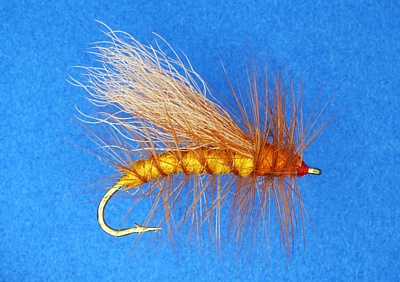
Sit down with a cup of coffee or a cold one as this video is not an abbreviated version. Greg ties a pattern that was inspired by the Norm Woods Special fly pattern.

“My friend James sent me a picture of the Norm Wood Special years ago before I was leaving for a trip to the Deschutes River. I remember thinking it looked just like a Stimulator or a Sofa Pillow fly without a tail and that’s exactly what it is!

I had no idea the fleshy color of the wing was the big deal about the Norm Woods Special differentiating it from other stonefly patterns.  Kind of a fleshy pink color.

norm-woods-special-idylwilde-trout-flies-31

Classic Norm Woods Special

That night as I looked for something that would work for the wing I decided to use rabbit fur plunked off the rabbit mask. The texture seemed to be somewhat like calftail (like the original and I had none) and the wing looked really good. I tied a few different colors of gold, brown, light brown and tan.  All classic colors for stonefly patterns.

DSC_0037

My Original Rabbit Fur Wing with Brown Body

When the fish began to hit the surface salmonflies were everywhere around me in trees, shrubs, bushes and I got excited to tie on a size 6 dry fly. I matched the hatch identically and to my surprise the trout weren’t interested or as Marty, one of my original mentors would say, “Rejected.”
IMG_0414

Matching the Hatch but Rejected

I then began to notice smaller golden stone flies popping off the tall grass.

IMG_0406

Golden Stone

Change fly to my Norm Woods Special variation in gold and BAMM.”

DSC_0042

Gold, Black, Brown, Tan….

Tie Some Up:
Hook: TMC 200R or Daiichi 1270
Thread: 8/0 Color To Match
Wire Rib: Ultra Wire Small Gold
Dubbing: SLF Kaufmann’s or Dub of Choice
Hackle: Neck or Saddle Dry Fly Hackle Brown

Norm Woods Special Fly

Stonefly Patterns for the Deschutes River Stonefly & Salmonfly Hatch

#FlyShopStrong

Posted in Fly Tying, Fly Tying Materials and Supplies | Leave a comment

Snook Brush Tuxedo Fly Tying Video

In this video professional fly tyer and blogger Jay Nicholas ties a simple snook fly called the Snook Brush Tuxedo Fly.

Incorporating materials from Hareline including the new Bling Rabbit Strips, Helix Flash, and H2O’s Flash Blend Baitfish Brushes Jay gives his input and years of experience discussing these new materials and how to work with them.

IMG_5943

Snook Brush Tuxedo

Hook: Ahrex Predator Stinger or Gamakatsu B10S 1-3/0
Thread: Danville 210 Denier Black
Tail: Magnum Bling Rabbit Strip-White
Flash: Helix Flash
Body: Sculpting Flash Brush White 2″
Collar: Farrar Blend Baitfish Brush

Posted in Fly Tying, Fly Tying Materials and Supplies | Leave a comment