Jigged Mega Prince Nymph Fly Tying Video – Alex Worth 2020

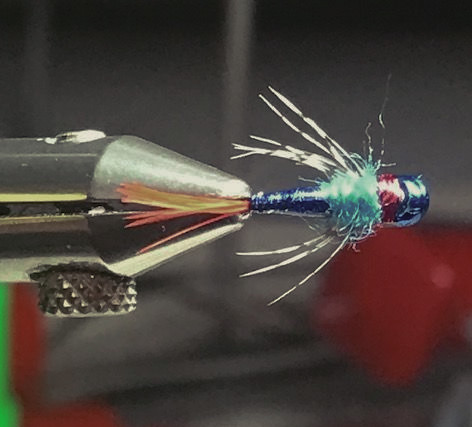
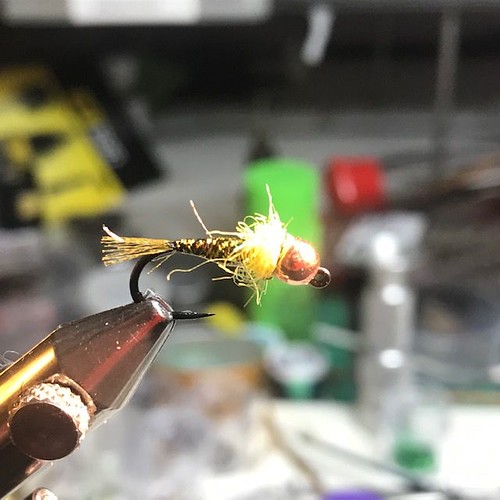
In this video, Alex Worth stopped by the shop to tie a McKenzie River guide favorite, the Mega Prince.

Using jig hooks and tungsten beads, this fly is designed to get deep into the zone where fish feed. Use it under an indicator or with a Euro nymph setup in different sizes (4-12) to match the hatch.

Screen Shot 2020-12-17 at 9.39.47 AM

Jigged Mega Prince
Hook: Daiichi 4640 Sizes 4-12
Bead: Slotted 3/16″ Tungsten Bead Gold
Thread: Uni Fl. Fire Orange 6/0
Antenna: Barred Crazy Legs
Tag: Mylar Tinsel Gold Med.
Tail: Wooly Bugger Marabou Brown
Krystal Flash Med. Brown
Barred Crazy Legs
Rib: Med. Ultra Wire Gold
Body: Peacock Herl
Wing: Indian Hen Feather
Thorax/Collar: Barred Crazy Legs
Peacock Herl
Goose Biots
Super Glue

Posted in Fly Tying, Fly Tying Materials and Supplies | 1 Comment

Double Year End Gift to Native Fish Society

mail

The Caddis Fly Angling Shop will donate 10% of Monday’s sales to Native Fish Society. We appreciate the hard work NFS has done over the years and continues to do today. Please donate if you can, NFS is doing some great things for wild fish.

From Native Fish Society

DOUBLE YOUR SUPPORT FOR WILD ABUNDANCE

Now is the time to DOUBLE your impact for abundant wild fish.

Last night an anonymous donor made an incredibly generous offer to NFS – to match every donation between now and the end of year up to $100,000!

That’s right a dollar for dollar match for every Year-End donation to NFS. To kick off the match our friends at the creative studio, THIS, just had their $6,000 donation to NFS doubled to $12,000! Thank you to our friends at THIS! We’re asking you to please join THIS and help us match all $100,000. Every donation makes a difference.

MAKE A DONATION HERE

Doubling your generous gift will ensure that our wild, native fish have a strong, science based voice across the Northwest in 2021. In Washington, your support will enable us to team up with local partners and Tribal Nations in the free-flowing White Salmon River to monitor the health and recovery of wild steelhead in this Wild Steelhead Gene Bank. In Oregon, we’re standing up to deadbeat dams and harmful hatcheries. With your support we can improve water quality, safe fish passage, and increase wild fish abundance on the Deschutes, Willamette, and North Umpqua rivers. In California, your generosity will empower volunteer River Stewards and staff to join Tribal Nations calling for a wild and free Klamath River – the largest river restoration project in world history. These homewaters matter and need your support!

DONATE HERE

Together, we can do so much more in 2021 — please double down for wild fish!

Best Wild Fish Wishes,

Mark Sherwood
Executive Director

P.S. Did you know that for 2020 only, taxpayers who itemize deductions on their tax returns can make a cash donation to a qualifying charity and deduct up to 100% of their adjusted gross income? Don’t miss this opportunity to give big!

Posted in Oregon Conservation News | Leave a comment

Jay’s Bonefish Fly Tying Video

In this video, Jay ties a Bonefish fly. A good pattern to try next time you’re down fishing the salt!

_DSC6668

Hook: TMC 811s size 6
Eyes: Chicone’s Stealth Bead Chain Eyes
Thread: 6/0 Danville Grey
Tail: Aussie Possum natural
Mono Eyes: Aquaflies Eyes
Body: Rainbow Scud Dub
Legs: Chicone’s Crusher Legs Shrimp Pink
Wing: Sculpting Flash Fibre
Wing: Senyo’s Fusion Dub Crusty Nail

Posted in Fly Tying, Fly Tying Materials and Supplies | Comments Off on Jay’s Bonefish Fly Tying Video

Saving Steamboat Inn -Go Fund Me

Screen Shot 2020-12-15 at 4.38.20 PM

Steamboat Inn was in the middle of the Archie Creek Fire that started September 8th, 2020. The devastation from the mega fire to the area is astounding. While our buildings survived, our three water systems (Inn, Campwater Houses, and Hideaway Cottages) and the septic system for the Inn did not. All four systems melted and are a complete loss. The fire burned to within feet of our cottages and at least one has water damage. The valve house that supplies the spring water to the Inn, suites, and cabins was destroyed and all of the plumbing will have to be replaced.

Estimates for the three water systems and the septic system replacement is $40,000-$50,000 EACH. The valve house plumbing, electrical, and structural repair quote is $20,000. We do not have the quote for the cottage water damage repair yet. We also have substantial business losses from closing three months early (after opening three months late) and $15,000 of food was spoiled during the two week evacuation with out power. We are still without phone lines. We are unable to take any reservations for 2021 yet as we do not know when we will be able to reopen. continue reading on the go fund me page here.

Posted in North Umpqua River Fishing Reports | Leave a comment

Adams Parachute – From Nicholas’ 1960s Time Vault

I know the flies we fish these days are superb. Tied on the best hooks, with fine threads, bodies that are light and float when we want them to, but every once in a while I think about the way I tied flies for Norm Thompson in Portland, in the mid-1960s. At the time, I was a teenager looking to find a way to pay for a nice fly rod and line. I talked with Peter Alport and agreed to provide these parachute flies for 35-cents each. At the time, that made this fly the most expensive dry fly they offered, at a retail price of 70-cants. I revitalized this discussion of the old-style flies for your entertainment here, and offer my invitation to read-on and enjoy a look back.

This is a fly tied in about 1980, very much like I tied the Parachute in the 1960s.

This is a fly tied in about 1980, very much like I tied the Parachute in the 1960s.

Adams Parachute

Hook – Mustad 94840 #10 – 14
Thread – Grey Nymo
Tail – White Calf tail
Body – Grey Mohlon yarn
Head – Olive-green dubbing
Post – White calf tail
Hackle – Grizzly & brown saddle feathers, dense

My favorite dry flies when I fished the Metolius River during the 1960s and 1970s were the Adams, Female Adams, Floatin’ Fool, and Red Coachman Special, all tied parachute style with heavy hackling and bodies that would be judged by 2020 standards of fly-proportion.

I also fished a Caddis Parachute, and a Green Drake Parachute too, but the heart of my Metolius fly boxes in those days were the basic Adams Parachute.

From my first parachute to this day, I prefer to tie these flies with calf tail hair, carried clear though to form the hackle post. I learned this style from Lloyd Byerly and Audrey Joy, in Portland Oregon, back in the 1960s and have found no reason to stray from the style.

I will readily acknowledge that materials like Poly yarn and Parachute Post materials perform better in terms of floatation, but I try to use the calf tail whenever I can find suitable hair on a tail. Modern synthetic dubbing materials provide better floatation, and color shades can be purchased to match the subtle shades of insects in different streams or months of the year.

The Female Adams was a favorite dry fly, although I never knew if the little yellow color bump at the rear of the fly helped - my confidence always soared.

The Female Adams was a favorite dry fly, although I never knew if the little yellow color bump at the rear of the fly helped – my confidence always soared.

Nicholas’ Female Adams Parachute, circa 1980s

A Good Variation from the Adams Parachute is the fly I refer to as the Female Adams. This fly can be tied as traditional with hackle wound around the hook shank, or as shown here as parachute style.

Hook – Mustad 94840 #12 – 14
Thread – Grey Nymo
Tail – Grizzly & brown hackle
Butt – Yellow dubbing, bright is best
Head – Olive-green dubbing
Body – Grey muskrat or superfine
Hackle – Grizzly and brown saddle feathers

After fishing Adams parachutes for several years, I discovered the Female Adams. In theory, the yellow butt triggers the take for trout keyed in on female Mayflies with an egg sac. This fly is sometimes referred to as an Egg Sac Adams. I have fished this pattern with the traditional tie as well as the parachute-style for decades and consider it a must-have on any trout waters. I have taken to tying this fly using fluorescent chartreuse Ice Dub for the egg-sac, and this fly produces well also. I can’t say whether the bright butt makes a difference, but I love the fly. You can depend on it on any trout waters.

I fished the Metolius in those days with an Eagle Claw fly rod; probably about 7 ½ ft. long, with an SA floating Double Taper fly line. I think I joined line and leader with a Figure-8 knot, but on occasion, I used those little metal eyelets that we jammed into the end of the fly line, and was held in place with two or three tiny barbs on the shaft. My reel was either a Perrine No 80 Automatic, or a Pflueger 1495, but frankly, I’m not sure, because some of these details have become a little fuzzy over time.

My leaders at the time were the Gladding Gladyl, dark green, 9 ft. 6X tapers.

My floatant was a red metal tub of Mucilin paste, and I would squash a soggy parachute fly in a wad of paper towel to dry it, apply more Mucilin, and my fly would float high again.

In closing, I’d like to thank any of our readers for making it this far. These old fly-styles are fun to tie, and they still catch fish.

Jay Nicholas, December 2020

Posted in Fly Tying, Fly Tying Materials and Supplies | Leave a comment

Holiday Gift Guide 2020 #2

Some last minute gift ideas for the fly fisher in your life.

renzetti-master-vise-27
Renzetti Master Vise (Only 250 Made)

renzetti-apprentise-fly-tying-vise-tools-vises-35
Renzetti Apprentise Vise (C-clamp or Base)

galvan-euro-nymph-reel-15
New 2020 Galvin Euro Nymphing Reel

rep-your-water-squatch-and-release-hoody-10
Rep Your Water Sweatshirt

rep-your-water-creek-of-dreams-old-fashioned-glass-10
Rep Your Water Glasses

rep-your-water-digi-bow-knit-hat-5
Rep Your Water New 2020

dropper-rig-fly-box-47
Dropper Box

magnify-clip-on-glass-magnifier-with-magnets-5
Magnify Clip

Gift Cards

Feel free to call the shop for more gift ideas at (541) 342-7005

Orders over $50 ship free in the USA

#flyshopstrong

Posted in Fishing Porn, Fly Fishing Gear Review, Fly Tying, Fly Tying Materials and Supplies | Leave a comment

Sens’ Foxee Dog Variation Fly Pattern – Jim Sens 2020

In this video, Jim Sens ties a fly that has proven itself over and over again in the PNW; The Foxee Dog.

Incorporating dubbing loops, hackles, marble fox, pheasant and much more, Jim’s experience and creativity make this video fun to watch. Follow along and tie some up! Winter time is just around the corner…

IMG_5998

Sen’s Foxee Dog Variation:
Shank: Senyo’s Articulated Shank by Fish Skull 40mm
Wire: Senyo’s Intruder Wire Pink
Hook: Aqua Flies Aqua Talon Size 2
Thread: Veevus 10/0 Light Pink
Lagartun Small French Oval Tinsel Silver
Veevus Mylar Tinsel Med.
Holo Fusion Flash Pink
Uni French Twisted Tinsel Med.
Lagartun Flat Braid Pearl
Ice Dubbing or Senyo’s’ Fusion Dubbing
Chinese Rooster Saddle Pink
Arctic Fox Tail White
Ice Wing UV Pearl Hue
Pheasant Rump
Pro Sportfisher Marble Fox Pink
Angel Hair Electric Pink
Red Peacock Herl
Silver Pheasant Feathers Natural
Solar Resin
Zap A Gap

Posted in Fly Tying, Fly Tying Materials and Supplies | Leave a comment

December Fishing on The McKenzie Continues

Fished the lower Mckenzie early this week. The water level was a bit lower than a week ago. Thus far, with no major rain event, December fishing remains fair to good.

Once again, the Euro Nymph rod is NOT recommended for steelhead! We caught this on a jig Possie bugger. The trout were hooked on the mega prince. Its a catch a few, lose a few fishery…get out there before the big rains!

d2

d3

LV

Posted in Fishing Reports, Lower Willamette, McKenzie River | Leave a comment

Red & Black Deceiver Fly for Dorado

In this video, Jay continues to tie deceiver style patterns for larger fish including golden dorado, musky, pike, and peacock bass.

Beautiful flies for beautiful, large fish!

Screen Shot 2019-08-18 at 8.53.51 AM

Hook: Ahrex PR320 4-6/0
Thread: Veevus GSP 150D White
Cement: Loctite or Hard as Hull
Tail: Strung Saddles (6-8) Black & Red
Flash: Mixture of Magnum Flashabou & Holographic Flashabou
4 Hollow Stations: Alternate Black & Red Bucktail
Eyes: Pro Tab or Jungle Cock Sub
Head: Copic Marker

Posted in Fly Tying, Fly Tying Materials and Supplies | Leave a comment

Scientists solve mystery of mass coho salmon deaths. The killer? A chemical from car tires

90

From the LA Times By ROSANNA XIA STAFF WRITER

When officials in Seattle spent millions of dollars restoring the creeks along Puget Sound — tending to the vegetation, making the stream beds less muddy, building better homes for fish — they were thrilled to see coho salmon reappear.

But when it rained, more than half, sometimes all, of the coho in a creek would suffer a sudden death.

These mysterious die-offs — an alarming phenomenon that has been reported from Northern California to British Columbia — have stumped biologists and toxicologists for decades. Numerous tests ruled out pesticides, disease and other possible causes, such as hot temperatures and low dissolved oxygen.

Now, after 20 years of investigation, researchers in Washington state, San Francisco and Los Angeles say they have found the culprit: a very poisonous yet little-known chemical related to a preservative used in car tires.

The chemical is just one of a vast number of contaminants that washes off roads whenever it rains. This giant soup of pollutants, which includes trillions of microplastics, rushes down drains and into creeks and ultimately into the sea.

“We pretty much figured out that anywhere there’s a road and people are driving their car, little bits of tire end up coming off your tire and end up in the stormwater that flows off that road,” said Ed Kolodziej, an environmental engineer and chemist at the University of Washington (Tacoma/Seattle), whose lab led a study that was published Thursday in the journal Science. “We were able to get all the way down to this one highly toxic chemical — something that kills large fish quickly and we think is probably found on every single busy road in the world.”

Coho salmon, also known as silver salmon, are prized among fishermen and an important indicator species — the canary in the coal mine for coastal watersheds along the northern Pacific Ocean. Their range has historically stretched from the creeks nestled in the redwood forests near Santa Cruz all the way north to the waters of Alaska. The few coho populations that still exist in California are either endangered or threatened.

The fish are born in freshwater streams, where they stay for about a year before making the long journey through rivers and estuaries and into the ocean. They return a year and a half later to lay and fertilize eggs before dying. Many obstacles have made this journey across different environments more difficult: Shrinking estuaries, blocked passages from dams and culverts, as well as drought and a changing climate.

“While we often monitor temperature and dissolved oxygen levels, much more could be done to test for toxicity,” said Mariska Obedzinski, a California Sea Grant fisheries biologist who leads monitoring and salmon recovery research on the Russian River and was shocked to see the findings out of Puget Sound.

“With so many chemicals out there,” she said, “it is overwhelming to know what to test for, so the results of this study will help us home in on testing for a chemical that we now know causes acute mortality.”

Peter Moyle, a longtime salmon expert and emeritus professor at UC Davis, recalled the four small streams in San Francisco Bay that once had coho. He has been following the Puget Sound research, which he is also not affiliated with, and now wonders whether all the roads and major freeways that crossed these creeks contributed to their disappearance decades ago, despite all the restoration efforts.

“The challenge when you talk about declines of really sensitive fish like coho salmon, is that there are so many things that are affecting them simultaneously, it’s hard to pinpoint one,” he said. “That’s why it’s so interesting that in these Puget Sound streams, they found this one chemical that seems to be the smoking gun.”

90-1

The scientists in Washington state spent years studying dozens of streams — looking for patterns and comparing samples from pristine creeks, to those in more urban areas. They narrowed the culprit down to stormwater, then to creeks that were near busier roads, and finally to the wear and tear of car tires.

Researchers then soaked tire bits in room temperature water for about 24 hours. As many as 1,500 to 2,800 chemicals would leach out and, using high-resolution mass spectrometry, the team methodically identified and analyzed these compounds.

They tried sectioning this tire cocktail into different chemical properties, such as removing all metals from the solution. Then they tested these different sub-mixtures to see which ones were still toxic to the salmon. They repeated this process until only a few chemicals were left — including one mysterious speck of purple that they knew very little about.

“We knew that the chemical that we thought was toxic had 18 carbons, 22 hydrogens, two nitrogens and two oxygens. And we kept trying to figure out what it was,” said Zhenyu Tian, the study’s lead author and a research scientist at the Center for Urban Waters at University of Washington Tacoma. “Then one day in December, it was just like bing! in my mind. The killer chemical might not be a chemical directly added to the tire, but something related.”

The smoking gun turned out to be related to a chemical called 6PPD, which is essentially a preservative to keep car tires from breaking down too quickly. When 6PPD hits the road and reacts with ozone gas, the chemical transforms into multiple new chemicals, including a compound known as 6PPD-quinone.

Not much is known about 6PPD-quinone, but it does appear to be very toxic (at about 1 microgram per liter) and does not degrade as quickly as 6PPD.

It remains unclear how exactly this chemical kills coho salmon, but it may be doing something to the lining of the salmon’s vascular system, said Jen McIntyre, an aquatic ecotoxicologist at Washington State University who has been studying this mystery for more than 15 years.

Once coho are exposed to 6PPD-quinone, they begin to breathe erratically — almost like they’re gasping for air. They lose equilibrium and start spiraling in circles, unable to stay upright in the water. Eventually they drop to the bottom, where they stop moving and die.

McIntyre has begun testing this toxin on five other Pacific salmon species, which have shown different levels of sensitivity. She’s also curious how 6PPD-quinone might affect other organisms, and more studies need to be conducted to understand whether this chemical has any impact on humans.

90-2

Worrisome concentrations of 6PPD-quinone were also confirmed in samples from L.A. and San Francisco. Rebecca Sutton, a study co-author who specializes in emerging contaminants, had reached out to the researchers in Puget Sound after coming across a number of tire rubber chemicals in her studies of San Francisco Bay.

These discoveries fit into a growing body of science that illuminates how driving is not just an air pollution and climate change problem, she said. In a separate study last year, Sutton was surprised to find that tire particles were by far the largest source of microplastics in the bay.

Tires containing zinc have also been known to harm wildlife, said Sutton, who works for the San Francisco Estuary Institute, an independent science think tank. “We also know that steelhead trout and Chinook salmon exhibit some sensitivity to tire rubber chemicals.”

Across California, water quality regulators, state transportation officials and federal scientists have been learning about these startling connections between stormwater and coho deaths during recent meetings and conferences. The state’s coastal highway, some pointed out, crosses numerous streams and estuaries.

“Now that they’ve gotten it nailed down to one compound — that’s amazing. It’s also really helpful that something could be done about it,” said Joe Dillon, who specializes in water quality and toxicology for NOAA Fisheries. “This means the tire industry can work on figuring out how to replace that compound with something less toxic. It means they can be pushed by the state of California or by nongovernmental organizations to undertake that work.”

Matt St. John, executive officer of California’s Regional Water Quality Control Board on the north coast, home to most of the remaining coho salmon in California, said he’d like to start monitoring for this chemical in creeks to determine what further action is needed.

“The study is definitely an eyebrow-raiser,” he said. “When you find a causal link like this that is controllable, we need to take this type of information seriously.”

Posted in Oregon Conservation News | Leave a comment

Micro Tinsel – Fly Tying Material Review

20 pack

Not often I support new fly tying material. I read about Uni Micro Tinsel in one of the trade magazines and it sounded interesting. First, this is not Mylar tinsel cut to smaller sizes. It’s thread! Well, 20 spools later, I went tyer crazy and used it with some of the new 1920 Daichi series hooks.

Micro Tinsel was designed for smaller flies. Round 6/0 Tinsel is perfect for tying smaller nymphs and euro style flies. I have been coating it with UV Cures and loving the results. Each spool of Uni Micro Tinsel has 12 yards of tinsel on the spool. Use it like wire or put it on a bobbin and wrap like thread. Very little or no stretch and its very durable.

The shop has most of the colors in stock. I think the best buy is the 20 pack. You get 14 colors and can experiment. I found black to cover with UV nicely and looks great. The combo of (20) spools also comes in Uni-Exclusive plastic tray (container) to keep spools well arrange, away from dust, and easy to store away.

Mico 1

Micro 2

gold

Black

cold

Lou V.

Posted in Fly Tying, Oregon Fly Fishing Tips | Leave a comment

McKenzie Fishing Well in December

I heard Justin had been out recently and pressed him a bit, he and Lou enjoyed some good success.

“Yeah, fished Sunday and Monday and both days were pretty good! I was just fishing a mega prince and jig PT below an indicator and that was catching fish all day. On Monday I fished a little bwo as there were more bugs on the water, but no surface activity. It rained a little bit on Sunday night and dumped on us for a bit on Monday, but after it cleared up the fishing got pretty good.”

IMG_0868

IMG_0841-preview

IMG_0873

IMG_0870

Posted in Fishing Reports, Lower Willamette, McKenzie River | Leave a comment

Fine Weather and Water Conditions for late season “McKenzie Trouting”

IMG_1815

It’s not every year we find the McKenzie in fine shape the first week of December. Currently the McKenzie is at 3600 CFS and dropping. The coming week of sunshine and good water gives anglers a shot at some “bonus” trout fishing. Mid-day nymphing with larger stonefly nymphs and Mega Princes will produce. Look for slower runs and seams. Don’t be afraid to go a bit deeper off the indicator.

IMG_1816

Posted in Fishing Reports, McKenzie River | Leave a comment

Caddis Fly Shop Holiday Gift Guide 2020

Caddis Fly Shop have all the gifts for the fly fisher in your life including new products from Fishpond, Hareline Dubbing, Scott Rods, Scientific Angler, Echo Fly Fishing, RIO, ABEL, and much more…

abel-sdf-underwood-fly-reels-25
Abel SDF Fly Reels

scott-centric-rods-5
Scott Centric Fly Rods

fishpond-web-belts-27
Fish Pond Belts

echo-shadow-fly-reel-23
Echo Shadow Fly Reel

scientific-anglers-switch-tippet-holder-25
SA Switch Tippet Holder
SA Absolute Tippet

rio-elite-rio-gold-trout-line-15
RIO Elite Fly Lines

dropper-rig-fly-box-14
Tandem Dropper Rig FlY Box

caddis-fly-hats-93
Caddis Fly Shop Hats

Gift Certificates

Free Shipping Orders Over $50 in USA
Curbside Pickup
Walk-in
(541) 505-8061
www.caddisflyshop.com

#Flyshopstrong

Posted in Fishing Porn, Fly Fishing Gear Review | Leave a comment

Army Corps Denies Pebble Permit

AK-BB-sockeye-Jason-Ching-1c1

From the Wild Salmon Center – Nov 25, 2020 Author: Oakley Brooks

The U.S. Army Corps of Engineers rejected the Pebble Limited Partnership’s permit for a mine in Bristol Bay, Alaska.

The Army Corps today denied Pebble Mine a key permit for its mine proposed in the headwaters of two of Bristol Bay’s most important salmon rivers.

That follows a huge outcry this summer against the mine from people across the political spectrum, the release of the Pebble Tapes, and a demand from the Army Corps that Pebble mitigate for damage planned to more than 100 miles of salmon streams and 3,000 acres of wetlands under its proposal.

The Army Corps said today that mitigation plan, submitted last week, did not meet Clean Water Act standards and was not “in the public interest.”

Guido Rahr, CEO of the Wild Salmon Center, said: “Today, we thank the Army Corps for doing the right thing. The agency recognized what Bristol Bay Tribes, fishermen, independent scientists and the EPA have long established: Pebble Mine is too destructive for the Bristol Bay ecosystem. Today’s decision gives the people of Bristol Bay temporary relief from this mine. It’s now time for EPA to use the Clean Water Act to kill this mine once and for all.”

We thank all of our supporters for helping us reach this point! Recharge and stay tuned as we gear up for the final, crucial step: securing Clean Water Act protections for one of the planet’s greatest salmon strongholds.

Posted in Oregon Conservation News, Oregon Salmon fly fishing, Oregon Saltwater Fishing | 1 Comment