OregonFlyFishingBlog.com Travel Week: First Install Cedar Lodge New Zealand

cedar lodge new zealand all inclusive helicopter fly fishing

Winter time in the Pacific Northwest is great for Winter steelheading but let’s not forget about planning and dreaming about your next destination fly fishing trip. This week I thought I would share some ideas for the coming year. We start with New Zealand, closest to our hearts Cedar Lodge.

underwater brown trout release New Zealnd fly fishing at cedar lodge

Cedar Lodge’s season starts around the 15th of November. High country rivers in Mt. Aspiring National Park open the first Saturday of November. We get going roughly the week after the opening week push. Spring is variable in terms of water and weather conditions, but fish are hungry and often we see better numbers of fish during the Nov-Dec period.
dry fly fishing on the south island of new zealand

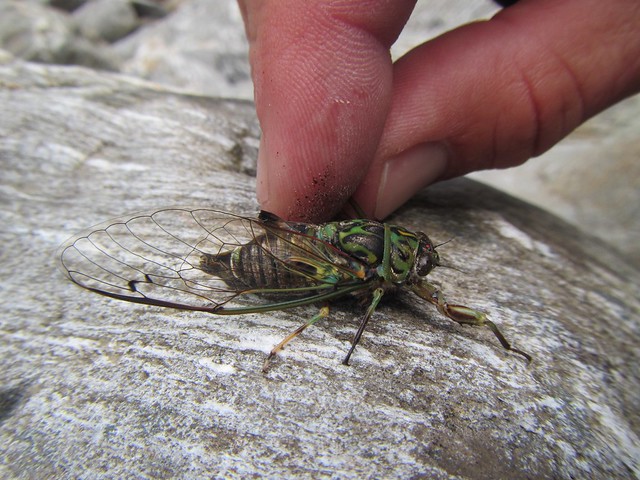
One of the most common questions we get is “when is the best time to come?” The easy answer is “anytime” you can make it, but here are a few thoughts. In a perfect world everyday in February (high summer) would be blue bird weather and Cicada’s would be singing, banging into you, and struggling on the water. Big browns would be free rising and water levels ideal. But we are set at roughly the 45th parallel and the weather varies. We just had 2 feet of rain in 3 days! 3500 lightening strikes hit central Otago during that period. One night the thunder was so loud it resembled 50 trains barreling down the valley, with the odd one crashing into our house. Back to the best time of year, January and February are considered high summer and we do book these weeks roughly a year in advance. Here is my sleeper pick for the best time of year. The two weeks prior to Christmas have been the transition between spring and summer the past 3 seasons. We have seen excellent Manuka Beetle activity and the weather has been largely settled and general fishing and tourism traffic is considerably less in New Zealand. December 10-22 is a fantastic window.

underwater release brown trout at cedar lodge

The fishing at Cedar Lodge: The two truly unique aspects of Cedar Lodge are location and inclusive helicopter transport to and from the rivers we fish. We are positioned at the edge of Mt. Aspiring Park and fish numerous rivers east and west of New Zealand’s southern divide. The fact that we own our helicopter makes heli transport inclusive rather than an additional charge at retail rates. We fish with five and six weight rods, use primarily dry flies with the occasional nymph dropper. Fish generally range in size from 2-8lbs, browns and rainbows are available depending upon the days local.

brown trout release at Cedar Lodge New Zealand

What to bring: We have quite a few guests arrive without rods, reels, boots, waders, flies etc. That’s fine! We have everything you might need here at the lodge. If you do want to bring your own gear we suggest rubber soled wading shoes, wading socks, five and six weight rods, 9-12ft 4x leaders, 3-5x tippet and an assortment of flies depending upon the season. Because the weather does vary we suggest you focus on layering and are prepared for all conditions. It can be 80 degrees one day and snow the next. A fishing license with “back country endorsement”, sunscreen, insect repellent, hat, buff, day pack and good polarized sunglasses are all necessities.

Meals and Accommodations: We have really “ramped” up the garden the past few seasons and along with famous New Zealand lamb, venison, and seafood our mains include freshly picked organic fruits and veggies. Hardy breakfasts get you started each morning and stream-side lunches are served with a cup of tea or coffee. The lodge has only 4 rooms, our maximum capacity is 8 guests. Each room has an every changing view of the Mountains of Mt. Aspiring national park.

Why come to Cedar Lodge New Zealand? I will make this easy. Sight fishing in crystal clear rivers for big trout in water you can drink out of!

You will find much more info at: http://cedarlodge.net/index.html
Posted in Fly Fishing Travel | Leave a comment

DNA evidence shows that salmon hatcheries cause substantial, rapid genetic changes

CORVALLIS, Ore. – A new study on steelhead trout in Oregon offers genetic evidence that wild and hatchery fish are different at the DNA level, and that they can become different with surprising speed.

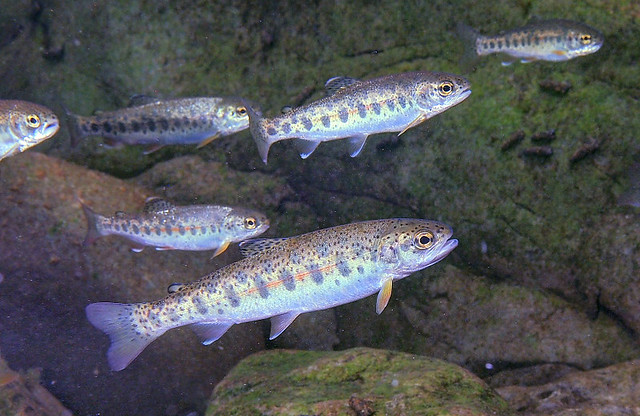
Juvenile steelhead trout

The research, published today in Nature Communications, found that after one generation of hatchery culture, the offspring of wild fish and first-generation hatchery fish differed in the activity of more than 700 genes.

A single generation of adaptation to the hatchery resulted in observable changes at the DNA level that were passed on to offspring, scientists reported.

This research was conducted at Oregon State University in collaboration with the Oregon Department of Fisheries and Wildlife. Scientists say the findings essentially close the case on whether or not wild and hatchery fish can be genetically different.

Differences in survival and reproductive success between hatchery and wild fish have long offered evidence of rapid adaptation to the hatchery environment. This new DNA evidence directly measured the activity of all genes in the offspring of hatchery and wild fish. It conclusively demonstrates that the genetic differences between hatchery and wild fish are large in scale and fully heritable.

“A fish hatchery is a very artificial environment that causes strong natural selection pressures,” said Michael Blouin, a professor of integrative biology in the OSU College of Science. “A concrete box with 50,000 other fish all crowded together and fed pellet food is clearly a lot different than an open stream.”

It’s not clear exactly what traits are being selected for, but the study was able to identify some genetic changes that may explain how the fish are responding to the novel environment in the hatchery.

“We observed that a large number of genes were involved in pathways related to wound healing, immunity, and metabolism, and this is consistent with the idea that the earliest stages of domestication may involve adapting to highly crowded conditions,” said Mark Christie, lead author of the study.

Aside from crowding, which is common in the hatchery, injuries also happen more often and disease can be more prevalent.

The genetic changes are substantial and rapid, the study found. It’s literally a process of evolution at work, but in this case it does not take multiple generations or long periods of time.

“We expected hatcheries to have a genetic impact,” Blouin said. “However, the large amount of change we observed at the DNA level was really amazing. This was a surprising result.”

With the question put to rest of whether hatchery fish are different, Blouin said, it may now be possible to determine exactly how they are different, and work to address that problem. When the genetic changes that occur in a hatchery environment are better understood, it could be possible to change the way fish are raised in order to produce hatchery fish that are more like wild fish. This research is a first step in that direction.

This work was performed using steelhead trout from the Hood River in Oregon. It was supported by the Bonneville Power Administration and the Oregon Department of Fish and Wildlife.

Posted in Oregon Conservation News | Leave a comment

WInter Steelhead Update

Mongo Island

Hard to believe its already mid-February 2016! With the recent rains over the weekend, all coastal streams are coming into good to very good fishing levels. Anglers are reporting fair to good catches on the Alsea, Siletz and Siuslaw with egg patterns, and swinging when water clarity permits. Anglers should be aware of river level reports before heading out as the current forecast will call for showers and some rivers may be impacted greater than others.

Here some egg patterns that have a proven track record of success: lowly glowly, clown egg and the thunder egg. We have a good supply in stock at the shop. More rain is forecasted in the coming days ahead with slight rises projected. Hopefully, this will bring great expectations of success for the winter steelhead angler.

Some rivers are producing fine natives in addition to the BBQ bound hatchery fish. Here a few pics of recent catches from some of our coastal streams. It looks good for the coming weekend, get out there!

Mongo 2

Mongo land

LV

Posted in Coastal Steelhead Fishing, Fishing Reports | Leave a comment

Understanding Ostrich (a little)

This is an excellent ostrich plume, probably several years old. I do not remember the origin.

This is an excellent ostrich plume, probably several years old. I do not remember the origin.

I tie with a lot of ostrich and realize that things I take for granted might not be understood by all fly tyers. The fly tying industry competes with the fashion industry, the costume industry, and the auto industry to get the best ostrich at the best prices possible. Over time, I have seen quality and availability vary considerably. All ostrich is useful but the fact remains that individual plumes have different properties that affect the performance of the flies we tie.  The various commercial providers of ostrich get the best plumes they can, but the raw feathers they are able to obtain are not the same from week to week, month to month and so on.

If I want to tie with ostrich – I take the best I can get through time, and adapt to a shifting playing field. Many beginning tyers do not understand how much ostrich can vary, and may blame the commercial providers for differences they see. In my experience, every commercial distributor is doing the best they can to provide first quality feathers – but from time to time they must pass on whatever is the best they can get in order to provide any ostrich at all.

The preferences of individual fly artisans vary too, with some wanting fluffy ostrich and some wanting slender strands on the plume that are similar to Rhea.

The following photos will illustrate a few points to consider. I tie with the following brands, and will limit my remarks to these.

OPST barred ostrich

OPST dotted ostrich

MFC premium ostrich

Hareline ostrich 

Other distributors of ostrich probably deal with the same issues I will discuss. I encourage anyone who loves ostrich to stock up when you are in your local fly shop and find the PERFECT ostrich. Of course, your tastes for ostrich may shift over time, but it is unlikely to imagine a future when ostrich is more available or higher quality than we see today.

Here goes – – – – – –

These ostrich barbules have consistently sharp tips and are tapered from a thick base.

These ostrich barbules have consistently sharp tips and are tapered from a thick base.

This ostrich plume (the same we have  been looking at) not only has shlarp tips but also very firm base to each fiber. this means it will stand out if spun in a loop and hold a lot of loft.

This ostrich plume (the same we have been looking at) not only has sharp tips but also very firm base to each fiber. this means it will stand out if spun in a loop and hold a lot of loft.

These ostrich fibers are sharp but a little scraggly and have some broken tips. Still good stuff and quite useful.

These ostrich fibers are sharp but a little scraggly and have some broken tips. Still good stuff and quite useful.

The fibers on this ostrich plume are not quite as firm at the base as on the orange plume, still reasonably firm though.

The fibers on this ostrich plume are not quite as firm at the base as on the orange plume, still reasonably firm though.

This is the portion of the ostrich I most appreciate if it is in fact short and firm engough to wind about three turns around the hook shank, intruder shank, or tube as you would wind a feather stem. I save these for my most special occasions. Rare stuff.

This is the portion of the ostrich I most appreciate if it is in fact short and firm engough to wind about three turns around the hook shank, intruder shank, or tube as you would wind a feather stem. I save these for my most special occasions. Rare stuff.

The fibers must be firm and short and with no broken tips. Never expect these qualities and never take them for granted.

The fibers must be firm and short and with no broken tips. Never expect these qualities and never take them for granted.

Some ostrich is packaged two plumes per, and in these cases it is customary for the two plumes to vary in quality or properties wth one large and one small. No one is tricking you here, it is normal industry practice. The largest nicest plume in the package will be in front. These plumes were in a single package and illustrate size difference. Both are useful and serve different purposes on different size flies.

Some ostrich is packaged two plumes per, and in these cases it is customary for the two plumes to vary in quality or properties wth one large and one small. No one is tricking you here, it is normal industry practice. The largest nicest plume in the package will be in front. These plumes were in a single package and illustrate size difference. Both are useful and serve different purposes on different size flies.

The charateristics, color, and quality of ostrich from the same distributor will shift over time due to circumstances beyone their control. These plumes are both by OPST, both are very good, and both are very different, obtained about two months apart. This is normal and expected.

The charateristics, color, and quality of ostrich from the same distributor will shift over time due to circumstances beyone their control. These plumes are both by OPST, both are very good (obtained in two different packages), and both are very different, obtained about two months apart. This is normal and expected.

These two plumes were in the same OPST package and are very similar is size but the fibers on one plume are a little fuller with fewer broken tips than on the other plume. Again, this is normal, and the fish do not shy away from a few gnarly tips.

These two plumes were in the same OPST package and are very similar is size but the fibers on one plume are a little fuller with fewer broken tips than on the other plume. Again, this is normal, and the fish do not shy away from a few gnarly tips.

Illustrating the size and tip quality differences in a single package of dotted OPST ostrich.  This is all good stuff and I'll use every bit of it on various parts of my flies.

Illustrating the size and tip quality differences in a single package of dotted OPST ostrich. This is all good stuff and I’ll use every bit of it on various parts of my flies. I should note here that OPST has enlarged the size of the dots on their ostrich and I like the big dots much better than the smaller dots of the old style.

This photo shows a black Hareline ostrich plume alongside a barred MFC plume. They are both large but their properties are extremely different. The Hareline ostrich is full and fluffy, while the MFC is slender and sleek, perfectly barred. While both plumes are superior, they will produce flies with a very different look.

This photo shows a black Hareline ostrich plume alongside a barred MFC plume. They are both large but their properties are extremely different. The Hareline ostrich is full and fluffy, while the MFC is slender and sleek, perfectly barred. While both plumes are superior, they will produce flies with a very different look.

SAMSUNG CSCThis photo shows a closer view of the slender MFC barred ostrich compared to the fully fluffy Hareline ostrich. I use both in my flies and simply want to let the novice tyers understand that these differences are normal and in fact useful to our creative palate.

This is by no means the full story of ostrich, but I hope these photos and notes help many of my fellow fly artisans understand the variability and usefulness of these fine feathers.

I have no way of knowing what we will have in the way of ostrich a year from now or five years from now. Same goes for every natural feather we use.

Jay Nicholas February 2016


Posted in Fly Tying, Fly Tying Materials and Supplies | 3 Comments

Come see the 2016 Fly Fishing Film Tour in Corvallis on Saturday February 20!

2016 Fly Fishing Film Tour Trailer from The Fly Fishing Film Tour on Vimeo.

Location: LaSells Stewart Center/OSU Conference Center

Doors open at 6:30 so you can enjoy a pre-event social gathering with beverages from local breweries, ciderhouses, and distilleries. The event will include door prizes, a silent auction, and a raffle. The films start promptly at 8:00.

Tickets are available online.

All proceeds from the event will benefit The Bluebacks Trout Unlimited chapter’s environmental and conservation projects.

Posted in Oregon Fly Fishing Clubs and Events | Leave a comment

Native Fish Society Homewaters Auction and Banquet

Mark your calendars for the Native Fish Society Homewaters 20th Annual Benefit Banquet + Auction, Saturday, April 16, 2016 5:00pm, Montgomery Park, 2701 NW Vaughn St., Portland, OR. Registration/pre-sale tickets available here.

NFS

Proceeds from the event and auction support the Native Fish Society. The Caddis Fly has donated a Guided McKenzie River trip this year. It’s always an excellent event.

Posted in Oregon Conservation News | Leave a comment

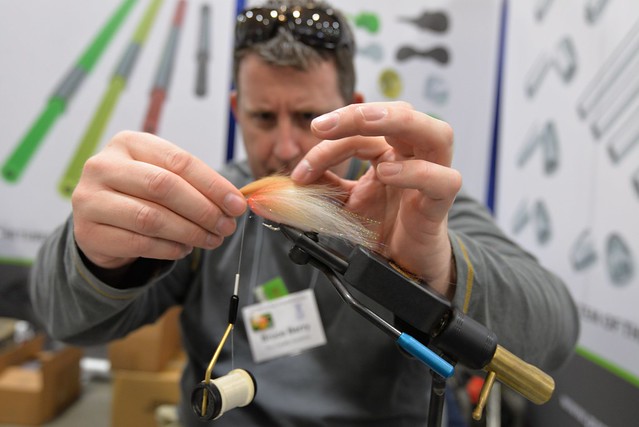
Flexi Tube Mini Leach Fly Tying Video

Bruce Berry of Pro Sportfisher demonstrates how to tie a really cool trout and steelhead mini leach.

mini leech

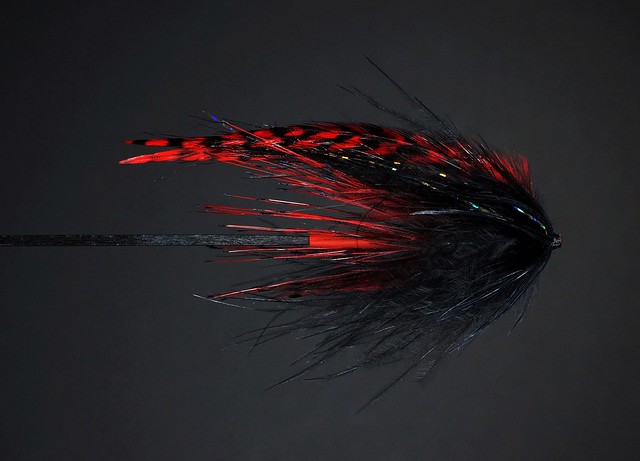
Flexi tube mini leach

Tube: Flexitube 40/40 black
Weight: Pro raw weight small
Body: Black uV polar chenille
Wing: Rabbit Strip “Tapercut” black
Collar: Black Pro opossum
Collar 2: Black Schlappen
Disc: Pro Ultra Sonic disc Medium

Posted in Fly Tying, Fly Tying Materials and Supplies | 1 Comment

Patagonia Rio Gallegos Wader Review

winter steelhead fly fishing in oregon

For 2016 Patagonia has redesigned and improved their line of waders and boots. In this review I will be focusing on the Rio Gallegos wader. Even though these are new waders I was able to get my hands on a pair of these babies in December and have been able to put a fair amount of days on the water with them. These waders were used bank angling, so they have received more use than just floating down the river.

The first thing that I noticed about them was the change in fit from the previous years model. They are a much slimmer fit , meaning less bagginess and excess material. They are by no means a slim fit wader, but slimmer than they were. The second thing I noticed was how comfortable the booties are. Patagonia uses a poly-grid lining for increased comfort. These really seemed to mold to my feet after just a few uses, and are honestly the “comfiest” booties on the market.

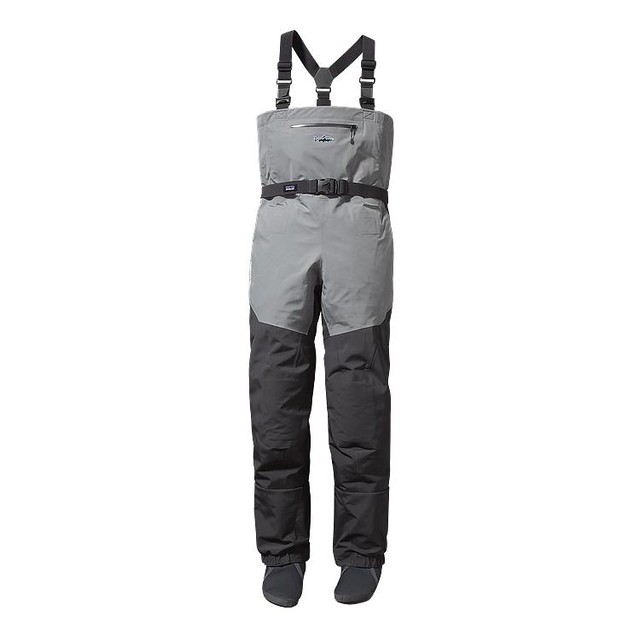
Patagonia Rio Gallegos Waders

Aside from fit and comfort, Patagonia has integrated some really cool features that I found functional as well as useful. The shoulder straps are stretchy and have a quick release buckle that is easy to use allowing the whole wader to drop down in a matter of seconds. This feature is great for changing layers and for easier “relief”. Inside the wader there are 3 pockets; one waterproof and 2 stretch pockets with daisy loops above them for hanging tools. The waterproof pocket is big enough for a big fancy smartphone or even a camera, and the two stretch pockets can hold anything from extra sink tips to large fly boxes and the all important flask of your favorite whiskey or scotch. The redesigned outer pocket is no longer mesh but a solid piece with a water resistant zipper; a welcome change especially if you wade too deep. The knee area of the wader even has a pocket that includes padding for kneeling down and releasing your catch. These pads are easily removable if you are a tough guy and don’t need the added protection.

As far as construction goes, Patagonia uses a 4- layer H2NO barrier throughout the entire wader with a DWR ( durable water repellent) for elevated protection that allows for quicker drying and keeps the outer fabric from becoming bogged down with moisture so the breathable layer can do what it’s suppose to. A heavier 4 layer is used on the lower portion in the increased wear areas and a lighter 4-layer up high where durability is usually not as much of an issue. I have put the durability of these waders to the test on numerous occasions of bush whacking through the woods and sticker bushes in the dense barrier of tangles and logs that live on our Oregon coastal rivers and streams. I have took several luge trips down the steep banks on my rear end as well. I have not had any issues with wear and tear or any pinholes or leaks, which is a testament to how durable these waders are. I really like that Patagonia uses a material that is thinner and a lot less bulky than some other wader manufacturers. Its nice to have a durable wader that is easier to move in and is also durable. If you are in the market for a great pair of waders, Patagonia definitely has you covered. They also make several other models that are worth looking into including the Rio Gallegos zip front wader, Skeena wader, Rio Azul wader and the Women’s Spring River wader.

Posted in Fly Fishing Gear Review | 1 Comment

Unexpected delights – totally random Product reviews

Well, it’s time to fish again and Guy Allen released a beautiful wild winter steelhead today and it is 11:08 PM and I’ve been up since 3:30 AM and can’t sleep and I didn’t get a grab but maybe tomorrow and i’ll start with a tube intruder I tied this morning at 4 AM.

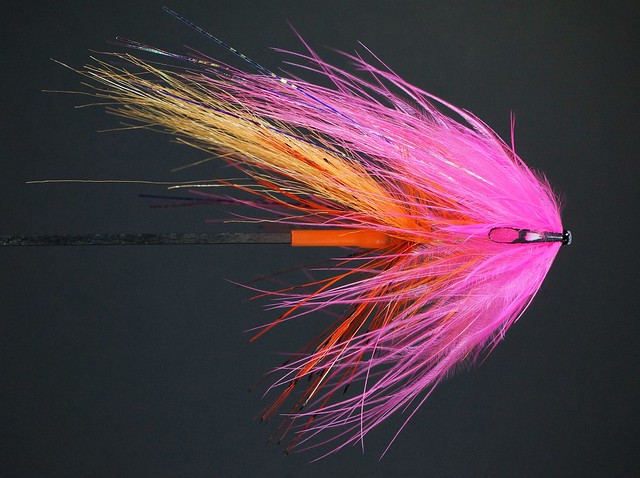
Jay's 0400 Hours  Tube Intruder.

Jay’s 0400 Hours Tube Intruder. This fly incorporates T-4 sink nanotube, Senyo’s Fusion Dub, Senyo’s Barred Predator Wrap, MFC ostrich, Pro Sportfisher Jungle Cock Imitation, and OPST Barred ostrich.

I decided to lay down my thoughts on  several new products or techniques to share with folks, these are just going to flow so bear with me please.

1.  Adding more wiggle to your bunny strips. Wow this is a simple technique that really works—first cut your rabbit strip and I use a 1/8″ but you may prefer a 1/4″ depending on circumstances. hold the tip of the strip securely in your fly vise, and mark the hide with a black sharpie or some other color of your choice, then with a razor blade, carefully and slowly slit the strip down the middle. Now tie in the un-split end as you normally would. You will find that the twosides of the split strip wiggle independently and you basically get twice the wiggle and motion from your rabbit strip flies. Deadly.

Rabbit strip marked with sharpie before splitting.

Rabbit strip marked with sharpie before splitting.

Rabbit strip marked with sharpie after splitting.

Rabbit strip marked with sharpie after splitting.


2.  Eumer Tube adaptor as dubbing pick and hackle folder tool. Yes you heard it here. This has become my favorite dubbing pick plus the rectangular butt is fantastic (the best I’ve ever found) for folding hackles from saddle to schlappen to guinea prior to winding them by the tip. I prefer the small and medium sizes and find that I like these better than any of the tools Ive used before.

Eumer tube adaptor small and medium sizes.

Eumer tube adaptor small and medium sizes.

3.OPST Dumbell shanks. These are very nice shanks with a return eye that is perfect for lashing on dumbbell eyes especially when tying Intruder style shank flies. I also tie unweighted flies with a trailer hook on these shanks.

OPST Dumbell eye shanks small and medium sizes.

OPST Dumbell eye shanks small and medium sizes.

4. Greg Senyo’s Fusion Dub. Egads. As if this madman didn’t already confuse me with the range of his products—I was in the shop recently and saw some of this new Senyo material in an customers order ready to ship. This material provides without question my most favorite colors for steelhead flies hands down. The Eat a Peach shines, the surf is super steelhead blue. The Grape is a purple beyond hope. I formerly was driven to blend my own dubbing to achieve these colors but Greg Senyo did the work for me on this one. Try it, you can not fail to love the colors.

Senyo's Fusion Dub - amazing colors (mtg favorites) and great texture and sparkle).

Senyo’s Fusion Dub – amazing colors (mtg favorites) and great texture and sparkle). If you tie steelhead and damon flies you must have this stuff.

5. Ostrich. OK let’s face the facts. Ostrich is tricky stuff. The various distributors struggle to get the best ostrich they can, but the nature of the plumes each distributor can obtain varies day-by-day. Month by month. Whatever. Point is the marabou you buy today may look different than the ostrich you buy a month from now. I’ve been tying steelhead flies with ostrich lately, and using OPST and MFC brands most often. I found that the OPST ostrich quality seems to have taken a turn for the better of late, and the MFC seems to alway always be of uniform nature. OPST is generally fluffier, and the MFC is very slender, a property based on how it is processed—so it is very much like Rhea. OPST offers barred and spotted ostrich. MFC offers a wide variety of barred and solid colors. I use both OPST and MFC ostrich and recommend it highly.

OPST Barred Intruder ostrich

OPST Dotted ostrich plumes

MFC barred premium ostrich

OPST and MFC Marabou.


Jay Nicholas OPST ostrich a.

Jay Nicholas OPST ostrich c Jay Nicholas OPST ostrich b Jay Nicholas MFC ostrich b Jay Nicholas OPST  & MFC ostrich a

6. Senyo’s Barred Predator Wrap. This stuff is crazy good incorporated in composite dubbing loops to provide both substance and motion to the fly’s body or hackle. You can wrap the stuff if you need it long or spin it in a loop if you want it shorter. I love this stuff.

Jay Nicholas Senyo's Barred Predator Wrap aJay Nicholas Senyo's Barred Predator Wrap bJay Nicholas Senyo's Barred Predator Wrap c

7. EP Game Change UV Blend. Im a big fan of Steve Farrar’s Blend materials for my saltwater flies and immediately recognized that Enrico Puglesi is now providing a very attractivve alternate that has slightly different properties and color shades to add to our palate of baitfish pattern materials. The EP Gamechange does NOT have UV Ice fibers added but the Gamechange blend is very sparkly. I’m just getting started with these materials but I guarantee that my boxes this season will feature many flies with this stuff, It is moderately stiff and will hold its shape well and can be trimmed as you wish. I’d venture that the textures of these two materials is more consistent than you see from color to color in the Farrar’s blend—where three different colors can have three completely different textures.

EP Game Change Blend assorted colors.

EP Game Change Blend assorted colors.

I hope you find something interesting here and are able to incorporate the inspiration into your own flies this season.

Jay Nicholas, January 2016.


Posted in Fly Fishing Gear Review, Fly Tying, Fly Tying Materials and Supplies | Leave a comment

Winter Steelhead Fly Fishing Update

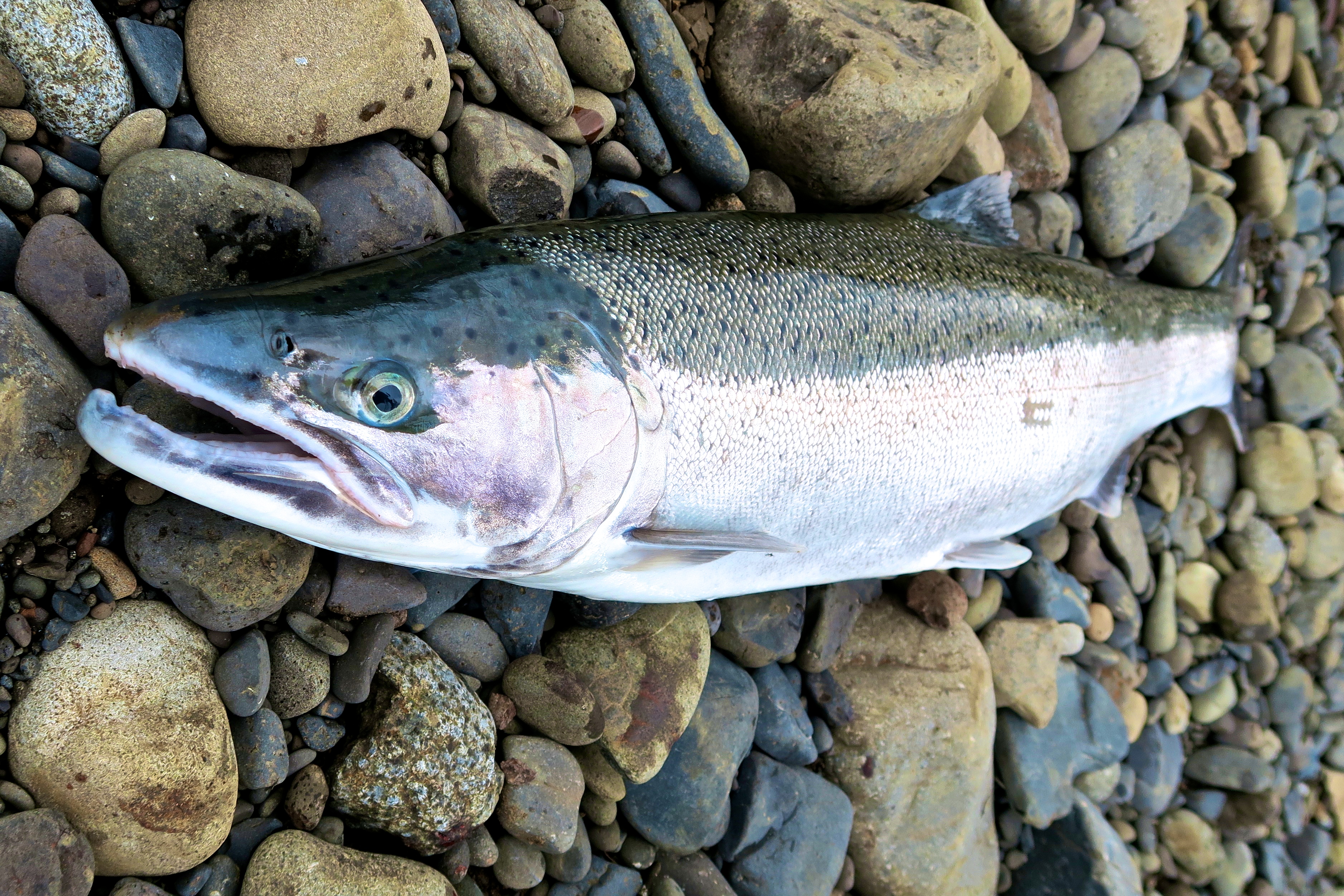
Buck winter steelhead on the gravel bar - a very nice hatchery fish.

Buck winter steelhead on the gravel bar – a very nice hatchery fish.

I’ve had the good fortune—finally—to get out and swing flies the last two days. The hatchery steelhead in the photo here is NOT one that I caught. This fine fish was laying on a gravel bar where another angler had stashed his backpack, lunch, thermos, and assorted tackle. I took this photo as a facsimile of two steelhead that were released by my friends over the last two days.

Joe unleashed with his Echo 3 Switch rod.

Joe unleashed with his Echo 3 Switch rod.

Beautiful swing water.

Beautiful swing water.

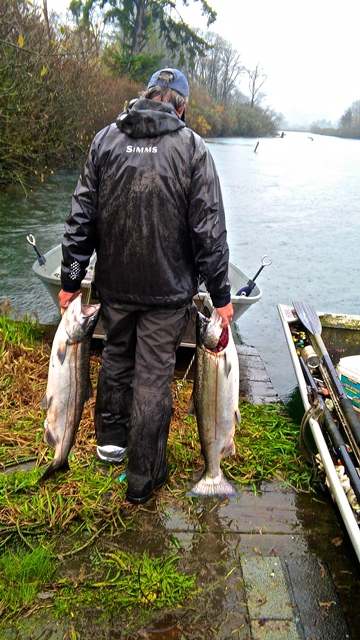
Two of us fished about two hours the first day and four of us fished five hours the second day. One wild buck came to hand for release on day one and one hatchery fish almost came to hand the second day. These two fish represented two grabs, no more. Oh yes, there were a few cutthroat in the mix both days. We had a great time, fished perfect water high in a coastal river, and found a few players. I think the catch-per-angler ratio was a little higher for folks fishing conventional gear lower in the river, based on rumors I’ve heard. A few of the fly anglers I’ve spoken with are beaming with big grins and hinting that there are good numbers of winters around anytime the water conditions permit fishing.

Nice power application by Guy.

Nice power application by Guy.

Luke launches a cast to cover a tailout.

Luke launches a cast to cover a tailout.

Jay's looking intent on the task at hand.

Jay’s looking intent on the task at hand.

The wind howled all night and there was rain too, but not as much as we’ve seen recently. I just checked the river level (7 AM  January 8th) and the rivers on the north coast are on the raise. I might get out and swing flies for at least a few hours this morning—but I’m weighing the fact that every bone in my back, knees, hips and shoulders aches. Maybe I’ll give it a rest and get back to it in a few days. This current river raise is not predicted to be very large and I should be well recuperated and ready to fish next week.

How to find a place to fish when the water is on the raise or higher than optimum? Here are my basic strategies.

1. Go high in the system. The farther you venture into a watershed the smaller the catchment basin is and the less water you’ll find. At this time of the season it could mean fewer steelhead also, but at least you will be fishing.

2. Fish tributaries. Check the regulations first, but tributaries will be fishable sooner than the main stem of large river basins.

3. Fish the smallest rivers. Smaller basin means less water and more likely to be in shape. Small rivers mean shorter rods down-sizing lines and tips, but these places can provide a refuge for the angler with cabin fever.

4. Go north or south. The rain often hits the Oregon coast in odd patterns and there are ties when the north coast will be un-fishable, but the central and south coast rivers will be in perfect condition.  The angler who is prepared to drive the coast will have more opportunities than a person like me who waits until the water is perfect in a close radius on the north coast.

Have fun and wade safe—my big accomplishment of the last two days was to make it up and down the riverbank without falling down or falling in. Life’s small joys these days.

Jay Nicholas Winter Steelhead update g

Wild winter steelhead ready for release

Just got this photo of the steelhead Guy released and have updated the post. Thanks Guy.

Best to you all.

Jay Nicholas January 28, 2015

Posted in Fishing Reports | Leave a comment

Diamond Lake Tiger Trout to take out Tui Chub?

For those lake anglers, an announcement from ODFW about Diamond Lake. It appears after spending millions of dollars in 2006 and killing off the tui chub, they have returned! Having to do this type of work does not help an already financially strapped organization (ODFW) get healthy anytime soon.

Stocking changes in Diamond Lake’s future

January 15, 2016
Oregon Fish and Wildlife
Photo by ODFW

TIger Trout

ROSEBURG, Ore – The Oregon Department of Fish and Wildlife plans to add tiger trout to its standard Diamond Lake rainbow trout stocking this June. These brook and brown trout hybrids are reproductively sterile and known to prey on smaller fish – biologists are banking on them to help keep tui chub in check.

A single tui chub was found in a trap net this past fall, and biologists know all too well their life history of explosive population growth in Diamond Lake.

“We know what chub are capable of in Diamond Lake, and we are working with our partners to get ahead of the curve. We looked at many options, and tiger trout came out on top,” says Greg Huchko, Umpqua District Fish Biologist. “We wanted to stock a mix of brown and tiger trout, but only tigers are available this year. We will be looking into sterile brown trout for next year in addition to tiger trout.”

Huchko said he’s been meeting with the Umpqua National Forest, Douglas County, and the U.S. Fish and Wildlife Service to discuss stocking, and biologists agreed that stocking sterile tiger and/or brown trout was the best choice. Both species are known to prey on smaller fish.

“Many strains of rainbow trout have been stocked in the past, but unfortunately, our creel surveys showed that even those we thought would prey on tui chub were feeding primarily on insects,” Huchko said. “In the early 2000s, we also experimented with a stocking of North Umpqua strain spring chinook with the hope they would eat tui chub, but most of them migrated out of the lake.”

Fisheries biologists will monitor tiger trout abundance in Diamond Lake although they expect minimal numbers of these trout to migrate into Lake Creek.

“Our goal is to design and implement a stocking strategy that controls tui chub to maintain water quality and angling opportunities. Any tiger trout that may leave or be removed from Diamond Lake are sterile so there is not the risk of these fish species reproducing in the North Umpqua watershed or elsewhere,” said Jason Wilcox, Umpqua National Forest fisheries biologist.

Pending funding, ODFW plans to purchase up to 20,000 three-inch and 5,000 eight-inch tiger trout from Cold Springs Trout Farm, a private hatchery in Utah. The tiger trout would be in addition to ODFW’s regular stocking of 300,000 rainbow trout fingerlings and will likely be catch-and-release only to protect these fish and maintain their numbers.

ODFW and partners also outlined a stepped-up monitoring plan for Diamond Lake, including hiring two seasonal technicians to conduct additional removal of tui chub and golden shiners via beach seines, fyke nets, electro-fishing, and trap nets. Also, ODFW plans to monitor the tiger trout population by continuing creel surveys and operating a smolt trap near the lake’s outlet.

ODFW applied for grants to fund monitoring and fish stocking. The Umpqua Fisheries Enhancement Derby is also helping raise money by holding a “fish frenzy” at its annual derby banquet and auction Friday, January 29.

For every dollar donated, funds will be split to purchase both fish and capture nets for monitoring. A nights lodging in a cabin at Diamond Lake Resort and use of two large, two-person snowmobiles for the day comes with each $1,000 donation while a $500 donation receives a night’s lodging and use of two single-person snowmobiles.

In September 2006, ODFW successfully treated Diamond Lake with rotenone to eliminate an estimated 90 million tui chub at a cost of nearly $6 million, restoring water quality and the recreational rainbow trout fishery.

###

Contact:

Oregon Department of Fish and Wildlife Contact: Greg Huchko, 541-440-3353

Umpqua National Forest Contact: Jason Wilcox, 541-957-3360

LV

Posted in Central Oregon Fishing Report, Oregon High Lakes | 3 Comments

Join Jay Nicholas at the Tillamook Bay Watershed Council Meeting Tomorrow

Join the Tillamook Bay Watershed Council Tuesday night, January 26th, for a very special event featuring salmon biologist, fisherman and philosopher Jay Nicholas. Named Oregon’s “Salmon Czar” by Governor Kitzhaber in 1996, Jay was the principal author of the Oregon Plan for Salmon and Watersheds–the guiding document for watershed councils state-wide. He is also the author of the scientific monograph Chinook Salmon Populations in Oregon Coastal River Basins, and of Oregon’s recently adopted Coastal Multi-Species Conservation and Management Plan. But Jay’s interest in salmon has always gone much deeper than mere profession. He has been a fanatical angler and fly tyer his entire life, and he has written extensively about his philosophies concerning salmon fishing and conservation. We are excited to host him here in Tillamook, where he spends a great many of his fishing days each year.

Jay

This event is the kick-off for the TBWC’s 2016 Speaker Series, and it heralds an amazing year to come. Attendance is FREE and open to the public. I will be providing smoked steelhead and other snacks, and there will be coffee, tea and soft drinks as usual. Jay’s talk will go from 6:30pm to 7:30pm, and will be followed by the Council’s regular monthly business meeting. Guests are encouraged to stick around for the meeting and learn about the many habitat restoration projects happening in our great watershed.

What: TBWC Speaker Series Kick-Off with Jay Nicholas
When: Tuesday, January 26th from 6:30 to 8:30pm
Where: Tillamook Public Library, 1716 3rd Street in downtown Tillamook
Why: Because we love our watershed!

Posted in Oregon Conservation News, Oregon Fly Fishing Clubs and Events | Leave a comment

Tube Fly Tying Class Jan 30th – Pro Sporfisher’s Bruce Berry – Winter Steelhead Tube Fly Patterns

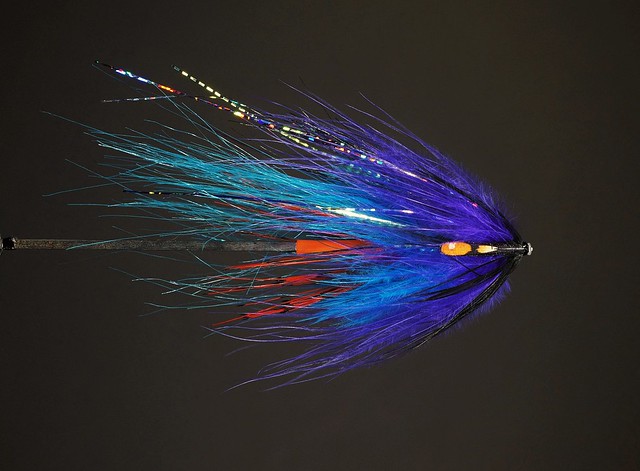
pro sportfisher tube flies

Bruce Berry of Pro Sporfisher will instruct six fly tiers on the art of tying Winter Steelhead flies on tubes Jan 30th from 1-5pm. Bruce will have all the tubes, weights, cones and more to create flies during the class. If you have your favorite vise and tools please feel free to bring your own gear.

bruce berry fly tying pro sportfisher tube fly materials

Call the shop at 541 342 7005 to sign up!

Patterns will range from basic to advanced during the class. This is a great opportunity to learn from a signature fly tier. Bruce will help enhance your winter and summer steelhead “swing fly selection” and techniques to create innumerable tube flies.

pro sportfisher flies bruce berry

pro sportfisher flies fly tying materials

Where: The Caddis Fly Angling Shop – 168 West 6th ave -Eugene
When: Jan 30th, 2016 1-5pm
How Much $35 per person 6 folks max
What to bring: your favorite tying vise and tools (optional)
How to sign up: Call the shop 541-342-7005

bruce berry steelhead

CD

Posted in Classes and Instruction, Oregon Fly Fishing Clubs and Events, Shop Sales and Specials | Leave a comment

Saltwater Fly Fishing Class – Feb 6th at Shop

Frank Amato Joined me last year (2015) and had a great time dory fly fishing at Pacific City.

Frank Amato Joined me last year (2015) — we had a great time dory fly fishing at Pacific City.

Anyone who is interested in fly fishing the ocean offshore Oregon will find entertainment and education value in this class. This is a three hour class (10 AM – 1 PM) and I’ll be available after the class for follow up questions and one-on-one coaching regarding tackle, tactics, and so forth.

I’ll show a 45 minute video that will help stimulate questions that Ill review regarding tackle, tactics, seasons, species, flies, and the like. The season offshore Oregon at Pacific City runs February through October, all dependent on weather and surf conditions. 2015 marked the first season when a dedicated fly fishing dory charter service was offered by Capt. John Harrell of Pacific City Fly Fishing.

Everyone who chartered with John is currently in the process of booking trips for 2016. Universally, they were thrilled by the fact that they spend more time with fish yanking on their lines than they had ever experienced while fishing for steelhead and salmon. In addition, if the season is open for crabbing, John usually finds a lot of prime ocean Dungeness Crab in his pots for charter clients.

Mountain of Pacific rockfish fillets ready to bag and ice.

Mountain of Pacific rockfish fillets ready to bag and ice.

Several limits of cooked prime Dungeness Crab ready to distribute to angler's  coolers.

Several limits of cooked prime Dungeness Crab ready to distribute to angler’s coolers.

This will be a fun session and I’ll bring a ton of my rods, reels, lines, and flies to provide examples of the gear and techniques we use fly fishing in the ocean.

Considering a Kayak to fish offshore? I’ve never fished from a Kayak, but these are available for rent from Nestucca River Outfitters, and I see many anglers offshore fishing from Kayaks. All, so far, of the Kayak anglers I’ve seen have been using gear but I assure you that fly fishing in the ocean is not a long-shot – it is extremely effective.

Julie Cyr and Red Kulper fishing the ocean in 2015.

Julie Cyr and Red Kulper fishing the ocean in 2015.

I invite you to join me at the Caddis Fly Shop on Saturday, February 6th, and step into 2016 with the resolution that you’ll fly fish the ocean  for sea bass, lingcod, coho, chinook, or albacore (depending on the month and local conditions) soon.

Cost: $50 per person – limited to 12 persons.

$30 discount to each class attendee on their first 2016 dory charter to fly fish with John Harrell in the dory Gold Comet.

On the fence about whether or not fly fishing n the ocean is for you?  Come find out how easy and fun this is.

Hope to see you there: JN


Posted in Classes and Instruction, Oregon Saltwater Fishing | Leave a comment

Kisaralik River Trip

Ever think about a trip to Alaska? Caddis Fly Shop customer, Jim Reichman is looking for a few anglers to accompany his group on a trip to the Kisaralik River. Jim has graciously given all the details regarding the trip. Please contact Jim directly if you have any questions. Read below for further details and information.

K river 1

“A Kisaralik River Alaska float trip offers the unparalleled fishing that we experienced up here 25+ years ago. This is a pristine wilderness river, consistently providing Alaska rainbow trout and salmon fly fishing that is off the charts. The only way to truly access the potential of the Kisaralik River is to float it; there are no lodges on the river. For this reason we rarely see other people out there, making the Kisaralik River ideal for an Alaska wilderness fly fishing float trip.
K river 3

Our Kisaralik River Alaska float trips start with a DeHavilland Beaver flight from the community of Bethel, taking us across the tundra and into the mountains, 110 miles to Kisaralik Lake. From there our Alaska rafting and fishing adventure continues 80 miles down the river to the west, through the Kilbuck Mountains. The scenery is varied and beautiful and wildlife abound: bear, caribou, wolf, moose, beaver, waterfowl; even wolverine. The solitude is complete; perfect campsites are readily available, and at our secret locations incredible Alaska fly fishing lies just outside the door of your tent.
A Kisaralik River Alaska float trip provides a variety of fishing experiences: pools, “aquariums”, holes, back channels, spawning beds, pot holes, log jams, tail outs, sweepers, root balls and a variety of holding waters loaded with beautiful rainbow trout, dolly varden, arctic char and grayling. Major runs of Alaska king salmon , chum and silver salmon provide sport fishing opportunities and later give nourishment to the jaw dropping numbers of very large rainbow trout that reside in the Kisaralik (commonly caught at 16-24 inches, occasionally up to 26+ inches). Not only is this a great river for mousing big ‘bows, but the silver salmon will consistently rise to surface flies. This is a one of a kind Alaska float trip”

Note: This adventure has been termed an “intimate” trip, which is similar to many of the wilderness float/fish trips in Alaska. That is, all of the gear is carried in the anglers’ rafts – there is no bag boat that precedes the anglers downriver to set up camp. Anglers will be expected to provide some assistance setting up and taking down camp, and there is one very short portage where everyone will help move the equipment.

2 – 4 anglers invited

Kisaralik River, Alaska Float/Fish
August 20-27, 2016

– 80 river miles, 8 days, 7 nights
– $4,600, based on double occupancy
– Silvers, Rainbows, Grayling, Dolly Varden, Char
– Scenery, solitude, wildlife abound
– Variety of fishing – pools, holes, back channels,
log jams, root balls, tailouts, holding water
– Depart from Bethel
– http://frontierriverguides.com/Western%20Alaska.html

We need 2 additional anglers for the trip to go, and prefer 4 additional. Interested?

Contact Jim Reichman
541-729-8002
ojreichman@gmail.com

K river 2

Posted in Fly Fishing Travel | 1 Comment