Purple Haze Fly Tying Video

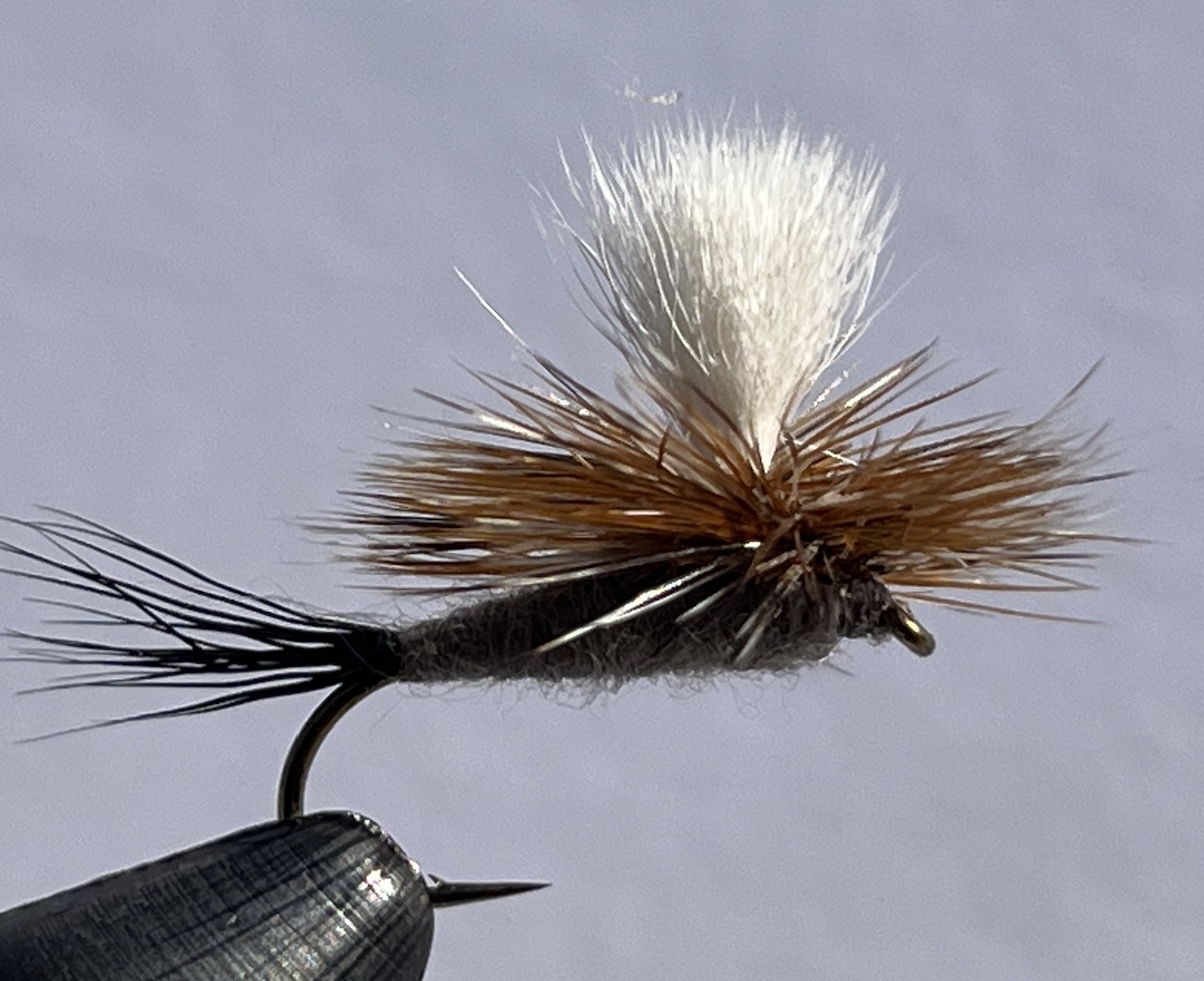
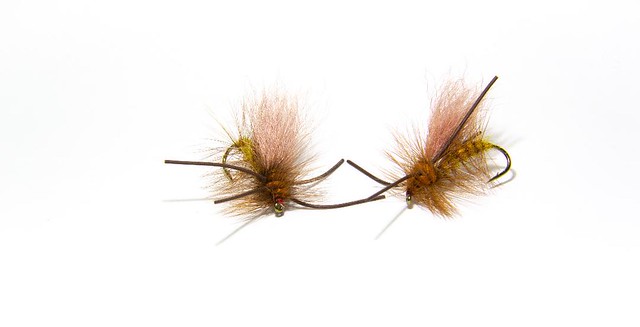
The Purple Haze has become one of the most popular trout dry fly patterns in the world. Trout DO like purple, we find that’s not up for debate.

Bruce Berry ties up this hi-vis purple haze fly. Tied true to fashion, just as the creator tied it and intended it to be.

para-blog

Purple Haze Material List:
Hook: TMC100 – Size 12 – 20
Thread: Uni – 6/0 in Purple
Tail: Cow Elk – Natural
Body: Life flex – Purple
Wing: Widow’s web – 50/50 Blend of hot pink & white
Hackle: Whiting hackle – Grizzly

Posted in Fly Tying, McKenzie River, Middle Fork Willamette River fishing | Leave a comment

High Spring Flows in the Willamette Valley May 2022

forecast

mfw

A super wet April has pumped serious water into the Willamette Valley and rivers are way up today. We needed the water, and the snow in the mountains. While high water can make access difficult it’s going to keep water temps, and levels solid through the coming couple of months. Current flows seemed to have crested and are on the way down for a day or two then back up. Water temps remain cold but that will change with a few warm days. Whats next in terms of fly patterns and tactics?

IMG_3588

The March Brown Hatch was great this year but it has come and gone. We are still seeing Grannom caddis, a few Salmon Flies, and Skwalla Stones. We are about to get into the “big fly” time of the year. Green McKenzie Caddis and Golden Stones will be more available to trout. After this high water push trout will come out aggressive on these bigger bugs. Fishing Chubby Chernobyls, Green McKenzie Caddis dries and Parachute Adams on the surface is a solid tactic. Nymph patterns like Possie Buggers, Mega Princes and Golden Stone Nymphs will be great over the next month. Pale Morning Duns and Little Yellow Stones will soon follow and adult Mayfly and stonefly patterns like the Tilt Wing PMD’s and Little Yellow Sally’s are good to have on hand.

temp

May is a great time to swing flies. Our McKenzie Green Caddis Wet, Possie Bugger, Freed’s Krystal Soft Hackle and Pheasant Tail soft hackles are great to swing from bigger water to inside soft seams.

Good Luck out there!

Posted in Lower Willamette, McKenzie River, Middle Fork Willamette River fishing | 1 Comment

Effective Trout Flies for High Alpine Lakes 2022

Screen Shot 2022-04-26 at 9.40.33 AM

Each year I spend a lot of my time above 10,000′ fishing for golden, brook, brown, and rainbow trout. At these elevations trout have a very limited feeding season depending on snowfall. Saying this, trout are hungry and will eat most anything to add additional weight for their long winter season when the lakes freeze and other animals begin to hibernate.

Screen Shot 2022-04-26 at 9.46.54 AM

What makes this environment so special for me is the landscapes I encounter while searching for trout that really don’t get bigger than 14″ on average. The glaciers, along with tectonic uplift and erosion are what created these beautiful lakes we get to fish.

There is evidence of glaication everywhere when you begin to look around. The picture above is a great example of chatter marks and striations. If you look closely you can see where the glacier ice moved over the granite rock and polished it to a mirror-like finish called glacier polish. You can also see the chatter marks and the striations it scratched into the rock. This picture is an example of glacier polish and it is found all over the Eagle Cap Wilderness, Sierra Nevada, and Goat Rocks.

Screen Shot 2022-04-26 at 9.58.29 AM

The picture above is an example of the phenomenon known as Krumholtz effect. Due to gnarly weather such as wind, snow, and freezing temperatures, trees such as this lodgepole pine twist, bend, and fold stunting the tree and deforming it. It’s in this environment that trout are able to hunker-down for long, cold winters and when the ice thaws out the fish are hungry.

Here are a few flies I use at elevations with great success.

Screen Shot 2022-04-26 at 10.42.57 AM

The Black Ant fly pattern is my go to pattern for high elevation lakes. This terrestrial is a very important food source at elevation where wind blows ants off of the banks, trees, and grasses. The trout will wait for an ant along the banks or below overhanging trees waiting for them to fall in. Hosmer lake in Central Oregon and the Sierra Nevada are areas I will always have black ant patterns with me.

Screen Shot 2022-04-26 at 10.51.03 AM

Kaufmann’s Stimulator is another dry fly pattern I use at elevations. An Elk Hair Caddis will work too, but the stimulator has a little more “bling” that catches the fishes attention. I will strip this fly on the lake surface and have discovered once the fish begin to tear the fly apart and it begins to sink slightly, it fishes better. Usually I’ll use colors in tan, brown, gold, and black.

Screen Shot 2022-04-26 at 10.53.47 AM

I was fishing a lake around 11,000′ years ago struggling to get a bite when the fish were surfacing everywhere. I used ants, Elk Hair Caddis, even Parachute Adams with no luck. Then I remembered a guy whom I issues a wilderness permit to who gave me a fly which he called the Timberline Emerger. I tied it on and instant weight on the rod. Years later I would discover that man was Randall Kaufmann.

The Kaufmann Timberline Emerger is the fly I would have if I could only choose one pattern at elevation. It rides low in the water and imitates both caddis and mayflies. It’s a must have for many guides and I’ve used it again and again with success.

Screen Shot 2022-04-26 at 11.03.55 AM

These are three flies I’m very fond of along with a selection of Adams and Hoppers.  I use 5wts. and leaders usually 9′ in length.  Do not be afraid to strip and twitch the fly, especially if it is windy.  It just looks like a bug struggling to fly away to the fish.  

If you find yourself out there in the wilderness practice Leave No Trace. Easy concept, leave the area better than you found it.  Let’s take care of our land for future generations.

Tight Lines,
Greg

Posted in Fly Fishing Travel, Fly Tying | 2 Comments

Chubby Chernobyl Fly Tying Video

Bruce Berry sits down and ties up a must-have for this time of the year.

Salmon flies are right around the corner and hoppers are on our radar. Materials used in this fly help keep it floating and visible without spooking the fish.

chubby

Chubby Chernobyl Material List:
Hook: TMC5360 – Size 6 – 16
Thread: Uni – 6/0 in Golden
Tail: Hareline Krystal Flash – UV Pearl
Foam: Hareline 2mm – Brown
Dubbing: Dry Fly Dub – 50/50 Blend of Tan & Amber
Wing: Widow’s Web – Rear, Smoke & Front, White
Legs: MFC Barred Sexi Floss – Copper Brown

Posted in Fly Tying, Fly Tying Materials and Supplies | Leave a comment

  Hecate House on Haida Gwaii Raffle On NOW!

mailmail

From Native Fish Society

Thanks to our friends at Epic Waters Angling, you have a shot at five days and four nights at Hecate House for just $100! Get your tickets for the NFS Haida Gwaii For A Benjamin Raffle, and this summer you and your family (or three very lucky friends) will be headed to “The Galapagos of the North!”

Haida Gwaii Family Fun at Hecate House

Details: 4 guests / 5 Days / All Meals Included
Trip Dates: Mutually agreed upon dates between July 14 – Aug 14, 2022

Tickets $100/ea⁠
Only 200 tickets will be sold⁠

Raffle tickets on sale: NOW – May 31, 2022⁠
Drawing: June 1, 2022 @ 3pm⁠

BUY TICKETS HERE

Nestled along the eastern shoreline on the Hecate Strait, surrounded by ancient forest and open sky, Hecate House specializes in authentic Indigenous (Haida) cultural adventures.

The Hecate House lodge and oceanfront cabin offer the ideal setting to explore the many eco-adventures, natural attractions, and historical and cultural sites found on Haida Gwaii’s Graham and Moresby Islands. The lodge is located on Moresby Island close to the airport, yet far from town on a secluded, semi-private beach. The lodge lies mere feet from the ocean, on a sandy beach offering ocean views from every room.

Prepare for an enlightening and transformative week of exhilarating discovery as you explore the very best of Haida Gwaii, the “Galapagos of the North.” Settle in the comfortable, relaxing, beachside lodge, and let the world’s problems fade away as you fall asleep to the sounds of the tide.

The edge of the world beckons with an extraordinary opportunity to “Experience Haida Gwaii.” Venture deep into monumental rainforests, where treasured heritage sites unveil ancient artifacts. Encounter remarkable rare flora and fauna, by land or sea. While at the lodge you can choose to simply relax, and unwind while we take care of all your meals. Or you can select a daily experience to travel about the island!

Experiences to choose from: (additional charges may apply)

– Bear viewing: the world’s largest subspecies of black bear live here
– Cultural trip by boat to Skedans village to see 100-year-old totem poles
– Big Tree photography tour: get deep off the beaten tracks to see some of the most spectacular old-growth forests that hold the island’s largest trees. You won’t see another person.
– Halibut and salmon fishing
– Crabbing
– Prawning
– Digging for razor clams

We’re raffling off 200 tickets, each for $100 – with no limit on the number of tickets per person. All ticket sales are first-come, first-served, so get yours now while they last!

All proceeds from this raffle will support the Native Fish Society’s work to restore abundant wild, native fish, free-flowing rivers, and thriving local communities across the Pacific Northwest.

BUY TICKETS HERE

Terms & Conditions:
Travel to Haida Gwaii, British Columbia NOT INCLUDED
Some of the local experiences may be subject to additional charges
Does not include gratuity

Posted in Fly Fishing Contests, Oregon Conservation News, Oregon Fly Fishing Clubs and Events | Leave a comment

Fly Patterns for Sierra Trout Spring 2022

F183C1BC-0018-448F-AE31-681189F03AA2

Preparing for a season takes months of prep and busy work, but I’m finally getting around to gear and flies.

I’m not a great fly tier, but I tie lots of flies and try different things to experiment with each season. I’ve discovered new fly patterns from being in the shop with an extremely knowledgeable staff, but also from tiers such as Jim Sens, Jay Nicholas, and the customers who come in to the shop or order online.

Screen Shot 2022-04-24 at 7.21.27 PM

This season I’ll be back home guiding in the Sierra Nevada and the biggest difference fly fishing in Oregon vs. the Sierra is the size of the fly. In Oregon you might use a size #8 or even size #6 Stimulator, but you would never really go larger than a size #10 on the Merced. In the Sierra, size #16-20 are common. I don’t think I’ve ever gone smaller than a size #16 in Oregon (midges maybe). Other than that, you use basically the same patterns.

95% of my clients have never fished in their lives. The 5% who have, only a handful of them have fly fished. So I need flies that my clients can see and I rarely go smaller than size 14 patterns. I also need flies that catch fish. These are my go to fly patterns I carry in my box all summer.

Parachute Adams (Heavy Hackle Size 14)
adams
Probably the most popular trout fly pattern rivaling the Elk Hair Caddis.

Elk Hair Caddis (Sizes 14 & 16)
Screen Shot 2022-04-24 at 6.32.44 PM
A true classic anywhere trout live. Going to Wyoming, get lots in light tan!!!

Carlson’s Purple Haze (Size 14)
Screen Shot 2022-04-24 at 6.34.31 PM
A Parachute Adams fly that’s purple. A great pattern for callibaetis. East Lake…..yes

Mercer’s Missing Link (Sizes 14-16)
Screen Shot 2022-04-24 at 6.37.04 PM
Mike Mercer has spent a lifetime fishing the Sierra Nevada. I began fishing this fly in 2017. It’s represents both caddis and callibaetis.

Sparkle Dun PMD
Screen Shot 2022-04-24 at 6.39.21 PM
My good friend and guide David Gregory introduced me to this pattern a few years back. There are many versions of this fly and this is the one I tie. David uses the Sparkle Flag fly pattern tied by RIO all summer long.

Kaufmann Stone Black (Size 12-14)
Screen Shot 2022-04-24 at 6.42.42 PM
I use this anywhere trout live and it is probably my favorite nymph. Go big in Oregon, sizes 2-8.

Bead Head Hare’s Ear (Size 14)
Screen Shot 2022-04-24 at 6.44.55 PM
A true classic.

Copper John (Size 14)
Screen Shot 2022-04-24 at 6.46.20 PM
You should have various colors.

Wooly Bugger (Sizes 8-10)
Screen Shot 2022-04-24 at 6.48.59 PM
Black, brown, olive, orange, white.

I tie other patterns too, but I find myself tying these 9 patterns back on again and again.

I use 4 & 5 weights with 5x tippet most of the time with a leader length of 9-11ft.  Six weights are appropriate at times when fishing streamers and fishing high water, but 5wts. are the norm.  Smaller streams, get out your 2 & 3 wts.

Be sure to have a variety of colors, especially with Cooper Johns, Wooly Buggers, and Elk Hare Caddis.

Tight Lines,

Greg

Posted in Fly Fishing Travel, Fly Tying | 1 Comment

North Umpqua Wild Steelhead News

mailmail

April 23rd -From the North Umpqua Coalition

Oregon Steps Up Protections for Imperiled North Umpqua Summer Steelhead

Hatchery program ended to aid recovery of iconic wild fish

ASTORIA, Ore. – Today, after four hours of presentation, comment, and deliberation, the Oregon Fish and Wildlife Commission voted to end the summer steelhead hatchery program on the North Umpqua River. By beginning the transition to an all-wild-fish management strategy, the Commission has protected imperiled wild summer steelhead from the negative impacts of hatchery fish.

“We are thrilled to see the Commission end the hatchery summer steelhead program,” Steamboaters Board of Directors Member Karl Konecny said. “The continued presence of hatchery fish on the spawning beds would have slowed the recovery and depressed the eventual size of the wild steelhead run.”

Over the past year, the Commission and the Oregon Department of Fish and Wildlife took initial measures to protect and evaluate the health of wild summer steelhead in response to severe declines in fish returns. In the summer of 2021, ODFW district staff closed sport fisheries on the mainstem Umpqua and North Umpqua rivers in response to the lowest return of wild summer steelhead on record. Earlier this spring, ODFW published a thorough assessment of wild summer steelhead health throughout the North Umpqua basin and initiated critical monitoring programs for future runs. By ending the hatchery program, the Commission has taken another crucial step on the path to recovery of wild North Umpqua summer steelhead.

“We’re fortunate that both the Commission and ODFW are stepping up and protecting these fish when they need it most,” Native Fish Society Executive Director Mark Sherwood said. “But we don’t take this lightly. As a coalition, we’re committed to reviving these fish and restoring this fishery. And the way to do both is by focusing our efforts on the revival of wild populations and the habitats that support and sustain us all. I’m looking forward to the day when wild steelhead are so abundant in the North Umpqua that anglers can legally bring a fish home and share it with their family and friends. Thanks to the Commission’s courageous decision today, I think we’ll get there.”

Wild summer steelhead are a critical and iconic population that have been the focus of more than 80 years of conservation actions from both local and worldwide anglers. For local anglers and conservationists the severe declines in the wild summer steelhead population were once again a call to action on behalf of these storied fish.

“The Fish and Wildlife Commission took courageous and science-based action to protect North Umpqua wild summer steelhead – one of the world’s most iconic and unique steelhead runs. The vote put wild fish first” said David Moskowitz, Executive Director of The Conservation Angler, a northwest wild fish advocacy organization.

Unlike their declining summer counterparts, the North Umpqua boasts the healthiest wild population of winter steelhead on the entire Oregon Coast. That run’s strength is thanks in part to the absence of a hatchery program.

“In recent times, science has taught us a great deal about steelhead and how the seasonal runs are genetically distinct from one another. While the North Umpqua winter steelhead run appears healthy, the genetically distinct summer steelhead simply is not. We expect the actions taken recently to help, but we must maintain a careful eye on these important fish and continue to fight for their existence. As a society, we cannot afford to lose them,” said Mike Morrison, President of Pacific Rivers.

The North Umpqua Coalition and wild fish advocates throughout the Pacific Northwest owe the Commission a debt of gratitude for taking action on behalf of this iconic run and the future of this legendary fishery. For our part, we remain committed to working with ODFW, the local community, and respective Tribal Nations to revive wild summer steelhead so that current and future generations can enjoy the fish that embody the wild and rugged spirit of the North Umpqua River.

“We are grateful the Commissioners recognize the importance of wild summer steelhead of the North Umpqua River and took such bold and necessary action. We remain committed to assisting with habitat restoration, addressing predation issues, and ensuring the North Umpqua River is a place that these fish can continue to call home for future generations,” says Jennifer Fairbrother, Conservation Director for the Native Fish Society.

“I never thought this would happen in my lifetime. I’m sure that somewhere Frank Moore is dancing and singing!” Tim Goforth, former Steamboaters President.

“The Oregon Council of Fly Fishers International, Inc. (ORCFFI) is grateful to the ODFW Commission for their decision to eliminate the summer steelhead hatchery program on the North Umpqua River. The Council believes this will aid in the recovery of this declining wild population. The Council’s goals are to preserve wild steelhead genetic and life history diversity and to restore wild steelhead stocks to historical abundance through habitat restoration and reductions in the scope and magnitude of hatchery stocking practices. Many thanks to the Commission, the Department, and the staff for all they do to protect and preserve our land and wildlife. The Council is also indebted to the North Umpqua Coalition for all the time, effort, and research that contributed to the Commission’s decision. Thank you.”
Stephen P. Maher, President, ORCFFI

The North Umpqua Coalition includes:
Native Fish Society * Pacific Rivers * Trout Unlimited * The North Umpqua Foundation
The Steamboaters * Umpqua Watersheds * The Conservation Angler * Wild Steelheaders United
* Oregon Council of Flyfishers International *

Posted in North Umpqua River Fishing Reports, Oregon Conservation News, Oregon Fly Fishing Clubs and Events, Oregon fly fishing links, Summer Steelhead | 2 Comments

Stonefly Season is Coming – Stonefly Patterns for 2022

thumbnail-17

April to early July adult stoneflies tend to be more available to trout than any other time of year. These big bugs offer a tremendous post spawn meal that trout count on to get back into shape and survive the mid-summer months. Famed hatches of stoneflies on the Deschutes, Metolius, Madison, Bighole and more bring anglers from all over the world to fish giant dry flies to big surface feeding trout.

Innovations in fly tying materials have led to a huge range of general and super imitative adult stonefly patterns. Below is a closer look at some of the best patterns available.

thumbnail-2

thumbnail-1

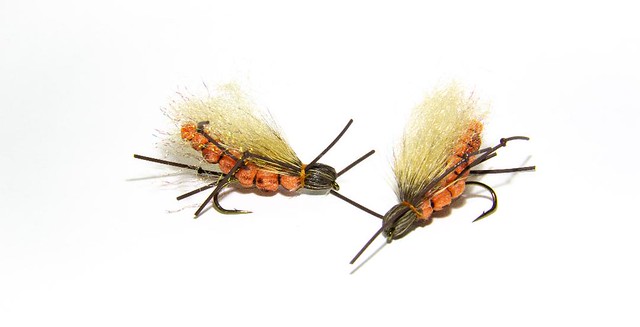
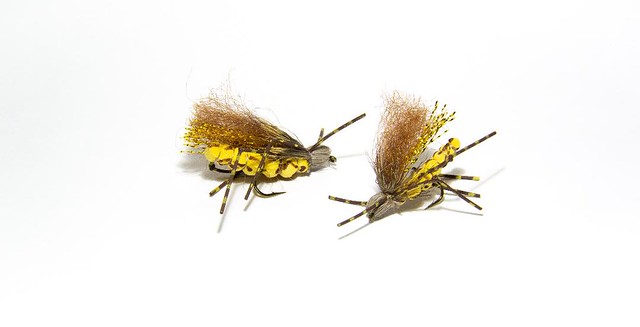
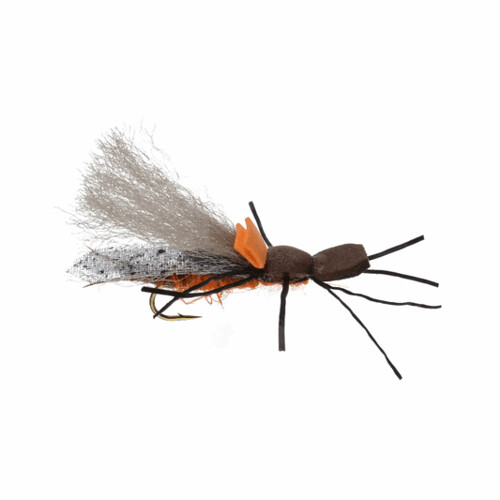
Reed’s Rogue Chubby has a realistic foam body and high floating wing. This version of a “chubby Chernobyl” is a super floater and is a great pattern to use when dropping a smaller nymph below it. Two versions are pictured above the Light Salmon color for the giant salmon fly and the Ground Mustard for the Golden Stone.

thumbnail-15

thumbnail-4

The True Salmon Fly and True Golden Stone patterns from Montana Fly Company have a super visible and “floaty” wing along with a very realistic segmented body. Both patterns are excellent “flush floaters” and work in all water types.

thumbnail-5

Stalcup’s Salmon Fly sits low in the water and invites big trout to take a slash at a struggling stone. This pattern is a little harder to see but its realistic profile and productivity make up for any visibility deficiencies.

thumbnail-9

thumbnail-8

Clark’s Stone and Clark’s Lady Stone above is one of the classic Golden Stone and Salmon Fly patterns. Low riding, easy to cast and super effective, both patterns are a must have in your stonefly collection.

thumbnail-11

Harrop’s CDC Golden Stone is a smaller Golden Stone pattern great for flat water. The CDC Golden is not a super high floater nor will it hold a dapper nymph but it’s a really good pattern when the fish are focused on Golden Stones more than Adult Salmon flies.

thumbnail-10

Harrop’s CDC Salmon fly is similar to the golden. Best in flat water or even fished sunken.

thumbnail-13

thumbnail-3

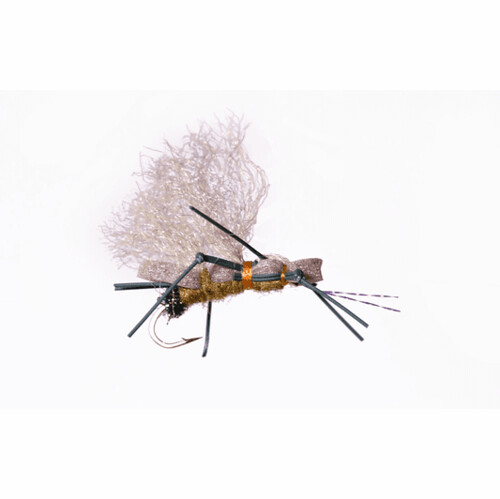
Norm Woods Special, two versions pictured above have been super popular patterns over the past 10 years. Norm seems to cover both Salmon and Golden Stoneflies in one pattern. It’s “bushy” enough to hold a nymph up and is visible in all types of water.

thumbnail-12

The Half Down Golden Stone is an excellent all around golden stone pattern. It sits down in the film but still floats high enough to be visible and hold up a small dropper nymph. We like to fish this pattern all summer, even if there are not many Goldens around.

thumbnail-7

Larimer’s Golden Stone is an excellent pattern in all water types. It sits low in the film but it very buoyant and visible. Larimer’s Golden Stone has a calf tail wing like the Norm Woods but a more slender profile.

thumbnail-16

Emma’s Stone is a buggy pattern that imitates the fluttering stonefly. Available in Golden and Salmon this easy casting highly visible pattern is a good one when you see super active stones.

thumbnail-14

The Golden Stone Rolling Stone is a Madam X style golden stone pattern that is highly visible but low riding. Fish the Golden Stone Rolling Stone later in the hatch and all summer long.

mason-s-mutiny-stonefly-salmon-fly-6

Mason’s Mutiny Stone is a super realistic Salmon Fly Patter. When the hatch is in full swing and they are eating the big bugs, the Mutiny Stone is a great choice.

kurt-s-egg-drop-stoneflies-3-pack-5

Kurt’s Egg Drop Stonefly is a “chubby Chernobyl” style pattern designed to sit lower in the film but still be super visible. It holds up good sized nymphs in a hopper dropper rig as well.

Posted in Central Oregon Fishing Report, Fishing Reports, Fly Fishing Gear Review | Leave a comment

Introducing the Sage Spectrum LT Reel with George Cook

George Cook graced Caddis Fly Shop with his presence and in doing so, showed off the new Spectrum LT reel from Sage.

The spectrum LT is the perfect companion to all water rods, fresh and light salt water applications. Sealed carbon style drag, five different colors and sizes and while it looks great on all rods, new silver pine color pairs well with the new R8.

The Spectrum LT has features and componentry that are top of the line currently in the world of fly fishing reels. The super-durable Spectrum LT is constructed with 6061-T6 aerospace grade aluminum and use of this high-grade aluminum makes this reel very lightweight. It is also built on a lightweight rigid frame, and this reduction of materials cuts weight as well. The aluminum is cold forged and tempered for immense strength and rigidity. The Spectrum LT is also hard anodized for surface protection and corrosion resistance. The Spectrum is finished off with a machined and anodized aluminum ergonomic handle.

The durable materials and sturdy frame house Sage’s tried and true SCS drag system. This drag is awesome in many ways, but the most noticeable are the smoothness and low start-up inertia. This reel has a one revolution drag knob which means you can quickly and precisely position the drag exactly where you wish.

reels

Posted in Fly Fishing Gear Review | Leave a comment

McKenzie River Report – Mid April 2022

IMG_3511

The McKenzie held its perfect spring flows this week and fishing remained solid. I spent an arctic Saturday and a beautiful overcast Sunday on the river this weekend.

IMG_3514

We knew Saturday was going to be wet, but didn’t expect it to last long. We were wrong. Sideways hail, whipping winds, and no place to hide. It was flat out nasty. Between the rain and hail we did find some nice fish. Nymphing with a double rig of a black stonefly nymph on the bottom and a PCP nymph up from it about 18 inches.

IMG_3524

Around 3pm we found some fish eating March Browns on the surface enjoyed some good dry fly fishing with Sparkle Dun March Brown patterns.

IMG_3529

Sunday was much more pleasant, light winds, overcast and perfect water conditions. Again nymphing was a solid tactic, swinging wets was also productive. The dry fly fishing excellent with a 2 plus hour period of fish looking up. Fish were still rising as we took out at around 5pm. Best patterns were March Brown Parachutes, Purple Haze, Purple Rooster and Purple Poly Post.

IMG_3534

This coming week looks wet again. As soon as water levels stabilize look for fine spring fishing to continue.

IMG_2502

Posted in Fishing Reports, McKenzie River | Leave a comment

Native Fish Society Chapter Meeting April 27th, 2022

mailmail

Where: Ninkasi Brewing’s Better Living Room, 155 Blair Blvd, Eugene, OR
When: Wednesday, April 27th at 5:30pm

Please note that we will actually be meeting on the last WEDNESDAY of the month, rather than Tuesday. This allows us to meet at Ninkasi. In case you missed it, here’s a link to the new NFS Chapter Manual. In it, you’ll find some ideas for Chapter activities, as well as some more background about NFS and our goals for NFS Chapters. So on April 27th, bring your idea for a Chapter activity you’d like to us to take on and we’ll select a couple to move forward with.

Finally, please encourage others to join us! The more, the merrier!

If you have any questions or concerns, please reach out to me,
Liz Perkin, Northern Oregon Regional Coordinator
503-442-3985
liz@nativefishsociety.org

Posted in Oregon Conservation News | Leave a comment

Redington Trout Spey Field Kit with Jon Hazlett

Jon Hazlett from Anglers Rendezvous in the Caddis Fly Shop, showing us what the Redington Trout Spey Field Kit has to offer. We think this makes a pretty sweet gift or simply a heck of a deal for anyone looking to get into the trout spey game.

From Redington:
The Trout Field Kit comes with a 9ft 5wt Redington 4pc rod, Redington Run Reel and a RIO Premier RIO GOLD fly line along with a 9ft 4x tapered leader.

redington-field-kit-fly-fishing-combos-61

Posted in Fly Fishing Gear Review | Leave a comment

The New Sage Arbor XL Reel with George Cook

George Cook sat down and gave us the low down on this new, smooth and beautiful reel from Sage, the Arbor XL. Available in two colors, in two sizes.

The SAGE ARBOR XL ultra large arbor reel will help you quickly catch up to fish in fresh and saltwater. The super technical Abor XL feature and extra large arbor and narrow spools that makes winding effortless and speedy.

The Arbor XL features Sage’s tried and true sealed carbon system drag package tuned for optimum performance in each size class and a one revolution drag knob for reliable and repeatable pressure. The fully machined Arbor XL reel is available in two sizes and two colors, 4/5/6 6/7/8 in Frost and Slate.

Arbor XL Reels “one revolution drag knob” has 20 numbers and 40 detent settings. The spool has a concave ported arbor for greater strength and capacity. Reels have an ergo handle and can be switched from right to left with ease. Each Arbor XL reels comes with a neoprene and embroidered ballistic nylon reel case.

arbor-blog

Posted in Fly Fishing Gear Review | 1 Comment

Winter Storm Brings Much Needed Water to Willamette Basin

Screen Shot 2022-04-11 at 4.42.16 AM

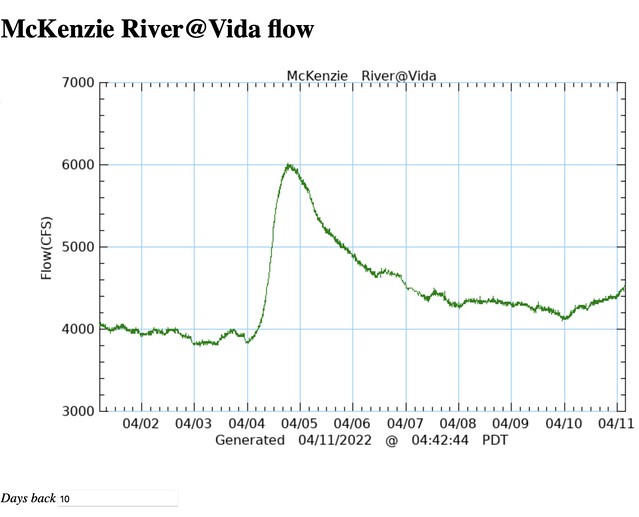
The Willamette Basin and Oregon in general has had another very mild winter. Lack of snow pack and precipitation is great for early spring fishing (its been a fantastic March Brown Hatch) but late spring and summer low water increases water temps and puts added pressure on fisheries. The storm we are experiencing right now has really helped, let’s hope it continues to add snow and precipitation through April.

Screen Shot 2022-04-11 at 4.42.55 AM

The above graph is from this morning and as you can see the McKenzie is not going up super fast. I am hoping that the cooler temps in the mountains are helping to keep this precipitation in the mountains as snow.

Screen Shot 2022-04-11 at 4.43.37 AM

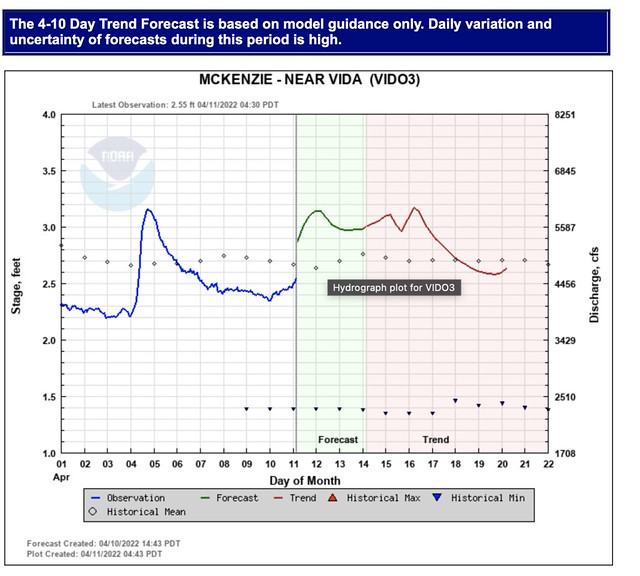
The predicted flows shown above are higher, but not too high to fish by any means. Additionally flows are above the historical mean which is really good for trout spawning.

Screen Shot 2022-04-11 at 5.01.21 AM

The Middle Fork of the Willamette below Hills Creek Dam has also come up but is still very fishable. It’s harder to find water in the upper reaches near Oakridge but as you get closer to Black Canyon campground the overall water level is just fine.

Screen Shot 2022-04-11 at 5.04.38 AM

While this graph shows the Middle Fork going up it’s not to high to fish. When we get to 5000-6000cfs things get way more interesting in terms of finding fish and wading is pretty much off the table in most areas.

The last couple of times I have been out on the water hatches have been excellent. March Browns, Blue Winged Olives, Grannom Caddis and even Salmon Flies. The Salmon Fly thing is really interesting. As water conditions rise, and the surface activity potentially suffers, keep in mind Salmon Fly Nymphs are heading to the short to crawl out and become adults. Using larger black stone nymphs is really effective to match this activity this time of year. The Salmon Fly and Golden Stone emergence is really interesting on the McKenzie and Willamette as it can start as early as March and continue through early July. By no means do we have the numbers of insects famed hatches on the Deschutes and Madison have but this sporadic emergence does not go unnoticed by the fish.

Screen Shot 2022-04-11 at 4.46.25 AM

Screen Shot 2022-04-11 at 4.48.05 AM

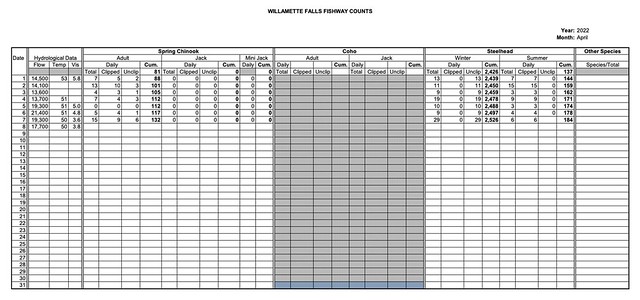
The two tables above are taken from ODFW Willamette Falls Fish Counts. Many local anglers are wondering where all the hatchery summer steelhead have gone. In years past we have had much larger returns of summer steelhead to the Willamette Basin, check out 2016. Since 2016 numbers of returning hatchery steelhead have been much lower. I recently asked long time local ODFW biologist Jeff Ziller what he thought the key factors of the lower returns. Jeff indicated that the state was planting the same number of fish and the same species of fish. He suggested two significant factors in his mind that are contributing to the low returns: (1) Poor escapement due to lower spring flows (2) Poor ocean conditions. The low flows are evident and without the push of high spring water all “out-migragting” fish suffer from predation, anglers, and simply not leaving. The ocean conditions are a huge unknown.

Posted in Fishing Reports, Lower Willamette, McKenzie River, Middle Fork Willamette River fishing | Leave a comment

Native Fish Society Virtual Auction is Live

NFS-Banners-v2

There is still time to sign up and bid on NFS Homewaters: Wild is the Future Benefit Auction. Support wild fish and bid on some great items today. Auction ends this weekend.

Click this LINK to check out the virtual acution.

Posted in Oregon Conservation News | Leave a comment