Lou’s Montana Fly Fishing Trip 2016

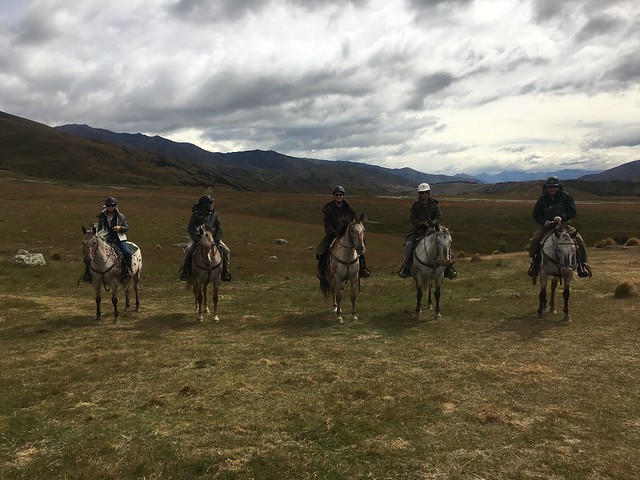
Got some time off from the shop and gathered up the Technical Men’s Conference (old dawgs who have fished together for decades) and headed off to Missoula.  We elected to try some of the other rivers (Bitterroot, Blackfoot, Clark Fork and Rock Creek) located near Missoula.   Our “camp”, was located 11 miles up Rock Creek Road, just before the pavement ends.   Once the pavement ends, the road becomes a suspension, tire and wheel alignment test area.  The sign posted “road is not maintained” was not a joke!

camp

The first snows to came to the area and  fall was well underway.

tmc-4

Each morning was a nature adventure with the wildlife we would see has we headed out.

moose

dscf1138-1

tmc-5

The variations of sunny days and snow showers were the signs of a fast approaching fall.  It also meant some blue wing olives, pheasant tails, and yes, even in Montana, the chubby chernobles were working.  We were amazed on our guided trip the hopper/dropper combo was the winning rig for success on the all of the rivers.

dscf1141

Posted in Fishing Porn, Fishing Reports, Fly Fishing Travel | Leave a comment

Late October Local Fly Fishing Opportunities Remain

MCKENZIE RIVER: Screen Shot 2016-10-25 at 4.31.43 AM

KEY FLIES: October Caddis (#8, #10, #12), BWO (#18, #16) and Mega Prince (#8, #6).

INTEL: The McKenzie River is riding a little high after the typhoon (yes, an honest to goodness typhoon) hit the Pacific Northwest last week, but water color is good and there still remain many opportunities for late season success fishing the McKenzie mid-day. If you can stand a little rain, the cloud cover will make fish less readily visible to predators and more likely to actively feed on those dry flies we all love to see ’em sippin’.


FUN FLY TO TRY:

ELKHAIR ORANGE CADDIS & BETTER FOAM OCTOBER CADDIS

img_0485

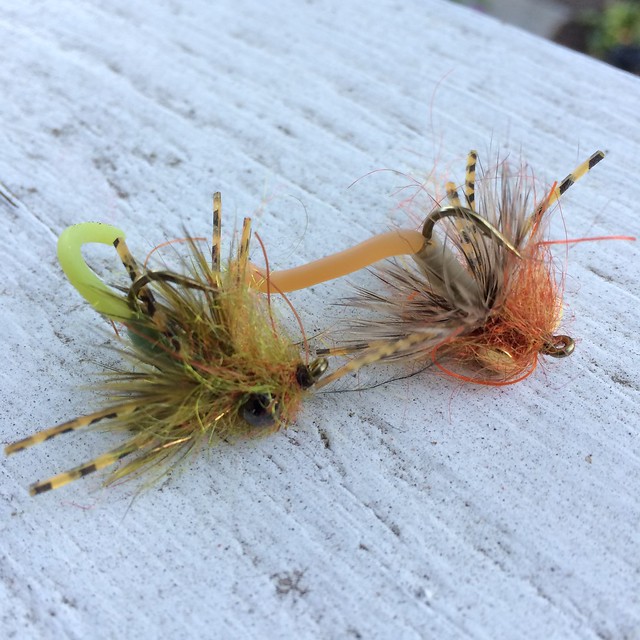
Who can argue with a classic? We may all be getting a little tired of the halloween color craze, but the fish are still just as stoked for orange caddis as they were at the beginning of the month. These beauties are still pulling lips on both the McKenzie and the Willamette.


WILLAMETTE RIVER:

Screen Shot 2016-10-25 at 4.32.45 AM

KEY FLIES: Parachute Adams (#10, #12) and October Caddis (#8, #10, #12)

INTEL: Below Dexter Dam to Fall Creek is the best, clearest section of the Willamette to fish at present with Fall Creek muddying up the water past the confluence point.  The flow from the dam at Dexter has been reduced, making the Willamette below this point less swift and more friendly for resting/feeding steelhead and trout. The river is consistently producing fish and flies. Our guys who were out on the Willamette this week saw success with dry flies: Natural (& Purple) Parachute Adams (#12), and October Caddis (#12).

FUN FLIES TO TRY:

Still trying to check that shiny steelhead off your October catch list? Try out these awesome Aqua Flies:

Wet Fly: MINI INTRUDER BLUE/BLACKimg_0465

Dry Fly: BRETT’S OBIE SKATER BLACK

img_0467

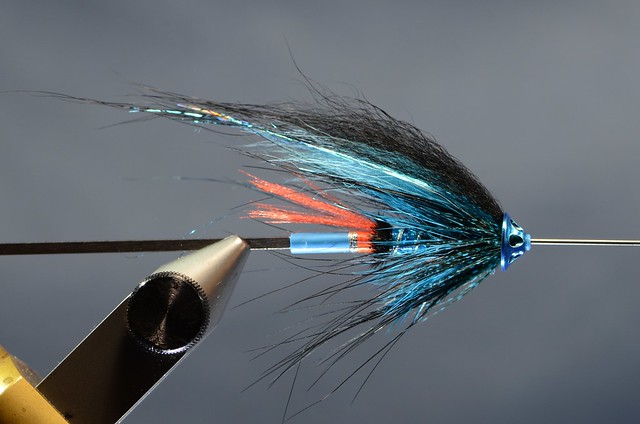
Swing your Mini Intruder through the soft water at the edge of a deep run and watch that big fin thrash on the catch. Then get out your Obie Skater for some fun on the surface, skating this small but powerful fly across the surface to attract steelhead to the surface.

Feel free to come check out our full fall selection of colors and flies in shop, at the front by the register:

img_0486

img_0488


Save

Save

Posted in Fishing Reports, McKenzie River, Middle Fork Willamette River fishing | Leave a comment

Fishing Report: A week in Idaho, October 2016

If you’ve never fished in Idaho’s mountain country, I recommend adding it to your fly fishing bucket list. Having grown up in the potato state, I try to get back to fish Idaho’s waters at least once a year and I was fortunate enough to get a week off to do so last week. It was simply a magnificent trip.
Idaho’s fall weather is wonderfully inconstant; the air is cold one cloud-covered minute and sun warmed the next. I stood on the river one afternoon beneath a cumulous clouded blue sky and felt the chill of mountain air suddenly press down on the back of my neck. I looked up to find snow blowing down from the peaks far above the valley, seemingly falling from the otherwise empty blue sky above my head. As the snow fell into the water and disappeared I was stunned by the absolute strangeness of this kind of beauty.
The fall colors were also set to stun. Whether you are fishing the tailwater rivers like the South Fork of the Boise below Anderson Dam, or the spring creeks like Silver Creek, the Big Wood through Ketchum and the Upper Lost in Copper Basin, there is everywhere a myriad of colors: rich vibrant gold glowing in the sun, bright green still hanging on to spring and red rusting into brown and orange. Each tree is a different shade, and the leaves fall like confetti on the water, crowding along the banks of slower sections.
fall2    fall
These rivers hold many different types of fish from Brown Trout and Brookies, to the occasional Whitefish and–my favorite–the always vibrant Rainbow Trout. This year we caught a number of beautiful 17-19″ rainbows over the course of our week on the water. Dark in color, these late-in-life spawners were big and hot–running as soon as the fly put pressure on their lip.
 rainbow-2
It is important to know how to fish the entire water column, but my expertise lies in dry fly fishing, so when I waded into each watershed I had an arsenal of dry fly classics: size 18-22 BWO, black/grey midge and callibaetis patterns. I saw success with each as the hatch patterns changed with changing water levels and cloudy vs. cloudless days–BWOs tend to hatch with cloud cover and midges/callibaetis hatch in the sunshine. It isn’t an exact science, but it’s what I have experienced.
flies
In winter, after farmers have cut their last crop of the season, watersheds are reduced to reserve as much rain and snow melt in reservoir stores for the next year’s irrigation. This means tailwater is reduced to levels sometimes as low as 50 cfs–barely past your ankles in some sections that would normally hold feeding fish. A change in water levels this drastic alters hatch patterns, holding locations and makes for some especially technical water for dry fly fishing; with larger trout rising in soft water on the edge of multi-current eddies created by the exposure of previously submerged tree roots or rocks, dry fly fishing is a challenge. To make it even more difficult, the waters are crystal clear, allowing fish to see you way before you see them.
maddycast
*Casting into a deep, slow section of river puckered by sipping trout*
But that challenge is why I love to dry fly fish.  Big trout sipping in technical water with only a two or three second drift to tempt them to the fly provides the perfect scenario for the most rewarding type of take, and make for the heart palpitating releases. We returned home from a great week in the mountains with faces full of smiles and phones full of fish pics. Can’t wait to get back next fall.
 img_0441*Playing and releasing a 19″ Rainbow Trout on the Upper Lost in Copper Basin*rainbow rainbow-4rainbow-3
*And Rainbows on Rainbows…*
MB

Save

Save

Posted in Fishing Reports, Fly Fishing Travel | 1 Comment

Remdinder -Oregon Coastal Salmon & Steelhead Presentation Oct 22, 2016.

OLYMPUS DIGITAL CAMERA

Is anyone interested in the status of Oregon’s coastal anadromous salmon and steelhead? I bet that plenty of people are not familiar with some basic facts like which species is most abundant, which species is most widely distributed, which species fluctuates in abundance the most, which species has the highest proportion of hatchery fish or the highest harvest rate in fisheries. How about the trend over the last five decades in the number of hatchery fish released on the coast?

When: October 22nd 12-2pm.

Where: The Caddis Fly Angling Shop – 168 West 6th ave, Eugene, OR 97401

The big picture answers to these questions are buried in the executive summary of the Oregon Coastal Multi
species Conservation and Management Plan
.

If you open the Executive Summary document and take a look at page 5 you will see trends by decade for species of spawners and smolts released too. This is fascinating stuff as far as I’m concerned — if you think so too, I’ll be at the Caddis Fly Shop this coming Saturday (October 22nd) from noon – 2 PM to review the answers to the questions posed n the introduction above.

I hope to see you at the Shop Saturday – October 22nd – full of questions about hatchery and wild salmon and steelhead on the coast. I won’t have all the answers, but I’ll be on solid ground providing basic background on coho, fall chinook, spring Chinook, summer steelhead, winter steelhead, chum, and coastal cutthroat.

Jay Nicholas, October


Save

Save

Save

Posted in Coastal Steelhead Fishing, Fly Fishing Glossary, Oregon fly fishing links, Oregon Fly Fishing Tips, Oregon Salmon fly fishing | Leave a comment

Fall Bahamas Trip 2016

Abaco palms 2016

Abaco palms 2016

Hurricane Matthew spared our favorite family vacation spot on the Bahamian Island of Abaco. The weather has remained a bit unsettled over the past week but it’s slated to improve each day for the next week.

We arrived in Marsh Harbor yesterday, gathered supplies and made the short drive to Abaco Palms. I was on the flats this a.m. testing the new SAGE X 9ft 8wt, Nautilus XL Max Reel and Scientific Anglers Amplitude Grand Slam. So far so good. More reports coming this week!

CD

Abaco palms 2016

Abaco palms 2016

Posted in Fishing Reports, Fly Fishing Gear Review, Fly Fishing Travel | Leave a comment

Oregon Coastal Salmon & Steelhead Presentation Oct 22, 2016.

OLYMPUS DIGITAL CAMERA

Is anyone interested in the status of Oregon’s coastal anadromous salmon and steelhead? I bet that plenty of people are not familiar with some basic facts like which species is most abundant, which species is most widely distributed, which species fluctuates in abundance the most, which species has the highest proportion of hatchery fish or the highest harvest rate in fisheries. How about the trend over the last five decades in the number of hatchery fish released on the coast?

When: October 22nd 2pm.

Where: The Caddis Fly Angling Shop – 168 West 6th ave, Eugene, OR 97401

The big picture answers to these questions are buried in the executive summary of the Oregon Coastal Multi
species Conservation and Management Plan
.

If you  open the Executive Summary document and take a look at page 5 you will see trends by decade for species of spawners and smolts released too. This is fascinating stuff as far as I’m concerned — if you think so too, I’ll be at the Caddis Fly Shop this coming Saturday (October 22nd) from noon – 2 PM to review the answers to the questions posed n the introduction above.

I hope to see you at the Shop Saturday – October 22nd –  full of questions about hatchery and wild salmon and steelhead on the coast. I won’t have all the answers, but I’ll be on solid ground providing basic background on coho, fall chinook, spring Chinook, summer steelhead, winter steelhead, chum, and coastal cutthroat.

Jay Nicholas, October


Save

Save

Posted in Classes and Instruction, Coastal Steelhead Fishing, Oregon Conservation News, Oregon fly fishing links | 2 Comments

Simple Steelhead Skater Fly Tying Video

This is a steelhead/sea-run cutthroat fly inspired by the pattern by Brett Jensen, newfound friend, who provided the recipe to Doug Brutaco of Aqua Flies. I borrowed from Brett’s Klamath Skater and his Obie Skater, both great flies on the Klamath and Rogue, to make this fly my own – figuratively speaking.

Chris likes the B10S hook better than my Daiichi 1530, but hey, I’ll stick with my standard for the time being. Feel the freedom to experiment and tie this fly on any hook you might choose for skating summer steelhead like the TMC 7999 or 7989.

I find this fly skates best on calm surfaces, not so well in the most turbulent waters -it is highly buggy and cutthroat in coastal rivers take the fly well too.

simple skater

Simple Steelhead Skater

Hook: Daichi 1530 # 6 or Gami B10S #4-6
Thread: White 210 Danville
Body: UV Polar Chenille UV Olive
Flash: Lateral Scale
Tentacles: Lady Amherst
Foam: 2MM Black
Post/Wing: Humpy Deer

I hope you enjoy tying and fishing this fly, and any variations you may decided to impart on your own also.

Jay Nicholas; Summer 2016

Posted in Fly Tying, Fly Tying Materials and Supplies | 1 Comment

HDA Fav Variant Jigged Nymph Fly Tyng Video

The HDA Fav Variant Jig is a great all around nymph. It’s a go to spring summer and fall tied below a Chubby Chernobyl. The quick descending and highly attractive pattern has caught fish all over the world!

HDA Fav Variant Pic

HDA Fav Variant

Thread: Veevus 10/0, Tan, and Fl. Orange

Hook: Daiichi 4647 size 10-16; size 12 in video
Bead: Gold Slotted Tungsten Bead; size 1/8 in video
Weight: Lead wire, 5-6 wraps 0.020
Tail: Dun Natural CDC and Woodduck Flank
Rib: Copper Brassie Ultra Wire
Shellback: Large Pearl Mylar
Body: Hare’s Ear Dubbing
Hackle: Dun Natural CDC and Partridge
Hot Spot: Fl. Orange Thread

Save

Posted in Fly Tying, Fly Tying Materials and Supplies | Leave a comment

Airflo Scout and OPST Commando Heads now available

390 gr AIRFLO SCOUT head on left and OPST Commando head on right.

390 gr AIRFLO SCOUT head on left and 350 gr OPST Commando head on right.

Fly anglers fishing single hand rods with short head fly lines now have more options to choose from – thanks to the entry of AIRFLO’s new for 2016/17 Scout fly line.

These very short shooting heads have been my go-to last winter while swing fishing the coastal rivers with 6 wt and 7 wt switch rods of 11 ft to 11.5 ft also.

The AIRFLO SCOUT lines start at 150 gr and go in 30 gr increments up to 480 gr.

The OPST COMMANDO heads start at 150 gr and go up in 25 gr increments to 475 gr.

The two heads pictured above are both 15 ft long. The shortest heads in the  OPST Commando series may be as short as 12 ft and the heaviest as long as about 18 ft long.

The shortest heads in the Airflo Scout series are 13.5 ft (150 gr) and the longest is 18.5 ft (480 gr).

Airflo decided to product their Scout heads in lengths that are 6″ to 18″ longer than the Commando heads – in order to reduce the instances of overpowering an anchor on the cast.

AIRFLO tip and butt (left and right) loops on SCOUT head.

AIRFLO tip and butt (left and right) loops on SCOUT head.

The Airflo heads and the Commando heads have slightly different loop characteristics, and I think the angler will decide if either is better than the other.

COMMANDO head gr wt marking - The AIRFLO SCOUT will be similarly marked on the line for convenience.

COMMANDO head gr wt marking – The AIRFLO SCOUT will be similarly marked on the line for convenience.

My AIRFLO Demo head was only color coded to indicate head wt. but the retail SCOUT heads will have the gr wt printed on the line, like the OPST line designation shown above.

We are both blessed and cursed with the number of choices we have in fly lines (and all goodies provided by the Fly Fishing Military Industrial Complex) — So begins the challenge of sorting our brand loyalty versus deciding if either of these fly lines is superior to the other under particular circumstances.

OPST has proven the functionality of these Commando heads. AIRFLO has a proven track record of producing quality fly lines, and this is especially true for the Pacific Northwest and Great Lakes angler fishing two hand rods.

Now you have two brand options and yet one more topic for debate around the campfire in the evening.

JN


Posted in Fly Fishing Gear Review | 2 Comments

Breaching the Lower Snake River Dams

Via The Oregonian:

A federal judge is forcing discussion of a radical step to save endangered salmon: taking out four dams on the Lower Snake River.

The public will get a chance to weigh in at meetings throughout the Northwest starting next month.

“Scientists tell us that removing the four Lower Snake dams is the single most important action we could take to restore salmon in the entire Columbia-Snake river basin,” said Sam Mace of Save Our Wild Salmon.

Federal agencies are holding meetings for public comment throughout the Northwest in the coming weeks. A full schedule is here.

For more info:

Myths and Facts about Lower Snake River Dam Removal

Posted in Oregon Conservation News | Leave a comment

Fall Chinook Tackle Recommendations – the Basics

OLYMPUS DIGITAL CAMERA

This is a bare bones set of recommendations for the angler who is about to head out and try a hand fly fishing for fall Chinook on the Oregon Coast.

We will be pleased to offer more detailed advice and tackle options if you drop by the Caddis Fly Shop — recognizing that the sport can get complicated. This blog post is intended to lay out the foundation for fall chinook fly fishing in such simple terms that it will allow most people to get started with a solid rod/reel/line/leader/fly set up and have a decent chance to hook a salmon on a fly.

Knowing that there are many exceptions to the advice I’m about to offer, here goes. (I am not mentioning brands here because we have a wide range of great rods and reels by many manufacturers.

Chinook rods: single hand 9 wt, switch rod 8 wt.

Chinook reels: saltwater safe reels capable of holding 150 yds of 30 Lb. backing under a fly line. This means a pretty hefty reel with a good drag system.

Chinook fly lines: I’d start with a RIO OUTBOUND Short Intermediate fly line. The next fly line would be the OUTBOUND Short with a sink-3 tip. The former line will meet a wide range of needs for the Chinook angler – the faster sinking line will come in handy when the water is deeper and the current or tide running faster.

The shooting head system is another very good option, and I’d start with a RIO OUTBOUND Shooting Head  fly line in Intermediate and Type 3 sink rates. If you go this route, you will also need to get a shooting line that goes between backing and shooting head. The RIO coldwater series shooting line is a good choice and there are others we can help you select as well if you call or email the Shop.

Backing: already mentioned, at least 150 yds 30 Lb backing.

Leader: Maxima Ultragreen – 9 ft long, in 12 Lb. or 15 Lb. test tippet.

Fly: Chartreuse Clouser of about 3″, Boss flies in flame orenge, black, and chartreuse green.

_________________________

That’s it. The bare bones. Hope this helps assure the prospective Chinook angler that they have a decent set-up to begin the quest.

Jay Nicholas -Early October, 2016

Save

Posted in Fly Fishing Gear Review | 1 Comment

2016 Two Fly Tournament Wrap Up

img_0255

The murmurs of excited anglers mingled with the crackling of the fire in Hideaway Bakery’s portable pizza oven as we kicked off this year’s Two Fly Tournament Friday night. Fishermen noshed on freshly baked pies, made with love and care by Hideaway chefs and the gaggle of kiddos present to celebrate their parents’ passion for fly fishing. It was a great night for all.

img_0252

After dinner Caddis Fly owner, Chris Daughters, gathered everyone together in the shop to introduce us not only to the guides donating their time and the rules of the tournament, but to the foundation we were all there to support–the McKenzie River Trust.

img_0258

The section supported by this year’s Two Fly was Finn Rock Reach:

mckenzierivertrustmar31_final

(photo courtesy of mckenzieriver.org)

Not only a haven for native fish, the Finn Rock Reach is especially important to Eugene anglers because of the Finn Rock River Launch site. This launch provides river access to thousands of rafts and drift boats fishing the McKenzie throughout the year. The money raised at this year’s Two Fly goes to helping restore and preserve this great section of river, and to the expansion of the protected section of land.

The shop was filled with competitive minded camaraderie as tournament rules were set:

– 1 guide per each team of two anglers

– 4 flies

– 3 native fish caught on tournament flies (steelhead excluded)

*The lengths of each angling team’s three longest native fish would be added together to make that team’s final score. Highest gross length would take home the grand prize.

Guides were selected via slips of paper drawn from one of this season’s newest, grooviest Patagonia hats–this year’s sponsor. As each guide-team pairing was made, the excitement in the room rose as team huddled to strategize fly selection and river sections that might produce the largest native trout.

img_3796

 2016 Two Fly Tournament Teams:

Guide Team
Tim Clancey Matthew Tropp and Brian Lebars
Matt O’Neil Jason Johnson and Luke Walsh
Bryson Fairlamb Tony Reser and Joe Palanuk
Lou Verdugo Jeff Woolsey and Doug Hoff
Chris Daughters Devin Thompson and Brad Gibbons
Ty Holloway Colleen Shipman and David Sacamano
Clay Holloway Joan McCreery and Katherine Paiva
Matt Ramsey John Pyrch and Matt Pyrch
Andrew Shipman Tom and Jane Holloway

The next morning, it was time to get out on the river.

Great day on the McKenzie for our annual Two Fly Tourney. More October Caddis everyday....#oregonflyfishingblog #caddisflyshop #mckenzierivertrust #octobercaddis #sagex

Nine boats competed, launching at sunup and fishing until early evening. The most success was seen in the early afternoon when rain showers speckled each run, but it was an overall beautiful day with many fish to hand. Some teams brought in over 30 fish, a good number reaching up to 17″.  The upper McKenzie fished great with October Caddis and Grey drakes hatching, but the lower McKenzie produced the fish to add up for the winning team.

Two fly 2017


lower-mckenzie-willamette

At Ninkasi’s administrative headquarters in Western Eugene Saturday evening, exhausted but happy anglers celebrated their success. They munched tacos and savored ice cold brews over shared photos of their largest natives, mostly glistening rainbows with one surprise Steelhead in the mix. With cheers and grins at the winning gross length of 55 1/8 inches, we celebrated Tom and Jane Holloway for their victorious catch, aided by the expert guiding of Andrew Shipman and some trusty ol’ Prince Nymphs.

champs-tom-and-jane-holloway-guide-andrew-shipman_30085627656_o

It was another wonderful tournament for a wonderful cause. We want to say a big thank you to Ninkasi and Patagonia for their generous donation of time and dollars to the McKenzie River Trust. Another huge thanks goes to our guides who donated their time and enthusiasm on Friday night and all day Saturday. This event would not be what it is without them, more able than any to showcase the phenomenal fishery we have in the McKenzie River.

guides-dscn4913_29825468310_o

*not present in this photo, but necessary to recognize, the awesome Matt O’Neil

Having now completed its 9th year, the Two Fly Tournament is a tradition the Caddis Fly Angling Shop and McKenzie River Trust hope to continue for many more years to come. Thank you to all of our participants and contributors who helped raise over $8,800 for the protection and restoration of the McKenzie River. What a better (or more fun!) way to help keep anglers out on our home waters, and the fish healthy and happy within them.

Save

Posted in Fly Fishing Contests, McKenzie River | Leave a comment

A Letter from Congressman Defazio – Frank Moore Wild Steelhead Sanctuary

Dear Mr. Daughters:

Thank you for your message in support of designating the Frank Moore Wild Steelhead Sanctuary in Oregon. I appreciate hearing from you and you will be pleased to know that I introduced H.R. 6129, the Frank Moore Wild Steelhead Sanctuary Act, on September 22.

H.R. 6129 would designate nearly 100,000 acres in the Steamboat Creek Watershed in Umpqua National Forest for salmon preservation. The Steamboat Creek watershed is consistently identified as one of the most important ecological areas in the Pacific Northwest, and also serves as an important cold water refuge for migrating summer steelhead.

The land, which will be designated as a Special Management Area, is named in honor of Frank Moore, a local WWII veteran, avid fly fisherman and fish conservation advocate. A former proprietor of the Steamboat Inn on the North Umpqua River in Douglas County, Moore served on the State of Oregon Fish and Wildlife Commission from 1971 to 1974 and has been repeatedly recognized by organizations for his conservation efforts. There are no two people who have done more to protect and preserve the North Umpqua River and its extraordinary natural resources than Frank and his wife Jeanne Moore. I can think of no more appropriate tribute to their efforts than to dedicate this incredible area to their legacy to remind us all of their life’s work safeguarding Oregon’s beautiful wild areas.

Frank Moore Wild Steelhead Sanctuary from Pacific Rivers on Vimeo.

Over my career, I helped add more than 390,000 acres of wilderness in the state of Oregon – an area half the size of Rhode Island. I have also been a part of numerous national wilderness debates and have fought for additional wilderness protections from the Red Rock Wilderness in Utah to the Arctic National Wildlife Refuge in Alaska.

I will continue to work hard to preserve wild areas that are vital to the ecological health of Oregon. Thanks again for your message and please keep in touch.

Sincerely,

U.S. REPRESENTATIVE PETER DeFAZIO
Fourth Congressional District, Oregon

Peter has my vote.
CD-

Posted in North Umpqua River Fishing Reports, Oregon Conservation News | 1 Comment

Jay Nicholas’ Advanced Intruder Strategies is now published

Signed copies of Advanced Intruder Strategies may be obtained by request at the Caddis Fly Shop.

Signed copies of Advanced Intruder Strategies may be obtained by request at the Caddis Fly Shop.

Following in the path established by Intruder Essentials, this book delves into the Intruder-style fly patterns more deeply than you have ever seen in print. With a foreword by Greg Senyo and a glowing review by Trey Combs, Advanced Intruder Strategies is a lot of fun for the fly tyer — providing examples of many Intruder styles.

From tubes to shanks to traditional hooks to Micro Intruders this latest Nicholas book covers the bases and lays out a clear picture to show the way to craft a wide variety of styles, sizes, and color themes in the Intruder style.

Composite loops, modern and traditional materials, articulated flies are all game and add to the spice of the flies photographed in this book.

A phone call or email to the Caddis Fly Shop will reserve a signed, personalized copy of this new book. (25 bucks)

Thanks for your support and may you have fun tying!

Jay Nicholas, late September 2016


Posted in Fly Fishing Books, Uncategorized | 2 Comments

The Caddis Fly is donation 10% of sales today to the McKenzie River Trust

Fall 2016 Patagonia

As part of our annual Two Fly Tournament we are donating 10% of sales to The McKenzie River Trust today. Come down and have a look at the new Fall line up of Patagonia clothing, SAGE X Rods, Nautilus X series reels, and a plethora of new Rio Fly Lines.

New Nautilus fly reels

Fall 2016 Patagonia

Fall 2016 Patagonia

shared-vsion-trucker-hat-38142_TPND

Posted in Fly Fishing Contests, McKenzie River | Leave a comment