From Oregon Live
Fall chinook salmon fishing will close Thursday, Nov. 1, in coastal rivers along the north half of the Oregon Coast.
Low returns and virtually no October rainfall led to the decision Friday.
Read more here: Chinook Closure


From Oregon Live
Fall chinook salmon fishing will close Thursday, Nov. 1, in coastal rivers along the north half of the Oregon Coast.
Low returns and virtually no October rainfall led to the decision Friday.
Read more here: Chinook Closure
In this video, Jay ties a Shrimp Pink Flesh Bugger. This is an effective pattern up in Alaska and around the coastal rivers here in Oregon too when there are fish spawning and both cutthroat and steelhead are keying in on little scraps of salmon. It Doesn’t pick up water and it’s easy to cast!

Jay’s Shrimp Pink Flesh Bugger
Hook: Ahrex NS110 Size 4 Ring Eye Hook
Thread: Danville’s 210D Pink
Eyes: Double Pupil Lead Eyes
Wire Free Synthetic Fox Brush
Tail: Rabbit Strip Pink
Wild winter steelhead in the Willamette Valley are extremely rare. Due to the tireless work of The Conservation Angler and the Willamette River Keeper they may get added protection in the coming years. Oregon Department of Fish and Wildlife faces the elimination of it’s hatchery program on the North Santiam. You can read more about the situation in this article published in the Statesman Journal here.
We at OregonFlyFishingBlog applaud the Corps of Engineers who seem to be moving towards funding habitat restoration rather than hatchery programs that have proven to be unsuccessful and even harmful to wild fish for the last 50 years.
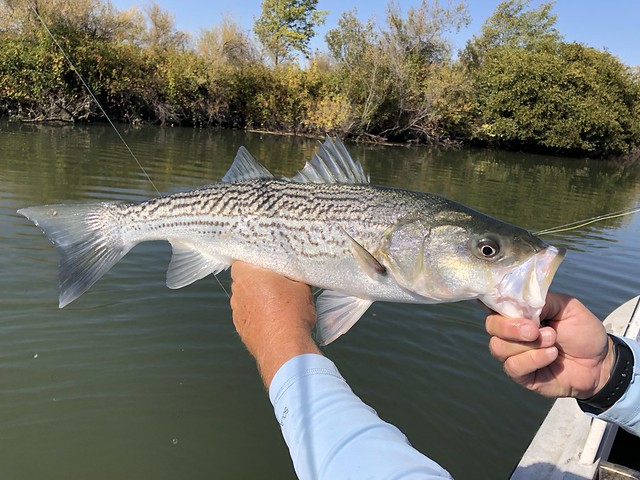
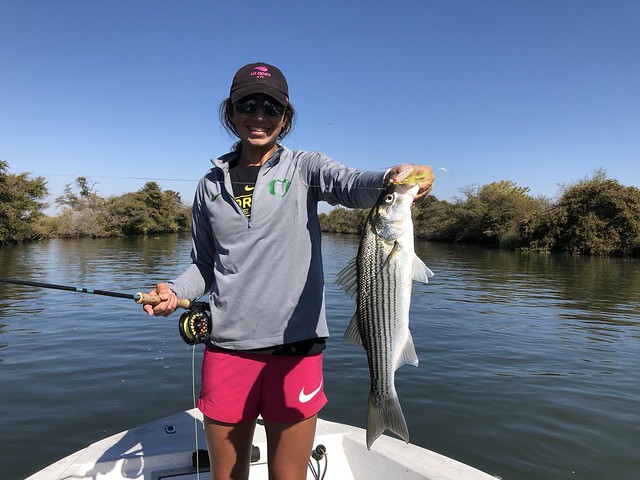
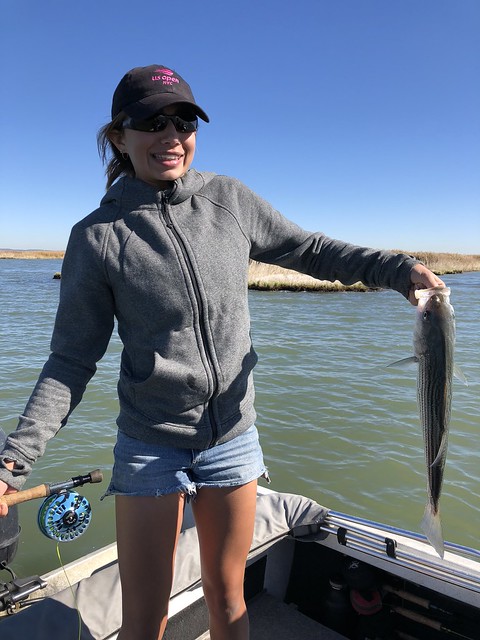
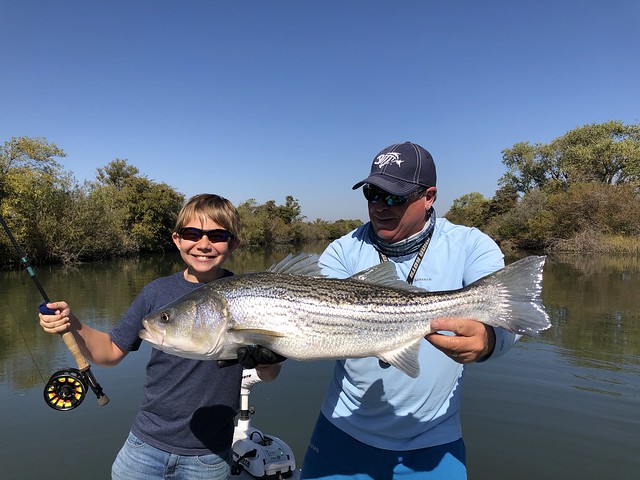
Had an absolute blast with Captain Mike Costello on the Sacramento Delta fly fishing for Striped Bass! The weather was amazing. Mike is a great guide. I highly recommend this fishery if you get a chance to do it.


Recently, forecast called for ” possible showers”, which immediately triggered, steelhead! . I had one of technical men’s conference attendees (old dawgs who have fished together for decades) along, the one from Burns. It appears we have all reached the “grandpa” stage of our lives which has driven attendance to an all time low. However, one thing remains constant…the Deschutes!

Fall on the Deschutes is a tough challenge. Steelhead are the prime target, but as we “swing” for the “tug”, those darn red sides are feasting on October Caddis pupa, copper johns, PT’s, lucent jig patterns and just about anything else! The trout fishing was extremely good while the steelheading was a disappointment.

The only steelhead hooked, unfortunately, was done while “euro nymphing”. It is now confirmed, a euro nymph 3 weight is not up to par for a Deschutes steelhead. Currently, euro nymphing is the latest craze in fly fishing. There is no question that it works, and works extremely well. However, like everything else in life, there are limitations. What we found is euro nymphing opens up more water than an indicator setup. We found the shallow, fast water, with the euro set up brought much greater success than the indicator. Our ability to vary the euro rod up and down, to control depth and with the proper weighted flies brought many fish to hand.


I had a chance to get a pair of the Devils Canyon boots from Korkers. It was quite a surprise to see the grandpa from Burns show up with Korkers boots as well! It was a Korkers trip and I have to say the Devils Canyon was extremely comfortable and the single-seam construction with compression molded flexible armor was put to the test. Single seam construction takes away the stitch or seam failure. The boots were fast drying and the fit was awesome. I also invested in a pair of felts with studs and found the interchangeable sole system easy to change. Bottom line, for versatility and comfort, Korkers is a great choice.

Showing this last pic with a chubby for a reason. I found the hopper dropper system with a orange legged chubby and a dark pheasant tail suspended below to very productive. I took great delight in seeing my chubby attacked or skating around with a trout munching the PT from below.

The Deschutes is a special place, and should be kept at the forefront of our Oregon river preservation thoughts. To learn more see the Deschutes River Alliance website. Meanwhile, its only 6 months to the legendary stonefly hatch!
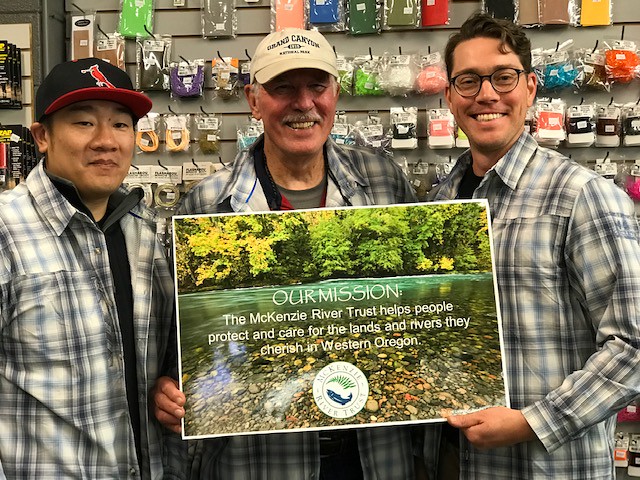
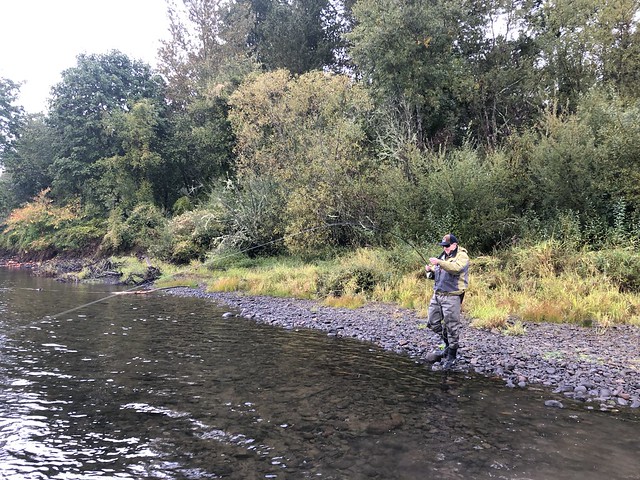
Our 11th annual Two Fly Tournament was the most successful yet in terms of raising funds for McKenzie River Trust. Thanks to the guides who donate their time and the guests who participate in the fun weekend event. The “Two Fly” has now raised more than $100,000.00 for MRT. What started with a few boats in it’s first year was eleven boats and 22 participants in 2018.

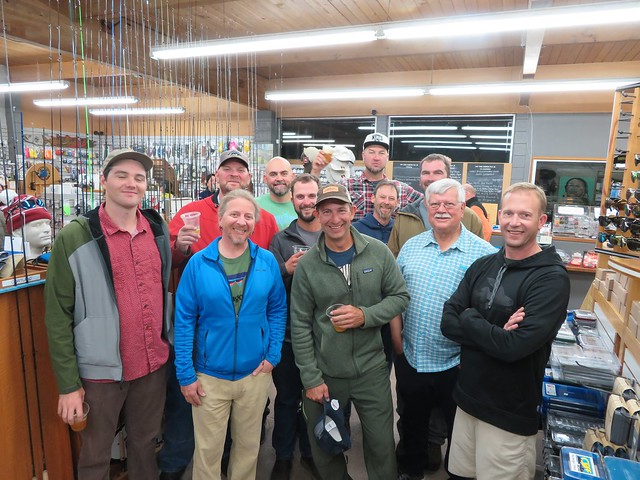
Our every year participant Joan McCreery had a birthday and won the Two Fly this year. Congratulations Joan! Many time guide winner Ty Holloway again got it done with the Mega Prince.
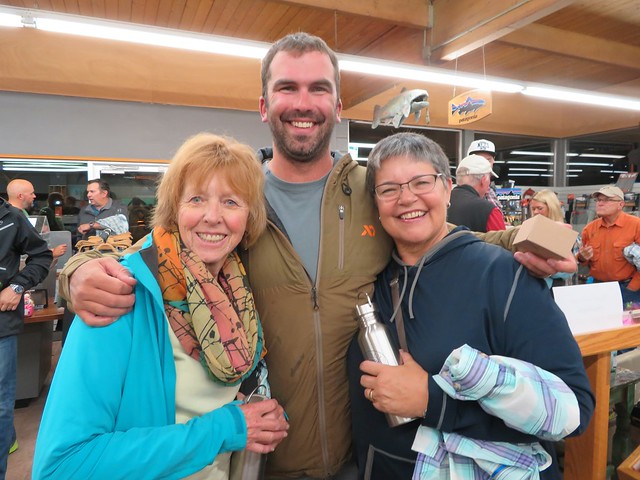
2018 CHAMPIONS: Guide Ty Holloway with anglers Joan McCreery and Katherine Paiva
SECOND: Guide Kyle Duke with anglers David Sacamano and Brian Carrico
THIRD: Guide Matt Ramsey with anglers Lee Daniels and Christian Beck
From the Mckenzie River Trust
A big thank you goes out to our amazing guides who donated their time and expertise to allow this event to happen, and the Caddis Fly Angling Shop for hosting. We also want to thank Jared Weybright, from the McKenzie Watershed Council, for his inspiring presentation about the South Fork McKenzie floodplain restoration project, and to Ninkasi Brewing for the beautiful space and delicious beer.
We would also like to thank Koffler Boats for funding the lunches, McKenzie Mist for providing water, and Richardson Hats & North Fork Public House for helping to fund Saturday’s dinner. And our gratitude goes to our Lead Two-Fly Sponsor, Patagonia. inc.

More Thanks: Hideaway Bakery for Friday night dinner, pizza and salad, always great. Echo Rods and Costa Sunglasses who donated prizes.
Other notables:
There were three steelhead caught this year, none of which count towards your score. Fishing totals were decent but not as good as some years when we have seen the water bumped a bit with fall rains. Best tactics remained nymphing but there was chatter about making 2019 a dry fly only tournament.
CD
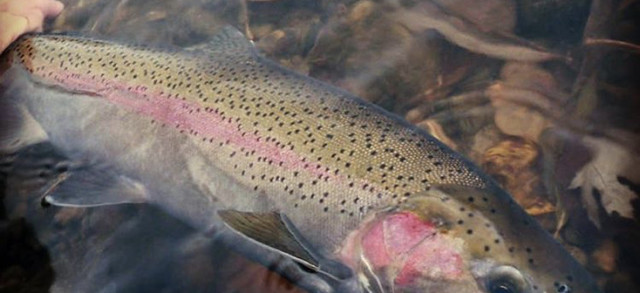
From The Conservation Angler
On October 9, 2018, The Conservation Angler and four other conservation groups sent notice to Idaho officials of our intent to file an ESA Take lawsuit to protect wild Snake River Steelhead.
TCA along with Wild Fish Conservancy, Friends of the Clearwater, Snake River Waterkeeper and Idaho Rivers United sent notice to Idaho Governor Butch Otter, Idaho Fish and wildlife Commission Chair Derek Attebury, members of the Commission, and to the Idaho Department of Fish and Game Director Virgil Moore and several Deputy’s of our intent to file suit against these officials for violations of the federal Endangered Species Act (ESA) regarding the authorization and implementation of fisheries that harm ESA-listed Snake River Steelhead.
You can read our official letter to Idaho here.
Learn more from our FAQ Backgrounder and discover additional resources about wild steelhead here.
Help us protect these wild steelhead!
David Moskowitz
on behalf of:
Pete Soverel, The Conservation Angler
Buck Ryan, Snake River Waterkeeper
Kurt Beardslee, Wild Fish Conservancy
Gary Macfarlane, Friends of the Clearwater
Kevin Lewis, Idaho Rivers United
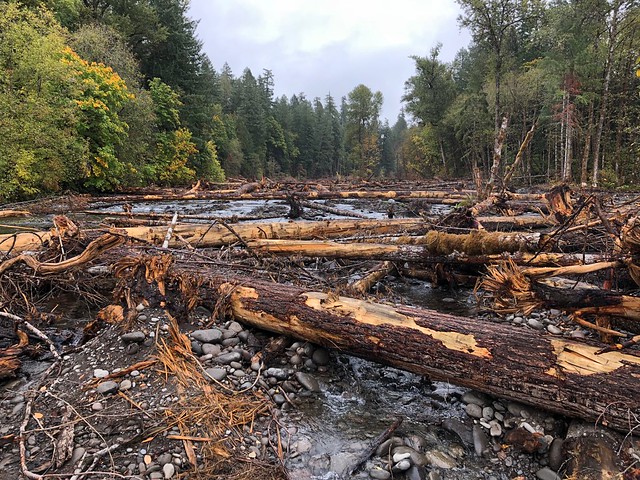
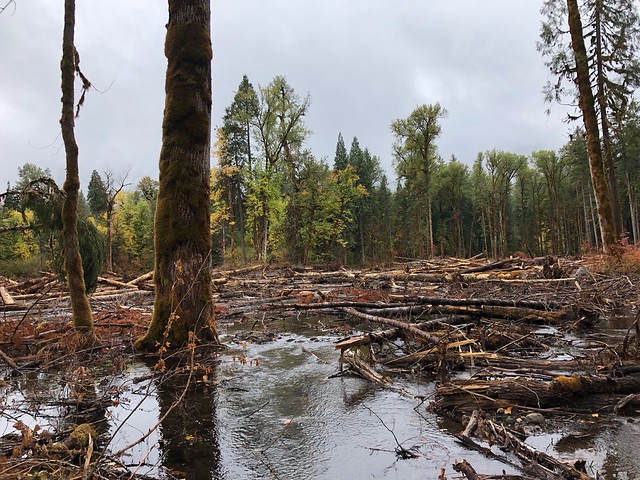
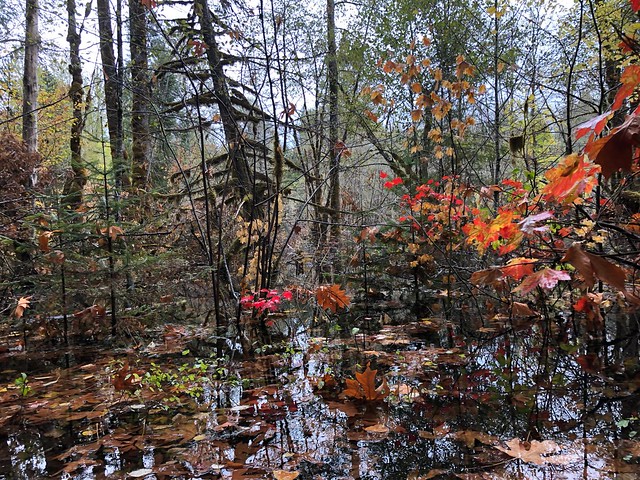
I took a walk up the lower South Fork of the McKenzie the other day to examine the restoration project that has been ongoing this summer. We had a great presentation at the Two Fly Tournament from Jared Weybright the executive direct of the McKenzie Watershed Council. Jared explained some of the ground breaking new strategies for restoring the flood plain habitat on the South Fork. It was super cool and you should read more about it at this link: South Fork Flood Plain Restore

There are other updates and explanations about the project on the the Watershed Council website here: McKenzie Watershed Council.

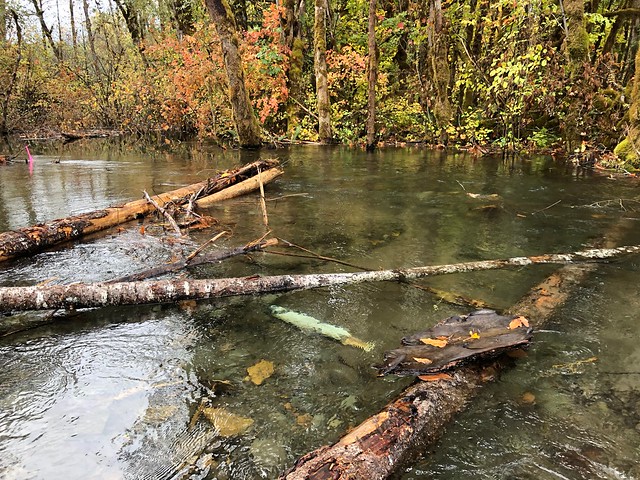
The work being done here is mind blowing and all indications are that it’s a tremendous success in terms of providing an incredible boost to the habitat for all species in the area.
In this video, Jay shows us how to tie an Olive themed Steelhead Tube Fly with Ginger Grizzly Saddle Hackle Tips and Orange Aqua Flies Intruder Eyes. This is a vibrant Winter Steelhead pattern that can be fished on the swing.

Olive Steelhead Tube Fly w/Aqua Flies Intruder Eyes
OPST Dubbing Spinner
Pro Sport Classic Tube
Pro Sport Flexineedle
Danville’s 210D Olive
Ice Dub UV Red
Ice Dub UV Copper
Grizzly Saddle Hackle Tips
Marabou Olive
Cement: Loc-Tite brush on
Krystal Flash Orange
Marabou Orange
Aqua Flies Intruder Eyes Orange
For the past couple months a lot of customers have been coming to the shop asking about European Nymphing, or Czech style nymphing – and for good reason: it’s a lot of fun and a very productive way to catch fish. I got turned onto the idea after hearing about it from local fly tyer Tony Torrence and watching Modern Nymphing: European Inspired Tactics which is a really great watch for anyone wanting a visual introduction to the technique. Since we’ve had so much interest in this method of fishing I thought I would share some of my insights. For anyone wanting an introduction to the technique please check out Introduction to Euro Nymphing from Vail Valley Anglers.
My preferred setup is a 10’0 or 10’6 3wt – there a few options including the Redington Hydrogen, Cortland Competition, and Echo Shadow 2. I went with the 10’0 3wt Redington Hydrogen and I paired it with the Airflo Euro Nymph line. For my leader I follow Devin’s formula (picture below) from Modern Nymphing with a couple variations. I use 8’ of 20 lb Maxima Chameleon, 3’ of 15lb Maxima Chameleon, 2-3’ of 11lb Rio Two-Tone Indicator Tippet (this is your sighter), followed by a tippet ring (I use the steelhead rings because trout is just too small). From this point I use 3-6’ of 4x Powerflex down to a terminal tippet ring at which point I tie 18” of 5x or 6x Fluoroflex to my weighted tungsten beaded nymph. Sometimes I’ll fish a two nymph setup with a 5” piece of 3x Fluoro tied off the terminal tippet ring. As far as reels go you want a somewhat heavy reel that will help counterbalance the extra length of the rod.


Devin’s Euro Leader Formula from Modern Nymphing.
My thoughts:
For someone who hasn’t done a ton of nymphing this style of fishing was fairly easy to pick up and almost immediately I had success. I was catching fish in water that I didn’t realize fish were holding in, or water that I would have passed over. And I was catching bigger fish that I would have previously spooked after a few false casts. And this is the main reason I think this style of fishing is addictive – the approach is stealthy. By virtue of using a weightless line, no indicator and a longer leader you’re eliminating a lot of the disturbances between you and the fish (no line hitting the water, no false casts overhead, and no indicator yanking out of the water when going to recast). I also like that I can go from deeper pockets and pools to shallow riffles without changing my setup. I simply lower or raise my arm to get my nymphs at the depth I want. It really opens up a lot of water this way. And truly I mean you can fish a 6 foot deep pool and a 2 foot riffle with the same setup and not worry about snagging. Along those same lines you can dissect sections of water more precisely. You can really fish every inch of water no matter the depth or speed with this technique.
The one downside to Euro style nymphing which is also an upside is that you essentially eliminate most of your casts. Instead of doing 3 or 4 false casts to get your fly in position you do a quick tension cast upstream or maybe 1 false cast and let your nymphs drop. If you enjoy fly fishing for the art of casting or just like bombing deep shots, this might bore you. But the upside to this minimalist approach is that you’re less likely to scare bigger smarter fish from false casting (that might have spooked after your first drift through).
Finally, the takes are awesome – I think this approach has made me a better fisherman because most of the takes I am noticing are tactile rather than visual. Yeah it helps having the two tone tippet as an indicator and for the most part that is what i’m watching with my drifts but 85% of the time I am feeling the strike before seeing any hesitation in my line. I feel more connected to my nymphs and more in sync with the drift in real time. And I am paying closer attention to any tactile movements with my line rather than just visual disruptions.
If you are keen to nymphing and want to up your nymph game I definitely recommend trying this method out and for the guys are dry fly purists – this might also change how you feel about nymphing.
A few of my favorite patterns for Euro Nymphing – Don’t be afraid to fish heavy!
Top Flies (12 and smaller): Pat’s Rubber Legs, Brillon’s Lucent Jig, Heavy Metal worm, San Juan Worm, Prince nymph, Mega Prince.
Terminal Flies (10 and larger): Hare’s Ear Jigged, Brillon’s Lucent Jig, Mega Prince Jigged, Prince Jigged, Jigged CDC Pheasant Tail Tungsten, Mckees Tungsten Rubber Legs.

A Mckenzie River Redside caught on the Euro Setup.
-Garrett Chappell
In this video, Jay ties a Steelhead Super Bugger Swing-Jig. He finishes the fly with an optional Laser Dub enhancement that adds a little more color. This fly can be cast, stripped, and swung, or fished under an indicator for Summer and Winter Steelhead.


Jay’s Steelhead Super Bugger Swing-Jig
Hook: Gamakatsu 60 degree jig #2
Thread: Danville’s 210D Black
Eyes: Double Pupil Lead Eyes Medium Black with Fl. Chartreuse and Black
Tail: Fish Hunter Marabou Spey Blood Quills Fl. Blue
Body: Wire Free Synthetic Fox Brush Black
Flash: Krystal Flash (Smolt Blue) or Ice Wing
Laser Dub Enhancement: Senyo’s Laser Dub Fl. Hot Orange

The Caddis Fly Angling Shop’s 11th annual Two Fly Tournament kicks off this Friday. In the shop today 10% of sales will go to The McKenzie River Trust. Over the years the tournament has raised over $80,0000 for the trust.
This year we have some fantastic sponsorships from Patagonia, Richardson Caps, North Fork Public House and Koffler Boats. We have had prizes donated by Echo Rods and Costa Sunglasses.
Please stop by and stock up today for a good cause. We have a full array of must have fall flies, new fall Patagonia shirts and jackets in stock along with all the rest of your fall fishing and fly tying needs.
Tonights festivities include Hideaway Bakery’s wood fired oven pizza and Oakshire Brew. Tonight, teams will draw guide assignments and strategies for Saturday fishing will be made. Each boat will be looking for the best three fish total length score of rainbow and cutthroat trout. Each angler is allowed to score with two flies.
Stay Tuned for this years results!
Fall fishing has been superb for trout on the McKenzie and Willamette. Steelhead fishing has also picked up considerably on both rivers. Below are some patterns you should have in your box this time of year.
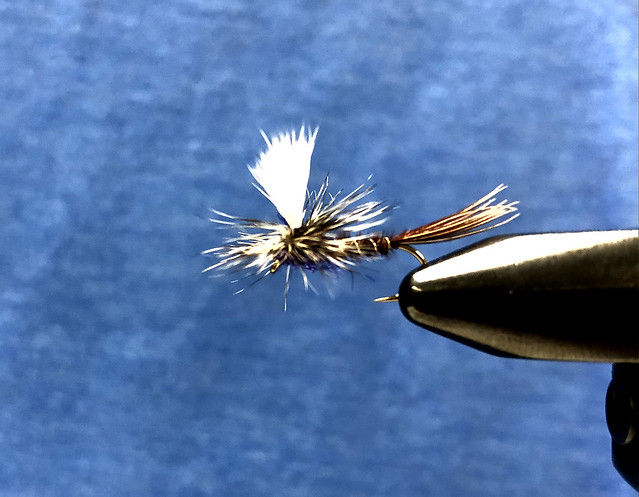
Purple Para Rooster– An all around mayfly imitator the Purple Rooster Parachute does a nice job of imitating Mahogany Duns, Lesser Drakes and others. I really like this fly this time of year but will pull it back out during March Brown time as well.
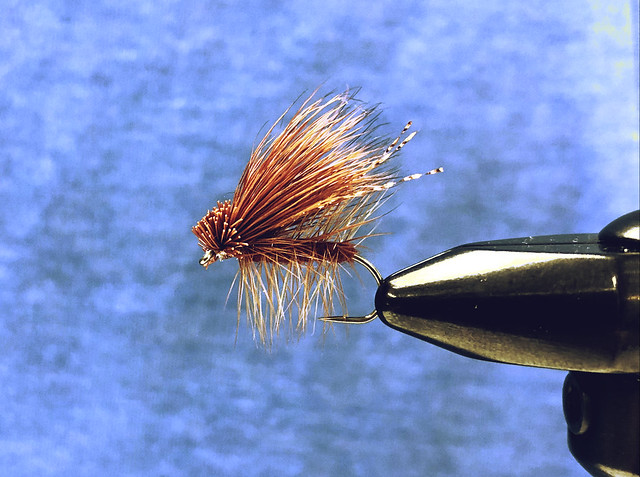
Rusty October Caddis- The high floating Rusty October Caddis imitates October Caddis and other caddis species you are likely to see late in the day on our local waters.

Orange Foam Elk Hair Caddis– The classic Elk Hair Caddis with an Orange body has worked for the last 30 years and it still does.
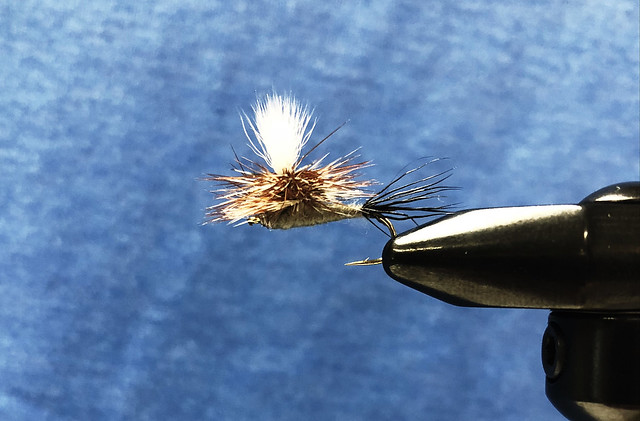
Parachute Adams– Key sizes are 10-16, simply a must have this time of year. Grey Drakes, blue winged olives and the mayflies are covered with this all timer.
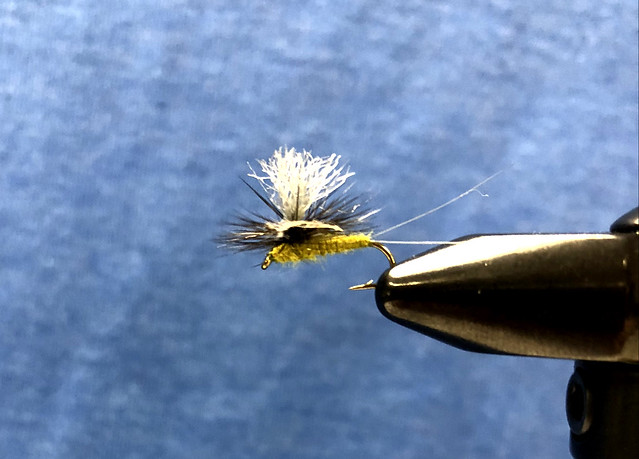
Bear’s Hi Vis Blue Winged Olive- An excellent Blue Winged Olive imitation. Look for more BWO’s to hatch daily as we progress into fall. Overcast days in particular this is a consistent emergence after about 2pm.
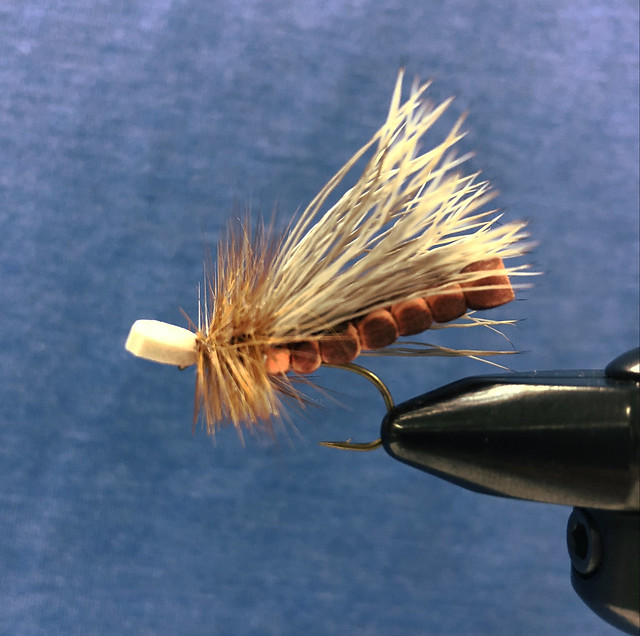
Morrish’s Foam October Caddis– More and more October Caddis are flopping around late afternoon. This hatch just gets more intense and we get deeper into October.
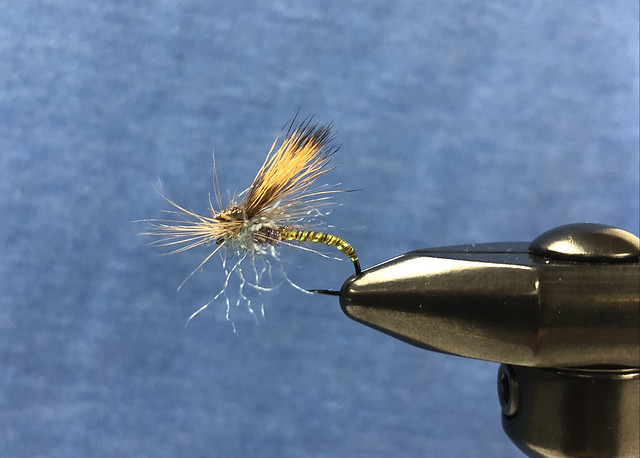
Mercer’s Missing Link– We like the Green Drake version of the Missing link for some of the larger mayflies of fall locally. It fishes particularly well in flat water situations.

Fall Sulphur Parachute- Really not sure why this one is so good, maybe it’s the perfect mix of fall color and size tied like a parachute Adams. Last year this shop custom fly was one of our best all around dries in October.
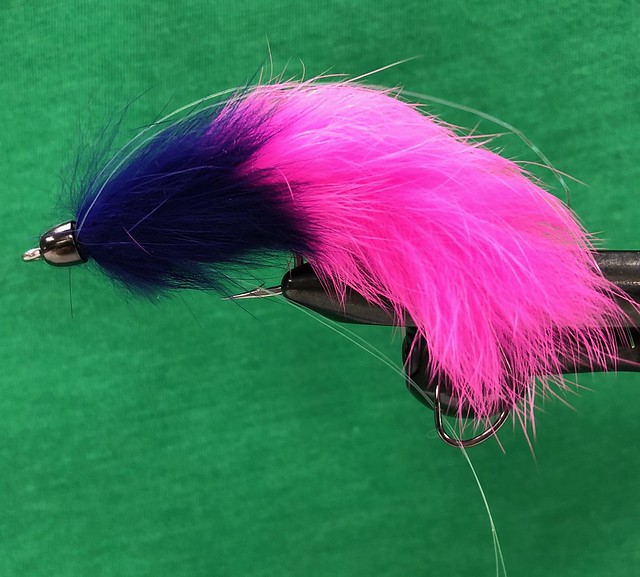
Moal Leech – The pink and purple “mother of all leeches” is an excellent producer for steelhead in the Willamette. Sink tip slow swing, fish on!
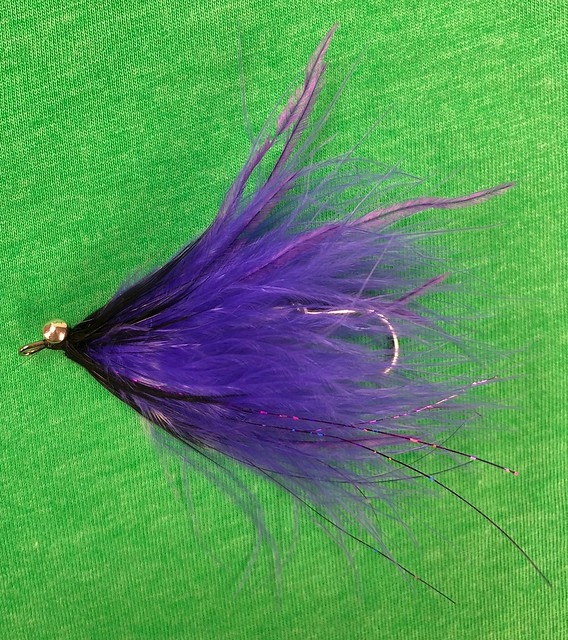
Reverse Marabou – This simple marabou articulated pattern fishes really well in shallow tail outs. We like with with a mid range sink tip clear or type 3.
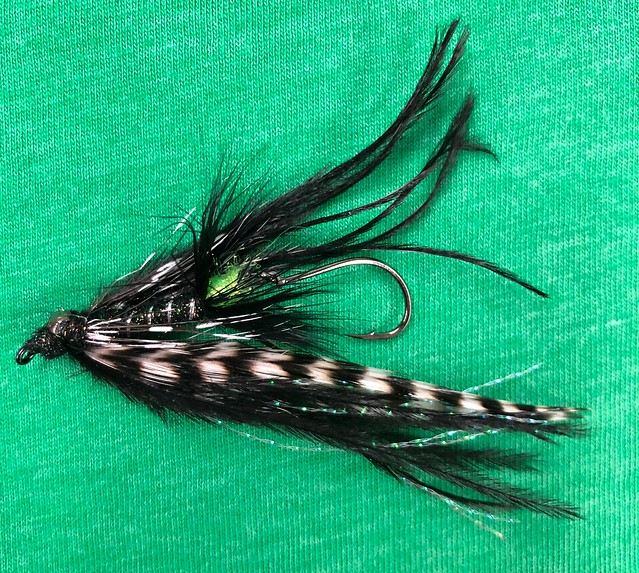
Morejohn’s Bantam – A mini intruder of sorts that fishes well on darker days. Easy to cast but still has a nice profile in the water.

Green Butt Silver Hilton – When you want to be a bit subtle out there… The water is still pretty low and sometimes a smaller fly is just the ticket. Aquaflies has tied this traditional pattern really nicely.

Explore. Enjoy. Conserve. Oregon’s Native Trout
The Last Cast: Native Trout-A-Thon is an outreach and education event hosted by Native Fish Society, Trout Unlimited, and Keep Em Wet Angling that encourages anglers to discover and share Oregon’s remarkable trout with their friends and neighbors, raise support for conservation, and promote responsible catch and release angling practices.
The Native Trout-A-Thon begins at dawn on Saturday, October 27th and wraps up one hour after sunset on Sunday, October 28th. That’s right, just 48-hours to discover Oregon’s native trout! This epic trout fishing road trip will test your skills, knowledge, and endurance as you crisscross the state catching as many different species of native trout to maximize your score and raise support for conserving Oregon’s native trout.
Before the angling weekend, participants will secure pledges from their neighbors, friends, and family to support reconnecting sea-run cutthroat trout with 13 miles pristine habitat on the Oregon Coast through the North Creek Campaign.
To participate anglers must register online, click the button below to get registered. All participants will receive Native Trout-A-Thon welcome and rule packets, a Trout-A-Thon scorecard, pledge form, stickers, a 2018 Last Cast: Native Trout-A-Thon t-shirt, and be eligible for prizes including fishing trips, Simms G3 waders, a Yeti cooler and swag, and cases of delicious craft beer.
To learn more and get registered, click HERE!


Do you fish the Middle Fork of the Willamette? Are you curious about conservation activities occurring In the Middle Fork watershed? Join Trout Unlimited at our next meeting for a presentation from Sarah Dyrdahl of the Middle Fork Willamette watershed council.
Monday October 8, 6pm Claim 52 Kitchen 1203 Willamette st.
All are welcome