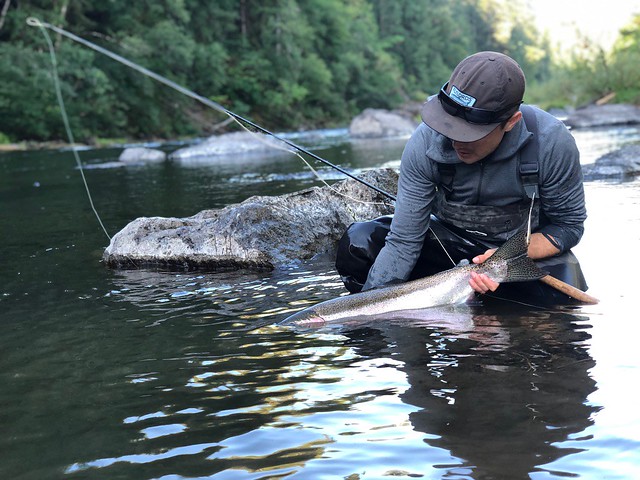
A Letter to My Fellow Anglers: Don’t hang it up. Stand Up.

bWFpbi9pbWcvcGFnZXMvNjRkOWU4M2UtODQ0MC00ZWZlLWFiYTAtMjc2N2ExOTAyODQ1XzFfMTA1X2MtMTYzOTA5Mjg3NS5qcGVn

NFS Southern Oregon Regional Manager Kirk Blaine’s open letter to fellow anglers below articulates the need for a cautious approach to management of Oregon’s South Coast Rivers. We have one more chance to let ODFW know how we feel about protecting wild fish, I urge you to get involved in the decision by commenting, attending the virtual meeting or signing the NFS Action Alert.

Dear Fellow Angler,

As anglers, it’s difficult to fully understand the impacts caused while sport fishing in the modern world. Compared to the ’80s, when fishing gear was limited and there weren’t as many people out on the water, today’s anglers are more successful at connecting and catching a higher percentage of fish in a population.

This increased efficiency raises the question: what are the impacts we anglers cause to the fishery and how is that affecting the future of our Salmon and Steelhead populations in the Pacific Northwest?

This question isn’t an easy one to answer, but there is an overwhelming amount of scientific evidence showing anglers cause impact. We anglers are damn good at catching fish. Angling causes mortality at differing levels depending on the methods and tackle being used to catch fish and whether we kill/harvest the fish or not. It’s why data about the methods we use to angle, how often we angle, and how successful we are is necessary for fisheries managers to collect and utilize to ensure that the impacts we anglers do have can be sustained by a population.

With the issues of wild Steelhead harvest on Oregon’s Rogue and south coast rivers about to be decided, it’s critical that we anglers understand the impact of our interactions with these fish and what the state needs in order to ensure that we have sustainable, abundant populations of wild Steelhead in southwest Oregon for years to come.

Who’s Taking A Cut

Let’s start by discussing some of the different types of “take,” or mortality, in any population of fish. These include:

Direct harvest for recreational and commercial fisheries: When it comes to Steelhead in the Rogue and south coast region, there is no inland commercial fishing harvest but Steelhead do end up as bycatch (the term used when a species is unintentionally caught while fishing for another species or population) by salmon fishermen offshore. Across their native range, there are twelve rivers in the lower 48 states and Canada where recreational anglers can still legally harvest wild Steelhead. All twelve of these rivers are in Oregon, and nine of those rivers will be governed by the state’s upcoming decisions on the Rogue & South Coast Plan.

Collection of fish for broodstock in hatcheries: ODFW collects wild Winter Steelhead broodstock in the Rogue and Chetco Rivers of southern Oregon in an attempt to create a “wilder” type of hatchery fish. But wild broodstock programs come with a multitude of impacts on wild fish populations beyond just removing wild fish from the rivers where they would otherwise naturally reproduce (spawn).

Predation: Sea lions, other marine mammals, and even other fish such as Pikeminnow! Pikeminnow are native to some waters in Oregon but are invasive in the Rogue River Basin. These non-native species put quite a damper on the populations of salmon and Steelhead juveniles that rear and migrate to the ocean.

Catch & release angling: This is a big one that often goes unrecognized by the public and fisheries managers. As anglers, we try our best to care for these fish. The reality is, any encounter causes some degree of impact that can reduce the chance that a fish successfully spawns. It is important that we account for this impact when seeking to manage populations in a sustainable way. When populations are trending towards trouble, it can be necessary to limit or curtail catch and release angling as the impacts can become too great for a diminished population to sustain.

These four areas of mortality are not the only mortality occurring in these watersheds, but they are the four that all fisheries managers must take into consideration when attempting to manage any population sustainably. Without acknowledging each and every one, there will be critical gaps in data collection that will affect the long-term health of a population.

What’s Happening in Southwest Oregon

Now that we have discussed numerous types of “take,” or mortality, occurring in any fishery, I want to compare these harmful effects to the management in the Rogue and south coast waters of southern Oregon with a specific understanding of how fisheries managers are evaluating harvest and catch and release mortality. These numbers are used to evaluate a harvest rate, or the number of wild Winter Steelhead that are removed from the spawning population by anglers.

In the waters of southern Oregon, wild winter Steelhead harvest is allowed in nine different rivers. These watersheds can be separated into two different areas, the Rogue Basin and streams along the south coast (rivers south of the Rogue down to the California border).

Fisheries managers do not have accurate adult population estimates for wild Winter Steelhead in any of the nine streams where harvest of wild Steelhead will continue if the proposed management plan is adopted. Along with a lack of adult fish data, fisheries managers don’t have accurate data for how many wild Winter Steelhead are caught and released or killed/harvested each year. Harvest cards are available, but there is no requirement that anglers return them. As you can imagine, the Department of Fish and Wildlife doesn’t receive many harvest cards back each year, leaving fisheries managers guessing about how many fish were harvested.

Managing the Unknown

This lack of data is a huge red flag in the department’s proposed plan. If we don’t have an accurate population estimate, and we don’t have an accurate harvest or kill number, we cannot calculate a harvest rate. It is a simple math equation; if you don’t have two of the three variables, you can’t solve the equation. In this case we don’t have any of the three variables necessary to draw a conclusion that can guide management towards the goal of sustaining populations.

untitled-drawing-(2)

And ODFW fisheries managers fail to acknowledge any other mortality besides harvest or direct kill of wild Winter Steelhead in the watersheds of the Rogue and south coast. They have no current data supporting what is currently being harvested or killed. Why would a managing agency take so much risk without knowing what is currently happening?

Managing Without All the Puzzle Pieces

In addition, ODFW has not factored catch and release mortality into total population mortality. This is one thing many anglers fail to consider when angling for wild Winter Steelhead or other species. Every other state besides Oregon observes a catch and release mortality rate for wild Steelhead fisheries. These rates have been evaluated based on the best available science and the allowed methods for fishing in the specific watershed. For example, if you can use bait (shown to cause more impactful hooking injury) mortality rates are higher. To make things simple, I will share an example from Washington and how they manage catch and release mortality in their fisheries.

Washington utilizes an10% catch and release mortality rate for managing wild Steelhead fisheries. This is supported by the best available science and the regulations allowed in the fisheries. They then use population estimates coupled with creel surveys (surveys taken on boat ramps and in popular fishing areas, asking folks simple questions such as: How many fish did you catch? Wild fish or hatchery fish? Did you keep any? etc.). Utilizing these data points, WDFW can estimate how many fish were caught and released by anglers, how many hatchery fish were harvested (wild harvest is no longer allowed in Washington), and how many fish escaped the fishery (did not get caught or harvested or perished before spawning). Based on the information gathered in the creel surveys, they can take the number of fish caught and assume that 10% of those fish will die before spawning, giving them a catch and release mortality (CnR Mortality). Here is an example:

untitled-drawing-(3)

This example shows that without harvesting/killing one wild Winter Steelhead in the sport fishery, anglers are likely killing 10% of the total run. That means approximately 10% of the population is dying before reproducing. In fact, in the Olympic Peninsula, creel surveys show that 140% of the run is being caught in some watersheds. This shows that every fish is being caught one time and some are being caught twice! Damn, we’re good at catching fish!

This is not to say we recreational anglers shouldn’t be fishing. It does mean we must be aware and cautious of our impact on whatever populations we encounter. When that impact becomes too great for a population to sustain, as it did in many rivers this past year including the Umpqua, just one basin north of the Rogue River, we must step back. At the same time, some rivers such as the Chetco and the Rogue are receiving more and more angling pressure every year. We are likely catching close to 100% of the fish that are returning to these rivers. Using Washington’s management mortality rate means that catch and release angling is taking 10% of the fish returning to spawn. Add the 15% harvest cap for wild Steelhead angler harvest and we are mining out 25% of the run every year! Converting to just catch and release angling will still have an impact. 10 fish out of every 100 will be killed in the Rogue River catch and release fishery alone. Compare this to the 25 out of every 100 fish that will be removed from the population if wild Steelhead harvest continues as proposed under the plan (again, hatchery Steelhead harvest will still be allowed and this rate doesn’t account for mortality from other sources including broodstock collection, predation, and bycatch impacts in commercial fisheries).

Join the Groundswell

If there is one thing I ask you to take from this article, it’s that anglers do have an impact on a fishery. No; the answer isn’t to hang it up and walk away. I am an angler myself and lost access to my homewaters of the North Umpqua this summer where the river saw the lowest population of Summer Steelhead ever recorded. It is heartbreaking. It’s in times like this when it would be easier to just turn it in and turn our attention elsewhere. But this is the moment that we, as anglers, need to put our passion for these fish into becoming their greatest advocates, both on and off the water.

The answer is to help folks understand anglers and managers must use caution when managing with so much uncertainty in order to conserve our fisheries. A step in the right direction for the Rogue and south coast would be to eliminate wild Steelhead harvest (kill/harvest of hatchery fish would still be allowed) and proceed with catch and release regulations for wild fish until adequate harvest numbers, population estimates, and harvest rates are available. This will allow everyone to keep fishing while minimizing the impact of angling.

I encourage you to stand up and share your voice for wild Steelhead. We anglers are always looking for our next chance to go fishing, hit the water, and possibly encounter a wild fish. And now, it’s our chance to stand up and help protect that experience and thrill. It is our chance to give back to the fish we love so much.

On Thursday, December 16th, ODFW Commissioners will be taking public testimony on the Rogue South Coast Multi-Species Conservation Management Plan. This is the most important moment yet for us to show up as the overwhelming groundswell of anglers and non-anglers alike that want to see the state do the best thing for the future of these fish.

Here are the ways you can join the groundswell:

Testify: Show up virtually on December 16th and ask ODFW to adopt catch and release regulations for wild Winter Steelhead. Register at this link by Monday, December 13. Testimony is limited to two minutes. It doesn’t have to be fancy or full of factoids; just let your love for these fish guide you.

Submit written comments: If you are busy that day and cannot make the meeting, please send in written comments. They can be as simple or complex as you would like. Send those comments to the ODFW Commissioners at ODFW.Commission@odfw.oregon.gov.

Sign the Action Alert: And if you are really busy and only have 30 seconds, please consider following this link to the one-click Action Alert to help share your voice.

Working together we will ensure that southwest Oregon has abundant wild fish, free-flowing rivers, and thriving local communities. It is more critical now than ever that we let our voices be heard and continue to grow the true groundswell of public support reviving abundant wild fish!

If you have any questions or concerns please reach out to Native Fish Society Southern Oregon Regional Coordinator Kirk Blaine today at kirk@nativefishsociety.org. Kirk is more than happy to assist with crafting testimony or any advice that may be necessary to help lend your voice to wild native fish.

Posted in Coastal Steelhead Fishing, Oregon Conservation News, Oregon Winter Steelhead Fishing, Southern Oregon | Leave a comment

2022 Intro to Fly Fishing Classes

39621040112_10c16f66e1_z

No greater gift for a new angler or one who wishes to have a refresh on fly angling or casting than signing up for a Intro to Fly Fishing Class!

We have been introducing anglers to basic casting skills for almost 30 years. Inspired by the original casting classes held by Les Eichorn, Bob Guard, Lefty Krieg, Jeff Carr and Mel Krieger this 6 hour class will have interested anglers on their way to fly casting mastery. Basic tackle discussions, casting, knots, entomology and fly presentation will be covered. All tackle, textbook is included and we maintain a one instructor to 5 student ratio. (15 students max per class)

Four hours of the course will be on water casting. Cost is $65, all equipment is provided, sign up at the shop or call 541-342-7005 to sign up.

Class Schedule for 2022 : Classes on two dates are Friday evening (6-8PM) at the shop and Saturday at Alton Baker Park (9am-12:30pm).

2022 Schedule

March 18,19, or 25,26   Due to popular demand two classes this month!

April 15,16 or ,22,23      Due to popular demand two classes this month!

May 13,14

June 17,18

July 15,16

August 19,20

September 23,24

October 28,29

Classes will be held per latest COVID guidelines set by Caddis Fly Shop owners.

Posted in Classes and Instruction, Oregon fly fishing links | 4 Comments

McKenzie River Still Fishing Well in December

IMG_2460

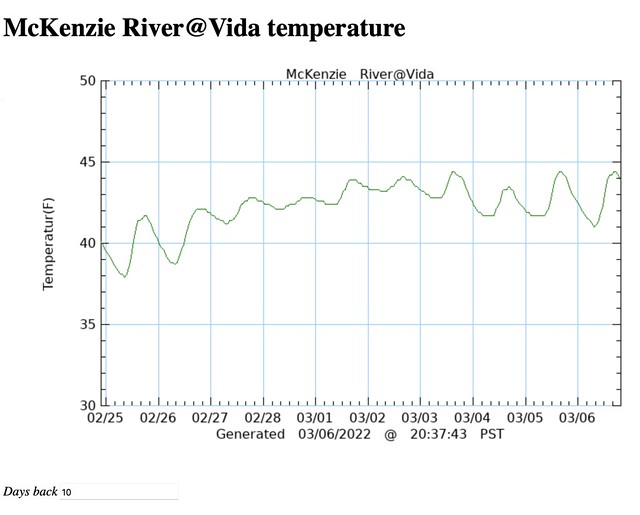
The McKenzie has been holding steady with water levels down near summer flows. Nymphing tactics have been producing some really good fishing. Get out there before the next rains bump the river up again.

Best Patterns including the following:

Hot Spot Girdle Bug
Mega Prince
Jigged Perdigon Patterns
Jigged Hustler
Split Case BWO

Posted in Fishing Reports, Lower Willamette, McKenzie River | Leave a comment

One Last Chance to Protect Wild Steelhead

Screen Shot 2021-11-21 at 7.01.35 AM

From Native Fish Society

Next week, ODFW Commissioners will be making a monumental decision on the future of wild winter steelhead regulations in southern Oregon. Commissioners will decide to either adopt fishing regulations that will require the catch and release of all wild winter steelhead. or allow the continued kill of these fish for the foreseeable future.

We need your help. Even if you have commented, testified, and shared your voice earlier this year, we ask that you do so again one final time. It is critical that we all stand up and speak out for the catch and release regulations that are necessary to sustainably manage steelhead populations in the Rogue and south coast rivers. Here are four ways you can help that will ensure ODFW Commissioners know you support catch and release regulations for wild winter steelhead in southern Oregon!

Testify virtually to the ODFW commission on December 16th. We need as many advocates at this meeting raising their voices in support of catch and release regulations as possible! It will only take a few minutes out of your day, but will have a lasting impact on our wild steelhead.

In addition to testifying, or if you cannot make it to verbally testify, you can send a personal message asking for catch and release regulations for wild winter steelhead in the Rogue South Coast Conservation Management Plan. Send this email to commissioners at the following address: ODFW.Commission@odfw.oregon.gov

If you are short on time, feel free to follow this link to the Action Alert posted on our website. This takes less than 30 seconds, and the more people we reach, the better!

The last thing you can do is spread the word! Ask two or three people to join you to testify, send in comments, or both! The more people we have, the better. It’s going to take a true groundswell to help commissioners make the right decision.
Wild Steelhead of southern Oregon need your help. These fish are struggling throughout their native range. We as advocates must step up and encourage fisheries managers to use a precautionary approach to best assure that we have abundant, wild steelhead returning to southern Oregon’s rivers for decades to come.

If you have any questions or concerns, please contact me today!

For the Wild,
Kirk Blaine
Southern Oregon Regional Coordinator

Posted in Coastal Steelhead Fishing, Oregon Conservation News, Oregon Winter Steelhead Fishing, Southern Oregon | Leave a comment

Discounted Saltwater Trip to Cuba – One Spot Available

IMG_0525

Our pal Jon Covich of Cuba Fishing Outfitters has a sweet deal that he is willing to discount even further.

We have just 1 spot open for this trip. The price is very reasonable at $4470 per person. We may also add some days at the beginning or end of the trip for those guests interested in experiencing cultural aspects of Cuba, and understanding more about the Cuban way of life.

Dates: January 22-29, 2022

Price: $4470 pp double occupancy and skiff

Check out the details here: Cuba Trip

contact Jon to discuss the details and discount here: http://www.cubafishingoutfitters.com/contact

Posted in Fly Fishing Travel | Leave a comment

Mullet Man Fly Tying Video

Back again with Alex Swartz, Alex ties us up a fly that he calls the Mullet Man. Tied on the Gamakatsu B10S Stinger, this fly handles steelhead, bass, pike and more. Toss this simple tie and let us know what you think! Don’t be afraid to switch up the colors, too.

Materials are available at https://www.caddisflyshop.com/​

mullet-man

Four Eyed Fly Pattern
Hook: Gamakatsu B10S – 1/0
Thread: Lagartun X Strong – 150D in White
Tail: Select Medium Sized Bucktails – White
Body: Hareline Extra Select Craft Fur – White
Body: UV Polar Chenille – Regular in White
Head: EP Craft Fur Brush – Olive

Posted in Fly Tying, Fly Tying Materials and Supplies | Leave a comment

Tell ODOT to Remove Kellogg Dam

bWFpbi9pbWcvcGFnZXMva2VsbG9nZ2RhbS5qcGVn

From Native Fish Society

Now is the time to remove the aging and dangerous Kellogg Dam! The Oregon Department of Transportation will be receiving a windfall in the form of an extra $1.2 billion thanks to the Infrastructure Investment and Jobs Act (IIJA). ODOT is requesting public input for how those extra dollars are spent, so make your voice heard to help wild fish!

What: Oregon Transportation Commission will be hosting a zoom meeting to provide information about the IIJA and will be taking public input on how that money should be spent.

When: Next Tuesday, December 7 from 9:00 to 10:30 am

Where: Sign up to testify by emailing Chloe Craft (Chloe.CRAFT@odot.state.or.us) or submit written testimony here.

Background and Talking Points:

Kellogg Dam in Milwaukie has been identified as the #1 fish passage barrier in the state of Oregon that is owned by ODOT but hasn’t yet been removed because of the high cost.

Kellogg Dam predates statehood (built in 1858, it has served no purpose since the 1890s), but blocks passage to habitat vital for all salmon, steelhead, and lamprey.

Kellogg Creek is an important thermal refugia for anadromous fish migrating through the Willamette River. If Kellogg Dam is removed, migrating fish would once again be able to take advantage of the relatively cool water in Kellogg Creek when temperatures in the Willamette are too high.

Dam removal would allow for wetland restoration to take place, increasing habitat for numerous species, as well as increasing flood storage capacity.

The highway 99E bridge that rests on the dam is 89 years old and earthquake vulnerable.

The removal of Kellogg Dam would allow for bicycle and pedestrian passage under 99E, making it safer for Milwaukie residents to access the Willamette River, Milwaukie Bay Park/Trolley Trail, and MAX station.

For more information or help preparing your testimony, please contact Northern Oregon Regional Coordinator Liz Perkin (liz@nativefishsociety.org).

Posted in Lower Willamette, Middle Fork Willamette River fishing, Oregon Conservation News | Leave a comment

Bird of Prey October Caddis Fly Tying Video

Jim Sens is back with us at Caddis Fly Shop to tie up a deadly fall nymph pattern, the Bird of Prey October Caddis. We love it for a local waters, especially on the McKenzie but we know this fly works anywhere.

Give it a shot and let us know how it goes.

october

Bird of Prey October Caddis
Hook: Daiichi 1120 – 10
Bead: Tungsten – 1/8 in Black
Thread: 16/0 – Black
Ribbing: Flashabou
Ribbing: Ultra Wire – Brassi in Amber
Body: Ice Dub – UV Shrimp Pink
Throat: Ice Dub – UV Callibaetis
Hackle: Natural Hungarian Partridge Skins
Collar: Micro Fine Dry Fly – Mahogany Dun

Posted in Fly Tying, Fly Tying Materials and Supplies | Leave a comment

Fly Fishing Apparel – Fall & Winter – Great Holiday Gifts!

Lots of new apparel here at Caddis Fly! Great pieces for fall and winter street wear, and for your colder weather fishing pursuits. Also have lots of options for those in warmer regions or those traveling to warmer regions.

Give us a call, shop on the website or visit us at the shop in Eugene.

Some of our favorites:
Howler Brothers Crosscut Deluxe Long Sleeve Shirt
Howler Harker’s Flannel
Howler Brothers Shoalwater Tech Pants
Patagonia River Salt Wading Jacket
Rep Your Water Squatch and Release Hoody
Tight Loops Squatch Eco Hoody
Powder Town Beanie

Posted in Fly Fishing Gear Review | Leave a comment

Tungsten Silver Bead Red Zebra Midge Fly Pattern

In this video, Greg ties the Zebra Midge, an easy fly pattern that catches big brown and rainbow trout in lakes, rivers, and streams.

A beginning fly pattern that could be tied in many variations of sizes, colors, with a bead or without. Beginners should focus on touching wraps and maintaining a uniform thread body and taper.

Materials are available at https://www.caddisflyshop.com/​

Screen Shot 2021-10-07 at 11.04.54 AM

Tungsten SB Red Zebra Midge Fly Pattern
Hook: Daiichi 1120 Size 16-22
Bead:Tungsten Silver 1/16″
Thread: Uni Red 8/0
Wire: UW Silver Small
Zap A Gap

Posted in Fly Tying, Fly Tying Materials and Supplies | Leave a comment

Montana Intruder Fly Tying Video

Eugene local, Jim Sens, teaches us how he ties the Montana Intruder. There’s no limit to the color combinations you can come up with this fly but Jim finds that this produces fish and that it does so well.

We like this as a trout spey fly but if you happen to get into a steelhead with this one, don’t worry – it’s built to handle that, too.

MT-blog

Montana Intruder Fly Pattern
Hook: AquaTalon Swing Hook – 4
Hook Wire: Color – Orange/Copper
Shank: 27mm
Eyes: Small – Yellow w/ White & Black”
Thread: Veevus 10/0 – Brown
Flash: Flashabou – 6933
Head: Hareline Ice Dub – Olive Brown
Butt: Senyo’s Laser Dub – Sculpin Olive
Topping: Hareline Ice Dub – Olive Brown
Throat: Hareline Senyo;s Dub – Olive

Posted in Fly Tying, Fly Tying Materials and Supplies | Leave a comment

Xingu River Lodge Report – November 2021

IMG_2204

James Cameron’s film Avatar is said to have been inspired by the Xingu River Basin. My family and I were lucky enough to visit Untamed Angling’s Xingu River Lodge and it’s easy to understand the inspiration Cameron felt. This incredible river basin lies in the Southern Amazon Jungle and unlike many rivers that eventually flow into the Amazon the Xingu remains clear when the rainy season approaches. As we boated up the river from a small airstrip near one of the Kayapo Native communities it was immediately evident we were in a volcanic region. Unlike the sediment rich bottom of most Amazon Basin rivers the Xingu is rocky, in some ways reminded me of a mini Williamson River in Southern Oregon. Shallow rocky riffles gave way to massive pools, the river would widen again thinning out with rapids, islands and jagged rocky features. In the dry season August-September the river is low, warm and clear. Peacock Bass, Matrixa, Pacu, Piranha, Bicuda and Payara or Vampire Fish inhabit the runs, riffles and pools of the Xingu.

IMG_1958

IMG_2227

IMG_1733

We arrived to a rising river and moderate air temperatures. November can reach 40 degrees Celsius but we were lucky to be in the mid 20s Celsius throughout our week. Afternoon rains brought the humidity way up and the biting insects were in full force. During the dryer months insects are not as prevalent but this week we needed to cover up and lather on the repellent.

IMG_6985

IMG_2155

The fishing day started early with 6:30 breakfast and departure to fishing between 7-7:30am, the focus was on Payara (Vampire Fish). Nobody in our group had ever caught a Vampire and we were excited despite the lodge manager Marcos setting the expectations that could only be described as steelhead like numbers 1-2 fish per session was going to be considered really good. By 8:30 we wondered what Marcos was talking about, fishing was incredible! Numerous opportunities allowed us comprehend and execute the powerful strip set required. Vampires are super strong and once hooked they try to rip the rod out of your hand. We had rolling and feeding fish in pools all week and fishing was simply phenomenal, we were very very lucky to happen on this incredible week.

IMG_2059

IMG_2188

IMG_1846

Untamed Angling once again were superb and professional operators. We were met in Manaus and guided through a quick covid test, whisked to a nice hotel and informed of the scheduled flight to the jungle the following morning. All schedules were followed exactly as planned, staff was super helpful and responsive to any request. Guides were awesome and we loved the cooperative approach with the local Kayapo Natives. Untamed, FUNAI, and NGO’s are working with the Kayapo to protect native lands, enhance ecological tourism, document Kayapo history, culture and more. Kayapo natives own and operate the boats we fished from. The Kayapo are enthusiastic and skilled in navigating the river, and positioning two anglers to chuck heavy sinking lines and 4/0 streamers into deep pools where the Payara live. It was fun to have four languages going in the boat, Portuguese Brazil’s tongue, Kayapo, Spanish (some of the guides at the lodge) and English.

IMG_8258

IMG_2054

In dry conditions more opportunities for Peacock Bass, Matrinxa, Pacu, Bicuda and Piranha exist. During our stay we spent some time fishing for these other species but the fishing was so good for Vampires we didn’t do as much as we could have. When we did, we got a sense for the “Jungle Trout Fishing” available at Xingu. It’s a blast to cast a foam trout fly like a Fat Albert or Chubby at the bank for fish that are looking for berries, seeds and nuts falling from the trees. Small clousers were great as well. When afternoon clouds and rain blew in one afternoon we got a sense for how many of the other species are available. We got to see Pacu rising like a trout chomping on leaves and eating seeds being blow into the water.

IMG_2031

IMG_1974

IMG_2121

IMG_2038

IMG_1942

Overall this trip was absolutely amazing. I can’t recommend it enough. Xingu has only been open for a couple of seasons and guides, anglers and operators are still learning about this fishery. The 2022 season is likely to be extended in order to capitalize on how productive the rainy season appears to be.

I have dates for 2022 season, feel free to contact if your are interested in going to Xingu. Caddisflyshop@gmail.com.

AAB3D8E5-80B5-4895-B7B3-C6E7CACE5A74

GEAR NOTES:

Payara have super tough mouths to go along with those wicked teeth. You need large double hooked flies for best results. I got some advice from Untamed Angling’s fly-tying guru Allan and guidance was perfect. We tied double hooked synthetic streamers with and without lead eyes using 4/0 Ahrex SA270 Bluewater Hooks as the first hook and Ahrex PR383 Barbless Predator Trailer Hooks as the trailer. I used 40lbs SA predator wire and shrink tubing to protect the connection. Our flies worked perfectly and I can’t say enough about the strength of the Ahrex hooks, they were absolutely perfect retaining their points, sharpness and strength fish after fish.

The Scott Sector saltwater rod was again the favored stick casting SA Custom Jungle Sinking Lines with ease and fighting fish with power from hook set to release. My G Loomis rep was kind enough to let us use 7 and 8wt NRX+ Swimfly Rods and these were great casting big streamers and poppers. The Swimfly series is light and has plenty of fish fighting power for the jungle. Another great performer and a rod that I really feel like was a super fish fighter was the Echo Prime in a 10wt. When a Payara bolted under the boat and the rod went full doubled over the prime was solid and gave way the least of all of our rods. Ideal rods ended up being 9wt’s but 8s and 10s came in handy as well.

Best lines and must bring lines are the SA Customer Jungle Sinking line and the SA floating Jungle taper.
Leaders were built using 60 fluoro and 40lbs SA Predator wire.

Reels with smooth strong drag are important but fish rarely ran to deep into the backing. You needed to set the hook with power and stay on the fish with strength throughout the fight.

CD

Posted in Fishing Reports, Fly Fishing Travel | Leave a comment

Protect Wild Steelhead on the South Coast

Screen Shot 2021-11-21 at 7.01.35 AM

From Native Fish Society

In less than a month, the Oregon Fish and Wildlife Commission will discuss the Rogue-South Coast Multi-Species Conservation and Management Plan for the final time. It is our sincere hope that the Commission takes a precautionary approach to steelhead management in southern Oregon—an approach that would include accurate monitoring, clear management triggers and corresponding actions, responsible hatchery management practices that reflect the best available science, and catch and release angling until monitoring is acceptable. Ultimately, we at Native Fish Society want a plan that adequately protects the area’s wild, native fish, and we have one last chance to speak up. The Commission is offering one more opportunity for public comment on December 16, and will make a decision on the RSP the next day. Add your name to the NFS Action Alert telling ODFW that releasing wild steelhead is the way forward in southern Oregon. Even if you have already submitted comments, please do so again. Let’s make our voices heard, and let’s make our voices count!

Add your voice here: https://nativefishsociety.org/action-alerts/release-wild-steelhead-in-southern-oregon

Posted in Coastal Steelhead Fishing, Oregon Conservation News, Oregon fly fishing links, Oregon Winter Steelhead Fishing | Leave a comment

Jim Sens Blow Torch Fly Tying Video

Jim Sens sits down in the shop to show us his variation of the blow torch. Once you tie this one up and hit the water, plan to catch some fish. Especially if you’re able to fish the McKenzie right outside of Eugene, Oregon.

Once you get comfortable tying this one, don’t be afraid to mix and match a variety of colors – we’ve got what you need to curb your curiosity.

blow-torch

Blow Torch Fly Pattern
Hook: Gamakatsu J20 Jig – 14
Bead: Hareline Slotted Tungsten – 1/8 in Orange
Thread: 70D – Orange
Tail: Glo Brite Floss – Fl. Orange
Ribbing: Ultra Wire – Amber
Body: Senyo’s Fusion Dub – Rusty Nail
Hackle: Natural Hungarian Partridge Skins
Loctite Brush-On Super Glue”

Posted in Fly Tying, Fly Tying Materials and Supplies | Leave a comment

Holiday Gift Guide

It’s that time of the year already and Caddis Fly has got you covered. Check out the video above and the list below for some ideas on gifts for the fly angler in your life!

Our Top Fly Fishing Gifts for this season:
Patagonia Black Hole Travel Rod Roll
pata-rod-roll

Abel Nippers
Hatch Nipper 3
hatch-abel

Scott Centric
Winston Air 2
scott-winston

Hareline Hackle, Hook, & Bead Gauge
hareline-gauge

Scientific Anglers Regulator Spool Line Winder
SA-spool

Loon Core Fly Tying Kit
loon-kit

Hareline Ultimate Long Neck LED Tying Light
Hareline-light

Patagonia Stealth Wader Work Station
pata-wader-station

Fishpond Eddy River Hat
fish-pond-hat

Patagonia Disperser Roll Top Pack 40L
pata-roll-top

Posted in Fly Fishing Gear Review | Leave a comment