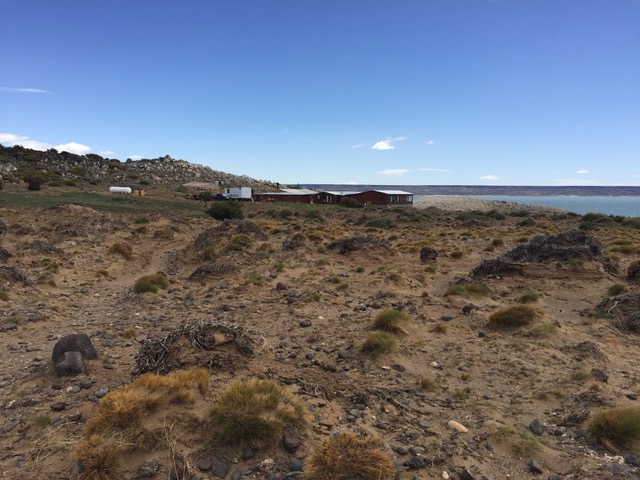
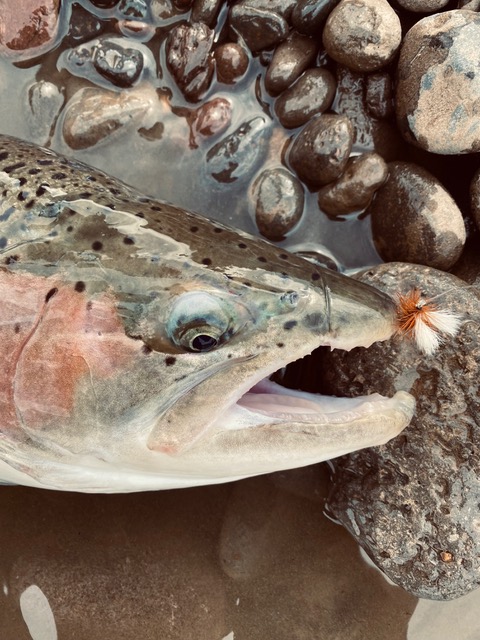
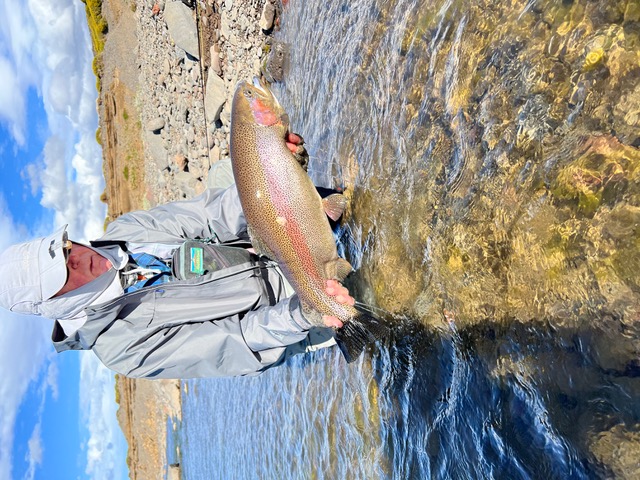
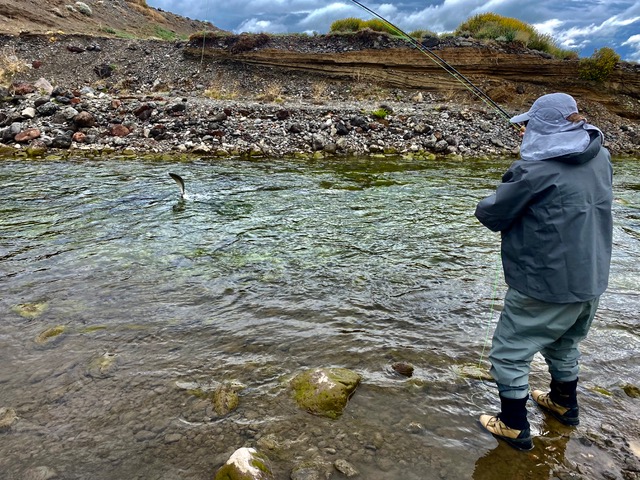
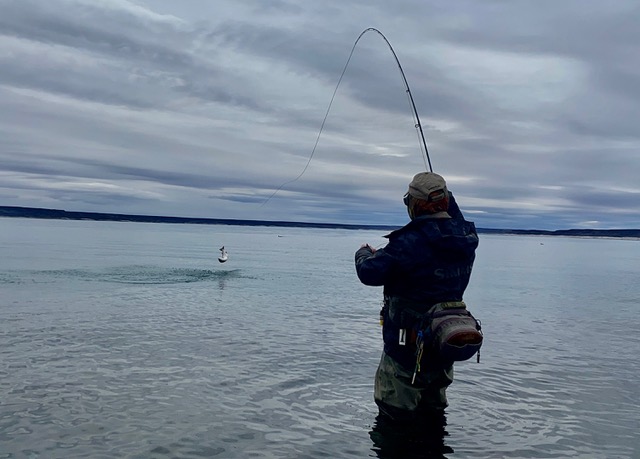
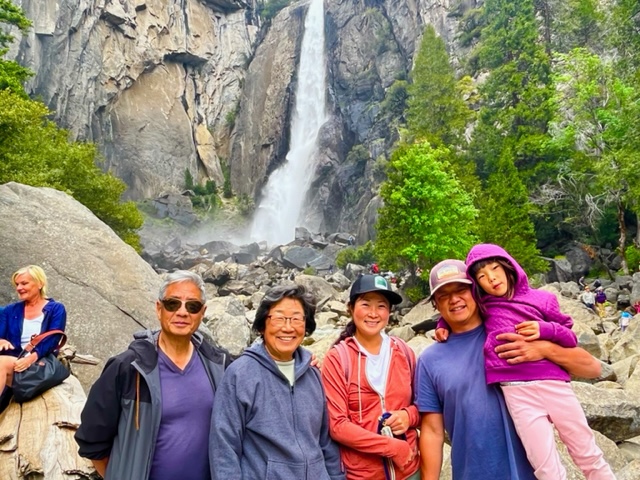
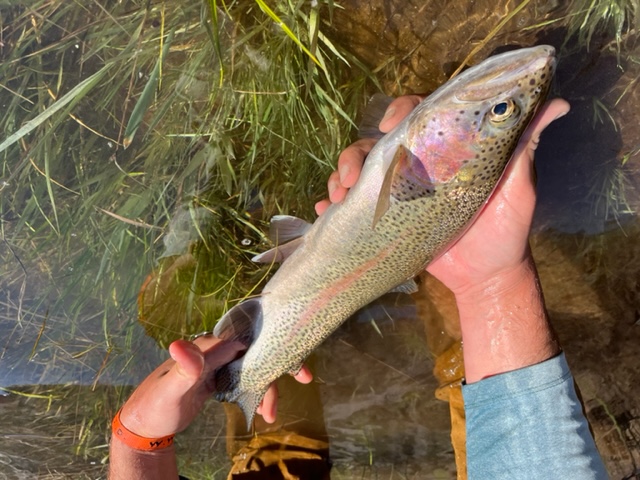
The family and I got dressed up for the frozen tundra and made the float from Hendricks to Hayden. The fishing was surprisingly good and the weather wasn’t too bad either. We encountered absolutely zero bugs but nymphing was solid. The other surprise was that we did not catch one whitefish. Water temp was 44-46 degrees Fahrenheit. Air temps varied, we had sun, plenty of wind and clouds. Best nymphs were Sili Leg Stone and “Sens 20 Incher”.
EWEB Commissioners voted to decommission the Leaburg Hydroelectric Project at their first meeting of the year on January 3.
All five Commissioners voted to approve Resolution 2302, which directs the General Manager to develop a Leaburg Hydroelectric Project Decommissioning Action Plan (LDAP). The LDAP will guide staff in creating milestones for reporting progress to the Board and to determine a framework for how the Board can continue to provide oversight on the decommissioning process.
Commissioners also unanimously approved a Record of Decision in support of the “Management Recommendation: Future Disposition of the Leaburg Hydroelectric Project.”
The Recommendation advocates:
permanently discontinuing electricity generation at the Leaburg Hydroelectric Project,
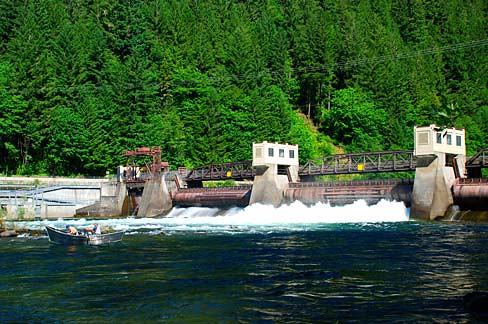
removing Leaburg Dam and restoring the McKenzie to a free-flowing river in the project area,
developing access to Leaburg Dam Road on the southern side of the river, preferably through Leashore Drive and the Goodpasture Bridge, if possible
repairing the Leaburg Canal for stream and stormwater conveyance (SWC), while preserving the future option to completely restore the site to pre-project conditions,
working with water rights holders to mitigate the effects of dewatering the Leaburg Canal, particularly the Leaburg and McKenzie fish hatcheries,
conducting a similar assessment of the Walterville Hydroelectric Project by the early 2030’s, and
identifying opportunities and requirements for Board review, guidance, and direction moving forward.
Later in the meeting, Commissioners voted to approve the development of the LDAP as an organizational goal for 2023. Staff will provide quarterly updates on the Plan’s development.
General Manager Frank Lawson emphasized that decommissioning the project is a regulatory-driven process requiring several years of studies and negotiations with settlement parties before decommissioning construction activities will begin. Generation Manager Lisa Krentz added that the proposed timeline of beginning construction by 2033 is hopeful and that, to her knowledge, decommissioning projects routinely take longer than anticipated.
Meanwhile, staff will continue working on near-term risk-reduction measures on the Leaburg Canal.
Commissioners requested continued public outreach on the decommissioning process.
“As much information as we can get to the public – when we know or have a better idea – is important to me as a Commissioner,” said EWEB Board Vice President John Barofsky.
Throughout the year, EWEB staff will continue to provide updates through the Leaburg Canal Updates Newsletter, as well as scheduling meetings with interested groups to explain the implications of decommissioning on electricity rates, recreation, water rights, fisheries, and other considerations, as discovered. Staff will also advise interested parties how to participate in the negotiations between EWEB and various interest groups to develop a settlement agreement.
Once a settlement agreement is reached, EWEB will petition the Federal Energy Regulatory Commission (FERC) for approval and begin designing and permitting to begin decommissioning the project.
Angling Trade magazine (of which I am also editor) recently conducted a poll of folks with a stake in the business of fly fishing, asking what they considered to be the greatest conservation issue of the day.
Answer number one… climate change. No surprise there, but that probably wouldn’t have been the case even several years ago.
What do you think number two was? Snake River dams? No… that came in third. “Other” came in fourth. Protecting the Everglades was next, and Pebble Mine rounded out the condensed field, though for the record, we should all know that fight isn’t done yet at all. I swear, I’ve been covering Pebble for at least 15 years, long before I ever joined TU, and that mine just keeps popping up like the bad guy at the end of a B-grade horror movie.
Alas… conservation concern number two, amongst those who make a living in some form or fashion through fly fishing, was “angling pressure.”
In other words, to be blunt, how badly are we pounding the fish? How sustainable is all that (or not)? And do we risk loving some of our rivers and flats to death?
I’ve seen rivers where the fishing isn’t what it was, and I know that wasn’t caused by fire, flood, or other natural disaster. I’ve seen that happen in the salt too. I’ve said that playing a “numbers” game is not sustainable… I’ve warned that catch-and-release is not a foolproof “get out of jail free” card. Some fish die, even fish caught and released, and if you’re only gunning for numbers, you’re depleting the resources, whether you admit it or not.
I know… I know… I know…
“How many?” has been the benchmark for measuring success since Isaak Walton or before. When I call my own mother and say, “I went fishing today!” I know the first thing she’s going to ask is, “how many did you catch?”
I also know this very simple truth: People absolutely love to be taught how to fish, and they absolutely hate to be told how to fish.
If I tell you to pump the brakes when you’re on your hard-earned fantasy escape to Montana, you’ll be mad at me. If I tell a guide to maybe spend a little more effort teaching people how to fish with various techniques (actually guiding… guiding to me is about teaching) rather than netting fish and taking photos, catching as many as possible because that’s the only way Mr. Sport is going to hand you a crisp Ben Franklin at the end of the day… well, they don’t want to hear that.
But the truth of the matter is that in some places—not all, but some, throughout the country—a race to experience “how many” is a conservation concern. Or it should be seen as such. Because we can plant all the trees, fix all the bad culverts, advocate to remove dams, and all that good stuff, and if all anglers do is show up with the notion that pounding the living snot out of as many fish as possible is how to define success, none of the good mojo matters.
So what’s it going to be?
At face value, if you don’t want to pressure fish, don’t go fishing! Buuuzzzzzz. Nope. That’s a non-starter. I, like millions of other anglers, love fishing. Been in my blood forever, and I’m not going to change. Fishing, done with a sense of ethics, is, in and of itself, supremely vital, and anglers have been hauling the mail on ALL conservation from rivers to the ocean for generations.
But maybe we do pump the brakes a little bit. How? I don’t think permits and limiting angling days are the best answers, but believe me, those options are on the table.
Instead, I’m hoping that more anglers, and guides in particular, will see a more sustainable “less is more” plan. Follow the lead of the hunting demographic. Heck, follow the lead of the steelhead and salmon crowd in the Pacific Northwest, who have learned the hard way that the numbers game is a dead-end street for anyone with a conscience who wants to share the resource with others and see it last for generations.
Triple-down on learning the vast, wonderful options, and tackling the many challenges fly fishing has to offer.
That’s so much more rewarding than winning some imaginary contest where you bag 50 fish in a day using some rudimentary technique that was conjured up, by its very nature, to afford any person with no angling skill whatsoever, to feel the thrill of catching a fish. Endeavor to transcend.
Different rivers have different tolerances. Same for the flats. If it’s on, and you’re on… go baby go. So yeah, sure, there can and should be bonanza days.
But it’s time we all started picking and choosing where and when that happens more carefully, and understand that we… you… me… every angler who steps into a river, is indeed a “conservation factor.”
That’s the elephant in the room, and it’s time for all of us to admit it’s there, and work together to figure things out.
No greater gift for a new angler or one who wishes to have a refresh on fly angling or casting than signing up for the Caddis Fly Shop Intro to Fly Fishing Class!
We have been introducing anglers to basic casting skills for almost 30 years. Inspired by the original casting classes held by Les Eichorn, Bob Guard, Lefty Krieg, Jeff Carr and Mel Krieger this 6-hour class will have interested anglers on their way to fly casting mastery. Basic tackle discussions, casting, knots, entomology and fly presentation will be covered.
All tackle and textbook are provided, we maintain a one instructor to 5 student ratios. (15 students max per class) Two hours class instruction on Friday evening and four hours Saturday casting on the water.
Cost is $65, all equipment is provided, sign up at the shop or call 541-342-7005 to sign up.
Class Schedule for 2023: The two-day classis on a Friday evening (6-8PM) at the shop and Saturday morning at Alton Baker Park (9am-12:00pm). Due to popular demand, we are holding two sessions in March, April and May! Sign up early and get your spot!
March 3,4, and 10,11
April 7,8 and 21,22
May 5,6 and 19,20
June 2,3
July 7,8
August 4,5
September 22,23
October 27,28
November 10,11
Alex Worth ties up a magnum bunny clouser. Alex tied this up in anticipation of some high, murky chinook salmon water. When we got to the water, we were instead met with gin-clear water that had dropped nearly two feet within two nights. Nonetheless, this magnum bunny clouser is heavy and perfect for a fish with a big appetite.
Our recent cold winter weather has trout focused on conserving energy. With a slower metabolism, fish will be especially picky and choose what meals are worth expounding energy for. The warmest part of the day will be most productive; there is no need to get to the river terribly early. Keeping this in mind and using it to educate your approach in the winter can make for a productive day despite the cold temperatures and lethargic fish.
This time of year, there is less room for error regarding fly choice, and you must pinpoint where fish are holding as they are not willing to move far for a meal on cold days. Fish will be holding in softer water in the winter months, and other lies which require less energy to hold their position. These are places around large rocks, near the bottom, and close to other structures. Lately, fish have been concentrated towards the head and tailouts of pools where their meals will come directly to them. Direct your attention to the soft side of seams, and foam lines through more calm water.
Nymphing is by far the most productive lately, and is a smart place to start. Most of the insects in the rivers are size 14 and smaller other than the older, more mature stonefly nymphs. Running a double nymph rig under an indicator is productive. Pairing a flashy pattern with a more natural one can be productive. Flashy attractor patterns work great; they will attract the fish’s attention, and are often eaten. If the fish doesn’t want to eat the attractor, there is a more natural nymph nearby that it will often take. Swinging soft hackles and small nymphs can be very effective if there is a hatch going on. It doesn’t hurt to let your nymphs swing towards the end of your drift before casting again. Mountain whitefish are spawning now as well, so nymphing a small, lighter colored egg pattern can be productive too.
Dry fly fishing can still be productive during the middle of the day, especially on warmer days. There will be a BWO hatch on most warm days; this takes place only in the afternoon once the water has warmed. You will see them riding downstream drying their wings when it’s warmer out. Fish are still taking October caddis flies too. A productive setup consists of tagging a small BWO imitation off of the back of a larger October caddis dry. This gives fish two choices, and the larger dry helps you keep track of your smaller one.
The lower Mckenzie river is a little bit high, but you can still find soft water to run your nymphs through. In areas with higher water, using larger nymphs works great; swinging and stripping a wooly bugger can work really well too. The upper Mckenzie river is moving slower, but it will be more challenging to get fish to eat at higher elevations where it gets colder. Water levels on the Middle Fork Willamette are fairly normal, and it is fishing well. Good luck out there and Happy Holidays!
In this video, Alex Worth ties a couple variations on a cone head wooly bugger that he uses on his local waters in the front range of Colorado, as well as some streams in south and central Wyoming. These two colors are extremely effective in the fall, but don’t stop there! Using the framework of this pattern and tying a few of your favorite colors is a great way to fill a small to mid-sized streamer box with confidence.
Alex demonstrates some solid tying techniques for the beginning and advance fly tyer.
Eugene Water & Electric Board (EWEB) General Manager Frank Lawson recommends the Board of Commissioners should vote to “permanently discontinue electricity generation at the Leaburg Hydroelectric Project.”
Lawson’s recommendation represents the collective expertise of EWEB staff and consultants, following two years of in-depth analyses and an extensive public outreach process.
Internal erosion and seismically vulnerable soils among portions of the Leaburg Canal forced EWEB to shut down the hydroelectric project in 2018 and evaluate whether heavy investments into repairing the canal would be cost-effective, or if it is time for EWEB to decommission the 90-year-old project and cease generation.
The Leaburg project has historically generated about 4% of Eugene’s electricity needs. If EWEB were to continue generating, staff calculated the project would produce electricity at least three times more expensive than other carbon-free options.
EWEB will petition the Bonneville Power Administration (BPA), which already provides EWEB with about 80% of its energy, to replace the energy that would be lost by decommissioning Leaburg. EWEB will ask BPA to provide that additional energy at the low-cost, Tier 1 rate reserved for public power utilities across the region.
In addition to economic considerations, Lawson points to the benefits that decommissioning Leaburg would yield to McKenzie River water quality and fisheries, as well as alignment with the utility’s core mission and customer-owner priorities to reduce costs.
“Permanently discontinuing electricity generation at the Leaburg Hydroelectric Project will result in the removal of the dam, restoring the McKenzie River to unobstructed flow and eliminating the human-made Leaburg Lake behind the dam,” Lawson writes. “EWEB’s mission does not directly prioritize creating or managing recreational facilities, transportation assets, or other non-electricity or drinking water activities,” Lawson states.
To maintain access to the south side of the river, Lawson recommends developing alternative access via Goodpasture Bridge.
All of the alternatives EWEB has studied would require capital investments tallying more than $150 million and would result in substantial rate increases over time. The recommended direction is the lowest-cost alternative. EWEB forecasts that this alternative might require the utility to raise electricity rates by 9-10% between 2023 and 2040.
“As a publicly owned utility, it’s our responsibility to make the best decision for our customer-owners while also being good stewards of the McKenzie River,” said Generation Manager Lisa Krentz. “This has been a difficult decision that includes significant trade-offs and impacts to our community. We look forward to continuing to work with our customers and upriver neighbors as we plan for the next steps of this project.”
Next steps:Lawson and staff will present their recommendation to Commissioners at today’s (Dec. 6) Board Meeting. All community members are invited to attend at the EWEB Roosevelt Operations Center, 4200 Roosevelt Blvd. at 5:45 p.m.
You can view the live stream at https://tinyurl.com/EWEB-Board-Meeting-12-06-22. The Board will determine a future date to vote on a Record of Decision to endorse or decline the proposal, which will set in motion an implementation and action plan towards decommissioning.If approved, EWEB anticipates several years of planning and settlement negotiations prior to construction commencing likely in the 2030s.Work on near-term risk reduction measure projects will start as soon as next year but the potential work to remove the dam and lake will likely not begin for 10 years or more.
Frequently Asked Questions about the Implications of Decommissioning Leaburg
1.What does this recommendation mean for the Leaburg Project?a. Dam Removal: This direction includes removing the Leaburg Dam, restoring the human-made Leaburg Lake to an unobstructed river, and building a road to connect properties that have used the dam as a bridge to the Goodpasture Bridge a few miles upstream.b. Canal Repairs: EWEB would reinforce the Leaburg Canal to act as a stormwater conveyance facility, taking the tributary creeks that flow into the canal back to the McKenzie River. EWEB would modify sections of the canal to reconnect certain creeks directly to the river.
2.Without the dam, will flooding be an issue? a. The Leaburg Dam is a run-of-the-river facility, meaning it doesn’t play a role in reducing the impact of floods. The dam serves to direct water into the canal, rather than impounding water to store it for hydropower generation. When in operation, the dam would divert only a maximum of 2,500 cubic feet per second (cfs) of water into the canal and the rest of the McKenzie River would flow through the dam’s rollgates. Because the Leaburg Project is run-of-the-river, its generation potential is directly influenced by water availability – a further risk consideration as climate change threatens to reduce summer flows and therefore would likely reduce the amount of energy the project could produce.
3.When will construction begin? a. If approved, we anticipate several years of planning and settlement negotiations prior to any construction related to decommissioning. Major decommissioning work is not anticipated to commence until the beginning of the 2030s, at the earliest. Work on near-term risk reduction measure projects will start as soon as next year (i.e. canal plugs for directing stormwater and an outfall gate at Johnson Creek), but the work to remove the dam and lake will likely not begin for 10 years or more.
4.How will this decision impact customer electricity rates?a. We estimate the costs to carry out this decision would require EWEB to raise electric rates by 9-10% between 2023 and 2040.
5.What about Irrigators and properties with water access? a. EWEB will work to mitigate water rights and water access issues where legally obligated and facilitate water access where possible, specifically for fish hatcheries.
6.How did EWEB communicate with the public about this decision?a. We’ve held a dozen meetings with the Eugene and upriver communities this year and have presented at community meetings like the Springfield Lions, the Santa Clara Neighborhood Association, and the Eugene Chamber of Commerce. We’ve also reached out to 23 other neighborhood associations, worked with local media outlets to cover the project, and communicated the project to all customers on the September bill message. We received over 420 responses to a public comment form that was open from June through October, and have compiled thousands of comments as part of assessing the social impacts of the Triple Bottom Line Assessment.
UV Badger Flexi Squishenille has a black badge core that gives it a look like no other chenille available on the market.
UV Ice dub is interlaced in the UV badger Flexi Squishenille fibers. The chenille is squashy and fish chew it. Sub UV Badger Flexi Squishenille for any pattern that calls for standard chenille and hang on. Available in three sizes, Small, Medium and Large.
We will once again be meeting at Ninkasi’s Better Living Room, 155 Blair Blvd on November 30 at 5:30 pm. McKenzie River Steward Dave Thomas will be on hand to catch us all up on what is happening with EWEB’s decision to either decommission or rebuild the Leaburg Dam and Canal. We will then discuss potential actions the Chapter might take to support the decommissioning and removal of the dam.
I hope to see you all there! As always, feel free to bring friends!
If you have any questions or concerns, please reach out to me,
Awesome mix of goods this season – filled with things you don’t need, things you want and things you should have. That about sums up your fly fishing arsenal, right?
One item we’re particularly excited about is the new Patagonia Swiftcurrent wading jacket. Perfect length for wading or wearing in the boot, with the addition of adjustable cuffs that you see in the whitewater paddling community. Not to mention, this actually keeps you dry.
The new rods from Echo, the Trout X and Boost Fresh, continue to exceed our expectations while maintaining an affordable option for a quality rod. Fishpond continues to impress with their line of backpacks – the Ridgeline and Firehole backpacks cover the board for simple day trips and long outings where you might prefer to carry more in.
Next up is the classic Renzetti Traveler Series vise, available in matte silver, black, red or blue. These things have stood the test of time while continuing to get more and more beautiful.
Below, we’ve linked the complete list of what we’re liking this season ranging from new, innovative tying tools to comfortable hoodies, hats and socks.