20 Fly Patterns you need in your box for Spring Angling Adventures

In no particular order other than style, here are 20 fly patterns to have/consider/create if you are fishing in Oregon over the next few weeks.

Go Deep! “Highish” “Coldish” water means it pays to get your flies down in the water column. The “Go Deep” trend is likely to last for a while.

Spring flies

McKee’s Girdle Bug – Excellent all around stonefly pattern that does the job getting to the bottom quickly.
Double Bead Peacock Nymph – Another dense nymph double beads get down, peacock catches fish.
Tungsten Trout Retriever – This stonefly pattern has been great this spring on the Middle Fork of the Willamette.
Lex’s Improved Golden Stone – Not as heavy as the previously mentioned patterns but very effective.

The following patterns work well deep but are also effective in the “mid water column” as well. They can even be swung and are deadly as they drift near the bottom and then rise towards the surface.

Spring flies

Possie Bugger – Hall of fame trout fly, you need several sizes in your box wherever you are.
Mega Prince – An absolute favorite in high water, as well as water with a bit of color.
Jigged 20 Incher – Deadly quick sinking pattern that works well all over the west.
Jigged Pheasant Tail – Like the 20 Incher this one gets down for it’s size and is very effective in clear water.
Montana Prince Nymph – An excellent small stonefly imitator this one can be fished off of a larger dry.

Moving towards the surface….. Soft hackles and emergers are deadly this time of year particularly on cloudy rainy days. A down and across swing method, or a short dropper off of a dry fly are effective tactics to fish the following patterns. Soft hackles are one of the oldest, easiest, and most effective fly patterns around!

Spring flies

Beadhead March Brown Emerger – The March Brown emergence has stalled a bit on the bright days of late but will most likely improve as the clouds develop.
Soft Hackle Hares Ear – One of the best all around soft hackle patterns.
Soft Hackle Peacock – Another classic emerger that works pre-hatch, during the hatch and when it’s so dark you can’t see your dry.

Dry flies for Trout

Spring flies

Parachute Adams – Caddis hatch, March Brown hatch, Blue Winged Olive hatch you name it the Parachute Adams is a must have.
Parachute Caddis – Numerous species of caddis will be emerging from now on, this pattern is a couple of sizes/colors will have you covered.
Carlson’s Copper Haze – A high vis March Brown imitator – good all around mayfly pattern.
Bear’s Hi-Vis Parachute Blue Winged Olive – When cooler temps bring on the smaller mayflies try this one.
Deer Hair Flying Ant – An excellent searching pattern or a match the hatch on a hot spring day.
Morrish’s May Day – High vis but sparse enough for flat water and picky fish. It’s a new favorite.
CDC Green McKenzie Caddis – Very effective on both the McKenzie and Willamette in late April-June.
Gould’s Half Down Golden Stone – One of our favorite Golden Stone adult patterns, and an excellent big dry to hold up dropper nymphs.

CD

Posted in Fishing Reports | Leave a comment

Three great Switch Rods – Nicholas’ Review of Echo, Scott, and Redington

Jay Nicholas Switch Rod Review a

Why consider a Switch Rod? With the winter steelhead season about wound down, I realize that I have responded to more people than ever who have enquired about the relative merits of Switch fly rods compared to full-on Spey rods when fishing Oregon coastal rivers. My answer applies to all waters, and here is basically how it goes.

I started out  (in the 60s and 70s) fishing nine foot single hand rods for steelhead and salmon, with the occasional ten footer in the mix, but the longer rods were often ungainly and awkward to handle all day long. At some point I discovered Spey rods, well after most everyone else here in the region. The rods I worked with in the 80s and 90s were generally longer (14-15 ft) and were beastly things to fish especially with my lacking skills. Time passed and the rods and line systems improved considerably, with manufacturers introducing shorter Spey rods that were lighter but still capable of making very long casts.

Sometime after 2000 (who’s got the date?) you could purchase very good 8 wt Spey rods at 12.5 to 13.5 ft that were light and great casting rods. The standard seemed to settle in with 6 wt rods being under 13 ft, 7 wt rods being 13 ft but under 14 ft, and 8 wt Spey rods pushing around the 13.5 – 14 ft mark.

Well, the longer Spey rods were (and still are) fine fishing tools when wading out in nice gravel studded runs with plenty of back casting room for forming D loops. When fishing in places with trees or rocks close behind, as is often the case on our coastal rivers, these longer rods are not nearly as much fun to maneuver.

Enter the Switch rods, offered at somewhere between the old 10 ft mark of the long single hander – and the 12 ft mark usually occupied by five or six wt Spey rods. The switch rods in the generic 11 ft class offer a superior option when fishing with tree branches overhead or close behind. They also make great beach, boat, and estuary fishing rods that may be fished overhead or with traditional Spry style casts.

I have watched many anglers struggle with longer Spey rods when fishing close quarters, and often loaned them my Switch rods to play with. The result is always the same – they want to add a Switch rod to their tool box – then the question becomes – which rod to recommend.

The high-end customer has several options that are all good, but not everyone has nine hundred bucks to drop on yet another fishin’ pole. So I have devoted considerable effort to exploring a range of mid-price options for the angler who is about to delve into the Switch rod world for the first time.

The Switch rods I’m reviewing in this post are three excellent rods that I’ve fished extensively this recent winter steelhead season. I’d venture that I’ve put in at least 36 hours fishing each of the three rods (18 days x 6 hours fishing per day, with equal time (2 hrs per rod each day).  I have fished other days with other Switch rods also, but none were as pleasing as these three (the term pleasing means that these three rods meshed well with my modest casting ability, considerable bad casting habits, and personal quirks). When people come to me and ask about purchasing a modestly priced switch rod, these three are the very first I’m recommending without reservation.

My attraction to these three rods is based on serious time on the river, not an hour or an afternoon. Day after day trudging up and down the river banks, falling in, stumbling, smacking my rod tip into overhanging brush (all three rods took a lot of punishment), wrapping flies around the rod when I placed my anchor poorly, and even a few steelhead hooked, lost, and released.

Mid Price – You will note that these three Switch rods are in what we refer to the mid-price range – meaning that there are rods that cost less and far more than these. The Sage ONE   is an excellent high end rod as are the Sage Method, Scott T3H Premium, and Burkheimer Switch rods. These Switch rods are all very good but I wanted to keep this review focused on mid- rather than high-end rods.

The three Switch rod I’ll discuss are 

Echo 3 Switch rod

Redington Chromer Switch rod

Scott L2H Switch rod

Price wise – the ECHO is just over five bills, the Scott is about halfway north of five bills, and the Redington a tad less expensive at roughly four hundred bucks.

Length – the ECHO is an even 11 ft while the Scott and Redington are both 11 ft 6 inches.

Action – All are what I consider fast action rods with soul, meaning that they are in a different class than rods like the Echo Dec Hogan II, a full action Burkheimer, or a modern glass rod. When I say these have soul, that means that I can feel them load as I’m casting. All three rods are fast but comfortably fast.

Distance casting ability – all are very versatile. I always start by making casts with only my sink tip out of the guides, and gradually lengthen the reach of my swing as I prospect a run. All three of these rods have allowed me to make very long casts and very short precise casts whether I’m wading out in an open run or hunkered under trees dodging tree branches.  As far as I’m concerned, there was never a situation when I was incapable of covering the water because of casting distance limitations – other than my own limitations. All of these rods will deliver your fly to the farthest reach of our coastal rivers with ease.

Line matches – I fished a six wt in the Chromer Swtch and a seven wt in the Scott and Echo rods. Both seven wts cast an Airflo Compact Switch Skagit at 450 gr, but I fished an OPST Commando 375 gr head on both rods more often than not. The 6 wt Chromer fished spectacularly with a 420 gr Compact switch or a 325 OPST Commando.

Sink Tips – I fished 10 ft RIO Mow tips in T-11 and T-14. I also fished AIRFLO Flo tips in T-10 and T-14. I found it uncomfortable when I tried the 12 ft T-14 tips with these lines and rods, but otherwise they were all up to the task of throwing T-10 to T-14.

Jay Nicholas Switch Rod Review b

Handle – The handles on these rods are different but similar, and I’ll have difficulty in this discussion, but here goes.

16.75″ – The Scott L2H is the shortest handle of the three rods and is very subtly different with the bulges at lower and upper top grip. For my hands and my casting style, I preferred this handle configuration over the other two handles.

17.25″– The Echo 3 Swich rod has the middle length handle and I would characterize this as the most generic shape of the three. A good handle overall.

17.75″ – The Redington Chromer handle is the longest of the three rods and is unique insofar as the rubber tip on top and bottom hand. While the handle overall is a little thinner than I’d prefer, I found that I liked the feel of the rubber tips so much that I was swayed towards this handle.

Hardware – All three rods have good hardware. We are all fickle about these small matters but I found myself most attracted to the Scott reel seat.

Warranty cost and service – All three manufacturers offer great warranty service. Echo  requires  a payment of 35$, Redington 40$, and Scott charges 50$ to pay for warranty service. This is usually a per section fee, but the manufacturer has some discretion in this matter.

If you ship a damaged rod to the factory from your home, you pay the cost of shipping the rod but the warranty fee covers the return of the rod to you. All warranties are original owner-based.

If you deliver a damaged rod to the Caddis Fly Shop, we will ship the rod for you at minimum cost and you will cover than the warranty fee charged by each respective company when the rod is returned. In our experience, warranty service is rarely needed for any of these three rods, and when it has been exercised we get rods back from Echo in less than a week, Redington is usually within two weeks, and Scott may be three or four weeks, depending on the rod and the season.

Rod Performance –  Excellent for all three rods. Remember, I fished other switch rods that were not so pleasing and chose these specifically because I can recommend each without reservation, meaning I can recommend them enthusiastically.

Making a decision – if you fish under trees and close to brush, the ECHO is going to make the cast a little easier because it is shorter. If you are price shopping the Redington  will save you on the sale. If you compare warranty cost and time of return the Echo will save you a tiny amount and get the rod back in your hands the fastest. Did any of these rods perform better than the others? No that I could detect.

Did I have a personal favorite? Yes, but it is based on largely insignificant personal quirks, and you’ll not see my call on what is essentially a photo finish here, because it is not the slightest bit objective.

You are likely to see me out on the river with any or all of these three rods on any given day. This speaks highly for the performance of all these rods.

DSC_1268

I’m sure that there are many very good 6 wt and 7 wt switch rods out there that I did not fish, but if you are even close to considering any of these three rods, I feel confident that you will be pleased fishing any of the three.

If you have further questions about these and other rods, lines, and matching lines to rods, I will be pleased to help puzzle through the morass if you contact me through the fly shop.

Jay Nicholas, April 2016


Posted in Fly Fishing Gear Review | 12 Comments

Springtime on the Lower Deschutes – April 2016

Before the hustle and bustle of the salmon fly hatch and long before the dog days of caddis fishing, there is fun trout angling to be had on the Lower Deschutes. Especially with the new 2016 regulations, you can now fish the water between Warm Springs and the reservation boundary, which you traditionally couldn’t fish between January 1-April 28.

Sunrise

Sunrise

A few friends and I did a quick overnight float between Trout Creek and Maupin and it was great to be back on the big river trout fishing. The river is certainly running higher this time of year than its summer flows, which is good. It was around 5300 CFS when we were down there. Rainy and cloudy weather on Thursday had me thinking we’d see mayflies hatching and fish looking up, but it was most certainly a nymph game on our float. We found a few fish rising, but we were pretty much nymphing the entire time. In a few weeks time, golden stoneflies and salmonflies will be covering the streamside bushes and fluttering around in massive numbers on the Deschutes. That’s why during the month leading up to the hatch, nymphing with stoneflies is the ticket. The rocks are covered in them right now as they begin to make their way to the banks to complete the final stage of their life cycle, and the trout love ‘em.

Redside

Redside

A two-stonefly nymph rig is all you need. We had good success with Jimmy Legs, Tungsten Trout Retrievers, Beldar’s Stonefly, and the Peacock Stone.  However, any of your favorite stonefly nymphs will work.  The redsides were in great shape and strong as ever. There are certainly steelhead and Chinook smolt around as well and you’ll get those too, as well as the occasional whitefish.

Overall, April is an awesome month down there and if you can find the time to make a trip before the salmon fly crowds hit the river, it can be awesome. The hills are green with the spring bloom and its quiet and peaceful. The fish are active and hungry, too. Remember to always handle the fish with care and use barbless hooks. They have a long summer of angling pressure ahead of them and how us anglers treat the fish and the river reflects on the quality of the area as a whole for everyone who wishes to enjoy it.

Have fun out there!
Andy

Posted in Central Oregon Fishing Report | Leave a comment

Demo Day Reminder – This Saturday at the Shop

April demo day

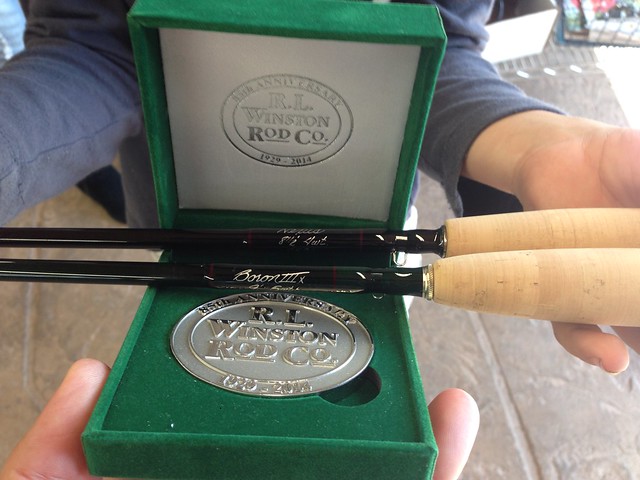
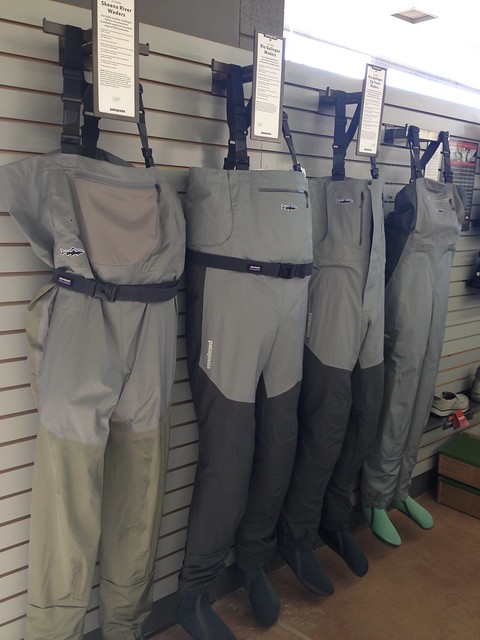
Starting 10am April 16th 2016 manufacturers representatives from Patagonia, Winston, Echo and Airflo will be at the shop displaying the newest gear. Please stop by the shop and check out some new gear and get the low down on design, fit and implementation.

April demo day

April demo day

While you are at the shop enter your name to win one of the following products: Patagonia wading boots, Echo fly rod, Airlfo F.I.S.T triple density skagit head.

A few highlights of what will be on hand.
–new waders and wading boots from Patagonia-
–new Winston Rods – give these a cast and check out the slickest rod guides on the planet.
–new airflo fly lines, leaders and tippets

April demo day

We plan to have the shop keg loaded with a new brew and will be serving up some brauts from the BBQ.

Hope to see you this Saturday!

Posted in Fly Fishing Contests, Fly Fishing Gear Review, Oregon fly fishing links, Shop Sales and Specials | Leave a comment

Lower McKenzie Fishing Report April 2016

Lower McKenzie river

This past Wednesday Peter and I floated the lower McKenzie from Hayden Bridge to Armitage State Park. The water was in fine shape as you can see from the hydro plot below. There was little or no hatch until late in the day. During the day insect activity was very sporatic, a few caddis, a huge stonefly, but really nothing that brought fish to the surface until later. Between 3-5pm we did see March Browns, Blue Winged Olives and a few Caddis. It was during that late in the day period when fish were willing to come to a Purple Haze style parachute pattern.

hydroPlot

The rest of the day we found success swinging wet flies, March Brown Emergers, Possie Buggers, Dark Cahill’s and Pheasant Tail Soft Hackles. Nymphing was also effective, we used a large Pheasant Tail Jig pattern as the bottom fly and a mid sized Flashback Pheasant Tail above it 15 inches or so. The entire rig was dropped off of the indicator about 6.5ft.

You can see from the water level graph that yesterdays rain bumped the river up considerably. It will need a few days to come back into shape. Fishing should only improve as we slowly warm up to Spring!

Posted in Fishing Reports, McKenzie River | Leave a comment

Understanding Holographic Flashabou (a little)

Here we go again, with my practical analysis of the flexibility and wiggle inherent in various colors of Holographic Flashaboou.

The point of this post is to crush the notion that since this material is a synthetic – that we should expect every color to be similar in its flexibility and therefore wiggle in the water.

This has not been my experience as a tyer and fly angler. I will show a series of photos that demonstrate what I believe I have seen. If anyone has an explaination I would appreciate your comments and wisdom.

Orange #6941 is moderate in its flexibility. This is a side view.

Orange #6941 is moderate in its flexibility. This is a side view.

Orange #6941

Orange #6941

Purple $6999 is moderately stiff in the hank.

Purple $6999 is moderately stiff in the hank.

Purple #6999.

Purple #6999.

Blue #6993 is stunning but seems the stiffest of these holographic flashabou colors.

Blue #6993 is stunning but seems the stiffest of these holographic flashabou colors.

Blue #6993.

Blue #6993.

Chartreuse #6989 is getting more flexible the way I like it best.

Chartreuse #6989 is getting more flexible the way I like it best.

Chartreuse #6968.

Chartreuse #6968.

Firetiger #6943 is the limpest most flexible holo flashabou I have found and I love the stuff.

Firetiger #6943 is the limpest most flexible holo flashabou I have found and I love the stuff.

Firetiger holographic flashabou #6943.

Firetiger holographic flashabou #6943.

Now here is a different product, 1/69″ Opal Mirage Lateral Scale. This is limp and has amazing flash.

FLA1733 Opal MIRAGE LATERAL SCALE is flexible and very flashy, another of my favorites.

FLA1733 Opal MIRAGE LATERAL SCALE is flexible and very flashy, another of my favorites.

SAMSUNG CSC

In summary, I’m trying to emphasize that the mere fact that you are tying with a synthetic material is no assurance that all colors will have exactly the same properties. While I like all the various holo flashabou colors, I prefer for purely superstitious reasons to tie my flies with colors that have the greatest flexibility and therefore wiggle. I do not understand why some colors seem less flexible and realize it is possible that all may become equally flexible after being fished for several hours, but still, I like my flashabou soft and wiggly right out of the package. Other tyers seem not to be plagued with my quirks, and all of the colors I note as being rather stiff are used in steelhead and salmon flies with perfect success. Give these a try and see what you think.

I hope you find this perspective intriguing and helpful at the bench and on the water. Am I completely crazy when I think that some flashabou is more flexible than others? I swim my flies in a tank and fish them in the river. Help me out with your observations and set me straight if you can, please.

Jay Nicholas April 2016

Posted in Fly Tying, Fly Tying Materials and Supplies | 2 Comments

Willamette River Fly Fishing Report – April 2016

W2

Finally made it out to the lower main stem of the “Willy”. The fishing was good during the cloud cover period of 11:00am to 2:00pm. The winter levels really made some changes to various islands and flat stretches. We were seeking the March Brown hatch and we did not see much, if any, of a hatch.

W6

The cut throat trout were active and seemed to be holding in the faster water.

W4

Redsides fell to a very large Adams and a Lou”s brew Silvey March Brown Size 16 soft hackle. Using the Adams trailing a soft hackle proved to be the most productive. The Silvey March Brown soft hackle was also productive. The nymph rod remained silent and was used very little. The fish were looking up and we had a very nice day of dry fly activity until we lost the cloud cover.

W5

The Willamette River has really become a great nesting area for the bald eagles. We counted 2 nests, 6 mature and 2 immature. The coming week shows more cloudy and rainy days ahead. Looks like nothing but better fishing ahead….Get out there!

LV

Posted in Fishing Reports, Lower Willamette | 1 Comment

Win New Gear – Patagonia, Winston, Echo, Airflo on Display April 16th at The Caddis Fly

April demo day

Starting 10am April 16th 2016 manufacturers representatives from Patagonia, Winston, Echo and Airflo will be at the shop displaying the newest gear. Please stop by the shop and check out some new gear and get the low down on design, fit and implementation.

April demo day

April demo day

While you are at the shop enter your name to win one of the following products: Patagonia wading boots, Echo fly rod, Airlfo F.I.S.T triple density skagit head.

A few highlights of what will be on hand.
–new waders and wading boots from Patagonia-
–new Winston Rods – give these a cast and check out the slickest rod guides on the planet.
–new airflo fly lines, leaders and tippets

April demo day

We plan to have the shop keg loaded with a new brew and will be serving up some brauts from the BBQ.

Hope to see you this Saturday!

April demo day

April demo day

April demo day

Posted in Fly Fishing Gear Review, Shop Sales and Specials | Leave a comment

Loon Products Jigawockie Fly Tying Video

Matt Callies (fly tying guru) from Loon Products demonstrates how to tie a killer jig fly pattern. If you have been following the blog over the past 12 months you know how much we love jig patterns. The most effective patterns are slim, high density, but visible at depth. This pattern will fish fantastic all spring on our local waters, but we see the Jigawockie working anywhere trout swim.

jigawockie fly

Jigawockie

Hook: Daiichi 4640 size of choice 10- 16
Thread: Veevus 10/0 Brown
Bead: Hareline tungsten slotted bead to match hook size
Tail: Hen saddle
Body: Veevus body quill in BQ14, Sm uni wire brown coated with Loon Outdoors Fluorescing UV Clear Fly Finish
Thorax: Hares ear and Ice dub peacock black
Legs: Hen Saddle brown
Wing case: Loon Outdoors UV Fly Paint Red

Posted in Fly Tying, Fly Tying Materials and Supplies | Leave a comment

New: Pro SportFisher 3D Printed Baitfish Eyes

Pro Sportfisher 3D Eyes

Pro Sportfisher 3D Eyes

Hot of the presses (pun intended) are these amazing new Pro SportFisher 3D Printed Baitfish Eyes from my friend Morten Bundgaard.

Size selection: is amazing with at least 9 or maybe 10 sizes from a HUGE 16mm to a TINY 3mm eye.  I am particularly attracted to the 8 mm and 10 mm for my albacore cast-flies and have used the 8 mm also on a Chinook Baitfish fly that the kings took well this season.

Jay Nicholas Pro Sportfisher 3D Eyes

Jay Nicholas Pro Sportfisher 3D Eyes

What is so different about these eyes?

Note the tab to tie in these eyes.

Note the tab to tie in these eyes.

Simple. the tab that we use to secure the eye in place, rather than having it glued or otherwise secured.

Look at those pretty eyes.

Look at those pretty eyes.

Short story: these eyes are well worth anyone’s attention and full testing. the ability to lash on the tab to hold the eye in place is wonderfully awesome.

SAMSUNG CSC

The smaller sizes could be great on little streamers for rainbow, browns, and sea run cutthroat, and the larger eyes for Pike and Musky and who knows what else.

SAMSUNG CSC

Thanks for your patience and support always.

Jay Nicholas, April 2016


Posted in Fly Tying, Fly Tying Materials and Supplies | Leave a comment

Cedar Lodge New Zealand 2015/16 Season Wrap Up

cedar lodge new zealand

We finished our third season as owners of Cedar Lodge at the end of March. It was a very busy season! We met many new friends and welcomed back numerous returning guests.

cedar lodge dining

cedar lodge new zealand

My biggest take away for the season was the inconsistency of the weather. With few exceptions we had challenging weather each week. The normal high-pressure systems that pass over the southern zone of the South Island simply wouldn’t stick around. We seemed to get a couple of good days before another blast of warm wet weather jumped rivers and limited our options to some degree. Despite the conditions we missed very few days on the water and guests did have some very good success.

cedar lodge new zealand

November and December were unseasonably warm with a lengthy Manuka Beetle emergence. Those early spring months saw virtually all of the “snows on the tops” get washed away with warm rains and several significant high water events.

cedar lodge new zealand

January, February and early March anglers had good success fishing large cicada patterns. March cooled a bit and we dropped the dry fly sizes down a bit but still largely brought fish to the dry.

heli fishing new zealand

heli fishing new zealand

heli fishing new zealand

heli fishing new zealand

While ideal fishing conditions seemed intermittent our staff performed superbly throughout the season. In the kitchen, Crystal and Kirsten rolled out fantastic fresh New Zealand cuisine. Utilizing New Zealand’s best export grade meats and fishes along with “fresh from the garden veggies”. Dion Matheson flew our R44 helicopter flawlessly, having to cope with “El Nino” winds and wet conditions was often “quite uncomfortable”. Paul Wright and Nick Johnson guided guests with great attitudes, concentrating on positive instruction to maximize results.

cedar lodge new zealand

cedar lodge new zealand

IMG_1548

cedar lodge new zealand

We found the fish in very good fitness towards the end of the season. Hopefully their good condition will bode well for next years undoubtedly more settled weather and water conditions.

cedar lodge new zealand

cedar lodge new zealand

cedar lodge new zealand

If you would like to join us at Cedar Lodge next season we still have space. Please check out our website: Cedar Lodge or contact me at caddiseug@yahoo.com for more info.

CD

Posted in Fishing Porn, Fishing Reports, Fly Fishing Travel | 1 Comment

Deschutes Alliance Report: Black Spot Disease

Black 1

Have you ever seen a Bull Trout with black spots? This recent report from Deschutes Alliance is yet another alarming trend regarding change on the Deschutes. In the report you will see what appears to be Black Spot Disease showing on recent catches. The report shares observations of the disease on bull trout. Thus far, the disease does not appear to be harmful to fish. The report further reveals the disease may be linked to the increase in the snail population.

No matter what side of the argument about “the tower” you choose, this change is yet another, change to the water of the Deschutes, and it’s not good! Read the report to learn more.

Donations are welcomed by the Deschutes Alliance. -LV

D

Posted in Central Oregon Fishing Report, Oregon Conservation News | 1 Comment

2016 International Fly Fishing Film Festival tomorrow

The Caddis Fly Shop and True West Custom Fly Rods are excited to be hosting the 2016 International Fly Fishing Film Festival (IF4) on March 31st at the Wildish Theater in Springfield. The IF4 is a collection of professionally made videos from around the globe that highlight the culture of fly fishing, and showcase some beautiful waters and amazing fish. This year’s selections are an awesome collection of films ranging from chasing arctic char in the far North to pursuing monster musky on the fly.

This event is not just about the films though, but also about bringing the Eugene/Springfield fishing community together to have a good time and raise money for a great cause. All proceeds from the event go to aid Fly Fishing Collaborative in fighting sex trafficking around the world. Over the course of the night we will be raffling off a few thousand dollars worth of fly fishing gear including: a custom fly rod, 2 custom painted rod tubes, guided trips, several fly lines, and a whole lot more! Plank Town Brewing has also generously donated a couple of kegs of beer, and will be serving it at the show.

Come out and join us as we have a great time watching the films, giving away a lot of awesome fishing gear, and supporting a great cause. Put it on the calendar and get your tickets for $15 at The Caddis Fly or online.

Posted in Oregon Fly Fishing Clubs and Events | Leave a comment

Review of Good gear from Echo Fly rods: 2016

Jay Nicholas Echo Glass fly rod

Ouch!

ECHO fly rods are tough, and this is something I’ve learned over a long stretch of time. While I do not recommend doing silly things like the photo above reveals, it is but one more example of how durable Echo fly rods are. This is what happens when I loose my grip on a fly rod handle when inserting or removing it from a ceiling rack at my cabin. the rod bobs and hangs while I shriek and wait for the shaft to break. So far they have not, and this is not the first time I’ve made this error. Thanks to Tim’s drive for great casting rods that are also very durable, I have been saved the humiliation of breaking rods in this manner. And no, I have not fished this rod since this event so I guess we will have to see if it is damaged or not! I have goofed with ECHO 3 SW and PRIME rods in this same manner and gone on to fish them with no apparent ill effect.

ECHO Warranty: All ECHO fly rods are covered by a lifetime original owner Warranty that is among the best in the entire fly fishing industry.

The fly fishing industry is in a constant state of flux based on new material and manufacturing technologies; design modifications, consumer feedback, and yes, the value of the dollar in a world of global trade.

Folks who know me understand that I appreciate the opportunity to fish many brands of fly rods, reels, lines, leaders and such forth. That said, I have a deep understanding and appreciation for a few of these, and ECHO fly rods are among the brands that I am particularly well acquainted with.

This post is a quick update on some of the goings-on that are radiating from the Rajeff Sports site in Vancouver Washington, where Tim Rajeff and his adept staff are on the cutting edge of rod and line design – while I’m the lucky end-user of their new or modified products.

Kindly forgive the fact that these are not studio glamor shots of the gear,  just simple images to set the stage for each product.

Jay Nicholas Echo ION XL fly rod

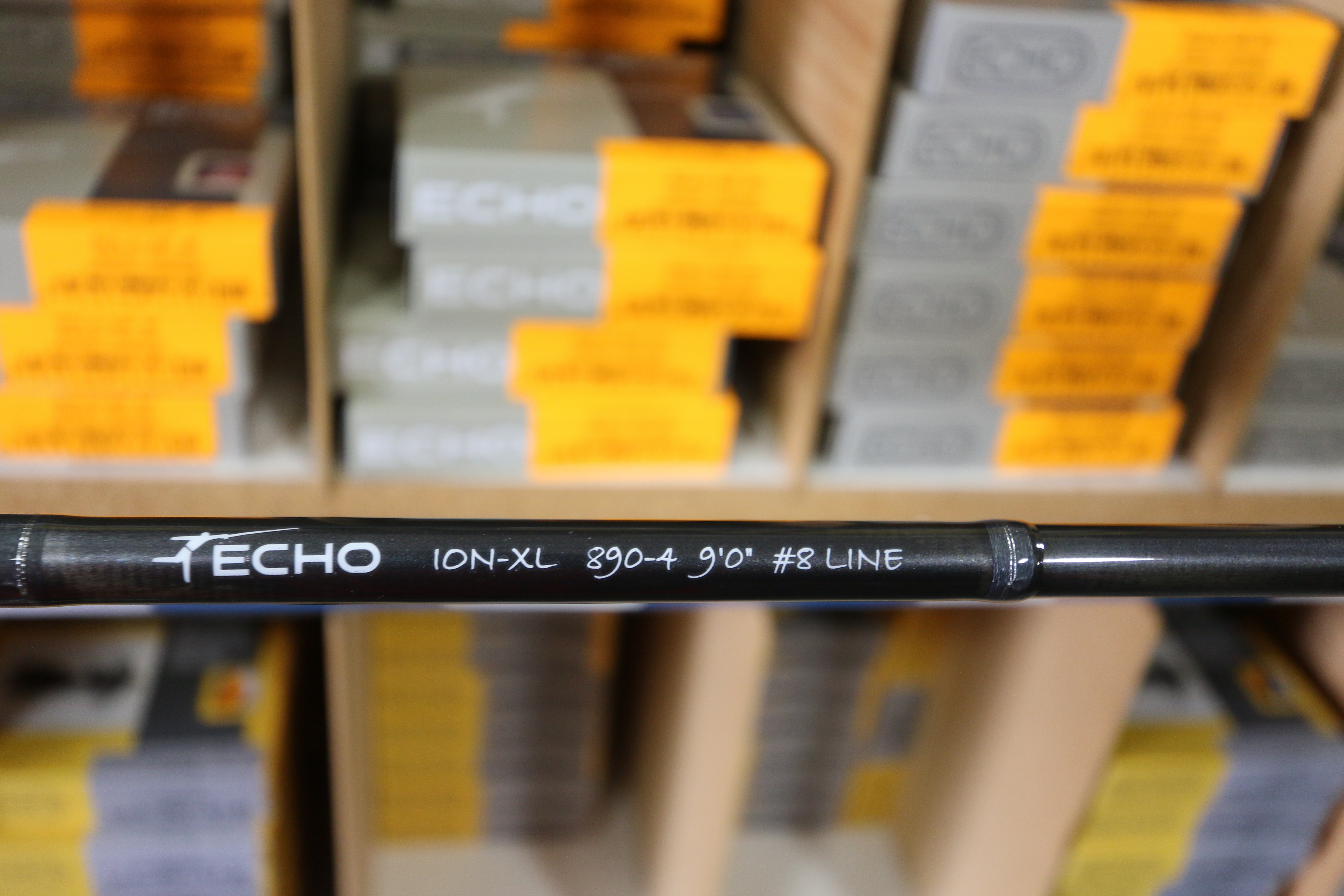
Echo ION XL fly rods. Here is a great example where Tim took an already great and modestly priced fly rod, switched up the cosmetics, decreased the swing weight of the rod, maintained the durability and dependability—with a decrease in consumer price. Amazing. My ION was a great rod before, now it looks sharper and costs less. Go figure.

Jay Nicholas Echo Shadow II fly rod

Echo Shadow II. This specialty nymphing fly rod was redesigned prior to 2016. How so? Tim and Pete Erickson preserved the core elements that make this a great European style nymphing rod, but they added a little more flex in the butt section thereby making this long rod (10 ft for the 2 and 3 wt models versus 10 ft 6 inches for the 4 wt model) more user friendly as a casting tool rather than a purely high-stick rod. The rod is light and a joy to cast dry flies and small wets on the Deschutes or wherever you consider your home waters, and is well worth trying as a dual purpose fly rod. The addition to the Shadow II line for 2016 was adding the 2 wt to the rod series.

Jay Nicholas Echo Dec Hogan II Spey Rod

Echo Dec Hogan II. This is a rod that was re-designed a few years ago but that I only had a chance to experience in 2015. I liked the first DH spey rod series, and I love this DH II. I especially like the 6.5 wt because it gives me a genuine ‘tweener that has more power than the 6 but less than the 7 – as if anyone really cares. These spey rods allow you to really feel the load and are tremendous fun to fight fish on.  Tremendously easy to cast, anyone who swings the two hander should love these rods. I fish the seven wt in winter and the 6.5 in summer.

Jay Nicholas Echo Boost Salt fly rod

Echo Boost. Less expensive than the Echo 3 SW rods. More expensive than the ION XL. Faster than the ION. Powerful Fresh and saltwater fly rods, these are tough fly rods that you can overload and pull hard on but are super casting tools. If you like to power out your flies and wrangle fish giving little quarter, these rods sure are fine to fish. I fish the 8 wt for rockfish, lingcod, and king salmon. Solid performance.

Jay Nicholas Echo Base fly rod

Echo Base. In my opinion, these fly rods over perform and are under priced. I fish the 8 ft 4 wt rod and it casts like a rocket. Seriously, if you told me this was an 800 buck rod I would believe it based on the casting it delivers. Of course the components are budget minded on this sub-hundred-buck rod, but if you fish any of these you will be amazed at how well they cast.

jay-nicholas-echo-glass-two-hand-on-coast-a

Echo Glass Switch and Spey rods. These are economical and fun to fish. I love the 3 wt and 4 wt rods fishing sea run cutthroat and summer steelhead in the coastal lakes. I fish the 8 and 8 wt spey rods for kings and winter steelhead. These take some getting used to after the fast recovery rods we have become accustomed to, but in terms of having fun fishing and playing fish these are superior rods. I thought initially that my casting range would be restricted by these slow rods, but it is not.

Jay-Nicholas-Echo-Glass-Fly-Rod-a

Echo Glass single hand fly rod. I have the 5 wt and LOVE it for trout fishing, plus I have also caught summer steelhead on this rod with small dry and wet flies. This rod will not cast as far as the BASE or Echo 3 rods in the five wt series, but it casts plenty far for my needs. In this photo I’m actually pulling on a summer steelhead on 5X tippet.

The Gen 2.0 Airflo Skagit Compact is noted by the blue hue on the rear of the head.

The Gen 2.0 Airflo Skagit Compact is noted by the blue hue on the rear of the head.

Skagit Gen 2.0 Skagit Compact Spey Head. Not a fly rod but what the heck. I have fished this line and find it performs very well, especially when paired with the new Super Dri Ridged 30 LB floating running line

The generation 2.0 skagits are shorter by about a half foot per size, and the rear taper is about a half foot longer. Overall, these skagit compact upgraded designs just make an already fine line even better.

The new super dry running lines have a black large loop that is I think tougher than the original line loop and is a nice visual cue to recognize how much overhang you have at your rod tip. The new super dry coat on these running lines is superior to the previous line coating and these are slippery and float better too.

jay nicholas echo carbon XL

Echo Carbon XL. The carbon is another Echo fly rod that is lighter and a tad less expensive in 2016. Good before, still good now, you can not go wrong with the fly rod.

ECHO 3 SW new titanium stripper guide on right.

ECHO 3 SW new titanium stripper guide on right (upper).

Echo 3 SW fly rods. These already excellent fly rods have been very slightly upgraded for 2016, with a titanium insert first stripper guide and a tip acton that is reportedly some 6% softer than the former models. I’m told that only expert casters will notice the difference but Tim Rajeff made the change to give these rods a slightly better feel when loading on short and moderate range casts. I loved the rods already and these changes only make them better. Fantastic fly rod at a fantastic price. Still, if you can afford it and want a rod in the 8 and up class, give the PRIME a serious consideration, I can’t imagine anyone regretting it.

Jay Nicholas Echo PRIME fly rod

Echo PRIME. This one piece fly rod is a fast action beauty that I love to fish offshore and in the estuaries for everything that swims within my casting range. At 8 ft 10 inches, this is a fantastic, light, tough-as-nails, fly rod. I’ve fished kings, silvers, rockfish, lingcod, and albacore with these rods available in lines wts from 8 – 12 only. The eight wt makes a fantastic all season rod for salmon. The the wt is acceptable for albacore (i usually fish the 12 wt though) and I have yet to find another 10 wt that I would fish albacore with. Is the one piece construction a problem? Not to me. And I have never broken one of these either. And I fish them hard too.

ECHO 3 Switch Rod – seven wt. Not changed, just a dependable great switch rod. I fish the 7 wt with a 450 Airflo Skagit Switch compact or 375 gr OPST Commando head on the coastal rivers, and this is a fantastic steelhead switch rod – light, powerful, casts long and short and generally a pleasure to fish all day long.
Jay Nicholas Echo 3 FW fly rod

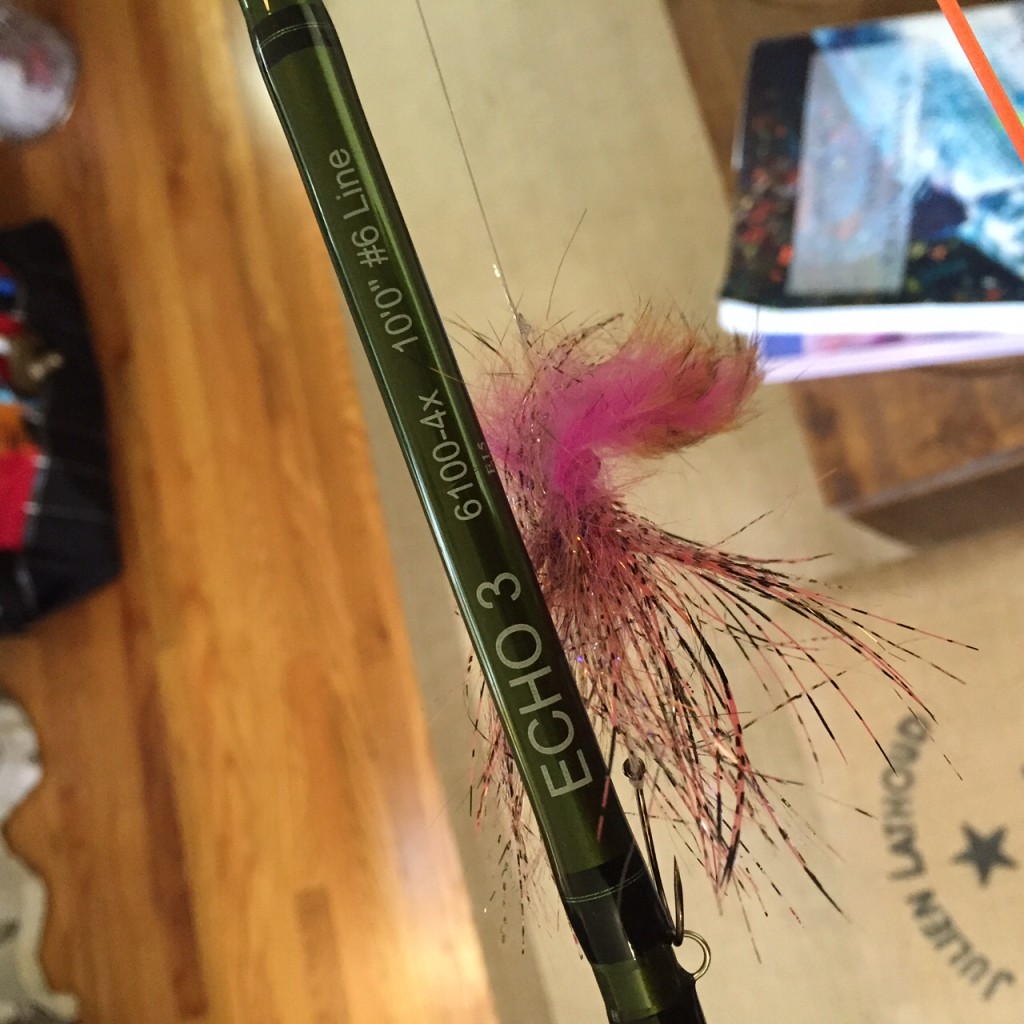
Echo 3 FW  – 10 ft six wt. When I’m feeling like indicator fishing, this is my go-to rod. Light, powerful, casts far and handles fish with authority (wow nice phrase)  this is a great fly rod. As this fly shows, I also swing flies with this rod fishing my indicator line or a OPST Commando head.

Jay Nicholas Echo Gecko kitlECHO Gecko kit with rod, reel, line, and leader. It is snappy bright to appeal to the youngest potential angler but this is no toy. At 7 ft 9 inches, this forgiving action fly rod has a short fighting butt to make two hand assist casts and the shaft is sturdy enough for the rod to take considerable amount of messing around poking at salamanders or just generally whipping around when not actually fishing. At under a hundred bucks for the rod only and well under two hundred for the complete outfit, this is a great fly fishing starter combo gift for very young anglers.

 Jay Nicholas ECHO Base Kit

ECHO BASE Fly Rod – Reel – Line – Leader combo kit. offered in line wts 4, 5, 6, 7, and 8 – these combo outfits offer the ready to fish outfit in a carrying case at well under two hundred bucks. All Echo/Airflo, and all durable highly fishable gear, these are wonderful starter combos, backup combos, and gifts.


Jay Nicholas ECHO Pin rod

ECHO PIN. Not a fly rod, I know, but I’ve fished these rods two full seasons and can report that they are a delight to fish for steelhead and chinook. My Centerpin casting skills are so rudimentary that I often just strip cast off the reel, and I’ve had some bonafide snarls in my line playing fish but these long rods at 13 ft cast great and have full flex action to absorb the surge of big fish while still making five pound steelhead seem like linkers. If you fish a center pin rod, this is a great option. Am I an expert in these rods? Heck no. But I’ve fished a lot of rods over the last fifty plus years and can recommend the PIN as an honest to goodness great value and effective steelhead/salmon “bobber” rod. Rated for 8 – 12 Lb line, Ive fished 15 when the going gets tough.


ECHO TR (Tim Rajeff) Two Hand rod series.  I have no image for this rod and do not normally fish this rod, but I have fished it and have several friends who count this as their number one two hander. Met a fellow recently who has a seven wt TR spey rod and was helping him tune his casting. Wow. This is a cannon. With a  powerful butt section, this TR is on target for powerful casters who like to push out the heavy tips on skagit heads. This is a long proven rod design and there are none tougher.

Hope these notes pique your interest, time for me to head out and hitch up the boat to go trout fishing on the town lake.

ECHO offers many more fly rods plus over roughly 20 fly lines, and great leader materials and various Polyleaders, Flow tips and custom cut sink tips too. I have fished most of these products (not all) and would be pleased to offer my thoughts if anyone calls or emails me.

Same goes for SAGE, SCOTT, WINSTON, LOOMIS, RIO, SA, HATCH, BURKHEIMER, and the entire range of great tackle I am fortunate to be able to fish. With so many solid options out there, I hope to be able to guide anyone into an outfit that fulfills your fly fishing dreams.

Jay Nicholas, March 2016

Posted in Fly Fishing Gear Review | 4 Comments

Fluorocarbon and Mono steelhead leader options – all good?

Jay Nicholas Steelhead Leader options a

Fluorocarbon and traditional steelhead leader options – are they all good?

 Saying that you are fishing Fluorocarbon is like – well – it is not very informative. There are many Fluoro brands and formulations on the market, and I have only fished a few, but I have learned that they are very VERY different.

Compared to nylon monofilament, Fluorocarbon is:

Denser/harder: this makes is paramount to keep your leader wet and lubricated when tying knots. If you do, your knots will be strong and secure. I sometimes carry a chapstick to lube my knots.

Sink rate – faster: This means that fluorocarbon is not necessarily superior when fishing dry flies, although this is up to you to decide.

Less stretch? Gosh this is a tough one since I have not tested it on fancy machine myself. Whether Fluorocarbon stretches less stretches less than mono is a factor not all reviewers agreed on. I think after reading all the tech info on the Internet that fluorocarbon may indeed stretch as much or more than mono – but its hardness may fool people into thinking that it does not stretch. Honestly, I’m not sure on this one.

Abrasion resistance is generally greater for the hard Fluorocarbon formulas but may be less abrasion resistant in the fluoro that is manufactured to emphasize suppleness and small diameter – depending on the specific product

Less visible –  but this is probably irrelevant except when you are fishing in very clear water.

Equivalent knot strength – as far as I can determine, good Fluorocarbon leader and good knot tying skills yield the same results as if you were using mono.

Superior resistance to UV deterioration – but  this is only seems important if you save spools of leader a long time and it is exposed to light for extended periods.

Less water absorption – compared to mono.

Variable stiffness – whether your Fluorocarbon leader is stiffer or more pliable than mono depends varys greatly between products, just as it does with mono leader.

Higher cost – Your Fluoro leader will cost more than mono.

Best knots to use – Improved clinch, non slip loop, loop knot, double surgeons knot, double uni knot( to join two pieces).

Jay Nicholas Steelhead Leader options g

Maxima Ultragreen. This is mono. It is great stuff. It is under labeled. By this I mean that the 12 Lb Maxima is really more like 15 Lb in any other mono. It is thick but tough. This may be my all around all species if it was all I could use leader.

Jay Nicholas Steelhead Leader options b

OPST Fluorocarbon. New product, the spools are smaller so they fit in less space, they have great stretchy grips holding the leader. The labels are waterproof –  a unique feature that is really nice. I have used this enough and lost enough flies up in trees and on rocks to be confident that it is indeed strong and durable. No fish landed yet but I think this is a winner.

Jay Nicholas Steelhead Leader options c

Rio Salmon Steelhead Mono. This material is new in 2015 and is dependable. Make no mistake however. this 12 LB is actually thinner than the above pictured 12 Lb Maima and is what I would call a true 12 LB. it is not fair to compare this RIO 12 head-to-head with Maxima. I fish this regularly and it is dependable.

Jay Nicholas Steelhead Leader options d

Hatch Premium Fluorocarbon. No,   I do not have a micrometer, but I think this material is thinner than the 12 Lb Maxima pictured above and is about the same strength. I fish this material regularly for spring chinook and have complete confidence in it.

Jay Nicholas Steelhead Leader options e

Airflo Sightfree Fluorocarbon Salt. New stuff, like the OPST, my experience is limited to break offs in trees and on the river bottom, not on fish. It is tough and as near as I can determine, every measure as dependable as the Hatch Premium Fluorocarbon material. I remain completely baffled at how these manufacturers come up with the decision regarding how they will label the diameter and break strength. They all seem to be drunk as far as I can tell. This AIRFLO Fluorocarbon formula is my choice for steelhead and salmon, not their other fluoro brands, which seem better aligned as trout and small fly leaders (they are softer and more supple).

Jay Nicholas Steelhead Leader options f

Rio Fluoroflex Fluorocarbon. This is an old time dependable for my saltwater and salmon/steelhead fishing. I would compare this material very favorably with the Hatch, AIRFLO, and OPST materials. I know this material will not fail me.

Are there some bad brands of Fluoro to avoid when salmon steelhead fishing?

Probably. But each of the mono and fluoro leader options shown in this review have proved themselves to me sufficiently for me to recommend them all without reservation. I am biased. Most anglers are a little weird about their leader choices. Maxima Ultragreen is the tippet I have used more years and have the most experience with. I do remember that I found myself with  several spools of 12 LB Ultragreen that was crappy. It was weak. At least I decided it was after loosing several Chinook. I discarded the spools, and had no problems thereafter. I have also had experiences with hooks over the years when some lots of hooks had improper temper and either bent or broke too easily. Overall, anomalies are rare with lines, leader, and hooks, but anomalies in manufacturing are still possible.

Overall, I’d say that any salmon/steelhead angler should be able to purchase any of the leaders I’ve shown here, and go fishing to decide what you think for yourself. You decide about the diameter in hand versus what it says on the label, You decide whether the labeled strength is real or a marketing strategy.

Me? I’ve got all of these leaders and am happy to tie on any of them when I’m fishing steelhead and salmon.

Hope this helps confirm or clarify whatever suspicions you may have about mono and Fluorocarbon leader materials.

My best to you on the water and at the fly bench.

Jay Nicholas, March 2016


Posted in Fly Fishing Gear Review | 3 Comments