
When most people think of fly fishing, they imagine someone on a tranquil floating stream searching for trout with dry flies. Almost like something out of A River Runs Through It. While this may be true for most people who pick up a fly rod, there are many sub disciplines within the sport that look drastically different from one another. One of these that not only varies in technique, but also scenery is stillwater fly fishing. Stillwater fly fishing refers to an entire fly fishing discipline centered around fishing lakes, hence the name “still-water” angling.
A stillwater specific rod varies from your traditional fly rod. While your standard 9′ 5wt can work for fishing lakes, a stillwater specific rod always outperforms a 590. Lake anglers need to account for afternoon wind and rods must be able to punch through wind on an open lake. These rods are powerful and responsive, typically they are 10′ for additional power and reach. These rods must be especially responsive for subtle eats on chironomids with indicator setups. Fish on lakes have plenty of time to scrutinize flies and presentation before deciding to eat subsurface, so having a rod that can set a hook quickly is imperative. The extra reach of a longer rod really helps with these quick hooklets. Lastly, for fishing dry flies, a lake rod must be delicate. lake fish working the upper water column are easily spooked. Presenting a dry fly to finicky lake fish requires a tool that is accurate, precise, and delicate.
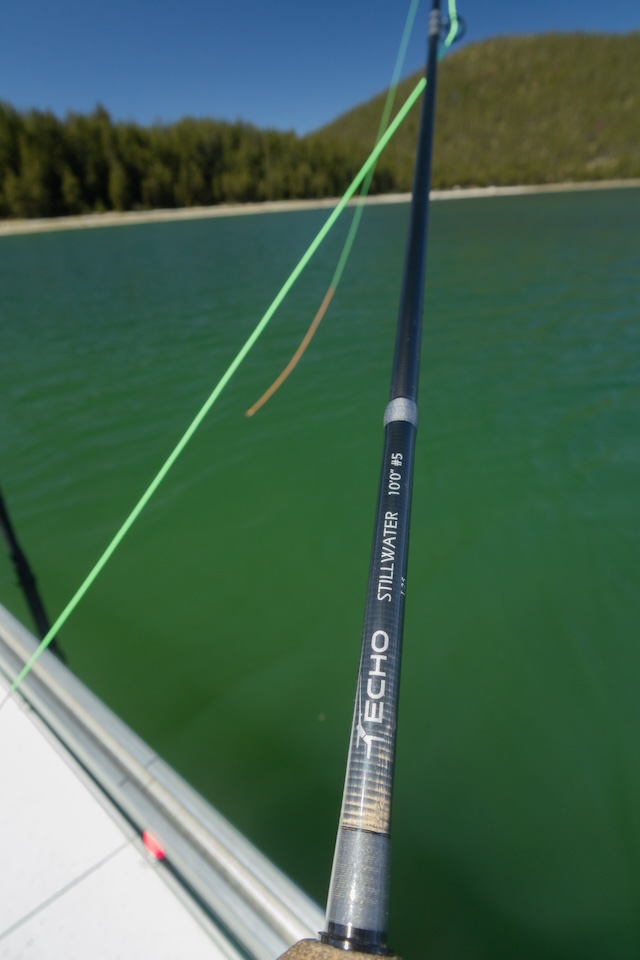
Adison Rook, stillwater guide and friend of the shop, and I ran out to east lake earlier this year to test a handful of new products. Two of them being designated lake rods from our friends at Echo: The Lago and Stillwater. We had two fantastic days fishing these 10′ 5wt rods with a variety of lines and utilizing several techniques with both. We both were impressed with them and the following breakdown reflects both of our thoughts. Leaning into Adison’s years of stillwater experience was especially helpful.
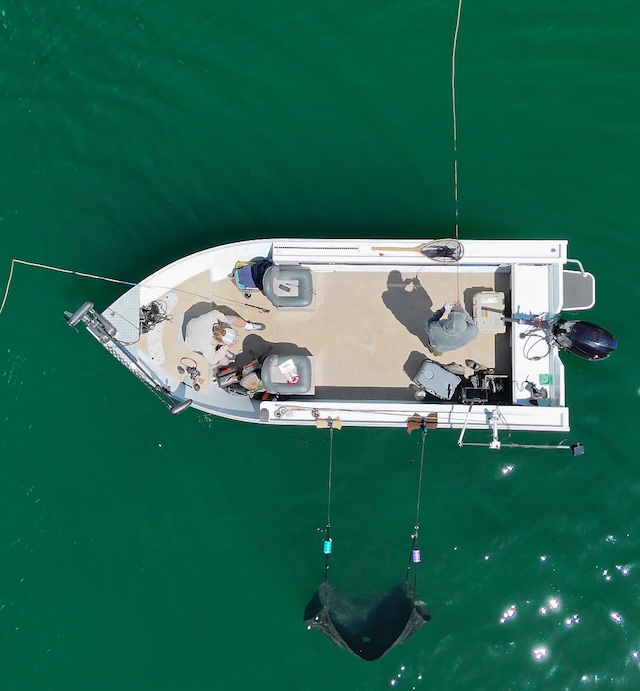
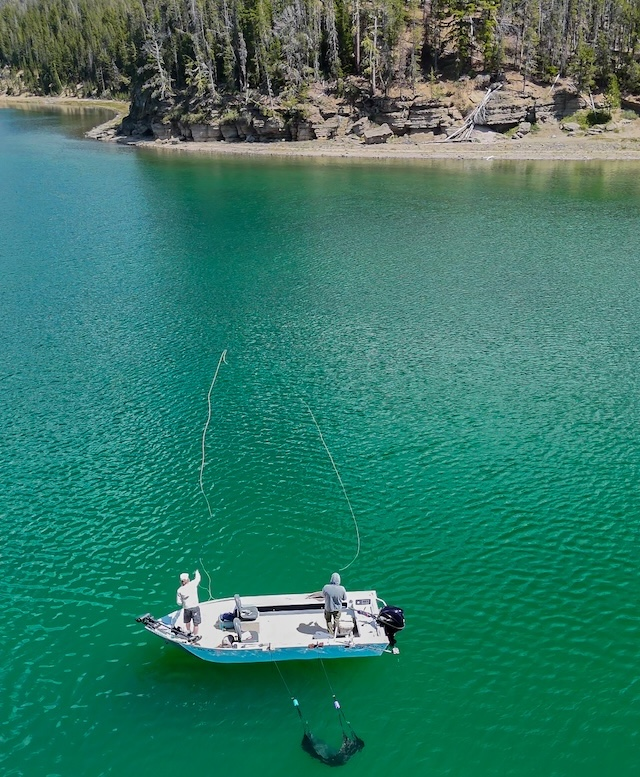
Aside from testing rods and lines, we had a phenomenal time up at East catching everything but the elusive brookies that still call the lake home. We caught fish using every technique from dunking chironomids under an indicator, fishing dries, stripping nymphs, fishing loch style with a drogue, and more.
Echo Lago
Starting with the Echo Lago, we both were especially fond of this rod. Retailing for $400 it is the more affordable of the two rods, but does not lack in its capabilities. The rod had a deeper flex and more feel, something that some anglers prefer. Over time, rods have gotten more powerful and faster action. For people who have recently picked up fly fishing in the last few years, they may prefer something that is faster action and feels more familiar. For long time anglers, the deeper flexing blank of the Lago may feel just right to them. The Lago comes 10′ options and ranges from 5-7wt. This has you covered from small alpine lakes, all the way to the behemoths of pyramid lake.

In terms of capability, this rod doesn’t sacrifice much with its more moderate action. In fact, it is especially good for subtle adjustments and its softer tip makes presenting dry flies delicately a breeze. Adison and I both enjoy medium to medium-fast rods and were particularly fond of the Lago as an all around lake stick. The rod kept up with its more expensive counterpart for virtually everything; each rod had specifics they excelled at. Taking a close look at what you like and how you will use the rod most will help you decide which is right for you.
For anglers with a dedicated watercraft, the Lago is nice because you don’t have to work as hard casting from the bank. The beauty of having a boat or tube is that you can move to where the fish are, this means no more hero casts from the bank. Although the Lago makes a better bank rod than your standard 9′ 5wt, the Stillwater’s power would make a better option if you are solely fishing from the bank. The Lago can definitely hang, but you could make hero casts for longer before tiring with the Stillwater than compared to the Lago from the bank. The Lago is superior for making close, delicate presentations of dries from a boat, or fish cruising close to the bank. Its mid flex allows it to delicately place small dries on the surface compared to its faster counterpart.
Echo Stillwater
The Stillwater is a powerful beast, and a phenomenal stillwater rod. Retailing at $525, it is slightly more expensive than the Lago, but has a significant bump of power, and much faster action. For especially windy days, large flies, cumbersome rigs, and sinking lines, the Stillwater is a fantastic choice. Not because the Lago cannot do those things, but because the Stillwater can do it for more hours, with less effort. Its innate power and faster action makes the rod have a significantly quicker recovery time. These attributes make the Stillwater more accurate as well, especially in subpar conditions where the weather acts up, which is especially common on open lakes. The Stillwater comes in 10″ 5-7wt and has an extra size of 10’6″ 6wt, which is one extra configuration compared to the Lago.
Despite its fast action, the Echo Stillwater does still have ample tactile feedback into the cork, allowing for a solid rod-angler connection through touch. Some especially fast rods completely sever this connection and often earn the title “broomstick”. The Stillwater navigates this plane well and is still intuitive for anglers who are looking for this in-hand feedback. The Stillwater cans till lie out a dry fly delicately, despite its fast action. If you solely fish terrestrials and callibaetis dries on lakes, the Lago may be for you. However, on especially windy days, the stillwater will be able to punch through the wind better. Also on windy days, the chop can act as an insulating layer between your dry fly presentation and finicky stillwater trout.

The Stillwater, being a more powerful rod, really excels at turning over sinking lake lines. If you’re a big streamer junkie on lakes, the Stillwater is likely the rod from you. If you are angling from shore, and have back cast room, the Stillwater will provide more reach with less effort than the Lago.
We fished a variety of lies on both rods, all being 6 weight lines. For indicator lines, we fished the Rio Phil Rowley Indicator Lake Line and the Scientific Anglers Anadro Indicator both in 6 wt options. Both rods handled this line exceptionally, with the Lago getting a deeper flex from these large, long headed lines. When loch style fishing with a drogue, we fished Phil Rowley’s Midge Tip Long, which is an intermediate sink tip line. Again both rods preformed exceptionally, with the Stillwater handling the extra mass of the sinking line marginally better than the Lago.
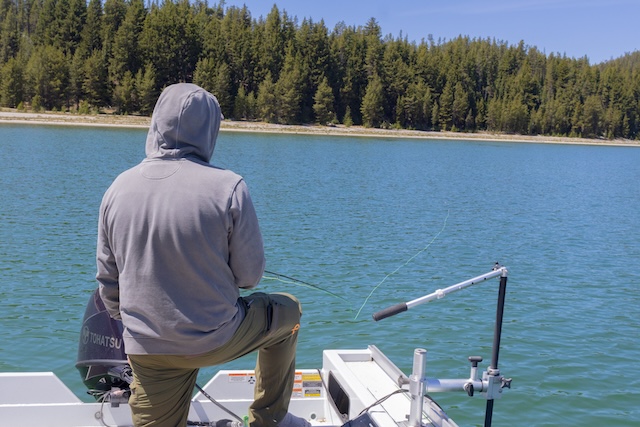
We ran Scientific Anglers Textured Infinities for dries, which dampened the power both of these rods had. Lake/indicator floating lines are great for fishing subsurface, but can be a little splashy for delicate dry fly presentations. Both rods were happy with this line. If you wanted to run a true dry fly line, the Lago would handle a more subtle taper like that better. If you hunt for fish on lakes with heavy sinking lines and streamers, the Stillwater is 100% the rod that you’d want. Its action and power is best suited to turn over heavy lines that get down deep fast.
With both rods being entirely capable of covering all of your stillwater needs, it can be hard to pick one as king. Choosing between the two really depends on your preference of rod feel, techniques you prefer and corresponding lines, price point, and your local stillwater venues and typical weather. Either rod is a phenomenal choice and will provide a significant improvement from fishing a standard 9′ 5 or 6wt on a lake.
If you’re curious about checking these rods out, swing by the shop and see for yourself. If you’re out of state, feel free to give us a ring and pick our brains if you have additional questions.
As always if you have questions or comments, feel free to chime in below.
-Simon
Stay up to date with additional links below
Follow us on Instagram
Caddis Fly Shop: @Caddisflyshop
Oregon Fly Fishing Blog: @OregonFlyFishingBlog
Caddis Fly Travel: @Caddis_Fly_Travel
Subscribe to our Youtube channel
Shop Online from all over the World
Caddis Fly Shop
168 W 6th Ave
Eugene, or 97401
Phone: (541) 342-7005
Email: Support@caddisflyshop.com