
The NW Fly Tyer and Fly Fishing Expo wrapped up yesterday and I picked up a few new fly patterns and tying tips. I was looking for a good Skwala Stonefly pattern, since I’d been seeing a few on the Upper Willamette lately.
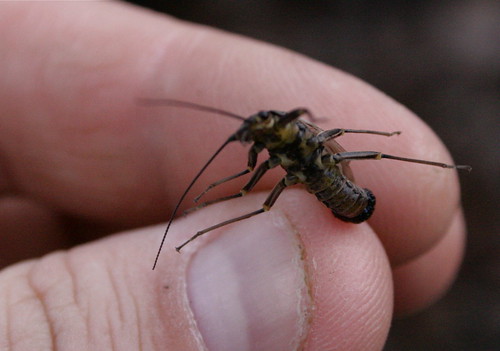
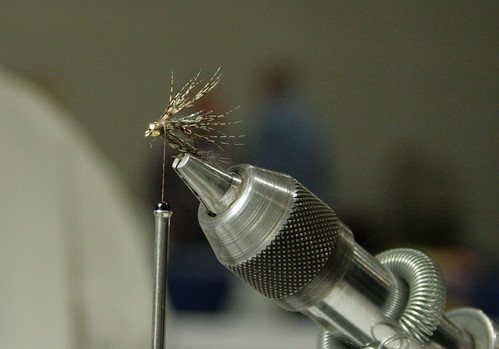
Preston Singletary, a Federation of Fly Fishers member from Seattle was tying Skwalas — a black, pre-runoff emerging stonefly that’s around from February to April. Singletary’s pattern, pictured below at right, is dressed sparser than the typical pattern, pictured at left. He says the typical pattern is overdressed in his opinion, largley in order to hold up a heavy nymph suspended beneath it.
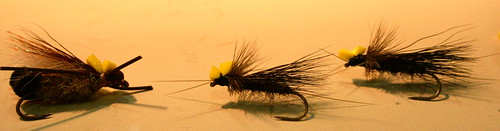
Singletary uses a size 10, 2x long 2512 hook; black dubbing, moose body hair wing and black or dun hackle for the collar. But the icing on the cake is the tapered paint brush fibers that he uses for front and rear antennae. The hotspot is yellow foam.
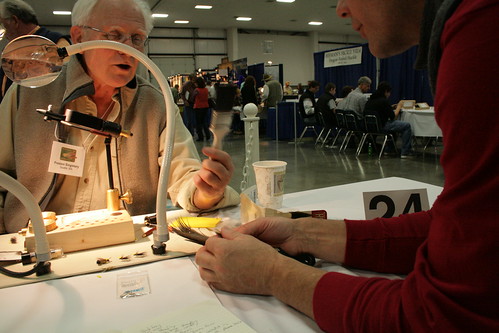
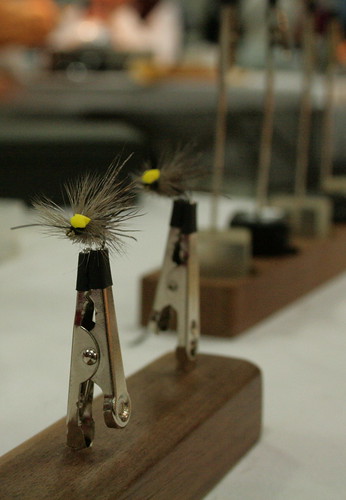
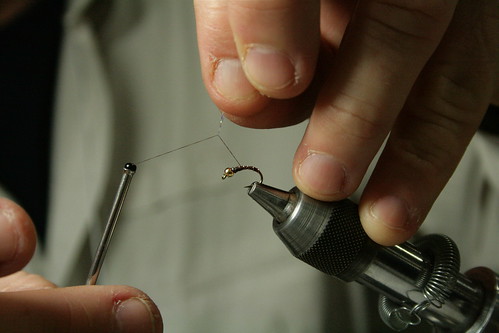
Marlon Rampy of Medford, OR offered up some excellent fly tying tips for softhackle patterns — and adding a little variety for finicky trout. He uses a small piece of crystal flash in some of his soft hackles. He also ties 50% of them with beads, 50% without. His other variation is the thorax: Rampy says peacock makes a great softhackle thorax, but once it’s wet it is basically black. If you’re looking for a little variation, Rampy suggests using a tan/brown dubbing ball for the thorax. He also reccomends using the freshest partridge skins you can find.
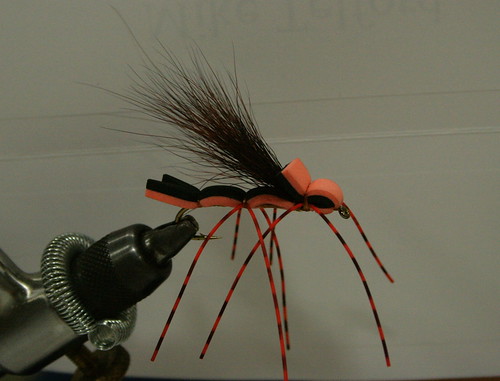
Bend-based tyer, Mike Telford’s foam salmonfly he uses on the Deschutes was a big hit. It’s a four component recipe and super simple. Long two-toned foam body, size 4 hook, bucktail wing and rubber legs. Telford says the pattern is cheap, easy to tie and durable.


I have been to the Federation Conclave six or so times, watching the fly tier, and am happy to say that the tiers we present in Oregon are as good, if not better than most of the tiers you see at the national show!