

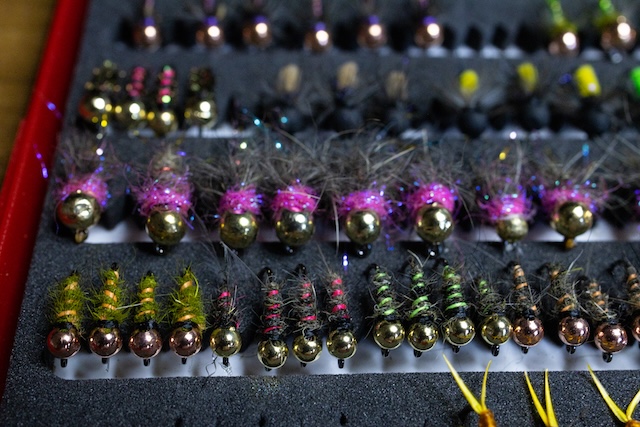
If you are a fly tyer, you are painfully aware of an emerging issue sourcing one of our favorite materials that is relatively new to the world of fly tying and fly fishing: tungsten. These make up our beloved beads that help us get a size 20 Baetis nymph just as deep as a size 10 girdle bug bundled up in a lead blanket beneath its chenille. In the past 12 months, the price of tungsten has increased 600% and we are feeling it. This is a complex matter driven by emerging markets, geopolitical impacts on trade, and a heavy metal that everyone wants to have. This article aims to flesh out the current situation, offer creative solutions, pontificate on the directions fly design and angling tactics may go, and pick the brain of an industry expert getting an internal opinion from Dom Lentini of Fulling Mill.
What is Tungsten and Why are Prices Increasing?
Tungsten is an exceptionally valuable heavy metal. It has the highest melting point & tensile strength of all pure metals. It is very strong and incredibly dense compared to many other metals. Its heat resistance and strength make it a popular material for aerospace manufacturing and situations where materials must withstand extremely high heat. It is a popular material for cutting tools, radiation shielding, microchips as a semiconductor, for electric vehicles boosting battery density, and its high density and strength make it a choice material for bunker busting and armor piercing projectiles.
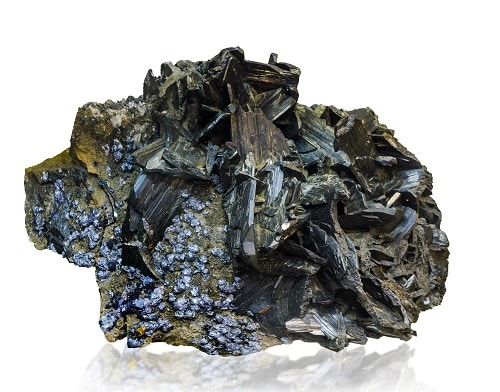
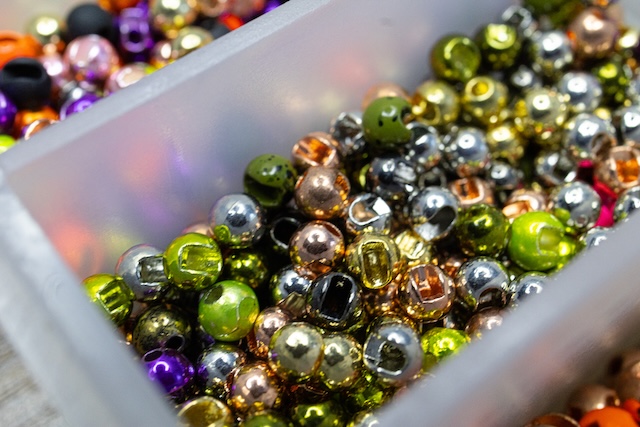
For anglers, tungsten’s exceptionally dense mass makes it a fantastic option for weighing down nymphs. Tungsten’s naturally high mass to volume ratio allows anglers to use relatively small beads to weigh down their correspondingly small nymphs. Beads made of other materials would have to be much larger to achieve the same weight. This property makes tungsten extremely valuable to fly anglers allowing them to keep their flies small, mimicking realistically sized nymphs, while maintaining the ability to plunge their nymphs into the feeding zone. Before the industry’s mass adoption of tungsten beads, eyes, and cones, anglers would use split shot, sinking agents, sinking lines, etc. to achieve this.
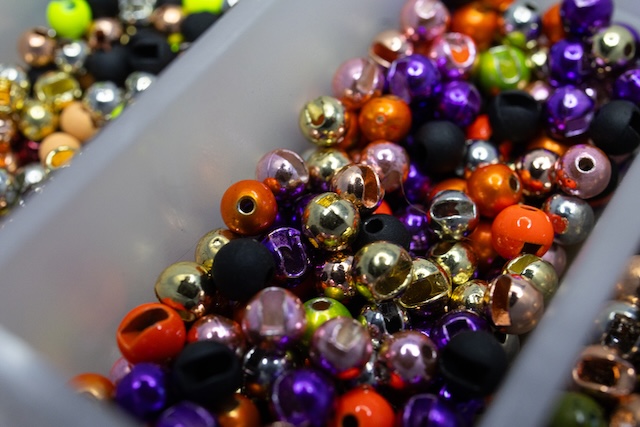
This has drastically changed the way typical nymphs look in today’s fly shops. Tungsten jigged nymphs dominate the nymph bins in shops today across the world, and for good reason: they simply outperform their predecessors. Our jigged tungsten nymphs allow anglers to be in the feeding zone for longer than anglers in the past, and these flies have slingshotted the growing popularity of the discipline of euronymphing. These flies allow anglers to have constant tension while employing tight line nymphing or euro nymphing techniques. Running large buoyant foam dry flies with jigged tungsten nymphs is common practice worldwide. In the last 15-20 years, we have shaped our techniques around this very precious metal which has made us all more efficient anglers.
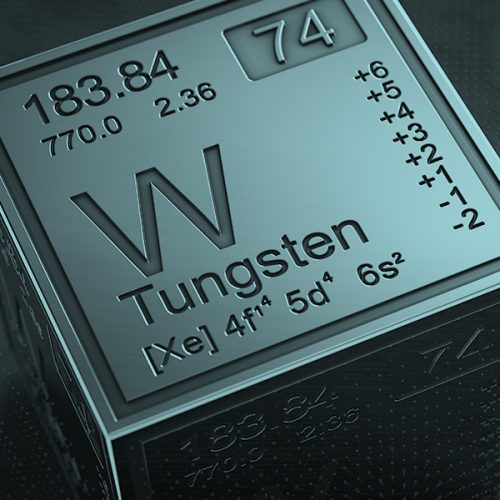
Because of tungsten’s innate high melting point, it is already incredibly expensive to extract when smelting out of its host rock. To then shape it into the little beads we as anglers know and love, it must be heated again to an upwards of 6,000 °F depending on the purity of the tungsten. This alone contributes to tungsten’s high price.
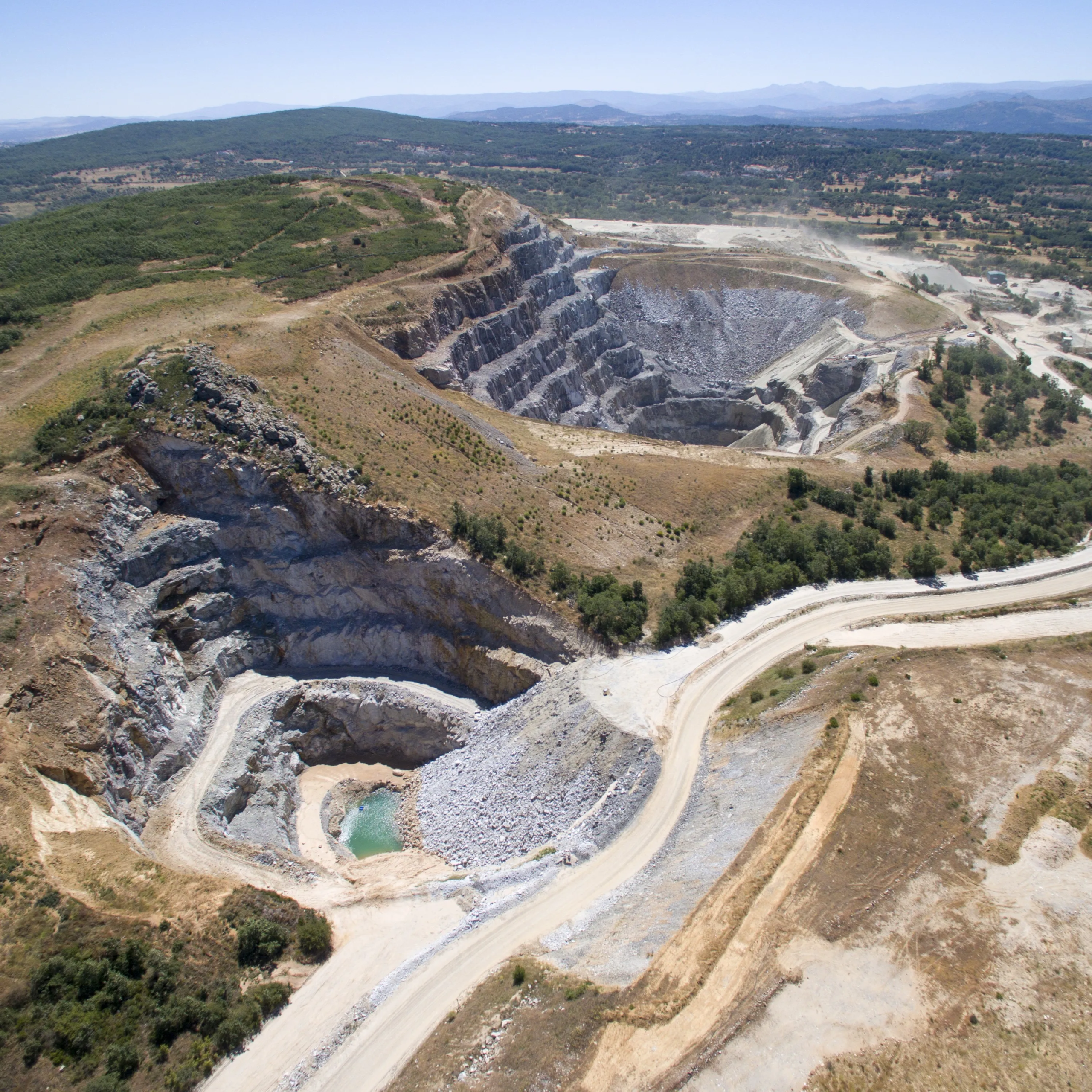
China controls 80-85% of the global tungsten processing, production, and immediate distribution. This is largely because they have the infrastructure to do so and the mineral deposits in relatively close proximity. With increasing demand for tungsten for military projectiles, its need for industrial tools, global aerospace research and spending, microchips, and the rise of EVs (electric vehicles), tungsten is a hot commodity. China, being the main source for it, has capitalized on the current emerging markets and current geopolitical state by restricting the global flow of tungsten. For western countries to build refineries, it could take upwards of 7+ years, so it is expected that tungsten prices will follow this newer baseline.
What This Means for Anglers and Fly Tyers & How Can We Adapt
For anglers and tyers alike, this seems to be something that we are going to have to get used to. This prompts several questions for anglers and tyers going forward.
Do all of my nymphs need large tungsten beads?
The reality is that all of us were probably overusing tungsten, sometimes when we really didn’t need it. While tungsten beads may give you extra seconds presenting your flies at the correct depth in your drift, anglers fished without tungsten effectively for a long time. Sometimes, out of habitually dredging with tungsten, I find myself fishing too deep, especially in the summer. Situations like this, are prime examples that fishing with non-tungsten beaded flies is still a viable option.
When and where am I saving my precious tungsten for?
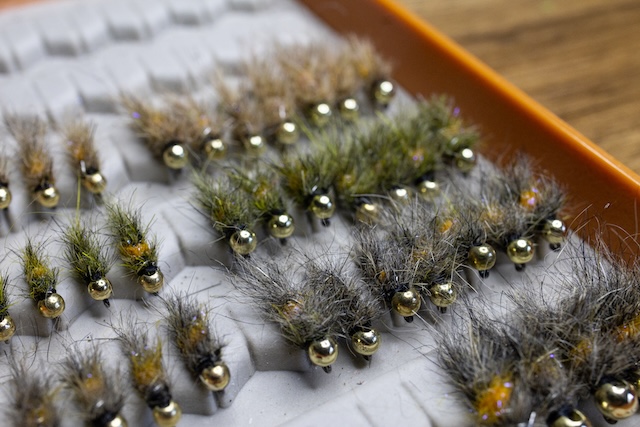
This is a question that anglers and tyers will be asking themselves more and more as time goes on. It likely will not be all that uncommon for anglers to be marking up nymphs in their boxes to differentiate tungsten vs brass beaded nymphs. There are certain places like high gradient plunge pools, our Upper Mckenzie River, the Metolious River, etc. where we will prioritize saving our tungsten for. Anglers will likely be asking themselves if they want to risk their tungsten flies near that submerged stump. This can be a difficult predicament as snags serve as prime lies for large feeding trout. Only you can decide when and how you want to use your tungsten if you are being conservative with it, but the questions we ask will make us all better anglers.
Have we been overusing tungsten?
There is an argument to be made that we all have been leaning on our tungsten beads a little too hard. Strategy, line management, cast placement, subtle cues reading water, etc. all go out the window when you have flies that have enough mass to almost always cut through difficult-to-fish water. In certain ways, tungsten has made us better anglers, but also worse in others. I’m sure some purists reading this are cheering on the other side of their screen. In all seriousness, anglers using tungsten less frequently will likely encounter old problems to solve again. These hurdles force us to ask questions and get creative, as a result it will give all of us a better understanding of water hydraulics, insect life, and just what is capable when presenting flies to feeding trout.
What alternatives do I have?
There are plenty of other options to exhaust if you are a fly tyer. After all, there was a time before tungsten penetrated the fly fishing industry and people were still successful. Lead wire has been incorporated into flies for a long time as a way to increase fly density. We have lead wire that is spooled in varying diameters, and we have flat lead that can be wrapped around a hook shank adding bulk. The down side is that lead is a toxic metal. For those who do not want to add more lead to our rivers, or touch it while tying, we do have spooled lead free wire and flat lead free wire . It is not as dense as pure lead wire, but helps.
Split shot is a method of adding weight directly to your leader to aid in getting flies down. The rise of tungsten beads really made this a thing of the past in many places, but we may see a massive resurgence. Most split-shot is lead, but we also have lead free shot made of tin from loon in black and camo.
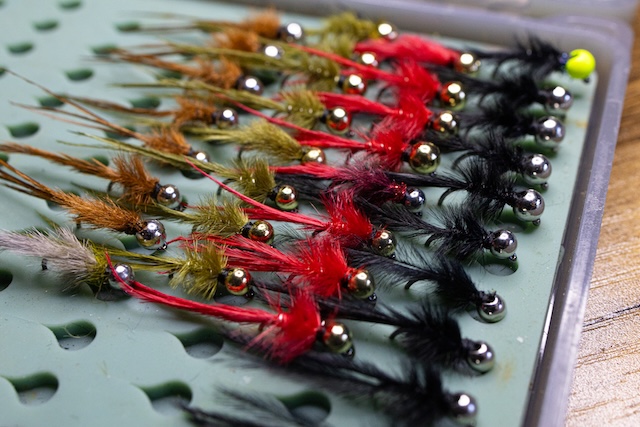
Brass beads have dwindled in popularity with the mass adoption of tungsten beads, but again just like split shot, we may see a massive resurgence of people using brass. A brass bead paired with a lead underbody can make a seriously heavy fly. Again just like the other options, anglers had success with brass long before tungsten took over our beads on our nymphs.
One alternative that is coming up is from our friends over at Fulling Mill. We cannot quite share what exactly is coming up from them, but we are extremely excited and impressed at the speed in which they jumped on finding a creative solution. As soon as the product is available, we will blast out another article here and all sorts of content on our social media pages.
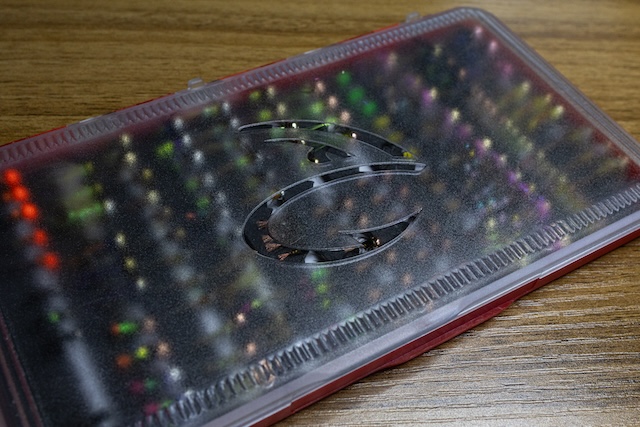
How will my tying change going forward?
One thing people frequently overlook when tying or buying flies is just how much material is on the hook. This goes for both dries and nymphs, an overdressed dry will sop up water, and will not shed water quickly, and an overdressed nymph will flutter in the water column like a feather dropping instead of plummeting into the feeding zone.
When tying subsurface flies without the extra help of a large tungsten bead, one can achieve a quicker descent by not adding extra things, but subtracting them. This is commonly seen in typical slim bodied Euro style nymphs. These slim, thread bodied flies sink extremely fast. A girdle bug, or Pats rubber legs will sink faster than a zirdle bug simply because the rabbit zonker is dragging against the water as the fly wants to sink. CDC collars, marabou, zonkers, extra buggy nymphs, soft hackle collars, etc are all things that impact a flies descent in varying degrees for better or for worse.
Implementing lead can really make a huge difference in adding a little bit of extra weight. Before the tungsten takeover, a brass bead and lead wrapped fly was the heaviest we had. Even if that wasn’t your choice fly in your rig, you could use that brass bead, lead wrapped stonefly to get your size 18 Baetis into the feeding zone.
The classic Brassie and Copper John patterns are a testament to anglers’ ability to innovate when faced with a problem. For those of you who don’t know, Brassies and Copper Johns are slim bodied, traditionally, brass beaded nymphs whose body is made of wire. This combination of slim body and extra wire really helps flies get deep quickly. I think going forward, we will see this become an even more popular method of creating nymph bodies.
We may see an uptick in using cones on both nymphs and small streamers. Many older stonefly and small streamer patterns made use of small cone-heads paired with some lead. In addition to cones, I wouldn’t be surprised if jigged stoneflies tied with brass dumbbell eyes or small lead dumbbell eyes became popular.
Tyers are always innovating, and the recent change in tungsten availability will shape the direction of peoples creative energy in interesting ways. Eventually this will yield commercially available flies whose design is a product of the available materials at the time. Whether you are cutting back on how much tungsten you are using, or not changing at all, the collective fly tying space will feel the impact of the drastic shift in tungsten’s availability.
What will flies look like going forward?
We all see our fair share of fly tying content on Instagram and Youtube. We likely will see many creative ways to get some extra weight on their flies. A few years from now fly bins in shops may be filled with massively oversized brass beads compared to the hook size. On the other hand, commercial nymph patterns may look for inspiration from the past, and take on a more classic approach. Flies that sacrifice tungsten will likely be tied more sparsely regardless, which isn’t necessarily a bad thing. Many commercial flies are overdressed and too big when compared to the natural they are imitating, so this may shift us into a more naturalistic era of fly tying. If the industry norm for a standard nymph shifts away from ultra heavy tungsten beaded nymphs, we may see a shift away from the massive multi layered foam chubby style flies specifically designed to suspend these extra heavy tungsten nymphs. Only time will tell which direction things will go, but we will likely see some very creative changes in the next few years.
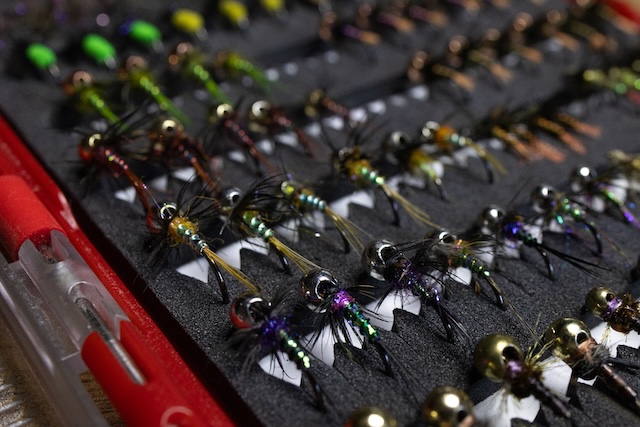
How will my angling tactics change?
The first discipline that comes to mind that is most affected by the tungsten crisis is euro or tight line nymphing. These folks rely on especially heavy flies to maintain tension and detect subtle strikes. Euro or Czech nymphing already employs several of the above listed tactics for their fly design. Slim, lightly dressed flies simply get down deep fast. Cutting out or reducing the amount of tungsten fished for the euro crowd will require a different approach. Longer runs will require a further cast and more time to allow flies to sink. This tying crowd, especially, will lean heavily on adding lead to their flies and utilizing wire bodied construction to maintain the density required for contact while tight line nymphing if they choose to cut back on their tungsten usage.
The streamer & spey crowd may be affected too as sinking lines are impregnated with tungsten powder to achieve the desired sink rate. The downstream effects of tungsten price gouging really hit the fly tying world first. It up to fly line manufacturers and commercial fly companies to decide their next move. Sparsely tied streamers with lead dumbbell eyes (Ex. Clouser Minnow) may become more commonplace to allow streamers to cut through the water. Spey folks may adjust their fly construction adding weight in the form of lead when and where they can. Tubefly guys are covered as the Prosportfisher systems have a dedicated modular system to add weight to these flies.
Single hand folks can adopt many of the solutions listed above and extend them onto the situation they find themselves in. Something that everyone will have to do is adapt the way they read water and think about presenting flies differently. This may be questioning if it is worth tossing on the tungsten point fly, or repositioning their body to get a better drift with less drag for a quicker descent.
Utilizing fluorocarbon tippet in your rig where needed can really aid in fishing effectively subsurface. Not only is fluorocarbon extremely stealthy and virtually invisible underwater, but it also has a higher density than monofilament tippet and is a better choice for getting subsurface flies into the feeding zone faster. It also has a higher abrasion resistance, and strength per diameter when compared to its monofilament counterpart. I am a big believer in fluoro and personally use it on most subsurface rigs and believe others would benefit from adopting it if they already haven’t.
Anglers will be forced to adapt and find more conducive water when fishing a slightly lighter rig. As always, a better drift with less drag really aids in flies getting down deep, we all could benefit from more attention to achieving a more natural drift, even in challenging water.
I am a big fan of using “utility flies” which is choosing a certain fly not necessarily to get eaten, but to move another fly into position. I will save the whole explanation for a different article, but for nymphing it is relatively simple. For those who want to avoid using tungsten, but are faced with needing to get a small size 14-20 nymph deep this can be difficult. Using shot is an option, but one could also use a lead wrapped stonefly to get the small offering into the feeding zone. Selectively creating a rig like this can really help you fish a small fly in deep water without always having to rely on a tungsten bead.
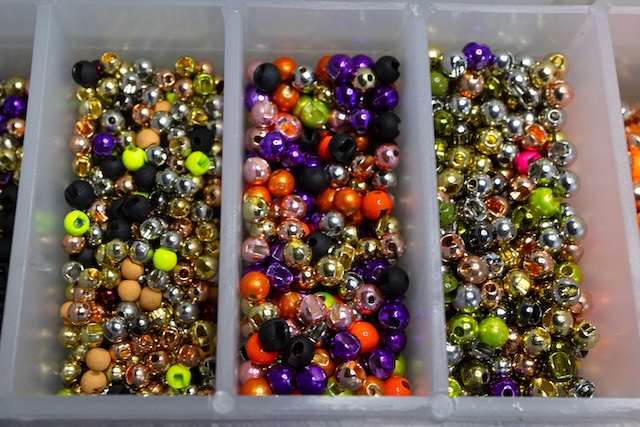
Everyone is responding to the tungsten situation differently. Some people have entirely sworn off tungsten beads, some stockpiled before prices jumped, others have continued to buy them like they did before. Fly companies and material companies alike are responding to this issue strategically and we will see how things play out in the next few months. Regardless, this is a great opportunity for anglers and tiers to think more critically about why they used tungsten, when they will continue to use it, and hopefully slow down and think more strategically on the river. After all, fly fishing is a leisure sport, there is no problem with slowing down and learning a thing or two.
Feel free to share your thoughts in the comment section below.
-Simon
Interview with Dom Lentini of Fulling Mill
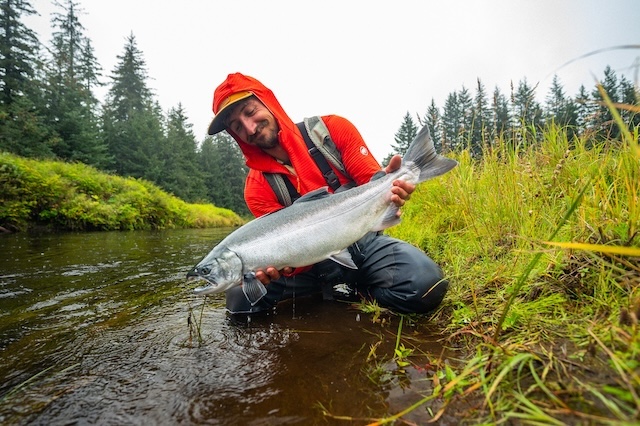
Given the way this price increase is shaking up the industry, we thought it would be interesting to interview someone who is looking at this tungsten crisis from a production point of view. We reached out to one of our friends at Fulling Mill, Dom Lentini who works in product development and marketing, and picked his brain on the situation.
Was this a major shock to you at Fulling Mill? Were there signs that you as a manufacturer saw before most consumers heard about it? Has the industry ever seen something like this?
“The rapid rise in the cost of tungsten was as much a shock to us at Fulling Mill as it was to everyone else. The raw material cost started rising rapidly, and unexpectedly, which forced a nearly immediate increase in tungsten bead pricing. It was not a step we wanted to take, but with our raw material cost going up approximately 600% there was no alternative.
We have never seen anything like this before with bead products. We did, however, seea similar situation with genetic hackle years back. It became a huge trend in fashion. As a result, hackle producers were selling them to people doing hair extensions at an astronomically higher cost. This, in turn, massively disrupted the market for us.”
If the price of tungsten remains high, do you foresee major shifts in typical fly designs that may bleed over into angling tactics?
“To some extent, yes. More than anything, I think this change will encourage anglers and tyers to think more critically about the flies, weight and tactics they use when fishing.
For years many of us used tungsten beaded flies because the cost difference between tungsten and brass was negligible. As a result, we didn’t really need to think critically about what we used. Because tungsten remains available, when it’s critical for sink rate and fly performance, it will still be there. However, if that same high sink rate isn’t needed, or you use weight on your leader, other options can now be considered.”
How will Fulling Mill adapt, & how do you see the industry adapting to the recent uptick in price for raw tungsten?
“While no one wanted this change to occur, necessity forces growth and innovation. To start, we did a comprehensive review of all our fly products with beads or dumbbells to make sure that we only used tungsten on products that needed them.
Additionally, we began searching for other alternatives to tungsten that can be manufactured into beads for flies. Things like brass and lead both exist on the market already, but both have their limitations, so we have been looking for options outside of that.”
Have you considered cutting beads with another type of metal to help retain material density, while keeping beads affordable? Something like 50% material “x” 50% Tungsten. Or looking into less “pure” Tungsten?
“The truth is, most tungsten products are an alloy already and are not 100% pure. So, that had already been accomplished. As a result, there isn’t much cutting left to be done because you will start to lose more density.”
As a manufacturer who has been in the fly tying game for a long time, what makes Tungsten the ideal material for heavy beads? Is there another suitable material outside of Tungsten?
“Tungsten is extremely sought after for a few reasons. One, it’s incredibly dense, which means even small beads are quite heavy. The other great thing about it is that it can be easily manufactured into slotted beads, which have become a big part of anglers’ fishing and tying with the popularity of jig hooks.”
“We have not been able to find any metals that share the same density as tungsten, however, we are super excited to have found one that can be manufactured into slotted beads. We’re working hard behind the scenes on this, but we expect a new range of both beads and flies with this material to be available as soon as this fall.”
– Dom Lentini of Fulling Mill
Stay up to date with additional links below
Follow us on Instagram
Caddis Fly Shop: @Caddisflyshop
Oregon Fly Fishing Blog: @OregonFlyFishingBlog
Caddis Fly Travel: @Caddis_Fly_Travel
Subscribe to our Youtube channel
Shop Online from all over the World
Caddis Fly Shop
168 W 6th Ave
Eugene, or 97401
Phone: (541) 342-7005
Email: Support@caddisflyshop.com


Very informative and well written article. Thank you.
Jim,
Thank you. Hope you’re well, and your spring pilgrimage was a success if you ran up north. Nice hearing from you.
-Simon