
Golden Stoneflies are one of the most important large insects that hatch here in the Western US. This bug is responsible for big, explosive dry fly eats in the summer. It is also partially responsible for the adoption of large buoyant foam dry flies and the growing popularity of running tungsten droppers below to search in the warmer months.
These are some of the largest aquatic insects that hatch in the summer with only their cousin the Giant Salmonfly being larger than them. There are a variety of other larger stoneflies like the nocturnal and shortwing stone, but the Golden Stones hatch in greater abundance, thus making them a more important insect to anglers.
Golden Stoneflies, like other stoneflies, hatch different than other aquatic insects like caddisflies, mayflies, and midges. Stoneflies crawl to the bank and emerge on stream side structure like rocks, tree, vegetation and logs, while the latter emerge directly on the water’s surface.

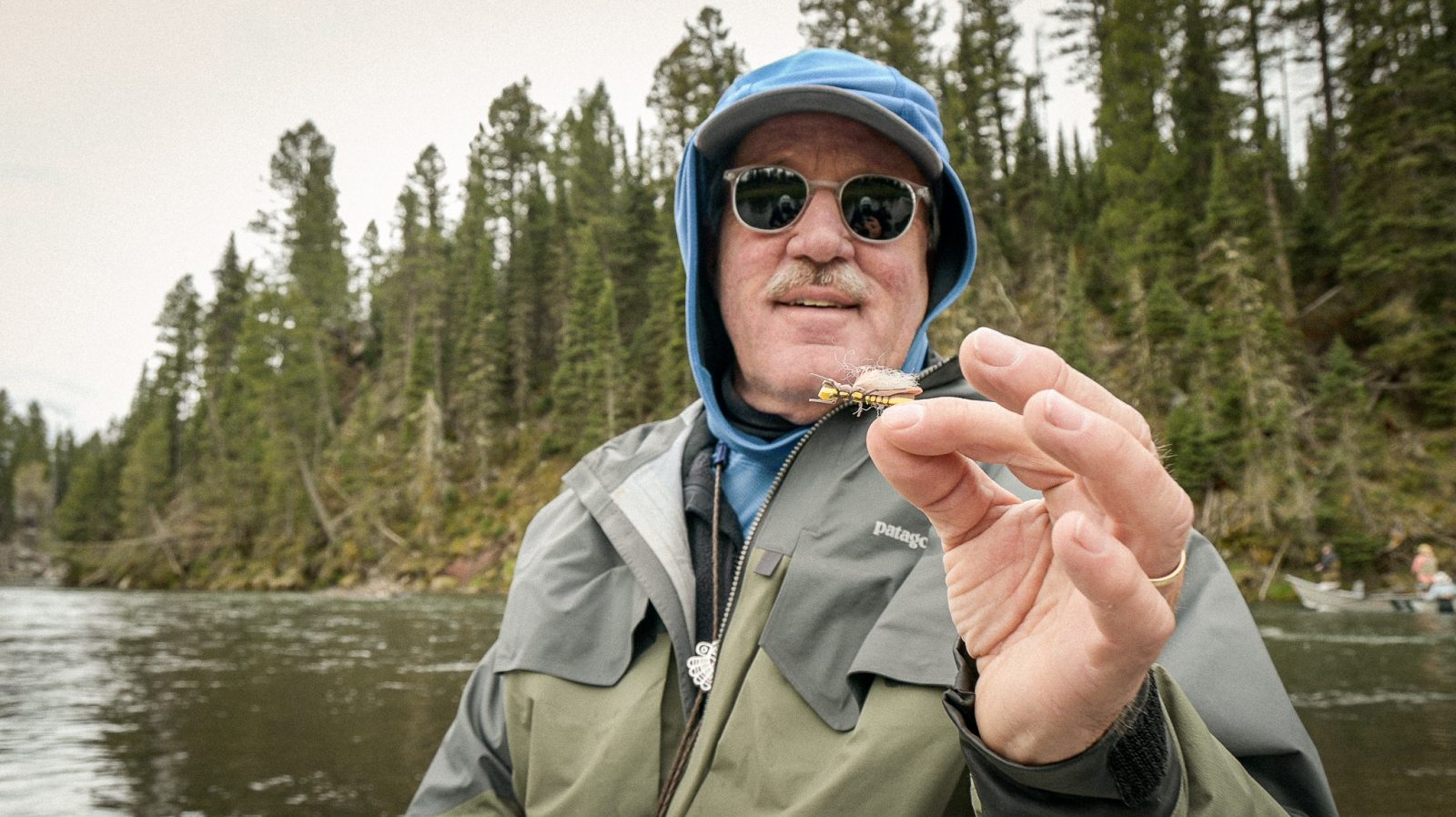
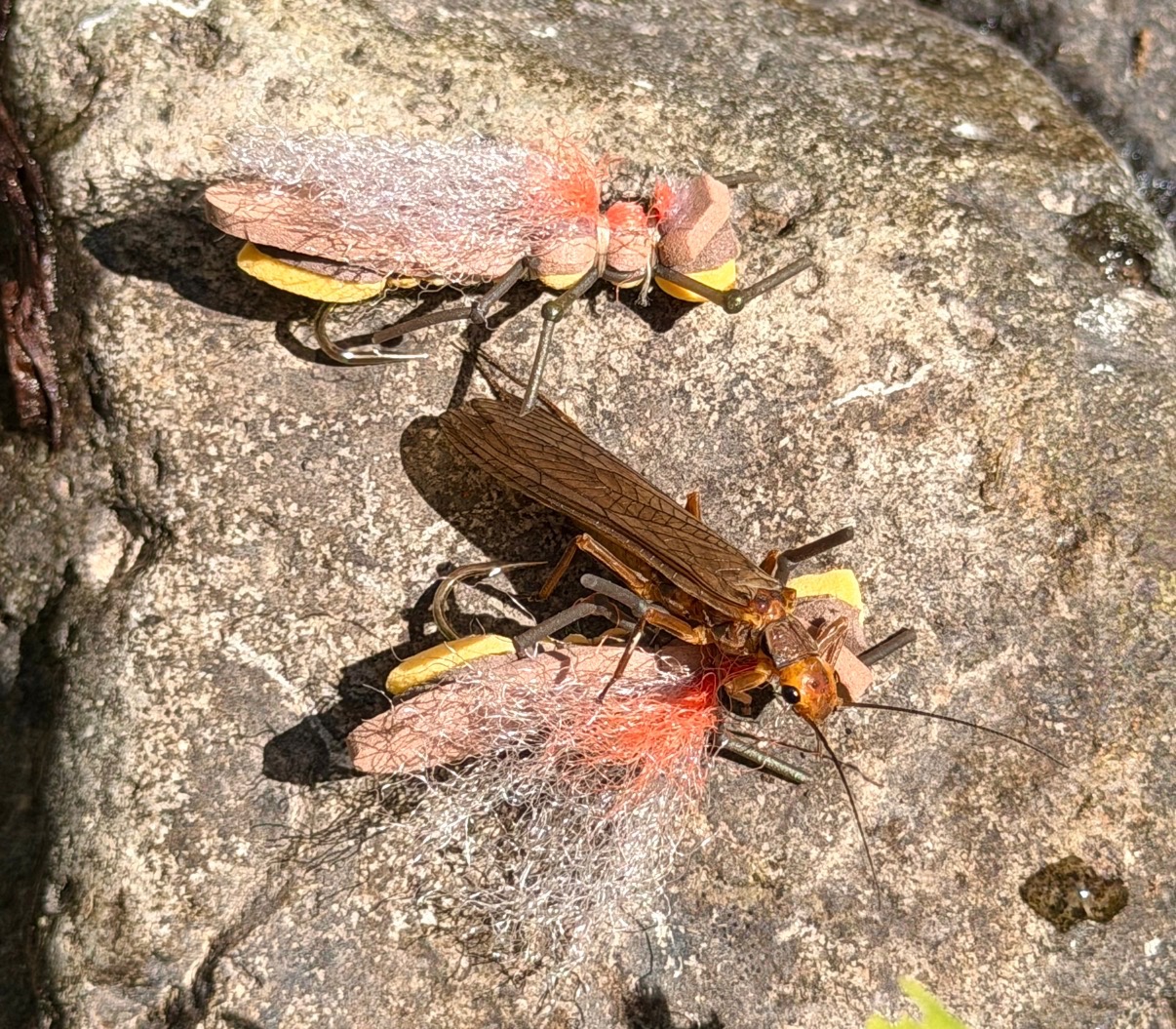
Stoneflies can be clumsy fliers, which is why they become so important to anglers. Female Golden Stoneflies directly oviposit their eggs on the waters surface where they sink to the bottom of the river. Female Golden Stones can be seen fluttering in tailouts and eddies looking for softer water to deposit their eggs, this is exactly where you want to be fishing one of our favorite flies from Fulling Mill Burkus’ Bareback Rider Gold Stone. It also is a great pattern to prospect promising water with a dropper below.
In a chubby dominated large foam dry fly scene, this fly especially stands out as a more delicate, realistic option. Typically, you have to use a simulator-like dry fly or Clark’s Stone that is a mix of deer hair and hackle to achieve a more realistic profile. The issue with using these more traditional Golden Stone patterns is that they lack the buoyancy of a large foam chubby and a tungsten dropper will just sink the fly. Ken Burkholder designed the Bareback Rider Gold Stone to be the best of both worlds, it is slim, realistic, but buoyant enough to withstand several eats, and run a dropper while still floating high.
We love to fish this fly as a buoyant first fly in our two fly dry-dropper rigs. Some of our favorite droppers which happen to be from Fulling Mill to run below The Bareback Rider Gold Stone follow: Olsen’s Blowtorch, Weiss’ Possum Anchor Jig, Yardley’s Low Hole Jig Fly, or a Weiss’ BP Dark Heavyweight Perdigon. All of these patterns have the slim profile that we are looking for in the summer. They vary in size and weight which is perfect as late summer flows and finicky fish require more frequent swapping of flies.
We also are especially fond of running small single dries behind the Bareback Rider Gold Stone. It is a great way to keep track of smaller dry flies when visibility can be difficult during the evening hatch, or casting into quicker water where trout frequently hold in the summer. The Bareback Rider Gold Stone floats high, is larger, and has a high-vis spot on the top, which makes tracking it in subpar conditions easier. We like to run these flies 16-20″ behind it: Croston’s Mass Attack, Tactical Light Cahill Parachute, Olsen’s Front End Loader Caddis, or a Dusty Old Bat Caddis. We will watch The Bareback Rider Gold Stone and it serves as a reference point for eats nearby, as well as being an irresistible dry fly itself.
Ken Burkholder’s Bareback Rider Gold Stone is a must have in anglers’ boxes across the Western US. It is especially important as a Chubby Chernobyl substitute during the late summer when fish get selective, and on pressured waters. Swing by the shop and load up on them, or shop online for them here and we will ship them right to your door!
-Simon