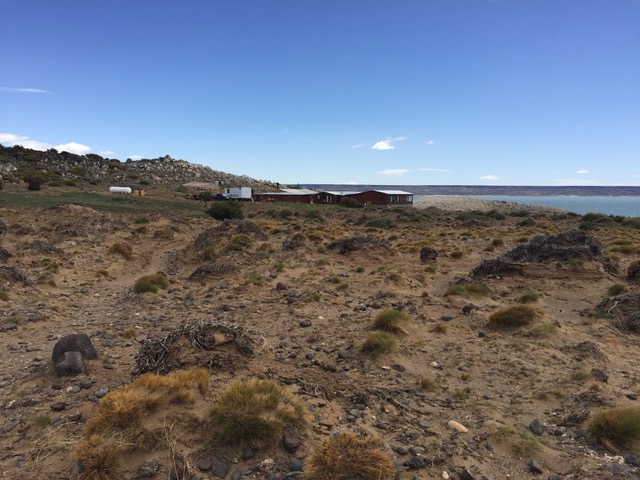
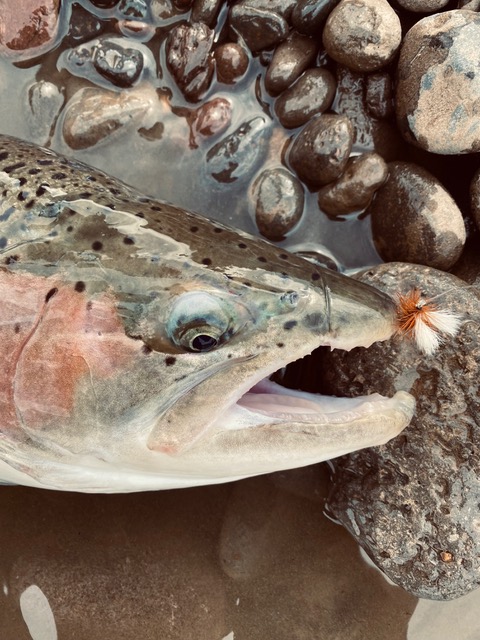
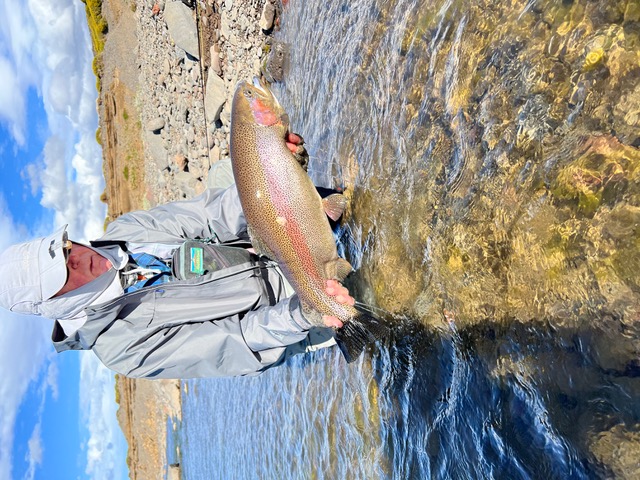
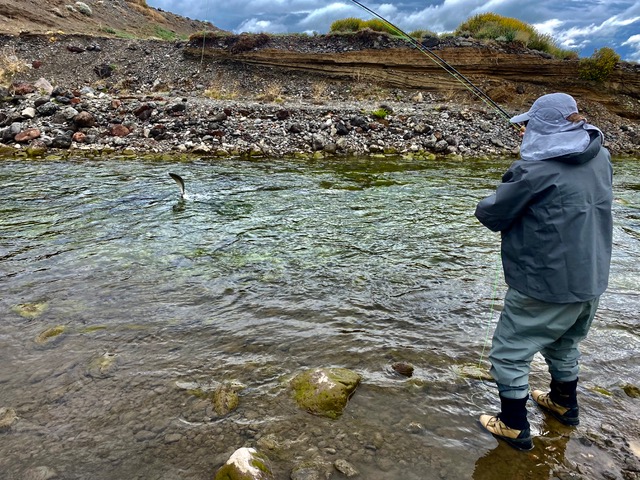
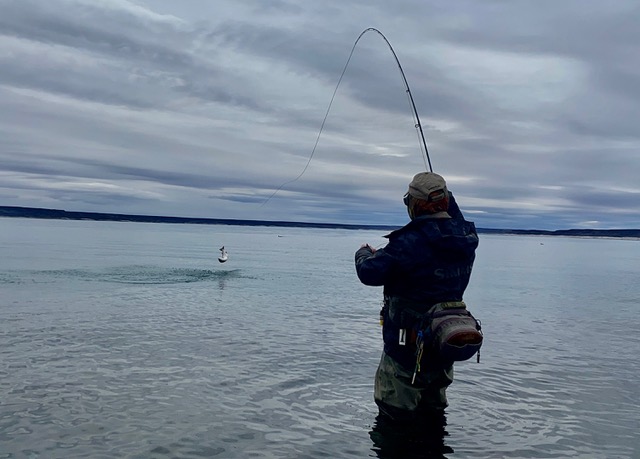
My son and I had a chance to fish Astove Atoll in the Seychelles this December. The Bulkhead Deceiver was the fly all week! Black, yellow and brown, pink and grey all fished very well for GT’s. This style of fly held up better to abuse than many other synthetic flies. The bucktail holds its bulk really nicely pushing water and creating enough of a disturbance to bring fish out of the surf. There is no question this fly would be awesome for Peacock Bass and other predators.
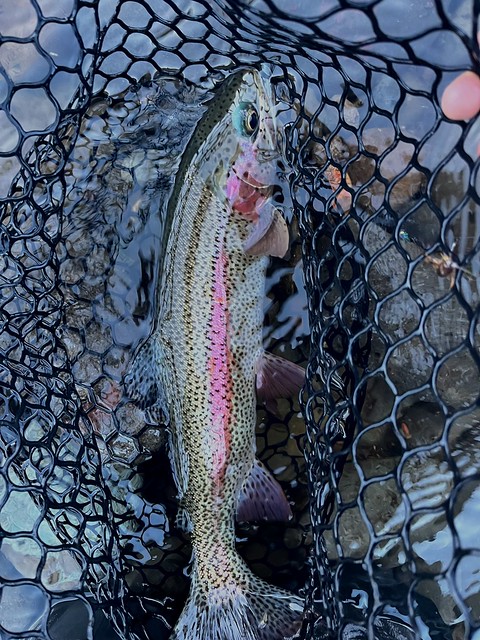
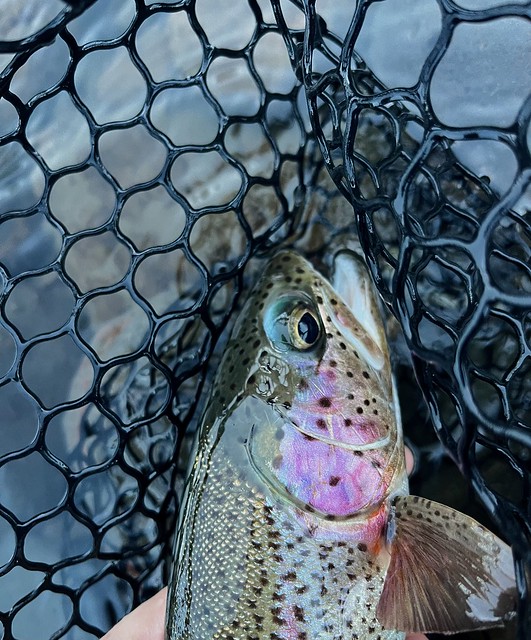
Cold Weather and recent high water in the past weeks has made trout fishing inconsistent. More recently in the last week or so on our local rivers, the Mckenzie and Willamette, the flows have subsided leading to more favorable fishing conditions. Hatches have been sparse with the colder weather, and nymphing has been the most productive approach by far. Larger flies have been working when water was higher, but now it seems the fish are more keyed in on smaller offerings.
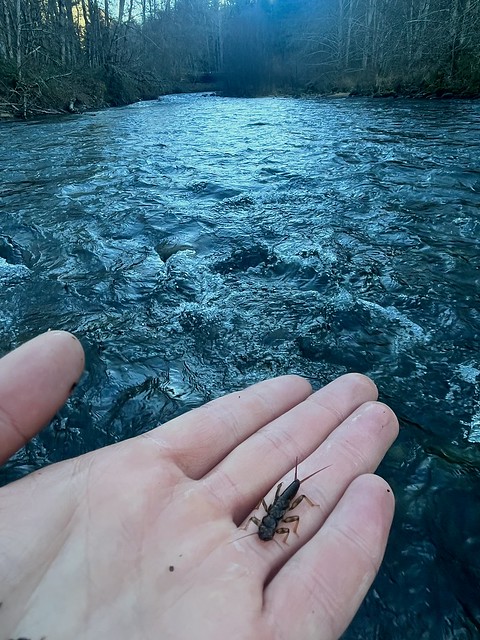
During the high water events, fish were found holding closer to the bank in the softer water and in large deep pools where they have to exert less energy to hold. High water nymphs include: Stonefly Double Bead #8, Jake’s Depth Charge Worm #14, Mega Pirince #8-12, Tunghead 20 Incher #8-12, Gummy Worm #12, or Tungsten Trout Retriever #8. When rivers are flowing faster, it is common for large stoneflies and other bugs to be pushed into the current. Pair that with heavy rains flushing worms into the system, and you’ll find trout holding on the edge of seams picking off large offerings being swept downstream. These larger flies are noticed more easily by a trout when the water is high and off color; hence why using a larger fly that stands out is important.
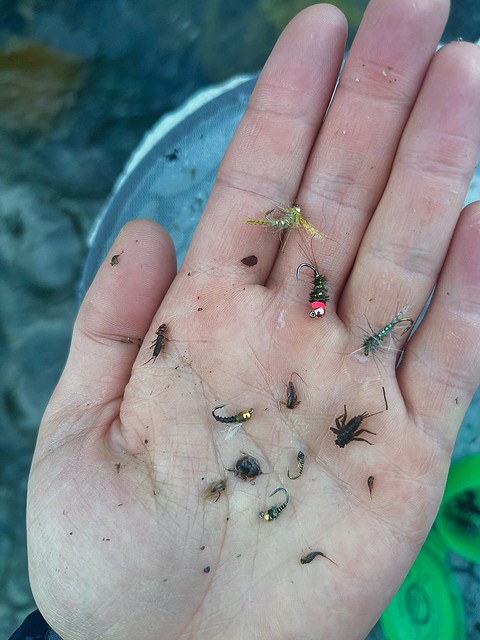
With flow levels coming down and water clarity improving, using a smaller nymph is more appropriate. Heavy jigged attractor patterns such as: Jigged PCP #14-16, Rainbow Warrior #14-16, Jigged Perdigon #12-16,Jigged Duracell #12 or a Jigged Frenchie #12-16 get down deep in faster water or deeper pools. When fishing water that is slower and softer, more realistic buggy looking nymphs often work better. The fish have more time to see your offering, so something more convincing and delicate will help. Good choices for slower, softer water include: Pheasant Tail #14-16, Galloup’s Peacock Hares Ear #14, Split Case BWO #18, Shop Vac #16, or a Zebra Midge #16-20. Drift these through the softer water near the seam and you’ll find willing fish. Letting your smaller flies swing at the end of your drift can also entice an eat, especially on warmer days before or during a hatch.
Cold weather has resulted in spotty Baetis/ Blue Winged Olive (BWO) hatches. Very few baetis will come off on colder days, but it is not enough to get the attention of the fish. On warmer days, however fish will key in on this hatch, and feed vigorously during the warmest part of the day. Unfortunately, most of January has been fairly cold or the water has been high, resulting in less than optimal conditions for the bugs to hatch. Fish can occasionally be enticed to eat at the head of runs, or in the tailouts; the likelihood of dry fly eats increases as the temperature does this time of year. If there are some warm days in the near future here are some great Blue Winged Olive patterns: Baetis Cripple #18-20, Hatchmatcher BWO 16-18, Film Critic BWO #16, Morrish May-Day BWO #17-19.
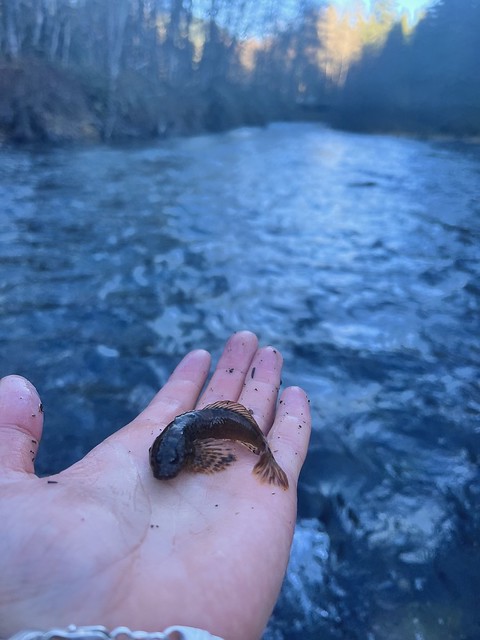
Streamer fishing can be good when flows are high. Small fish and sculpins can be washed down stream and provide high calorie meals to larger trout. Fishing a streamer at the head of a pool and stripping erratically will mimic a fish in a panic that was rushed downstream. When conditions are right, trout will key in on this and the streamer fishing can be decent. Streamer suggestions include: Thin Mint #8-12, Black Wooly Bugger #8-10, Olive Wooly Bugger #8-10, or a small sculpin pattern like Sculpzilla #8.
Our local waters are fishing well! Grab your gear, bundle up, and get out there!
Available here, this Sage SP+ 8wt came after the SP series. This fast-action rod is great for getting into the saltwater game but also an excellent backup for your upcoming season and trips. Comes with the original tube and sock for $425.
Alex Swartz demonstrates how to tie a proven euro style nymph pattern that resembles the “Brassie” nymph. We use this pattern for a hopper dropper rigs all year long. Alex uses a “3 at a time” wire wrap method that one can adapt to numerous colors and sizes of wire.
Available here, this G Series has the classic Scott action, perfect for summer steelhead and as your streamer rod. This rod is in nearly perfect condition, including the cork itself. Also comes with the original tube and rod sock for just $275.
Trivia winner prize – MiiR camp mug with artwork designed by Always With Honor
Native Fish Society will be hosting a trivia night, featuring categories such as “Native Fish of Oregon” and “Rivers of Oregon.” In addition to bragging rights, the winning team will also be rewarded with awesome MiiR mugs, featuring a leaping Chinook (pictured above). Teams of up to four people are welcome at this all-ages event.
Where: Ninkasi’s Better Living Room, 155 Blair Blvd
When: Wednesday, January 25th at 5:30 pm.
As always, feel free to bring friends!
If you have any questions or concerns, please reach out to me,
Since 1975, the Caddis Fly Shop has been providing fly anglers with the best tackle in the world. Whether that be in person or through our website, we’ve enjoyed the ride and the people we’ve met along the way.
Over the years, we’ve understood that the price point for those just entering the fly fishing world – or for those who are looking for backup gear – are met with financial barriers. Or, maybe you are just concerned with your impact and enjoy buying used items. Regardless, we’ve only offered used gear here in the shop in Eugene, Oregon.
As we head into 2023, we’d like to extend our used offerings to our online shoppers. We’ll be loading in our used items here. Each listing and blog post will be accompanied by a short video describing the product, maybe a bit of its history, and more importantly, the shape the product is in. We’re excited about this journey and are looking forward to seeing how it goes.
The Lost Salmon, chronicles the plight and potential recovery of the iconic spring chinook salmon of the Pacific Northwest. Faced with extinction in many river systems of the West, a new genetic discovery could aid in their recovery. Once teaming in the millions and a sacrament for the oldest civilizations in the Americas, time is running out for the genetically distinct wild salmon.
The McKenzie and Willamette Rivers are in fine shape and winter trout fishing has been surprisingly productive. For 2023 we are starting our normal Spring Special in Winter! Let’s hope the weather California is getting pounded with continues to miss us!
The “winter time trout specific special” is a nymphing focused excursion of about 5 hours and can accommodate 2 anglers. Cost is $375, timing is generally in the 10:30-3:30 range. Anglers bring their own lunch. Our guides will instruct indicator style nymphing as well as euro nymphing. Tactics, leader construction, flies and more will be addressed.
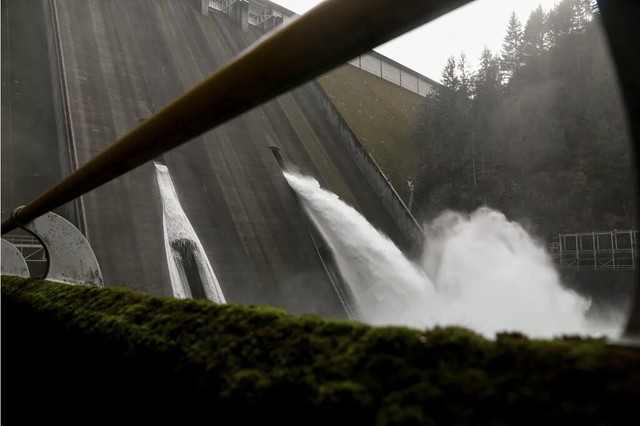
A plan that will reshape management of 13 dams and reservoirs in the Willamette River Basin is the subject of four meetings next week in Eugene, Springfield, Sweet Home and Stayton.
The U.S. Army Corps of Engineers is hosting the meetings after it released a 2,200 page blueprint for managing how it stores and releases over 500 trillion gallons of water used for drinking, irrigation and recreation in the Willamette Valley.
A public comment period for people to weigh in on the seven alternatives the Corps are considering is underway until Feb. 23.
“What we’re doing now will be important for how we manage the system for the next 30 years,” Nicklas Knudson, acting project manager for the EIS revisions with the Corps, told the Statesman Journal in December. “This is the best chance to directly affect how we manage this system in the future. At this point, we can still make changes.”
While the meetings are good for information and to ask questions of the Corps, people still need to submit comments via email (willamette.eis@usace.army.mil) or mail to PO Box 2946, Portland, OR., 97208-2946.
In-person planned meetings in the Willamette Valley This Week
Eugene
12:30-2:30 p.m., Tuesday
Lane Community College
4000 E. 30th Ave., Building 19, Room 102, Eugene
Sweet Home
6-8 p.m., Wednesday
Sweet Home Senior Center
880 18th Ave., Sweet Home
Stayton
Noon to 2 p.m., Thursday
Stayton Community Center
400 W. Virginia St., Stayton
What’s going on?
The document in question is known as a draft Programmatic Environmental Impact Statement. It took more than three years to complete and was last updated in 1980 and comes following years of lawsuits and court orders demanding the Corps retrofit dam operations to help native salmon and steelhead avoid extinction.
The plan lays out seven different “alternatives” for how the agency could manage the 13 dams and reservoirs. People can comment on which alternatives they like most and why.
The Willamette Basin’s dams and reservoirs, which stretch from Cottage Grove to Detroit and include major rivers like the Santiam and McKenzie, were originally designed to reduce flooding. That main purpose won’t change.
But within its secondary operations, and in the document, the Corps proposes some dramatic actions. Its “preferred alternative” — the option they’re leaning toward — includes fundamentally changing Cougar Reservoir and building multimillion-dollar structures to help fish pass through dams and regulate river temperatures. It includes scaling back hydropower, eventually scaling back hatchery fish programs and tweaking how much water is stored in the 13 reservoirs.
The links above will take you to the Corps documents.. While the entire document is massive the first part of it gives and abbreviated examination/explanation of the preferred alternatives.
The family and I got dressed up for the frozen tundra and made the float from Hendricks to Hayden. The fishing was surprisingly good and the weather wasn’t too bad either. We encountered absolutely zero bugs but nymphing was solid. The other surprise was that we did not catch one whitefish. Water temp was 44-46 degrees Fahrenheit. Air temps varied, we had sun, plenty of wind and clouds. Best nymphs were Sili Leg Stone and “Sens 20 Incher”.
EWEB Commissioners voted to decommission the Leaburg Hydroelectric Project at their first meeting of the year on January 3.
All five Commissioners voted to approve Resolution 2302, which directs the General Manager to develop a Leaburg Hydroelectric Project Decommissioning Action Plan (LDAP). The LDAP will guide staff in creating milestones for reporting progress to the Board and to determine a framework for how the Board can continue to provide oversight on the decommissioning process.
Commissioners also unanimously approved a Record of Decision in support of the “Management Recommendation: Future Disposition of the Leaburg Hydroelectric Project.”
The Recommendation advocates:
permanently discontinuing electricity generation at the Leaburg Hydroelectric Project,
removing Leaburg Dam and restoring the McKenzie to a free-flowing river in the project area,
developing access to Leaburg Dam Road on the southern side of the river, preferably through Leashore Drive and the Goodpasture Bridge, if possible
repairing the Leaburg Canal for stream and stormwater conveyance (SWC), while preserving the future option to completely restore the site to pre-project conditions,
working with water rights holders to mitigate the effects of dewatering the Leaburg Canal, particularly the Leaburg and McKenzie fish hatcheries,
conducting a similar assessment of the Walterville Hydroelectric Project by the early 2030’s, and
identifying opportunities and requirements for Board review, guidance, and direction moving forward.
Later in the meeting, Commissioners voted to approve the development of the LDAP as an organizational goal for 2023. Staff will provide quarterly updates on the Plan’s development.
General Manager Frank Lawson emphasized that decommissioning the project is a regulatory-driven process requiring several years of studies and negotiations with settlement parties before decommissioning construction activities will begin. Generation Manager Lisa Krentz added that the proposed timeline of beginning construction by 2033 is hopeful and that, to her knowledge, decommissioning projects routinely take longer than anticipated.
Meanwhile, staff will continue working on near-term risk-reduction measures on the Leaburg Canal.
Commissioners requested continued public outreach on the decommissioning process.
“As much information as we can get to the public – when we know or have a better idea – is important to me as a Commissioner,” said EWEB Board Vice President John Barofsky.
Throughout the year, EWEB staff will continue to provide updates through the Leaburg Canal Updates Newsletter, as well as scheduling meetings with interested groups to explain the implications of decommissioning on electricity rates, recreation, water rights, fisheries, and other considerations, as discovered. Staff will also advise interested parties how to participate in the negotiations between EWEB and various interest groups to develop a settlement agreement.
Once a settlement agreement is reached, EWEB will petition the Federal Energy Regulatory Commission (FERC) for approval and begin designing and permitting to begin decommissioning the project.
Angling Trade magazine (of which I am also editor) recently conducted a poll of folks with a stake in the business of fly fishing, asking what they considered to be the greatest conservation issue of the day.
Answer number one… climate change. No surprise there, but that probably wouldn’t have been the case even several years ago.
What do you think number two was? Snake River dams? No… that came in third. “Other” came in fourth. Protecting the Everglades was next, and Pebble Mine rounded out the condensed field, though for the record, we should all know that fight isn’t done yet at all. I swear, I’ve been covering Pebble for at least 15 years, long before I ever joined TU, and that mine just keeps popping up like the bad guy at the end of a B-grade horror movie.
Alas… conservation concern number two, amongst those who make a living in some form or fashion through fly fishing, was “angling pressure.”
In other words, to be blunt, how badly are we pounding the fish? How sustainable is all that (or not)? And do we risk loving some of our rivers and flats to death?
I’ve seen rivers where the fishing isn’t what it was, and I know that wasn’t caused by fire, flood, or other natural disaster. I’ve seen that happen in the salt too. I’ve said that playing a “numbers” game is not sustainable… I’ve warned that catch-and-release is not a foolproof “get out of jail free” card. Some fish die, even fish caught and released, and if you’re only gunning for numbers, you’re depleting the resources, whether you admit it or not.
I know… I know… I know…
“How many?” has been the benchmark for measuring success since Isaak Walton or before. When I call my own mother and say, “I went fishing today!” I know the first thing she’s going to ask is, “how many did you catch?”
I also know this very simple truth: People absolutely love to be taught how to fish, and they absolutely hate to be told how to fish.
If I tell you to pump the brakes when you’re on your hard-earned fantasy escape to Montana, you’ll be mad at me. If I tell a guide to maybe spend a little more effort teaching people how to fish with various techniques (actually guiding… guiding to me is about teaching) rather than netting fish and taking photos, catching as many as possible because that’s the only way Mr. Sport is going to hand you a crisp Ben Franklin at the end of the day… well, they don’t want to hear that.
But the truth of the matter is that in some places—not all, but some, throughout the country—a race to experience “how many” is a conservation concern. Or it should be seen as such. Because we can plant all the trees, fix all the bad culverts, advocate to remove dams, and all that good stuff, and if all anglers do is show up with the notion that pounding the living snot out of as many fish as possible is how to define success, none of the good mojo matters.
So what’s it going to be?
At face value, if you don’t want to pressure fish, don’t go fishing! Buuuzzzzzz. Nope. That’s a non-starter. I, like millions of other anglers, love fishing. Been in my blood forever, and I’m not going to change. Fishing, done with a sense of ethics, is, in and of itself, supremely vital, and anglers have been hauling the mail on ALL conservation from rivers to the ocean for generations.
But maybe we do pump the brakes a little bit. How? I don’t think permits and limiting angling days are the best answers, but believe me, those options are on the table.
Instead, I’m hoping that more anglers, and guides in particular, will see a more sustainable “less is more” plan. Follow the lead of the hunting demographic. Heck, follow the lead of the steelhead and salmon crowd in the Pacific Northwest, who have learned the hard way that the numbers game is a dead-end street for anyone with a conscience who wants to share the resource with others and see it last for generations.
Triple-down on learning the vast, wonderful options, and tackling the many challenges fly fishing has to offer.
That’s so much more rewarding than winning some imaginary contest where you bag 50 fish in a day using some rudimentary technique that was conjured up, by its very nature, to afford any person with no angling skill whatsoever, to feel the thrill of catching a fish. Endeavor to transcend.
Different rivers have different tolerances. Same for the flats. If it’s on, and you’re on… go baby go. So yeah, sure, there can and should be bonanza days.
But it’s time we all started picking and choosing where and when that happens more carefully, and understand that we… you… me… every angler who steps into a river, is indeed a “conservation factor.”
That’s the elephant in the room, and it’s time for all of us to admit it’s there, and work together to figure things out.