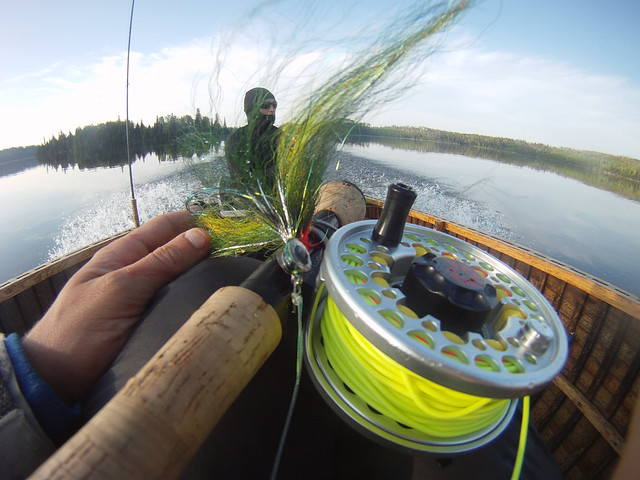
A recent trip to explore fishing for hatchery trout growing robust in Diamond Lake proved that these cagey trout are tough to hook, even more difficult to land, but are well worth the effort. Stocked as fingerlings only a few inches long, these rainbow trout grow to monstrous sizes. If one finds the right fly and is willing to fish for days-on-end, it is possible, though rare, to actually hook one of the leviathans.
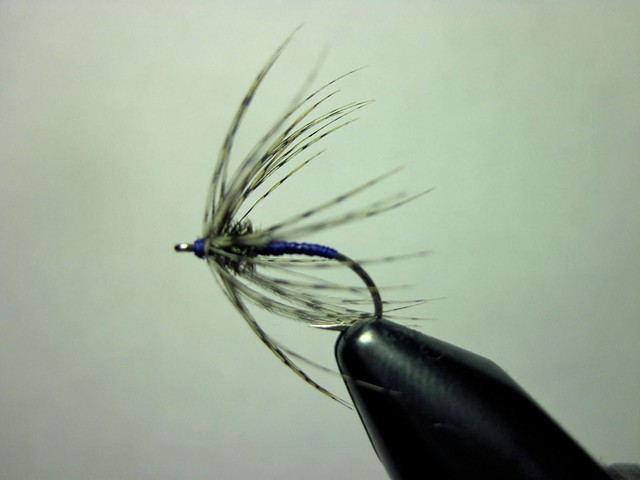
My recent venture to the lake started by testing some likely fly patterns by tossing a handful of candidates on the floor of the den and seeing which, if any, my young cat, Boomer, preferred. His choice was clear and consistent, as shown here by his interest in this Purple Intruder.
Purple Western Soft Hackle – Tying instructions and more….
This article is going to coversome key points about tying and fishing Soft Hackle flies for trout and steelhead. I will ramble on about names of Soft hackle flies, best fly sizes, how to fish the little (and big) flies, weighting issues, application of Soft Hackle flies to your favorite steelhead stream, and a basic tying video.
How many soft hackle fly patterns are there? I don’t know. The Partridge and Yellow may just be the most famous. Substitute green for yellow, orange for green, scarlet for orange, or …. Get the idea? Soft hackles are tied in many variations with and without names. The naming convention helps label the bins in our fly shops, and helps us fly fishers communicate with each other when we are reporting the hot Soft Hackle of the day.
As in – “I was having great success on a size 12 Partridge and Yellow;” when in fact, the truth is that a size #16 Peacock and Grizzly Soft Hackle was the savior of the evening fishing. Not that trout fly fishers ever resort to low-life tactics of mis-information like salmon fly fishers may practice.
Some of the Soft Hackles you should think about fishing and tying include the following flies: Partridge and Yellow Soft hackle; Partridge and Green; McKenzie Green and Peacock Soft Hackle; Western Purple Soft Hackle; Scarlet and Grizzly Soft Hackle; Scarlet and Brown Soft Hackle; Grey Hackle – Yellow tail Peacock Soft Hackle: Black Peacock Soft Hackle; Black Pheasant Soft Hackle; Peacock and Partridge Soft Hackle; Carey Special soft Hackle; Pheasant Tail soft hackle; Peacock and Starling Soft hackle.
Soft hackle fly sizes? The question as to best size fly when tying and fishing soft hackles is one of those, well, it depends on where, when and so on issues. Big Soft Hackles represent the largest caddis flies, the smaller soft hackles cover smaller mayflies, caddis and such. I tie soft hackles down to #18, not easily mind you, but the sub size #12 are the heart of my soft hackle arsenal. It is not entirely critical to match hackle size with hook size with Soft Hackle flies, at least not as much so as it is with dry flies. One may compensate for a little over-size hackle on a #16 hook by using only one turn of hackle, and the fly will fish very effectively.
Partridge and Grouse feathers are two feathers that are traditionally associated with Soft Hackle flies. That said, I far prefer Partridge, Grizzly Hen capes, Whiting Brahma Hen saddles, Starling skins, and Whiting Hen capes in various colors – as compared to Grouse. But given my state of learning as time marches on, I could change my mind and come to love Grouse too. Who knows? Starling Skins are my newest discovery and really offer a nice range of dull hued very small feathers for my smallest Soft Hackles.
Impressionist rather than imitative. Yeah. Soft hackle style flies are what I would refer to as impressionist flies, as I think that they can be taken by trout as a general, close enough, just might be a such-and-such insect. Sometimes we fish a dry stonefly or an October Caddis. In these cases if a trout takes our fly, the fish probably thought it was about to eat a great big juicy caddis fly. When a trout slurps a size 13 or 15 sparsely dressed soft hackle, swinging just under the surface in glassy or riffled water, the fish could be thinking … Caddis! On the other hand, the fish could be thinking … Mayfly! Again, more often than not, when there are many insects hatching, the fish could simply be thinking …. Bug (food)!
How to fish Soft Hackle flies? Start fishing dead drift with slight upstream cast, and even sometimes straight upstream to feeding fish. Cross and downstream presentation will deliver a swing rate based on current speed from slow to brisk.
Most of my soft hackle experience has been on the Deschutes, McKenzie and Willamette. The Metolius is a place where I have never ever, been successful fishing soft hackles on the swing. Anyone who can explain this gets one free soft hackle in the mail. Really.
Traditional soft hackles are tied un-weighted, and this makes sense, because they are intended to be presented to the fish just under the surface. Now, if one looks at a Carey Special for lake fishing, or at a big October Caddis Emerger as soft hackles, then one could indeed weight these depending on the depth of water and current speed.
Soft Hackles for steelhead? Absolutely. I have not managed this feat myself, but a close friend has had days on the upper Deschutes when summer steelhead rose deliberately and repeatedly to #14 and #16 Partridge and Green Soft Hackles. This was a many fish, many hour experience, not a one fish deal. Another friend has had similar experiences on the Upper Rogue anytime from July through September, and again, this involved many fish and many days. The Klamath is another place I have not fished, but where I have friends who regularly catch summer steelhead on what we consider trout-size Soft Hackles. And here is one final example: the North Umpqua. A fish biologist friend swears by a #12 pale olive and Partridge soft hackle in the months of July and August when fishing pressure is high and water is crystal clear. Quite different from traditional steelhead wet flies, leech style steelhead flies, and splashy dry flies, but think about this alternative next time you head to the North Umpqua.
Soft Hackle Trout Flies Part 2 – Hooks, Thread, and Body Materials
Following on our recent post on selection of feathers to hackle Soft Hackles (a mouthful to be sure), this is a short article on hooks and body materials that are best suited to tying Soft Hackle flies.
But first – to capitalize Soft Hackle or to not capitalize soft hackle? RR would have an answer, as would any worth-his (or her)-salt editor, but I refuse to either consult these persons or to conform to their dictates. So I will proceed to capitalize or not, and to do so somewhat randomly, just for fun. Thanks for your patience on this quirk, just one of many I assure you.
Hooks? Let’s get down to it. I prefer wet fly hooks with enough wire heft to keep the lightly-hackled, squishy little fly under the surface when it is swinging across and down. My personal preference is to un-forged, round wire hooks, but the Alec Jackson hook has caught my eye and now has a secure place on my fly bench. This is the absolute truth, within the context that nowadays, my preoccupation with salmon and steelhead flies on larger shanked hooks and on tubes takes up a lot of space on my bench. That said, I still have a neat little corner, densely packed with my soft hackle hooks. There. Confessed.
Favorite hooks for tying soft hackles are as follows: TMC 2488 this is a sleeper hook worth considering for Soft Hackles. Straight eye, 3x wide gape, 2x short, curved wire, fine wire. This allows one to use a smaller size hook with greater hooking ability TMC 3761 – this is the gold standard: round wire, Sproat bend, wet fly and nymph hook, in a 2x heavy, 1x long version. This is the hook I would choose if I wanted to tie a Soft Hackle for summer steelhead. TMC 3769 – Just like the TMC 3761 without the extra length. Great standard nymph and Soft Hackle fly hook. Thread: Daiichi 1560 – very nice Sproat bend, round wire, bronze finish standard wire and length hook. Oddly, perhaps, but this is my personal favorite for soft hackles. Have no idea why.
Alec Jackson North Country Trout Hook – an elegant and exquisite wet fly hook especially suited to tying Soft Hackle flies. This is what I would call a Limerick Bend, lightly forged at the bend, 2x short needle point with mini barb. These Alec Jackson hooks are made by Daiichi at Alec’s specifications and are beautiful and functional hooks. These are a nickel silver finish that adds a little sparkle to the fly. Nice touch. There is a 1x fine wire Alec Jackson Crystal North Country hook offered also.
Thread and body materials for Soft Hackles? I have become fond of using Pearsall’s gossamer silk thread and marabou silk floss. Frankly, I had zero experience with these two materials before Marcos Vergara at Hareline Dubbin nudged me to try them recently. I did my homework, read up on the Pearsall’s thread and floss, tied with the materials, wrote about them, and am a full-on supporter of Pearsall’s silk threads and flosses now.
Other body materials for Soft hackles? These include all the usual suspects, like Ice Dub, Hareline Sparkle Dub, Pheasant tail fibers, peacock herl, and the like. My advice, for what it is worth, is to keep body materials relatively slim, unless of course if you are imitating a big juicy October caddis or dragon fly, in which case you could use good old tried and true chenille!
I hope these ideas and the videos help you sort out some of the mystery and get down to the fun of tying and fishing soft hackle trout and steelhead flies.
Our next related post will be tying an actual Soft hackle fly, the Purple Western Soft hackle. Fun.
From the Clackamas Bull Trout working group: In the past, bull trout were abundant and widely distributed in the Willamette Basin, including the Clackamas River. They were a historical component of the river’s native fish assemblage that evolved over thousands of years. Currently, bull trout are extirpated from the Clackamas River Subbasin; there have been no documented sightings of bull trout in the Clackamas River since 1963. The bull trout was listed as threatened under the Endangered Species Act by the U.S. Fish and Wildlife Service in 1998. Efforts to recover the species are underway, including restoring the species to areas from which it has been lost.
Years of planning by many agencies and organizations will culminate next week with the initial transfers of bull trout from the Metolius to the Clackamas River. Transfers of fish will continue through July this year and will continue annually for likely the next 7 years. All bull trout will be released in the Clackamas and tributaries upstream of the Collawash/Clackamas River confluence. All bull trout released in the Clackamas will be listed as threatened under the ESA but will be designated a “nonessential experimental population”, a designation allowed under Section 10(j) of the ESA that allows for more flexible management of the population and without the stringent protections typically afforded a federally listed species.
Left Eugene at 3:15am for the North Coast, cow country estuary. Sand dunes, spring chinook, Sitka Spruce, scrub grass, seals, starfish, sea stacks, surf shops, shitty coffee, surly locals. Stepped out of the car at 5:30am into the misting then pouring rain. Pulled on my Gore-Tex, hood down around my face, tunnel vision. Rain pooling up to our ankles in the bottom of the boat. The tide pulling the river into the ocean, surf rasping against the beach, a red buoy two miles away clanging in the wind. Sunless grey sky, casting across the hole, stripping in on a slow diagonal swing. We’ve formed a circle around the pool full of shifting water, out pops a big dorsal, lead-colored back, a white belly, silver gill plate, up and down again. The rain breathes through the clothes, smears down my arms, under my collar. Captain Jeff hooks a salmon on a RR special, it tears around the entire pool just below the surface before coming to the net. Rob looks at me, says catch something so we can get the hell out of the rain. We don’t. Instead, we call in a chowder and coffee order and row under the bridge to eat it like fishless trolls.
Soft hackles are an often overlooked but always an important element of our trout fly fishing tackle complement. Here is a short video where I review some of the best soft hackle feather materials that we all have access to these days, with soft hackle flies as our search image.
Each of the feather types featured here offers excellent qualities for creating soft hackle flies, and yes, there are times when small soft hackles are just what summer steelhead want to eat. Fish the upper Deschutes, Upper Rogue, the Rogue Canyon, or the North Umpqua, and Klamath – if you put your time to good use, you are likely to find evenings when a size #10 to #16 soft hackle will be taken with confidence by summer steelhead anywhere from July through October.
Browse this video and my notes below about these great feathers. Hope this tutorial helps you tie your best soft hackle trout and steelhead flies ever.
Hungarian Partridge (full skin): this is possibly the best source of soft hackle hackles ever. Domestically bred and raised birds are perfection, and available in natural and dyed colors. I use feathers from the tip of the skin for #16s down to feathers over the back for #10s. Feathers at the tip and sides of the skin are black and white barred, feathers straight down the back are brown/bronze striped. The bars are fine and the fish love the look of flies tied with partridge as much as we love their traditional look. Zero waste and the feathers are sorted for us on the skin by size. Partridge feathers are relatively short, so I find I must be quite slow and easy winding them
Metz Grizzly Hen Capes: these are another amazingly versatile source of soft webby feathers, easy to tie with, and we can use these Metz hen cape feathers for our smallest soft hackles and our steelhead Silver Hiltons also. Oh yes, the tips of these feathers allow us to create wings on dry and wet flies from tiny to steelhead size. These hen cape feathers are long enough that it is fairly easy to wind one to four wraps of hackle and still have plenty of feather to hang on to. Zero waste, wide range of flies, and ease of use are major advantages.
Starling Skins: I had always wondered about this product and who was using starling feathers for what. Well, now I know. These are apparently used as cheeks on traditional streamers and Atlantic Salmon flies, but they also shine if we want to tie small soft hackles with dark grey hues. These starling skins offer very low price, very fine feathers and zero waste. The feathers are short and fine, they wind nicely, but I had to be very careful with my nubby salmon fly tying fingers and handle these feathers with a delicate touch. Too short to tie with fingers only, these will require you to pull out and apply your hackle pliers. One or two turns of these feathers and your soft hackle is ready to swim.
Whiting Brahma Hen Saddle: This is my preferred hackle for larger soft hackles, lake wet flies in the #8 & #10 range, and similar size summer steelhead wet flies. Zero waste, size graded on the skin, and nice barring. The feathers are denser than partridge but the overall barring is very similar.
Whiting Hen cape: these have all the properties as the Metz Hen Capes discussed above, but are available in browns and duns. Easy to work with, exquisite fine feather stems that wind marvelously, and never any waste. Soft hackles, wings, and collars on all manner of wet flies, streamers, and nymphs.
Wapsi India Hen capes: these are a more colorful analogy to starling skins, beautifully marked, easy to tie soft hackles, wings, beards and collars on all manner of small trout flies. Hummmmm. Bluegill would take these flies too, methinks. These also call for a delicate hand, like the Partridge and Starling feathers, but the care is worthwhile when you see the finished fly.
Soft hackle flies can imitate emerging Mayflies, Caddis flies, midges, and just plain old trout food. Sometimes we think we know what we are imitating, but I think sometimes trout and steelhead just take these little wisps of a fly because they look interesting and sort of like food. My personal preference for tying soft hackles is to use from one to three turns of hackle. In other words, I like to make soft hackle flies fairly sparse. Three turns of starling is about as dense as two turns of Metz or Whiting hen hackle, because the Starling is a finer fiber feather. The Whiting Brahma Hen Saddle is perhaps the most dense fibered feather of the ones reviewed here, and I prefer these for flies in the Carey Special family to imitate big juicy lumbering caddis struggling to the surface to emerge. Keep in mind, also, that most of these feathers make great collars on nymphs like the Prince and our good old standard wet flies like the Royal Coachman, Leadwing Coachman, and oh yes, I almost forgot …
Remember how effective a Grey Hackle Peacock with red or yellow tail was in years gone by? Let’s be clear. These flies, tied with a Metz Grizzly Hen Cape in sizes #12 – #16 are still deadly for trout, and in sizes #4-#8 are wonderful summer steelhead flies too.
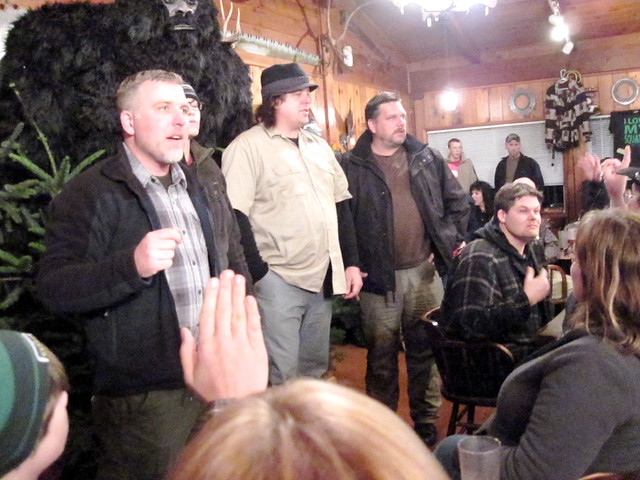
After watching the recent episode of Finding Bigfoot on Animal Planet, I can finally say that I’ve had my fifteen minutes of fame. Bob Welch wrote up a column on the show in the Register-Guard, friends sent me photos of me on their TV screens, and people I hadn’t talked to in ages came out of the woodwork on Facebook, freaking out.
If you missed it last night, I suspect Animal Planet will replay the show. Or you can check out this bootleg version we found on YouTube:
Stay tuned for Caddis Fly Squatch gear coming soon.
-MS
Matt Stansberry demonstrates how to tie two versions of Dahlberg Diver style flies. We love these for Bass, Pike, Muskie, Freshwater Dorado and more. Spinning deer hair can be intimidating we hope that these videos dispels some of difficulty in tying good looking spun deer hair heads. Continue reading →
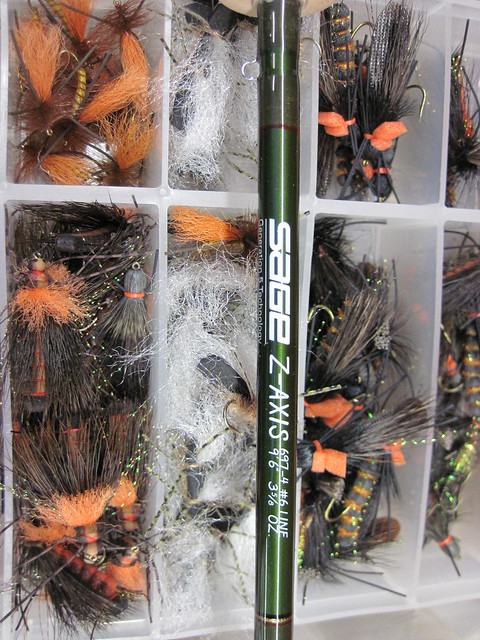
Sage has given dealers the green light to discount Z-Axis single handed fly rods just in time for fathers day. See note below from our Northwest Sale Rep, Spey casting guru and hunter extraordinaire George Cook.
Many of you already know , have guessed or sniffed out that the successful run of the ZAXIS Single Handed series has come to an end. While August 1st was the INITIAL DECLARED date for Reduced Blow out pricing on the US Retail front, various circumstances (The usual Media suspects…Web/Blog/Twitter/Facebook) have already taken such Viral and today the decision came down to announce the Discontinuation of the Single Hand portion of the ZAXIS Family. In essence this is a “Green Light” to put on SALE as you see fit. Please bare in mind that ZAXIS SPEY and SWITCH Rods will CARRY OVER INTO all of 2012.
Check out the existing and ready to ship or pick up inventory at the following links.
Lest anyone think springers to the fly are easy or common here in Oregon. The bay is practically deserted. I put in early and fished the north flats. Then south flats. No fish or fellow anglers.
Determined was I. Bored was I. Lonely. Does trolling a Comet count as fly fishing?
The tide turned. Heading for the boat ramp, I see two Kings roll in 3′ of water. Anxious to set up and cast before turn of tide. I anchor in a foot of water, ease into the water (darn near fell in), and cast from a sand bar. Continue reading →
Honest reporting here at OregonFlyFishingBlog.com, Jay Nicholas sent this to me “real-time” this afternoon but I was so busy fielding calls from women seeking feathers ( super impossible to get feathers) I couldn’t get the post up till now.Continue reading →
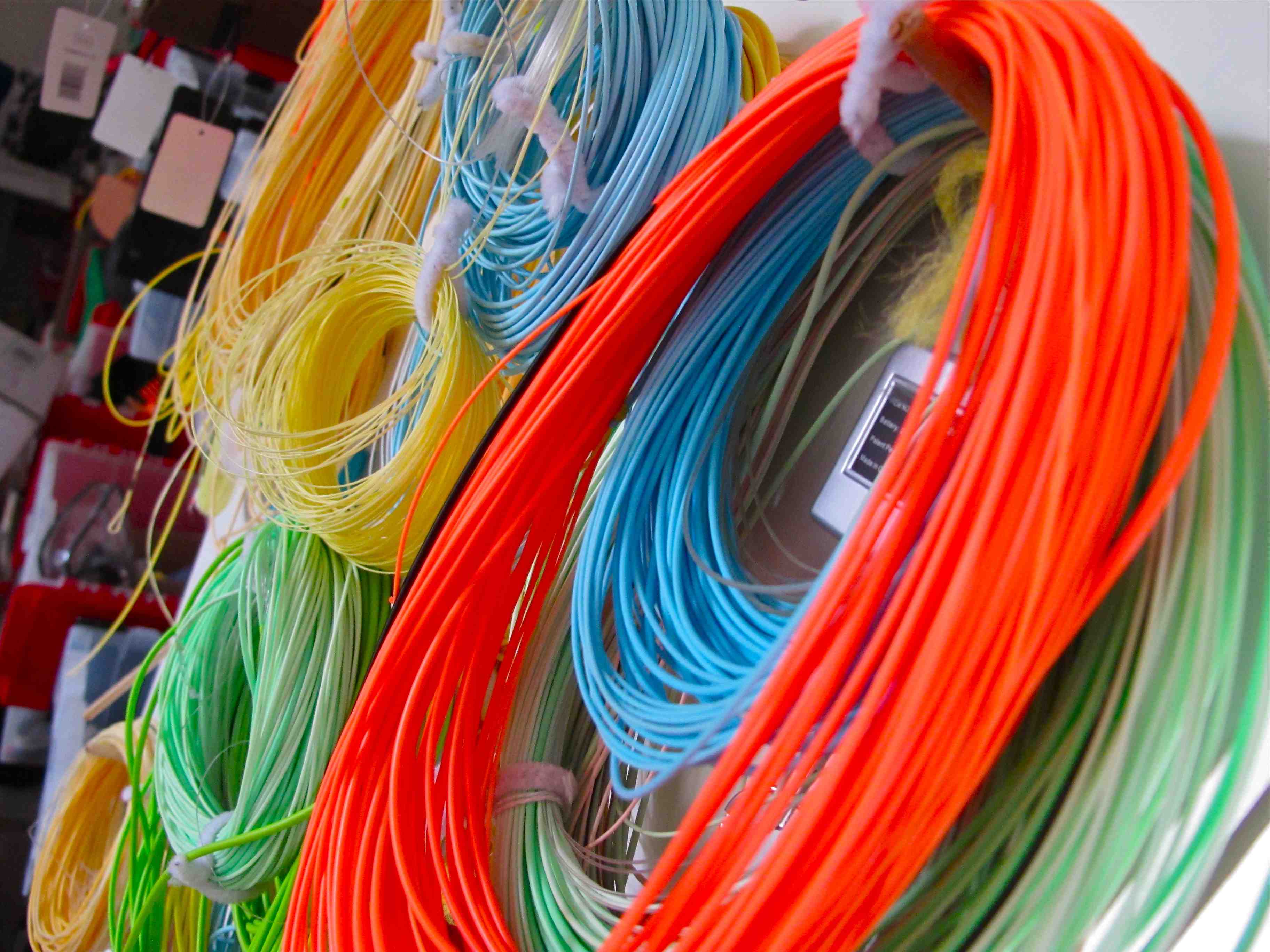
As promised, this here blog entry is a humble attempt to sift through some of the mystery involved in our contemporary – and technically dizzying array of fly lines we have at out hand in our local fly shops and Internet Catalogs. Chris Daughters, with the purest of educational intentions, invited knowledgeable folks who represent our big three (Rio, Airflo, and Scientific Anglers) to answer a few questions about their fly lines. Those Q & A will be at the tail end of this blog post, for anyone who wishes to read the technical information they offered. Continue reading →
Over the past two decades, I’ve only missed two trips with my family for our annual pike trip, including this year. And according to Nate, this was not the year to miss. Last year summer came early, the water was the lowest I’d ever seen it, and the big pike were locked into a summer pattern, sulking in deeper water most of the day and not hanging around the shallows. This year the water was high, the weather had been cold, and the pike spent the best part of the day sunning themselves and feeding on the flats. Nate said they had a 40-inch fish to the boat every day. Good times.
The McKenzie River has dropped into nice condition of late and the Middle Fork of the Willamette had a day or two under 2000 CFS last week. Warmer water and air temperatures have spurned more insect activity of late. Continue reading →
Our big debut on Animal Planet is one week from this Sunday. Mark your calendars for Finding Bigfoot, Jun 19, 10:00 pm.
From the Animal Planet Website: Bigfoot expert Matt Moneymaker takes his team of specialists to Oregon to examine a video taken on a rafting expedition. While investigating, the BFRO team hears a sound in the middle of the night that they believe could prove the creature’s existence.