Echo/Airflo Demo Day: Buy a Rod or Bring Your Rod!

Join us this Saturday, July 16, from 11:00am to 2:00pm at Alton Baker Park ponds for Echo/Airflo Demo Day. Dan Marshall our Echo/Airflo rep, will be at Alton Baker park with the entire Echo Rod line up AND Airflo lines. Ever think about balancing out your spey,switch or your single handed rod with a line BEFORE you sink the bucks into a line? Thinking of getting a new outfit? Here is your opportunity! Bring your rods down and you can test cast the Airflo lines; Trout Lines Ridge, Sixth Sense and 40+. Spey Lines and Switch Lines; Scandi Compact and Skagit Compact will also be available to test cast.
deltaspey

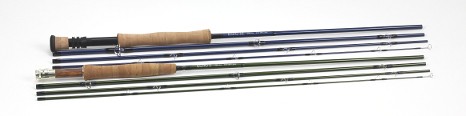
The new series of Echo 3 line of rods will be present and ready for casting.
echo_3

If you are looking for a new outfit Saturday is the day to demo and cast some great outfits at a great price! See you there!

effects clomid

Posted in Shop Sales and Specials | Leave a comment

Sneaky Pete Hits Diamond Lake Again

boat launching

Diamond Lake is windy but fishable. Rented boat at marina. Fished damsels and callinaetis nymphs in 40′ weeds. Rainbow trout looked a lot like black rockfish, lingcod, and blue rockfish. Must be a hatchery breeding anomaly. Note to self, call ODFW to complain. Continue reading

Posted in Oregon Saltwater Fishing | 9 Comments

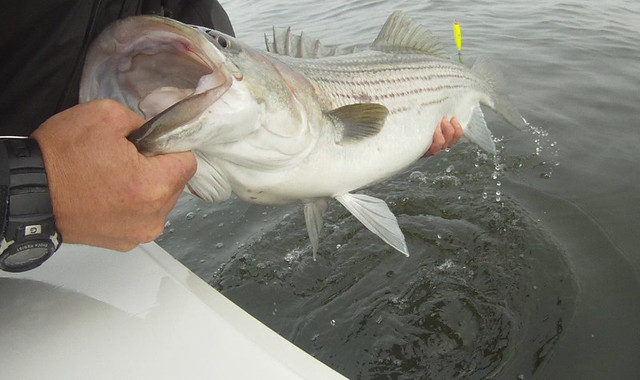
Huge stripers hanging around NYC this weekend

This morning I fished with Capt Ken Jones out of Brooklyn, NY. The striped bass bite has remained hot later than expected into the summer. Weather patterns have consistently pushed cooler water close to shore, keeping the bunker schools and marauding stripers within easy reach from NYC.

NYC Striper
Continue reading

Posted in Fishing Porn, Fishing Reports, Fly Fishing Travel | 2 Comments

Check flows, and the Water temperature too!


Flows out of Foster Reservoir dropped this week, and the change brought the South Santiam River into an ideal range for fly fishing for hatchery summer steelhead anywhere from Foster Dam downstream to Waterloo Park.

The graph above shows the abrubt drop in stream flow just below Wiley Creek. Continue reading

Posted in Fishing Reports | 3 Comments

McKenzie River Osprey Rescue

I like critters of all types, but I happen to have a special affinity for ospreys. It is hard not to like a bird that spends it’s whole life fishing. A friend and I were out in canoe the other day on Leaburg Lake, when we saw a raptor of some sort sitting on that little island below the covered bridge. Thinking at first that it was a turkey vulture eating the deceased, we paddled up for a closer look.

“That’s not a turkey vulture, that’s a friggin’ osprey. Why is it just sitting there? Something is wrong with that bird.”

There it was. Mono wrapped around one foot and a wing, pellet head still dangling off of the end. It could neither fly nor walk. It was, however, still well within its capabilities of looking seriously pissed.

We backed the boat off and debated netting the bird and unwinding it ourselves. After having a long look at the feet and beak on that thing, we thought better of it. We hit upon the idea of calling the Cascade Raptor Center, in Eugene. Luckily, they answer their phone 24/7. They made a few calls and had a staff member standing on the new EWEB ramp in under an hour. We pulled the canoe up and ferried the Raptor Center person downstream to the bird. It was pretty amazing to watch the skill with which she handled that bird.

The big take away here: Clean up your line. Clean up everyone’s line, really. RG

Posted in Uncategorized | 18 Comments

Trout Unlimited Whilamut Planting and Restoration Scheduled for Saturday

July 9th, 9:am-Noon: members of the McKenzie-Upper Willamette Trout Unlimited, Chapter 678 will continue with their mission of preserving cold flowing water, removing invasive weeds and restoring native habitat. We will be eliminating annual and perennial weeds and mulching native trees and shrubs. This is an amazing location located in the heart of the Whilamut Natural Area of Alton Baker Park (see map).

Stay for an hour or for the morning. Tools, materials, gloves and snacks will be provided by the City’s Volunteer Program. Hope to see you there.

TU_Planting_map

Posted in Oregon Conservation News | Leave a comment

Product Reviews from a Gearhead …….

I love gear. I am a gear head. Once, before my heart surgery, I would actually maintain my fly fishing gear in a neat, clean, organized manner. Not nearly so these days. I routinely ignore fly reels that would have been washed each night, fail to wipe down my rods, almost never un-spool and re-spool fly lines, rinse salty flies in freshwater and dry them with a hair dryer, wipe my waders clean, re-organize my fly boxes, and so on. Nope, not these days.

I still love my gear though, and have found a few items particularly useful. Here, in the spirit of blatant commercialism, are a few of my favorites. Is this an advertisement? A product endorsement? Do I receive compensation from these manufacturers? Common, folks, this is America. We are in an economic downturn. The only way the future will be bright is if we spend our dwindling retirement funds on fishing tackle. Seriously. These dollars provide each of us with cool fishing tackle and in turn are spent on fly shop employees, owners, children and pets of afore mentioned persons, internet consultants, wages for UPS drivers, monthly cell phone fees and service charges (read the fine print), free coffee and pastries for walk in customers, annual parties, charitable contributions to Trout Unlimited, roof repairs, electricity, water, paper towels in the restroom, garbage service, a new Koffler boat for Chris, lunch for employees, and vacuum bags. And that’s the short list.

Here are a few of the gearish items that I really really love and have come to depend on when I go fishing at Diamond lake.

Simms Bootfoot Waders. That’s right. Much of the fishing I do is from a boat rather than on the treacherous waters of the North Umpqua, where studs or cleats or felts + studs or some such thing are really nice to have on the bottom of one’s wading boots. When fishing like a gentle-person from a boat, say on a lake or at the coast fishing for shiner perch or starry flounder or what not, it is nice to be able to slide in and out of a great wader, enter and exit the boat, and pose for photos in the mud —- all without the problem of tracking crud back in the boat from felts or cutting up fly lines by stepping on them with cleats. Simms boot foot waders are a custom order, well worth the price and the Muck Boots are a comfort to wear all day long, day after day.

Simms Headwater Reel Briefcase. We got our fly reels, we gotta have a good way to lug them around. Here it is.

Spare anchor and anchor line. Try to fish the lake or ocean from a drift boat with one anchor. Not nice. Two anchors are better than one. And if you loose an anchor it is really nice to bypass that dilemma of trying to figure out how to tie a rope around a round rock to make an anchor, or buying one at the gas station for $99.99. (We have these in stock for rock bottom (ha ha) prices, so call the shop for details.)

Patagonia Great Divider This Patagonia bag is the little cousin to the Patagonia Great Divider. I choose the big bro’ or the little one based on the number of hours i plan to be out in the boat and the distance from the boat ramp. These bags really do keep the water out and the spare gear handy. I love mine, all of ’em.

Cliff’s bugger Beasts, Crab Shaks, Bugger Barns, and such. Must have flies. Must organize flies. These fly boxes come in many sizes and do the job nicely.

Yeti Roadie cooler. This is for my road trip burritos, ginger ale, and left-overs. This cooler is a fantastic to carry and cool my snacks for days, and real food sure beats energy bars.

Simms G3 Guide Jacket. Pockets, hood, wrist closures, slim and deep pockets, great fit, really does keep the water out, and i even sleep in mine if it is dry and I am cold. I have slept in my Simms Fleece Pants too. For a week. Two pair of underwear, as JH would counsel me, the Lucky pair and the Unlucky pair. All week long.

Battery Jump Starter. For the truck, the boat, or my heart, whichever needs it most on a given day. Auto Zone has these in stock – get the 99 buck model if you want to get your heart started.

Sleeping pad, as thick and cushy as possible. This comes in handy when sleeping in the Fred Meyer Parking Lot in Tillamook.

Ok, enough for now. Go buy some fly fishing gear, please. You know you need it. Your significant other will understand and support this decision. More gear posts will follow, unbiased and objective as always. Now, may I have a cup of that free coffee?

JN

Posted in Fly Fishing Gear Review | 7 Comments

Big changes to wading spots after high water

In the summer, once the water levels drop down, I do most of my trout fishing on foot. Last weekend, I made my first trip to one of my summer wading spots — the mouth of Salmon Creek on the Middle Fork Willamette. I wouldn’t normally give a spot like this away online, but it’s been wiped out. The mouth of Salmon Creek has shifted downstream about a quarter mile. The slow, rocky current near the north bank leading down to Salmon Creek now speeds along the high gravel bar that’s formed up where the mouth used to be. And the entire section of Salmon Creek all the way up above the 58 bridge is different. Photo below — the new mouth of Salmon Creek:

trout

Continue reading

Posted in Fishing Reports, Middle Fork Willamette River fishing | 3 Comments

Langtry Stone Fly Tying Video

The Langtry Stone is, in my opinion, the precursor to the Stimulator series of flies that were so popularized by Randall Kaufmann in an uncountable combination of sizes and colors. Here is a little about the background of this fly, and it is surely not the whole story.

The Deschutes River is famous for the “stonefly hatch,” usually expected to begin sometime in May around Maupin and proceed upstream to Warm springs by mid June. Fly anglers and guides descend on the river this time of year, expecting a chance to find voracious trout taking big dry flies, sometimes all day long, and hoping to find some of the largest fish of the year looking up rather than down, for their daily ration.

Not many Deschutes fly fishers make formal distinctions between the Giant Salmonfly (Pteronarcys californica), versus the Golden Stonefly, which is a smaller species of stonefly. Both are important food sources on the Deschutes, and each can be keyed-on by trout depending on the day of the season. The Giant Salmonfly tends to make its emergence earlier than the Golden Stone, and is a much larger bug. Being a non-entomologist, I suspect that “bug” makes Rick Hafele cringe, so please forgive me Rick. One would tend to imitate the Giant Salmonfly with a dry fly as large as size #4 up to a #6. The Sofa Pillow is the fly we fished in the 1960s and 70s to imitatet the Giant Salmonflies on the Deschutes.

Toward the middle of the Pteronarcys hatch, the Golden Stones usually start showing up in increasing number. These are smaller, lighter color stoneflies, and if Deschutes rainbow start to key on these flies, the larger dry flies will usually be ignored. This is when the Langtry Stone shines. Originally tied on #8 Mustad 3xl forged wire, bronze fly hooks, these flies have a much lighter color and at times will seize the day, out-fishing any other fly by a wide margin.

The fly was developed, more or less, by Oregon Supreme Court Judge Virgil Langtry. Tim, a reader of fishingwithjay, noted that Judge Langtry was on the Oregon Supreme Court during 1969-76, appointed by Governor Tom McCall, and most likely fished the Deschutes with the right honorable Gov.

The Langtry Stone, as tied in the mod 1970s and sold by the wheelbarrow-full at Doughton hardware, in Salem Oregon, was tied as follows. Tail: Mule Deer stacked in a hand-made stacker (aluminum cigar tube). Body: baby yellow Anton yarn, small, twisted tightly to make the body segmented and resistant to absorbing water. Body hackle: brown Chinese neck feather, tied in by butt and wound forward. Wing: oregon Mule Deer. Head, bright Orange Antron yarn. Head hackle: brown Chinese neck feather. Thread: orange Nymo. Hook: Mustad #8, 3xl. By today’s standards, these were crude flies, but oh-my they were effective.

Lou, my Deschutes River resource, reports that this fly is not at all useful these days. Nope, he NEVER EVER catches Deschutes rainbow on the Langrty Stone. So, Lou says, don’t bother tying any of this fly and especially DO NOT fish them on the Deschutes. Or on the Metolius. Or on the Upper McKenzie. Or anywhere, for that matter. Thanks for the tip, Lou.

Here is a recipe for a decent version of today’s Langrty Stone:

Hook: TMC 5263
Tail: Nature’s Spirit Yearling Elk hair
Body: Hareline Uni Yarn – Pale Yellow
Wing: Elk
Head: Hareline Uni Yarn – Fl Orange
Head Hackle: Whiting, Keough, or similar or similar Neck Hackle
Thread: Danville 6/0 Flymaster Waxed Thread – Fl fire Orange 0

By the way, I would sure appreciate any more history on this fly and its originator that our blog readers could provide.

Thanks,

JN

Posted in Fly Tying | 3 Comments

Coastal Cutthroat Wet Fly Tying Video

Summertime, finally, and we are faced with so many possibilities of where to fish that it is mind boggling, at best. Sturgeon, Carp, Smallmouth bass, High Lakes trout, Willamette summer steelhead, McKenzie Redsides, Chinook (nah, none of those around here in Oregon). And finally, the humble but lives almost everywhere coastal cutthroat trout.

Oncorhynchus Clarki – the coastal cutthroat trout – is taxonomically grouped with the Pacific Salmon. This fish is really cool. the coastal cutthroat does not achieve the size of steelhead or salmon, but it makes up for size with its bold nature and the fact that this fish inhabits many more rivers than the rainbow/steelhead fishes. The extremely wide distribution of coastal cutthroat means that we have ample reason to go fishing somewhere close or far from home here in Oregon during a huge part of the year.

Cutthroat trout will be found in virtually every watershed in the coast range, and many of these fish are capable of expressing an anadromous life history, of becoming sea-runs. Cutts are equally well distributed in the headwaters of Willamette Valley watersheds and some of these fish express an in-basin migration referred to as potadromy.

Cutthroat trout in the Lower McKenzie, for example, probably spawned in the Mohawk river, may have reared there as juveniles for a few years, and then migrated to the McKenzie or Willamette mainstem, where they will live, feed, grow, and then migrate back into the McKenzie to spawn. Historically, migrations like this occurred into the upper reaches of the Long Tom River. Most places where cutthroat exist in the Willamette Valley will see cutthroat making in-river seasonal migrations that allow them to take optimum advantage of spawning and feeding conditions throughout the year. In coastal rivers, the cutthroat’s migration may take it to the estuary or out into the ocean, or the fish may only migrate within the river.

Point is, coastal cutthroat are in just about all of the Willamette valley streams at one time of year or another, just as they are in coastal rivers. Because they become sexually mature at younger ages than rainbow trout, cutthroat are usually a smaller fish, but cutts in the lower McKenzie, Willamette, and the Black Canyon area of the Willamette above Lookout Point Reservoir can reach the 20″ range, just like sea run cutthroat do.

Ok, enough rambling about fish biology. Cutthroat trout are bold feeders, and when they aren’t selectively feeding on little caddis or BWOs they like chunky food. They like buggers, muddlers fished wet, streamers, and they like brightly colored modest sized wet flies too. The style of fly featured in this video is tied with resident or river-bound cutthroat in mind, but it works well for sea run cutts as well. The philosophy of this fly series is simple and retro: provide a bright colored body, dark wing, collar hackle, a hint of flash and a dab of contrasting color on top of the wing.

These flies attract Cutthroat in virtually all of the range where O. clarki swim, so tie up a few, throw ’em in your vest, and hit the river. Oh yes, please pinch those barbs, because you are likely to encounter many feisty little 6-9″ cutthroat for every 12-14″ fish, and the barbless hooks are much easier on the fish.

Coastal Cutthroat Wet Fly

Hook: TMC 3761 # 10
Thread: Lagartun 95D
Rib: Lagartun Oval Small
Body: Uni Yarn Hot Orange or Scarlet
Underwing: ringneck Pheasant Center Tail, 2 strands Hot Orange Krystal Flash
Overwing: 2 Strands of Hot Pink uni Yarn
Hackle: Metz Grizzly Hen Neck

Posted in Fly Fishing Travel, Fly Tying | 1 Comment

McKenzie and Willamette River Report/Fish Porn

fly fishing the mckenzie rainbow release

Fishing remains very good with a variety of tactics and imitations. Cloudy weather has had fish looking up particularly well the past couple of days. Important bugs for the McKenzie, lower Willamette, and Middle Fork of the Willamette include Green Drakes, Green McKenzie Caddis, Pale Morning Duns, small Caddis patterns, soft hackles and of course the standard Mega Prince and Possie Bugger. Prime June fishing came late this year but it’s likely to last for a while.

Colleen and Andrew Shipman bring us a nice report from the lower McKenzie River. Continue reading

Posted in Fishing Reports, Lower Willamette, McKenzie River, Middle Fork Willamette River fishing, Summer Steelhead | 1 Comment

Summer steelhead heating up around Eugene

Summer steelhead fishing is picking up on the McKenzie and Willamette Rivers near Eugene. Here are a couple of new videos from our buddy Greg Hatten:

Posted in Fishing Reports, Summer Steelhead | 5 Comments

Green McKenzie Soft Hackle Fly Tying Video

This is another nice pattern in our latest series of tying videos focussing on Soft Hackle trout and steelhead flies. Greenish caddis flies are ubiquitous across the Western United States and the planet earth. This is based on a sweeping statement yet to be verified but possibly true. The key issue here is the great versatility of this family of green soft hackles. Take s look at the photo of this fly and the video. This depicts a simple slim green soft hackle with nicely webbed grizzly hackle from a Metz Hen Cape.

Switch things up with this fly by tying it with Partridge hackle twice as wide as the hackle shown in this video and you will have a fly with more wiggle and a bolder presence. Tie and fish it as a size #10 with a full hackle of Caddis Green Partridge or Whiting Brahma Hen Saddle to imitate the Green McKenzie Caddis – and hang on.

If you fish the Deschutes anytime from right now through September, you are likely to find Caddis flies rocking the river. Tie yourself a variation of this soft hackle using a hook in the #14 – #16 range, make the body green, and dub a modest size head of black Hareline Ice Dub – making the perfect impression of an emerging green caddis fly. These little green caddis can make up for a whole day of fishy inactivity by enticing many fine wild Deschutes Rainbow to your tippet at last light.

IMG_2408

Green McKenzie Soft Hackle

Hook: TMC 3761 #10-16
Thread: Pearsalls Gossamer Silk Olive Green
Body: Same as thread
Thorax: Peacock Herl
Hackle: Metz Grizzly Hen Cape
Head: Silk Olive Green Thread

Posted in Fly Tying | 1 Comment

NYC dispatch: Weird weather, big blues, stripers on the fly

From our man in Manhattan, Capt Ken Jones:

Walking down the street I overhear individuals muttering to themselves, small groups of Greenpeace folks chattering away about climate change. In New York’s Northeast Marine Environment, I have experienced some of the strangest and most irregular weather patterns this year, which has translated into seemingly erratic behavior of the fish I pursue.

Having studied the sea surface temperature charts religiously for the last three months, I have witnessed the Gulf Stream reach the Hudson Canyon a month early, and 70 degree water temperatures only 4 miles from the dock when most people would expect to see water temps in the high 50’s.

There is a recipe for success in nature, and angling, and that is “ADAPTABILITY”.

NewYork Saltwater Flyfishing

Continue reading

Posted in Fly Fishing Travel | 4 Comments

Discontinue Snider Creek hatchery on Sol Duc

An urgent request from Native Fish Society, Wild Steelhead Coalition and Moldy Chum.

The Washington Department of Fish and Wildlife will soon be making a decision regarding the future of the Snider Creek hatchery on the Olympic Peninsula’s Sol Duc River. This decision will be driven in great part by the comment process so please read the alert from the Wild Steelhead Coalition and take action for Wild Steelhead.

Spray from Sol Duc Falls

Help create a wild steelhead reserve on the Sol Duc River. Photo credit: Amanderson2.

Posted in Oregon Conservation News | Leave a comment