Recommendations for care of flies fished in Seawater.

This is a very fine Daiichi Salmon Fly hook exposed to Seawater for several days. Continue reading

Recommendations for care of flies fished in Seawater.
This is a very fine Daiichi Salmon Fly hook exposed to Seawater for several days. Continue reading
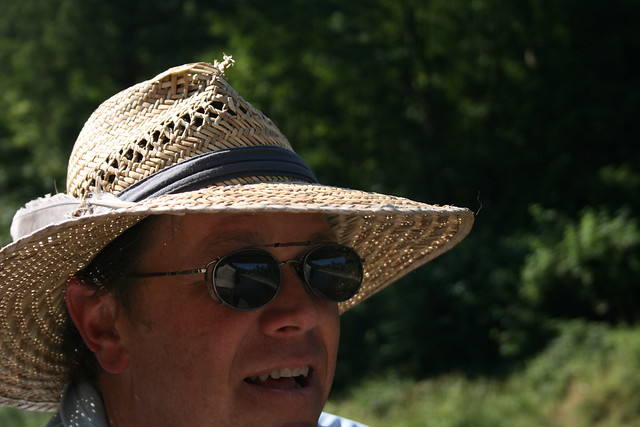
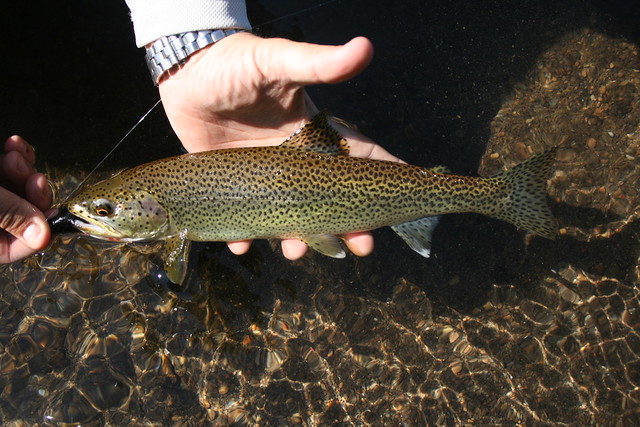
Mark Twain was right — the clothes make the man. We floated through a jungle of Japanese Knotweed, ate a jack spring chinook cooked over a driftwood fire, and saw some football sized sea-run cutthroat. Good summer day on the North Coast.

-MS

The ocean was calling. Salmon on the fly are a passion for me. Salmon on the fly, here in Oregon, are hard work. Like sitting in the Casino day after day, pulling the lever, waiting for the big payout. You spend all your rent money month after month, hoping and persisting, biding your time for the magic moment when the grab will come. My friends also refer to the rat pushing the button because it remembers getting a food pellet months ago.

But now I have a new fishing realm to explore, the offshore fly fishing world. Captain Nate tried for several seasons to get me into the big blue, or even the close green of the sea world. Fearing deathly puking over the side outcomes, and still in the grips of salmon fever, I managed to evade the invitations. Not this year, though.

My dear friends Jack and Jon Harrell, famed Pacific City fly anglers/guides invited me, once again, to join them dory fishing for black rockfish with fly rods. To their surprise, I think, I said yes. Eagerly. In fact I became a pest, asking when the ocean would be flat enough to launch in the surf at Pacific City.


Five PM thursday, the phone rang. Jay, this is Jack. Hi Jack, what’s up? The ocean is looking pretty good for launching tomorrow morning, Jack said. I’ll be there; you name the time. We made our arrangements, and i hung up, knowing that my gear was already staged in the garage. Wow. An opportunity to fish with friends, most excellent fly anglers, and Dory skippers. Not to be missed. After all, I am semi-retired, and the clock is ticking.


Ooops. I had a work meeting to attend the next day, I remembered in a brief moment of clarity. Hummmmm. I’m 62. The meeting is important, as are all work meetings, I reminded myself. Hummmmm. Life is short, I reminded myself. Will a crucial decision point be reached tomorrow, I asked myself. No. Maybe. Not likely. Could happen. Oh heck, there will be time to revisit decisions made at the meeting, I rationalized. I remembered my history of being hyper-responsible, work dedicated to the point of risking my health. Not to mention my sanity, which hangs in the balance most days.
Hummmm. Life is short. I have how many days with fly rod on the ocean? Less than a handful. I have how many work meetings attended? Egads! Thousands upon thousands!


Dear ________, I wrote in an email. I will not be able to attend the meeting tomorrow owing to an unanticipated appointment. I pressed send, and promptly headed to the garage to load the truck.
Met my buddy at Rickreall at 5, arrived PC at 6:15. Jumped in the back of Jon’s Pickup, leading the Gold Comet down the road and across the beach. Jon backed the tilt trailer into the surf and dumped the Dory into the Pacific. The swells were pushing 8 or 9 feet, so it was a little dicey, but we soon scooted out through the surf, leaving Jon to his construction job, and we headed out to hunt the wily Black Rockfish.
Jack scanned the shoreline for visual cues, and eyed the fish finder to locate our destination. Pretty soon, he cut the motor and told us to get with it. Huge school of fish, twenty to forty feet deep, right under the boat, he said.

Suffice to say, we had a wonderful morning of it. Black Rocks took our Clousers and Tube flies fairly consistently, although Jack told us it was sort of slow that day. We saw a sunfish cruise by, Dolphin, a sea lion, and plenty of fish to our flies. We hunted salmon a little, but found none that day. Jack and my buddy both kept their eyes on me to detect signs of green around my gills, but my sea legs were in fine shape, and no puking was executed that day.


With the wind kicking up at about 11:30, Jack gave his son a call, and Jon jumped in his truck at his work site, heading for the beach to pick us up. We made our run for the beach, and in typical fashion, Jack ran the Dory straight onto the beach, timing the surf, and we sat high and dry, ready to trailer the boat.
An ODFW fish checker approached us as we debarked the Dory. We smiled and welcomed her to check our catch. Each fish was weighed and measured, part of the process of assessing harvest rates and status of the rockfish stocks. When she was done, we headed off the beach, driving past surfers and beach walkers, and headed back to Jack’s home where we filleted our catch.


Only one thing left to do. Breakfast at the Grateful Bread. Jack knows everyone there, so ordering took a little time while we were introduced to half the staff working there and local events were chatted over. RR joined us, completely coincidentally, as he was driving through town looking for a Condo to buy, a good golf course, or whatever it was he was doing there. Breakfast was great, conversation ranged from the fishing sublime to the biological arcane, and then it was time to head back to the valley. I checked my email.

There it was. A message, respectfully worded, relating not-so-happy-with-absence-from-meeting-with-virtually-no-advance-warning from boss. Hummmmm. I decided to let it slide. There would be plenty of time next week to accept my reprimand. For now, I had fresh memories a glorious morning on the ocean, time on the water with friends, dancing with rockfish, feeling mysterious giant grabs from unseen denizens that almost-but-not-quite got hold of the hook in my tube fly, putting new fly rods and reels and fly lines to the test of seawater and sea-fish. Tomorrow, I could be dead. Don’t want to be dead, but could be. I called my family and we planned to go see Captain America when I hit town.

JN
Rick and Sam’s River Crawl 2011
Between Eugene and Bend, Oregon lie an outlandish number of fly fishing opportunities for the bank angler. This is good because it is sad and true that we do not own a drift boat. Much to our disappointment, we will never be featured on the Oregon Fly Fishing blog drifting through the foaming waves of the McKenzie River.
But wait. What if we contrive to perform some absurd fishing stunt, traveling in a gas efficient compact car instead of a McKenzie boat? Perhaps if we forgo the leisurely enjoyment of standing in pure mountain waters, communing with osprey and heron, deer and otters; perhaps if we turn fishing into a road rally scavenger hunt for trout, (and catch it all on video) then we too, shall be worthy of blogdom.
The Plan:
All in just one day, July 27, 2011, our intrepid party shall attempt to catch a trout in 10 separate rivers/creeks on the fly, while traveling from Eugene to Bend and back again. We shall catch and release trout from the McKenzie River, Blue River, Metolius River, Deschutes River, Fall River, Crescent Creek, Odell Creek, Salt Creek, North Fork of the Middle Fork of the Willamette River, and finally the Middle Fork of the Willamette River. But wait, there’s more: we shall attempt to hit a trout grand slam by catching 4 different varieties of trout. Not enough craziness? There’s still more. We will perform this absurd feat without repeating the same fly that worked in one body of water in any other body of water. (Kind of like the antithesis to the Mckenzie River Two Fly competition, huh?). We will capture this endeavor on video for your viewing pleasure and hope that it will be worthy of the blog. So stay tuned….
The Team
Jen: Videographer and Photographer (thanks Jen)
Sam: Fly Fisher who will tempt trout to pose for our documentary.

Rick: Fly Fisher who shall also tempt the trout to say “cheese”

-Good luck guys.
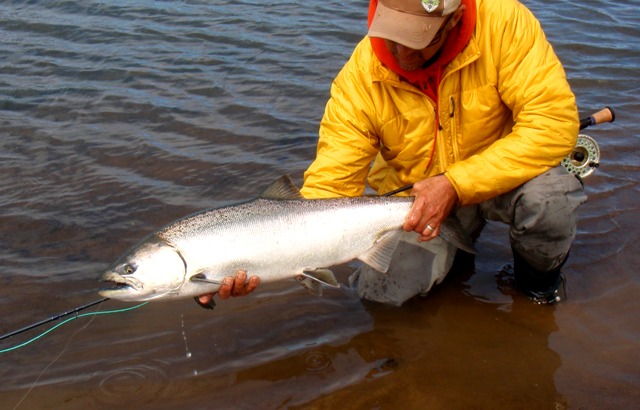
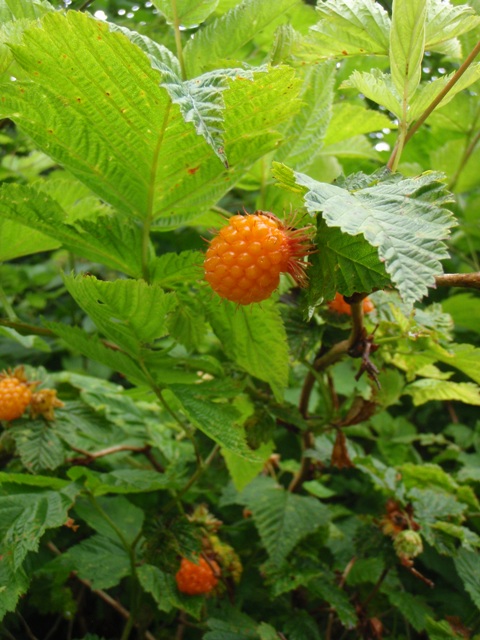
As the foxgloves fade and the salmonberries ripen, our coastal rivers are settling into summer. The rainforest has grown into a full-blown jungle, almost impenetrable. Spring chinook have found refuge in cool canyon pools. Summer steelhead are tucked into comfortable bubble curtains, reverting to trouty habits, tempted by summer hatches. Sea-run cutthroat are making their way up the estuaries, blasting schools of small anchovies and candlefish, as well as baby salmon and steelhead. Meanwhile, coho and chinook rip voraciously through our offshore waters, putting on weight and counting down the weeks before the big autumn dance. For the handful of anglers who fished hard through the spring and early summer, it’s time to sleep in, catch up with friends, and stock up on flies for September. It’s a fine time to reflect a little on a season full of excitement and pseudo-revelations…
Tidewater Steelhead
During a particularly grungy incoming tide, my line tightened to the steady thumping of a fish. The jolts were hard and quick, and my first thought was that I had foul-hooked a salmon by the tail. Seconds later, an aquamarine summer steelhead leaped and thrashed, and a long-standing dream of mine finally came true. Hopefully it won’t take another 20 years to find the next one!
Caught in the Act
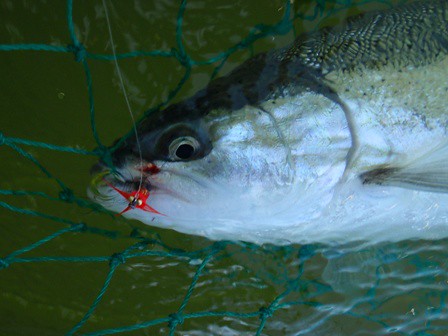
Ever trained your lens on the water’s surface, determined to get a photo of a salmon or steelhead mid-jump? I’ve done it plenty, as have my pro-photographer buddies. The Law of Jumping Salmon, section 4, line 11, states: “Salmon will stop jumping when cameras appear, and resume when cameras are stowed.” So imagine my surprise when I clicked the shutter JUST AS a spring salmon blasted the surface! I’ll admit it was a little anti-climactic, as the picture is only moderately compelling. But it still qualifies as a first in my book.

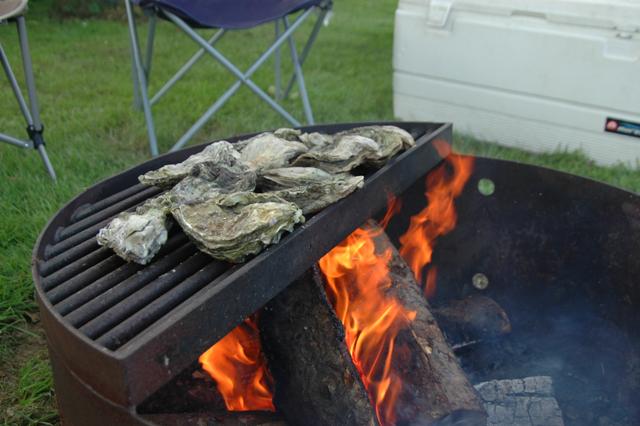
Oysters on the Campfire
There is no better camp food than fresh oysters. Grilled spring chinook is a nice side dish. Beer is the vegetable.
Cracking the Crab Code?
After cutting the day’s fish, Miguel and I stood on the camp dock, sipping micro brews and watching the algae bloom. Our neighbor in camp, now referred to as “Random Camper Guy,” wanders over and exclaims when he sees the fillets:
“Holy cow, where did you get those beauties?” he asked.
“Just down river,” we replied.
Then RCG sees the fly rods.
“Good Lord, you got those on flies?”
We suspected by the way RCG phrased it, that he knew a thing or two. He walked over to the rods and inspected our flies.
“Oh, you’re using crab larva flies!”
Miguel and I looked at each other sideways. We had no idea what he was talking about.
“Uh…what’s that again?” I offered.
“These flies,” he pointed at a #8 Zebra Tail, “are yellow and red, just like late-stage crab larvae. That’s one of the primary foods of chinook in the ocean.”
“Really?”
He shared a few more factoids, then shuffled off to his RV. Miguel and I stared at each other, gears turning, communicating without words.
“Let’s tie up some crab flies for tomorrow!” I said. And with that we cranked out 13 new flies and split them up among our crew.
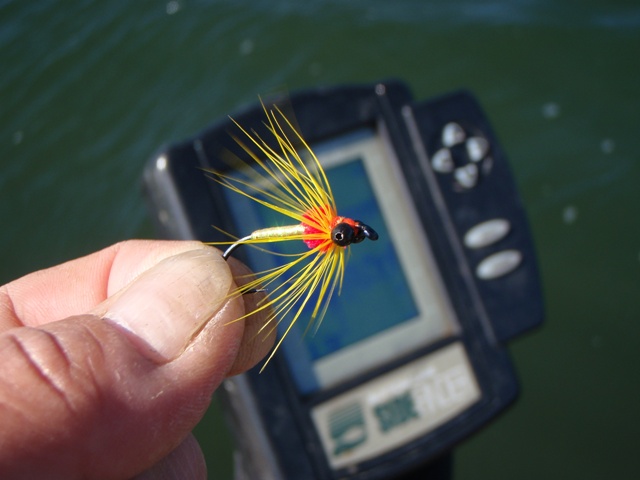
The next day we rocked the chinooks, and every time someone hooked up, the refrain echoed, “Crab fly!”
Pink Zebra Tail Magic
Last year’s unqualified ‘nook killer, the Pink Zebra Tail, drove the spring season right out of the gate. The flashy little critter brought multiple limits to the net, and lead to speculation as to the secrets of its success. As it happened, Random Camper Guy nudged us in another direction, and over the following two weeks, my buddies and I developed tighter and tighter facsimiles of megalops Dungeness crab larvae. Those flies performed well, and led to other innovations. But some of our crab larvae experimentation failed. For instance, we all tied itty bitty versions of our crab flies, attempting to better match the naturals. The small flies didn’t pan out, primarily because the smolts would not leave them alone. As the season wound down, the magic of the crab flies seemed to wane. But the Zebra Tail proved itself time and again, up to the last grab.
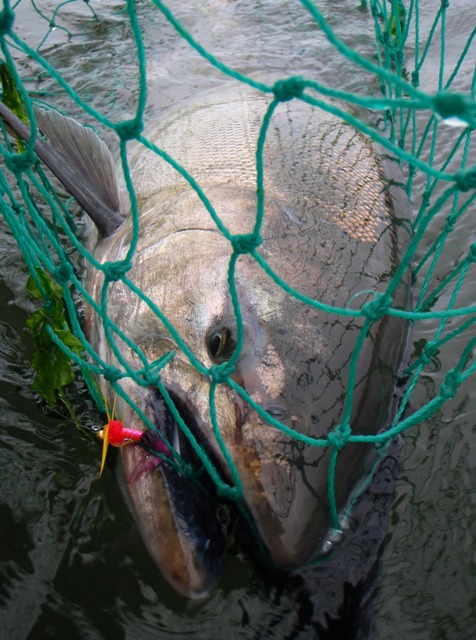
That final hookup came after 14 hours of swinging–almost perfectly in line with the season average of 13.8 hours per fish landed.

Despite the recent rain of this past week, water and fishing conditions are excellent in the Willamette Valley and the State of Oregon. Here are some of the highlights and flies to use for some of our great fly fishing waters of Oregon.
The Lower McKenzie River is fishing well especially on some of the cloudy days we’ve have lately. Look for the sun to pop and fishing to remain good but focus more on morning and evening as we head into August. Water levels and water temperatures are going to be really good for lower river trout this year and the “Summer Lul” associated with low and warm water is most likely not going to occur. Flies you need to have in your box for the lower river include. Continue reading
Sea Run Cutthroat are in already – and it’s only mid July…

Last week was a great opportunity to explore and fish my brains out. Spring Chinook season was winding down, but the ocean was there and, for me, a whole new sea to dip my toes into. And I had been noticing some fish messing around the estuaries that looked a lot like sea run cutthroat. Continue reading

So yes, I admit that I was NOT wearing my polaroid glasses at this particular moment. But I do wear glasses all the time, at least if I want to see what’s going on, and it was early in the morning, and then suddenly……
My trusty ball cap was ripped unceremoniously from my head and splatted into the waters of Diamond Lake. Now this was not much of a surprise, because on more than one occasion I have whapped myself in the back of the head with a wind driven fly, and my fishing buddy and I routinely trade flies to the head. I am one up in this contest, having buried a fly past the barb into his ear while he has only stuck me short of the barb, and we are about equal in trading fly-borne injuries and near game-closers. This de-capping felt different, though, delivering a little more decisive ripping-from-head effect.

Retrieving my hat from the dark waters, I examined the hook placement and was astounded. Hook buried waaaay under the bill, about as far back as it could have gone, and with the eye of the hook pointing forward. It remains difficult to imagine the skill and contortional fly line control required to place a fly in this location, but none-the-less, it was achieved, and achieved so close to my eyes that it gave pause.

Close call, and a stern reminder of how important it is to wear some kind of eyewear when fly fishing. Polaroids cut glare, make it easier or even possible to spot fish, and provide basic protection. While am waiting for prescription polaroids, I have been wearing Cocoons Aviator Sunglasses over my regular glasses. My wife won’t let me wear these around town, but they really get the job done on the water.
So, please, wear some form of eye protection, dawn to dark, and keep those little peepers safe. One never knows when one’s buddy will drive a hook into a wind, only to misplace the cast. And I have whapped myself many a time as well, expert fly caster that I am. Ha ha.
JN

I’ve broken two salmon rods this spring season, both of which are still being repaired, so I was relieved last week when Daughters allowed me to test out the new Echo Edge 10-weight. Tim Rajeff, the rod designer at Echo, is one of the most progressive in the biz. I was excited to try out his latest design, and hopefully christen the new rod on a bright chinook. Continue reading

Over the several centuries I have been tying flies and fishing, (this is to establish my credibility as an expert and therefore worthy of the time it will take you to read this fly tying material comparison and although it may be a slight exaggeration, it also serves to accomplish a task that many persons apply to formulaic writing about fly fishing and fly tying and so, being true to the art form, I thought why not have fun with it?)
Been using bucktail for decades, honestly, and Hareline Extra Select Craft Fur for only a few years, maybe three. At first, I did not like the synthetic. Can’t really remember why, but I decided it was not for me. Over several seasons, however, I have put craft fur back on the fly bench and in my fly boxes and both materials are here to stay.
I tie steelhead and Chinook tube flies with craft fur. Comets are as likely to have a craft fur tail as a traditional bucktail tail. Wings on traditional steelhead wet flies and sea run cutthroat flies are about equally likely to be tied with craft fur, bucktail, white deer belly hair, and arctic fox tail fur, depending on my supplies and whim.
Anyway, I thought some of our blog readers might like to review some of the tying and fishing qualities of these two materials. Here ya go.
Consistency of material. This is a big issue. Craft fur is always craft fur, as long as you stick to a single manufacturer and product type. The qualities of the fur may change over time, if the manufacturer changes their product specifications, but overall, you can grab any of ten thousand bags of craft fur off the pegs at a hundred locally owned fly shops, and every one, without exception, will be exactly alike. Same length, amount of underfur versus guard hairs, and even the feel of the material.
Not so with bucktail. Nope. Being a natural product, you should expect every bucktail to be different, or at least have the potential of having different qualities at the fly bench. Some hair will be longer, more wavy, harder or softer, or will be thinner or thicker when one examines individual hair fibers. Softer hair may compress and flare more. Straight hair may be stacked to even up hair ends, but very crinkly hair will require hand-work to even up the tips, if such is desirable in the finished fly. Fundamentally, bucktail can be a tricky material to work with in a large part because of the individual quality of hair on each tail.
Color availability. No problems or challenges here. Both craft fur and bucktail (over two dozen colors in each material) are available in enough colors, I think, to satisfy the vast majority of fly tying tastes.
Action in the water. Craft fur is limp and wiggly, bucktail is not. The question this divergence presents to every fly tyer is whether limpness of stiffness matters in a particular fly type. Craft fur really does undulate and wiggle on the retrieve or on the cross current swing, and this quality has become quite attractive to me, even not knowing what the fish think or if they care.
Length of material. Generally, bucktail is a bit longer than craft fur. Hareline craft fur is my go-to material, and I usually find that its working length is in the 2.5 – 3” range. When using bucktail, it is fairly easy to find hair in the 4” category , although this is not true for every bucktail.
Durability. Not sure I can differentiate between the durability of these two materials. Both are subject to getting chewed on and broken while fishing. I guess I would say that bucktail is a bit more durable than craft fur, because when I look at “been-fished” flies of previous seasons, it seems that the bucktail tied flies still look like I would want to tie one on, whereas some of the already-been-fished-hard craft fur flies seem less appealing. But I think this is a close call. As far as breakage upon chompage, both are subject to damage.
Fish catching ability. Clearly nose-to-nose. I have absolute confidence fishing flies tied with craft fur and bucktail.
Applications to fly tying. Wings and tails, near as I can figure, are the key uses for both bucktail and craft fur.
Ease of use. Craft fur is easy to tie with. Bucktail, as a generality, is a little more difficult to master. Depending on the hair on an individual tail, it will require more or less tension with fly tying thread to secure the material and at the same time avoid flaring the hair. Hard hair must be tied in very tightly to prevent it from slipping out, say, when tying a wing on a steelhead fly. Both materials require one to pull out some of the underfur or shorter hair fibers. This is pretty easy with both materials.
Translucence. This was supposed to be a big deal, the reason Polar Bear hair was so desirable over calf tail or bucktail when tying steelhead fly wings. Translucence, we were told, made our flies more attractive to the salmon and steelhead we pursued. Even today, with Polar Bears on the brink of extinction and the material limited to the safety deposit boxes, the mythology of translucence is powerful among fly tyers. Personally, I have given up on the translucence mantra when tying most of the flies I craft these days. Craft fur and bucktail are both about equally non-translucent, and I fish both materials with confidence.
Tendency to foul around the hook. Both craft fur and bucktail are capable of fouling. I find bucktail my preferable material for tying a fly like a Clouser, but have friends who swear by craft fur Clousers. Bucktail as tailing on a Comet or Boss is less likely to foul around the hook than craft fur, but I find the even when fouled, a long craft fur tail looks good in the water and the fly fishes well, as long as there is just one turn around the hook. Taking a look at my fly at the end of my retrieve is my way of making sure that a craft fur tail is still fishing the way I want it to. Wings that are the length of the hook bend or shorter will not foul with either material. Wings longer than the bend of the hook, again, should be checked in the water now and then if using craft fur, as it is capable of more fouling than bucktail when tied long.
Hope this helps next time you ponder whether that fly should be composed of craft fur or bucktail – why not both?
JN
Back in April 2010, the Oregon Board of Forestry decided to clear cut salmonid protections in our Clatsop and Tillamook State Forests. Since then OSU has weighed in on the issue:

From The Oregonian: In April, an independent review by scientists at Oregon State University found that the Board of Forestry did not use the best available science when considering harvest increases. The OSU scientists found that the increased harvest levels had a “high probability” of contributing to tipping points that would lead to local extinctions of some species. An earlier assessment by the Oregon Department of Fish and Wildlife scientists found that the extensive clear cutting under the new plan would result in a high risk of harming watershed function in some streams critical to salmon.

There are some aspects of fly rod position that many anglers do not consider when they are playing big fish. I am going to cover just a few of these here, recognizing that there are whole books that can be written on the topic. Hummm. Might be a pretty dull book unless it has a lot of cool photos.
There are two common errors I commonly see when I watch friends playing big fish. The first is keeping their fly rod at a high angle where just the upper 1/3 of the rod is flexed. This creates a situation where only a few ounces of pressure is being exerted on the fish. The tip is the most flexible part of the rod, and a tip bend alone will prolong the process and leave more time for the hook to fall out as a consequence of being under inadequate tension.

Another error that is especially common is for the angler to grab the rod in the middle of the first section above the rod handle. This is a no no as illustrated above. Placing one’s hand above the cork creates a hinge point (my terminology) and can cause the rod to deform and break right there. Placing the hand between cork and first guide is a very natural action, but this can cause many a break.
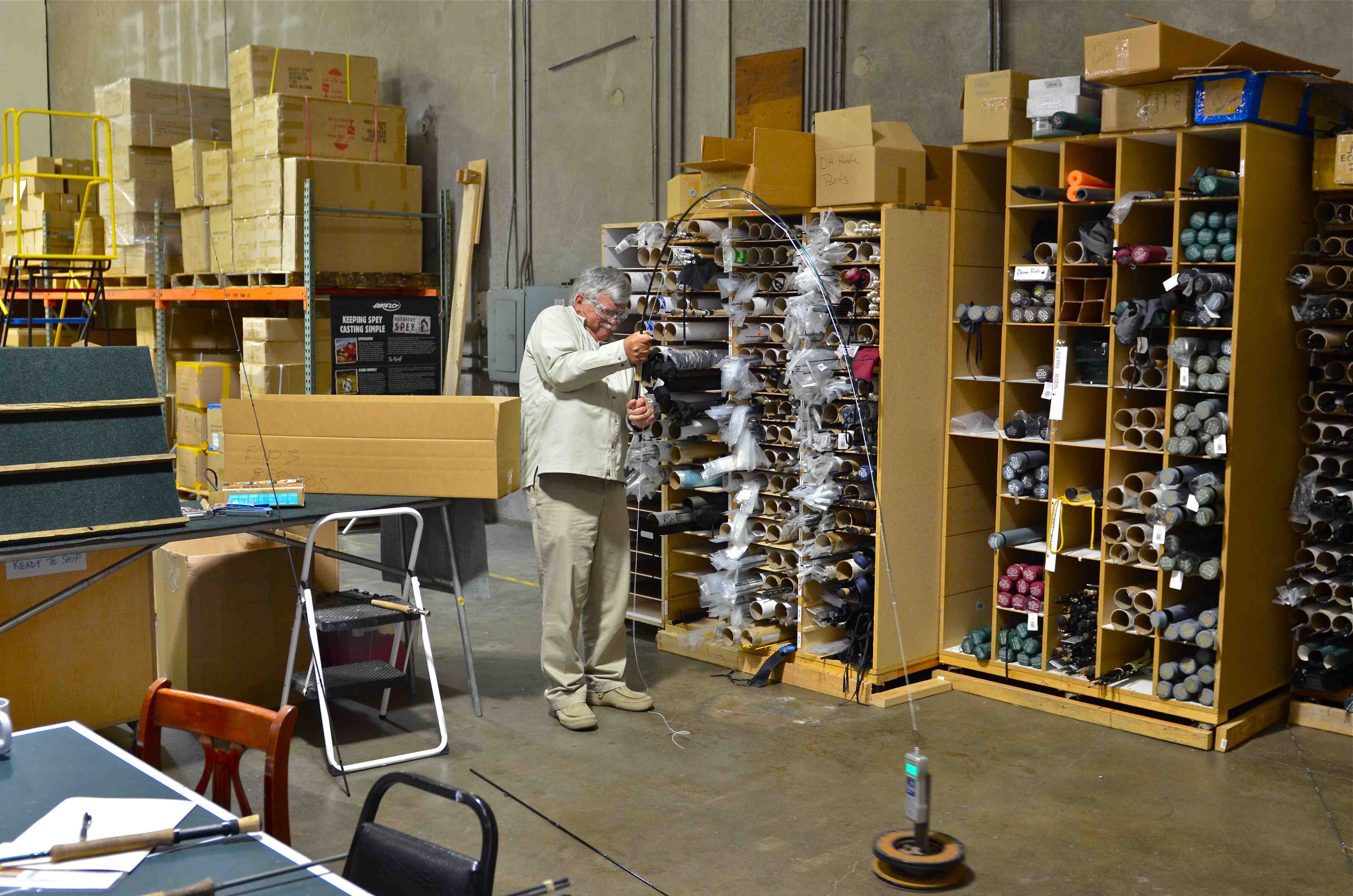
Fly rods, and Echo Fly Rods specifically, can take a lot of pressure if one keeps hands on the cork. The photos above show our Shop mate Lou doing his best to break an Echo 8 wt, with hands on the handle. He did break it finally, but he was sweating, and even these sturdy rods would be more vulnerable if grabbed between cork and fist guide. So please don’t do it.

What to do? This photo shows the practice of keeping a low rod angle, distributing a lot of pressure applied through the reel drag and the entire rod, with emphasis on the butt section (the most powerful part of the rod). This is the course of action when you want to put the most pressure on a fish, if you hold the reel tight. Ironically, it is also a rod position that comes into play if your fish makes a sudden bolt to the deep and you want to release pressure — in this case, you allow the drag to ease up, and lower the rod to reduce line friction through the guides. Never point your rod straight at Mr. Big, though, because that eliminates any shock absorbing qualities of the rod.
So, now it is time for counterpoint commentary, and it is genuinely welcome. meanwhile, have fun out there.
JN
Join us this Saturday, July 16, from 11:00am to 2:00pm at Alton Baker Park ponds for Echo/Airflo Demo Day. Dan Marshall our Echo/Airflo rep, will be at Alton Baker park with the entire Echo Rod line up AND Airflo lines. Ever think about balancing out your spey,switch or your single handed rod with a line BEFORE you sink the bucks into a line? Thinking of getting a new outfit? Here is your opportunity! Bring your rods down and you can test cast the Airflo lines; Trout Lines Ridge, Sixth Sense and 40+. Spey Lines and Switch Lines; Scandi Compact and Skagit Compact will also be available to test cast.

The new series of Echo 3 line of rods will be present and ready for casting.
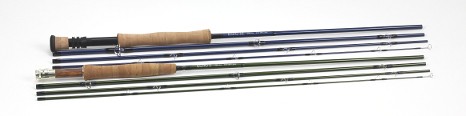
If you are looking for a new outfit Saturday is the day to demo and cast some great outfits at a great price! See you there!
From Captain Nate: I took the boat on a 90-mile trip from Cleveland to Detroit this weekend to chase muskies… Sorry for the grin and grabs, but we got some monsters on flies! I’m working through some of the pics, but didn’t get all I wanted. On a side note we couldn’t keep the smallmouth off the muskie flies and there were tons of Lamprey…something I have never seen before. I think they thought the big streamers were the parasitic eel and wanted to take some revenge…

Trout Unlimited 678 invites you to a presentation tonight, Wednesday July 13th at 7:00 pm, Veterans Club, 1626 Willamette Street.

Brandy Langum, USFS Biologist on Bull Trout Restoration in the Upper Willamette Watershed.
Brandy will discuss USFS efforts to restore bull trout to the Middle Fork Willamette. Come find out how you can help rebuild populations of this important native fish. We’ll also give an update on wild trout tagging in the Mckenzie River.
Come share a beer and bring a friend.